5 550 résultats
réf. 102853Chartres. New. N.D. Hardcover. 2951249705 . FREE UPGRADE to Courier/Priority Shipping Upon Request - IN STOCK AND IMMEDIATELY AVAILABLE FOR SHIPMENT - Flawless copy brand new pristine never opened -- VOLUME 1 OF 3 VOLUMES published between 1998 and 2001. Text in French. Volume 1: Catalogue raisonne de l'oeuvre typographique de Massin 1948-1958 128 pages ISBN: 2951249705. 1 2 3 One Two Three I Il Ill Catalogue Raisonne Catalog Raisonné Complete Works La Vie Et L'uvre Oeuvre Raisonnee -- with a bonus offer . Chartres hardcover
1657réf. ABC_49981Cologne: Pierre de la Vallee = Amsterdam Lodewijk & Daniel Elzevier 1657. 19th-century blind-tooled black morocco with the title and author lettered in gold on the spine a double filet border on both boards blind-tooled board edges and turn-ins a red ribbon marker red sprinkled edges marbled endpapers. 12mo. With a woodcut vignette on the title page and several decorated woodcut initials in the text. 2 parts in 1 volume. First issue of the first definitive edition marking a pivotal moment in the works history: the first time the Pascal letters were gathered into a single volume with continuous pagination. Issued under the pseudonym Louis de Montalte and bearing the fictitious Cologne imprint of Pierre de la Vallée the work was in fact printed in Amsterdam by the Elzevier press. Although it is the second edition overall it offers for the first time a coherent and authorially revised text as Pascal himself oversaw revisions to the letters before publication refining their style and argument. It is consequently regarded as the authoritative edition. The 18th letter published after the printing had been completed was appended separately.Blaise Pascal 1623-1662 was a mathematician physicist and religious thinker. In the Provinciales he combines theological argument with a clear and carefully structured prose style. His treatment of complex doctrinal issues in an accessible and engaging manner contributed to the wide readership of the letters beyond strictly scholarly audiences. Few books capture the intellectual tension of 17th-century France as vividly as the Lettres provinciales. Conceived in the heat of the bitter dispute between Jansenists and Jesuits these 18 letters first appeared not as a book but as a series of anonymous pamphlets published between January 1656 and March 1657. At the time of the present works publication it was arguably the most widely read work in France and its blend of humour logic and rhetorical precision helped define what would become classical French style.The opening 398 pages contain the complete series of letters combining theological precision with devastating satire. Written in the guise of correspondence from Paris to a provincial friend they expose and ridicule the casuistical reasoning of Jesuit moral theology with a brilliance that ensured their immediate success. At once playful and incisive Pascals prose moves effortlessly between irony and indignation creating a new standard for French writing.The second part of the present work turns from satire to direct theological intervention. It contains the Avis de Messieurs les Curés de Paris attributed to Antoine Arnauld 1612-1694 a central figure of the Jansenist movement and a close ally of Pascal. This text anchors the work firmly within the doctrinal controversies of the time particularly the defence of Arnauld following his condemnation by the Sorbonne.With the later manuscript initials "C.E." on the title page. The boards and spine are somewhat rubbed. The work is slightly browned throughout with occasional mild foxing. Otherwise in good condition.l Berghman Stockholm 102; Brunet IV no. 890; PMM 140; STCN 853094535 9 copies; USTC 1841842 11 copies; VD17 23:329180S; Willems 1218. Pierre de la Vallee [= Amsterdam, Lodewijk & Daniel Elzevier], hardcover
1928réf. 102365Les Beaux-Arts. As New. 1928. Paperback. FREE UPGRADE to Courier/Priority Shipping Upon Request - IN STOCK AND IMMEDIATELY AVAILABLE FOR SHIPMENT - AS NEW THE TEXT BLOCK IS PRISTINE CLEAN UNMARKED AND IN EXCELLENT CONDITION - - Text in French. 157 pages; 32 black and white illustrations. 219 works catalogued. Catalogue Raisonne Catalog Raisonné Complete Works La Vie et L'uvre Oeuvre Raisonnee Les Beaux-Arts paperback
1930réf. 37311Paris France: Librairie Du Bulletin De L'Academie Des Beaux-Arts. As New. 1930. Paperback. FREE UPGRADE to Courier/Priority Shipping Upon Request IN STOCK AND IMMEDIATELY AVAILABLE FOR SHIPMENT - AS NEW THE TEXT BLOCK IS PRISTINE CLEAN UNMARKED AND IN EXCELLENT CONDITION - - 31 pages of text in French followed by many lovely black and white plates. Pascal-Adolphe-Jean Dagnan Bouveret Pascal Adolphe Jean Catalogue Raisonne Catalog Raisonné Complete Works La Vie Et L'uvre Oeuvre Raisonnee -- with a bonus offer; Signed by CoppierCoppier . Librairie Du Bulletin De L'Academie Des Beaux-Arts paperback
1787réf. H-210The increasingly scarce first French translation by Parraud of "The Bhagvat-Geeta or Dialogues of Kreeshna and Arjoon; in Eighteen Lectures" by Charles Wilkins in English published two years earlier in London in 1785. Abbot Joseph Pascal Parraud Translator 1752-1832 Charles Wilkins Author 1749-1836. Le Bhaguat-Geeta ou Dialogues de Kreeshna et d'Arjoon ; contenant un Précis de la Religion et de la Morale des Indiens. Traduit du sanscrit la langue sacrée des Brahmes en anglais par M. Charles Wilkins : et de l'anglais en français par M. Parraud de l'Académie des Arcades de Rome. A Londres et se trouve à Paris chez Buisson 1787 Octavo 6-CLXII pp. and 180 pages in contemporary binding. The English translation of the Bhagavad Gita is the greatest accomplishment of notable Orientalist Wilkins founder of the Asiatic Society of Bengal. Published by the East India Company in 1785 under the patronage of Governor General Warren Hastings this translation had a profound impact on some of the greatest Western intellectuals of the time including Carlyle and Emerson. Soon after efforts were underway to translate this extraordinary text into other languages this French translation being the pre-eminent of all. As a beautiful testament to skilled pre-Revolutionary French printing this edition by Parisian publisher Buisson bears the signatory hallmark and increasing importance of oriental religion specifically Hinduism within the literary minds of France. The Bhagvat Geeta is part of the sixth book of the Mahabharata the great Indian epic. During the battle of Kurukshetra the Lord Krishna friend and charioteer of Arjun offers words of wisdom to the Pandava prince Arjun and this set of philosophical dialogues between them is a central text of Hinduism. The poem consists of 700 Sanskrit verses divided into 18 chapters here "lectures". In Hinduism Krishna is regarded as the human incarnation of God Vishnu. One may recall the famous Radha-Krishna love-songs and stories that form the bedrock of romantic literature in Sanskrit and other languages such as Maithili Bengali etc. Condition- In beautiful contemporary binding Pages are remarkably clean; a beautiful collector's copy in very good condition! Buisson, Paris hardcover
réf. 91148Chartres. New. N.D. Hardcover. 295124973X . FREE UPGRADE to Courier/Priority Shipping Upon Request - IN STOCK AND IMMEDIATELY AVAILABLE FOR SHIPMENT - Flawless copy brand new pristine never opened -- THREE 3 VOLUME SET published between 1998 and 2001. Text in French. Volume 1: Catalogue raisonne de l'oeuvre typographique de Massin 1948-1958 128 pages ISBN: 2951249705. Volume 2: "Du côté de chez Gaston": catalogue raisonne de l'oeuvre typographique de Massin 1958-1979 157 pages ISBN: 2951249713. Volume 3: "Cavalier seul": catalogue raisonné de l'oeuvre typographique de Massin 1979-2000 189 pages ISBN: 295124973X. 1 2 3 One Two Three I Il Ill Catalogue Raisonne Catalog Raisonné Complete Works La Vie Et L'uvre Oeuvre Raisonnee Chartres hardcover
1999réf. 92016Van de Wiele. New. 1999. Hardcover. 9076297053 . FREE UPGRADE to Courier/Priority Shipping Upon Request - IN STOCK AND IMMEDIATELY AVAILABLE FOR SHIPMENT - Flawless copy brand new pristine never opened -- Text in French and Dutch. Includes 80 color and 50 black and white illustrations. Catalogue Raisonne Catalog Raisonné Complete Works La Vie Et L'uvre Oeuvre Catalogus Het Complete Oeuvre Raisonnee Van de Wiele hardcover
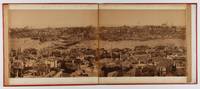
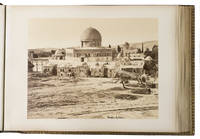
1890réf. 54541Constantinople: Sebah & Joaillier 1890. First edition. Hardcover. vg- to vg. Oblong small folio. 12 1/4 x 14 1/4". Red pebbled cloth boards with decorative gilt ruling tooling and lettering on the covers. Rebacked maroon leather spine. Gilt-stamped crescent moon and star motif the national emblem of Turkey on the back cover. Taken from the Galata Tower in what is now the Karaköy neighborhood of Istanbul this magnificent panorama displays the skyline and cityscape of Constantinople as it appeared sometime in the late 1880s or early 1890s. The panorama is comprised of 10 original albumen photographs mounted on heavy card stock and bound together in accordion style leporello measuring a total of more then 11 feet when completely unfolded. Shot in a southwardly direction the viewer can see Galata Karaköy in the foreground and from left to right across the Bosporus to the Uskudar district on the Asian side and then across the harbor at the mouth of the Golden Horn the Galata Bridge and across to the Pérama neighborhood and the Faith district where many famous landmarks of the city can be seen including the New Mosque Topkapi Palace Hagia Sophia and many others. Each panel measures about 13" wide and 12" tall. The photography is credited to "Sebah & Joaillier" one of the most prominent and prolific photography studios of Ottoman Empire during the second half of 19th century. Originally founded sometime around 1857 in Instanbul by Syrian-Armenian photographer Pascal Sebah 1823-1886 the studio was one of the earliest in the city and all of Ottoman Turkey. By the 1870s Sebah had become among the most prominent Ottoman photographers having also opened a branch of the studio in Cairo. Upon Sebah's death in 1888 the firm was taken over by his 16 year-old son Jean Pascal Sebah who then partnered with photographer Policarpe Joaillier 1848-1904. The firm was renamed "Sebah & Joaillier". Therefore although this panorama is undated it could not have been issued earlier than 1888; most likely sometime shortly thereafter circa 1890. Spine of of the portfolio has been professionally re-backed. Plates with minor to light foxing although the images are still quite clean and vibrant. Binding in very good images in very good- to very good condition overall. A slightly later version of the panorama from Sebah & Joaillier simply titled "Constantinople" is comprised of 12 slightly smaller panels instead of 10 and measures around the same size in total. Bibliographic refences: Jacobson Ken. Odalisques & Arabesques: Orientalist Photography 1939-1925. Quaritch 2007; Özendes Engin. "Photography in the Ottoman Empire"; Öztuncay Bahattin. The Photographers of Constantinople. Aygaz 2003. Sebah & Joaillier hardcover
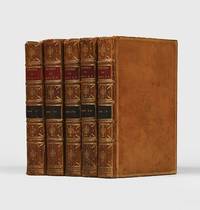
1779réf. 41493La Haye Dètune 1779. 8vo. Five very nice contemporary full mottled calf bindings with gilt title- and tome-labels to richly gilt backs triple gilt line-borders to boards and single gilt line-ornamentation to edges of boards. Marbled adges. Minor repairs to a few capitals but overall a very nice copy indeed. Internally very nice clean and fresh; printed on good paper. One leaf of volume one with neatly closed tear. Old owner's name to title-page of volume 5. Title-pages printed in red and black. With book-plates of Fritz Trieboe/Twilboe A. Gedeon and C. Rasch. Frontis-piece portrait 425 pp.; XII 549 pp. last leaf uncut an folded; VIII 526 pp.; VIII 456 pp. 9 engraved plates of which 8 are folded; VIII 462 pp. 5 folded engraved plates 1 p directions for the book binder. In all 14 engraved plates of which 13 are folded. Scarce first edition of Pascal's collected works comprising much significant material printed for the first time as well as the second appearance of the announcement of Pascal's groundbreaking calculating machine the first edition privately printed of which from 1645 is impossibly scarce making this the earliest obtainable edition of the seminal text. "Pascal designed his first mechanical adding machine in 1642. He was not the first to design and construct a mechanical calculator." but in contrast to Schickard's accomplishments which were destined for a history of obscurity Pascal in contrast "constructed about fifty examples of his machine of which several are extant; and the machine was well known to the cognoscenti both through Pascal's own efforts he hoped to make a profit selling them and through Diderot's later description of it in the "Encyclopédie" 1751. In 1645 Pascal published an eighteen-page pamphlet - now extremely rare - describing his calculating machine. The pamphlet does not identify a place of printing or a printer's name so we may assume that Pascal himself paid for its printing. When we wrote this bibliography OCLC cited only two copies of this pamphlet in one French library and no copies and North America." The pamphlet was reprinted along with additional material in volume IV pp. 7-30 of the present "Oeuvres". The additional material consists of Pascal's 1650 letter to Queen Christina of Sweden; the privilege for its construction and sale issued in 1649 and published for the first time here ; and Diderot's description of it for the "Encyclopédie" along with two plates. Also of interest here is the reprint of Pascal's 1654 paper introducing his triangle of binominal coefficients Pascal's Triangle included in Volume V pages 1-54. Pascal's invention "predated the concepts of computation of the values of polynomial functions by differences." Lee 1995 538." Origins of Cyberspace No. 13. In the present edition the Pascal-Noël correspondence on the vacuum is also printed for the first time along with other pieces on the vacuum as well as his correspondence with Fermat and deRibeyre.Origins of Cyberspace: 13.Brunet: IV395; Tchemerzine: IX p78 f: "Les Oeuvres Scientifiques de Pascal sont recueillies dans l'édition des Oeuvres La Haye chez Detune libraire 1779. 5 vol. in 8. Titre rouge et noir. Publiée par l'Abbé Bossut. Les oeuvres scientifiques occupent les tomes IV et V." hardcover
1656réf. ST12177-11Paris or Leyden 1656-57; related material 1657-58. 235 x 165 mm. 9 1/4 x 6 1/2". With 16 of 18 letters lacking letters IV and XVIII as well as general title and "Advertisement" leaf. 17 of 19 individually issued parts including the "Refutation de la Réponse à la Douzième Lettre". The original parts bound up in pleasing modern tan crushed morocco blind-ruled border raised bands gilt titling new endpapers. PMM 140; Tchemerzine V 62-63. ◆Light brown stain to head margin of the last quarter of the leaves occasional faint browning or foxing elsewhere more conspicuous on final gathering minor worming in bottom margin of a few leaves otherwise a very good copy internally with nothing approaching a serious defect and in a pleasing unworn binding. In addition to related material normally not included this volume contains 17 of the rare original 19 separately issued letters or "Provinciales" by the French polymath Blaise Pascal 1623-62 a series characterized by PMM as "the first example of French prose as we know it today perfectly finished in form . . . on a subject of universal importance . . . and an expression of one of the finest intelligences of the seventeenth century." Prompted by the Jesuits' condemnation for heresy of Pascal's friend Antoine Arnauld the letters are "a magnificent sustained invective" PMM against the laxity and casuistry of his detractors and at the same time a defense of Jansenism that theological movement and faction within Catholicism that grew out of the writings of Dutch theologian Cornelius Jansen 1585-1638 and that emphasized many of the Calvinist tenets of faith human sinfulness lack of free will and the necessity of divine Grace. The additional material apparently collected from a variety of sources comprises letters Pascal wrote to parish priests seeking assistance with the controversy. There is also a copy of Noel de la Lane's "Recit de ce qui s'est Passé au Parlement au Sujet de la Bulle de Nostre S. Père le Pape Alexandre VII. contre les Censures de Sorbonne" ca. 1665. Pascal 1623-62 was a man of many attainments in several fields among them physics philosophy and mathematics. Above all he was a profound thinker a devout Christian and the creator of memorable prose. Written simply lucidly objectively and wittily the "Provinciales" represents a landmark in French literature an early expression of Enlightenment thinking. It was enormously successful dealt the Jesuits a fatal setback and influenced the prose of Voltaire and Rousseau. Not surprisingly the book was put on the Index and ordered to be burned. Originally printed clandestinely by various printers as separate publications at various times during 1656 and 1657 the series is bibliographically complicated but it is clear that our quarto format versions precede the duodecimo printing dated 1657 and obviously those editions with later dates. It is likely given the small parts we are missing that someone assembled the various letters found here as they were issued at the time. A complete set of these letters in first edition--which is rarely seen--would sell for a considerable amount of money. unknown
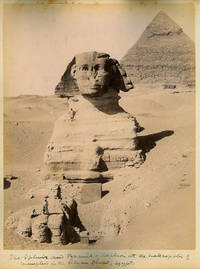
1880réf. 729951880. SBAH J. Pascal and BCHARD Emile et al. Photograph Album. Twenty-two Albumen Prints of Egypt with Views of the Pyramids. Egypt circa 1880. Oblong quarto period style full green morocco gilt raised bands gilt and blind-stamped boards watered silk endpapers; 22 vintage albumen prints each measuring 8 by 10 inches mounted on heavy card stock total of each measuring 10 by 14 inches. $3800.Original photograph album of the Middle East circa 1880 with 22 splendid exhibition-size albumen prints from glass negatives featuring the work of renowned photographers J. Pascal Sbah mile Bchard Langahi and others including Sbah's images of Alexandria's Column of Pompey Nile yachts and desert vistas Langahi's view of Nubian tribesmen and Bchard's iconic image of people climbing the massive stones of the Great Pyramid. Splendidly bound.Near the end of the 19th century many ""were captivated by photography's capacity to 'take them there' and bring them directly in contact with the long ago and far away"" Parr & Badger I:18. With that Egypt's majestic pyramids and exotic worlds beckoned. This rare album of 22 vintage albumen prints characteristically produced for England and France highlights the work of two highly respected photographers: J. Pascal Sbah and mile Bchard. The Turkish-born Sbah especially possessed a keen sense of his subjects' ""interaction with one anotherÉ His outside work involving people is very dramatic: for example the well-known images of camel caravans in the desert where a string of camels and their riders walk across the picture place."" Those very qualities are seen here in Sbah's ""Marshe aux Chameaux"" March of Camels ""Chameliers"" Camels and his images of crowded bazaars and Nile River yachts. In addition Sbah's striking views of Alexandria include one of its catacombs and another of the Column of Pompey one of the best known ancient monuments standing today. Like Sbah French photographer Bchard worked in Egypt in the 1870s and 80s where he was ""known primarily for his photographs of Egyptian antiquities and archaeological sitesÉ characterized by a dramatic sense of presentation"" Micklewright and Brassey Victorian Traveler 118-120. One of his most famous photographs is that featured at the close of this album: ""Ascension de la grand pyramide."" With the misleading signature of Sbah's brother Cosimi who ran Sbah's studio after his death Bchard's evocative view of people climbing the massive stones of the Great Pyramid is one of the era's most iconic. This impressive album also features several unattributed prints: a view of the Great Pyramid and Sphinx that closely resembles Francis Frith's distinctive photograph panoramas of Smyrna in Sbah's Turkish homeland and the portrait of an Ottoman soldier together with a print of Nubians astride camels by Langahi and the image of a veiled woman seated on a donkey unclear in-negative caption. With 22 vintage albumen prints from glass negatives each measuring 8 by 10-1/2 inches individually mounted on heavy card stock most with in-negative captions and signatures. See Rosenblum 163. Photographs fresh with only light scattered margin foxing not affecting prints. A rare album of vintage prints in about-fine condition. Beautifully bound. hardcover
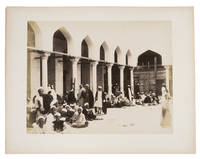
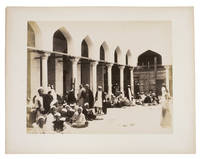
1888réf. ABC_47975Cairo 1888. 34 albumen prints ca. 22 x 27 cm mounted on cream cardstock ca. 28 x 35.5 cm. Remarkable collection of 34 stunning photographic prints of Egypt all numbered titled and signed in the negative by photographer Jean Pascal Sébah 1872-1947 who owned the leading studio for Orientalist photography. He was even named the official photographer of the Sultan of Turkey together with his business partner Polycarpe Joailllier 1848-1904. The majority of the images in the present collection show streets and buildings from lesser known Egyptian cities and scenes of daily life. Larger collections of Sébah's work are relatively rare on the market.Sébah continued the business of his father Pascal Sébah 1823-1886 one of the first photographers working in Egypt. Pascal rose to prominence because of his well-organized compositions careful lighting and quality of his prints. The majority of his photographs are of tourist destinations and locals. Jean Pascal inherited his father's good eye but was more interested in depicting lesser known locations. His photos of people also appear more spontaneous. The present collection includes photographs of El-Souroughieh street and the Khalig canal in Cairo the Virgin Mary's tree in Matariya a local with a buffalo a group of seated men in a mosque a sugarcane market locals working on a sugarcane field a group of boys fishing and the hustle and bustle along the Nile.With a small purple ownership stamp of an anchor in mirror image and the letters "S A" near the top edge of one of the photographs of the Nile. The cardstock is very slightly foxed and yellowed and has somewhat warped from past temperature fluctuations. The prints have somewhat yellowed around the edges but are otherwise in good condition.l Cf. Saretzky The history of photography online. unknown
1888réf. ABC_47975Cairo 1888. 34 albumen prints ca. 22 x 27 cm mounted on cream cardstock ca. 28 x 35.5 cm. Remarkable collection of 34 stunning photographic prints of Egypt all numbered titled and signed in the negative by photographer Jean Pascal Sébah 1872-1947 who owned the leading studio for Orientalist photography. He was even named the official photographer of the Sultan of Turkey together with his business partner Polycarpe Joailllier 1848-1904. The majority of the images in the present collection show streets and buildings from lesser known Egyptian cities and scenes of daily life. Larger collections of Sébah's work are relatively rare on the market.Sébah continued the business of his father Pascal Sébah 1823-1886 one of the first photographers working in Egypt. Pascal rose to prominence because of his well-organized compositions careful lighting and quality of his prints. The majority of his photographs are of tourist destinations and locals. Jean Pascal inherited his father's good eye but was more interested in depicting lesser known locations. His photos of people also appear more spontaneous. The present collection includes photographs of El-Souroughieh street and the Khalig canal in Cairo the Virgin Mary's tree in Matariya a local with a buffalo a group of seated men in a mosque a sugarcane market locals working on a sugarcane field a group of boys fishing and the hustle and bustle along the Nile.With a small purple ownership stamp of an anchor in mirror image and the letters "S A" near the top edge of one of the photographs of the Nile. The cardstock is very slightly foxed and yellowed and has somewhat warped from past temperature fluctuations. The prints have somewhat yellowed around the edges but are otherwise in good condition.l Cf. Saretzky The history of photography online. AFRICA ART ARCHITECTURE & PHOTOGRAPHY MIDDLE EAST & ISLAMIC WORLD Egypt Islamic Art Culture & Science North Africa Photography unknown
1779réf. 153032The Hague: Detune 1779. Collecting Pascal's published and unpublished work First collected edition of Pascal's works containing much significant material published here for the first time. Pascal is the towering figure among the European mathematicians of the mid 17th century. His achievements range from his celebrated calculating machine - the first to be produced commercially - to projective geometry the calculus of probabilities and indivisibles and to the study of infinitesimal problems. This edition was prepared by an important French disseminator of science and major contributor to scientific education Charles Bossut 1730-1814. His textbooks of engineering and physics were in use in France and - in translations - in other European countries up to the Empire. He also wrote the "Discours sur la vie & les ouvrages de Pascal" which takes up pages 3 to 119 of volume I of this edition. The first three volumes are devoted to Pascal's literary and philosophical writings the final two volumes to his scientific texts. For a detailed bibliographical analysis see René Taton's article in DSB. Among the scientific works appearing here for the first time are the famous Pascal-Noël correspondence on the vacuum the letter to Le Pailleur refuting Noël the preface to the treatise on the vacuum the only surviving fragment of his intended major treatise on the vacuum and his correspondence with Fermat and de Ribeyre. Also included are all of the Pascal texts relating to his invention of the calculating machine with two finely engraved plates depicting the mechanism Pascal's letter to Queen Christina Royal patents etc. which are virtually unobtainable in the originals. 5 vols octavo 199 x 127 mm. Titles printed in red and black with engraved portrait frontispiece 13 folding engraved plates 1 further plate usually folding here trimmed and single page woodcut vignettes woodcut tailpieces in the text. Contemporary calf red and black morocco labels gilt in compartments gilt rule border to covers marbled endpapers gilt edges. Some chipping and wear round extremities all joints and hinges intact contents clean bound without the 'Avis' leaf at the end of vol. V repaired closed tear at head of vol. III pp. 491/2 affecting text; a very good set. Maire pp. 11719; see DSB X 33042. unknown
1989réf. 2788Constraint Satisfaction in Logic Programming Pascal Van Hentenryck MIT Press First Edition 1989 Language: English ISBN 10: 0262081814 ISBN 13: 9780262081818 Book Description A landmark monograph that introduced constraint satisfaction as a first‑class computational paradigm within logic programming. Van Hentenryck presents a unified framework for integrating constraint‑solving techniques with declarative programming covering consistency algorithms propagation methods search strategies and the formal semantics of constraint logic programs. The work played a foundational role in shaping constraint programming as a discipline influencing research in artificial intelligence operations research and combinatorial optimization. This volume is a significant component of the Hassan Aït‑Kaci archive aligning directly with his contributions to logic programming unification theory and the formal underpinnings of declarative computation. MIT Press hardcover
1657réf. 28515Cologne" i.e. Paris: Chés Pierre de la Vallée 1657. First edition first issue the 18 separate letters plus the refutation bound together. 23.7 x 17.5 cm. Letters 1-15 have 8 pages; 16-18 have 12 pages. "Refutation de la reponse a la douziéme lettre" bound before the 12th letter. Full brown morocco gilt a.e.g. by Riviere. Small chip at the top of the spine; joints neatly repaired edges lightly rubbed; former owners' signature and bookplate. Fifth letter lightly browned; small hole repaired with loss of a few letters on 18:7/8. First state of advertisement leaf with spelling"advertisement". "These letters were originally issued clandestinely in eighteen parts as a series of separate publications by a variety of different printers between 23 January 1656 and 15 January 1657. No detailed or authoritative information on these separate issues is available" PMM. "The Lettres Provinciales as they are called are the first example of French prose as we know it today perfectly finished in form varied in style and on a subject of universal importance.Pascal was an infant prodigy whose work in mathematics and natural science attracted considerable attention before he was sixteen. But he will always be chiefly remembered as a moralist more especially as the great apologist for Jansenism the seventeenth-century French ascetic movement of reform inside the Roman Catholic Church.At the end of 1655 the movement had been much under attack from the Jesuits and Pascal was persuaded to write a rejoinder.his counter-attack took the form of a brilliant exposure of the casuistical methods of argument employed by the Jesuits.Pascal's weapon was irony and the freshness with which the gravity of the subject contrasts with the lightness of the manner is an enduring triumph. The vividness and distinction of his style recalls Milton at its best." Printing and the Mind of Man 140. Chés Pierre de la Vallée unknown
réf. 16-4077Paris : Perrotin 1853. Large folio. 51 x 40 cm. Original qtr. roan and percaline restored.16pp. and 45 color lithograph plates. most lightly foxed and a few more heavily foxed. Provenance: Collector's mark of Gaston Courtois Costumier Paris. His collection sold at auction in Paris Décembre 1894.OCLC Number: 457516951 Paris : Perrotin, 1853. unknown
réf. 18821Paris Grasset août 2002. 1 vol. 145 x 215 mm de 189 p. et 1 f. Veau naturel blanc estampé et teinté d'un camaïeu de bleus rehaussé d'or blanc et de palladium titre à l'oeser bleu sombre sur le premier plat contreplats bord à bord de papier gris perle et gardes chèvre velours bleu sombre couvertures et dos conservés chemise et étui reliure signée de Louise Bescond titr. Claude Ribal 2019. . Édition originale. Un des 50 premiers sur vélin pur fil Malmenayde n° 15. . Premier volume du cycle du Dernier royaume Les Ombres errantes paraît en même temps que les deux suivants Sur le Jadis et Abîmes mais c'est pour le premier titre que Quignard est récompensé en 2002 du Prix Goncourt l'emportant au troisième tour de scrutin avec six voix contre deux à Olivier Rolin Tigre en papier au Seuil et deux à Gérard de Cortanze Assam chez Albin Michel : l'un des Goncourt les moins commerciaux des vingt dernières années critiqués par certains membres du jury dont Jorge Semprun jugeant qu'il n'ouvrait « aucune voie littéraire nouvelle. Ce n'est pas un problème qu'il ait moins de lecteurs que d'habitude car un livre écrit pour 20 000 personnes peut mériter le prix. Mais c'est très classique très convenu et très prolixe . ». Les Ombres errantes mènent en efet le lecteur vers des pistes abruptes et difficiles loin semble-t-il d'un terrain classique et convenu que fustige Semprun ; un livre qui n'est comme le défendait la présidente du jury Edmonde Charles-Roux « pas un roman mais qui est mille romans. Chaque paragraphe est un roman en puissance c'est cela que nous avons couronné. » Un couronnement dont se serait presque passé Quignard lui qui dans Les ombres errantes parle de ces hommes qui sont « des trous d'acide dans la vie sociale accoutumée » : « Mon embarras est que depuis que je me suis retiré de tout voici sept ans je ne parais plus au moment des prix. C'est pour moi un paradoxe un heureux paradoxe de recevoir un prix pour un livre dont j'avais choisi la date de parution afin qu'il ne soit pas question de prix ». Magnifique exemplaire sublimé de l'ombre froide par Louise Bescond. Paris, Grasset, (août) 2002. 1 vol. (145 x 215 mm) de 189 p. et [1] f. Veau naturel blanc estampé et teinté d'un camaïeu de unknown
1867réf. ABC_474041867. Contemporary gold-tooled reddish-brown morocco over cushioned covers gold-tooled turn-ins watered-silk end papers gilt edges. Oblong folio ca. 28 x 38 cm. With 75 albumen prints most signed and numbered in the negative. Beautiful and unusually large souvenir album with 75 photographs of Syria Palestine Constantinople and Athens in a luxurious binding. The photographs were made by the renowned studios of Félix Bonfils 1831-1885 and Pascal Sébah 1823-1886 who were already widely celebrated in their own time for their pioneering work in Egypt the Ottoman Empire and the Middle East. Their images could be bought separately or as customised albums but collections as large as the present one are uncommon as few sets exceed fifty images. The majority of the photographs in the album are signed by Bonfils. He opened his first studio in Beirut in 1867 and produced thousands of photographs of the region. The present album contains one of the photographs he is most known for namely the group of Jews in front of the Wailing Wall. Bonfils personally considered this haunting image to be one of his best works. Other photographs include views of Damascus Beirut and Jerusalem the church of the Holy Sepulchre the Dome of the Ascension Jericho Jaffa Ramallah the Jordan river the temple of Jupiter in Baalbek and the Umayyad mosque. The remaining photographs in the album are either signed by Sébah or unsigned and include beautiful portraits of locals views of Istanbul the Blue Mosque Hagia Sophia Galata bridge and the Bosphorus river and Athens the Theseion the temple of Olympian Zeus the Parthenon and the caryatids of Erechtheion.With a black bookseller's label mounted at the foot of the front pastedown Philip Son & Nephew Liverpool some of the photographs are captioned in ink underneath. The leaves are somewhat browned and the albumen prints are slightly yellowed. Otherwise in very good condition.l Cf. El-Hage B. Damascus a photographic journey 1840-1918 pp. 57-58; Hannavy Encyclopedia of nineteenth-century photography pp. 173-175. unknown
1880réf. I45A4CVFDU99Egypt and Switzerland 1880. Contemporary black half morocco. 4to 29.5 x 23.5 cm. 50 photographs of Egypt albumen prints and cyanotypes and approximately 40 albumen prints of Switzerland. Impressively presented series of original photographs taken at various important sites and cities in Egypt including Giza Thebes Karnak Luxor Abydos Esna and others. They show archaeological sites like the temple of Seti I at Abydos the precinct of Ahmen-Rah near Luxor the Avenue of Sphinxes at Karnak the Ramesseum and the Colossi at Thebes the temple of Khnum at Esna the Sphinx and pyramids of Giza and many more. Other photographs show the local population engaged in a wide variety of activities such as catching crocodiles on the nile a Luxor barber shaving the head of a sailor or life in a Bedouin camp in the Libyan Desert. The Istanbul-based Sebah studio catered to the Western European interest in the exotic "orient" and the growing numbers of tourists visiting the Islamic world who wished to take home images of the city ancient ruins in the surrounding area portraits and local people in traditional costumes. "Sebah rose to prominence because of his well-organized compositions careful lighting effective posing attractive models great attention to detail and for the excellent print quality" Saretzky. When Pascal Sébah 1823-1886 died his son Jean Sébah 1876-1947 took over the studio and signed his productions "J. P. Sebah" on the negative putting his initial in front of his fathers.Some spotting and fading binding worn. Otherwise in good condition.l Cf. for Sébah: Saretzky Photo history. unknown
1657réf. 25133Cologne Amsterdam: Pierre de la Valle'e Elzevier 1657. First duodecimo edition and First Elzevier edition same year as the first complete 4to edition printed in Paris. This is the first and uncorrected state of two nearly identical issues. 12mo beautifully bound in regal 18th century full red morocco the covers framed by an elaborate decorative gilt rolled border surrounding a gilt coat of arms the spine beautifully gilt tooled in compartments between fine gilt tooled bands one compartment with a black morocco label gilt lettered and stippled gilt turn-ins and board edges marbled endpapers a.e.g. Ex-Libris of the Chateau de Sampigny. xxiv 398 111 pp. A fine and beautiful copy. FIRST ELZEVIER AND EXTREMELY EARLY PRINTING OF THIS MASTERPIECE OF THE MODERN FRENCH LANGUAGE. PMM 140. "The vividness and distinction of his style recalls the prose of Milton at its best". Elzevier’s was Pascal’s definitive version of the text. It was the first edition to gather the eighteen letters within continuous pagination and has become the standard text for all successive editions. It also contains attached at the end and paginated separately the 'Advis de Messieurs les Curez de Paris "The Lettres Provinciales as they are called are the first example of French prose as we know it today perfectly finished in form varied in style and on a subject of universal importance. Pascal's weapon was irony and the freshness with which the gravity of the subject contrasts with the lightness of the manner is an enduring triumph. The vividness of and distinction of his style recalls the prose of Milton at its best". Printing and the Mind of Man. Pierre de la Valle'e [Elzevier] unknown
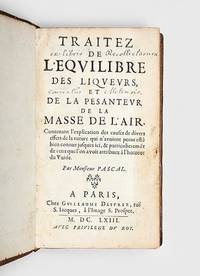
1663réf. 190869Paris: Guillaume Desprez 1663. Defining hydrostatics First edition of the work that codified the principles of hydrostatics including the first statement of "Pascal's Law" and the first indication of the relationship between barometric pressure and atmospheric changes. For this Pascal has been credited with experimentally disproving the long-standing belief that nature abhors a vacuum. The Traitez synthesises all the major previous work on hydrostatics including contributions by Galileo and Torricelli and develops it via the comprehensive application of 17th-century empiricism. "For their synthetic treatment of the subject clarity and rigour the Traitez are indisputably a classic of 17th-century science" DSB. Many of the experiments were performed in the 1640s and the work itself was complete by 1654 but it was not published until the year after Pascal's death. Duodecimo 144 x 81 mm pp. xxviii 232 8. With 2 folding plates woodcut illustration to p. 105. Contemporary sprinkled calf spine lettered and decorated in gilt covers panelled in blind edges sprinkled red. From the Franciscan monastery at Metz with the contemporary ink inscription "ex libris Recollectorum conventus Metensis" on the title page and similar ink annotation to leaf E11. Infrequent later pencil corrections. Light bumping and wear minor foxing to contents folding plates with short closed tears at inner margin and a few small spots of worming contents otherwise clear: a very good copy indeed. Brunet IV 400; Dibner 143; En français dans le texte 101; Norman 1650; Osler 3625; Waller 12161. unknown
1657réf. 78An exceptional copy of the 1st edition of Provinciales with 28 other first editions 2 of Pascal and one autographe provenant de la fameuse bibliothèque Maxime Denesle. Pascal Blaise. Les Provinciales ou lettres écrites par Louis de Montalte à un provincial de ses amis et aux RR. PP. Jésuites sur le sujet de la morale et de la politique de ces pères. Cologne Pierre de la Vallée 1657. Followed by 28 other first editions published between 1657 and 1732. 4° calf from beginning of the 18th century 246 x 181 mm. First edition of Pascal's 18 letters written between January 23rd 1656 and March 24th 1657 containing Réfutation de la réponse à la douzième lettre and the 17th letter in 12 pages. Published separately and in secret all are here published together and bound without the title and the warning leaves: a sign of first printing which is a very sought-after and rare state. It shoiw that the cipoy was constituted as letters were being published. Trois corrections manuscrites anciennes. Bound together 29 other pieces 700 pages in total in first edition relating to Jansenism some very rare and of which two are from Pascal are related to the following including a manuscript: - Advis de Messieurs les Curez de Paris 8 pp. - Extrait des plus dangereuses propositions de Morale de Casuistes 20 pp. - Factum pour les Curés de Paris. Paris 1657. Edition originale attribuée à Pascal. 8 pp. - Factum pour les Curés de Rouen. Paris 1657. 12 pp. - Lettre pastorale de M. L'Évêque de Troyes. Paris 1732. E. O. 10 et 80 pp. - La Calomnie portée au dernier excez contre les Appelans. 1728. 25 pp. - Ordonnance de M. le Cardinal de Noailles. 1703. E. O. 10 pp. - Lettre de la Mère supérieure de la Visitation. 1726. E. O. 3 pp. - Lettre et mandement de l'Évêque de Montpellier. 1727. E. O. 4 ; 3 et 4 pp. - Mandement de l'archevêque d'Utrecht. 1730. E. O. 8 pp. - Requête de l'Évêque d'Auxerre. 1730. E. O. 10 pp. - Recueil de pièces. 6 pp. - Mandement de l'Évêque de Senez. 1727. E. O. 28 pp. - Lettre et instructions de l'Évêque de Montpellier. 1726. E. O. 20 pp. ; 1728 E. O. 29 pp. - Mandement de l'Évêque de Saintes 16 pp. - Instruction et Lettres de l'Évêque de Montpellier 1726. E. O. 16 et 19 pp. - manuscript of the letter of Évêque de Montpellier à Mosseigneurs les Évêques datée Montpellier ce 2 may 1725. 14 pp. - Quatre lettres de l'Évêque de Montpellier à l'Évêque de Soissons 1727. E. O. de 16 pp. 40 pp. 35 pp. 26 pp. - Lettre de l'Évêque de Soissons à l'Évêque de Montpellier 1727. E. O. 22 pp. - Ordonnance et instruction de l'Évêque de Montpellier portant condamnation du livre intitulé " Institutionnes Catholicae " 1726. E. O. 42 pp. - Défense et consultation de MM. Les Avocats de Paris 1729. E. O. 115 pp. et 44 pp. A beautiful copy of " the purest masterpiece of French language " " the first book of genius in prose " Voltaire from Maxime Denesle's library. Pierre de la Vallée hardcover
1854réf. B5798Gide et J. Baudry libraires-Editeurs c.1854. Edition: First Edition Binding: Contemporary half red morocco with gilt double fillet borders with marbled boards; expertly rebacked; spine with 5 raised gilt designed bands and central gilt ornaments; gilt titled morocco labels on two and four; matching marbled pasted and free endpapers. Notes: Text in French. This example does not include Perse Ancienne; it includes a complete set of Perse Moderne's 100 exquisite lithographed plates. First edition of this survey of Modern Persia. This is the atlas volume for the Modern Persia section only. There are several atlas volumes that form part of the larger set with text volumes which are not present here. While complete sets are very rare and the part on ancient Persia focuses mainly on ancient monuments and structures of architectural interest the modern part describes the country during the 19th century many parts of which were difficult and unsafe to access; it is therefore of greater interest and the more sought after. Jean-Baptiste Eugène Napoléon Flandin 1809-1889 was a French orientalist painter archaeologist and politician. He is most renowned for his famous drawings and paintings of Persian monuments landscapes and social life made during his travels with the architect Pascal Coste during the years 1839-41. Flandin’s observations on the state of Persia and international politics in the mid-19th century also continue to provide important documentary information. In 1839 Flandin was along with Coste made a laureate of the Institut de France and they both joined the embassy of the Comte de Sercey to Persia. After parting from de Sercey’s mission they left Isfahan with very limited financial means and retinue. Flandin’s courage during this journey which spanned the entirety of Persia was praised by Coste who also noted his intrepidity during times of duress. Their timetable and work were strictly organized. After Flandin’s return to France he was awarded the Légion d’honneur in 1842 for his part in this government-sponsored archaeological mission. The atlas volumes form part of the larger set with text volumes not included here. Size: Folio 612 mm x 432 mm Illustration: 100 lithographed plates including 2 finely hand coloured plates. Some plates with 2 images. Provenance: Round bookplate with heraldry at centre surrounded by References: Brunet II 1280; Wilson p. 72 Pages: P. Ex libris bl. 4 Half Title Publisher’s Note Title bl. 100 lithographed plates Table of contents 3. Category: Book Asia Middle East Iran; Gide et J. Baudry, libraires-Editeurs hardcover
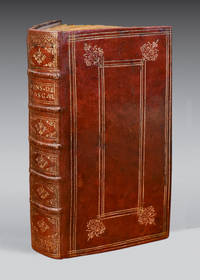
1670réf. LCS-A1The 1670 Pensées by Pascal bound in red morocco à la Duseuil of the period. Prestigious copy from the library of the master teacher of the Plessis-Sorbonne college the Abbé de Saint-André enriched with his handwritten ex-libris dated March 21 1698. "Labbé de St André. A Paris au Collège du Plessis Sorbonne l'an mil six cents nonante huit ce jourduy 21 mars". 12mo. Collation: 41 preliminary leaves 365 pages 10 leaves of table. Full red morocco covers decorated in the style of Duseuil richly decorated spine with raised bands gilt edges. Contemporary morocco binding. 148 x 82 mm. Precious edition of the Pensées printed in the year 1670 bound in red morocco of the period the copy of the Abbé de Saint-André master at the famous College du Plessis-Sorbonne in the year 1698. Copy belonging to the second of the four editions published in 1670 Brunet supplément II 167 gives it priority and calls it the original edition; Tchemerzine ranks it second calling it the first counterfeit from the library of the "Abbé de Saint-André master at the Collège du Plessis-Sorbonne A Paris the year 1698 this day March 21". This college was founded in 1317 by Geoffroy du Plessis-Balisson apostolic notary and secretary to Philippe le Long under the name Collège Saint-Martin-au-Mont. But it quickly came to be known as the Collège du Plessis. It was joined to the Sorbonne in 1646 and then took the name Plessis-Sorbonne. Its buildings are now occupied by the current Lycée Louis-le-Grand. The classical 19th-century bibliographers considered the present edition as the true original. Thus Deschamps in the Supplément de Brunet II-167 described it as: "Original edition; it consists of 41 preliminary leaves 365 pages and 10 leaves of table; the privilege granted to sieur Périer given in Paris on December 27 1666 says at the end: Completed printing for the first time January 2 1670; there is an errata on the verso." M. Petier was the first to carefully compare this edition with the unique copy of the 1669 edition preserved in the Bibliothèque Nationale; the two editions are essentially the same; the number of pages the ornaments and the typographic layout are identical; the differences are these: the title is not exactly the same; the 1669 copy lacks ecclesiastical approvals the privilege and the table ends at the word Charnel meaning the last nine leaves are missing; moreover the 1669 copy was not revised that is it did not undergo the deletions or changes likely demanded by the Archbishop of Paris. Two other editions appeared in the same year 1670. 1/ "A second counterfeit under the same date with identical collation has a slightly different title. The monogram of G. Desprez is replaced by the fleuron from the Provinciales quarto edition of 1657" Tchémerzine V 71. 2/ The true second edition of the Pensées this time with the errors corrected. The title is identical to that of the original edition but the collation differs: duodecimo of 39 leaves 358 pages numbered as 334 and 10 leaves. Among these four editions published in 1670 ours would occupy the second place in chronological order. It is extremely rare bound in morocco of the period. "Pascal remains unique not so much because he is 'one of the greatest intellects to have appeared' Paul Valéry but for his passion his momentum for that aggressiveness which seizes the reader's soul for those discoveries those surprises which he holds in store which astonish and confound the reader and make him discover within himself not only abysses but the meansor rather the only meansof crossing them." "As it was known that Pascal had planned to work on religion great care was taken after his death to collect all the writings he had made on that subject. They were found all together strung together in various bundles but without any order without any sequence. And all of it was so imperfect and so poorly written that it took immense effort to decipher them" says Étienne Périer in his preface. Pascal's friends Roannez Brienne and Étienne Périer ultimately decided to publish the fragments arranging them in a certain order grouping together the thoughts with related subjects merely "clarifying and embellishing" them. The result of this work was the 1670 edition. Copies of Pascal's Pensées printed in 1670 and bound in contemporary morocco are rare; one belonging to the first original edition of 1670 was sold for 230000 by Sotheby's 24 years ago Sotheby's December 5 2001; another from the Pierre Bérès collection trimmed and restored was sold for 120000 twenty years ago. Precious copy bound in decorated morocco of the period with superb provenance: "Labbé de St André Collège du Plessis-Sorbonne ce 21 mars 1698" The rise of Paris as the capital of France was supported by the development and influence of the University of Paris. It came into being during the 12th century as a result of the steady growth of the Parisian schools grouped on the Montagne Sainte-Geneviève. These schools provided an education preparing for three degrees: the baccalaureate grammar dialectic rhetoric the license arithmetic geometry astronomy music and the doctorate medicine canon law theology. By the end of the Middle Ages the University of Paris had become the largest cultural and scientific center in Europe attracting some 20000 students. Its reputation rested on the prestige of its teachers but also on its libraries whose richness was matched only by the papal library. The University of Paris was the cradle of the "second French humanism" in the 15th century and it was at the Sorbonne that the first printing press in France was installed in 1469 by the royal librarian Guillaume Fichet and the prior of the college Jean Heynlin. "The institution endowed with a significant library a chapel and dormitories intended for the comfort of its students was indeed associated with the faculty of theology and established itself permanently in the heart of medieval Paris. From century to century the college later known as 'la Sorbonne' played an increasingly important role in the life of the Kingdom of France actively participated in intellectual debate and tirelessly pursued its educational mission. In 1622 its illustrious principal and soon-to-be cardinal Richelieu seeking a place to house his own tomb undertook major renovations and began the construction of a chapel. This marked the beginning of a continuous modernization of the buildings as the University's reputation kept growing throughout Europe. In 1698 the Abbé de Saint-André master at the Collège du Plessis-Sorbonne inscribed his handwritten ex-libris on this copy of the 1670 Pensées bound in morocco of the period. FRANCAIS Les Pensées de Pascal de 1670 reliées en maroquin rouge à la Duseuil de l'époque. Prestigieux exemplaire provenant de la bibliothèque du maître enseignant du Plessis-Sorbonne l'abbé de Saint-André enrichi de son ex-libris manuscrit en date du 21 mars 1698. " Labbé de St André. A Paris au Collège du Plessis Sorbonne l'an mil six cents nonante huit ce jourduy 21 mars ". In-12. Collation : 41 feuillets liminaires 365 pages 10 feuillets de table. Plein maroquin rouge encadrement de filets à la Duseuil sur les plats dos à nerfs richement orné coupes décorées tranches dorées. Reliure en maroquin de l'époque. 148 x 82 mm. Précieuse édition des Pensées imprimée dès l'année 1670 reliée en maroquin rouge de l'époque l'exemplaire de l'abbé de Saint André maitre du célèbre collège du Plessis Sorbonne en l'année 1698. Exemplaire appartenant à la seconde des quatre éditions parues en 1670 Brunet supplément II 167 lui donne la priorité et la qualifie d'édition originale ; Tchemerzine la classe en seconde position la qualifiant de première contrefaçon provenant de la bibliothèque de l'abbé de Saint-André maître au collège du Plessis-Sorbonne A Paris l'an 1698 cejourdhuy 21 mars " Ce collège fut fondé en 1317 par Geoffroy du Plessis-Balisson notaire apostolique et secrétaire de Philippe le Long sous le nom de collège Saint-Martin-au-Mont. Mais il fut vite désigné sous le nom de collège du Plessis. Il fut uni à la Sorbonne en 1646 et prit alors le nom de Plessis-Sorbonne. Ses bâtiments sont occupés par l'actuel lycée Louis le Grand. Les bibliographes classiques du XIXe siècle considéraient la présente édition comme la première originale. Ainsi Deschamps dans le Supplément de Brunet II-167 la décrivait-il ainsi : " Edition originale ; elle se compose de 41 ff. limin. de 365 pp. et de 10 ff. de table ; le privilège délivré au sieur Périer donné à Paris le 27 décembre 1666 porte à la fin : Achevé d'imprimer pour la première fois le 2 janvier 1670 ; il y a un errata au verso. M. Petier le premier confronta minutieusement cette édition avec l'exemplaire unique de l'édition de 1669 que conserve la Bibliothèque Nationale ; les deux éditions n'en font qu'une ; le nombre des pages les fleurons les dispositions typographiques sont les mêmes ; il n'y a de différences que celles-ci : le titre n'est pas absolument le même ; l'exemplaire de 1669 n'a ni les approbations ecclésiastiques ni le privilège et la table finit au mot Charnel c'est-à-dire que les ix derniers ff. manquent ; de plus l'exemplaire de 1669 n'a pas été cartonné c'est-à-dire qu'il n'a pas subi les suppressions ou modifications qui furent exigées sans doute par l'archevêque de Paris ". Deux autres éditions virent le jour en cette même année 1670. 1/ " Une seconde contrefaçon sous la même date avec collation identique a un titre un peu différent. Le monogramme de G. Desprez y est remplacé par le fleuron des Provinciales éd. in-4 de 1657 " Tchémerzine v 71. 2/ La véritable seconde édition des " Pensées " avec cette fois les fautes corrigées. Le titre est identique à celui de l'édition originale mais la collation est différente : in-12 de 39 ff. 358 pp. chiff. 334 et 10 ff. Parmi ces quatre éditions parues en 1670 la notre occuperait la seconde place par ordre chronologique. Elle est infiniment rare reliée en maroquin de l'époque. " Pascal reste unique non pas tant parce qu'il est " une des plus fortes intelligences qui aient paru " Paul Valéry mais par sa fougue par son élan par cette agressivité qui empoigne l'âme du lecteur par ces découvertes ces surprise qu'il lui réserve qui l'étonnent qui le confondent et lui font découvrir en lui non seulement des abîmes mais les moyens ou plutôt l'unique moyen de les franchir. " " Comme l'on savait le dessein qu'avait Pascal de travailler sur la religion l'on eut un très grand soin après sa mort de recueillir tous les écrits qu'il avait faits sur cette matière. On les trouva tous ensemble enfilés en diverses liasses mais sans aucun ordre sans aucune suite. Et tout cela était si imparfait et si mal écrit qu'on a eu toutes les peines du mondes à les déchiffrer " dit Etienne Périer dans sa préface. Les amis de Pascal Roannez Brienne et Étienne Périer s'en tinrent finalement à l'édition des fragments en les disposant dans un certain ordre groupant celles des pensées qui avaient quelque affinité par le sujet se contentant de les " éclaircir et embellir ". Le résultat de ce travail fut l'édition de 1670. Les exemplaires des " Pensées " de Pascal imprimés en 1670 reliés en maroquin de l'époque sont rares ; l'un appartenant à la première édition originale de 1670 fut vendu 230 000 par Sotheby's il y a 24 ans Sotheby's 5 décembre 2001 ; le second provenant de la bibliothèque Pierre Bérès court de marges et restauré fut vendu 120 000 il y a 20 ans. Précieux exemplaire relié en maroquin décoré de l'époque à superbe provenance : " Labbé de St André Collège du Plessis-Sorbonne ce 21 mars 1698 " L'affirmation de Paris comme capitale de la France s'appuya sur le développement et le rayonnement de l'Université de Paris. Celle-ci vit le jour au cours du XIIe siècle au terme d'une croissance continue des écoles parisiennes regroupées sur la Montagne Sainte-Geneviève. Ces écoles dispensaient un enseignement qui préparait à trois grades : le baccalauréat grammaire dialectique rhétorique la licence arithmétique géométrie astronomie musique et le doctorat médecine droit canonique théologie. A la fin du Moyen-Âge l'Université de Paris était devenue le plus grand centre culturel et scientifique européen attirant quelque 20 000 étudiants. Elle tirait sa renommée du prestige de ses maitres mais également de ses bibliothèques dont la richesse n'avait d'égale que celle de la bibliothèque pontificale. L'Université de Paris fut le berceau du " second humanisme français " au xvè siècle et c'est à la Sorbonne que fut installée en 1469 la première imprimerie de France par le bibliothécaire du roi Louis xi Guillaume Fichet et le prieur du collège Jean Heynlin. " L'établissement doté d'une bibliothèque d'envergure d'une chapelle et de dortoirs destinés au confort de ses étudiants s'associe en effet à la faculté de théologie et s'implante durablement au cur du Paris médiéval. De siècle en siècle le collège que l'on nomme par la suite " la Sorbonne " joue un rôle grandissant dans la vie du royaume de France participe activement au débat intellectuel et poursuit sans relâche sa tâche d'enseignement. En 1622 son illustre proviseur et bientôt cardinal Richelieu à la recherche d'un lieu pour accueillir son propre tombeau entreprend de grands travaux de rénovation et débute alors la construction d'une chapelle. C'est le début d'une modernisation constante des bâtiments à mesure que la renommée de l'Université ne cesse de s'accroître dans toute l'Europe. En 1698 l'Abbé de Saint André maître au collège du Plessis-Sorbonne apposait son exlibris manuscrit sur cet exemplaire des Pensées de 1670 relié en maroquin de l'époque. Guillaume Desprez.