5439 risultati
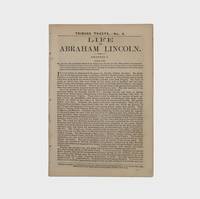
1860rif. 377692New York: Horace Greeley & Co 1860. 32pp. 8vo. Disbound. 32pp. 8vo. An early campaign biography of future president Abraham Lincoln written by John Locke Scripps of the New York Tribune. Scripps reports on the life of Abraham Lincoln in eight chapters touching on the major events of his life and career beginning with his early life and his move to Illinois through his transition from merchant to lawyer and legislator and covering his time in Congress with accounts of Lincoln's opposition to the Mexican-American War his support of the Wilmot Proviso and his involvement with the organization of the Republican Party. Wessen states that this edition was printed by Horace Greeley "from plates cast from the same type forms" as the 1860 Chicago edition which is considered the first published biography of Lincoln. An advertisement for the Tribune and the Tribune Almanac fills the bottom two thirds of the last page. "Most authentic of Lincoln campaign biographies" - Howes. Howes S247a "aa"; Managhan 79 note; Wessen Campaign Lifes of Abraham Lincoln 12 ref; Miles 418a; Abraham Lincoln: His Life in Print p. 85 Horace Greeley & Co unknown books
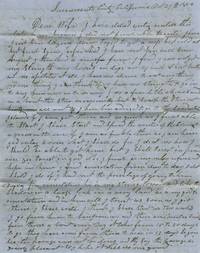
1850rif. BK0017Sacramento City California 1850. Autograph letter signed "Sam'l Locke" to his wife in Belfast Maine. 6 pp. Stampless folded letter with clear circular "SACRAMENTO CITY / CAL." postmark and "40" rate handstamp; manuscript notation recording receipt in Maine on December 19 1850. Light soiling; very good. A bleak California Gold Rush letter written during the 1850 Sacramento cholera epidemic by Samuel Locke a Maine emigrant suffering from prolonged fever and unable to regain his strength. Surrounded by sickness failed mining ventures violent crime and men too poor or ill to return home Locke plans to seek recovery in the Sandwich Islands while relying upon his religious faith for consolation. Locke had been ill since August and was now so weak that ordinary work exhausted him: "My limbs or legs are very weak short breath and no appetite at all. I have no desire to eat anything not one thing I can think of. I have no strength to go into any business or to do any. I do a few little chores round or about the store occasionally but to sweep the store it beats me all out . O how I long to get out of this place. Can't get any strength don't know as I can anywhere but I long to try." Friends advised him to spend the winter in the Sandwich Islands. He expected to travel first to San Francisco and then make the fifteen- to twenty-day passage to Hawaii though he feared that continued illness might leave him unable either to support himself there or return to Maine. He states that he will "trust in providence yes trust in God who I feel is my only refuge". Locke gives a grim account of California's climate and the spread of cholera through Sacramento claiming that the climate in California prevented the sick from recovering their strength as the "air is very light & bad middle of the day very hot and nights very cool." The previous week's report had stated forty dead but "nothing near all the cases were reported" with Locke himself knowing of several unreported cases personally. A local blacksmith died overnight after his companions borrowed Locke's syringe and "We can hardly see a healthy looking individual in the streets." The letter also records the uncertain fortunes of men from Locke's home region scattered through the mines. William Beckett and his partners had spent the summer constructing a mining dam had struck gold on the first day and then immediately "the dam was washed away so they lost all their summer's labor." Other acquaintances had moved to Kelsey's Bar the southern mines or Oregon or were preparing to return east by way of Panama. Some remained convinced that California would reward perseverance while others had "seen enough" after accomplishing nothing. Locke regarded success as largely accidental: "Thousands are here and in the mines who want to get home and cannot-not able to do seamen's duty and no money to pay but they have got to stay in the mines and do the best they can. Some it is true have been lucky. It is all luck. If they happen to hit a good place they do well." News that cholera had entered the mining districts increased his alarm. Locke feared especially for men living in tents as the rainy season approached with poor food and little protection from exposure. Sacramento itself was marked by nightly violence: "There are murders or robberies about every night. One man killed in front of our house a few nights ago. We heard him holler and heard the blows. Next morning he died. His head was dreadfully mangled." Locke closes with an emotional message to his wife and children. His health finances and prospects all appeared uncertain and he repeatedly asked his family and church to pray for him: "Tell the dear Children to be good and if they never see me again when I am gone they will have the satisfaction . of knowing they acted as thy Father requested . Pray for me ask the Church to pray for me indeed I know I have your prayers and you have mine often." A particularly bleak account of the human cost of the California Gold Rush documenting epidemic disease physical collapse failed mining schemes violent crime religious faith and the predicament of emigrants unable to escape California after their health and resources were exhausted. . unknown
1850rif. BK0017Sacramento City California 1850. Autograph letter signed "Sam'l Locke" to his wife in Belfast Maine. 6 pp. Stampless folded letter with clear circular "SACRAMENTO CITY / CAL." postmark and "40" rate handstamp; manuscript notation recording receipt in Maine on December 19 1850. Light soiling; very good. A bleak California Gold Rush letter written during the 1850 Sacramento cholera epidemic by Samuel Locke a Maine emigrant suffering from prolonged fever and unable to regain his strength. Surrounded by sickness failed mining ventures violent crime and men too poor or ill to return home Locke plans to seek recovery in the Sandwich Islands while relying upon his religious faith for consolation. Locke had been ill since August and was now so weak that ordinary work exhausted him: "My limbs or legs are very weak short breath and no appetite at all. I have no desire to eat anything not one thing I can think of. I have no strength to go into any business or to do any. I do a few little chores round or about the store occasionally but to sweep the store it beats me all out . O how I long to get out of this place. Can't get any strength don't know as I can anywhere but I long to try." Friends advised him to spend the winter in the Sandwich Islands. He expected to travel first to San Francisco and then make the fifteen- to twenty-day passage to Hawaii though he feared that continued illness might leave him unable either to support himself there or return to Maine. He states that he will "trust in providence yes trust in God who I feel is my only refuge". Locke gives a grim account of California's climate and the spread of cholera through Sacramento claiming that the climate in California prevented the sick from recovering their strength as the "air is very light & bad middle of the day very hot and nights very cool." The previous week's report had stated forty dead but "nothing near all the cases were reported" with Locke himself knowing of several unreported cases personally. A local blacksmith died overnight after his companions borrowed Locke's syringe and "We can hardly see a healthy looking individual in the streets." The letter also records the uncertain fortunes of men from Locke's home region scattered through the mines. William Beckett and his partners had spent the summer constructing a mining dam had struck gold on the first day and then immediately "the dam was washed away so they lost all their summer's labor." Other acquaintances had moved to Kelsey's Bar the southern mines or Oregon or were preparing to return east by way of Panama. Some remained convinced that California would reward perseverance while others had "seen enough" after accomplishing nothing. Locke regarded success as largely accidental: "Thousands are here and in the mines who want to get home and cannot-not able to do seamen's duty and no money to pay but they have got to stay in the mines and do the best they can. Some it is true have been lucky. It is all luck. If they happen to hit a good place they do well." News that cholera had entered the mining districts increased his alarm. Locke feared especially for men living in tents as the rainy season approached with poor food and little protection from exposure. Sacramento itself was marked by nightly violence: "There are murders or robberies about every night. One man killed in front of our house a few nights ago. We heard him holler and heard the blows. Next morning he died. His head was dreadfully mangled." Locke closes with an emotional message to his wife and children. His health finances and prospects all appeared uncertain and he repeatedly asked his family and church to pray for him: "Tell the dear Children to be good and if they never see me again when I am gone they will have the satisfaction . of knowing they acted as thy Father requested . Pray for me ask the Church to pray for me indeed I know I have your prayers and you have mine often." A particularly bleak account of the human cost of the California Gold Rush documenting epidemic disease physical collapse failed mining schemes violent crime religious faith and the predicament of emigrants unable to escape California after their health and resources were exhausted. . unknown books
1833rif. 191Ricardo Taylor 1833. Hardcover in half brown leather. Spine with light wear and golden applications. Book with stamp from the library of Barão de Muritiba. Ex libris of """"Sebastião Salviano"""". Essay on the True Origin Extension and End of Civil Government. Written in English by John Locke and Translated into Portuguese by João Oliveira de Carvalho Third Year Student of Canons Offered to the Portuguese Constitutions as Fundamental Principles for the Consolidation of the Constitutional Charter Dated April 29 1826. London Printed by Ricardo Taylor 1833. xxiv 227 pp. Ricardo Taylor hardcover
1696rif. BBO47LOCKE John: Some Thoughts Concerning Education London: A and J Churchill 1695. 8vo. 3742 pp.; brown spotted calf Third edition Newly Expanded First edition thus A and J Churchill hardcover
1696rif. BBO47LOCKE John: Some Thoughts Concerning Education London: A and J Churchill 1695. 8vo. 3742 pp.; brown spotted calf Third edition Newly Expanded First edition thus A and J Churchill hardcover books
1706rif. 247368London: Churchill 1706. First. hardcover. very good. 4 336 pages. 8vo bound in contemporary full brown paneled brown calf with raised bands light edgewear and joints neatly repaired; front endpaper mended at corner; charming contemporary inscription on verso of title page and a handful of pages with inked marginalia otherwise clean. London: W. B. for A. and J. Churchill 1706. First edition. A very good copy sturdy and attractive. First edition of Locke's Posthumous Works published by his literary executors and featuring the first publication of several essays: Of the Conduct of the Understanding once planned as "the largest chapter of my Essay on Humane Understanding" and Discourse of Miracles and his unfinished Fourth Letter on Toleration and An Examination of P. Malebranche's Opinion. --Yolton 299; Pforzheimer 609; Attig 724. Churchill unknown
1706rif. 247368London: Churchill 1706. First. hardcover. very good. 4 336 pages. 8vo bound in contemporary full brown paneled brown calf with raised bands light edgewear and joints neatly repaired; front endpaper mended at corner; charming contemporary inscription on verso of title page and a handful of pages with inked marginalia otherwise clean. London: W. B. for A. and J. Churchill 1706. First edition. A very good copy sturdy and attractive. First edition of Locke's Posthumous Works published by his literary executors and featuring the first publication of several essays: Of the Conduct of the Understanding once planned as "the largest chapter of my Essay on Humane Understanding" and Discourse of Miracles and his unfinished Fourth Letter on Toleration and An Examination of P. Malebranche's Opinion. --Yolton 299; Pforzheimer 609; Attig 724. Churchill unknown books
1714rif. 956F15London: John Churchill and Sam. Manship 1714 . First edition. Leather. Fair. 13.5" by 9". None. The first edition of volumes I and III of the complete works of philosopher John Locke one of the most influential figures of the Enlightenment period. The first edition of the collected works of John Locke.Present here are volumes I and III only of this scarce first edition. Lacking volume II.The collected works of English philosopher physician and Enlightenment thinker John Locke frequently referred to as the 'Father of Liberalism' and recognised as one of the first of the British empiricists.Essays and writings on numerous subjects - including a discussion of interest letters concerning toleration and the reasonableness of Christianity - are included in these volumes alongside his posthumous works and a number of personal letters. With a lengthy index to the rear of each volume. ESTC T128627Volume I with the collation: A2 a2 a-g2 B-4G4 4H2. Volume I lacks the engraved frontispiece and engraved funerary epitaph but the text leaves are complete.Volume I also lacks 'An account of the life and writings of John Locke Esq; The third edition enlarged' London: printed for J. Clarke and E. Curll 1714 and 'The remains of John Locke Esq; . Publish'd from his original manuscripts' London: printed for E. Curll 1714 as called for. These two works which should each retain an individual title page and have separate paginations and registers consist of twenty-nine leaves.Volume III with the collation: A2 1 B-R2 S-5A4 5B-5D2 5E. Volume III lacks the final index leaf being leaf 5E2.With the United College Bradford library label to each front pastedown.With an advertisement leaf to volume I following the title page as called for.Sam. Manship's name does not appear in the imprint of volume III as called for.Two volumes of the scarce first edition of the works of one of the most important and enduring figures of Western philosophy.Locke's philosophy of mind is viewed as the origin of modern conceptions of personal identity and the psychology of the self influencing the work of later philosophers such as Rousseau Hume and Kant. Volume I in a full calf binding volume III in panelled calf. Significant losses of calf to volume I back strip. All boards detached but present with both volumes lacking endpapers. Major losses of calf to rear board of volume I. Significant rubbing to back strip and board perimeters of volume III. Bookplates to front pastedowns. Volume I title page detached but present. Title page and following two leaves of volume II remaining attached to front board and separated from rest of text block. Otherwise internally firmly bound. Pages of volume I bright with light marks to gutters of first third of the work and to fore edge of index leaves to rear. Handling marks to fore edges of leaves throughout. Significant handling marks to first and last few leaves of volume III with pages otherwise generally bright and clean. The odd marginal pencil notation to first third of volume III. Significant closed tear to fore edge of leaf 4B major closed tears to perimeters of 5E2 of volume III. Lacking volume I frontispiece and engraved funerary epitaph and final leaf of volume III leaf 5E2. Volume I lacking twenty-nine further leaves 'An account of the life and writings of John Locke' and 'The remains of John Locke'. Fair John Churchill, and Sam. Manship hardcover
1700rif. 49185xl 438 pages index 11 & errata 1 at rear portrait frontispiece of the author signed on the reverse of frontispiece by J. F. Pettit and James Cardinal 1756 of Earls Colne Essex also signed by James Cardinal at head of title page Published by Awnsham and John Churchil hardcover
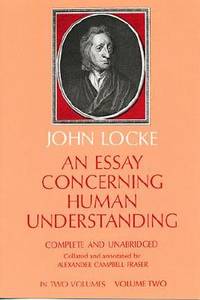
rif. SKU1024102Dover Publications 1959-06-01. Paperback. Like New. 5x1x8. Like New Inside and Outside. Clean and crisp pages w/no markings! You will be pleased. Excellent book! z1s185C Some very minor wear on cover. Fast Shipping Dover Publications paperback
1931rif. 205937New York: Harmon Foundation Incorporated 1931. First edition. Softcover. 47 pages. Exhibition catalog for a show that ran February 16 - 28 1931. Features text contributions by AA. Schomburg Alain Locke Ernestine Rose James V. Herring and Alon Bement. Includes a checklist brief biographies and illustrations of works by: James Lesene Wells Lillian A. Dorsey Sargent Claude Johnson Albert Alexander Smith Archibald John Motley Jr. James Latimer Allen Malvin Gray Johnson William Arthur Cooper Richmond Barthe and numerous others. A near fine copy in stapled wrappers. A very nice copy of an early catalog on the work of African American artists. Uncommon. Harmon Foundation Incorporated unknown
1931rif. 205937New York: Harmon Foundation Incorporated 1931. First edition. Softcover. 47 pages. Exhibition catalog for a show that ran February 16 - 28 1931. Features text contributions by AA. Schomburg Alain Locke Ernestine Rose James V. Herring and Alon Bement. Includes a checklist brief biographies and illustrations of works by: James Lesene Wells Lillian A. Dorsey Sargent Claude Johnson Albert Alexander Smith Archibald John Motley Jr. James Latimer Allen Malvin Gray Johnson William Arthur Cooper Richmond Barthe and numerous others. A near fine copy in stapled wrappers. A very nice copy of an early catalog on the work of African American artists. Uncommon. Harmon Foundation Incorporated unknown books
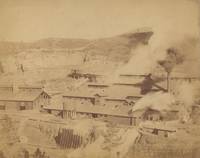
1890rif. List2450Deadwood: H.R. Locke 1890. Albumen photographs measuring 9 x 7 inches on larger mounts. Very good contrast some chips and wear to mounts. Very Good. A group of four photographs by Henry Robinson Locke who operated a studio in Deadwood South Dakota in the early statehood years. He photographed the Black Hills region. This collection of four photographs shows a gold mill in Deadwood a cyanide mill in Deadwood and two views of Lead City which was the home of the Homestake Mining Company during the period and continued to be a center for natural resource extraction for several decades following the initial Gold Rush period of the 1870s which brought the first wave of Euro-American settlers to the area. H.R. Locke unknown
1890rif. List2450Deadwood: H.R. Locke 1890. Albumen photographs measuring 9 x 7 inches on larger mounts. Very good contrast some chips and wear to mounts. Very Good. A group of four photographs by Henry Robinson Locke who operated a studio in Deadwood South Dakota in the early statehood years. He photographed the Black Hills region. This collection of four photographs shows a gold mill in Deadwood a cyanide mill in Deadwood and two views of Lead City which was the home of the Homestake Mining Company during the period and continued to be a center for natural resource extraction for several decades following the initial Gold Rush period of the 1870s which brought the first wave of Euro-American settlers to the area. H.R. Locke unknown books
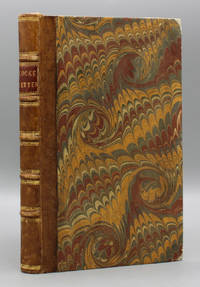
1697rif. 11458London: Printed by H. Clark for A. and J. Churchill. 1697 First edition. Rebound in quarter calf over marbled boards. Octavo. Very good. Printed by H. Clark, for A. and J. Churchill.. hardcover
1697rif. 11458London: Printed by H. Clark for A. and J. Churchill. 1697 First edition. Rebound in quarter calf over marbled boards. Octavo. Very good. Printed by H. Clark, for A. and J. Churchill.. hardcover books
1894rif. 52727Deadwood South Dakota: Photographed by H. R. Locke 1894. 1894. PHOTOGRAPH CUSTER. 6 1/2" x 8 5/8" photograph mounted on a 10" x 12" photo picture board. A photograph of Custer's Monument located near Crow Agency Montana along the Burlington & Missouri River Valley Railroad B. & M. R. R. Photographed and copyrighted by H. R. Locke in 1894 Deadwood South Dakota. It serves as a memorial to those who fought in the battle of Little Big Horn in 1876. Henry Robinson Locke 1867 - 1927 was an American photographer in the 19th and 20th century who photographed the Wild West. He ran a studio in Deadwood South Dakota. He photographed the Black Hills area Deadwood Crow Indians farmers miners railroads but also Calamity Jane 1885 and the Little Big Horn battlefield 1894. The picture board has light wear to the corners and extremities else a very good presentation. Photographed by H. R. Locke, 1894. unknown
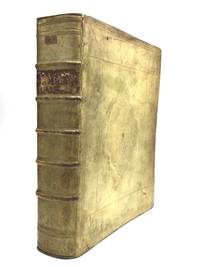
1700rif. 76523Amsterdam: Chez Henri Schelte 1700. First Edition. Hardcover. The first edition in French of this classic of human thought. Locke's monumental An Essay Concerning Human Understanding 1689 is one of the first great defenses of modern empiricism and concerns itself with determining the limits of human understanding in respect to a wide spectrum of topics. Regarded as among the most important Enlightenment thinkers Locke 1632-1704 greatly influenced Voltaire and Jean-Jacques Rousseau and many Scottish Enlightenment thinkers as well as the American Revolutionaries. Quarto: 56 936 22 p. with an engraved frontispiece portrait. Full period vellum binding with a red morocco spine label five raised bands and decorative blind stamping. Light spotting to the endpapers with a small bookplate to the front pastedown. The front joint is just starting. A bit of bowing to the boards which are stained and soiled more so along the spine and extremities with some scuffing to the spine label. Chez Henri Schelte hardcover
rif. 12good book has been read has wear on spine volume one some tears on pages rear flyleaf volume one has several small holes includes picture of Locke. this set is part of the DNA of being an American. Thomas Jefferson owned the 1740 edition and used some of the ideas in the US constitution. This set was owned by Felix Cohen who codified American Indian Law. Lcoke's ideas and Jefferson's use of them continue throught the work Of Felix Cohen. hardcover
1925rif. 86359New York: Albert & Charles Boni 1925. Second printing. Hardcover. Small ownership stamp to title-page and front endpaper with further stamp and ink name to half-title; some edge-wear to boards slight fraying to spine at head. No jacket. Illustrated throughout with 27 full-page illustrations and 37 in-text of which 50 are monochrome and 14 are colour-printed a further 7 illustrated music scores of which 3 are full-page. First edition second printing. Large 8vo. Original cloth-backed boards. A landmark of the Harlem Renaissance representing the creative endeavours of the New Negro Movement. The anthology portrays the African-American community's pursuit of civil rights and a new diverse identity offering a compelling reflection of the era's social and artistic transformation. Albert & Charles Boni hardcover
1780rif. 43514A Amsterdam, chez Barthélémi Vlam, 1780. In-12 de XVIII-(2)-328 pp., maroquin rouge, dos lisse orné, triple filet d'encadrement sur les plats, dentelle intérieure, tranches dorées (Derome le Jeune).
1995rif. 315699Easton Press 1995. Hardcover. Near Fine. Twelve volumes in uniform bindings of full bright red leather stamped in gilt spine titles in black labels. No corners or spine ends bumped or pushed. All have an unused bookplate laid in. Three have no flaws whatsoever to the page edge gilt eight have very minor almost imperceptible flaws Plato has two white spots on the top edge. This set will be remarkably attractive on your shelf. Please request a shipping quote before ordering. Easton Press hardcover
1710rif. 6255London: A. and J.Churchill and Samuel Manship 1710. Sixth Edition. Sixth Edition. Two volumes 8vo. 32 371 1: 16 340 28 pages additional blank leaves at front and rear of both volumes. Contemporary paneled calf with central patterning blindstamped design work on both covers. Portrait frontispiece to volume one none to volume two as called for early owner's name on recto of frontis and fly leaf of second volume bearing the date 1712. Wear to spines lacking spine labels. This appears to be a particularly scarce edition with none other bearing the date 1710 found in commerce. A. and J.Churchill and Samuel Manship unknown
1710rif. 6255London: A. and J.Churchill and Samuel Manship 1710. Sixth Edition. Sixth Edition. Two volumes 8vo. 32 371 1: 16 340 28 pages additional blank leaves at front and rear of both volumes. Contemporary paneled calf with central patterning blindstamped design work on both covers. Portrait frontispiece to volume one none to volume two as called for early owner's name on recto of frontis and fly leaf of second volume bearing the date 1712. Wear to spines lacking spine labels. This appears to be a particularly scarce edition with none other bearing the date 1710 found in commerce. A. and J.Churchill and Samuel Manship unknown books