5 314 résultats
1983réf. 92399Tampa Florida: University of Tampa 1983. Softcover. Near Fine. First edition of the premiere triple issue of this magazine; this issue devoted to Fred Chappell. With contributions from Gibbons Ruark William Pitt Root Jack Matthews among others. Spine slightly sunned top corner a bit bumped bottom corner of back cover a little worn but still a near fine copy in wrappers. University of Tampa unknown books
1983réf. 94806Tampa FL: Abatis 1983. Softcover. Fine. First edition of this issue dedicated to Leo Connellan. Covers a bit sunned otherwise a fine copy in printed green wrappers. With poems by Connellan and contributions by Richard Eberhart William Stafford David Ignatow Hayden Carruth among others. OCLC locates no copies. Abatis unknown books
1930réf. 75832New York: Dodd Mead & Company 1930. Hardcover. Fine/Very Good. First edition. Fine in an attractive very good dustwrapper with a long shallow chip at the top of the rear panel and a bit of rubbing at the spine. English painter and wine collector goes to a French town to paint the mayor who is also a winemaker. Dodd, Mead & Company hardcover books
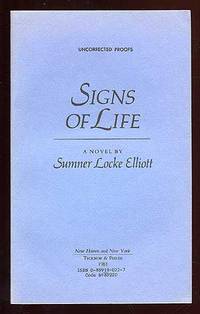
1981réf. 50912New York: Ticknor & Fields 1981. Softcover. Fine. First edition Uncorrected proof with slip laid in. Fine in wrappes. Ticknor & Fields unknown books
1930réf. 59736New York: Dodd Mead & Company 1930. Hardcover. Fine/Very Good. First edition. Very slight spotting to the boards else fine in attractive very good dustwrapper with two modest chips. English painter and wine collector goes to a French town to paint the mayor who is also a winemaker. Dodd, Mead & Company hardcover books
1923réf. 81593Cambridge: Harvard University Class of 1908 1923. Hardcover. Very Good. Class report. Black cloth gilt. A bit of wear to the cloth at the spine ends very good. A survey of the Class of 1908 including autobiographical statements from most of the class members. This was poet John Hall Wheelock's copy and is Signed by him by his statement. It also includes autobiographical statements from author Van Wyck Brooks African-American scholar and author Alain Locke historian Samuel Eliot Morison and world-renowned cardiologist Paul Dudley White. (Harvard University Class of 1908) hardcover books
1948réf. 81597Cambridge: Produced for the Class by the Harvard University Printing Office 1948. Hardcover. Near Fine. Class report. Red cloth gilt. Fine. A survey of the Class of 1908 including autobiographical statements by the class members. This was poet John Hall Wheelock's copy and is Signed by him by his statement. It also includes autobiographical statements from author Van Wyck Brooks African-American scholar and author Alain Locke historian Samuel Eliot Morison and world-renowned cardiologist Paul Dudley White. Produced for the Class by the Harvard University Printing Office hardcover books
1933réf. 81596Cambridge Massachusetts: Privately Printed for the Class by the Cosmos Press 1933. Hardcover. Near Fine. Class report. Red cloth gilt. Light wear near fine. A survey of the Class of 1908 including relatively long autobiographical statements by the class members. This was poet John Hall Wheelock's copy and is signed by him by his statement. It also includes autobiographical statements from author Van Wyck Brooks African-American scholar and author Alain Locke historian Samuel Eliot Morison and world-renowned cardiologist Paul Dudley White. This issue of the class report also includes photos of the students as undergraduates and as they were when this volume was printed. Privately Printed for the Class by the Cosmos Press hardcover books
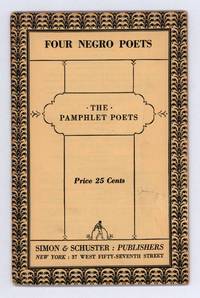
réf. 9607New York: Simon & Schuster 1927. 8vo 8.325" x 5.5" original staple-bound printed wrappers. 31 pp. CONDITION: Very good two faint vertical creases to front wrapper and document tape repair at verso of front wrapper along 2" tear at right edge slight toning and wear to spine one small spot of soiling to rear wrapper contents very good. First edition of this Pamphlet Poets series collection of poems by Countee Cullen Langston Hughes Jean Toomer and Claude McKay edited by the "dean" of the Harlem Renaissance Alain Locke. Lauding Toomer Cullen Hughes and McKay as "modernists among moderns" Locke introduces this collection of their previously-published poems as "A reflection of Negro experience true to its idiom of emotion and circumstance." He highlights McKay's "proud spirit.linking our newly insurgent race pride and consciousness with the rebel poetry of radical thought" Toomer's "probing into the sub-soil of Southern life" Cullen's "polished lyricism.and exuberant flow of an awakening Negro life" and Hughes's "democratic sweep and universality." Biographies of the poets appear on the final page. Simon and Schuster began the "Pamphlet Poets" series just two years after the publishing house was founded intending the 25-cent volumes as affordable introductions to poetry. The series was published for just three years and reached sixteen titles including a volume devoted solely to Langston Hughes also introduced by Locke. Scarce in the trade: no examples recorded in Rare Book Hub. New York: Simon & Schuster, [1927] unknown books
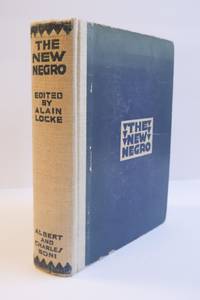
1925réf. 1405855New York: Albert and Charles Boni 1925. First Edition. Hardcover. Octavo xviii 446 pages. In Very Good condition. Bound in publisher's quarter tan cloth and navy blue paper boards with blue lettering to spine. General shelf wear with moderate to heavy rubbing along extremities. Some sunning and scratching to boards. Fading to red dye on top edge of textblock. With pink pictorial endpapers. Previous bookseller's sticker adhered to rear pastedown. Mild tearing to fore edges of pages xv-xviii. Light age toning with minor penciling scattered throughout. Shelved in Case 1. "The New Negro: An Interpretation" is an anthology of fiction poetry and essays on African-American and African art and literature. The title lent itself to The New Negro Movement a contemporary name for what is now commonly known as the Harlem Renaissance. Editor Alain LeRoy Locke was a leading figure in the Harlem Renaissance and a professor at HBCU Howard University in Washington DC. 1405855. Shelved Dupont Bookstore. Albert and Charles Boni hardcover books
1922réf. 136800New York: Dodd Mead 1922. Hardcover. Very Good/Good. First edition. Very good or better in good plus dustwrapper. Hardcover First Edition. Dustwrapper has small chips at spine ends soiling. Story of a young woman and a famous author. Basis for the 1924 silent movie A Fool's Awakening starring Mary Alden and Lionel Barrymore. Scarce in dustwrapper. Dodd, Mead hardcover books
1956réf. 13317Chicago IL: Gateway Editions 1956. First Paperback Edition. Original Wraps. Very Good in Wraps. First Paperback Edition. Original Wraps. Underlining by Oliver Sacks. Dr. Sacks often made comments in the margins or had conversations with the author in the text. From the library of Dr. Oliver Sacks the renowned neurologist author and educator. He was in his life celebrated for his contributions to the understanding of the human brain and his ability to communicate complex scientific concepts to a broader audience. In doing so he highlighted the profound impact of neurological disorders on human identity and experience. His library is a reflection of this remarkable polymath's questing mind. Shelfwear/toning chipping else tight bright and unmarred. Pictorial wrappers. 8vo. xiii 368pp. Illus. b/w. All underlining emphasis and notations are in the hand of Dr. Oliver Sacks. Gateway Editions unknown books
1700réf. 11172Amsterdam: Chez Henri Schelete 1700. French translated Edition Fourth. Full Calf. Very Good. French translated Edition Fourth. Full Calf. Translation to English: Philosophical Essay Concerning Human Understanding or We Show What is the Extent of our Certain Knowledge and the Way in which We Achieve it. Translated from the English of Mr. Locke by Pierre Coste. On the Fourth Edition revised corrected and enlarged by the Author. Original 18th Century Edition. First French translation by Pierre Coste 1668-1747 of Locke's 1632-1704 philosophical work first published in 1690. Pierre Coste was a French theologian translator and writer. Born in Uzès France to Protestant parents he moved to England via Switzerland and Holland after the Revocation of the Edict of Nantes in 1685. Acknowledgments from Simon von Beaumont statesman. Complete detachment on front board starting rear; minimal head and tail wear chipping rubbing to boards minor foxing evidence of dampstaining else very good. Full calf gilt titling/edging/decorations tall 8vo 936 pp. table ornaments marbled edge. In French. Chez Henri Schelete unknown books
1884réf. 3565Boston: C.H. Woodman & Co 1884. First Edition. Hardcover. Very Good. No DJ. First Edition. Hardcover. Includes at rear an ad for the "'American' or Thomson-Houston System of Electric Lighting." and makes the claim that: "A Central Lighting Station for supplying Electric Lights for Old Orchard Beach was built here last Summer with a capacity or 100 lights 50 of which were distributed along the beach front making The Most Perfect Display of Electric Lights on any Beach along the Atlantic Coast." Williamson 5531. Overall a handsome copy of this scarce volume. Light shelf/edge wear focused at head heel and tips light toning at spine and endpages small tear at mount point of fold-out plate else tight bright and unmarred. Rust cloth boards gilt lettering in blind decorative elements frontispiece tissueguard. 12mo. 103pp. plus 12 pages of ads throughout and at end. Illus. color and b/w plates. Chromolithographic plates frontispiece and 22.5 inch by 9.75 inch color folding plate "Balloon View of Saco Bay". C.H. Woodman & Co hardcover books
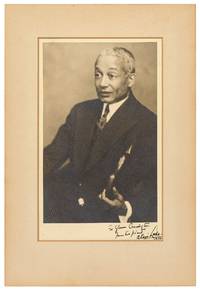
1935réf. 607237New York: Allen 1935. Unbound. Fine. Gelatin silver portrait photograph. Measures approximately 5" x 8" mounted in a contemporary mat. Photographer's name embossed in blind in lower margin. Unexamined out of the mat faint toning on mat the photograph appears fine. The seated Locke pictured in a suit holding a book or portfolio. Neatly Inscribed by Locke in the bottom margin to a noted collector and denizen of the Harlem Renaissance: "For Glenn Carrington from his friend Alain Locke. 1935." Locke was the college mentor of the Virginia-born Carrington a gay African-American man who was a noted collector of books particularly by African-Americans and a valued associate of the Harlem Renaissance group that included Langston Hughes Countee Cullen Bruce Nugent Claude McKay and the other gay and bi-sexual black authors who revolved around Locke. Allen unknown books
1980réf. 624049London: Ferret 1980. Hardcover. Very Good/Very Good. First edition. Quarto. 246pp. Modest foxing on page edges boards slightly bowed very good in a very good dust jacket with a small tear and moderate edgewear. Books from Locke's own extensive collection with an emphasis on interplanetary tales. One of 500 copies. Ferret hardcover books
1941réf. 628759New York: Pathway Press 1941. Hardcover. Good. First edition thus "Centenary Memorial Subscribers' Edition" with a new foreword by Alain Locke. Containing the Introduction by George L. Ruffin from the 1881 first edition. Illustrated by African-American artist Carl Gibson Hill. Large octavo. xxx 695pp. Bound in publisher's red buckram with faded gilt-stamped spine title. Ex-library with the usual markings blue ink blotch along the topedge on front endpapers owner name not Samuel Wright penned on front fly spine and edges sunned thus a good only copy. This is copy number 71 for Subscriber Mr. Samuel Wright. Pathway Press hardcover books
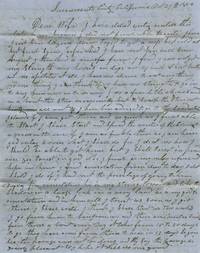
1850réf. BK0017Sacramento City California 1850. Autograph letter signed "Sam'l Locke" to his wife in Belfast Maine. 6 pp. Stampless folded letter with clear circular "SACRAMENTO CITY / CAL." postmark and "40" rate handstamp; manuscript notation recording receipt in Maine on December 19 1850. Light soiling; very good. A bleak California Gold Rush letter written during the 1850 Sacramento cholera epidemic by Samuel Locke a Maine emigrant suffering from prolonged fever and unable to regain his strength. Surrounded by sickness failed mining ventures violent crime and men too poor or ill to return home Locke plans to seek recovery in the Sandwich Islands while relying upon his religious faith for consolation. Locke had been ill since August and was now so weak that ordinary work exhausted him: "My limbs or legs are very weak short breath and no appetite at all. I have no desire to eat anything not one thing I can think of. I have no strength to go into any business or to do any. I do a few little chores round or about the store occasionally but to sweep the store it beats me all out . O how I long to get out of this place. Can't get any strength don't know as I can anywhere but I long to try." Friends advised him to spend the winter in the Sandwich Islands. He expected to travel first to San Francisco and then make the fifteen- to twenty-day passage to Hawaii though he feared that continued illness might leave him unable either to support himself there or return to Maine. He states that he will "trust in providence yes trust in God who I feel is my only refuge". Locke gives a grim account of California's climate and the spread of cholera through Sacramento claiming that the climate in California prevented the sick from recovering their strength as the "air is very light & bad middle of the day very hot and nights very cool." The previous week's report had stated forty dead but "nothing near all the cases were reported" with Locke himself knowing of several unreported cases personally. A local blacksmith died overnight after his companions borrowed Locke's syringe and "We can hardly see a healthy looking individual in the streets." The letter also records the uncertain fortunes of men from Locke's home region scattered through the mines. William Beckett and his partners had spent the summer constructing a mining dam had struck gold on the first day and then immediately "the dam was washed away so they lost all their summer's labor." Other acquaintances had moved to Kelsey's Bar the southern mines or Oregon or were preparing to return east by way of Panama. Some remained convinced that California would reward perseverance while others had "seen enough" after accomplishing nothing. Locke regarded success as largely accidental: "Thousands are here and in the mines who want to get home and cannot-not able to do seamen's duty and no money to pay but they have got to stay in the mines and do the best they can. Some it is true have been lucky. It is all luck. If they happen to hit a good place they do well." News that cholera had entered the mining districts increased his alarm. Locke feared especially for men living in tents as the rainy season approached with poor food and little protection from exposure. Sacramento itself was marked by nightly violence: "There are murders or robberies about every night. One man killed in front of our house a few nights ago. We heard him holler and heard the blows. Next morning he died. His head was dreadfully mangled." Locke closes with an emotional message to his wife and children. His health finances and prospects all appeared uncertain and he repeatedly asked his family and church to pray for him: "Tell the dear Children to be good and if they never see me again when I am gone they will have the satisfaction . of knowing they acted as thy Father requested . Pray for me ask the Church to pray for me indeed I know I have your prayers and you have mine often." A particularly bleak account of the human cost of the California Gold Rush documenting epidemic disease physical collapse failed mining schemes violent crime religious faith and the predicament of emigrants unable to escape California after their health and resources were exhausted. . unknown books
1927réf. 616800New York: The Arts Publishing Corporation 1927. Softcover. Very Good. Volume 11 Number 2. Quarto. iv 57-110 v-xii ads pp. Wrappers worn and soiled with a tiny bit of loss at the spine ends corners gently bumped very good. Prints Alain Locke's illustrated 11-page essay "A Collection of Congo Art" an article on the Ethnological Museum of Berlin and a 2-page essay on painting musculature by Thomas H. Benton among other material. The Arts Publishing Corporation unknown books
1862réf. 39080Augusta Maine 1862. Folio broadside 6-1/2" x 31." Printed in two columns. Old folds a few fox spots at the bottom Very Good. This rare Song emphasizes McClellan's and the Union's military achievements in the West against the "Merrimac" "old Beaury" Stonewall Jackson and in New Orleans. McClellan Foote Ericsson Burnside Porter Farragut are noted as "our man" but especially McClellan. The song is in nine verses above the copyright entry. Beneath the copyright a second rendering of verses 6 and 7 is printed with different words. The first rendering of verses 6 and 7 discuss "Old Jackson" and Island No. 10 respectively. In the second verse 6 "Old Burnside called at Roanoke." The second verse 7 excoriates "Old Floyd the thief and boasting Wise." Not in Wolf Sabin the Levy Collection or LCP. Not at AAS. OCLC 37243538 1- Brown as of February 2023. unknown books
1741réf. 2350909London: Printed for C. Hitch in Pater-noster-Row; J. Pemberton in Fleetstreet; J. Beecroft in Lombard-Street; and S. Symon in Cornhill 1741. Twelfth Edition. Full-Leather. Very Good/No Jacket. Twelfth edition. Spines a bit faded corners rubbed with minor loss bookplate removal marks on front endpaper of each volume minor pencil marginalia. 1741 Full-Leather. iv 26 372; xiv 340 27 pp. 8vo. Contemporary full calf red morocco spine labels five raised spine bands gilt titles and rules with decorations in compartments. First published in 1689 this is a foundational work in the influential British school of empiricism of which Locke was among the leading proponents. Empirical philosophy argued that knowledge stemmed from subjective experience a posteriori rather than the operation of objective reason a priori. As such this work contains commentary on how the formation of ideas relates to sensation and perception. This edition includes an extensive index. Printed for C. Hitch in Pater-noster-Row; J. Pemberton in Fleetstreet; J. Beecroft in Lombard-Street; and S. Symon in Cornhill hardcover books
1735réf. 2346391Edinburgh: Mundell & Son; and J. Mundell 1735. Eleventh Edition. Full-Leather. Good/No Jacket. 1735 eleventh edition. Three volumes bound in two. Large discolored area on rear board of second volume a few spots on boards otherwise evidence of repair along joints of both spines corners a bit rubbed a few pages lightly foxed ink names on title page of each volume C.J. Forbes Florence; Tho. Storer. xxxii 372; xvi 340 27 pp. 8vo. Contemporary full calf black and red morocco spine labels five raised spine bands gilt titles and rules with decorations in compartments speckled edges and marbled endpapers. First published in 1689 this is a foundational work in the influential British school of empiricism of which Locke was among the leading proponents. Empirical philosophy argued that knowledge stemmed from subjective experience a posteriori rather than the operation of objective reason a priori. As such this work contains commentary on how the formation of ideas relates to sensation and perception. This edition includes an extensive index. Mundell & Son; and J. Mundell hardcover books
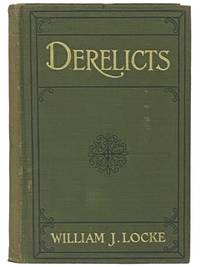
1897réf. 2335884New York: A.L. Burt Company 1897. Reissue. Hard Cover. Good/No Jacket. Reissue. Spine faded edges foxed. 1897 Hard Cover. 413 pp. Carrying within him the humiliation of imprisonment an ex-convict struggles to earn a meager living. A.L. Burt Company hardcover books
1956réf. 41318London: Oxford University Press. Good with no dust jacket. 1956. Reprint. Cloth. A Reprint in Good condition; Abridged and edited by A. S. Pringle-Pattison; 12mo; 380 pages; FSA . Oxford University Press hardcover books
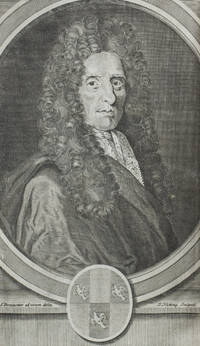
1716réf. 42019London: J. Churchill Vol. 1; A. and J. Churchill Vol. 2 1716. Seventh Edition with large Additions. Hardcover. fair to vg. Octavo 8 x 5". 32 372 1; 16 340 25 index 1pp. Contemporary full calf with modern white lettering on spine. Raised bands. Previous owner's gift inscription on front free endpaper: "To the Edinburgh Academical Club This Book Is Presented By One of its Original Members John M. Balfour. 1829." Engraved frontispiece portrait of John Locke by J. Nutting after a painting by S. Brounower. Title page for each volume. Seventh and enlarged edition of John Locke's Essay "Concerning Human Understanding" a philosophical landmark originally published in 1689 although dated 1690.5 One of the principal sources of empiricism in modern philosophy this essay presents a detailed systematic philosophy of mind and thought and wrestles with fundamental questions about how we think and perceive and it even touches on how we express ourselves through language logic and religious practices. In the introduction entitled 'The Epistle to the Reader' Locke describes how he became involved in his current mode of philosophical thinking. He relates an anecdote about a conversation with friends that made him realize that men often suffer in their pursuit of knowledge because they fail to determine the limits of their understanding. The Essay is divided into four books two per volume: First volume: - Book I is devoted to an attack on nativism or the doctrine of innate ideas. Locke allowed that some ideas are in the mind from an early age but argued that such ideas are furnished by the senses starting in the womb: for instance differences between colors or tastes. If we have a universal understanding of a concept like sweetness it is not because this is an innate idea but because we are all exposed to sweet tastes at an early age. One of Locke's fundamental arguments against innate ideas is the very fact that there is no truth to which all people attest. He took the time to argue against a number of propositions that rationalists offer as universally accepted truth for instance the principle of identity pointing out that at the very least children and idiots are often unaware of these propositions. - Book II: Whereas Book I is intended to reject the doctrine of innate ideas proposed by Descartes and the rationalists Book II explains that every idea is derived from experience either by sensation - direct sensory information - or reflection - "the perception of the operations of our own mind within us as it is employed about the ideas it has got". Furthermore Book II is also a systematic argument for the existence of an intelligent being: "Thus from the consideration of ourselves and what we infallibly find in our own constitutions our reason leads us to the knowledge of this certain and evident truth that there is an eternal most powerful and most knowing being; which whether any one will please to call God it matters not!" Second volume: - Book III focuses on words. Locke connects words to the ideas they signify claiming that man is unique in being able to frame sounds into distinct words and to signify ideas by those words and then that these words are built into language. Chapter ten in this book focuses on "Abuse of Words." Here Locke calls out metaphysicians for making up new words that have no clear meaning. He also criticizes the use of words which are not linked to clear ideas and to those who change the criteria or meaning underlying a term. Thus he uses a discussion of language to demonstrate sloppy thinking. Locke followed the Port-Royal Logique 1662 in numbering among the abuses of language those that he calls "affected obscurity" in chapter 10. Locke complains that such obscurity is caused by for example philosophers who to confuse their readers invoke old terms and give them unexpected meanings or who construct new terms without clearly defining their intent. Writers may also invent such obfuscation to make themselves appear more learned or their ideas more complicated and nuanced or erudite than they actually are. - Book IV and last focuses on knowledge in general - that it can be thought of as the sum of ideas and perceptions. Locke discusses the limit of human knowledge and whether knowledge can be said to be accurate or truthful. Thus there is a distinction between what an individual might claim to "know" as part of a system of knowledge and whether or not that claimed knowledge is actual. For example Locke writes at the beginning of Chap. IV Of the Reality of Knowledge: "I doubt not my Reader by this Time may be apt to think that I have been all this while only building a Castle in the Air; and be ready to say to me To what purpose all of this stir Knowledge say you is only the Perception of the Agreement or Disagreement of our own Ideas: but who knows what those Ideas may be . But of what use is all this fine Knowledge of Man's own Imaginations to a Man that enquires after the reality of things It matters now that Mens Fancies are 'tis the Knowledge of Things that is only to be priz'd; 'tis this alone gives a Value to our Reasonings and Preference to one Man's Knowledge over another's that is of Things as they really are and of Dreams and Fancies." In the last chapter of the book Locke introduces the major classification of sciences into physics semiotics and ethics. Binding heavily rubbed along edges with closed tears along joints. Head and tail of spine slightly chipped. Hinges reinforced with binder's tape. Previous owner's bookplate on inside of front cover James A. Young. Stamp of the Edinburgh Academical Club at lower margin of front free endpaper and on both title pages. Moderate and sporadic age-toning throughout and minor and sporadic creasing along paper margin not affecting lettering. Binding in overall fair interior in good to very good condition. "John Balfour 1750-1842 was a Scottish politician and a civil servant in the East India Company with connections to the Orcadian island of Shapinsay." From Wikipedia. J. Churchill (Vol. 1); A. and J. Churchill (Vol. 2) hardcover books