Heinrich HeineBiblio.com

5 289 résultats
réf. BN354881München Hanser 1978-84. Hardcover. Sämtliche Schriften. Hrsg. von K. Briegleb. u. G. Häntzschel. Mischauflage 1. u. 2. A. 6 Bde. in 7. Sämtliche Schriften. Hrsg. von K. Briegleb. u. G. Häntzschel. Mischauflage 1. u. 2. A. 6 Bde. in 7. Heinrich Heine München, Hanser 1978-84. hardcover
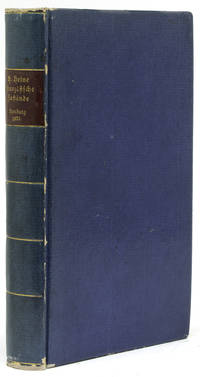
réf. H824Leipzig u. New York Costenoble 1856. Gr.-8°. XVI 321 S.; VIII 375 S. Mit getöntem Holzstichtitel u. 10 getönten Holzstichtaf. Leinenband der Zeit mit goldgepr. Rtitel etwas fleckig bestossen und partiell verblichen innen etwas braunfleckig ordentliches Exemplar. Erste Ausgabe. - Henze II 561 - vgl. Cordier Japonica 517 nur die holländische Ausgabe. - Heine war als Zeichner Mitglied der berühmten Perry-Expedition nach Japan. unknown
1985réf. b2-2-1831D.J. Heine 1985-01-01. First Edition. Hardcover. Very Good. Signed by Author. First Edition. Signed and inscribed on author's page by author "5-18-85 Best wishes to Miss Virginia Manger and Mr. Milburn Dorothy Jean Heine." One tiny small stain on back cover otherwise fine. D.J. Heine hardcover
1836réf. 220168Hamburg: Hoffmann und Campe 1836. First edition. Pp. ii-viii 1-348. Bound without half title. 1 vols. 8vo. Later patterned boards morocco spine label. Fine. Half morocco slipcase and chemise. First edition. Pp. ii-viii 1-348. Bound without half title. 1 vols. 8vo. Goedeke VIII 561 8 Hoffmann und Campe unknown
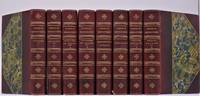
1891réf. 008218London: William Heinemann 1891. Book. Near Fine. Hardcover. First Edition Thus. 12mo - over 6¾" - 7¾" tall. Eight volumes published 1891-1893 finely bound in unsigned contemporary half brown morocco over marbled boards the backs gilt marbled end papers tops gilt. Florentine Nights V. I; Pictures of Travel Vols. II and III; The Salon V. IV; Germany Vols. V and VI; French Affairs Letters from Paris Vols. VII and VIII. Small labels of period San Francisco book sellers D.P. Elder and Morgan Shepard rear end pages. Very Good Plus contemporary gift inscription Santa Monica CA dated 1900 in pencil front end page Vol. II. Scattered underlining in pencil mostly in Vol. II but noticed in half the volumes prior owner name in pencil. The bindings showing the faintest of wear a quite lovely set overall and exceedingly SCARCE as a set. Worldcat locates 4 holdings. A heavy set please be advised added shipping charges will be requested for international orders and priority mail. William Heinemann Hardcover
1836réf. 220168Hamburg: Hoffmann und Campe 1836. First edition. Pp. ii-viii 1-348. Bound without half title. 1 vols. 8vo. Later patterned boards morocco spine label. Fine. Half morocco slipcase and chemise. First edition. Pp. ii-viii 1-348. Bound without half title. 1 vols. 8vo. Goedeke VIII 561 8 Hoffmann und Campe unknown books
2012réf. SONG1461361281Springer 2012-10-11. 1995. paperback. Used: Good. 6.10x0.95x9.25. Buy with confidence. Excellent Customer Service & Return policy. Springer paperback
1834réf. 1342Hmbg., Hoffmann and Campe, 1834-40. Bound in 4 cont.full green cloth. Richly gilt backs. Somewhat brownspotted, esp.vol.1.
1834réf. 1342Hmbg. Hoffmann and Campe 1834-40. Bound in 4 cont.full green cloth. Richly gilt backs. Somewhat brownspotted esp.vol.1. First edition. hardcover
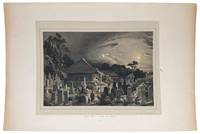
1856réf. 42585New York: G.P. Putnam & Company 1856. Tinted lithograph on proof paper tipped onto a bristol board with glossy back as issued with additional hand colouring of figures accompanied by an original descriptive text leaf. A finely atmospheric view of the cemetery and temple precinct at Shimoda Japan one of Heine's most evocative images from Graphic Scenes of the Japan Expedition. This plate shows the graveyard at the temple rendered not as a topographical prospect alone but as a carefully staged nocturnal or dusk scene. The temple buildings occupy the middle ground their broad tiled roofs framed by dense trees stone lanterns and upright funerary monuments. Small figures move through the foreground paths and among the graves their pale clothing and touches of blue and pink hand-colouring heightening the stillness of the composition. Beyond the temple enclosure a luminous sky and distant hills open the view outward giving the scene a quiet theatricality characteristic of Heine's strongest expedition images. Shimoda had particular significance within the Perry expedition. Under the Treaty of Kanagawa signed in 1854 Japan opened Shimoda and Hakodate for American vessels seeking provisioning and refuelling and granted the United States the right to appoint consuls in those ports if deemed necessary. Heine's image therefore records a place newly charged with diplomatic meaning while its subject remains local and specific: a Buddhist temple cemetery with its stone markers lanterns pathways and hillside setting observed through the lens of a visiting Western artist. Wilhelm Heine was the official artist on Commodore Matthew C. Perry's expedition to Japan in 1853-54. On returning to the United States he produced several series of prints commemorating the trip. A group of six elephant-folio prints appeared in 1855 and the following year a second volume was issued in a smaller format with different images and with explanatory text. Both projects employed the New York lithographic firm of Sarony among the best lithographers in the United States at that time. Bennett p.53; McGrath American Color Plate Books 123. G.P. Putnam & Company unknown
1856réf. 42585New York: G.P. Putnam & Company 1856. Tinted lithograph on proof paper tipped onto a bristol board with glossy back as issued with additional hand colouring of figures accompanied by an original descriptive text leaf. A finely atmospheric view of the cemetery and temple precinct at Shimoda Japan one of Heine's most evocative images from Graphic Scenes of the Japan Expedition. This plate shows the graveyard at the temple rendered not as a topographical prospect alone but as a carefully staged nocturnal or dusk scene. The temple buildings occupy the middle ground their broad tiled roofs framed by dense trees stone lanterns and upright funerary monuments. Small figures move through the foreground paths and among the graves their pale clothing and touches of blue and pink hand-colouring heightening the stillness of the composition. Beyond the temple enclosure a luminous sky and distant hills open the view outward giving the scene a quiet theatricality characteristic of Heine's strongest expedition images. Shimoda had particular significance within the Perry expedition. Under the Treaty of Kanagawa signed in 1854 Japan opened Shimoda and Hakodate for American vessels seeking provisioning and refuelling and granted the United States the right to appoint consuls in those ports if deemed necessary. Heine's image therefore records a place newly charged with diplomatic meaning while its subject remains local and specific: a Buddhist temple cemetery with its stone markers lanterns pathways and hillside setting observed through the lens of a visiting Western artist. Wilhelm Heine was the official artist on Commodore Matthew C. Perry's expedition to Japan in 1853-54. On returning to the United States he produced several series of prints commemorating the trip. A group of six elephant-folio prints appeared in 1855 and the following year a second volume was issued in a smaller format with different images and with explanatory text. Both projects employed the New York lithographic firm of Sarony among the best lithographers in the United States at that time. Bennett p.53; McGrath American Color Plate Books 123. G.P. Putnam & Company unknown books
1912réf. 37.37München: Simplicissimus Verlag 1912 - 1920. . Camisas. 29x39. Simplicissimus Verlag unknown
1997réf. 47029Hamburg; Hoffmann und Campe, Zwischen 1975 und 1997. Jedes Buch zwischen 411 und 1397 Seiten, Ill. Gr.-8°(=22,5-25cm), Leinen in Klarsichtfolie im Pappschuber (wenige mit leichten Gebrauchsspuren, teils etwas lichtrandig). Gute Original-Umschläge, wenige mit minimalen Gebrauchsspuren.
2012réf. DADAX1461361281Springer 2012-10-11. 1995. paperback. New. 6.10x0.95x9.25. Buy with confidence. Excellent Customer Service & Return policy. Springer paperback
1912réf. 63795Berlin, Morawe & Scheffelt, 1912. 8°. Mit 3 Vignetten, 7 Initialen u. (inkl. Frontispiz) 11 farb. Tafeln von Josef von Diveky. 84 S., 1 Bl., OHPgmt. m. goldgepr. Rückentitel u. Kopfgoldschnitt.
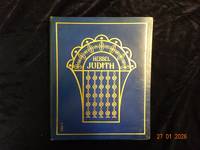
réf. STAB0069München Hans von Weber 1908. 22 x 18 cm. 2 Bl. 71 1 Seiten 10 nn. Tafeln 10 Vignetten im Text 2 71 1 Seiten 10 Tafeln. cMit zehn Tafeln und zehn Vignetten im Text von Thomas Theodor Heine. Illustr. blauer Originalkalblederband mit Rücken u. Deckelgoldprägungen entworfen von Th. Th. Heine. Ecken minimal berieben Außenstege leicht gebräunt. Nr. 77 von 100 Exemplaren auf Kaiserlich Japan gesamt 1100 vom Künstler hs. numeriert u. signiert. Erste Ausgabe mit diesen Illustrationen. Schauer II10; Langer S.48; Eyssen S.26: "".ein Tribunal für die Entlarvung psychopathologischer Verirrung."" Und ein Höhepunkt der deutschen Jugendstil-Buchkunst. München, Hans von Weber 1908. unknown
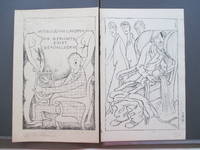
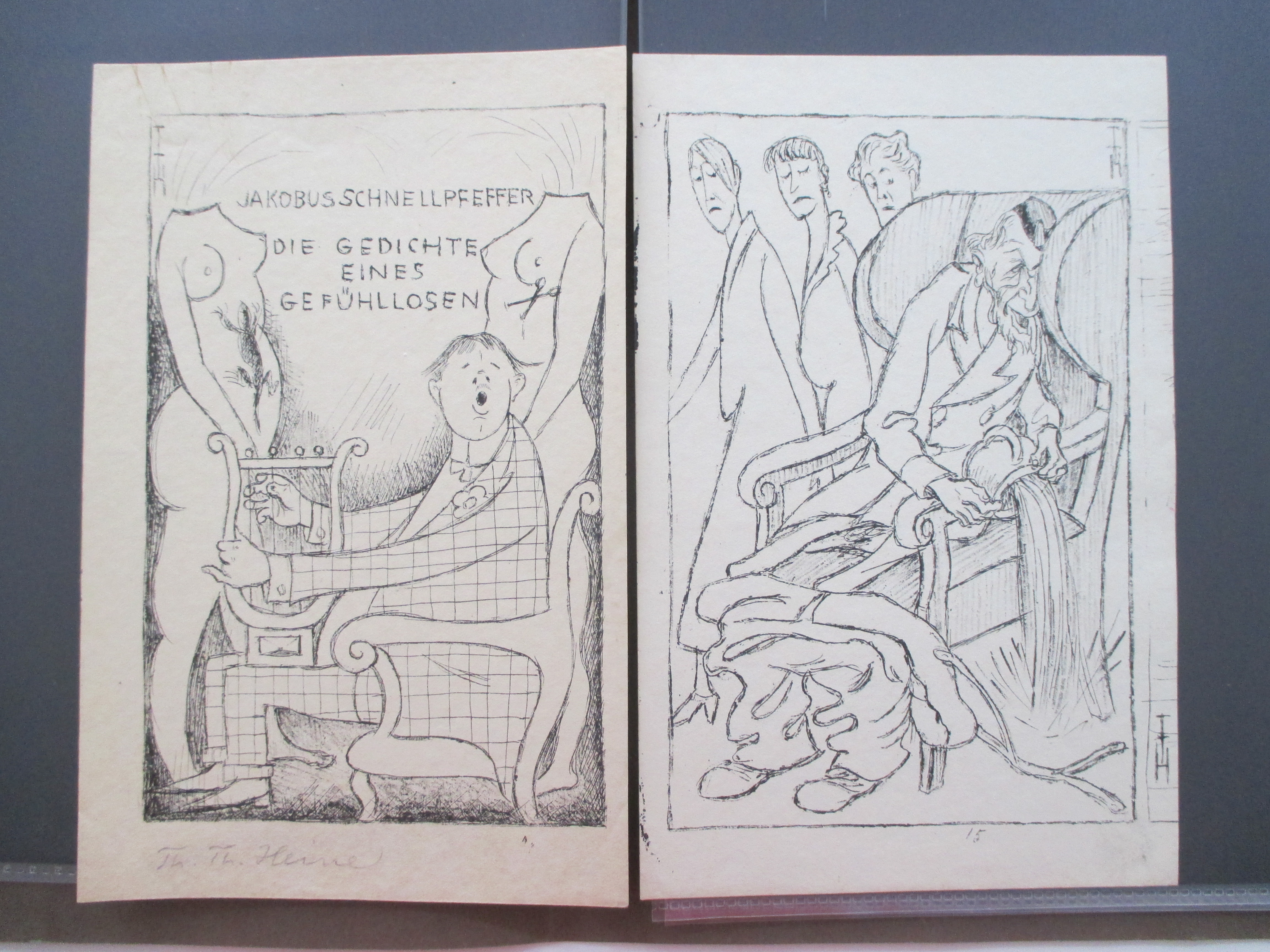
1923réf. 14860AB1923. 1923 20 : 13 cm. Vier Original-lithpgraphien 1 signiert in Schwarz von Thomas Theodor Heine. Vier Probedrucke von Thomas Thedor Heine zu dem Privatdruck. Die vom Stein gedruckten Blätter hier nur in den schwarzen Konturen im Buch sind sie farbig. Das erste Blatt Titel vom Künstler in Bleistift signiert die anderen drei Blätter im Stein monogrammiert. Thomas Theodor Heine 1867-1948 bekannter deutscher Illustrator der für viele Zeitschriften - Jugend Simplicissimus etc - arbeitete und viele Bücher illustrierte. - Sehr selten. Aus dem Besitz von Horst Stobbe. unknown
1923réf. 14860AB1923. 20 : 13 cm. Vier Original-lithpgraphien (1 signiert) in Schwarz von Thomas Theodor Heine.
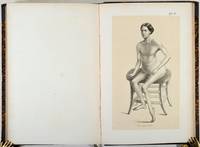
1860réf. 203591860. Zweite umgearbeitete und vermehrte Auflage. - Stuttgart J.G. Cotta'scher Verlag 1860 VIII 204 pp. 14 getönten lithogr. Taf. Pappband der Zeit. Die erste Monographie über dieses Krankheitsbild von Jakob von Heine 1800-1879. "Erst in dieser stark vermehrten zweiten Auflage unter Bekanntgabe von vielen neuen Methoden und Erkenntnissen erhielt dieses klassische Werk den Titel "Spinale Kinderlähmung" da er den Sitz der Krankheit im Rückenmark annahm wenn er sich auch noch nicht auf Sektionsergebnisse stützen konnte. Er teilte das Leiden ein in das akute primäre und das chronische sekundäre Stadium und unterschied sehr wohl die cerebrale spastische Hemiplegie von der spinalen Lähmung die er "Paralysis infantilis spinalis" nannte. Ferner führte er sehr genaue Temperaturmessungen an den verschiedenen Körpergegenden durch und stellte dabei Unterschiede der Hautemperatur zwischen der gesunden und gelähmten Seite fest; auch das Zurückbleiben im Wachstum entging ihm nicht. Ebenso wies er schon auf das epidemische Auftreten hin ferner auf die Kontrakturen und die anderen Fehlstellungen." ".namentlich die zweite aus dem Jahre 1860 deren reicher Inhalt nur in Stichworten angedeutet werden konnte sind als wahre klassische Werke zu bezeichnen; nach ihrer Lektüre wird man es voll und ganz verstehen . das die Bezeichnung einer der schlimmsten Plagen welche Kinder und Erwachsene befallen kann mit dem Namen des deutschen Orthopäden Jacob von Heine 1800-1879 als 'Heine-Medinische Krankheit' verbunden bleiben wird. Ferner war Jakob Heine wahrscheinlich der erste in Deutschland welcher die orthopädische Gymnastik in seinem Institut bei Cannstatt einführte." "In 1940 Heine 1799-1879 gave the first description of acute anterior polyomelitus in a slender monograph of 78 pages. "Twenty years later 1860 in a much enlarged edition Heine gathered again his rich experiences announcing many new methods and observations. He called his new monograph "Spinale Kinderlähmung" as he assumed the seat of the disease to be in the spinal cord --- These tow monographs by Heine especially the second of 1860 . must be considered true classics . "Valentin After a brief account of the acute or primary stage comes a detailed description of the second or paralytic stage with numerous clinical histories of the different forms of paralysis followed by sections on etiology and pathologic anatomy differential diagnosis prognosis and treatment especially by orthopaedics means. The 29 lithographic figures illustrate deformities and apparatus. The book contains numerous references to the literature. Fischbein et al Valentin Gesch. d. Orthopädie pp.557125134136230; Grulee Collection 1116; Bloomfield Bibl. of internal Med. p.407; Bick Source Book of Orthopaedics p.155; Levinson Pioneer pf Paediatrics pp.55; Hist. of Poliomyelitis; Haymaker Founders of Neurology; Walker 4209 unknown
1969réf. 146891Unknown: I.P.C. Pictures 1969. Draft script for the 1971 film here under the working title "The Catcher in the Raw." At a California hot springs resort a shady therapist helps eight carefully selected applicants find themselves and "experience their bodies" a process which mostly involves consuming large amounts of LSD meditative screaming and slow-motion basketball games. Louis Garfinkle's sole directorial credit and an excellent example of the intersection of early 1970s wellness culture and sexploitation. Set in California. Brown titled wrappers. Title page present dated 1969 with credits for director Louis Garfinkle. 136 leaves with last page of text numbered 133. Mimeograph duplication rectos only. Pages Very Good plus wrapper Very Good plus bound with three gold brads. I.P.C. Pictures unknown
1969réf. 146891Unknown: I.P.C. Pictures 1969. Draft script for the 1971 film here under the working title "The Catcher in the Raw." At a California hot springs resort a shady therapist helps eight carefully selected applicants find themselves and "experience their bodies" a process which mostly involves consuming large amounts of LSD meditative screaming and slow-motion basketball games. Louis Garfinkle's sole directorial credit and an excellent example of the intersection of early 1970s wellness culture and sexploitation. Set in California. Brown titled wrappers. Title page present dated 1969 with credits for director Louis Garfinkle. 136 leaves with last page of text numbered 133. Mimeograph duplication rectos only. Pages Very Good plus wrapper Very Good plus bound with three gold brads. I.P.C. Pictures unknown books
1833réf. 220167Hamburg: Hoffmann und Campe 1833. First edition. Pp. ii-xxvi 1-408. Bound without half title. 1 vols. 8vo. Later nineteenth-century boards morocco spine label. A few leaves of prelims with short lower margins improperly folded title a bit soiled else Fine. First edition. Pp. ii-xxvi 1-408. Bound without half title. 1 vols. 8vo. Goedeke VIII 557 41 Hoffmann und Campe unknown
1833réf. 220167Hamburg: Hoffmann und Campe 1833. First edition. Pp. ii-xxvi 1-408. Bound without half title. 1 vols. 8vo. Later nineteenth-century boards morocco spine label. A few leaves of prelims with short lower margins improperly folded title a bit soiled else Fine. First edition. Pp. ii-xxvi 1-408. Bound without half title. 1 vols. 8vo. Goedeke VIII 557 41 Hoffmann und Campe unknown books
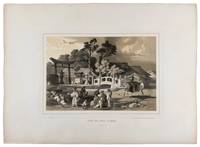
1856réf. 42583New York: G.P. Putnam & Company 1856. Tinted lithograph mounted on support sheet with printed letters as issued with small stab holes where previously bound. A finely observed street scene at Shimoda Japan from Graphic Scenes of the Japan Expedition based on Wilhelm Heine's drawings during Commodore Matthew C. Perry's expedition to Japan showing the newly accessible treaty port through its built environment local movement and everyday encounters. Heine's view presents a street near the gate at Shimoda in Izu Province shortly after the port's opening to American vessels under the Treaty of Kanagawa. The scene is organized around a small arched stone bridge with pale balustrades set before a shrine approach marked by a large torii stone lanterns thatched and tiled buildings and tall windswept trees. The composition balances architectural record with social observation giving equal attention to the cut-stone bridge the street's raised central path the houses lining the road and the figures who animate the foreground. At right two bearers carry a traveller in a kago the enclosed palanquin used in Japan where wheeled carriages were not part of ordinary travel. In the foreground adults and children gather around a seated figure likely an artist drawing in the street while other figures pass across the bridge or stand beneath the torii. These small groups give the print a sense of immediacy: Shimoda appears as a functioning town observed at close range. Wilhelm Heine was the official artist on Commodore Matthew C. Perry's expedition to Japan in 1853-54. On returning to the United States he produced several series of prints commemorating the trip. A group of six elephant-folio prints appeared in 1855 and the following year a second volume was issued in a smaller format with different images and with explanatory text. Both projects employed the New York lithographic firm of Sarony among the best lithographers in the United States at that time. Bennett p.53; McGrath American Color Plate Books 123. G.P. Putnam & Company unknown
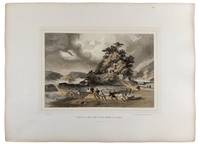
1856réf. 42584New York: G.P. Putnam & Company 1856. Tinted lithograph mounted on support sheet with printed letters as issued with small stab holes where previously bound. A fine plate from Graphic Scenes of the Japan Expedition of a Benten temple in Shimoda Japan harbour showing one of the treaty ports opened to American vessels in 1854 through the combined lens of topography harbour life and local religious practice. Shimoda or "Simoda" in the period spelling used here had particular importance for Perry's expedition. Under the Treaty of Kanagawa signed on 31 March 1854 it was one of the two ports opened to American vessels for supplies and refuelling. Heine records the harbour as a coastal landscape of daily movement local religious architecture and practical maritime activity. In the foreground Japanese boatmen haul a long narrow boat through the surf while a second boat lies angled on the beach at right. Beyond them the temple rises from a small rocky promontory half hidden among trees and reached by a stepped landing and gate with low mountains and a heavy cloud filled sky in the distance. The titles "Ben-Teng" is a 19th-century transliteration of Benten or Benzaiten a deity closely associated with water good fortune music and eloquence. Benten halls and shrines are often found beside rivers ponds springs and the sea which makes the placement of this harbour temple especially fitting within the image. The composition uses this setting to strong effect: the shrine rises above the labour of the beach while the dramatic sky and surrounding mountains give the small coastal sanctuary a commanding presence within Shimoda's new post-treaty landscape. Wilhelm Heine was the official artist on Commodore Matthew C. Perry's expedition to Japan in 1853-54. On returning to the United States he produced several series of prints commemorating the trip. A group of six elephant-folio prints appeared in 1855 and the following year a second volume was issued in a smaller format with different images and with explanatory text. Both projects employed the New York lithographic firm of Sarony among the best lithographers in the United States at that time. Bennett p.53; McGrath American Color Plate Books 123. G.P. Putnam & Company unknown