5 289 résultats
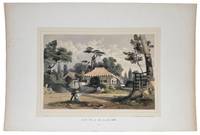
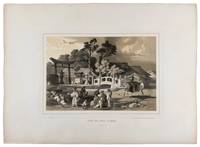
1856réf. 42583New York: G.P. Putnam & Company 1856. Tinted lithograph mounted on support sheet with printed letters as issued with small stab holes where previously bound. A finely observed street scene at Shimoda Japan from Graphic Scenes of the Japan Expedition based on Wilhelm Heine's drawings during Commodore Matthew C. Perry's expedition to Japan showing the newly accessible treaty port through its built environment local movement and everyday encounters. Heine's view presents a street near the gate at Shimoda in Izu Province shortly after the port's opening to American vessels under the Treaty of Kanagawa. The scene is organized around a small arched stone bridge with pale balustrades set before a shrine approach marked by a large torii stone lanterns thatched and tiled buildings and tall windswept trees. The composition balances architectural record with social observation giving equal attention to the cut-stone bridge the street's raised central path the houses lining the road and the figures who animate the foreground. At right two bearers carry a traveller in a kago the enclosed palanquin used in Japan where wheeled carriages were not part of ordinary travel. In the foreground adults and children gather around a seated figure likely an artist drawing in the street while other figures pass across the bridge or stand beneath the torii. These small groups give the print a sense of immediacy: Shimoda appears as a functioning town observed at close range. Wilhelm Heine was the official artist on Commodore Matthew C. Perry's expedition to Japan in 1853-54. On returning to the United States he produced several series of prints commemorating the trip. A group of six elephant-folio prints appeared in 1855 and the following year a second volume was issued in a smaller format with different images and with explanatory text. Both projects employed the New York lithographic firm of Sarony among the best lithographers in the United States at that time. Bennett p.53; McGrath American Color Plate Books 123. G.P. Putnam & Company unknown books
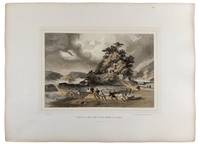
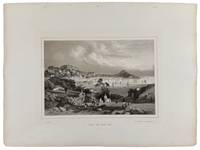
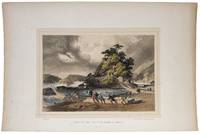
1856réf. 42584New York: G.P. Putnam & Company 1856. Tinted lithograph mounted on support sheet with printed letters as issued with small stab holes where previously bound. A fine plate from Graphic Scenes of the Japan Expedition of a Benten temple in Shimoda Japan harbour showing one of the treaty ports opened to American vessels in 1854 through the combined lens of topography harbour life and local religious practice. Shimoda or "Simoda" in the period spelling used here had particular importance for Perry's expedition. Under the Treaty of Kanagawa signed on 31 March 1854 it was one of the two ports opened to American vessels for supplies and refuelling. Heine records the harbour as a coastal landscape of daily movement local religious architecture and practical maritime activity. In the foreground Japanese boatmen haul a long narrow boat through the surf while a second boat lies angled on the beach at right. Beyond them the temple rises from a small rocky promontory half hidden among trees and reached by a stepped landing and gate with low mountains and a heavy cloud filled sky in the distance. The titles "Ben-Teng" is a 19th-century transliteration of Benten or Benzaiten a deity closely associated with water good fortune music and eloquence. Benten halls and shrines are often found beside rivers ponds springs and the sea which makes the placement of this harbour temple especially fitting within the image. The composition uses this setting to strong effect: the shrine rises above the labour of the beach while the dramatic sky and surrounding mountains give the small coastal sanctuary a commanding presence within Shimoda's new post-treaty landscape. Wilhelm Heine was the official artist on Commodore Matthew C. Perry's expedition to Japan in 1853-54. On returning to the United States he produced several series of prints commemorating the trip. A group of six elephant-folio prints appeared in 1855 and the following year a second volume was issued in a smaller format with different images and with explanatory text. Both projects employed the New York lithographic firm of Sarony among the best lithographers in the United States at that time. Bennett p.53; McGrath American Color Plate Books 123. G.P. Putnam & Company unknown books
1926réf. 1370909Paris France: Pour Les Membres de la Société du Roman Philosophique 1926. Limited Edition #198/233. Hardcover. Quarto 540 pages. In Very Good condition. Rebound in quarter red leather with marbled paper boards and new endpapers. Paneled spine is lightly sunfaded red with gilt lettering and gilt tooling. Minor shelfwear to spine and paper boards. Bumping and slight chipping to fore-edges slightly exposing boards. Slight ink mark to back board board. Top edge of textblock dyed red. Deckled textblock with minor water damage to last pages endpapers of original textblock. Mild soiling to pages 254-257 and 312-313. Signed flat by Heine and the Treasurer of the Society on the limitation page. Shelved in Room A Oversize. Sade wrote the stories collected in this volume while in prison at the Bastille. 1370909. Special Collections - Upstairs. Pour Les Membres de la Société du Roman Philosophique hardcover
1926réf. 1370909Paris France: Pour Les Membres de la Société du Roman Philosophique 1926. Limited Edition #198/233. Hardcover. Quarto 540 pages. In Very Good condition. Rebound in quarter red leather with marbled paper boards and new endpapers. Paneled spine is lightly sunfaded red with gilt lettering and gilt tooling. Minor shelfwear to spine and paper boards. Bumping and slight chipping to fore-edges slightly exposing boards. Slight ink mark to back board board. Top edge of textblock dyed red. Deckled textblock with minor water damage to last pages endpapers of original textblock. Mild soiling to pages 254-257 and 312-313. Signed flat by Heine and the Treasurer of the Society on the limitation page. Shelved in Room A Oversize. Sade wrote the stories collected in this volume while in prison at the Bastille. 1370909. Special Collections - Upstairs. Pour Les Membres de la Société du Roman Philosophique hardcover books
réf. BN745392Leske Budrich. René König Schriften 3 7 14 16 18 19 : Kritik der historisch-existenzialistischen Soziologie / Zur Konstitution moderner Gesellschaften / Familiensoziologie / Arbeit und Beruf in der modernen Gesellschaft /Autobiographische Schriften / Briefwechsel 1 René König Schriften 3 7 14 16 18 19 : Kritik der historisch-existenzialistischen Soziologie / Zur Konstitution moderner Gesellschaften / Familiensoziologie / Arbeit und Beruf in der modernen Gesellschaft /Autobiographische Schriften / Briefwechsel 1 H.-J. Hummell ed. / Heine von Alemann ed. / Rosemarie Nave-Herz ed. / Hansjürgen Daheim & Dieter Fröhlich eds. / Mario König Oliver König eds. René König Leske + Budrich unknown
réf. BN124658Reimer Dietrich. Softcover. The Eastern Nilotes The Eastern Nilotes Hrsg. v. Heine Bernd Reimer, Dietrich paperback
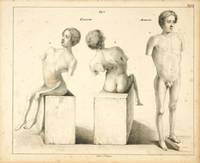
1840réf. 181791840. Stuttgart F.H. Köhler 1840 4° 6 78 pp. 1 Blatt "Druckfehler" mit 7 von F. Federer lith. Tafeln mit 34 Abb. minimal gebräunt etwas fleckig sehr gutes Exemplar Halbleinenband im Stil der Zeit; ExBibExpl des Rockefeller Inst. First edition of the "First description of acute anterior poliomyelitis which Jakob von Heine 1799-1879 separated from other forms of paralysis; he described the deformities arising from the disease. He also called attention to congenital spastic paraplegia which following Little's classical description was termed "Little's disease". Garrison & Morton Vorrede: "Die Lehre von der Lähmung der unteren Extremitäten ist ungeachtet mancher darüber erschienener zum Theil sehr schätzbarer Abhandlungen und einer grossen Zahl bekannt gemachter Fälle noch sehr lückenhaft und daran gewiss nicht nur die Schwierigkeit und seltene Gelegenheit Rückgratshöhlen zu öffnen sondern auch vorzugsweise die sich widersprechenden Resultate der Leichenöffnungen der an Rückenmarkskrankheiten Verstorbenen Schuld. Unter diesen Umständen dürfte es vielleicht nicht ganz ohne Interesse seyn wenn ich mir erlaube in folgenden Blättern eine Reihe von während 11 Jahren in meiner Heilanstalt gemachten Beobachtungen über eine Art von Paralyse der unteren Gliedmassen zusammen zu stellen und zu versuchen ob sich hiebei nicht Andeutungen über diese sowohl in ihrer primären als secundären Natur noch wenig bekannte Krankheit ableiten lassen. Erhält indessen die Wissenschaft selbst durch diese kleine Arbeit auch keinen grossen Gewinn so bleibt mir jeden Falls das angenehme Bewusstseyn das herbe Schicksal einer Anzahl unglücklicher Wesen erleichtert zu haben Wesen welche oft kaum der Mutter Schoos entsprossen und sich bereits eines hoffnungsvollen Gedeihens erfreuend durch ein unglückliches Geschick wieder in ihr erstes hülfloses Daseyn zurückgeworfen wurden." Cannstadt im Juni 1840 Der Verfasser. Garrison & Morton No.4664; Fishbein No. 8 unknown
réf. 22497Bruxelles, H. Dumont, 1859. Deux tomes en un volume grand in-8 de 304 pp., - 316 pp., 11 planches hors-texte sur papier de chine dessinées d'après nature par l'auteur (sur fond teinté) dont le titre frontipice. Intérieur très frais pour le texte, une petite et pâle mouillure angulaire aux planches sans gravité. Demi-veau. Reliure à l'imitation.
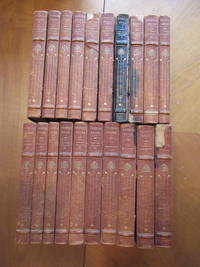
1891réf. 036642New York: Croscup & Sterling Company 1891. First American Edition Thus . Hardcover. Good. Portraits Including Colored Frontispieces. Twenty Volumes Complete #7 Of 250 Copies. Printed In England Translated From The German Edition Which Contains Many Corrections Etc. From The Author's Papers Not Present In The Original Edition. Half Green Morocco In Art Nouveau Design Gilt Flowers On Spines Over Green And White Paper Boards And Matching Endpapers. All Plates In Two States With One Of Frontispieces Nicely Colored In Each Volume. Bindings Aged Morocco Mostly Browned Light Fraying At Corners Four Boards Detached Several Joints Seriously Starting. International Shipment By Usps Priority Mail Box About 28 Pounds At Well Above Standard Charge. Croscup & Sterling Company hardcover
réf. 209719Leipzig, Voss et compagnie, 1802 in-folio, XII-72 pp. de texte, avec 50 planches gravées par Sprinck, Frosh, Küllmann, Böttger, Natling, Seiffert, Capieux, sous serpentes, dont une en frontispice, demi-basane fauve à coins, dos lisse orné de guirlande et filets dorés, pièce de titre bouteille (reliure de l'époque). Coins abîmés. Bon exemplaire.
1858réf. 53684Leipzig, Hermann Costenoble, 1858-59. Lex8vo. 3 uniform contemp. hcalf. Spines gilt with gilt lettering. Corners a bit bumped. 3 tinted frontispieces. XX,330VIII,392VIII,424 pp., 1 facsimile, 21 plates (some tinted) and 12 maps (10 large and folded, finely strenghtened on verso). Clean and fine.
1858réf. 53684Leipzig Hermann Costenoble 1858-59. Lex8vo. 3 uniform contemp. hcalf. Spines gilt with gilt lettering. Corners a bit bumped. 3 tinted frontispieces. XX330;VIII392;VIII424 pp. 1 facsimile 21 plates some tinted and 12 maps 10 large and folded finely strenghtened on verso. Clean and fine. First edition. - Sabin 31241. unknown
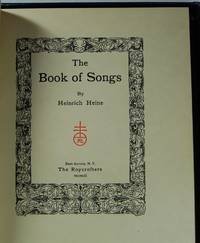
1903réf. 1018480New York: The Roycrofters 1903. Limited. Leather Bound. Collectible - Very Good. Signed by Elbert Hubbard on Limited Edition page. This is #43 of 100 copies printed on Genuine Japan Vellum. Hardcover with 3/4 blue leather with marble board covers. Satin marker. Gilt decoration and lettering on spine. Front gutter is not loose but paper has split. Clamshell case is also in blue cloth with a soft felt interior. Some wear and chipping to exterior boards. Paper title label on bottom edge of case. 8.25x6.25. 111823 The Roycrofters hardcover
1974réf. SBBI-mon0000160732Citadel Press Inc.U.S. 1974. paperback. Acceptable. Integral damage to binding e.g. cover coming away no spine chunks of pages falling out. Please see the condition note after this for details if this is missing please consider Acceptable to mean poor quality that could include major staining water damage writing missing dustjacket etc etc. Our books are dispatched from a Yorkshire former cotton mill. We list via barcode/ISBN so please note that the images are stock images and may not be the exact copy you receive furthermore the details about edition and year might not be accurate as many publishers reuse the same ISBN for multiple editions and as we simply scan a barcode or enter an ISBN we do not check the validity of the edition data when listing. If you're looking for an exact edition please don't order at least not without checking with us first although we don't always have time to check. We aim to dispatch prompty the service used will depend on order value and book size. We can ship to most countries see our shipping policies. Payment is via Abe only. Citadel Press Inc.,U.S. paperback
1903réf. 6539East Aurora: Roycroft Press 1903. First Edition Thus. First Edition Thus. 8vo. Beautifully bound in three-quarter crushed green morocco with marbled boards elegant gilt decorated spine marbled endpapers. PRESENTATION COPY: "To Alice Keiles Reserve your best thoughts for the Elect Few. Elbert Hubbard." Printed in red and black on Japan vellum. David Ogle reports: "All known copies of the limited dieiton 100 copies are hand-illumined though this copy with rubricated initals does not appear to be hand-illumined an interesting feature which may mean ohe of Hubbard's own copies for presentation. Book is in very fine condition Box with original label very good. Roycroft Press unknown
1903réf. 6539East Aurora: Roycroft Press 1903. First Edition Thus. First Edition Thus. 8vo. Beautifully bound in three-quarter crushed green morocco with marbled boards elegant gilt decorated spine marbled endpapers. PRESENTATION COPY: "To Alice Keiles Reserve your best thoughts for the Elect Few. Elbert Hubbard." Printed in red and black on Japan vellum. David Ogle reports: "All known copies of the limited dieiton 100 copies are hand-illumined though this copy with rubricated initals does not appear to be hand-illumined an interesting feature which may mean ohe of Hubbard's own copies for presentation. Book is in very fine condition Box with original label very good. Roycroft Press unknown books
1856réf. 42599New York: G.P. Putnam & Company 1856. Tinted lithograph on proof paper tipped onto a bristol board with glossy back as issued with additional hand colouring. A quietly revealing image from Heine's Graphic Scenes of the Japan Expedition: the American encounter with the Ryukyu Islands in Japan where diplomacy observation and coastal movement preceded the better-known landings in Japan. This plate is one of the more understated images in Graphic Scenes of the Japan Expedition and that restraint is part of its appeal. Lew Chew was the period Western name for the Ryukyu Islands and On-Na corresponds to Onna on Okinawa. The scene shows a kung-kwa or village rest house set back behind a low wall and gate its tiled roof partly screened by trees. Heine gives the building a strong sense of place: the whitewashed wall shaded yard garden growth and open path all suggest a local administrative or stopping-place outside the more formal diplomatic centres of Naha and Shuri. In the foreground one figure sits with a portfolio or sketchbook while another stands nearby. Ryukyuan figures appear closer to the building absorbed into the architecture and enclosure of the scene. The print therefore records more than a picturesque stop on the route to Japan turning a coastal village structure into evidence of landscape architecture custom and access. Within the Perry visual record Kung-Kwa at On-Na is valuable precisely because it shifts attention from treaty ceremony to the quieter geography of the voyage. It places Okinawa within the wider American itinerary through the China Seas the Ryukyus and Japan and preserves a carefully observed view of a Ryukyuan public building at the moment when the islands were being drawn into the diplomatic and commercial mapping of the Pacific. Wilhelm Heine was the official artist on Commodore Matthew C. Perry's expedition to Japan in 1853-54. On returning to the United States he produced several series of prints commemorating the trip. A group of six elephant-folio prints appeared in 1855 and the following year a second volume was issued in a smaller format with different images and with explanatory text. Both projects employed the New York lithographic firm of Sarony among the best lithographers in the United States at that time. Bennett p.53; McGrath American Color Plate Books 123. G.P. Putnam & Company unknown
1856réf. 42582New York: G.P. Putnam & Company 1856. Tinted lithograph mounted on support sheet with printed letters as issued with small stab holes where previously bound. A mid nineteenth century view of Macao China from Penha Hill published as the first topographical scene in Heine's Graphic Scenes of the Japan Expedition showing the city's harbour churches fortified heights and waterfront at a moment when Macao's older role in the China trade was being overtaken by Hong Kong. Heine's view looks down from Penha Hill across Macao's semi-circular harbour with the town rising in terraces from the waterfront toward its churches gardens and fortified heights. The composition places Macao's maritime and religious identity in a single prospect: small vessels fill the inner harbour larger ships lie farther out and the built town gathers around the shoreline beneath prominent ecclesiastical and defensive structures. In the foreground porters carrying shoulder poles and a seated group of robed women animate the hillside road giving the view a local and social immediacy beyond its topographical function. Macao had developed from the sixteenth century as the principal Portuguese settlement on the South China coast occupying a narrow peninsula near the entrance to the Pearl River system and serving as a crucial intermediary point in trade between China Japan India and Europe. Its urban form is clearly legible in Heine's image. The waterfront known as the Praia curves around the harbour below the elevated town while Penha Hill provides the high vantage from which Macao appears as an amphitheatre of houses churches gardens and forts descending toward the water. By the time Heine's view was published Macao's commercial standing had changed substantially. Hong Kong occupied by Britain in 1841 and rapidly developed as a free port drew away much of the foreign trade that had once passed through Macao. Heine's print records the older Portuguese city in this altered commercial landscape: still picturesque densely built and socially important as a resort and residence for foreign merchants connected with Canton but no longer the dominant European entrepôt on the China coast. Seen from Penha Hill Heine's Macao appears as a harbour city where Portuguese civic and religious landmarks Chinese geography and nineteenth-century treaty-port commerce meet in a single prospect. Wilhelm Heine was the official artist on Commodore Matthew C. Perry's expedition to Japan in 1853-54. On returning to the United States he produced several series of prints commemorating the trip. A group of six elephant-folio prints appeared in 1855 and the following year a second volume was issued in a smaller format with different images and with explanatory text. Both projects employed the New York lithographic firm of Sarony among the best lithographers in the United States at that time. Bennett p.53; McGrath American Color Plate Books 123. G.P. Putnam & Company unknown
1856réf. 42598New York: G.P. Putnam & Company 1856. Tinted lithograph on proof paper tipped onto a bristol board with glossy back as issued with additional hand colouring. A fine plate of Shimoda harbour in Japan showing the Benten temple on a rocky tree-covered rise above the water from Graphic Scenes of the Japan Expedition. Shimoda or "Simoda" in the period spelling used here had particular importance for Perry's expedition. Under the Treaty of Kanagawa signed on 31 March 1854 it was one of the two ports opened to American vessels for supplies and refuelling. Heine records the harbour as a coastal landscape of daily movement local religious architecture and practical maritime activity. In the foreground Japanese boatmen haul a long narrow boat through the surf while a second boat lies angled on the beach at right. Beyond them the temple rises from a small rocky promontory half hidden among trees and reached by a stepped landing and gate with low mountains and a heavy cloud filled sky in the distance. The titles "Ben-Teng" refers to Benten or Benzaiten a deity often associated with water and shoreline shrines. This gives the image a specificity beyond its topographical interest: Heine presents Shimoda through a recognisable local sacred site placed directly within the harbour that had become newly significant in American and Japanese relations. The composition balances picturesque scenery ethnographic observation and the physical geography of a newly opened treaty port giving equal weight to topography and local life. Wilhelm Heine was the official artist on Commodore Matthew C. Perry's expedition to Japan in 1853-54. On returning to the United States he produced several series of prints commemorating the trip. A group of six elephant-folio prints appeared in 1855 and the following year a second volume was issued in a smaller format with different images and with explanatory text. Both projects employed the New York lithographic firm of Sarony among the best lithographers in the United States at that time. Bennett p.53; McGrath American Color Plate Books 123. G.P. Putnam & Company unknown
1856réf. 42599New York: G.P. Putnam & Company 1856. Tinted lithograph on proof paper tipped onto a bristol board with glossy back as issued with additional hand colouring. A quietly revealing image from Heine's Graphic Scenes of the Japan Expedition: the American encounter with the Ryukyu Islands in Japan where diplomacy observation and coastal movement preceded the better-known landings in Japan. This plate is one of the more understated images in Graphic Scenes of the Japan Expedition and that restraint is part of its appeal. Lew Chew was the period Western name for the Ryukyu Islands and On-Na corresponds to Onna on Okinawa. The scene shows a kung-kwa or village rest house set back behind a low wall and gate its tiled roof partly screened by trees. Heine gives the building a strong sense of place: the whitewashed wall shaded yard garden growth and open path all suggest a local administrative or stopping-place outside the more formal diplomatic centres of Naha and Shuri. In the foreground one figure sits with a portfolio or sketchbook while another stands nearby. Ryukyuan figures appear closer to the building absorbed into the architecture and enclosure of the scene. The print therefore records more than a picturesque stop on the route to Japan turning a coastal village structure into evidence of landscape architecture custom and access. Within the Perry visual record Kung-Kwa at On-Na is valuable precisely because it shifts attention from treaty ceremony to the quieter geography of the voyage. It places Okinawa within the wider American itinerary through the China Seas the Ryukyus and Japan and preserves a carefully observed view of a Ryukyuan public building at the moment when the islands were being drawn into the diplomatic and commercial mapping of the Pacific. Wilhelm Heine was the official artist on Commodore Matthew C. Perry's expedition to Japan in 1853-54. On returning to the United States he produced several series of prints commemorating the trip. A group of six elephant-folio prints appeared in 1855 and the following year a second volume was issued in a smaller format with different images and with explanatory text. Both projects employed the New York lithographic firm of Sarony among the best lithographers in the United States at that time. Bennett p.53; McGrath American Color Plate Books 123. G.P. Putnam & Company unknown books
1856réf. 42582New York: G.P. Putnam & Company 1856. Tinted lithograph mounted on support sheet with printed letters as issued with small stab holes where previously bound. A mid nineteenth century view of Macao China from Penha Hill published as the first topographical scene in Heine's Graphic Scenes of the Japan Expedition showing the city's harbour churches fortified heights and waterfront at a moment when Macao's older role in the China trade was being overtaken by Hong Kong. Heine's view looks down from Penha Hill across Macao's semi-circular harbour with the town rising in terraces from the waterfront toward its churches gardens and fortified heights. The composition places Macao's maritime and religious identity in a single prospect: small vessels fill the inner harbour larger ships lie farther out and the built town gathers around the shoreline beneath prominent ecclesiastical and defensive structures. In the foreground porters carrying shoulder poles and a seated group of robed women animate the hillside road giving the view a local and social immediacy beyond its topographical function. Macao had developed from the sixteenth century as the principal Portuguese settlement on the South China coast occupying a narrow peninsula near the entrance to the Pearl River system and serving as a crucial intermediary point in trade between China Japan India and Europe. Its urban form is clearly legible in Heine's image. The waterfront known as the Praia curves around the harbour below the elevated town while Penha Hill provides the high vantage from which Macao appears as an amphitheatre of houses churches gardens and forts descending toward the water. By the time Heine's view was published Macao's commercial standing had changed substantially. Hong Kong occupied by Britain in 1841 and rapidly developed as a free port drew away much of the foreign trade that had once passed through Macao. Heine's print records the older Portuguese city in this altered commercial landscape: still picturesque densely built and socially important as a resort and residence for foreign merchants connected with Canton but no longer the dominant European entrepôt on the China coast. Seen from Penha Hill Heine's Macao appears as a harbour city where Portuguese civic and religious landmarks Chinese geography and nineteenth-century treaty-port commerce meet in a single prospect. Wilhelm Heine was the official artist on Commodore Matthew C. Perry's expedition to Japan in 1853-54. On returning to the United States he produced several series of prints commemorating the trip. A group of six elephant-folio prints appeared in 1855 and the following year a second volume was issued in a smaller format with different images and with explanatory text. Both projects employed the New York lithographic firm of Sarony among the best lithographers in the United States at that time. Bennett p.53; McGrath American Color Plate Books 123. G.P. Putnam & Company unknown books
1856réf. 42598New York: G.P. Putnam & Company 1856. Tinted lithograph on proof paper tipped onto a bristol board with glossy back as issued with additional hand colouring. A fine plate of Shimoda harbour in Japan showing the Benten temple on a rocky tree-covered rise above the water from Graphic Scenes of the Japan Expedition. Shimoda or "Simoda" in the period spelling used here had particular importance for Perry's expedition. Under the Treaty of Kanagawa signed on 31 March 1854 it was one of the two ports opened to American vessels for supplies and refuelling. Heine records the harbour as a coastal landscape of daily movement local religious architecture and practical maritime activity. In the foreground Japanese boatmen haul a long narrow boat through the surf while a second boat lies angled on the beach at right. Beyond them the temple rises from a small rocky promontory half hidden among trees and reached by a stepped landing and gate with low mountains and a heavy cloud filled sky in the distance. The titles "Ben-Teng" refers to Benten or Benzaiten a deity often associated with water and shoreline shrines. This gives the image a specificity beyond its topographical interest: Heine presents Shimoda through a recognisable local sacred site placed directly within the harbour that had become newly significant in American and Japanese relations. The composition balances picturesque scenery ethnographic observation and the physical geography of a newly opened treaty port giving equal weight to topography and local life. Wilhelm Heine was the official artist on Commodore Matthew C. Perry's expedition to Japan in 1853-54. On returning to the United States he produced several series of prints commemorating the trip. A group of six elephant-folio prints appeared in 1855 and the following year a second volume was issued in a smaller format with different images and with explanatory text. Both projects employed the New York lithographic firm of Sarony among the best lithographers in the United States at that time. Bennett p.53; McGrath American Color Plate Books 123. G.P. Putnam & Company unknown books
1900réf. 61932Leipzig und Wien: Bibliograpisches Institut 1900. 29 vols. 8vo. Uniformly bound in contemporary half brown morocco with red leather title labels. Very fine. 29 vols. 8vo. Bibliograpisches Institut unknown
1900réf. 61932Leipzig und Wien: Bibliograpisches Institut 1900. 29 vols. 8vo. Uniformly bound in contemporary half brown morocco with red leather title labels. Very fine. 29 vols. 8vo. Bibliograpisches Institut unknown books
réf. 755241-nnew. unknown