263.130 resultados
1827ref. 003875S. l.: s. n. 1827. Good. Wood-and-paper box; 11 x 4 ½ x 3 ¼; the exterior covered in lovely block-print paper the interior in beautiful marbled paper; a small separate compartment with a lid to the left; embossed label with flowers to top; ornate label with a manuscript note to one of the interior walls - Zum Andenken 1827 For Souvenirs or alternately As a Commemoration; a few small chips and cuts to corners and a bit of rubbing to edges; flower label worn; in good condition. Possibly of Pennsylvania - Dutch origin. s. n. unknown books
1949ref. 003877Shanhai: Tipografii Nikita - Do-Shin Press 1949. Good. First edition presumed; 5 x 3 1/2; pp. I-V 2 4-286 1; original wraps appear to have been replaced by plain brown paper; chips to corners of first and last leaves and mild spotting; in fair to good condition. An unusual apparently unrecorded in OCLC prayer book with Acathist Hymns it was published for the Russian emigre community in Shanghai. Tipografii Nikita - Do-Shin Press paperback books
1910ref. 002651n.p: n.p 1910. Hardcover. Very Good. Hardcover white oilcloth boards with black lettering to front board 8-5/8" x 5-3/4" 8 pp. ads 161 pp. 7 pp. ads. Some soiling to boards a few recipes corrected or altered in pencil one cookie recipe crossed out corner of two leaves torn off with no text loss. Good condition. Although I'm curious to try the "Beer Soup" the "Nasturtium and Cream Cheese Salad" is the winner for me using both the leaves and petals although the directions call for cottage cheese and mayonnaise dressing rather than cream cheese. In Wisconsin the nasturtium is an annual. n.p hardcover books
1518ref. 010256Paris France: Gailot Du Pre and Michel le Noir 1518. Disbound. Very good. La Mer des Histoires et Chroniques de France takes its title from Mare historiarum Gailot Du Pre and Michel le Noir unknown books
ref. 013369Chicago: unidenitified. Soft cover. VG. Pamphlet pictorial covers with picture and titles in blue ink on thin polished yellow stock measuring 13x19cm 31 pp illustrated pulp stock heavily toned as expected. Title page title is "The traffic in girls : white slavery as now practiced in America including detailed descriptions of the customs and manners of the white women" Cover title is " The Dangers of a Large City or The System of the Underworld: Exposing the White Slave Traffic" No publisher identified no date circa 1912. Rare Worldcat lists 6 institutions with a copy with another edition of the same title but with Garden City Publishing as publisher and a date of 1912 in 6 libraries too. A few tiny nicks to the edges and some soiling to the rear panel. (unidenitified) unknown books
ref. 012959London/ NY: Ernest Nister/ E. P. Dutton 0. 1st Edition. Hardcover. Fair. Presumed first or early edition. Large 4t0 chromolithographed pictorial covers pages disbound. No author identified nor year of publication. c. 1880-90. Distinctive movable with 8 movable plates plus text illustrated with line drawings so that when a tab is pulled changes the configuration of the story told. The story "Your's Sincerely" tells the story of a young girl's affection for both her pet dog and pet cat; when the tab is pulled the picture of her with dog switched to that of her with cat. Leaves are disbound but all the chromolithographed switching plates are in working order. Frail paper is chipped about around most edges. Boards worn bruised and stained here and there but not affecting internals. Scarce even in this condition. WorldCat identifies only 8 institutions with a copy. Printed in Bavaria. Ernest Nister/ E. P. Dutton 0 hardcover books
1853ref. 011792Philadelphia: C. G. Henderson 1853. 1st Edition. Hardcover. Very Good. Presumed first or certainly early edition 1853 on title page 1852 on copyright in publishers tight weave brown cloth with a gilt-pressed image of an impoverished young boy and girl and a monkey front with blind-ruled and stamped border. unobtrusively rebacked with nearly all original spine with gilt laid back down original polished yellow endpapers short 8vo 128 16p of illustrated Henderson catalogue of juvenile titles eight new books each with a full page engraving plus 8 full page engravings in text one which is the pictorial in gilt on the cover. The treatment of Italian orphan immigrant might have been charming then now it would be Italo-phobic anti-immigrant even. I mean the pet monkey trope alone! Contemporary 19thC bookplate of Isabel Douglass. Covers rubbed. Marginal light stain not affecting text for a few middle signatures. C. G. Henderson hardcover books
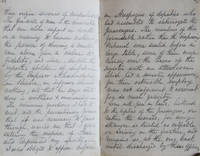
ref. 3063712mo 68 manuscript pages plus blanks and 8 pages of notes bound in contemporary embossed leather backed flexible stiff wraps entries written in English in pencil in a clear and legible hand. The journal is an excellent highly literate well written account of the author's impressions of Russian society and his keen observations on all aspects of life in Russia which the author refers to as "the Empire of Fear." The diarist who describes himself as a Russian prince is anonymous although he identifies his companions. He takes a business trip to the part of Russia which is now in present day Poland. The purpose of his trip was to draw up a statement of account for the manufactory of Messrs Palin & Dunlop in Nowogrodek. Afterwards he visits the different silk and cotton manufactories in the town and also the place where Russe serge cloth is manufactured. The book only mentions business in passing. Mostly the author is concerned with describing the people and the regime of the country. Sample Quotations: "Wednesday April 24 1872 Left Windermere at 8.15 a.m. for Preston meeting at the latter place Thomas Hatch Margaret Hatch; James Ainscough; and Robert Sale proceeded from thence to Hull via Leeds arriving at 4.40 p.m. Went to Foreign Consulate for colltn of Passports; thence Granville Temperance Hotel. Left the Humber Dock Wall by steamship Cyclone at 10.50 same evening for Hamburg…" After a rough passage our author and his party arrived in Hamburg after passing through customs they left Hamburg by rail at 11:30 a.m. for Perleburg making several stops along the way they arrived in Berlin shortly before 9 p.m. and stayed overnight at the Café Imperial. They departed Berlin by rail the next morning and arrived at the border of Poland that afternoon: "… on the boundary line of Poland where we first encountered the numerous annoyances travelers of all descriptions are subjected to and to which even Russian Princes like myself were obliged to submit during our transit through the Custom House but on arriving at Warsaw I had the mortification of seeing them released in three minutes whilst I had to struggle with every species of trickery for the space of three hours. At four o'clock we succeeded in penetrating that land which is blessed with all the amenities attached to Russian Government which was announced by the Russian Eagle floating over the miserable apology for a building yclept the Groche Custom House Groche being a town of some dozen or so of dilapidated wooden erections which serve not only as shelters but also as dwellings and of which the Customs House is chief Winding by the banks of the river Vistula … the line threaded by the river bank to Nieszawa which seemed to be a busy place for the shipment of sundry descriptions of goods and merchandize; some loading for others unloading from the Baltic; we next came to Bobrownik another port of the same river & from whence two canals diverge; after this we reached Biskepia; where we stayed upwards of 20 minutes and then proceeded to Wyrzogrod at which place we left the Vistula on the right & proceeded by way of Biaski & Takrodzin and reaching Warsaw at 9.20 p.m. at which place a multitude of little superfluous precautions engender a population of deputies and sub-officials each of whom acquits himself with an air of importance and a rigorous precision which seems to say though everything is done with much silence "Make way I am one of the members of the grand machine of state." Such members acting under an influence which is not in themselves in a manner resembling the wheel-work of a clock are called men in Russia! I say Russia though I am in reality speaking of Poland which is virtually and tyrannically a part and portion of the Great Empire. The sight of these voluntary automata inspires me with a kind of fear: there is something supernatural in an individual reduced to the state of a mere machine. If in lands where the mechanical arts flourish wood and metal seem endowed with human powers under despotisms human beings seem to become as instruments of wood. We ask ourselves what can become of their superfluity of thought And we feel ill at ease at the idea of the influence that must have been exerted on intelligent creatures before they could have been reduced to mere things. In Russia I pity the human beings as in England I feared the machines: in our own country England the creations of man lack nothing but the gift of speech; in Russian Poland the gift of speech is a thing superfluous to the creatures of the state. These machines clogged with the inconvenience of a soul are however marvelously polite it is easy to see they have been trained to civility as to the management of arms from their cradle. But of what value are the forms of urbanity when their origin savours of compulsion The free will of man is the consecration that can alone impart a worth or a meaning to human actions; the power of choosing a master can alone give a value to fidelity; and since despite the reported abolition of serfdom by the Emperor Alexander in Russia an inferior chooses nothing all that he says and does is worthless & unmeaning – The numerous questions I had to meet and the precautionary forms that it was necessary to pass through warned me that I was entering the empire of Fear and depressed my spirits. – I was obliged to appear before an Areopagus of deputies who had assembled to interrogate the passengers. The members of this formidable rather than the imposing tribunal were seated before a large table; some of them were turning over the leaves of the register with an attention which had a sinister appearance for their ostensible employ was not sufficient to account for so much gravity. Some with pen in hand listened to the replies of the passengers or rather the accused for every stranger is treated as culpable on arriving on the frontier and remains so at the very least until discharged by these officious notables; during the scrutiny six or a dozen ragged men half covered with sheepskins the wool turned within and the filthy skin appearing without will appear from time to time at the entrance to satisfy their curiosity by a prolonged and vulgar stare at the luckless beings undergoing the ordeal of officious examination. These arrivals and departures though they did not accelerate our matters at least gave me leisure to reflect on the species of filthiness peculiar to the people of the north who for the most part are shut up within doors and have a greasy dirtiness which appears to me far more offensive than the neglect of a people destined to live beneath the open heaven & born to bask in the sun. The tedium to which these Russian formalities condemned us gave me also an opportunity of remarking that the great lords of the country were little inclined to bear patiently the inconveniences of public regulations when those regulations proved inconvenient to themselves. "Russia is the land of useless formalities" they murmured to each other – but in French that they might not be overheard by the subaltern employès. I have retained the remark with the justice of which my own experience has only too deeply impressed me. As far as I have been hitherto able to observe a work that should be entitled The Russians judged by Themselves would be severe. The love of their country is with them only a mode of flattering its master; as soon as they think that master can no longer hear they speak of everything with a frankness which is the more startling because those who listen to it become responsible. It was a perfect relief to the tortured mind to find the sic such things as gags were not in use as it allowed me to expound a number of invectives which might have brought me into no end of trouble had my hearers been even possessed of an inadequate knowledge of the English language. The cause of all our delay was at length revealed. The chief of chiefs the director of the directors of the custom-house again presented himself: it was this visit we had been waiting so long without knowing it. At first it appeared as if the only business of the great functionary was to play the part of the man of fashion among the few ladies who had been subjected to the same indignities as those of the sterner sex. He reminded one of their rencontre in a house where the lady had never been; he spoke to her of balls she had never seen: but while continuing to dispense these courtly airs our drawing room officer of the customs would now and then gracefully confiscate a parasol stop a portmanteau or recommence with an impartable sang froid the researches already conscientiously made by his subordinates. In Russian administration minuteness does not exclude disorder. Much trouble is taken to obtain unimportant ends and those employed believe they can never do enough to show their zeal. The result of this emulation among clerks and commissioners is that the having passed through one formality does not secure the stranger from another. It is like a pillage in which the unfortunate might after escaping from the first troop may yet fall into the hands of a second & a third. The chief turnkey of the empire having at length concluded his scrutiny graciously permitted us to depart at about half past twelve and time being an object I thought it desireable not to chance the accommodation offered for the night in a city where I had already been subjected to a sufficiency of inconveniences & in opposition to the desires of those under my charge I determined to proceed at the earliest chance which occurred and accordingly on the morning of the 28th Sunday we moved from the neighbourhood of the city of Warsaw at a little past four o'clock and at half past seven reached a large and apparently prosperous town called Praga…" Our writer and his party stopped in Praga for about 40 minutes where excellent coffee but detestable food were procured. They resumed their journey and passed Misorent and Kamienezyk a small town on the river Narew. They then reached "a long straggling town" with the"somewhat short name of Nur" on the River Bang. Then the large village of Wysokie and afterwards the town of Surasz an extensive manufacturing place twelves miles further they reached Boralystok and at length arrived at Gradnau where the party stopped for the night at the Hotel de Coulon: "… and found it to be under the management of a degenerate French innkeeper. The house was nearly full at that time owing to the marriage of a Duchess which was about to take place; indeed the landlord appeared almost annoyed at being obliged to receive other guests … gave himself little trouble to accommodate us… Having seen their immediate wants attended to I joined the company at the Table d'hote which consisted of a mixture of Russians Poles French Spaniards and a couple of Englishmen and curiously enough not a single lady was present – Amongst those natives of High blood were a Prince & two young Counts. The first named is of an illustrious family and may be taken as a fair specimen of the general swelldom of the country. He is as I was informed the only son of a very rich individual and a character worthy of observation. The tavern is his empire: it is there that he reigns eighteen hours out of the twenty-four; on that ignoble theatre he displays naturally & involuntarily noble & elegant manners; his countenance is intellectual and extremely fascinating; his disposition is at once amiable and mischievous; many traits of rare liberality & even touching sensibility are recounted of him. He is remarkably well informed; his mind is quick and endowed with great capacity; his wit is unequalled but his language and conduct are such as would not be tolerated elsewhere except in the most depraved society. Profligacy has impressed upon his contours the traces of a premature decay; still these ravages of folly not of time have been unable to change the almost infantile expression of his noble and regular features … In no other land could a man be found like the young Prince Leuchtenberg but there are more than one such here. He is surrounded by a group of young men his disciples and competitors who without equaling him in disposition or in mind all share with him a kind of family resemblance it may be seen at the first glance that they are and only can be Russians. It is for this reason that I am about to give some details connected with their manner of life … But I know not or rather fear how to begin; for it will be necessary to reveal the connection of these libertines not with women of the town but with the youthful sisters of religious orders – with nuns whose cloisters as it will be seen are not very securely guarded. It may be asked why lift a corner of the veil that shrouds scenes of disorder which ought to remain carefully covered Perhaps my passion for the truth obscures my judgment but it seems to me that evil triumphs so long as it remains secret whilst to publish it is to aid in destroying it and since these incidents may at some future time be submitted to the scrutiny of the public this one particularly is noted here as a memorandum; besides I have resolved to draw a picture of this country as I see it – not a composition but an exact and complete copy from nature. … As for the man whom I select for a specimen of the most unbridled among libertines he carries his contempt of opinion to the extent of desiring me to describe him as I see him. A story of the death of a young man killed in the convent of - by the nuns themselves he told at the full table d'hôte before several grave and elderly personages employès and placemen who listened with an extraordinary patience to this and several other tales of a similar kind all very contrary to good manners. The story in question … relates to a young man who after having passed an entire month concealed within the convent of - began at last to weary of his course of happiness to a degree that wearied the holy sisters also… whereupon the nuns wishing to be rid of him but fearing the scandal that might ensue should the sic send him to die in the world concluded that it would be better to make an end of him themselves. No sooner said than done – The mangled remains of the wretched being were found a few days after at the bottom of a well. The affair was hushed up. …As I have imposed upon myself the duty of communicating the ideas that I have hurriedly formed of this land I feel called upon to add to the picture already sketched a few minor specimens of the conversation of the parties already referred to. One boasted of himself & his brothers being the sons of the footmen and the coachmen of their reputed father; & he drank and made the rest drink to the health of all his unknown parents. Another claimed the honour of being brother on the father's side of all the waiting maids of his mother. Many of these evil boasts are no doubt made for the sake of talking: but to invent such infamies in order to glory in them shows a corruption of mind that proves wickedness to the very core – wickedness worse even than that exhibited in the mad actions of these libertines. According to them the wives of the middle classes are no better than the women of rank. During the months that their husbands go to the fair of Nijni the officers of the neighboring garrisons take care not to leave the vicinity of the deserted wives. This is the season of easy assignations. The ladies are generally accompanied to the place of rendezvous by some respectable relation to whose care their absent husbands have confided them. The goodwill and silence of these family duennas have also to be paid for. Gallantry of this kind cannot be excused as a love affair there is no love without bashful modesty – such is the sentence pronounced from all eternity against women – who cheat themselves of happiness and who degrade instead of purifying themselves by tenderness. The defenders of the Russians pretend that the women have no lovers; I agree with them other term must be employed to designate the friends whose intimacy they seek in the absence of their husbands. … Scarcely was I installed in my abode for the night than overcome by fatigue I lay down wrapped in a rug on an immense leather sofa & slept profoundly during – 3 minutes. At the end of that time I awoke in a fever and in casting my eyes upon the rug what a sight assailed them! – a brown but living mass: things must be called by their proper names – I was covered I was devoured with bugs in a place too where I was obliged to remain imprisoned with the enemy and the war was consequently more sanguine. … A Russian waiter appeared. I made him understand that I wished to see his master. The master kept me waiting a long time and when he at length did come & was informed of the nature of my trouble he began to laugh & soon left the room telling me that I should soon become accustomed to it for that it was the same everywhere in Russia. … The town generally is not of a prepossessing appearance; a few yards only to the rear of the inn I came to a guard house full of Cossacks whose stiff bearing and severe gloomy air would impart to foreigners the idea of a country where no one dares to laugh even innocently. In the neighbourhood of the canal wharves all was busy with life whilst a few drowskas were already slowly traversing the streets the drivers dressed in the costume of the country The singular appearance of these men their horses and carriages struck me more than anything else on this my first view of a Russian town or city. The ordinary costume and general appearance of the lower classes by which I mean the workmen coachmen small trades people is as follows – On the head is worn either a cap formed somewhat in the shape of a melon or a narrow brimmed hat low crowned & wider at the top than the bottom. This headdress slightly resembled a woman's turban. It becomes the younger men. Both young & old wear beards. Those of the beaux are silken and carefully combed; those of the old and careless appear dirty and matted. Their eyes have a peculiar expression strongly resembling the deceitful glance of the Asiatic. … The movements of the men whom I met were stiff and constrained; every gesture seemed to express a will which was not their own. The morning is the time for commissions and errands and not one individual appeared to be walking on his own account. I observed very few good-looking women and heard no girlish voices; everything was dull and regular as a barrack. There are scarcely any buildings worthy of note in this busy mart except the Kremlin a building which is indigenous to every Russian town of importance. … Shortly after 9 0'clock we took our departure from Gradnow through a dead flat & muddy district stopping only at 3 insignificant towns or large villages viz: Goja Perschevelka & Onlekha; and about a couple of miles from the last named we reached Novogrodek a large manufacturing town and here terminated our journeying by rail though we were still 21 miles distant from our destination Novogrodka and in order to accomplish this distance I succeeded after some difficulty in securing a team of horses & a rude description of dray minus springs with driver for the sum of half Impl or about 16/1 English in this rude machine we were conveyed at the risk of our necks owing to the badness & unevenness of the road in a trifle under two hours; and shortly after 4 o'clock I presented myself Mssrs Palin and Dunlop's manufactory along with T. Hatch…Mr. Hebden the manager was greatly surprised to see us as he had not been apprised of our coming: though a letter had been forwarded from Manchester a fortnight previously to inform him of our coming but owing to the irregularity of the Russian postal arrangements it had not been delivered although it arrived safely on the following morning." "Tuesday April 30th 17th Russian I arose early finding Novorogodka in every way an exact repetition of my first nights experiences in the great Muscovite nation. I have often in my travels had reason to remember the sagacious observations of Pestalozzi the great practical philosopher the preceptor of the classes before Fourier & the St. Simonians. According to his observations on the life of the lower orders of two men who have the same habits of life one will be dirty the other clean. … Among the Russians there reigns a high degree of sordid negligence it seems to me they must have trained their vermin to survive the bath. Notwithstanding my ill humour I went carefully over the interior of the patriotic convent of the Trinity… This is one of the principal convents in the empire and at this season of the year is much sought by pilgrims even from the most remote parts of the country. All the names of note in Russian history have taken pleasure in enriching the convent which overflows with gold pearls and diamonds. … Czars Empresses nobles libertines and true saints have vied with one another in enriching the treasury of Novogrodka. Amid so many riches the simple dress and the wooden cup of St. Sergius shine by their very rusticity. … The convent would have furnished a rich booty to an enemy; it has not been taken since the fourteenth century. It contains nine churches. The shrine is of silver gilt; it is protected by silver pillars and canopy the gift of the Empress Anne. The image of St. Sergius is esteemed miraculous. Peter the Great carried it with him in his wars against Charles XII. Not far from the shrine under shelter of the virtues of the hermit lies the body of the usurping assassin Boris Godounoff surrounded by many of his family. The convent contains various other famous but shapeless tombs… The number of monks is now only one hundred… Notwithstanding my persevering request they would not show me the library. "It is forbidden" was always the answer. This modesty of the monks who conceal the treasures of science while they parade those of vanity strikes me as singular. I argue from it that there is more dust on their books than on their jewels. …" "… The town of Novogrodka is an important entrepot for the interior commerce of Russia. By it Petersburg communicates with Persia the Caspian & all Asia. The Volga that great national & moving road flows by the town which is the central point of the interior navigation of the country – a navigation wisely directed much boasted of by the subjects of the Czar and one of the principal sources of their prosperity. It is with the Volga that the immense ramifications of canals are connected that create the wealth of Russia. The town of Novogrodka is like all other provincial towns in the empire vast in extent and appears empty. The streets are immensely broad the squares very spacious and the houses in general stand far apart. The same style of architecture reigns throughout. The painted and gilded towers which are numerous shine at a distance and gives the idea of a place resplendent with wealth and the town altogether presents a picturesque appearance…. Notwithstanding it's commercial importance the town is empty dull and silent. From the height of the terrace is to be seen the yet more empty dull & silent surrounding country with the immense river its hue a somber iron-grey its banks falling straight upon the water and forming at their top a level with the leaden-tinted plain here and there dotted with forests of birch & pine. The soil is however as well cultivated as it is capable of becoming; it is boasted of by the Russians as being with the exception of the Crimea the richest & most smiling tract in this empire. The primitive droshky is to be seen in this town. It consists of a little board on four wheels entirely concealed under the occupant and looks as though the horse were fastened to his person… The females generally go barefoot. The men most frequently wear a species of sandal made of rushes rudely platted which resembles those of antiquity. The leg is clothed in a wide pantaloons the folds of which drawn together at the ankle by a little fillet are covered with the shoe. This attire is precisely similar to the Scythian statues of the Roman sculptors. Upon a long float of timber I observed several men descending the course of their native Volga they managed to guide the raft skillfully the while singing a Russian melody in the vague plaintive strain peculiar to the country. On reaching near to where I stood they wished to land which they eventually did and passed close before me without taking any notice of my foreign appearance; without even speaking to each other. The Russian peasants are taciturn and devoid of curiosity; I can understand why: what they know disgusts them with all of which they are ignorant. To a certain point the want of a charitable disposition in the Russians towards strangers appears to me excusable. Before knowing us they lavish their attentions upon us with apparent eagerness because they are hospitable but they are also easily wearied. In welcoming us with a forwardness which has more ostentation than cordiality they scrutinize our slightest words they submit our most insignificant actions to a critical examination; and as such work necessarily furnishes them with much subject for blame they triumph internally saying "These then are the people who think themselves superior to us!" …" "… One of the peculiar laws relating to strangers in this country is that on entering the empire in addition to answering the multitudinous and frivolous questions put as to your object &c it is also necessary to mention if the visit or stay on Russian soil is to extend over five days for if so it will be found necessary for the foreigner to advertise not less than twice at intervals of three days his intention of departure in the local newspapers stating the precise time of leaving &c. Also to make an affidavit to the Governor of the province that all debts are duly discharged a note to that effect is given by the Governor for the moderate sum of half a rouble 1/6 ¾ in exchange for his autograph this is then countersigned by the sub-governor who also expects a tipfor his condescension. No one can leave Russia under any pretence until he has forwarded all his creditors of his intention in the manner above quoted. This is strictly enforced unless at least you pay the police to shorten the prescribed time and even then the insertion must be made once if not twice. No one can obtain post horses or a railway ticket without a document from the authorities certifying he owes nothing. … The Russian police so alert to torment people is slow to help or enlighten them when they have recourse to its aid in doubtful situations…" "… It will by this be seen how the subaltern agents of the Russian police perform their duties. These faithless servants gained a double advantage by selling the body of the murdered woman; they obtained a few rubles & they also concealed the murder which would have brought upon them sever blame if the noise of the event had got abroad. …" "… I safely reached Warsaw shortly before 9 at night and entered a Russian or I might perhaps more properly call it a Polish coffee house adjacent to the Railway. … Here I determined to take up my quarters for the night. The waiters were dressed in white shirts girded round the middle and falling like a tunic over loose white pantaloons. The teas served was excellent so is the coffee & liqueurs at this establishment but it is served with a silent solemnity very different from the gaiety which suffuses houses of entertainment in our own country. … About ten o'clock I sallied forth into the city without guide or companion strolling at hazard from street to street. I first traversed several long and wide streets laid out with great regularity. It was only at this time that the sun sank and the moon rose. The turrets of the convents the spires of the chapels the towers the battlements and all the irregular and frowning masses of buildings were swathed with wreaths of light … my eyes were filled with the dust of the streets kept in continual motion by the number of vehicles moving about at a gallop in all directions. It was not until 12 o'clock that I repaired to my lodgings where I slept soundly happily without the aid of the multitudinous bugs which I had experienced previously in Russia." books
1840ref. 008960Philadelphia: James Kay Jun. & Brother 1840. Brown Cloth. Very Good -. Johnson. Extremely scarce only 8 copies listed in OCLC. Jointly published by C. H. Kay & Co. in Pittsburgh. Faded spine ends and cover corners worn small tear at left spine edge with signatures barely visible minor scuffing to covers gilt title in triple ruled box at front cover. Binding separated at inside front and rear hinges signatures visible still attached at bottom spine. Hand-colored engraving opposite title page loose but barely attached color engravings throughout a few slight stains scattered foxing. James Kay, Jun. & Brother unknown books
1985ref. 88504NY:: Grove Press. Fine in Near Fine dust jacket. 1985. Hardcover. 0394550951 . GP-995. Part of The Victorian Imagination series. First printing thus. Fine in a near fine age toning to flaps dust jacket. . Grove Press, hardcover books
1976ref. 60257NY:: Viking. Near Fine in Near Fine dust jacket. 1976. Hardcover. 0670158828 . A novel. Translated from the Italian by John Shepley. First American edition. Near fine in a near fine some light rubbing dust jacket. . Viking, hardcover books
1681ref. 12795London: R. Baldwyn 1681. Good. London: R. Baldwyn 1681. First Edition. Small quarto; removed pamphlet with perished stitching and gatherings subsequently loose; 40pp. A-E4. Extremities rather toned and dust-soiled; Good overall. Scathing religious tract questionably attributed to the early Whig politician Anthony Ashley Cooper First Earl of Shaftesbury 1621-1683. The tract excoriates what the author deemed to be a Popish trend in recent publications and includes shoulder annotations of the pamphlets under attack. Published in 1681 the same year as Shaftesbury's arrest for suspicion of high treason the pamphlet exists in three states no precedence. This copy with p. 18 beginning with "tions" and no errata on p. 40. ESTC R235145; WING I73. R. Baldwyn unknown books
1947ref. 003812S. l.: Mountain Democrat Press 1947. Very good. Facsimile of the original souvenir n. d. 1947; 9 x 6; pp. 1 2-10 2; off-white wraps printed and decorated in yellow and blue; illustrated with two plates - a photographic image and an engraving; a small crease to lower corner and a few minor spots; in very good condition. A handsome facsimile edition of the original souvenir which commemorated the unveiling of Marshall Monument in Coloma. James Marshall 1810 - 1885 was a carpenter and sawmill operator whose discovery of gold in January of 1848 would be the impetus for the California Gold Rush. Mountain Democrat Press paperback books
1950ref. 003809Paris: Les reliefs d'art 1950. Very good. Peep show postcard n. d. 1950s; 4 1/4 x 5 3/4; die-cut card stock with three consequtive layers of illustrated transparent films and paper; age-toning to front panel of the card; in about very good condition. An adorable mid-20th-century birthday card in a peep show format it depicted a boy and a girl picking flowers in a endless field. Les reliefs d'art unknown books
1924ref. 30438Paris: Andre Delpeuch 1924. First Edition. Wraps. Good. Softcover in printed wraps. 99 pages 78 quatrains critical essay pp. 89-99 quatrains printed singly with decorative borders. Potter 434. Darkened rubbed interior quite good. Andre Delpeuch paperback books
1976ref. 003772Hollister California : San Benito County Historical Society 1976. Near fine. Limited bicentennial printing this copy #26; 9 1/4 x 6; pp. 4 1-40; textured red wraps printed in black; illustrated with photographs including frontis; small nicks to tips of spine else very light wear; in very good to near fine condition. The story of Tiburcio Vasquez 1835 - 1875 - called the second-greatest bandit of California Joaquin Murieta being allegedly the greatest one who was active between 1854 and 1874. San Benito County Historical Society paperback books
1944ref. 003748S. l. San Francisco: Navy Overseas Freight Terminal 1944. First Edition. Very good. First edition presumed n. d. ca 1944; 5 1/4 x 4; pp. 30; beige mimeographed stapled wraps; mimeographed illustrations and text to rectos only; a small chip to upper corner of one leaf else minor wear; in very good or better condition. An unrecorded booklet it was distributed among the enlisted personnel at the Navy Overseas Freight Terminal in San Francisco and proudly proclaimed: "We count on every man and woman to be ON DUTY every Day. Accidents are sabotage. They wreck equipment ruin schedules and injure valued employees. Accidents are comfort to the enemy.this book shows you safe ways to work - to KEEP FIGHTING TRIM." And showing it did with caricaturish illustrations how to pay attention to signs how to work and not horse around how to realize a mild discomfort is turning into a big deal and so on. The Navy Overseas Freight Terminal was responsible among other things for the sourcing shipping and accounting for the vast amount of supplies needed for the war in the Pacific. Navy Overseas Freight Terminal paperback books
1920ref. 003746S. l.: s. n. 1920. Very good. Small brochure n. d. ca 1920s; 4 1/2 x 2 3/4; pp. 4; orange card stock printed and ruled in black; illustrated with a drawing; a small rubbed spot to upper right corner of last page obscuring a few words else minor wear; in about good to very good condition. A concise lesson in ventriloquism the tiny brochure also "debunked a few things" about the art including throwing of one's voice and talking with the lips closed. s. n. unknown books
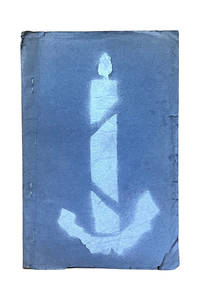
1950ref. 002536Idaho 1950. Soft cover. Very Good. Blue paper covers with silver stenciled candle to front cover mimeographed pages 9" x 6" 20 single-sided pages. Special thanks to Chris Boyd of Boyd's Used and Rare Books for triangulating contributor names to identify Moscow Idaho as the likely origin of this cookbook. Wear to yapped wraps else very good. The most interesting contribution is for Nesselrode Pie. This pie was created in 1945 by New York baker Hortense Spier. The original recipe included pecans but as others copied the recipe it devolved into having chocolate flakes and maraschino cherries instead. The New York Times claimed in a 1988 article that "while for years it was a popular American Christmas dessert Nesselrode pie left our collective culinary consciousness about 30 years ago and has hardly been heard from since." Dec. 7 1988 Section C Page 20. The recipe included in this cookbook does indeed have chocolate flakes meaning this was probably published in the late 1940s or 1950s. paperback books
ref. 003692S. l.: s. n. Very good. Caligraphic manuscript n. d. 19th century; 4 x 6 3/4; single cream stock; text and decorations in pink and black ink; a few minor spots to edges; in very good condition. A beautiful memento it included the words: "Remember Me" on a scroll surrounded by lacy exquisite decorations. Such remembrance tokens were commonly exchanged in the 19th century and kept individually such as this one or pasted in scrapbooks. s. n. unknown books
1920ref. 003671Lynn Massachusetts: Lydia E. Pinkham Medicine Co. 1920. First Edition. Very good. First edition n. d. ca 1920; 7 x 4 1/2; pp. 1-32; pictorial lithographed wraps in black silver and red; mild age-toning and creasing to corners; in very good condition. Published as an advertisement for various Lydia Pinkham quack medicines the booklet contained various recipes for soups breads cookies etc. Lydia E. Pinkham Medicine Co. paperback books
1920ref. 003664S. l.: s. n. 1920. Good. Early 20th-century edition n. d. ca 1920; 6 3/4 x 5; pp. 2 1-25; stapled pink wraps faded printed and decorated in blue; illustrated with drawings; wraps fragile with chips along edges and some loss of paper; text block solid; in good condition. A comprehensive guide to Mah Jong. s. n. paperback books
1830ref. 003661S. l. Michigan: By the author 1830. Good. Manuscript plat map n. d. ca 1820s - 1830s; 13 x 16; off-white stock and brown ink; mild spotting; discreet repairs to verso; in about good condition. A beautiful map it showed the Gallain River and Lake Michigan and noted several businesses with their land properties including Robb & Co. Morison & Co. etc. By the author unknown books
1904ref. 003569S. l.: Izdanie Bunda 1904. Very good. Real photo postcard; 3 1/2 x 5 1/2; subtitled below image; a few small creases and several nicks to corners; minor spotting; in about very good condition. A photographic postcard showing the members of the Yakutsk Protest most of them Russian Jews which lasted from February 18th through March 7th of 1904. Fifty-six men and women were depicted with their last names listed below the picture. The protest was an armed rebellion by political exiles so called Romanovites in Yakutsk. It would be the biggest and best-known collective political action of exiles in the city and would be triggered by a circular by the Irkutsk Governor-General which ordered the punishment of exiles for unauthorized absence and for communicating with other exiles. The rebels ultimately surrendered and were sentenced to 12 years of hard labor - a harsh punishment which would spark nationwide demonstrations and would lead to the prisoners' release in 1905. Izdanie Bunda unknown books
1870ref. 003629New York: Continent Stereoscopic Co. 1870. Good. Ten stereoviews n. d. 1870-1890; 4 1/4 x 7; overall in good to very good condition - with some foxing a few small nicks to edges and occasional creasing. The Continent Stereoscopic Company of New York was a major publisher of copy negatives occasionally issuing original work as well. Allegedly they published over 2000 views of the United States primarily focusing on Oregon Nevada and California but also Washington Pennsylvania and New York. The current stereoviews some including human figures in the images pictured Crinoline Point Nevada Falls and North and South Domes in Yosemite Woodward's Gardens and a view from the Cliff House in San Francisco Lovers Cascade in Wildwood Canyon etc. Continent Stereoscopic Co. unknown books