ANONYMOUS; PARISABAA
170.486 resultados
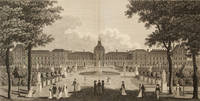
1816ref. 1435761816. PARIS. Graphic Illustrations of the Most Prominent Features of the French Capital; with Characteristic Figures in the Foregrounds comprised in Twelve Stroke Engravings From Accurate Designs Taken in Paris during the Imperial Reign of Buonaparte. With Descriptive Notices and Interesting Anecdotes. 26 pp. illustrated with 12 double-page engravings. Folio 430 x 380 mm. bound in contemporary French three-quarter black morocco over marbled boards gilt title and floral vignettes on spine paper label with ms. number "20" on front cover and spine. London: Harper and Co. 1816. A fine copy of this extremely rare collection of views of Paris consisting of twelve artistically conceived views of Paris engraved by English artists. The large double-page engravings incorporate local Parisians participating in daily routines within the setting of each view. Panoramic views include: the Military School and the Church of the Invalides; View of Paris from the South Boulevard; View of Paris from Montmartre; South View of the Old and New Louvre; The Mint and The Façade of the Louvre; View of La Place de la Concorde; The Garden of the West Front of the Tuileries; Palace of the Tuileries Facing La Place du Carrousel; Garden of the Tuileries; The Luxembourg or Palais du Senat with the Gardens; The Elysian Fields Distant Gardens of the Tuileries; Entrance to Les Champs Élysées and La Place de la Concorde. Each plate is followed by two pages of text giving historical details and anecdotes about the site illustrated. Minor wear to outer edges of binding plates and text clean. Rare: OCLC lists 6 copies worldwide of which only one is held in America Bowdoin College. hardcover books
1813ref. 1285581813. ANONYMOUS. Tableau ou Description de la Russie. Avec les Moeurs Usages Coutumes Religion de ses Divers Peuples. Orne de Jolies Figures. 4 139 1 pp. with 7 plates. 12mo 130 x 80 mm. bound in half reddish calf over red marbled paper covered boards. Paris: Chez H. Nicole Rue de Seine 1813. A charming little book on various aspects of Russia which is very rare and would appear to be unrecorded since we can find no record of it in any data base or any of the standard bibliographies. Although the format is the same as the work by Breton de la Martiniere published in the same year the illustrations are far less sophisticated and of course the book is a fraction of the length. Hinges head and tale worn but sound internally fine. hardcover books
1969ref. 362157New York: Midwood Enterprises 1969. Softcover. Near Fine. First edition paperback original. Else fine with a bit of light wear to lower edge of front panel. From The Collectors Classic Series. Scarce. OCLC locates no copies of this first edition. Midwood Enterprises unknown books
1968ref. 362461New York: Grove Press 1968. Softcover. Near Fine. First Evergreen Black Cat edition. Mass market paperback. Near fine with spine creases and edge wear. Grove Press unknown books
1974ref. 362462New York: Bantam Books 1974. Softcover. Near Fine. Reprint. 340pp. Mass market paperback. Crease on front cover else about near fine with slight rubbing and edge wear. Bantam Books unknown books
1982ref. 156906New York: Star Dist 1982. Paperback. 180p. illustrated with explicit drawings very good first printing PBO in original explicit camp pictorial wraps. Gay pulp fiction. Rough Trade RT-521. Star Dist paperback books
1930ref. 280705New York: Horace Liveright 1930. Hardcover. Near Fine/Near Fine. First edition. Introduction by W.E. Woodward. A tiny owner's stamp on the front fly else fine in a modestly rubbed near fine dustwrapper with tiny nicks and tears and jacket art by Sugar. Epistolary and practical advice on the stock market delivered in a series of letters between an uncle and nephew. Very scarce in jacket. Horace Liveright hardcover books
1890ref. m1814London: Ernest Nister n.d. ca. 1890. Quarto color-illustrated self-wrappers 16 pp. Chromolithograph plates throughout. Fine. Ernest Nister, n.d. [ca. 1890.] unknown books
1851ref. m1310London: John W. Parker 1851. 1st edition. Duodecimo cloth 215 pp. Wood-engraved plates illus. Good; moderate shelf wear. John W. Parker, 1851. hardcover books
1862ref. 28438Philadelphia: American Sunday-School Union 1862. 16mo brown cloth 232 pp. Wood-engraved illustrations. Shelf worn. American Sunday-School Union, [1862]. hardcover books
1869ref. 28378Philadelphia: Friends’ Publication Association 1869. 24mo printed wrappers 20 pp. Very Good; cover lightly soiled. Friends’ Publication Association, 1869. unknown books
1933ref. 76416New York: Macaulay 1933. Hardcover. Fine/Very Good. First edition. Fine in a moderately worn very good dustwrapper with several chips and tears at the extremities. Advance Review Copy with publisher's promotional material soliciting a review laid in. Trials and tribulations of a divorced and pregnant woman. Scarce. Macaulay hardcover books
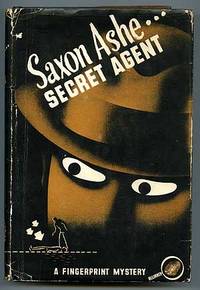
1942ref. 75643New York: Alliance Book Corporation 1942. Hardcover. Very Good. First American edition. Owner stamp front fly very good or better in moderately worn about very good dustwrapper thta is rubbed and is spliting at the spine fold. Second of the two Saxon Ashe novels by the genuinely anonymous author uncharacteristicly even Hubin does not list the author's true name this one about an attempt to thwart the Nazis in Holland. Alliance Book Corporation hardcover books
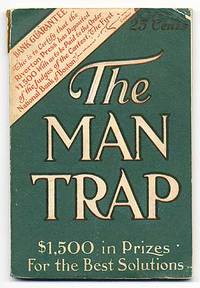
1910ref. 55521Boston: Riverton 1910. Softcover. Very Good. First edition. Wrappers detached but present else very good. Riverton unknown books
1986ref. 45934New York: Grove Press 1986. Hardcover. Fine/Fine. Reprint. Fine in a fine dust jacket. Grove Press hardcover books
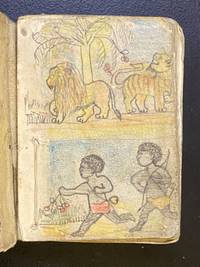
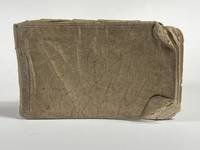
1920ref. 4211s.l. Germany or Austria s.d. late 19th or early 20th century. Poor. 64mo 70 x 55 mm. Homemade binding cloth spine loosening front cover perished; back cover: board covered with glazed paper present on the pastedown inside detaching but the glazed paper on the outside is torn away. VERY WORN see the 44 IMAGES on our website the back cover becoming unstable but all the leaves are attached. Preserved in a fine cloth case which is perfectly fitted to allow the manuscript to be correctly removed and completely protected. HIGHLY CURIOUS LILLIPUTIAN ALBUM CONTAINING JUVENILE DRAWINGS OF THE MOST UNLIKELY ASSEMBLAGE OF UNDER-REPRESENTED PEOPLES NAMELY AFRICANS NATIVE AMERICANS AND ABORIGINAL AUSTRALIANS ALL DEPICTED IN THEIR NATIVE HABITATS AND INDIGENOUS ATTIRE. We have never encountered a manuscript such as this one either in permanent collections on in the trade. Our album contains 41 colored drawings and b/w sketches on 35 leaves with a number of blanks bound in. They include: AFRICANS: 28 drawings and b/w sketches including hunting scenes some on horseback; nude and partially clothed Africans; African landscapes with lions tigers and great birds some devouring each other; an African child being saved from a tiger by an angel; and a man and woman dancing in a garden; three Africans cultivating grapes; several Africans fighting and much more. Some of the drawings feature palm trees and rounded huts. The caption on one of the drawings reads "In die Jagt" sic. NATIVE AMERICANS: 9 drawings and b/w sketches including hunting scenes with the hunters in full headdress with feathers; in one of the drawings a group of three men are in combat with a tiger who leaps from a large tree. Interestingly some of the drawings likewise feature palm trees. The caption on one of the drawings reads "Zweiter Theil vom dem Ameriganer oder Idianer." ABORIGINAL AUSTRALIANS: 4 drawings and b/w sketches the most remarkable being a scene of two men seated beneath a tree a large dinosaur bird flies immediately above and in the sky a peaceful sun sees all. The caption on one of the drawings reads "Dritter Theil von dem Australiener." GNOME: 1 b/w sketch. The gnome wears a backpack and carries a gnarled walking stick his conical hat bearing a heart-shaped ornament in the background a laughing sun peers over the horizon. That Parts II and III have a divisional title suggests that there were one or more leaves at the beginning of Part I as well now no longer extant. Nonetheless this is a fascinating little children's manuscript and remains A REMARKABLE SURVIVAL. CATALOGUER'S NOTE: We are grateful to Dr. Claudia Bubenik for helping us transcribe the juvenile German inscriptions. unknown books
1915ref. 4227France Belgium England 1915. Good. Oblong 8vo. Small "Walker's Service Notebook" 154 x 94 mm lined 26 pages filled with neat entries in pencil and pen final page of diary loose the remaining portion of the notebook i.e. about 2/3 blank. Original limp cloth covers worn. § Extraordinary manuscript diary of an anonymous British soldier beginning April 12th 1915 and ENDING ABRUPTLY IN THE TRENCHES AFTER A GAS ATTACK. The final entry was dated December 19th 1915 which was THE FIRST DAY PHOSGENE GAS WAS USED AGAINST BRITISH SOLDIERS. The short diary is rich in detail of life at the front. The anonymous soldier belonged to the 49th West Riding Division which had a large number of gas casualties when soldiers in reserve lines did not receive a warning in time to put on their helmets. A study by British medical authorities arrived at a figure of 1069 gas casualties 120 of which were fatal. It is very possible that the present manuscript was written by one of those men. It seems probable that with access to the right regimental records the identity and fate of the soldier could be learned and his story told in full; however even as an anonymous diary the interest and poignancy of this personal record is clear. The events recorded span just nine months. On April 12th the soldier leaves Edenthorpe near Doncaster and crosses the channel to Le Havre that evening "packed like herrings" and accompanying horses and wagons. Over the next few months he records laying lines opening signal offices handling horses towns and villages visited billets and meals injuries regiments encountered names of comrades and O.C.s shelling rain and mud. He sees the Northumberland Hussars the Indian Corps and Royal Horse Artillery. On May 9th he records the Battle of Aubers Ridge: "Off duty at 7am. Attack began at 5am by Artillery. Signal thro' during day showed heavy losses in E. Lancs Lincolns. 13th London and other Batts. Had coffee in Fleurbaix and then to bed in barn. Off duty 3pm. Attack still proceeding without much impression on our line. French said to be doing well. At night we have the two windows in our Signal Office made up with corrugated iron & sandbags." For the entry dated May 12th our author notes that the name of the Division has been "altered to the 49th" thereby confirming the identity of his Division. On May 24th: "The Allamands dropped about 6 shrapnel in our vicinity." From a period of steady work and periodic pleasures "had tea & cakes at a patisserie & and then back after buying some books" "glorious day" the situation deteriorates with the weather "torrential rain dugouts leaking & 18" water on my floor". They move to Chateau de Trois Tours and on July 13th there is "rather an exciting night" with a bombardment from 7.30 to 10.30. On the 14th "The whole place is being encircled by barbed wire & trenches & the furniture is being moved out of the chateau." On the 15th "At 12.45pm about 12 shells fell round the chateau made a dive for the Signal Office Billy Edwards & Gus Harris wounded in thigh and ankle." They were shelled again on the 16th. On December 1st he travels back to Sheffield on leave returning on December 8th. The company are now holed up near Ypres at Hospital Farm the name given to a farm building used as a dressing station. The final entry reads "Dec 19th 'S.O.S.' Gas attack 5.30 am things lively until 8.30am. 146 & 148 des. 148 soon repaired from chateau". The cemetery at Hospital Farm contains 115 Commonwealth burials of the First World War. On the significance of the 19 Dec. 1915 battle at Wieltje Belgium northeast of Ypres see the long Wikipedia entry "German Phosgene Attack of 19 December 1915." The diary contains many clues that could help identify our writer in military records. It is not certain that he was one of the first British casualties to Phosgene gas but it seems tragically likely. As it stands the final entry in the diary marks an important milestone in the war: phosgene gas would eventually be responsible for about 85% of the 90000 deaths caused by chemical weapons during World War I. unknown books
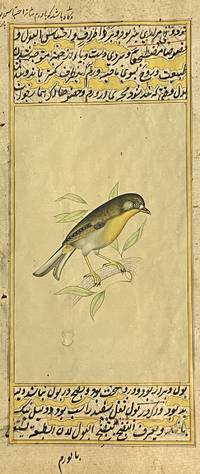
1920ref. 4018India 19th or 20th century. Good. Painting on manuscript leaf ca. 270 x 160 mm hinged on plexiglas so that the verso is visible matted matte size: 367 x 250 mm some spotting on the matte. Manuscript leaf with some damage outside painted area; a very attractive ornithological painting. A delicate Indian painting of a Western Yellow Wagtail likely made for the tourist trade painted on a manuscript leaf that has nothing to do with the images. The Arabic text above the painting is an excerpt from a commentary on Mūjiz al-QÄnūn by Ibn Nafis. The bird and the decorative yellow "cloudbands" that appear between the lines of text were added later. The text on the verso is unidentified but judging from the red overlining we are inclined to believe it is a commentary. In our Western Yellow Wagtail we admire the extremely naturalistic color and fine modelling of the feathers as well as the restrained depiction of the tree branch and leaves. Suitable for exhibition and study. We are grateful to Kelley Tuttle for her characteristically excellent cataloguing assistance. unknown books
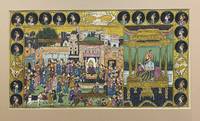
1920ref. 4019India 19th or 20th century. Good. Painting with extensive gold applied on a partially printed leaf with some manuscript annotations ca. 358 x 260 mm hinged on plexiglas so that the verso is visible matted matte size: 475 x 327 mm. Minor staining to the paper but the painting is in excellent condition. An intriguing Indian painting with extensive gilding which mimics Persian dynastic or genealogical manuscripts but was in fact written in a fake language. Likely created for the tourist trade the painting was applied on a completely unrelated partially printed leaf lithographed which has been annotated in manuscript. The words which appear in the circular portraits are written in a fake language. Clearly the artist did not know Persian or Urdu since the two languages utilize almost the same alphabet and thus resorted to writing letters that looked similar. In fact they are mere squiggles. Suitable for exhibition and study. We are grateful to Kelley Tuttle for her characteristically excellent cataloguing assistance. unknown books
1920ref. 4020India 19th or 20th century. Very good. Painting with extensive gold applied on a partially printed leaf with some manuscript annotations ca. 354 x 164 mm mounted on card matted matte size: 460 x 278 mm. Each painting has a scratch to the surface area SEE IMAGES overall in very good condition. In these delicately rendered Indian processional paintings are depicted no less than 43 people three elephants four bulls two carriages and two horses. Alongside a waterfront one party leaves from while the other party returns to a walled courtyard. The sky above appears to darken what is left of a fading sunset. Suitable for exhibition and study. We are grateful to Kelley Tuttle for her characteristically excellent cataloguing assistance. unknown books
ref. 4027India Early 20th century . Very good. Large painting on a manuscript leaf in Arabic from the "Sharh al-Wiqayah" by Burhan al-Shariah Mahmud ibn Ubayd Allah SEE BELOW 353 x 216 mm hinged onto plexiglas mount with clear tape so that the text of the manuscript is visible from the back; matted matte size: 500 x 360. A remarkable erotic Indian painting of an uncommon type which we describe as "zoomorphic erotica." The painting depicts a camel within a frame surrounded by an antilope a lion a horse a gazelle and a bull; within each animal is a depiction of an orgy comprised of six or in the case of the camel seven men and women all finely rendered by an artist of considerable skill. This is a very high quality piece. THE MANUSCRIPT on which the painting was applied belongs to a rare text: is an excerpt from the "Sharḥ al-WiqÄyah" a commentary on a work of Hanafi fiqh law by BurhÄn al-Sharīʻah Maḥmūd ibn ʻUbayd AllÄh d. 1274 or 1275 specifically from the chapter about PREPARING BODIES FOR FUNERALS. We are grateful to Kelly Tuttle for her scholarly generosity in identifying this text and for dating it to the early 20th century. MUST BE SEEN TO BE FULLY APPRECIATED. unknown books
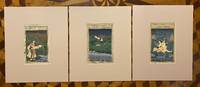
1819ref. 4048India 18th or 19th century . Very good. Three matted paintings matte size: 323 x 266; leaf size: 215 x 145 mm; visible image: 170 x 115 mm hinged to clear Plexiglas so that the manuscript texts on the versos are perfectly legible. Leaves with some soiling edges slightly frayed along inner gutter margins. A remarkable assemblage of three erotic Indian paintings all of have been executed on the same unidentified Urdu manuscript. The settings are intriguing and the subjects are set within brooding fantastical landscapes alongside a stream or lake festooned with lily pads and lotus flowers. They depict: 1. A woman holding a large ejaculating phallus; 2. A flying phallus carrying a basket of four phalluses accompanied by a winged vagina; 3. A man holding a bowl couples with a four-armed goddess presumably a devotee of Kali: in her hands she holds a sword a spear and an ax in the fourth a lotus flower. All three paintings were finely rendered by an artist of considerable skill. This are are very high quality pieces. THE MANUSCRIPT one which the paintings appear was written in Urdu and has resisted identification. As always we are grateful to Kelly Tuttle for her scholarly generosity. MUST BE SEEN TO BE FULLY APPRECIATED. unknown books
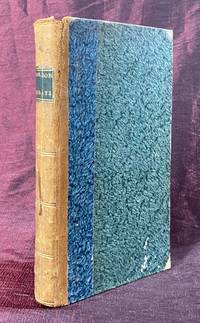
1687ref. 3835Lugduni imprint false: likely printed in Germany 1687. First Edition. Very good. 8vo 180 x 100 mm. 8 295 pp. Later German quarter calf over decorated blue paper boards actually two different sheets were utilized printed waste utilized as spine lining the text is in Latin and French vellum corner tips black spine label gilt binding a bit worn all edges stained red. Paper defect on fol. H3 pp. 101/2 affecting five lines of text with loss paper stock foxed and somewhat browned as is common with Germany medical books at this date but a good unsophisticated copy with a few leaves unopened. UNKNOWN PHYSICIAN ARGUES AGAINST HEAVY SMOKING IN 1687. This curious medical book discusses in 65 chapters an uncharacteristically broad array of afflictions: vertigo vomiting stomach complaints "hypochondria" "melancholia hypochondriaca" ailments of the liver and spleen arthritis fever coughing grief scurvy bloody urine epilepsy asthma and much more. To these discussions are added a series of bewildering letters to various unknown recipients including an argument addressed to a young student AGAINST SMOKING TOBACCO "Ad juvenem quendam studiosum cui Nicotianae fumum dissuaseram" pp. 231-236. Here the anonymous author argues against the "noxious" smoke of tobacco "Nicotiana" which is an "enemy to human nature." But the author conceeds that "No one of a sound mind will deny that this plant has been endowed with amazing strength by God the greatest Creator." Also: "All other plants were created in vain and the earth was crushed by the useless weight of millions of plants in vain because the faculties of all other plants were in this one plant . that can by itself remove and quench both cold and hot disease." However the conclusion is that even "Moderate smoking is harmful but much more harmful to those who sin in excess." We learn that the tobacco plant "not only has the power of subverting the stomach but also has a certain narcotic capacity and if we are to believe the writers of Indian affairs it often produces wonderful visions." Such however should very rarely be put to use. Furthermore tobacco is harmful to the skin and flesh; if smoked frequently the brain is weakened by the narcotic power; nor does it help the eyes. Finally the author implores his young recipient to "abstain from daily smoking." No copy in the U.S. The BL copy lacks the title-page. BnF Catalogue des sciences médicales II p. 258. unknown books
1940ref. 3870s.l. Pittsburgh 1940. Good. 7 glossy black and white prints on paper 3 3/16 x 4 1/2 inches on versos the paper numbered M001 M220 and M349. Some general wear creasing from handling soiling on versos one small tear. ODD CLAUSTROPHOBIC INNER-CITY VERNACULAR PHOTOGRAPHS FROM THE 1940s. Depicted here are unnamed African-American neighbors and probably relatives assembled on brick streets against brick-walled houses. At least three of the photos were taken on the same street corner. A well-dressed man stands in front of a grocery store; one very young woman smokes; behind a wide-eyed girl wearing glasses and too-large sandals hangs laundry; another woman sits in a shadowy alley; three girls pose against a brick wall which exhibits faint graffiti behind them a contraption of some kind appears in the darkness for no reason; a stone step worn and sunken supports the feet of two boys in a doorway: on the sidewalk in front of them falls the shadow of the amateur photographer his fedora visible in the flawed negative. The photographer's subjects are often strangely positioned to one side; he has decapitated 1.5 heads; he has made the children squint and scowl uncomfortably; one woman smiles at the camera a bag of trash on the ground at her feet while her companion stares into a window. The several ghostly flaws to the negatives remove the viewer even further away from these lost moments. But not every photograph is claustrophobic: there is one of a forgotten family-outing at a hard-scrabble beach with radio towers and industry looming vaguely in the background. But we all know that the outing will be brief that they must soon return to the inner-city where perhaps there will live out the end of their days. The photographs were discovered in Pittsburgh and it is very possible that they were all taken there. At present we have only the emulsion and paper and thoughts of Temps Perdus. unknown books
1865ref. 3882Philadelphia: W.W. Harding 1865. Album 5 x 6 x 2.5 in. Title-page a little foxed verso blank Index to portraits 2 pp. followed by 25 thick cards creating 50 slots; all are filled with 47 cartes-de-visite 2 views and one chromolithograph a little foxed. Bound in original blue-green roan over deeply embossed carved boards covers and spine gilt edges dazzlingly gilt and gauffered each board with four porcelain beads two working catches and clasps with luxuriously wrought mounts and two porcelain beads moire pastedowns and endpapers. Minor scuffing to binding extremities. SUPERB CIVIL WAR ERA PHILADELPHIA BINDING THE GILT AND GAUFFERED EDGES GLEAM AMAZINGLY. The assemblage of the present album may be localized to Minnesota or neighboring Wisconsin owing to the surprising inclusion of two small views by Benjamin Franklin Upton 1818-1910 of the St. Croix River which demarks the two states. One of the images is entitled "Views of the Dells on the St. Croix River" a stereoscopic copy dated 1865 is at the Getty; the other is a log jam downriver from the bridge with a group of loggers posed in the foreground two stereoscopic copies of this scene are view held by NYPL Photography Collection. While it is not certain that the family who assembled the album are from either Minnesota or Wisconsin it seems self-evident that the St. Croix River was of considerable significance. Was the last name of this family "Quincy" We are perplexed by a third surprising inclusion namely a chromolithograph of a "Quince Blossom" probably not at random. The present album is far more luxurious than Harding's more common and much more inferior "Universal Photograph Album" 1861 and ours is distinguished by its exceptional condition. W.W. Harding unknown books