Joyce JamesABAA
15 485 résultats
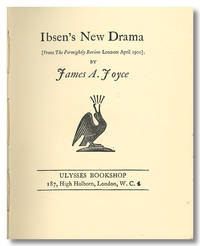
1930réf. WRCLIT79519London: Ulysses Bookshop 1930. 12mo. Cloth backed boards printed label edges untrimmed. Usual very slight tan offsetting to endsheets otherwise a fine copy. First edition in book form of this essay first published in THE FORTNIGHTLY REVIEW April 1900. The edition consisted of forty press-numbered copies of which this is #11 plus an unspecified number of review and out of series copies printed by H.D.C. Pepler. The review copies are denoted "Press Copy" and like these numbered copies bear the approbation: "No copy for sale." Shortly after publication Jacob Schwartz proprietor of The Ulysses Bookshop informed Joyce that twenty-two sets of this work and its companion volume were sent to libraries ten sets to friends and one set each to Joyce Stuart Gilbert and Harriet Shaw Weaver. He retained five sets which he assured Joyce would not be offered for sale. He did not however provide an accounting of the "Press" copies in that letter. But in later years he inscribed at least one 'press' copy of its companion suggesting it was one of about fifteen copies thus. SLOCUM & CAHOON A40. Ulysses Bookshop hardcover books
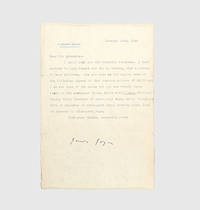
1930réf. 190805Paris: 1930. Lady Cunard. is sending over a person to hear Sullivan An unpublished letter sent to the future proprietor of the Ulysses Bookshop enlisting him in the promotion of the Irish tenor John O'Sullivan. Joyce first heard the singer perform in October 1929 and was immediately enthralled by his powerful voice. Upon meeting Joyce and O'Sullivan became friends and drinking companions and Joyce worked tirelessly to help O'Sullivan achieve success. In early 1930 Joyce was struggling against a creative slump in his work on Finnegans Wake. Furthering O'Sullivan's career became an alternative pursuit; Joyce was himself an amateur tenor and regarded the singer as "a kind of alter ego" Ellman p. xlv. He attended as many performances as possible always sitting in the front row and responding enthusiastically and encouraged his friends and admirers to do the same. He also attempted to get the tenor noticed by music critics and potential patrons such as Nancy Cunard's mother who he mentions in the present letter: "I have written to Lady Cunard and she is sending over a person to hear Sullivan". Ultimately few others were found who shared Joyce's enthusiasm for the singer but he was immortalized as the character "Jean Souslevin" i.e. "under the wine" in Finnegans Wake. Jacob Schwartz was "one of the first to recognize the market potential for letters and manuscripts of Joyce" Brockman p. 174. He met the writer in London in 1929 and shortly afterwards embarked on a journey to Dublin to purchase Joyce-related documents and memorabilia. The Ulysses Bookshop opened later in 1930. Single sheet of Joyce's printed letterhead 232 x 158 mm typed on one side. Housed in custom orange cloth chemise with acetate internal pocket. Short splits at ends of former folds two with small tape repairs to verso holding fast edges a little chipped and creased lightly toned. In very good condition. Richard Ellman ed. Letters of James Joyce Volume II 1966; William S. Brockman "Jacob Schwartz - 'The Fly in the Honey'" Joyce Studies Annual vol. 9 Summer 1998. hardcover
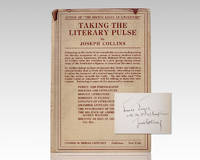
1924réf. 151436New York: George H. Doran Company 1924. First edition of this work analyzing modern authors and their literary characters through a psychological lens. Octavo original publisher's red cloth illustrated with tipped in plates. Association copy inscribed by the author to fellow writer James Joyce on the front free endpaper "James Joyce with the writers compliments Joseph Collins." The recipient James Joyce was an Irish modernist writer whose novel Ulysses 1922 is widely regarded as one of the most influential works of twentieth-century literature. Set in Dublin over the course of a single day the novel employs innovative narrative techniques—most notably stream of consciousness—to explore the inner lives of its characters while drawing structural parallels to Homer’s Odyssey. Joseph Collins was the first person to review Ulysses for the New York Times after Joyce lent Collins the Little Review installments of Ulysses. Collins groaned to Nutting the next day "I have in my files writing by the insane just as good as this" and gave a medical explanation of the deterioration of the artist's brain. Later on however he began to think better of the book. Joyce even had Molly Bloom memorialize Collins's manner in Ulysses: "Floey made me go to that dry old stick Dr Collins for womens diseases on Pembroke road. I wouldn't trust him too far to give me chloroform or God knows what else still I liked him when he sat down to write." Richard Ellman James Joyce page 516. Near fine in a very good dust jacket. An exceptional association. Dr. Joseph Collins 1866–1950 was an American neurologist author literary critic and medical educator known for his contributions to the study of nervous and mental disorders in the early twentieth century. A graduate of New York University Collins served as a professor of neurology and was actively involved in clinical practice and medical writing producing works that addressed both specialized neurological topics and broader issues of health and psychology. In addition to his scientific publications he wrote essays and books aimed at general audiences often exploring the relationship between mind and body as well as the social implications of medical knowledge. George H. Doran Company hardcover
1939réf. 140947977London: Faber and Faber 1939. First Edition. Near Fine/Near Fine. First edition first printing. iv 628 pp. Bound in publisher's red cloth stamped in gilt on the spine yellow topstain. Near Fine with offsetting to fly-leaf and final page. In a Near Fine unclipped dust jacket with trivial toning to spine. Housed in a custom clamshell case black cloth over quarter black morocco titled in gilt. A beautiful copy of Joyce's famously complex and linguistically innovative novel scarce in this condition. One of an edition of 3400 copies of which 950 copies in sheets were destroyed. Slocum A48. Faber and Faber unknown
1928réf. 029919New York 1928 Crosby Gaige Hardcover 1st Edition Signed by Author
réf. 22066Préface de C. K. Ogden et portrait de l’auteur par C. BRANCUSI. P., The Black Sun Press, 1929, in-8, broché, couv. rempl., 58 p., sous chemise étui de l’éditeur papier vert et argent. Edition originale. Cette édition est due à Harry et Caresse Crosby qui dirigeaient une maison d'édition, The Black Sun Press, installée à Paris rue Cardinale. Elle comporte trois importants fragments de " Work in Progress " : The Mookse and the Gripes, The Muddest Thick that was Ever Heard Dump et The Ondt and the Gracehoper. En outre le recueil est illustré en frontispice du célèbre portrait " abstract " de Joyce par Brancusi constitué d'une spirale et de trois lignes verticales, dans lequel on reconnaît sans peine l'auteur d'Ulysses. Tirage à 650 exemplaires, celui-ci 1/100 de tête num sur Japon (thirty-four), signé à l'encre par Joyce page de faux-titre. Excellent état. Slocum & Cahoon, A 36.
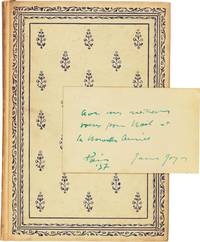
1936réf. 018988New York: The Black Sun Press 1936. First Edition. Hardcover. Partly unopened. Light soiling mostly to the rear; spine darkened. Near Fine. Small octavo 4-1/2" x 6-5/8" in publisher's cream-white boards spine lettered in blue front cover stamped in blue with floral ornaments. Frontispiece portrait by Augustus John. Copy #576 of 800 numbered copies. A Presentation copy with Joyce's engraved visiting-card INSCRIBED and SIGNED on the verso in green ink: "Avec mes meilleures/voeux pour Noël et/la Nouvelle Année. Paris '37 James Joyce." On the recto Joyce has scored through his name in green ink and there is a green ink blot in the upper left corner. The Black Sun Press hardcover
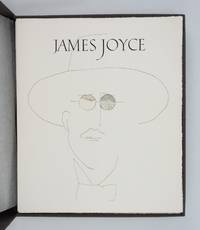
réf. ST21186New York: Vincent FitzGerald & Company 1987. No. 15 OF 50 COPIES for sale and 15 Artists' Proofs. 385 x 325 mm. 15 1/8 x 12 3/4". 2 p.l. 40 pp. 5 leaves. Unbound as issued in original wraps with a portrait of Joyce on front cover his round glasses cut out to reveal part of a collage on the opening leaf. Housed in a clamshell box by David Bourbeau of Thistle Bindery this covered in burgundy-flecked taupe Japanese handmade silk woven for this box upper cover with incised vertical line showing the profile of Joyce this with silver Japanese tea paper peeking through spine with silver "JJ." With a total of 62 etchings employing more than 150 plates original watercolors collage and hand cutting some of the pieces folded into multiple sections the artwork divided into four sections: "Dreams" "Games" "Planes" and "Death" each preceded by a title page also printed with the page numbers of the texts that inspired the art. Printed on Moulin du Gue paper; section title leaves for illustrations wrapped with Japanese paper. SIGNED in the colophon by Weil and Van Dyke. See: E. Brunazzi "Susan Weil's Art of Joycean Illumination" in James Joyce Quarterly Vol. 34 No. 1/2 Joyce's Women Fall 1996 - Winter 1997 pp. 121-34. In pristine condition. With a very strictly limited press run this collection of carefully crafted sketches by Joyce is offered here as an important artist's book honored as one of the best illustrated productions of its time. Compiled after Joyce's death and first published in 1956 the text here consists of 40 short but polished fragments in prose and poetry the author put together between 1901-04 and then drew on in the composition of his major works "Dubliners" "A Portrait of the Artist as a Young Man" "Ulysses" and Finnegans Wake." "Epiphanies" was an appropriate choice for the present striking production since our publisher Vincent FitzGerald aimed to produce deluxe publications in the mode of the French livres d'artiste by facilitating an artistic environment like that of Paris in 1920s. And so when he asked his friends Susan Weil and Marjorie Van Dyke what writer's work they would like to illustrate they immediately chose Joyce one of brightest lights of 1920s Paris. Weil was a longtime Joyce devotee and suggested his little-known "Epiphanies" for their first project since these notes and ideas provided material for some of his greatest books. As Weil said "'The Epiphanies' seemed so perfect. Words were released like a flock of birds to roost in Joyce's future works." Elizabeth Brunazzi tells us that "FitzGerald challenged Weil and Van Dyke to create an innovative relationship among the visual images responding to the verbal texts; to make them 'flow' one into the other rather than present them frame by frame as in an illustrated work; and thus to create a novel organic form for the visual text and a different interpretation of the 'artist's book' altogether." The result is a work where the "illustrations" are not static but are intended to be manipulated by the reader in order to fully reveal themselves. Weil and Van Dyke independently produced images for each of the 40 "Epiphanies" then began dividing the contributions into four themes: "Dreams" "Planes" "Games" and "Death." Both employed a variety of techniques including watercolor etching collage and paper cut-outs and worked with other artists to refine and produce their final works. Brunazzi says that the present production results in the reader beginning "to rediscover and explore the frontiers of textuality much as a child first encounters a book as a beloved physical object incorporating physical images both tactile and visual." The resulting book was chosen by the Independent Curators for the Franklin Furnace exhibition "Contemporary Illustrated Books" as one of the 50 best illustrated books from 1966-88 and was featured in the Boston Athenaeum exhibition "Artists of the Book 1988 A Facet of Modernism.". Vincent FitzGerald & Company unknown
réf. 164342Margate: Counter Editions. 2019. Edition of 125 initialled dated and numbered on a label to lower right verso by Pensato. 2 colour lithograph on Somerset Tub Sized Satin White 410 gsm paper. Sheet size: 60 x 76 cm. Framed size: 69.8 x 85.5 cm. Excellent condition. Presented in a handmade black wooden frame with conservation acrylic glazing. unknown
réf. 302463New York: Vincent Fitzgerald & Co 1987. One of 50 numbered copies from a total edition of 65 including fifteen artist's proofs signed by Susan Weil and Marjorie Van Dyke. With illustrations by Susan Weil and Marjorie Van Dyke in various media: original etchings watercolors collages and decoupage. 1 vols. Folio 38 x 32.5 cm. Folded loose sheets laid into Japanese handmade silk over boards clamshell box with lightning bolt down upper cover mirror paper interiors by the Thistle Bindery. Internally fine some minor toning to spine and portions of the box else fine. One of 50 numbered copies from a total edition of 65 including fifteen artist's proofs signed by Susan Weil and Marjorie Van Dyke. With illustrations by Susan Weil and Marjorie Van Dyke in various media: original etchings watercolors collages and decoupage. 1 vols. Folio 38 x 32.5 cm. A stunning visual meditation upon the texts of Joyce's epiphanies executed in original etchings watercolors collages and hand-cut creations printed on various Japanese papers and on Moulin du Gue paper. The collages were executed by Vincent Fitzgerald and Zahra Partovi; the etchings were printed by Van Dyke and Maria Luisa Rojo at the Printmaking Workshop and the lithographs were printed by Van Dyke and Rhae Burden. The calligraphy was executed by Jerry Kelly and the letterpress printed by Dan Keleher and Bruce Chandler at Wild Carrot Letterpress. The texts of the forty epiphanies are printed in full and those selected for interpretation are assigned thematic divisions: "Planes" "Death" "Dreams" and "Games" with Weil undertaking the first two sections and Van Dyke the latter two. The thematic sectional titles to the divisions of the illustrative matter are keyed numerically to the relevant epiphanies in the text. A notable production singled out for notice in several key exhibitions including selective shows by Franklin Furnace and the Boston Athenaeum. Vincent Fitzgerald & Co unknown
1922réf. 1263501922. Paris: John Rodker for the Egoist Press 1922. 4to 15 732 1pp. Later half black morocco gilt top backstrip richly gilt original Aegean blue printed wrappers bound in. A very good copy tastefully bound and preserving the iconic wrappers. § First UK edition number 715 of 2000 copies printed 500 were seized and burned by the U.S. customs upon arrival; with half-title and 7 pages of errata at the front. Long bookseller's note in pencil at back by John Howell-Books priced $75. Joyce's ground-breaking modernist novel was first serialized in the American journal The Little Review and was the target of the first of many censorship attempts soon after the publication of the Nausicaa episode. Despite being banned in the UK and suppressed in the US well into the 1930s the novel was recognized as a landmark in literature from its earliest reviews. "I hold this book to be the most important expression which the present age has found; it is a book to which we are all indebted and from which none of us can escape." - T.S. Eliot. Slocum & Cahoon A18. unknown
réf. 75334New York: Crosby Gaige 1928. Literature SIGNED LIMITED EDITION No.72 of 800 copies. Octavo 18 x 12cm pp.xx 61; 3 blank. Publisher's illustrated vignette monogram to title page. Typography by Frederic Warde. Bound in original brown cloth tooled in gilt and blind top edge gilt others untrimmed. Housed in a protective quarter leather designer clamshell box. Simply a crisp clean copy. Box gently sunned to spine. An excerpt/article from Joyce's "work in progress" which would eventually be published within 'Finnegans Wake' 1939. New York: Crosby Gaige, 1928 unknown
réf. 124199London Elkin Mathews 1907. . First edition first impression first issue binding; small 8vo; mild browning to endpapers as always; publisher's green cloth titles to upper board and spine gilt a couple of small marks to boards slight rubbing to spine tips and corners endpapers browned as often; very good. Chamber Music was Joyce's first commercially published book after privately produced jeux and an aborted edition of the precursor to Dubliners. Gorman reported there to have been just 509 copies produced and these were split into three distinct issues. The present copy is from the first issue with laid paper endleaves with the chain lines running horizontally and the text in signature C well centred. The subsequent issues were bound later and turn up not infrequently. Slocum & Cahoon A3. London, Elkin Mathews, 1907. hardcover
1926réf. 2605First edition 8th Printing May 1926; bound by Stuart Brockman; all edges gilt. Binding in blue to match the colour of the original paper wrappers. The binding is in full blue goatskin; design applied with goatskin onlays gold tooling; lettered in gold leaf; book housed in velvet lined quarter leather box lettered in gold to spine. The design depicts two halves of a clock face which encloses the 18 steps taken during the book represented by the red dots and lines connecting. The radiating lines represent light and alternative directions in which the story could have taken. Shakespeare and Company
1996réf. UJOYLEA00sndLaura Geringer / Harper Colllins circa 1996. Very Good. Joyce William. The Leaf Men and the Brave Good Bugs. NY: Laura Geringer / Harper Colllins circa 1996. Illustrated. 4to. Glossy paper over boards. Book condition: Very good with some scuffing. Dust Jacket Condition: Very good. Panels scratched most noticeable on rear panel. Laura Geringer / Harper Colllins hardcover
1987réf. 302463New York: Vincent Fitzgerald & Co 1987. One of 50 numbered copies from a total edition of 65 including fifteen artist's proofs signed by Susan Weil and Marjorie Van Dyke. With illustrations by Susan Weil and Marjorie Van Dyke in various media: original etchings watercolors collages and decoupage. 1 vols. Folio 38 x 32.5 cm. Folded loose sheets laid into Japanese handmade silk over boards clamshell box with lightning bolt down upper cover mirror paper interiors by the Thistle Bindery. Internally fine some minor toning to spine and portions of the box else fine. One of 50 numbered copies from a total edition of 65 including fifteen artist's proofs signed by Susan Weil and Marjorie Van Dyke. With illustrations by Susan Weil and Marjorie Van Dyke in various media: original etchings watercolors collages and decoupage. 1 vols. Folio 38 x 32.5 cm. The Weil - Van Dyke Epiphanies. A stunning visual meditation upon the texts of Joyce's epiphanies executed in original etchings watercolors collages and hand-cut creations printed on various Japanese papers and on Moulin du Gue paper. The collages were executed by Vincent Fitzgerald and Zahra Partovi; the etchings were printed by Van Dyke and Maria Luisa Rojo at the Printmaking Workshop and the lithographs were printed by Van Dyke and Rhae Burden. The calligraphy was executed by Jerry Kelly and the letterpress printed by Dan Keleher and Bruce Chandler at Wild Carrot Letterpress. The texts of the forty epiphanies are printed in full and those selected for interpretation are assigned thematic divisions: "Planes" "Death" "Dreams" and "Games" with Weil undertaking the first two sections and Van Dyke the latter two. The thematic sectional titles to the divisions of the illustrative matter are keyed numerically to the relevant epiphanies in the text. A notable production singled out for notice in several key exhibitions including selective shows by Franklin Furnace and the Boston Athenaeum. Vincent Fitzgerald & Co unknown books
1929réf. 2621Paris: Shakespeare and Company 1929. First edition. 194 pp. Original printed wrappers with cover design by Sylvia Beach. Top edge uncut and unopened. Some slight overall soiling to the wrappers slight chipping to the lower edge of the spine. Chemised in a custom slipcase. One of 96 numbered copies on Verge d'Arches the numbered copies are twice as thick as the ordinary edition due to the paper used. Various tributes and studies of Joyce's Work in Progress which was published ten years later as Finnegans Wake. As Beach wrote "these were writers who had been watching Work in Progress from the beginning each seeing it from his own angle but interested in Joyce's experiment and friendly towards it." Beckett's first appearance in book form with texts by Marcel Brion Frank Budgen Stuart Gilbert Eugene Jolas Victor Llona Robert McAlmon Thomas McGreevy Elliot Paul John Rodker Robert Sage and William Carlos Williams. With letters of protest by G.V.L. Slingsby and Vladimir Dixon reputed to have been written by Joyce himself. Slocum & Cahoon B10. Federman & Fletcher 1. Wallace B11. Shakespeare and Company unknown
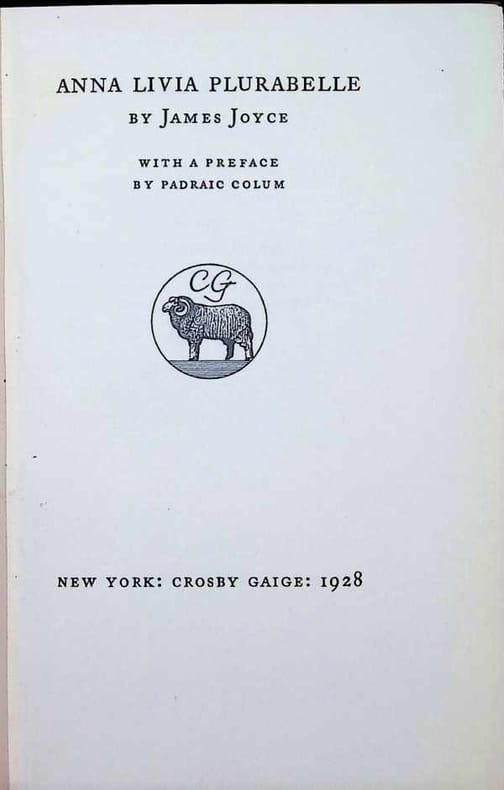
1928réf. 17230JNew York: Crosby Gaige 1928. First Edition. One of 800 numbered copies signed by the author James Joyce this copy being Number 547. Octavo. Typography by Frederic Warde. Beautifully bound in a rich brown cloth with gilt-stamping to the front board and spine and with a simple classical geometric line border stamped to the front and rear boards and top edge gilt. With the Crosby Gaige colophon design of a ram standing beneath “CG” within a circle. Some minor rubbing to board edges at spine and corners very small bump to fore-edge front board a few faint tiny bits of slight foxing to preliminaries; a near fine copy. Prints what is generally considered the most famous section from work in progress of what would become Joyce’s Finnegans Wake published in 1939. This elegant volume begins with the following from Padraic Colum’s preface: “‘Anna Livia Plurabelle’ is concerned with the flowing of a River. There have gone into it the things that make a people’s inheritance: landscape myth and history; there have gone into it too what is characteristic of a people: jests and fables. It is epical in its largeness of meaning and its multiplicity of interest. And to my mind James Joyce’s inventions and discoveries as an innovator in literary form is more beautifully shown in it than in any other part of his work.” Crosby Gaige hardcover
1920réf. 021432Paris 24 November 1920. Letter. Close to Fine. Small 4-1/2" x 6-1/2" AUTOGRAPH LETTER SIGNED "James Joyce" to Madame Yasushi Tanaka Louise Gebhard Cann on blue paper integral with envelope which is addressed in Joyce's hand and postmarked on the verso. In full: "Dear Madam In reply to your letter I shall call on you on Sunday afternoon next as it seems to be the most convenient time for you. Sincerely yours James Joyce." Louise Gebhard Cann was a prominent writer and art critic in early 20th century France. At Ezra Pounds suggestion Cann wrote to Joyce requesting an interview with him for an article on writers in France set to appear in an upcoming issue of THE PACIFIC REVIEW. Following publication of the "Nausicaa" episode of ULYSSES in THE LITTLE REVIEW the previous year Joyces writing was deemed obscene. This particular issue of THE LITTLE REVIEW was effectively banned in the United States and it is believed that because of the controversy the editors then decided to omit any mention of Joyce from the finished article published in the March 1921 issue of THE PACIFIC REVIEW. Ellman JAMES JOYCE LETTERS III: 32. unknown
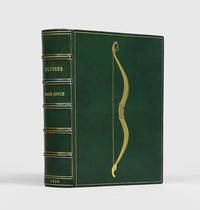
1936réf. 30022London: John Lane The Bodley Head 1936. First Edition English Issuance First Authorized English edition one of 900 copies only printed on special Japon vellum papers probably the most beautiful First Edition of ULYSSES ever printed. Tall thick royal 8vo publisher’s original full green polished linen buckram with the gilt lettering and pictorial decoration of the gilt bow designed by Eric Gill on the upper cover and spine housed in the rare printed dustjacket lettered in black on the upper cover and on the spine and decorated with the bow in red on the spine panel. xvi 766 pp. A well preserved copy the covers of the green cloth in bright and beautiful condition without any of the fading typical to the book the back just a bit mellowed at the tips the dustjacket with the price still intact and showing some light aging and some evidence of use or handling but whole and without major defects or substantial wear some tidying up to the verso. A pleasing survival with all aspects of a collector’s demands in good order. A HIGHLY IMPORTANT LITERARY FIRST EDITION ARGUABLY THE GREATEST WORK OF FICTION OF THE 2OTH CENTURY RARE IN THE DUSTJACKET. This an extremely impressive copy of the first authorized English edition. IT IS ALSO THE FIRST EDITION of ULYSSES PRINTED IN GREAT BRITAIN. The superb binding executed in full polished linen buckram has been especially designed for this great book. DESIGNS FOR THE BINDING EXECUTED IN GILT WERE ACCOMPLISHED BY ERIC GILL ONE OF THE MOST GIFTED MASTERS OF THE ART. The typeface is extremely attractive and very readable the printing on fine paper makes the book unusually handsome and presents what is perhaps the most beautiful printing of ULYSSES ever accomplished. Along with the text there are a series of appendices attached including copies of the International Protest against the unauthorized and mutilated printings of ULYSSES done especially in the United States; a copy of the injunction issued to prevent Samuel Roth from continuing his piracies of ULYSSES; a copy of Joyce’s letter to Bennet Cerf concerning the promotion legal fight and publication of ULYSSES on the author’s behalf; a copy of the decision of the US District Court which was rendered on December 6 1933 which lifted the ban on ULYSSES and a copy of the subsequent decision of the US Court of Appeals rendered in August of the following year which upheld the original decision; a copy of the forward to the first American edition and a bibliography of the works of James Joyce. ULYSSES can be viewed as the pinnacle of the Modernist movement and its impact on all subsequent western literature is unmistakable. Such writers as Virginia Woolf John Dos Passos William Faulkner Samuel Beckett Malcolm Lowry and Anthony Burgess have all paid tribute consciously or unconsciously to Joyce's influence. Burgess as well pronounced it the greatest single work in the English literature of this century and he is not alone in that opinion. John Lane, The Bodley Head hardcover
1916réf. 140940404New York: B. W. Huebsch 1916. First Edition. Near Fine. First American edition first printing. Bound in publisher's original pale green cloth lettered in dark green. Near Fine with sunning to spine and light rubbing to spine ends bookplate to front paste down light foxing to preliminary and terminal pages pages lightly toned. One of 504 copies of the first American edition which was bound up using imported sheets from the first London edition published two years earlier by Grant Richards the title page being a cancel with the Huebsch imprint. A lovely copy of this modernist cornerstone. B. W. Huebsch unknown books
1936réf. 81820London:: John Lane The Bodley Head 1936. First edition printed in England; trade issue; No.571 of 900 copies on Japon vellum. . publisher's green buckram stamped with Homeric bow in gold; t.e.g. iin dust jacket. A fine copy in a dust jacket with slight creasing and use; uncommon in this condition. Small 4to. John Lane, The Bodley Head, hardcover
1939réf. 87094London: Faber & Faber 1939. First trade edition. Hardcover. 1939 First trade edition first impression. Royal 8vo. Original red cloth ruled and lettered in silver to spine. Dust-jacket priced 25s. A very good first edition of Joyce's key work of literary modernism a hallucinatory dream-like narrative centred on the Earwicker family that weaves myth history and language into a cyclical structure. Very minor rubbing to jacket extremities but overall a very good example. Very Good Faber & Faber hardcover
1929réf. 181353Paris: Shakespeare and Company 1929. Who is Sylvia What is she that all our scribes commend her First edition first issue a press copy inscribed by Beach on the title page "the publisher Sylvia Beach" and with "press copy" ink-stamped on the initial blank. The first article "Dante. Bruno. Vico. Joyce" is Samuel Beckett's first appearance in print while the wider collection is among the earliest critiques of Finnegans Wake published ten years before the novel. The French writer Andre Chamson wrote "Sylvia carried pollen like a bee. She cross-fertilized these writers She did more to link England the United States Ireland and France than four great ambassadors combined. It was not merely for the pleasure of friendship that Joyce Hemingway Bryher and so many others often took the path to Shakespeare and Company in the heart of Paris." This early critique of Joyce's final work was partially intended to raise funds for the perennially impecunious writer. Other contributors include Marcel Brion Frank Budgen Stuart Gilbert Eugene Jolas Victor Llona Robert McAlmon Thomas McGreevy Elliot Paul John Rodker Robert Sage and William Carlos Williams. The publishers later sold sheets of this edition to Faber & Faber in London and New Directions in New York who reissued them with inserted title pages but this copy is from the original Paris issue. Octavo. Original white wrappers printed in black. Housed in custom orange cloth slipcase and chemise. Nicking and a couple of spots of faint toning to extremities short closed tears to spine ends chipping and toning to otherwise clean contents many leaves unopened: a very good copy. Slocum & Cahoon B10. hardcover
1936réf. 183370London: John Lane The Bodley Head 1936. Handsomely bound copy First UK edition. From a total printing of 1000 numbered copies this is one of 844 on japon vellum unsigned of which this is number 844. The Bodley Head Ulysses established the text for the succeeding 25 years and printed as appendices the International Letter of Protest against Samuel Roth's piracy and the famous legal judgement by John M. Woolsey lifting the ban in America on the publishing of the book. Crown octavo 250 x 190 mm. Finely bound by the Chelsea Bindery in green morocco spine lettered and decorated gilt raised bands block design of the bow first designed by Eric Gill gilt to front board twin rule to turn ins burgundy endpapers top edge gilt others untrimmed. The ocasional minor blemish an excellent copy finely bound. Slocum and Cahoon A23. hardcover