Aldus HuxleyBiblio.com

5 058 résultats
réf. 423368Chatto and Windus. Hardcover. Good. Set of eight novels; The Olive Tree On the Margin Limbo Texts and Pretexts After Many a Summer Eyeless in Gaza Little Mexican and Two or Three Graces. Olive cloth hardcovers some with shelf wear marking as illustrated. Gilt to the spines. Some bumping to the corners and folding to the top and bottom of the spines. Pages inside are clean and the bindings are tight. No dust jackets Chatto and Windus hardcover
réf. 429098Chatto & Windus. Hardcover. Good. Condition Notes : Dustjacket present and in good condition though with small creases and some tears at the points where the wrap goes around the cover of the book. Dustjacket more notably damaged to top edge of spine. Very mild browning to page edges. Not price-clipped. 0.75" tear to top edge of dust jacket cover. All nicely wrapped in a protective cellophane outer wrapper that can be removed if wished.CONDITION : In Island his last novel Huxley transports us to a Pacific island where for 120 years an ideal society has flourished. Inevitably this island of bliss attracts the envy and enmity of the surrounding world. A conspiracy is underway to take over Pala and events begin to move Chatto & Windus hardcover
réf. 429649Chatto and Windus. Hardcover. Fair. Fairly good condition for year Chatto and Windus hardcover
réf. 0701126426.Ghardcover. Good. Access codes and supplements are not guaranteed with used items. May be an ex-library book. hardcover
réf. 0260547646.Ghardcover. Good. Access codes and supplements are not guaranteed with used items. May be an ex-library book. hardcover
réf. 0852363028.Ghardcover. Good. Access codes and supplements are not guaranteed with used items. May be an ex-library book. hardcover
réf. 3337026850.Gpaperback. Good. Access codes and supplements are not guaranteed with used items. May be an ex-library book. paperback
réf. 0330237772.Gpaperback. Good. Access codes and supplements are not guaranteed with used items. May be an ex-library book. paperback
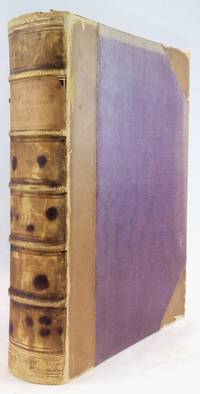
1896réf. 28069D. Appleton and Company 1896. Hardcover. Very Good. Seven volumes of the nine volume set; the missing volume 6 Hume and volume 9 Evolution and Ethics are missing; each volume is three-quarter bound with leather spines and corners over blue marbled paperbound boards; gilt lettering on the spines; all leather is intact though the spines have begun to dry out; top edges of textblocks are gilt D. Appleton and Company hardcover
réf. 1015814492.Ghardcover. Good. Access codes and supplements are not guaranteed with used items. May be an ex-library book. hardcover
réf. 3752327383.Gpaperback. Good. Access codes and supplements are not guaranteed with used items. May be an ex-library book. paperback
réf. 3752301643.Gpaperback. Good. Access codes and supplements are not guaranteed with used items. May be an ex-library book. paperback
réf. 1026109132.Gpaperback. Good. Access codes and supplements are not guaranteed with used items. May be an ex-library book. paperback
réf. 1025370066.Ghardcover. Good. Access codes and supplements are not guaranteed with used items. May be an ex-library book. hardcover
réf. 1025264800.Ghardcover. Good. Access codes and supplements are not guaranteed with used items. May be an ex-library book. hardcover
réf. 1026105943.Gpaperback. Good. Access codes and supplements are not guaranteed with used items. May be an ex-library book. paperback
réf. 1025262212.Ghardcover. Good. Access codes and supplements are not guaranteed with used items. May be an ex-library book. hardcover
réf. 1025355865.Ghardcover. Good. Access codes and supplements are not guaranteed with used items. May be an ex-library book. hardcover
réf. 1026036631.Ghardcover. Good. Access codes and supplements are not guaranteed with used items. May be an ex-library book. hardcover
réf. 1025916395.Gpaperback. Good. Access codes and supplements are not guaranteed with used items. May be an ex-library book. paperback
réf. 1025927370.Ghardcover. Good. Access codes and supplements are not guaranteed with used items. May be an ex-library book. hardcover
réf. 1025359062.Ghardcover. Good. Access codes and supplements are not guaranteed with used items. May be an ex-library book. hardcover
1860réf. 1908London: Zoological Society of London 1860-1872. First editions. 44 OFFPRINTS COLLECTED BY PROMINENT BRITISH NATURALIST AUTHORED AND INSCRIBED BY COLLEAGUES IN THE DECADE FOLLOWING DARWIN'S ORIGIN OF SPECIES. 14x21.5 cm 3/4 leather & burgundy cloth bound collection of offprints from Proc Zool Soc London 1860-1872 presumably collected by JB Pettigrew to whom a number of the papers is inscribed by the authors. The papers vary in length from 2 pages to substantial monographs total size in the region of 400 pp. with 10 colored plates and several full page engraved plates as well as numerous text ills. Most concern mammalian or avian anatomy. Of the 44 29 are by James Murie 2 jointly with Mivart 6 by Mivart alone 3 by Cobbold and 4 by Flower and one each by Kirk and Huxley. Flower sided with Darwin against Richard Owen over the nature of the human brain and one of the papers here is on the anatomy including brain of the South American saki monkey Pithecia monachus. Cobbold was a leading authority on helminthology on which a 22 pp. paper is included here along with one on the anatomy of the giraffe. Murie himself is best known for work on the Thames fisheries and some African adventures but was for some time assistant in the museum of the Royal College of Surgeons. He appears to have been a friend of Pettigrew 13 of his papers being inscribed to him sometimes as 'my friend' or similar. Pettigrew was an eminent Scottish naturalist and museum curator who became a leading authority on animal locomotion and flight even designing an ornithopter on which he published several works as well as an anti-Darwinian 3 volume book on 'Design in Nature' completed 1908. This volume is in excellent condition being internally clean and tight with only occasional brown spotting though there is some cloth fading and surface marking to leather on gilt panelled spine. The spine label has gone but impression remains reading 'Papers by Doctors Murie Mivart Flower Cobbold &c'. It was apparently one of a series of similar volumes being numbered 'III' in one of the panels. An early hand-written list of the paper titles is laid in but missing 2 papers by Murie. THOMAS SPENCER COBBOLD 1828 - 1886 was an English scientist. After graduating in medicine at the University of Edinburgh in 1851 he was appointed lecturer on botany at St Mary's Hospital London in 1857 and also on zoology and comparative anatomy at Middlesex Hospital in 1861. He was elected a Fellow of the Royal Society in June 1864. His special subject was helminthology particularly the worms parasitic in man and animals and as a physician he gained a considerable reputation in the diagnosis of cases depending on the presence of such organisms. WILLIAM HENRY FLOWER 1831 - 1899 was an English comparative anatomist and surgeon. Flower became a leading authority on mammals and especially on the primate brain. He supported Thomas Henry Huxley in an important controversy with Richard Owen about the human brain and eventually succeeded Owen as Director of the Natural History Museum. Flower succeeded John Thomas Quekett as Conservator of the Hunterian Museum of the Royal College of Surgeons of England on the recommendation of Huxley and others. Flower became associated with Huxley's controversy with Richard Owen concerning the human brain. Owen had erroneously said that the human brain had structures that were not present in other mammals and separated man off into a Sub-Class of its own instead of a genus in the primates. At the 1862 meeting in Cambridge when Owen read a paper maintaining his claims Flower stood up and said "I happen to have in my pocket a monkey's brain" - and produced the object in question! report in the Times. In 1882 he was awarded the Royal Medal of the Royal Society. He was President of the Zoological Society of London from 1879 to 1899. THOMAS HENRY HUXLEY 1825 – 1895 was an English biologist and anthropologist who specialised in comparative anatomy. He has become known as "Darwin's Bulldog" for his advocacy of Charles Darwin's theory of evolution. He became the finest comparative anatomist of the later 19th century. He worked on invertebrates clarifying relationships between groups previously little understood. Later he worked on vertebrates especially on the relationship between apes and humans. JOHN KIRK 1832 - 1922 was a Scottish physician naturalist companion to explorer David Livingstone and British administrator in Zanzibar. He earned his medical degree from the University of Edinburgh. He was a keen botanist throughout his life and was highly regarded by successive directors of the Royal Botanic Gardens Kew: William Hooker Joseph Dalton Hooker and William Thistleton-Dyer. ST. GEORGE JACKSON MIVART 1827 - 1900 was an English biologist initially an ardent believer in natural selection but later becoming one of its fiercest critics. Mivart attempted to reconcile Darwin's theory of evolution with the beliefs of the Catholic Church and finished by being condemned by both parties. Fellow of the Linnean Society from 1862 Secretary from 1874-80 and Vice-President in 1892. In 1867 he was elected a Fellow of the Royal Society for his work "On the Appendicular skeleton of the Primates". Mivart was someone Darwin took seriously. One of his criticisms to which Darwin responded in later editions of the Origin of Species was a perceived failure of natural selection to explain the incipient stages of useful structures. Taking the eye as an example Darwin was able to show many stages of light sensitivity and eye development in the animal kingdom as proof of the utility of less than perfect sight argument by intermediate stages. JAMES MURIE 1832-1925 earned his MD from the University of Glasgow and specializing in zoology he first worked at the Royal Infirmary Glasgow proceeding to the Royal College of Surgeons in London as assistant in the Museum where under Prof. J. E. Queckett he was a comparative anatomist specializing in aquatic mammals. PROVENANCE: JAMES BELL PETTIGREW 1834 - 1908 was a distinguished naturalist in Edinburgh and London and at St Andrews University from 1875 until his death. Pettigrew was an internationally acknowledged authority on animal locomotion. In 1862 Pettigrew accepted the post of Assistant Curator at the Hunterian Museum of the Royal College of Surgeons in London which he held for five years. In 1867 he retired to Ireland to study the flight of birds and bats. In 1868 at the age of 36 Pettigrew was elected a Fellow of the Royal Society. In 1873 Pettigrew published Animal Locomotion: or Walking Swimming and Flying his most popular work. COMPLETE LIST OF PAPERS AVAILABLE ON REQUEST. Zoological Society of London hardcover
1968réf. 1911London: Jonathan Cape 1968. First edition thus. HUXLEY'S GROUNDBREAKING STUDY OF EVOLVED RITUALIZED BEHAVIOR IN SEXUAL SELECTION. 10.5x18.5 cm hardcover black cloth binding gilt title to spine 97 pp 2 2 plates. Near fine in near fine dust jacket in protective mylar sleeve. LAID IN: Retrospective review of the book in Nature 25 Sept 2014 pages 484-5. " JULIAN HUXLEY 1887–1975 was an architect of the mid-twentieth-century evolutionary synthesis that merged Darwin's ideas on natural selection with population genetics. Decades before that however he helped to pioneer the field of animal behavior with his groundbreaking work on avian ethology the 1914 Courtship Habits of the Great Crested Grebe. In it he demonstrated how detailed observations of individual birds can prompt profound biological questions and sometimes reveal the outline of the answers. Huxley and his brother Trevenen spent two weeks watching the courtship of great crested grebes Podiceps cristatus. They did so at a reservoir near the Hertfordshire town of Tring now renowned as home to the matchless bird collections of the Natural History Museum. The result was a paper published in the Proceedings of the Zoological Society of London in 1914 and later in slightly abbreviated form as a pocket-sized book. By the month of the brothers' observations the grebes had already paired. Nevertheless male and female whose plumages are virtually identical engaged in striking behaviors such as the "cat attitude" and the "penguin dance" as Huxley colorfully labelled them. These he interpreted as necessary to bring the two birds into what he perceived as the emotional synchrony needed for coition nest-building and egg-laying. To achieve this some behaviors have undergone a gradual change from useful action to symbol to ritual. It was Huxley's landmark paper that identified this process of ritualization in animal behavior he organized a Royal Society symposium to discuss it in 1965. Huxley also realized that ritualization extended to mammals including people. With a sprinkling of references to Dante Plato and Shakespeare's Romeo and Juliet he digresses to muse on how human courtship so often and so predictably proceeds from hand-holding to kissing to more. More formally he realized that behaviors may be shaped by evolution." Jonathan Cape hardcover
réf. 1022987011.Ghardcover. Good. Access codes and supplements are not guaranteed with used items. May be an ex-library book. hardcover