HUXLEY, ElspethBiblio.com
Huxley, ElspethBiblio.com
Out In The Midday Sun
rif. 0712664378.Gpaperback. Good. Access codes and supplements are not guaranteed with used items. May be an ex-library book. paperback

Bonita · Stati Uniti50,13 USD≈ 44,79 €
5055 risultati
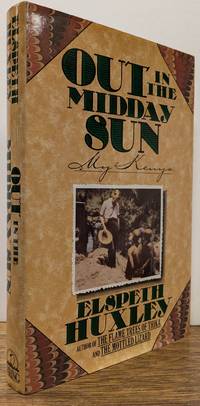
1985rif. C70228London: Chatto & Windus 1985. First Edition. Hardback. Dust Jacket. Hardback Hardcover. Very Good. First Edition. Hardback. Dust Jacket. Large 8vo. pp 262. Original publisher's red cloth lettered gilt on spine. The author evokes the Africa of her adult life in particular her experiences in Kenya between the wars. Signed by the author on the title page and dated 9th November 1985."" ISBN: 0701139757 Presented to Princess Alice Duchess of Gloucester 1901Ã2004 on the front endpaper from her nieces Renira and Anne Hawkins the daughters of Admiral Hawkins. Very good indeed in very good indeed dust jacket. Chatto & Windus, hardcover
rif. 342Chatto & Windus 1985 1st edition . 262 pages illustrations map : her Kenya especially the legendary characters between the wars; hardback vg vg dw SIGNED by author on slip tipped-in to the title page SIGNED COPIES ARE SCARCE afmar25 Chatto & Windus 1985 1st edition hardcover
rif. 0712664378.Gpaperback. Good. Access codes and supplements are not guaranteed with used items. May be an ex-library book. paperback
1985rif. Q-0701139757Chatto & Windus 1985-01-01. Hardcover. New. In shrink wrap. Looks like an interesting title! Chatto & Windus hardcover
1988rif. 1-00260Penguin Books 1988-04-05. Paperback. New. In shrink wrap. Penguin Books paperback
1988rif. 10-23350Penguin Books 1988-04-05. Paperback. New. In shrink wrap. Penguin Books paperback
1988rif. Q-0140092560Penguin Books 1988-04-05. Paperback. New. New. In shrink wrap. Looks like an interesting title! Penguin Books paperback
1987rif. Q-0670811831Viking Adult 1987-03-11. Hardcover. New. New. In shrink wrap. Looks like an interesting title! Viking Adult hardcover
1988rif. DADAX0140092560Penguin 1988-04-05. paperback. New. 4.75x1.00x8.00. Buy with confidence. Excellent Customer Service & Return policy. Penguin paperback
19858vo., First Edition thus, with plates; red cloth, gilt back, a near fine copy in unclipped dustwrapper. Of the original print run of 5,899 copies, 2000 were sold to Westlands Sundries of Nairobi and bear its imprint on title and dustwrapper. SCARCE. See Cross & Perkin A46a.
19858vo., First Edition, with plates; red cloth, gilt back, a near fine copy in unclipped dustwrapper. Cross & Perkin A46.
1987rif. 322949New York: Viking 1987. First. hardcover. fine/fine. Illustrated. x 262 pages 8vo cloth-backed boards d.w. New York: Viking 1987. First American edition. A fine copy in a fine dust wrapper. Viking unknown books
rif. 0484570226.Ghardcover. Good. Access codes and supplements are not guaranteed with used items. May be an ex-library book. hardcover
1918rif. 33056Oxford: B.H. Blackwell 1918. First edition. Book in very good condition with a tad toning to cover label; Card folder has a short cut to it; Slipcase has dark toning to the spine top Edges of rear board as well as some blemishes to the front leather edge. Wraps housed in custom cloth covered card folder and quarter leather slipcase; 54 pages. B.H. Blackwell unknown
rif. 1017459541.Ghardcover. Good. Access codes and supplements are not guaranteed with used items. May be an ex-library book. hardcover
1917rif. 059143Oxford: B. H. Blackwell Broad Street 1917. First Edition . Soft cover. Very Good Plus. 8vo. OXFORD : 1917. Oxford Poetry 1917 . Edited by D. L. Sayers. Includes poems by Dorothy L. Sayers; Una Ellis-Fermore; A. Huxley; Robert Graves et al. Dark blue-grey paper-covers. Printed paper label to spine and cover. Untrimmed edges as issued. Neat owner name dated Christmas 1917; no internal markings. Bright tight and clean. Minor wear to spine foot; label slightly dulled. Minor wear only. VERY GOOD INDEED. iv 61pp. Includes the poems 'For Phaon' 'Sympathy' and 'Vials Full of Odours' are by Dorothy L. Sayers. See Gilbert B5. 2000 copies were printed. Will be well-packed for posting/shipping. 8vo. B. H. Blackwell Broad Street. SCARCE. B. H. Blackwell, Broad Street paperback
1918rif. 006394Oxford: B. H. Blackwell 1918. First Edition. Wraps. Owner name dated 1919 on the half-title page. Minor staining and wear to wraps. Very Good. Blue wraps with a printed label. Very early appearances by Aldous Huxley and Dorothy Sayers. B. H. Blackwell paperback books
1937rif. 2226Oxford: Printed by John Johnson at the Oxford University Press for The Oxford Society 1937. First Edition. Paperback. Very Good. 4to. Pp. 62 followed by 10 pages of Oxford businesses. Generously illustrated with black and white photography plans and reproductions of old etchings. Bound in stiff paper wraps printed in blue and yellow and featuring the Oxford crest on the front cover. Edges a bit age-toned with short closed tears. Please see photo. Laid in is a printed letter from Lord Halifax unsigned addressed to the Vice Chancellor of Balliol expressing sympathy with the effort to raise funds for Oxford. Halifax has also contributed the introduction. Essentially a prospectus soliciting funds for the expansion of the Bodleian Library. Includes many photos of the library as is with librarians contending with the cataloging of stacks of recent acquisitions stacks in the Sheldonian Cellars students studying etc. as well as a photo of the architectural model for the expansion. Contributors include considering the Bodleian in from many perspectives include Greene Powicke Craster Gilbert Scott Julian Huxley Lindsay Mitchell Lindemann Tizard et al. Printed by John Johnson at the Oxford University Press for The Oxford Society paperback
rif. 0333351495.Gpaperback. Good. Access codes and supplements are not guaranteed with used items. May be an ex-library book. paperback
1860rif. 1908London: Zoological Society of London 1860-1872. First editions. 44 OFFPRINTS COLLECTED BY PROMINENT BRITISH NATURALIST AUTHORED AND INSCRIBED BY COLLEAGUES IN THE DECADE FOLLOWING DARWIN'S ORIGIN OF SPECIES. 14x21.5 cm 3/4 leather & burgundy cloth bound collection of offprints from Proc Zool Soc London 1860-1872 presumably collected by JB Pettigrew to whom a number of the papers is inscribed by the authors. The papers vary in length from 2 pages to substantial monographs total size in the region of 400 pp. with 10 colored plates and several full page engraved plates as well as numerous text ills. Most concern mammalian or avian anatomy. Of the 44 29 are by James Murie 2 jointly with Mivart 6 by Mivart alone 3 by Cobbold and 4 by Flower and one each by Kirk and Huxley. Flower sided with Darwin against Richard Owen over the nature of the human brain and one of the papers here is on the anatomy including brain of the South American saki monkey Pithecia monachus. Cobbold was a leading authority on helminthology on which a 22 pp. paper is included here along with one on the anatomy of the giraffe. Murie himself is best known for work on the Thames fisheries and some African adventures but was for some time assistant in the museum of the Royal College of Surgeons. He appears to have been a friend of Pettigrew 13 of his papers being inscribed to him sometimes as 'my friend' or similar. Pettigrew was an eminent Scottish naturalist and museum curator who became a leading authority on animal locomotion and flight even designing an ornithopter on which he published several works as well as an anti-Darwinian 3 volume book on 'Design in Nature' completed 1908. This volume is in excellent condition being internally clean and tight with only occasional brown spotting though there is some cloth fading and surface marking to leather on gilt panelled spine. The spine label has gone but impression remains reading 'Papers by Doctors Murie Mivart Flower Cobbold &c'. It was apparently one of a series of similar volumes being numbered 'III' in one of the panels. An early hand-written list of the paper titles is laid in but missing 2 papers by Murie. THOMAS SPENCER COBBOLD 1828 - 1886 was an English scientist. After graduating in medicine at the University of Edinburgh in 1851 he was appointed lecturer on botany at St Mary's Hospital London in 1857 and also on zoology and comparative anatomy at Middlesex Hospital in 1861. He was elected a Fellow of the Royal Society in June 1864. His special subject was helminthology particularly the worms parasitic in man and animals and as a physician he gained a considerable reputation in the diagnosis of cases depending on the presence of such organisms. WILLIAM HENRY FLOWER 1831 - 1899 was an English comparative anatomist and surgeon. Flower became a leading authority on mammals and especially on the primate brain. He supported Thomas Henry Huxley in an important controversy with Richard Owen about the human brain and eventually succeeded Owen as Director of the Natural History Museum. Flower succeeded John Thomas Quekett as Conservator of the Hunterian Museum of the Royal College of Surgeons of England on the recommendation of Huxley and others. Flower became associated with Huxley's controversy with Richard Owen concerning the human brain. Owen had erroneously said that the human brain had structures that were not present in other mammals and separated man off into a Sub-Class of its own instead of a genus in the primates. At the 1862 meeting in Cambridge when Owen read a paper maintaining his claims Flower stood up and said "I happen to have in my pocket a monkey's brain" - and produced the object in question! report in the Times. In 1882 he was awarded the Royal Medal of the Royal Society. He was President of the Zoological Society of London from 1879 to 1899. THOMAS HENRY HUXLEY 1825 – 1895 was an English biologist and anthropologist who specialised in comparative anatomy. He has become known as "Darwin's Bulldog" for his advocacy of Charles Darwin's theory of evolution. He became the finest comparative anatomist of the later 19th century. He worked on invertebrates clarifying relationships between groups previously little understood. Later he worked on vertebrates especially on the relationship between apes and humans. JOHN KIRK 1832 - 1922 was a Scottish physician naturalist companion to explorer David Livingstone and British administrator in Zanzibar. He earned his medical degree from the University of Edinburgh. He was a keen botanist throughout his life and was highly regarded by successive directors of the Royal Botanic Gardens Kew: William Hooker Joseph Dalton Hooker and William Thistleton-Dyer. ST. GEORGE JACKSON MIVART 1827 - 1900 was an English biologist initially an ardent believer in natural selection but later becoming one of its fiercest critics. Mivart attempted to reconcile Darwin's theory of evolution with the beliefs of the Catholic Church and finished by being condemned by both parties. Fellow of the Linnean Society from 1862 Secretary from 1874-80 and Vice-President in 1892. In 1867 he was elected a Fellow of the Royal Society for his work "On the Appendicular skeleton of the Primates". Mivart was someone Darwin took seriously. One of his criticisms to which Darwin responded in later editions of the Origin of Species was a perceived failure of natural selection to explain the incipient stages of useful structures. Taking the eye as an example Darwin was able to show many stages of light sensitivity and eye development in the animal kingdom as proof of the utility of less than perfect sight argument by intermediate stages. JAMES MURIE 1832-1925 earned his MD from the University of Glasgow and specializing in zoology he first worked at the Royal Infirmary Glasgow proceeding to the Royal College of Surgeons in London as assistant in the Museum where under Prof. J. E. Queckett he was a comparative anatomist specializing in aquatic mammals. PROVENANCE: JAMES BELL PETTIGREW 1834 - 1908 was a distinguished naturalist in Edinburgh and London and at St Andrews University from 1875 until his death. Pettigrew was an internationally acknowledged authority on animal locomotion. In 1862 Pettigrew accepted the post of Assistant Curator at the Hunterian Museum of the Royal College of Surgeons in London which he held for five years. In 1867 he retired to Ireland to study the flight of birds and bats. In 1868 at the age of 36 Pettigrew was elected a Fellow of the Royal Society. In 1873 Pettigrew published Animal Locomotion: or Walking Swimming and Flying his most popular work. COMPLETE LIST OF PAPERS AVAILABLE ON REQUEST. Zoological Society of London hardcover
1860rif. 1908London: Zoological Society of London 1860-1872. First editions. 44 OFFPRINTS COLLECTED BY PROMINENT BRITISH NATURALIST AUTHORED AND INSCRIBED BY COLLEAGUES IN THE DECADE FOLLOWING DARWIN'S ORIGIN OF SPECIES. 14x21.5 cm 3/4 leather & burgundy cloth bound collection of offprints from Proc Zool Soc London 1860-1872 presumably collected by JB Pettigrew to whom a number of the papers is inscribed by the authors. The papers vary in length from 2 pages to substantial monographs total size in the region of 400 pp. with 10 colored plates and several full page engraved plates as well as numerous text ills. Most concern mammalian or avian anatomy. Of the 44 29 are by James Murie 2 jointly with Mivart 6 by Mivart alone 3 by Cobbold and 4 by Flower and one each by Kirk and Huxley. Flower sided with Darwin against Richard Owen over the nature of the human brain and one of the papers here is on the anatomy including brain of the South American saki monkey Pithecia monachus. Cobbold was a leading authority on helminthology on which a 22 pp. paper is included here along with one on the anatomy of the giraffe. Murie himself is best known for work on the Thames fisheries and some African adventures but was for some time assistant in the museum of the Royal College of Surgeons. He appears to have been a friend of Pettigrew 13 of his papers being inscribed to him sometimes as 'my friend' or similar. Pettigrew was an eminent Scottish naturalist and museum curator who became a leading authority on animal locomotion and flight even designing an ornithopter on which he published several works as well as an anti-Darwinian 3 volume book on 'Design in Nature' completed 1908. This volume is in excellent condition being internally clean and tight with only occasional brown spotting though there is some cloth fading and surface marking to leather on gilt panelled spine. The spine label has gone but impression remains reading 'Papers by Doctors Murie Mivart Flower Cobbold &c'. It was apparently one of a series of similar volumes being numbered 'III' in one of the panels. An early hand-written list of the paper titles is laid in but missing 2 papers by Murie. THOMAS SPENCER COBBOLD 1828 - 1886 was an English scientist. After graduating in medicine at the University of Edinburgh in 1851 he was appointed lecturer on botany at St Mary's Hospital London in 1857 and also on zoology and comparative anatomy at Middlesex Hospital in 1861. He was elected a Fellow of the Royal Society in June 1864. His special subject was helminthology particularly the worms parasitic in man and animals and as a physician he gained a considerable reputation in the diagnosis of cases depending on the presence of such organisms. WILLIAM HENRY FLOWER 1831 - 1899 was an English comparative anatomist and surgeon. Flower became a leading authority on mammals and especially on the primate brain. He supported Thomas Henry Huxley in an important controversy with Richard Owen about the human brain and eventually succeeded Owen as Director of the Natural History Museum. Flower succeeded John Thomas Quekett as Conservator of the Hunterian Museum of the Royal College of Surgeons of England on the recommendation of Huxley and others. Flower became associated with Huxley's controversy with Richard Owen concerning the human brain. Owen had erroneously said that the human brain had structures that were not present in other mammals and separated man off into a Sub-Class of its own instead of a genus in the primates. At the 1862 meeting in Cambridge when Owen read a paper maintaining his claims Flower stood up and said "I happen to have in my pocket a monkey's brain" - and produced the object in question! report in the Times. In 1882 he was awarded the Royal Medal of the Royal Society. He was President of the Zoological Society of London from 1879 to 1899. THOMAS HENRY HUXLEY 1825 – 1895 was an English biologist and anthropologist who specialised in comparative anatomy. He has become known as "Darwin's Bulldog" for his advocacy of Charles Darwin's theory of evolution. He became the finest comparative anatomist of the later 19th century. He worked on invertebrates clarifying relationships between groups previously little understood. Later he worked on vertebrates especially on the relationship between apes and humans. JOHN KIRK 1832 - 1922 was a Scottish physician naturalist companion to explorer David Livingstone and British administrator in Zanzibar. He earned his medical degree from the University of Edinburgh. He was a keen botanist throughout his life and was highly regarded by successive directors of the Royal Botanic Gardens Kew: William Hooker Joseph Dalton Hooker and William Thistleton-Dyer. ST. GEORGE JACKSON MIVART 1827 - 1900 was an English biologist initially an ardent believer in natural selection but later becoming one of its fiercest critics. Mivart attempted to reconcile Darwin's theory of evolution with the beliefs of the Catholic Church and finished by being condemned by both parties. Fellow of the Linnean Society from 1862 Secretary from 1874-80 and Vice-President in 1892. In 1867 he was elected a Fellow of the Royal Society for his work "On the Appendicular skeleton of the Primates". Mivart was someone Darwin took seriously. One of his criticisms to which Darwin responded in later editions of the Origin of Species was a perceived failure of natural selection to explain the incipient stages of useful structures. Taking the eye as an example Darwin was able to show many stages of light sensitivity and eye development in the animal kingdom as proof of the utility of less than perfect sight argument by intermediate stages. JAMES MURIE 1832-1925 earned his MD from the University of Glasgow and specializing in zoology he first worked at the Royal Infirmary Glasgow proceeding to the Royal College of Surgeons in London as assistant in the Museum where under Prof. J. E. Queckett he was a comparative anatomist specializing in aquatic mammals. PROVENANCE: JAMES BELL PETTIGREW 1834 - 1908 was a distinguished naturalist in Edinburgh and London and at St Andrews University from 1875 until his death. Pettigrew was an internationally acknowledged authority on animal locomotion. In 1862 Pettigrew accepted the post of Assistant Curator at the Hunterian Museum of the Royal College of Surgeons in London which he held for five years. In 1867 he retired to Ireland to study the flight of birds and bats. In 1868 at the age of 36 Pettigrew was elected a Fellow of the Royal Society. In 1873 Pettigrew published Animal Locomotion: or Walking Swimming and Flying his most popular work. COMPLETE LIST OF PAPERS AVAILABLE ON REQUEST. Zoological Society of London hardcover books
1961rif. RO60014106Fischer Bücherei. 1961. In-12. Relié. Bon état, Couv. convenable, Dos satisfaisant, Intérieur frais. 302 pages. Ouvrage en allemand.. . . . Classification Dewey : 430-Langues germaniques. Allemand
1934rif. 015287London: Cassell & Company 1934 12mo. original red cloth gilt endpapers a little offset edges slightly flecked trifling wear in dustwrapper spine and foldovers a little silverfished; pp. x 240 last blank with illustrations. A very good copy. First Thus. Hard Cover. VG/VG. Illus. by L.R.Brightwell. Cassell & Company hardcover
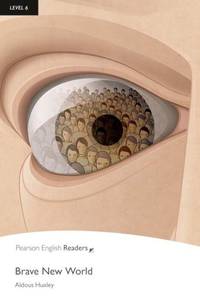
rif. 9781408274354PEARSON EDUCATION. new. Contemporary / British English Aldous Huxley's Brave New World is one of the great works of science fiction. It is the year After Ford 632 in the New World. People are born and by scientific methods. There is worldwide happiness and order. Then John comes from the Savage Reservation to the New World and with him he brings strong emotions - love hate anger fear. Suddenly danger threatens the New World. Book and MP3 pack. PEARSON EDUCATION unknown
rif. 0713701617.Ghardcover. Good. Access codes and supplements are not guaranteed with used items. May be an ex-library book. hardcover