2.481 Ergebnisse
Best.-Nr. 269455like new. unknown
Best.-Nr. 33361101-nnew. unknown
2019Best.-Nr. G1138605859I4N00Routledge 2019. Hardcover. Very Good. May have limited writing in cover pages. Pages are unmarked. ~ ThriftBooks: Read More Spend Less.Dust jacket quality is not guaranteed. Routledge hardcover
Best.-Nr. SL-3764355034Birkhäuser Architecture. Hardcover. New. In shrink wrap. Looks like an interesting title! Birkhäuser Architecture hardcover
1990Best.-Nr. Q-3764355034Birkhäuser Architecture 1990-12-31. Hardcover. New. In shrink wrap. Looks like an interesting title! Birkhäuser Architecture hardcover
Best.-Nr. 183961New York: George H. Doran Co not identified. Hardcover. Fair heavy shelfwear to boards foxing spots mainly to end papers soiling to bottom block extending slightly to bottom of some pages previous owner's name inside front ffep text and illustrations are otherwise clear. Brown paper boards with green cloth spine gilt lettering on spine; top edge gilt color illustrated title and half title page ornamental borders; unpaginated; profusely illustrated throughout in bw and color with many mounted color plates. Presented by Willy Pogany. A classic Coleridge poem. George H. Doran Co hardcover
Best.-Nr. 183961New York: George H. Doran Co not identified. Hardcover. Fair heavy shelfwear to boards foxing spots mainly to end papers soiling to bottom block extending slightly to bottom of some pages previous owner's name inside front ffep text and illustrations are otherwise clear. Brown paper boards with green cloth spine gilt lettering on spine; top edge gilt color illustrated title and half title page ornamental borders; unpaginated; profusely illustrated throughout in bw and color with many mounted color plates. Presented by Willy Pogany. A classic Coleridge poem. George H. Doran Co hardcover books
1920Best.-Nr. 011607Insel-verlag 1920. Hardcover. Very Good. SIGNED AND INSCRIBED BY AUTHOR. Foxing to boards and textblock tiny piece missing from top of spine text in German. Insel-verlag hardcover
1950Best.-Nr. 04617Also contains original work by Cyril Kornbluth Eric Frank Russell et.al. Along with FRITZ WILLY AND BOB AND THE SUMMER OF '48 Posthumous Press 2005 first edition as new in like pictorial dust-wrapper. 1/85 copies the total print run revealing for the first time that George Pal was not Heinlein's first choice as producer on this project. This small volume reproduces the text of a letter which has never before been published anywhere about a hitherto unknown occurrence from the world renowned film director Fritz Lang to his very good friend and perhaps equally renowned rocket and space travel enthusiast Willy Ley. It's a most fascinating letter concerning events of the summer of 1948 when then a still maturing science fiction writer named Robert Heinlein visited Fritz Lang in the hopes of stimulating the esteemed film director to produce an accurate and technically correct film of a journey to the moon. What actually transpired between the two men at least from Mr. Lang's point of view makes fascinating reading if not only for the fact that such a meeting took place but also in an attempt to better understand the machinations of that marvelous and enigmatic wonderland of magic and nepotism we call Hollywood. The 85 copies produced have some variation. As with the first Posthumous Press publication which is now available only through the antiquarian market place at a price more than 6 times the original it will not be reprinted. Along with SHOOTING "DESTINATION MOON" in Astounding for July 1950 Street & Smith first edition just about vg in wraps. Astounding / Street & Smith / Posthumous Press paperback
1950Best.-Nr. 04617Also contains original work by Cyril Kornbluth Eric Frank Russell et.al. Along with FRITZ WILLY AND BOB AND THE SUMMER OF '48 Posthumous Press 2005 first edition as new in like pictorial dust-wrapper. 1/85 copies the total print run revealing for the first time that George Pal was not Heinlein's first choice as producer on this project. This small volume reproduces the text of a letter which has never before been published anywhere about a hitherto unknown occurrence from the world renowned film director Fritz Lang to his very good friend and perhaps equally renowned rocket and space travel enthusiast Willy Ley. It's a most fascinating letter concerning events of the summer of 1948 when then a still maturing science fiction writer named Robert Heinlein visited Fritz Lang in the hopes of stimulating the esteemed film director to produce an accurate and technically correct film of a journey to the moon. What actually transpired between the two men at least from Mr. Lang's point of view makes fascinating reading if not only for the fact that such a meeting took place but also in an attempt to better understand the machinations of that marvelous and enigmatic wonderland of magic and nepotism we call Hollywood. The 85 copies produced have some variation. As with the first Posthumous Press publication which is now available only through the antiquarian market place at a price more than 6 times the original it will not be reprinted. Along with SHOOTING "DESTINATION MOON" in Astounding for July 1950 Street & Smith first edition just about vg in wraps. Astounding / Street & Smith / Posthumous Press paperback books
2005Best.-Nr. Q-0754644170Routledge 2005-09-28. Hardcover. New. In shrink wrap. Looks like an interesting title! Routledge hardcover
2011Best.-Nr. DADAX6131557454Omniscriptum 2011-01-14. paperback. New. 5.91x1.21x8.66. Buy with confidence. Excellent Customer Service & Return policy. Omniscriptum paperback
1927Best.-Nr. 24331Berlin: Julius Springer 1927. First Edition. Cloth. Very Good. First Edition. viii 418 2-ads pages. 8vo. Publisher's blue/black boards with gilt lettering and publisher's device on spine and titles on front panel. Bookstore tag on front pastedown. Binding glued in gutter at Vorwort foreword. Otherwise a nice clean bright copy. Text in German. Cloth. Wagner was a full member of the Academy of Sciences Berlin and was made in 1931 an Honorary Member of the American Academy of Arts and Sciences Boston. He held numerous other awards including in 1930: Slaby-Plakette des Deutschen Funktechnischen Verbandes. In 1924 he founded the magazine Zeitschrift Elektrische Nachrichtentechnik. In the foreword Wagner notes that the sudden onset of broadcasting has created high demand for wireless telephony and has accelerated technical developments dramatically. The new building blocks of broadcasting can be built on the progress made in radio technology. In addition to the general relations of electrodynamics the laws of transmission propagation and reception of electric waves the events occurring in the electron tubes and their mode of action in the various circuits as rectifiers amplifiers and vibration exciters and finally the laws of acoustics and the operation of the electro-acoustic devices all play a role. Knowing all of these things is essential for building a good broadcast radio but is not easy to acquire because so far there has been no where to go for sound details regarding all of these issues. The Heinrich Hertz Society in 1925 created a plan to promote broadcasting over the airwaves by organizing a series of lectures about "The scientific basis of radio communications". This book was the much enlarged result. Wagner is probably best known for the development of what we now call wave filterswork he did starting in 1915. "The most prominent researchers G. A. Campbell in the United States and K. W. Wagner in Germany explored selective filter circuits for telephone applications in the early years of World War I thus paving the way for the first ideas about electrical circuit synthesis. They designed sophisticated filter circuits simply by cascading elementary sections of lossless inductors and capacitors. The circuits obtained in this way had a striking similarity to circuit models in engineering transmission line theory and henceforth were called ‘wave filters’." Life and Work of Wilhelm Cauer 1900 – 1945 Cauer et al Proc. MTNS2000 Perpignan France June 19 - 23 2000 Waveguide filters today are most useful in the microwave band of frequencies where they are a convenient size and have low loss. Examples of microwave filter use are found in satellite communications telephone networks and television broadcasting. Davis Electrical and Electronic Technologies #372 noting that in 1915 filter technology came into being with the independent proposal of it by Campbell and Wagner. Julius Springer unknown
1927Best.-Nr. 24331Berlin: Julius Springer 1927. First Edition. Cloth. Very Good. First Edition. viii 418 2-ads pages. 8vo. Publisher's blue/black boards with gilt lettering and publisher's device on spine and titles on front panel. Bookstore tag on front pastedown. Binding glued in gutter at Vorwort foreword. Otherwise a nice clean bright copy. Text in German. Cloth. Wagner was a full member of the Academy of Sciences Berlin and was made in 1931 an Honorary Member of the American Academy of Arts and Sciences Boston. He held numerous other awards including in 1930: Slaby-Plakette des Deutschen Funktechnischen Verbandes. In 1924 he founded the magazine Zeitschrift Elektrische Nachrichtentechnik. In the foreword Wagner notes that the sudden onset of broadcasting has created high demand for wireless telephony and has accelerated technical developments dramatically. The new building blocks of broadcasting can be built on the progress made in radio technology. In addition to the general relations of electrodynamics the laws of transmission propagation and reception of electric waves the events occurring in the electron tubes and their mode of action in the various circuits as rectifiers amplifiers and vibration exciters and finally the laws of acoustics and the operation of the electro-acoustic devices all play a role. Knowing all of these things is essential for building a good broadcast radio but is not easy to acquire because so far there has been no where to go for sound details regarding all of these issues. The Heinrich Hertz Society in 1925 created a plan to promote broadcasting over the airwaves by organizing a series of lectures about "The scientific basis of radio communications". This book was the much enlarged result. Wagner is probably best known for the development of what we now call wave filterswork he did starting in 1915. "The most prominent researchers G. A. Campbell in the United States and K. W. Wagner in Germany explored selective filter circuits for telephone applications in the early years of World War I thus paving the way for the first ideas about electrical circuit synthesis. They designed sophisticated filter circuits simply by cascading elementary sections of lossless inductors and capacitors. The circuits obtained in this way had a striking similarity to circuit models in engineering transmission line theory and henceforth were called ‘wave filters’." Life and Work of Wilhelm Cauer 1900 – 1945 Cauer et al Proc. MTNS2000 Perpignan France June 19 - 23 2000 Waveguide filters today are most useful in the microwave band of frequencies where they are a convenient size and have low loss. Examples of microwave filter use are found in satellite communications telephone networks and television broadcasting. Davis Electrical and Electronic Technologies #372 noting that in 1915 filter technology came into being with the independent proposal of it by Campbell and Wagner. Julius Springer unknown books
2000Best.-Nr. Q-079237956XSpringer 2000-09-30. Hardcover. New. In shrink wrap. Looks like an interesting title! Springer hardcover
2007Best.-Nr. SL-3540719571Springer 2007-12-05. hardcover. New. In shrink wrap. Looks like an interesting title! Springer hardcover
2007Best.-Nr. Q-3540719571Springer 2007-12-05. Hardcover. New. In shrink wrap. Looks like an interesting title! Springer hardcover
1910Best.-Nr. 19606George H. Doran 1910. Hardcover. Very Good/No Dust Jacket. This old book is clean solid and appears to have never been read. This hardcover book has many illustrations and tipped in color plates by Willy Pogany. The binding is strong with all pages firmly attached. There is a bookplate on the first end paper. The pages are clean with no soiling writing or tears. The book is undated but appears to be circa 1910. The green patterned boards with dark green spine and bright gold text show just a hint of edgewear and some discoloration along the top edge of the back. This old book looks and feels great! We always ship in a sturdy cardboard box! George H. Doran hardcover
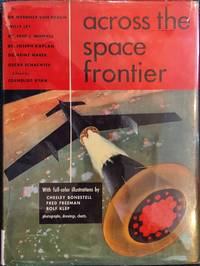
1952Best.-Nr. 260109-MB24Viking Press 1952. Very Good Hardcover with Dustjacket First edition illustrated DJ spine hs several chips and tears. First Edition. Hard Cover. Very Good/Good. Illus. by Bonestell Chesley; Freeman Fred; Klep Rolf illustrators. Viking Press Hardcover
Best.-Nr. 269455-nnew. unknown
2008Best.-Nr. SONG1848003471Springer 2008-11-27. 2009. paperback. Used: Good. 8.27x0.91x10.98. Buy with confidence. Excellent Customer Service & Return policy. Springer paperback
Best.-Nr. 33186025like new. unknown
Best.-Nr. 44464172-nnew. unknown
1968Best.-Nr. G0679401091I3N00David McKay Co 1968. Hardcover. Good. Disclaimer:A copy that has been read but remains in clean condition. All pages are intact and the cover is intact. The spine may show signs of wear. Pages can include limited notes and highlighting and the copy can include previous owner inscriptions. At ThriftBooks our motto is: Read More Spend Less.Dust jacket quality is not guaranteed. David McKay Co hardcover
1975Best.-Nr. G0860070840I3N00Futura Publications Limited 1975. Paperback. Good. Pages can have notes/highlighting. Spine may show signs of wear. ~ ThriftBooks: Read More Spend Less.Dust jacket quality is not guaranteed. Futura Publications Limited paperback