6 058 résultats
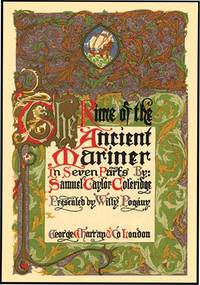
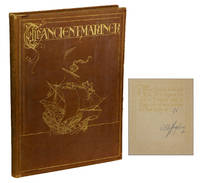
1930réf. 192444London: George G. Harrap & Co. Ltd 1930. With an original etching Signed limited edition British issue number 150 of 750 copies signed by the artist specially bound and with an original etching also signed by Pogány. Pogány's illustrated edition was first published in 1909. A further 500 copies were issued in America. Quarto. Tipped-in colour frontispiece and 11 plates all by Pogány title page printed in brown decorations and illustrations in the text. Original bluish green morocco spine lettered in gilt raised bands circular floral motif in gilt red and brown on front cover marbled endpapers top edge gilt others untrimmed. Spine and head of boards toned a little wear on tips occasional spotting internally: near-fine. Not in Potter. hardcover
réf. P6615Mülheim/Ruhr and from December 1972 Cologne: self-published 1970-1977. Quartos 30 × 21 cm. Original mostly pictorial self-wrappers a few issues staple-stitched; each issue between 14 and 32 pp. with numerous illustrations. A few issues have been punched and somewhat closely trimmed; in the July 1971 issue pages 9 and 10 are missing; otherwise with only light signs of wear and handling and about very good. Extensive run of seven nearly complete years see list below of the longest-running periodical of postwar German anarchism. The journal often printed monthly appeared from 1948 to 1978. The years offered here from 1971 to 1978 were presumably the most politically eventful for the clandestine periodical which following the student protests of 1967 and 1968 sought to hold its own alongside the numerous new socialist and communist organizations and publications. The founder and longtime editor Willy Huppertz 1904-1978 had already been active as an anarcho-syndicalist worker during the Weimar Republic. After surviving National Socialism including imprisonment in the Sachsenhausen concentration camp he founded his first anarchist periodical in the Soviet occupation zone together with Wilhelm Jelinek. After Huppertz moved to West Germany Jelinek sent him the subscribers' list in order to keep it out of the reach of the Soviet secret service. Jelinek was arrested by the Soviet army in 1948 and sentenced to 25 years in prison. He died in the notorious prison in Bautzen. Cf. Michael Kubina Von Utopie Widerstand und Kaltem Krieg Hamburg 2001 pp. 269f. Huppertz continued his anarchist publishing activities in West Germany's industrial Ruhr region. From 1948 onward his anarchist periodical appeared under the name "Befreiung." As an anarchist he viewed the student protests that began in the late 1960s and the extra-parliamentary opposition APO with skepticism. This skepticism was directed on the one hand at Marxists of the Leninist and Maoist varieties but also on the other at the anti-authoritarian movement of the hippies which was being "swallowed up" by "record producers and organizers of pop festivals." One of the issues addressing the counterculture states: "They do business with you your drugs and your music. Jimi Hendrix is just as much a brand-name product as Peter Alexander German-language popular singer. . What you are doing is merely a skillful accommodation to capitalism. By refusing to work and living by begging e.g. in sunny fascist Spain or Greece you in no way unsettle the system of exploitation" June 1971 p. 7. Huppertz was nevertheless able for example to connect with the squatting movement and with small anarchist groups that were able to establish themselves alongside the socialist and communist organizations. Despite the political differences the "Baader-Meinhof Group" RAF became a subject from 1972 onward insofar as the anarchist milieu saw itself confronted by a "police state." In February 1972 issues and distribution materials were confiscated in Cologne and Mülheim and investigations were initiated for "supporting the Baader-Meinhof Group." Since the fall of 1970 the group "Anarchosyndikat Köln" had been involved in the editorial work. In 1974 Huppertz handed over the editorial work entirely to the Cologne group under the leadership of Ralf Stein. That same year Stein was arrested and in 1975 sentenced to one year in prison without a suspended sentence for supporting the Baader-Meinhof Group denigration of the Federal Republic of Germany and incitement of the people. Cf. DadA-Periodika no. DA-P0000816 vol. 23 nos. 5 11 of 12 nos. in 2 issues. vol. 24 nos. 4 6-12 of 12 nos. in 7 issues. vol. 25 nos. 1-7/8 10-12 of 12 nos. in 10 issues. vol. 26 nos. 1-12 of 12 nos. in 11 issues. vol. 27 nos. 1/2-10 of apparently only 10 nos. published in 9 issues. vol. 28 nos. 1-7 apparently complete except for the "special issue" in 7 issues. vol. 29 nos. 1-5 7-9 of 9 nos. in 8 issues. vol. 30 nos. 2-7 of 7 nos. in 6 issues. DadA-Periodika DA-P0000816. As of August 2026 only two North American libraries list incomplete runs. unknown
réf. 23122Paris, Ernest Flammarion, 1895. In-18, (2 ff.), 319 pp., couverture illustrée. - Maroquin brun clair, triple filet doré en encadrement et masque de comédie aux angles sur les plats, dos à nerfs orné, dentelle dorée intérieure, tête dorée, non rogné, couverture conservée (Thierry Sr de Petit-Simier).
1903réf. AMO-2397Paris, Albin Michel, 1903 1 volume in-18 (19,5 x 13 cm) de LXV-(1)-383 pages. Nombreuses illustrations en noir au trait dans le texte par Wely. Portrait photographique de Claudine (actrice Polaire) en écolière en frontispice. Reliure de l'époque demi-maroquin à coins havane, dos lisse orné doré, filets dorés sur les plats, tête dorée, non rogné (relié sur brochure). Couverture illustrée en couleurs par Wely (les deux plats et le dos conservés). Exccellent état. Très beau papier de Hollande. ÉDITION ORIGINALE. UN DES RARES EXEMPLAIRES SUR HOLLANDE, CELUI-CI PARAPHÉ PAR WILLY ET NUMÉROTÉ "N° HUIT [signé] WILLY" Les exemplaires sur grands papiers ne sont pas annoncés sur les exemplaires ordinaires. Il doit y avoir une dizaine d'exemplaires seulement sur ce papier. Le volume contient au début la plaidoirie de Maître J. Paul-Boncour pour la maîtresse du Prince Jean. L'ouvrage fut condamné. Cette première édition est la seule complète, les suivantes ayant été expurgées des passages les plus scabreux. "Willy est plus sourd encore que sa vertu n'est muette !... Du moins, cette Maîtresse du Prince Jean, a un mérite : elle ne prendra pas son lecteur en traître. Elle arrive à lui munie d'un casier judiciaire propre à le mettre en garde : dès avant son apparition, elle fut poursuivie, jugée et condamnée ; aussi, ceux qui voudront aller plus loin que la couverture du livre et en sortiront le rouge au front sauront à qui s'en prendre ; ils auront été prévenus. Je sais bien que l'éditeur, malin, a placé en tète du livre la délicieuse plaidoirie où M. Paul-Boncourt entreprit de démontrer à la justice de son pays que la Maîtresse du prince Jean n'était, mon Dieu, pas si immorale qu'on le voulait prétendre ; je sais bien qu'il l'a fait avec un luxe étonnant de verbe, d'esprit et d'aimable sophisme, et qu'il a réussi à être persuasif puisque je m'y suis laissé prendre et que j'ai lu le livre. Cette lecture m'a édifié — si j'ose dire — et je puis affirmer, en connaissance de cause que ce roman, même « épousseté », est terriblement scabreux. Je le sais d'autant mieux que j'ai lu jusqu'à la dernière page — il me faut faire mon mea culpa — car trop souvent le rire et le sourire désarmèrent ma colère ; et ainsi j'ai connu complètement les aventures de ce prince fantôme et de cette trop réelle et plantureuse Gaétane, et j'ai fréquenté le poète carottier Lauban, et Smiley, le littérateur, et aussi l'immuable Maugis, Journaliste notoire, qui ressemble à Willy comme un frère et qui en est très fier, le monstre ! J'ai vu, J'ai lu tout cela, et malgré moi j'y ai pris plaisir. Du moins, pour m'en punir et pour me réhabiliter à mes yeux. Je devais mettre en garde mes contemporains contre la séduction de la Maîtresse du prince Jean, leur affirmer que c'est un livre à ne pas lire et, puisque j'ai été victime de ma curiosité, empêcher les autres de céder à la leur, car s'ils ouvrent le livre, ils sont perdus, ils feront comme moi, ils iront jusqu'au bout." in Le Figaro du 31 juillet 1903, article signé Frédéric Charpin. TRÈS BEL EXEMPLAIRE DU TIRAGE A QUELQUES EXEMPLAIRES SUR HOLLANDE PARAPHÉ PAR L'AUTEUR RELIÉ A L’ÉPOQUE PAR CHARLES MEUNIER.
Paris, Ernest Flammarion, 1895. In-18, (2 ff.), 319 pp., couverture illustrée. - Maroquin brun clair, triple filet doré en encadrement et masque de comédie aux angles sur les plats, dos à nerfs orné, dentelle dorée intérieure, tête dorée, non rogné, couverture conservée (Thierry Sr de Petit-Simier). Édition ORIGINALE. Willy propose ici une série de critiques musicales écrites avec sagacité et ironie sur les différents concerts et spectacles musicaux de l'époque. Chaque critique, datée du 9 mai 1894 au 14 mai 1895, offre un témoignage précieux de la vie parisienne à la fin du XIXe siècle. L'auteur y donne une description détaillée des chefs d'orchestre, des musiciens, des mises en scènes, des chanteurs et du public. Il s'agit du quatrième recueil de ce genre composé par Willy, tous portant la signature de “L'ouvreuse du Cirque d'été” ou de “L'Ex-Ouvreuse du Cirque d'été”. Belle couverture illustrée en couleurs par JOB. UN DES TRÈS RARES EXEMPLAIRES SUR PAPIER DE HOLLANDE. TRÈS bel exemplaire en pleine reliure de Thierry.
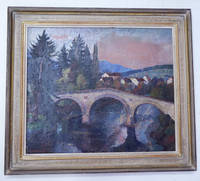
réf. 1059591977. 62 x 71 cm gerahmt 49 x 56 cm Schönes Ex. Erste Erwähnung des «grossen Steges über die Töss» in der jüngeren Offnung von Rorbas im Jahre 1521. Man findet den offenen Steg auch in der Gygerkarte von 1667 und dem Zehntenplan von 1770. Dieser Steg stand wenige Meter oberhalb der heutigen Brücke. Etwas weiter unten gegen die Wildbachmündung befand sich die Furt für die Fuhrwerke. Die Kämpfe von 1799 zwischen den Franzosen und Österreichern sowie einem Hochwasser von 1803 setzten dem Holzsteg arg zu. Es musste dringend eine Neukonstruktion erstellt werden. Ab 1804 setzten sich verschiedene Persönlichkeiten nachhaltig für einen Brücken-neubau ein. Holz war damals sehr teuer rund 4200 Schuh Holz für das Lehrgerüst stammten aus dem Staatswald Hard. Steine gut 600 Kubikmeter konnten aus dem gemeindeeigenen Tuff-Steinbruch geschlagen werden. Die Ge-meinden leisteten viel Fronarbeit. Der Brückenkörper allein kostete 4'500; die Gesamtkosten beliefen sich auf 8’715 Gulden. Nach einem Staatsbeitrag und Einzelspenden von je 1’000 Gulden wurden die Gemeindebeiträge wie folgt aufgeteilt: Rorbas 4/9 Freienstein 3/9 und Teufen 2/9. Die 8’715 Gulden würden heute etwa 1.6 Millionen Franken entsprechen. Die Brücke wurde von dem Niederglatter Maurermeister Volkart realisiert. Mangels Mustern in der Ost-schweiz und dem Zeitgeiste der Mediation entsprechend wurde die Brücke nach dem Vorbild von franz. Kunststrassen gebaut. Der Bau fand in einer politischen Umbruchzeit Zeit statt. Rorbas Freienstein u. Teufen waren unterschiedlichen Bezirken zugehörig. Die Gemeindekassen waren von den Schäden und Ein-quartierungen des Krieges leer. Erstaunlich dass unter so schlechten Rahmen-bedingungen trotzdem ein gelungenes Werk entstehen konnte. So kamen unsere Gemeinden zu der ersten Steinbogenbrücke im Kanton. Bis in die heutige Zeit ist die «Alte Brücke» das verbindende Wahrzeichen der beiden Dörfer. - Bärtschi Willy Alexander 1906 - 1995 Maler Dozent und Publizist .Bauernsohn aus Lützelflüh Gymnasien in Zürich und Frauenfeld Kontakt mit dem Werk des Philosophen Holzapfel. 1928 Eintritt in die Kunstakademie Breslau die er aber bald wieder verliess. 1929 Eintritt in die Kunstakademie in Dresden ab 1930 Schüler von Otto Dix. Von 1934–1938 lebte Bärtschi als freier Maler in Dresden. 1938 Rückkehr nach Zürich kleinere Arbeiten für die Landi. Nach dem Aktivdienst 1943 Lehrer an der Kunstgewerbeschule in Zürich. Nach der Pensionierung 1971 widmete er sich wieder der Malerei. 010 1977 unknown
2001réf. 26417Antwerp: Detlef BVBA 2001. Faint impression mark to the front cover and a hint of smudging to the printed white boards else fine. First Edition. Oblong quarto. 2001 Spring / Summer lookbook of arguably the most important men's collection of the 2000s. In a sparse and minimalist selection of twelve color images Simons anticipates by less than a year the post-9/11 era of anxiety and surveillance. Using stills captured from a video by frequent Simons collaborator and fellow Academy alumnus Willy Vanderperre; grainy uneasy images of young men on a concrete basketball court wearing balaclavas and hoods. Simons had long been fascinated by presenting his clothing via video; his first collection F/W 95 was a video recording of street models instead of live runway. The anxious threatening mood of this lookbook and artists' book is one of the final and best instances of pre-millennial anxiety in art and fashion. Antwerp: Detlef BVBA unknown books
1921réf. 740DGZürich, Druck Hofer & Co., 1921. Lithographie.
1921réf. 740DG1921. Zürich Druck Hofer & Co. 1921. Lithographie. Ausstellungs-Plakat. Ausstellung vom 9. bis zum 17. April 1921.- Am oberen Rand kleine Fehlstelle 25 x 18 cm. unknown
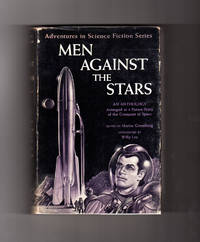
1950réf. 000365New York: Gnome Press 1950. First Edition . Cloth. Near Fine/Very Good Plus. 8vo - over 7¾" - 9¾" tall. Cartier Edd jacket. New York: Gnome Press 1950. First Edition. Introduction by Willy Ley. Edited by Martin Greenberg this copy signed inscribed and presented by him to Arthur C. Clarke. Octavo 351 pp. Purple cloth-backed gray cloth boards with silver spine titling and blindstamped launching-spaceship and star motif on purple margin. Pictorial dustjacket by sci-fi illustration luminary Edd Cartier. A near fine book with only minor page edge soiling and a trace of partial spine fade in a Very Good jacket showing light perimeter wear. Singular copy inscribed and presented to Arthur C. Clarke by Greenberg with provenance of unimpeachable order accompanying the book. An increasingly classic collection of short stories by some of the now-timeless sci-fi names. Willy Ley: "Here is a different type of anthology. This book taken in its entirety tells a story: the conquest of space. Moving from man's first attempt to reach the moon to the exploration of the ends of the universe these stories are among the finest ever published." - Willy Ley. Hailed by critics at the time of its publication as a quantum leap forward in both quality and concept for science fiction anthologies Martin Greenberg's thematically edited Men Against the Stars is a collection of twelve lengthy stories whose authors read like a Who's Who of Golden Age sci-fi including Isaac Asimov Murray Leinster A.E. Van Vogt L. Ron Hubbard Hubbard's "When Shadows Fall" is here and E.M. Hull. Not a slap-dash aggregation to get to the printer quickly Greenberg's collection was a thoroughly contemplated and planned project a selection of the very finest available stories on theme ranging back as far as 1939. Nicely complimented by a Cartier's funky pure genre period stylization jacket. A sci-fi presentation copy of the highest sort that of a veteran and astute editor to a future superstar. Arthur C. Clarke's reputation at the time was already becoming established and Greenberg shows the admiration in his skilled critical eye for Clarke's sci-fi talents in his presentation remark. As always please feel free to ask questions or request additional scans. L53n Gnome Press hardcover
1910réf. elala1308London: George Harrap & Co. 1910. 1910. 4to. pp. 20 tipped-in colour plates & text illus. & decoration some in colour incl. colour title by Willy Pogány. original gilt-stamped calf t.e.g. some moderate wear mainly to extremities. First Edition Illustrated by Pogány Limited to 525 copies numbered & signed by the Artist. Signed by Authors. 1st Edition. Hardcover. Good. London: George Harrap & Co., [1910]. Hardcover
1954réf. 58377N.p. ca. 1954. original wrappers titled in red pencil in custom slipcase and chemise. Light soiling and a few tears to wrappers. . Folio. unknown
1911réf. 24558London: G. G. Harrap & Co 1911. Limited edition. Hardcover. Very good. 4to. Full calf embossed on the spine and upper board. Top edge gilt. Illustrated throughout by Pogány in black and white and tipped-in full color plates. Leather rubbed at hinges and edges with some light soiling else this is a very good copy. One of 525 numbered copies signed by Pogány. This is number166. . G. G. Harrap & Co hardcover
1913réf. 24584London: G. G. Harrap & Co 1913. First edition. Very good. Hardcover. Three volumes. 4to. Quarter green calf spine blocked in gilt; Cloth sides with gilt title and design on the upper boards. Top edges gilt. Illustrated throughout by Pogány in black and white and 40 mounted full color plates Spines sunned to a pleasing tan color else this is a very good set. In the publisher's slipcase which has some light wear. . G. G. Harrap & Co unknown
réf. 50277Now first completely done into English verse from the Persian in accordance with the original forms with a biographical and critical Introduction by John Payne. London : printed for the Villon Society by private subscription and for private circulation only 1898. Quarto half crushed levant morocco by C. J. Sawyer ruled in gilt spine in compartments with raised bands ruled and ornamented in gilt edges slightly rubbed top edge gilt others uncut pp. lxxi; I; 206 a fine copy of the large paper deluxe edition printed in an unspecified limitation this is copy 24. The Rubaiyat is a collection of poems exploring the human condition attributed to the 12th-century Persian poet astronomer and mathematician Omar Khayyám. The Villon Society published fine quality limited editions of classical literature for its members at the turn of the century. hardcover
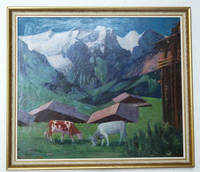
réf. 1059571980. 53 x 59 cm gerahmt 45 x 52 cm Schönes Ex. Das Wetterhorn ist ein 3690 m ü. M. hoher Berggipfel der Berner Alpen Westalpen im Schweizer Kanton Bern und steht oberhalb von Grindelwald bzw. Rosenlaui im Berner Oberland.Das Wetterhorn wurde am 31. August 1844 durch Melchior Bannholzer und Johann Jaun zum ersten Mal bestiegen. Die erste Winterbegehung erfolgte 1874 durch Meta Brevoort eine Ausnahmealpinistin für Winterbegehungen- Bärtschi Willy Alexander 1906 - 1995 Maler Dozent und Publizist .Bauernsohn aus Lützelflüh Gymnasien in Zürich und Frauenfeld Kontakt mit dem Werk des Philosophen Holzapfel. 1928 Eintritt in die Kunstakademie Breslau die er aber bald wieder verliess. 1929 Eintritt in die Kunstakademie in Dresden ab 1930 Schüler von Otto Dix. Von 1934–1938 lebte Bärtschi als freier Maler in Dresden. 1938 Rückkehr nach Zürich kleinere Arbeiten für die Landi. Nach dem Aktivdienst 1943 Lehrer an der Kunstgewerbeschule in Zürich. Nach der Pensionierung 1971 widmete er sich wieder der Malerei. 010 1980 unknown
1910réf. 33890London: George G. Harrap and Co 1910. Very good minus. Signed limited first Pogany edition one of only 525 numbered copies printed on Japan vellum and signed by Pogany. Often called Pogany's masterpiece this production owes much to the aesthetics of Morris's Kelmscott Press and Ricketts's Vale Press as well as artists like Gustave Doré and Aubrey Beardsley. Printed on silky high-quality paper each page features decorative borders and interlocking designs in subtle colors. A gorgeous book. 12.5'' x 9''. Original full brown calf gilt-stamped and -lettered. Top edge gilt other edges uncut. Illustrated by Pogany with 20 tipped-in color plates calligraphic text decorative borders plus a profusion of stunning illustrations in color and line throughout text many full-page. Signed by Pogany on limitation page. Joints expertly repaired with some additional careful repair to boards where leather has been scuffed all along edges. George G. Harrap and Co unknown
réf. 30185London: George G. Harrap and Co. . Signed limited deluxe edition no.283 of 525 signed by Pogany 4to. unpaginated publisher’s full pictorial vellum gilt pictorial endpapers tipped-in colour plates b/w plates decorations in colour throughout; a fine copy. London: George G. Harrap and Co., hardcover
1991réf. 27542FEEST REINER 09/1991-08/93. 1. hardcover. SAMMLERAUSGABE DER BLAUEN REIHE FEEST, REINER hardcover
1910réf. 140938515London: George Harrap 1910. First THUS. Very Good. Limited edition of 525 copies hand-numbered 91 in blue signed by illustrator Willy Pogany. Quarto. Original full tan calf decorated in gilt illustrated with 20 beautiful tipped-in color plates top edge gilt. Unpaginated. Very Good with scratch in front cover wear along edges of leather internally near fine bookplate ghost on paste down. All plates present. A wonderful visual exploration of Coleridge's classic poem with intricate ink illustrations and every plate a hazy dream-like wash of color. George Harrap unknown books
1910réf. 6398London: George G. Harrap & Co. 1910. Good/Edition limited to 525 copies SIGNED by Willy Pogány. 33cm; 144 pages. Polychrome half title and title page. Twenty full color illustrations by Pogàny printed by Dalziel and mounted. Numerous full-page monochrome illustrations and illustrations in text. Letterpress and Initials in two colors surrounded by elaborate borders designed and printed by Vincent Brooks Day & Son. Decorated endleaves following blanks. In gilt-stamped brown leather. Covers worn at spine and at extremities somewhat stained and mottled yet sound and entire. Pages quite clean and unmarred. George G. Harrap & Co. hardcover books
1919réf. 172758London: George G. Harrap & Co. Ltd 1919. Fine mid-century tree calf A finely bound copy of the second edition illustrated by Pogány "Dulac's most successful European contemporary during the highest peak of the Golden Age of book illustration" Dalby p. 87. Fitzgerald's translation of the Rubáiyát published in 1859 slowly gained recognition as a masterpiece of English literature. By the early 1900s many of Fitzgerald's phrases had entered the common stock of English quotations and allusions. Quarto 208 x 142 mm. With 16 mounted colour lithographic plates decorative embellishments throughout contents printed in blue-green and black. Near-contemporary tree calf by Bayntun-Rivière red and green morocco labels compartments elaborately gilt double gilt fillet with corner rosettes gilt inner dentelles marbled endpapers gilt edges. Quotation from Théodore de Banville and gift inscription in French dated 1942 to first blank. Boards gently bowed minimally rubbed the odd spot of foxing. A near-fine copy. Potter 100. Richard Dalby The Golden Age of Children's Book Illustration 1991. hardcover
1932réf. 49762Leipzig: Hachmeister & Thal 1932. Hachmeister & Thal unknown
réf. 03377London: G.G. Harrap 1913. One of Pogany's Masterpieces Limited to 525 Copies Signed by the Artist POGANY Willy illustrator. ROLLESTON T.W. WAGNER Richard. The Tale of Lohengrin Knight of the Swan after the Drama of Richard Wagner by T.W. Rolleston. Presented by Willy Pogany. London: G.G. Harrap n .d. 1913. Limited to 525 copies signed by the artist this being copy no. 90. Quarto. Eight tipped-in color plates numerous full page color illustrations calligraphic text head- tailpieces; an image on every page. Printed on heavy grey stock. Full vellum pictorially gilt-stamped. Top edge gilt others untrimmed. A fine copy. Housed in a blue cloth slipcase. William Andrew "Willy" Pogany born Vilmos Andreas Pogány August 1882 - 30 July 1955 was a prolific Hungarian illustrator of children's and other books. Pogany's best known works consist of illustrations of classic myths and legends done in the Art Nouveau style. He also worked as an art director on several Hollywood films including Fashions of 1934 and Dames. The publication of Pogány's Lohengrin was the final act in his trilogy of masterworks focused on Wagner's Germanic tales and one of the quintet that is considered his finest work. Pogány clearly approached the commission to illustrate Lohengrin as an opportunity to improve and extend techniques that he had developed through his preceding work particularly The Rubáiyat of Omar Khayyám The Rime of the Ancient Mariner Tannhäuser and Parsifal the other four books that immortalized his career as an illustrator. That commitment to ongoing innovation resulted in an incredible suite of illustrations including color lithographs monotone and marginal illustrations and the delightful tipped-in color plates produced with a four-color process included in Lohengrin. Themes of medieval chivalry erotic love and moral tests are illustrated in a lavish fashion by Pogány with an outstanding use of iconography form and color. London: G.G. Harrap, 1913 unknown books
1910réf. 140938515London: George Harrap 1910. First THUS. Very Good. Limited edition of 525 copies hand-numbered 91 in blue signed by illustrator Willy Pogany. Quarto. Original full tan calf decorated in gilt illustrated with 20 beautiful tipped-in color plates top edge gilt. Unpaginated. Very Good with scratch in front cover wear along edges of leather internally near fine bookplate ghost on paste down. All plates present. A wonderful visual exploration of Coleridge's classic poem with intricate ink illustrations and every plate a hazy dream-like wash of color. George Harrap unknown