7 234 résultats
1910réf. 6398London: George G. Harrap & Co. 1910. Good. 33cm; 144 pages. Polychrome half title and title page. Twenty full color illustrations by Pogàny printed by Dalziel and mounted. Numerous full-page monochrome illustrations and illustrations in text. Letterpress and Initials in two colors surrounded by elaborate borders designed and printed by Vincent Brooks Day & Son. Decorated endleaves following blanks. In gilt-stamped brown leather. Covers worn at spine and at extremities somewhat stained and mottled yet sound and entire. Pages quite clean and unmarred. Edition limited to 525 copies SIGNED by Willy Pogány. George G. Harrap & Co. hardcover
1930réf. 10623London: George G. Harrap & Co. Ltd 1930. Limited Edition. Hardcover. Very Good. Limited Edition. Hardcover. There are two iterations of this edition 750 in the British issue and another 500 for the United States. Each signed twice by Pogany first on the limitation page and then in pencil on the frontispiece etching. The work includes twelve tipped-in color plates mounted on tipped in backings numerous small tipped in decorative pieces braced with printed head and tail pieces. This was Pogany's second book for Harrap an earlier version of the same title printed in 1909 having established his reputation as a book illustrator. Pogany is said to have creditted Harrap for giving him his "first big chance." Minor shelf/edge wear spine evenly sunned else tight bright and unmarred. Full teal leather binding four raised bands gilt lettering and decorative elements red ink decorative element lightly marbled endpages frontispiece tipped in plates on mounts teg. 4to. 173pp. Illus. color and b/w plates. Signed twice by the artist. Numbered limited edition this being 387 of 750. George G. Harrap & Co. Ltd hardcover
1949réf. 153A nice copy in a price-clipped jacket with minor wear at the spine. Inscribed by Ley to Nathan Weinberg dated Sept 1 1949 book publication is listed as Sept 1949 on verso of title page. No mention of later printings as was standard for Viking first printings of this period. Tissue inserts present protecting the color endpaper illustrations. Jacket in mylar protector. Very uncommon signed particularly in the month of publication. Viking hardcover
réf. 51-3889Paris: Circa 1898. . Original drawing from a French Collection. 32 x 23.5 cm. Titled. Expertise by Jean-Marc DECHAUD Expert CNES 10 rue de Chinon – 37220 CRISSAY sur MANSE. France. William Andrew Pogany born Vilmos András Pogány; August 24 1882 – July 30 1955 was a prolific Hungarian illustrator of children's and other books.Pogany spent two years in Paris.When he finally saved up some money from his work he left Paris to go to London. In London he crafted his quartet of masterpieces: The Rime of the Ancient Mariner 1910 Tannhauser 1911 Parsifal 1912 and Lohengrin 1913. Each of these was designed completely by Pogany from the covers and endpapers to the text written in pen and ink pencil wash color and tipped-on plates.After ten years in London Pogany emigrated to AmericaPogany worked as an art director on several Hollywood films including Fashions of 1934 and Dames. He began his involvement in motion picture set design in 1924 and worked in film until the end of the 1930s. He was commissioned by John Ringling Ettenger Reiner and WIlliam Randolph Hearst's Wyntoon Estate painted for the Barrymore family Douglas Fairbanks Jr. Carole Lombard Enrico Caruso Miriam Hopkins and many others. Paris: Circa 1898. unknown
1921réf. 5582131921. Unbound. Near Fine. Two original pen and ink drawings on artists board. Each measures approximately from 8¼" x 10". Overall near fine with hint of toning at the edges and some wear at the corners. The drawings are not signed but both have pencil notes on the rear noting the book in which they appeared: Padraic Colum’s The Golden Fleece and the Heroes Who Lived Before Achilles published by The Macmillan Company in 1921. The images depict Jason of the Argonauts reaching for Aeson his stern-looking father and King Admetus crumpled in a chair lamenting his upcoming Death while his wife Alcestis stands touching his head in comfort before choosing to take his place in the Underworld. Each drawing is a fine representation of Pogany's crisp line work. A nice pair of images. Book not included. unknown
2000réf. SBBIH-PJOYK46ZWIXVOrion Children's Books 2000. paperback. Good. Our good condition books are generally good for reading but not for gifting or collecting. They could have imperfections such as creasing fanning inscriptions margin notes yellowing staining on edge or cover or pages bumps scuffs etc etc sometimes multiple of these. It's a wide category that encompasses anything that isn't almost-new down to anything that is slightly better than poor. We would NOT recommend gifting Good books - these should be considered reading copies. Our books are dispatched from a Yorkshire former cotton mill. We list via barcode/ISBN so please note that the images are stock images and may not be the exact copy you receive furthermore the details about edition and year might not be accurate as many publishers reuse the same ISBN for multiple editions and as we simply scan a barcode or enter an ISBN we do not check the validity of the edition data when listing. If you're looking for an exact edition please don't order at least not without checking with us first although we don't always have time to check. We aim to dispatch prompty the service used will depend on order value and book size. We can ship to most countries see our shipping policies. Payment is via Abe only. Orion Children's Books paperback
1999réf. SBBIH-3CLHHZOMLBC5Intes International 1999. hardcover. Very Good. Most of our very good books have only minor imperfections such as shelf wear consistent with a new book that's sat on a bookshop shelf for a year or two. Occasionally we may miss other minor imperfections as we have to grade books at speed. Our books are dispatched from a Yorkshire former cotton mill. We list via barcode/ISBN so please note that the images are stock images and may not be the exact copy you receive furthermore the details about edition and year might not be accurate as many publishers reuse the same ISBN for multiple editions and as we simply scan a barcode or enter an ISBN we do not check the validity of the edition data when listing. If you're looking for an exact edition please don't order at least not without checking with us first although we don't always have time to check. We aim to dispatch prompty the service used will depend on order value and book size. We can ship to most countries see our shipping policies. Payment is via Abe only. Intes International hardcover
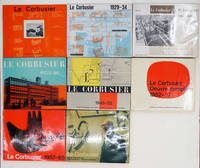
1957réf. 2412190001Les Editions d'Architecture; George Wittenborn; Praeger 1957. Hardcover. Very Good. The Architectural Work of Le Corbusier an Outstanding Contribution to the Modern Movement 10 volume set. Oblong quartos 29 x 24 cm. Bound in publisher's cloth. Hardcover bindings. Dust jackets in good condition in protective mylar wrappers. Good bindings and covers. Occasional foxing but still a nice set. Includes: Vol 1: Le Corbusier The Complete Architectural Works 1910-1929 Volume I. - Les Editions d'Architecture 1964 - 216 pp.; Vol II: Le Corbusier et Pierre Jeanneret Oeuvre complete de 1929-1934 - Les Editions d'Architecture Zurich 1964 - 208 pp.; Vol III: Le Corbusier & Pierre Jeanneret Oeuvre complete 1934-1938 - Les Editions d'Architecture 1964 - 175 pp.; Vol IV: Le Corbusier Oeuvre complete 1938-1946 - Les Editions d'Architecture 1966 - 208 pp.; Vol V: Le Corbusier Oeuvre complete 1946-1952 - Les Editions d'Architecture 1953 - 244 pp.; Vol VI: Le Corbusier et son atelier rue de Sevres 35 Oeuvre complete 1952-1957 - Les Editions d'Architecture 1957 - 223 pp.; Vol VII: Le Corbusier et son atelier rue de Sevres 35 Oeuvre complete 1957-1965 George Wittenborn 1965 - 239 pp.; Vol VIII: Le Corbusier: Last Works; Praeger 1970 208 pp. German French and English text; Vol IX La Tourette: The Le Corbusier Monastery Wittenborn 1966 tear on dj.; Vol X: The Radiant City: Elements of a Doctrine of Urbanism to be Used as the Basis of Our Machine-Age Civilization Orion 1967 small tear on dj. Refs: Sharp p.70 1-7; Avery 329. Seventeen projects by Le Corbusier in seven countries are listed as UNESCO World Heritage Sites. This is an oversized or heavy book which requires additional postage for international delivery outside the US. Les Editions d'Architecture; George Wittenborn; Praeger hardcover
1954réf. 1207Paris: B. Artaud 1954. First Edition First Printing. Hardcover. Near fine/near fine. Belleville Ménilmontant. Photographs by Willy Ronis. Claud Arthaud editor. Type design by Roger Excoffon. B. Arthaud Paris 1954. 96 pp. Quarto 11 x 9 in./28 x 23 cm First edition. Vol. II in the collection "Les Imaginaires". Hardbound with illustrated boards. Original acetate jacket and printed belly band. 93 gravure reproductions printed by Braun & Co. BOOK CONDITION: Near Fine; a solid tight clean copy with light wear to edges and corners light tap to upper spine; in a Fine clear acetate dust jacket with slight wear at crown of spine including a tiny chip and tear to acetate; in a Fine yellow belly band with signs of uneven fading at spine; housed in a Near Fine brown cardboard slipcase original showing light rubbing wear and fading alog margins. The scarce hardbound issue of Ronis's classic! Before his death in 2009 Willy Ronis was one of the last of the surviving documentary photographers in the humanist tradition of Kertesz and Cartier-Bresson. During the 40s and 50s he was a prolific chronicler of many corners of French social life especially the working people of Paris. He tended to wear his politics on his sleeve often photographing strikes demonstrations occupations of factories and the like. For this reason he also kept his distance from the American and British press. In this scarce volume Pierre Mac Orlan offers his paean to the authenticity of these working class neighborhoods of Belleville-Menilmontant. Ronis discovered the area through Daniel Pipart a painter and friend of his wife who kept a studio there. He visited and photographed regularly from 1947-1950 with the aim of one day making a book from the images. Ronis's images like countless Realist artists before him aim to capture the poetry of the streets. Ever respectful of his subjects Ronis's gaze is always affectionate and discrete. Unlike many documentary photographers who search out freaks and weirdoes Ronis seeks out the typical and the ordinary. Yet beneath the surface one senses a subtle sense of melancholy and muted nostalgia. A masterpiece of book design and typography! The images contained in Belleville-Menilmontant are certainly among Ronis's finest and provide an essential point of entry into his work. Included in MM. Auer: 802 Photo Books. B. Artaud hardcover
réf. 16-5241Paris: Éditions Excelsior 1926. Large 4to. 26 x 33.5 cm. Original paper wraps time stained as usual One of 546 numbered copies with 20 color etchings by Icart.Luc Monod: Manuel De L'Amateur Livres Illustres Modernes 1875-1975 no. 3011.With a facsimile of a letter by Colette: : “De deux romans Minne et Les égarements de Minne qui ne portèrent pas ma signature j’en ai fait un seul : l’Ingénue libertine. La première partie trouve encore grâce à mes yeux ; je suis plus sévère pour la deuxième et dernière mot rayé superflue et qui sent le travail. Cette libertine aurait bien dû en rester à l’ingénuité. — Colette”Broché sous couv. rempliée 33.5 x 26.5 cm.Édition limitée à 546 exemplaires celui-ci un des ex. num. du tirage principal survergé à la forme de Rives BFK. Le texte de Colette est illustré de 20 eaux-forteshors texte de Louis Icart 1888-1950 quelques-unes à caractère érotique et mises en couleur au pochoir et d’un fac-similé d’une lettre de Colette. Défauts mineurs. Paris: Éditions Excelsior, 1926 paperback
réf. 324971London: George G. Harrap. hardcover. very good. Pogany Willy. Beautifully illustrated with 16 tipped-in color plates by Willy Pogany and with decorative turquoise borders and initials on every page. Unpaginated. 8vo publisher's elaborately gilt and blind-stamped brown calf binding. London: George G. Harrap no date circa 1932. Handsome ex-libris on inside front cover; slight toning on endpapers and light foxing throughout else a near fine copy. George G. Harrap unknown
1926réf. 177550London: George G. Harrap & Co. 1926. A handsomely produced publication a reissue of the 1910 deluxe edition with a new elaborate binding featuring intricate onlays and text reproduced in Pogany's manuscript-style lettering. The Rime of the Ancient Mariner was among the artist's most ambitious exercises in total book design drawing consciously on the tradition of medieval illuminated manuscripts. As Richard Dalby observes "Willy Pogány was Dulac's most successful European contemporary during the highest peak of the Golden Age of book illustration. The Rime of the Ancient Mariner was his most ornate and impressive production with hand-scripted text full-page black and white drawings and colour plates tipped-in on grey matte paper. This combination of illustration and calligraphic text by the artist was rarely repeated" p. 87. Quarto. Title page printed in colour 20 tipped-in halftone colour plates in-text illustrations in black white and green all by Willy Pogany. Original grey crushed morocco spine lettered in gilt compartments ruled and elaborately decorated in gilt with ship and dragon motifs front cover lettered and blind-tooled in gilt with blue dots to borders onlay centrepiece of a ship within gilt framing marbled endpapers gilt top edge other edges untrimmed. Ownership inscriptions of "Derek Whitting Law" dated 30 November 1932 and later inscriptions of "Richenda D. Buxton" and "R. D. Blaken" to front free endpaper. Spine toned scratches on rear cover front board slightly bowed. A very good copy. Richard Dalby The Golden Age of Children's Book Illustration 1991. unknown
1913réf. 184178London: G. G. Harrap & Co. 1913. First trade edition in the publisher's deluxe leather binding. In this beautifully decorated production Pogany finds "a congenial theme for his exceptional powers in the high imaginings the terror and mysticism the symbolism and supernatural vision of one of Wagner's immortal romances. The pages are beautified with decorative drawings that are fittingly in tune with the changing moods of the text" Adcock. Large octavo. With 8 colour mounted plates illustrated and decorated throughout the text in various colours. Printed on pale grey paper. Original brown calf smooth spine decoratively lettered and stamped in gilt front cover with title and pictorial block in blind colour-illustrated endpapers top edge gilt others untrimmed. Bookseller's ticket of Margareta Webber Melbourne. Spine sunned gilt bright front inner hinge split short split to rear inner hinge remaining sound. A very good copy. A. St John Adcock "The Colour of Christmas" The Bookman Dec. 1913 p. 158 hardcover
réf. 99248Zürich Vlg. f. Architektur Artemis 1948 52 55 65 1970. Quer-Gr.8° je ca. 200 S. unzählige Abb. OLwd. m. OU Bücher fein säuberlich mit Folie bezogen Besitzerstempel a. Vors. minimal fingerfleckig sonst sauber Div. Auflagen. Text mehrheitl. frz. einige Bde. m. frz./dt./engl. Kommentaren. Einige Bde.: Gestaltung von Max Bill. 010 Zürich, Vlg. f. Architektur Artemis, 1948, 52, 55, 65, 1970 unknown
réf. 419461949. 49 x 42 cm Unter Passepartout gerahmt. Fries Willy 1907 Wattwil SG †18.7.1980 Wattwil SG Maler Zeichner und Grafiker. Wandbild Glasfenster Zeichnung Holzschnitt und Illustration. Der im ländlichen Wattwil aufgewachsene Willy Fries bricht 1929 sein Studium der Kunst- und Literaturwissenschaft an der Universität Zürich auf Anraten von Heinrich Wölfflin zugunsten einer Laufbahn als freier Künstler ab. In Paris kurzzeitig an den Académies Scandinave und Grande Chaumière sowie in den Ateliers von Fernand Léger und Amédée Ozenfant. 1930–34 weitere Ausbildung an der Universität und der Akademie in Berlin sowie Anschluss an den Kreis der bekennenden Kirche um Dietrich Bonhoeffer. Studienreisen nach Italien Frankreich Holland und Flandern. 1935 zwingt ihn ein Skiunfall zum Verbleib in Wattwil. Dort entsteht mit dem Gemäldezyklus Die Passion 1936–1944 Köln-Marienburg Garnisonskirche der die Leidensgeschichte Christi in der damaligen Gegenwart und mit dem Toggenburg als Kulisse schildert in den folgenden Jahren sein Schlüsselwerk. 1939 Heirat mit der Pfarrerstochter Dorothea Wieser und endgültige Niederlassung in Wattwil. Fries entwickelt sich zu einem vielbeschäftigten Künstler der zahlreiche Fresken und Glasfenster für Kirchen Spitäler und Gemeinschaftsräume vorwiegend in der Ostschweiz aber auch in Berlin Bonn und Seifhennersdorf entwirft. Mit der Passion und weiteren Gemäldezyklen wie Christ ist geboren 1944–49 einer Schilderung der Weihnachtsgeschichte vor den Ruinen der zerbombten Stadt München findet er im Kontext zeitgenössischer religiöser Malerei in der Nachkriegszeit starke Beachtung und wird mit Einzelausstellungen in der Schweiz in Deutschland und Frankreich geehrt. Die filmische Umsetzung der Passion in eigener Regie unter dem Titel Gib uns Frieden wird 1962 mit dem Anerkennungspreis der Interfilmtagung in Brüssel prämiert und von zahlreichen Fernsehstationen gesendet. 1964 Gesamtausstellung im Kunstmuseum St. Gallen. Auszeichnung mit dem Rembrandt-Preis in Salzburg 1970. Für seine Bemühungen um die Darstellung des Evangeliums in der Malerei wird er 1972 mit dem Doktor honoris causa der theologischen Fakultät der Universität Bern geehrt. 1977 Jubiläumsausstellung in den beiden Kirchen von Wattwil. Die vom Künstler in seinem Todesjahr gegründete Stiftung veranstaltet 1982 in St. Gallen sowie 1987 in Hamburg und Berlin Gedächtnisausstellungen. 010 1949 unknown
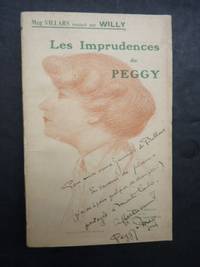
1910réf. 29824Paris: Sté d'éditions et de publications parisiennes 1910. Fine. Sté d'éditions et de publications parisiennes Paris s. d. circa 1910 12 x 19 cm broché First edition in French translated by Willy; no mention of large paper copies. An important superb inscription from Meg Villars Willy's mistress while he was married to Colette to Viscountess Jeanne de Bellune "". pour mon amie Jeannot de Bellune / en souvenirs de plaisirs qu'on ose à peine qualifier de champêtres partagés à Monte-Carlo.for my friend Jeannot de Bellune / in memory of shared pleasures that one would hardly dare call rural in Monaco . Cover illustrated in red by Garnier Salbreux. A handsome copy with an exceptional provenance. Sté d'éditions et de publications parisiennes unknown
1910réf. 10849George G. Harrap and Co London. 1910. FIRST POGANY EDITION. Large 4to. 12.5 x 9.3 inches. Fully illustrated by Pogany with illustrated title page 20 tipped-in colour plates scores of other mono and two colour illustrations printed in light green and mauve some full page and calligraphic text all within decorative borders all illustrated or written by Pogany. A fine copy in the scarce publishers deluxe burgundy coloured suede binding with yapp edges. Lovely bright and clean gilt decoration and lettering to the front board. Top edge gilt the others untrimmed. Original illustrated end papers. A fine and truly handsome copy of this classic work and a remarkable survivor. The suede bindings of this period are fragile and prone to drying out often resulting in the suede perishing and the yapp edges splitting. Rare in this condition. George G. Harrap and Co, London. 1910
1930réf. 192444London: George G. Harrap & Co. Ltd 1930. With an original etching Signed limited edition British issue number 150 of 750 copies signed by the artist specially bound and with an original etching also signed by Pogány. Pogány's illustrated edition was first published in 1909. A further 500 copies were issued in America. Quarto. Tipped-in colour frontispiece and 11 plates all by Pogány title page printed in brown decorations and illustrations in the text. Original bluish green morocco spine lettered in gilt raised bands circular floral motif in gilt red and brown on front cover marbled endpapers top edge gilt others untrimmed. Spine and head of boards toned a little wear on tips occasional spotting internally: near-fine. Not in Potter. hardcover
réf. P6615Mülheim/Ruhr and from December 1972 Cologne: self-published 1970-1977. Quartos 30 × 21 cm. Original mostly pictorial self-wrappers a few issues staple-stitched; each issue between 14 and 32 pp. with numerous illustrations. A few issues have been punched and somewhat closely trimmed; in the July 1971 issue pages 9 and 10 are missing; otherwise with only light signs of wear and handling and about very good. Extensive run of seven nearly complete years see list below of the longest-running periodical of postwar German anarchism. The journal often printed monthly appeared from 1948 to 1978. The years offered here from 1971 to 1978 were presumably the most politically eventful for the clandestine periodical which following the student protests of 1967 and 1968 sought to hold its own alongside the numerous new socialist and communist organizations and publications. The founder and longtime editor Willy Huppertz 1904-1978 had already been active as an anarcho-syndicalist worker during the Weimar Republic. After surviving National Socialism including imprisonment in the Sachsenhausen concentration camp he founded his first anarchist periodical in the Soviet occupation zone together with Wilhelm Jelinek. After Huppertz moved to West Germany Jelinek sent him the subscribers' list in order to keep it out of the reach of the Soviet secret service. Jelinek was arrested by the Soviet army in 1948 and sentenced to 25 years in prison. He died in the notorious prison in Bautzen. Cf. Michael Kubina Von Utopie Widerstand und Kaltem Krieg Hamburg 2001 pp. 269f. Huppertz continued his anarchist publishing activities in West Germany's industrial Ruhr region. From 1948 onward his anarchist periodical appeared under the name "Befreiung." As an anarchist he viewed the student protests that began in the late 1960s and the extra-parliamentary opposition APO with skepticism. This skepticism was directed on the one hand at Marxists of the Leninist and Maoist varieties but also on the other at the anti-authoritarian movement of the hippies which was being "swallowed up" by "record producers and organizers of pop festivals." One of the issues addressing the counterculture states: "They do business with you your drugs and your music. Jimi Hendrix is just as much a brand-name product as Peter Alexander German-language popular singer. . What you are doing is merely a skillful accommodation to capitalism. By refusing to work and living by begging e.g. in sunny fascist Spain or Greece you in no way unsettle the system of exploitation" June 1971 p. 7. Huppertz was nevertheless able for example to connect with the squatting movement and with small anarchist groups that were able to establish themselves alongside the socialist and communist organizations. Despite the political differences the "Baader-Meinhof Group" RAF became a subject from 1972 onward insofar as the anarchist milieu saw itself confronted by a "police state." In February 1972 issues and distribution materials were confiscated in Cologne and Mülheim and investigations were initiated for "supporting the Baader-Meinhof Group." Since the fall of 1970 the group "Anarchosyndikat Köln" had been involved in the editorial work. In 1974 Huppertz handed over the editorial work entirely to the Cologne group under the leadership of Ralf Stein. That same year Stein was arrested and in 1975 sentenced to one year in prison without a suspended sentence for supporting the Baader-Meinhof Group denigration of the Federal Republic of Germany and incitement of the people. Cf. DadA-Periodika no. DA-P0000816 vol. 23 nos. 5 11 of 12 nos. in 2 issues. vol. 24 nos. 4 6-12 of 12 nos. in 7 issues. vol. 25 nos. 1-7/8 10-12 of 12 nos. in 10 issues. vol. 26 nos. 1-12 of 12 nos. in 11 issues. vol. 27 nos. 1/2-10 of apparently only 10 nos. published in 9 issues. vol. 28 nos. 1-7 apparently complete except for the "special issue" in 7 issues. vol. 29 nos. 1-5 7-9 of 9 nos. in 8 issues. vol. 30 nos. 2-7 of 7 nos. in 6 issues. DadA-Periodika DA-P0000816. As of August 2026 only two North American libraries list incomplete runs. unknown
réf. 23122Paris, Ernest Flammarion, 1895. In-18, (2 ff.), 319 pp., couverture illustrée. - Maroquin brun clair, triple filet doré en encadrement et masque de comédie aux angles sur les plats, dos à nerfs orné, dentelle dorée intérieure, tête dorée, non rogné, couverture conservée (Thierry Sr de Petit-Simier).
1903réf. AMO-2397Paris, Albin Michel, 1903 1 volume in-18 (19,5 x 13 cm) de LXV-(1)-383 pages. Nombreuses illustrations en noir au trait dans le texte par Wely. Portrait photographique de Claudine (actrice Polaire) en écolière en frontispice. Reliure de l'époque demi-maroquin à coins havane, dos lisse orné doré, filets dorés sur les plats, tête dorée, non rogné (relié sur brochure). Couverture illustrée en couleurs par Wely (les deux plats et le dos conservés). Exccellent état. Très beau papier de Hollande. ÉDITION ORIGINALE. UN DES RARES EXEMPLAIRES SUR HOLLANDE, CELUI-CI PARAPHÉ PAR WILLY ET NUMÉROTÉ "N° HUIT [signé] WILLY" Les exemplaires sur grands papiers ne sont pas annoncés sur les exemplaires ordinaires. Il doit y avoir une dizaine d'exemplaires seulement sur ce papier. Le volume contient au début la plaidoirie de Maître J. Paul-Boncour pour la maîtresse du Prince Jean. L'ouvrage fut condamné. Cette première édition est la seule complète, les suivantes ayant été expurgées des passages les plus scabreux. "Willy est plus sourd encore que sa vertu n'est muette !... Du moins, cette Maîtresse du Prince Jean, a un mérite : elle ne prendra pas son lecteur en traître. Elle arrive à lui munie d'un casier judiciaire propre à le mettre en garde : dès avant son apparition, elle fut poursuivie, jugée et condamnée ; aussi, ceux qui voudront aller plus loin que la couverture du livre et en sortiront le rouge au front sauront à qui s'en prendre ; ils auront été prévenus. Je sais bien que l'éditeur, malin, a placé en tète du livre la délicieuse plaidoirie où M. Paul-Boncourt entreprit de démontrer à la justice de son pays que la Maîtresse du prince Jean n'était, mon Dieu, pas si immorale qu'on le voulait prétendre ; je sais bien qu'il l'a fait avec un luxe étonnant de verbe, d'esprit et d'aimable sophisme, et qu'il a réussi à être persuasif puisque je m'y suis laissé prendre et que j'ai lu le livre. Cette lecture m'a édifié — si j'ose dire — et je puis affirmer, en connaissance de cause que ce roman, même « épousseté », est terriblement scabreux. Je le sais d'autant mieux que j'ai lu jusqu'à la dernière page — il me faut faire mon mea culpa — car trop souvent le rire et le sourire désarmèrent ma colère ; et ainsi j'ai connu complètement les aventures de ce prince fantôme et de cette trop réelle et plantureuse Gaétane, et j'ai fréquenté le poète carottier Lauban, et Smiley, le littérateur, et aussi l'immuable Maugis, Journaliste notoire, qui ressemble à Willy comme un frère et qui en est très fier, le monstre ! J'ai vu, J'ai lu tout cela, et malgré moi j'y ai pris plaisir. Du moins, pour m'en punir et pour me réhabiliter à mes yeux. Je devais mettre en garde mes contemporains contre la séduction de la Maîtresse du prince Jean, leur affirmer que c'est un livre à ne pas lire et, puisque j'ai été victime de ma curiosité, empêcher les autres de céder à la leur, car s'ils ouvrent le livre, ils sont perdus, ils feront comme moi, ils iront jusqu'au bout." in Le Figaro du 31 juillet 1903, article signé Frédéric Charpin. TRÈS BEL EXEMPLAIRE DU TIRAGE A QUELQUES EXEMPLAIRES SUR HOLLANDE PARAPHÉ PAR L'AUTEUR RELIÉ A L’ÉPOQUE PAR CHARLES MEUNIER.
Paris, Ernest Flammarion, 1895. In-18, (2 ff.), 319 pp., couverture illustrée. - Maroquin brun clair, triple filet doré en encadrement et masque de comédie aux angles sur les plats, dos à nerfs orné, dentelle dorée intérieure, tête dorée, non rogné, couverture conservée (Thierry Sr de Petit-Simier). Édition ORIGINALE. Willy propose ici une série de critiques musicales écrites avec sagacité et ironie sur les différents concerts et spectacles musicaux de l'époque. Chaque critique, datée du 9 mai 1894 au 14 mai 1895, offre un témoignage précieux de la vie parisienne à la fin du XIXe siècle. L'auteur y donne une description détaillée des chefs d'orchestre, des musiciens, des mises en scènes, des chanteurs et du public. Il s'agit du quatrième recueil de ce genre composé par Willy, tous portant la signature de “L'ouvreuse du Cirque d'été” ou de “L'Ex-Ouvreuse du Cirque d'été”. Belle couverture illustrée en couleurs par JOB. UN DES TRÈS RARES EXEMPLAIRES SUR PAPIER DE HOLLANDE. TRÈS bel exemplaire en pleine reliure de Thierry.
réf. 1059591977. 62 x 71 cm gerahmt 49 x 56 cm Schönes Ex. Erste Erwähnung des «grossen Steges über die Töss» in der jüngeren Offnung von Rorbas im Jahre 1521. Man findet den offenen Steg auch in der Gygerkarte von 1667 und dem Zehntenplan von 1770. Dieser Steg stand wenige Meter oberhalb der heutigen Brücke. Etwas weiter unten gegen die Wildbachmündung befand sich die Furt für die Fuhrwerke. Die Kämpfe von 1799 zwischen den Franzosen und Österreichern sowie einem Hochwasser von 1803 setzten dem Holzsteg arg zu. Es musste dringend eine Neukonstruktion erstellt werden. Ab 1804 setzten sich verschiedene Persönlichkeiten nachhaltig für einen Brücken-neubau ein. Holz war damals sehr teuer rund 4200 Schuh Holz für das Lehrgerüst stammten aus dem Staatswald Hard. Steine gut 600 Kubikmeter konnten aus dem gemeindeeigenen Tuff-Steinbruch geschlagen werden. Die Ge-meinden leisteten viel Fronarbeit. Der Brückenkörper allein kostete 4'500; die Gesamtkosten beliefen sich auf 8’715 Gulden. Nach einem Staatsbeitrag und Einzelspenden von je 1’000 Gulden wurden die Gemeindebeiträge wie folgt aufgeteilt: Rorbas 4/9 Freienstein 3/9 und Teufen 2/9. Die 8’715 Gulden würden heute etwa 1.6 Millionen Franken entsprechen. Die Brücke wurde von dem Niederglatter Maurermeister Volkart realisiert. Mangels Mustern in der Ost-schweiz und dem Zeitgeiste der Mediation entsprechend wurde die Brücke nach dem Vorbild von franz. Kunststrassen gebaut. Der Bau fand in einer politischen Umbruchzeit Zeit statt. Rorbas Freienstein u. Teufen waren unterschiedlichen Bezirken zugehörig. Die Gemeindekassen waren von den Schäden und Ein-quartierungen des Krieges leer. Erstaunlich dass unter so schlechten Rahmen-bedingungen trotzdem ein gelungenes Werk entstehen konnte. So kamen unsere Gemeinden zu der ersten Steinbogenbrücke im Kanton. Bis in die heutige Zeit ist die «Alte Brücke» das verbindende Wahrzeichen der beiden Dörfer. - Bärtschi Willy Alexander 1906 - 1995 Maler Dozent und Publizist .Bauernsohn aus Lützelflüh Gymnasien in Zürich und Frauenfeld Kontakt mit dem Werk des Philosophen Holzapfel. 1928 Eintritt in die Kunstakademie Breslau die er aber bald wieder verliess. 1929 Eintritt in die Kunstakademie in Dresden ab 1930 Schüler von Otto Dix. Von 1934–1938 lebte Bärtschi als freier Maler in Dresden. 1938 Rückkehr nach Zürich kleinere Arbeiten für die Landi. Nach dem Aktivdienst 1943 Lehrer an der Kunstgewerbeschule in Zürich. Nach der Pensionierung 1971 widmete er sich wieder der Malerei. 010 1977 unknown
1928réf. 7907Thomas Nelson and Sons. Very Good. First Edition; First Printing. Hardcover. Three quarter blue cloth cover with blue boards has modest wear to corners and spine caps sunned spine and toned spine label but clean bright and overall in very good condition. Boards and spine are straight. Binding is tight. Pages have very sparse and modest soiling from handling but overall very clean and in very good condition. Signed by illustrator on limitations page this being #127 of 500 copies. Rare original slipcase with matching labels has heavy toning and wear. This edition issued without a dust jacket. .; Signed by Illustrator . 1928. Thomas Nelson and Sons hardcover
2001réf. 26417Antwerp: Detlef BVBA 2001. Faint impression mark to the front cover and a hint of smudging to the printed white boards else fine. First Edition. Oblong quarto. 2001 Spring / Summer lookbook of arguably the most important men's collection of the 2000s. In a sparse and minimalist selection of twelve color images Simons anticipates by less than a year the post-9/11 era of anxiety and surveillance. Using stills captured from a video by frequent Simons collaborator and fellow Academy alumnus Willy Vanderperre; grainy uneasy images of young men on a concrete basketball court wearing balaclavas and hoods. Simons had long been fascinated by presenting his clothing via video; his first collection F/W 95 was a video recording of street models instead of live runway. The anxious threatening mood of this lookbook and artists' book is one of the final and best instances of pre-millennial anxiety in art and fashion. Antwerp: Detlef BVBA unknown books