Vorelli - Rosen Willy - Margot L.Livre Rare Book

7295 risultati
1930rif. 28665Eschig Max 1930
1905rif. 342131905. BKW 42/2425. - Berlin August Hirschwald 12. und 19. Juni 1905 4° pp.737-796 feine Broschur. Erstdruck! unknown
1972rif. Khe05178Bonn ( Vorstand der SPD ) 1972 (= Erste Ausgabe). 8°, illustrierter Originalumschlag ( Klammerheftung ) 62 S., 1
rif. 9055440299.Ghardcover. Good. Access codes and supplements are not guaranteed with used items. May be an ex-library book. hardcover
1978rif. 11127Neuchâtel, éditions de la Baconnière, 1978. Petit in-8 broché, couverture imprimée en deux tons. Tout petit choc au coin supérieur du second plat.
rif. 80170Casterman 1979, album cartonné illustré, 22pp avec des illustrations en couleurs; collection Farandole - bon état
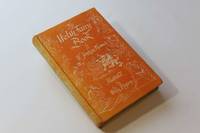
1957rif. mon0001651954University of Wales 1957. Hardcover. Good. . The Welsh Fairy Book by W. Jenkyn Thomas is a delightful collection of traditional Welsh fairy tales legends and folk stories gathered from the oral traditions of Wales. The stories feature fairies giants enchanted kingdoms magical objects supernatural creatures and colourful characters while reflecting the landscapes customs and folklore of Wales. Thomas preserves the distinctive flavour of Welsh storytelling while making the tales accessible to a wider audience. Illustrated by Willy Pogany this is an attractive and important collection of Welsh folklore and children�s literature.rn University of Wales hardcover
rif. BN213711Luzern Schweiz Reich 1992. HanseStädte HanseStädte Wacker Willy Text Luzern (Schweiz), Reich, 1992 unknown
rif. __311262355XDe Gruyter 1929. Hardcover. New. 4th reprint edition. 388 pages. German language. 5.00x1.06x8.00 inches. De Gruyter hardcover
1927rif. 24331Berlin: Julius Springer 1927. First Edition. Cloth. Very Good. First Edition. viii 418 2-ads pages. 8vo. Publisher's blue/black boards with gilt lettering and publisher's device on spine and titles on front panel. Bookstore tag on front pastedown. Binding glued in gutter at Vorwort foreword. Otherwise a nice clean bright copy. Text in German. Cloth. Wagner was a full member of the Academy of Sciences Berlin and was made in 1931 an Honorary Member of the American Academy of Arts and Sciences Boston. He held numerous other awards including in 1930: Slaby-Plakette des Deutschen Funktechnischen Verbandes. In 1924 he founded the magazine Zeitschrift Elektrische Nachrichtentechnik. In the foreword Wagner notes that the sudden onset of broadcasting has created high demand for wireless telephony and has accelerated technical developments dramatically. The new building blocks of broadcasting can be built on the progress made in radio technology. In addition to the general relations of electrodynamics the laws of transmission propagation and reception of electric waves the events occurring in the electron tubes and their mode of action in the various circuits as rectifiers amplifiers and vibration exciters and finally the laws of acoustics and the operation of the electro-acoustic devices all play a role. Knowing all of these things is essential for building a good broadcast radio but is not easy to acquire because so far there has been no where to go for sound details regarding all of these issues. The Heinrich Hertz Society in 1925 created a plan to promote broadcasting over the airwaves by organizing a series of lectures about "The scientific basis of radio communications". This book was the much enlarged result. Wagner is probably best known for the development of what we now call wave filterswork he did starting in 1915. "The most prominent researchers G. A. Campbell in the United States and K. W. Wagner in Germany explored selective filter circuits for telephone applications in the early years of World War I thus paving the way for the first ideas about electrical circuit synthesis. They designed sophisticated filter circuits simply by cascading elementary sections of lossless inductors and capacitors. The circuits obtained in this way had a striking similarity to circuit models in engineering transmission line theory and henceforth were called ‘wave filters’." Life and Work of Wilhelm Cauer 1900 – 1945 Cauer et al Proc. MTNS2000 Perpignan France June 19 - 23 2000 Waveguide filters today are most useful in the microwave band of frequencies where they are a convenient size and have low loss. Examples of microwave filter use are found in satellite communications telephone networks and television broadcasting. Davis Electrical and Electronic Technologies #372 noting that in 1915 filter technology came into being with the independent proposal of it by Campbell and Wagner. Julius Springer unknown
1927rif. 24331Berlin: Julius Springer 1927. First Edition. Cloth. Very Good. First Edition. viii 418 2-ads pages. 8vo. Publisher's blue/black boards with gilt lettering and publisher's device on spine and titles on front panel. Bookstore tag on front pastedown. Binding glued in gutter at Vorwort foreword. Otherwise a nice clean bright copy. Text in German. Cloth. Wagner was a full member of the Academy of Sciences Berlin and was made in 1931 an Honorary Member of the American Academy of Arts and Sciences Boston. He held numerous other awards including in 1930: Slaby-Plakette des Deutschen Funktechnischen Verbandes. In 1924 he founded the magazine Zeitschrift Elektrische Nachrichtentechnik. In the foreword Wagner notes that the sudden onset of broadcasting has created high demand for wireless telephony and has accelerated technical developments dramatically. The new building blocks of broadcasting can be built on the progress made in radio technology. In addition to the general relations of electrodynamics the laws of transmission propagation and reception of electric waves the events occurring in the electron tubes and their mode of action in the various circuits as rectifiers amplifiers and vibration exciters and finally the laws of acoustics and the operation of the electro-acoustic devices all play a role. Knowing all of these things is essential for building a good broadcast radio but is not easy to acquire because so far there has been no where to go for sound details regarding all of these issues. The Heinrich Hertz Society in 1925 created a plan to promote broadcasting over the airwaves by organizing a series of lectures about "The scientific basis of radio communications". This book was the much enlarged result. Wagner is probably best known for the development of what we now call wave filterswork he did starting in 1915. "The most prominent researchers G. A. Campbell in the United States and K. W. Wagner in Germany explored selective filter circuits for telephone applications in the early years of World War I thus paving the way for the first ideas about electrical circuit synthesis. They designed sophisticated filter circuits simply by cascading elementary sections of lossless inductors and capacitors. The circuits obtained in this way had a striking similarity to circuit models in engineering transmission line theory and henceforth were called ‘wave filters’." Life and Work of Wilhelm Cauer 1900 – 1945 Cauer et al Proc. MTNS2000 Perpignan France June 19 - 23 2000 Waveguide filters today are most useful in the microwave band of frequencies where they are a convenient size and have low loss. Examples of microwave filter use are found in satellite communications telephone networks and television broadcasting. Davis Electrical and Electronic Technologies #372 noting that in 1915 filter technology came into being with the independent proposal of it by Campbell and Wagner. Julius Springer unknown books
rif. 3663004279.Gpaperback. Good. Access codes and supplements are not guaranteed with used items. May be an ex-library book. paperback
rif. 0274073919.Ghardcover. Good. Access codes and supplements are not guaranteed with used items. May be an ex-library book. hardcover
rif. 033140110X.Ghardcover. Good. Access codes and supplements are not guaranteed with used items. May be an ex-library book. hardcover
rif. 027402036X.Ghardcover. Good. Access codes and supplements are not guaranteed with used items. May be an ex-library book. hardcover
1962rif. 1010130.32Johann Ambrosius Barth Verlag Leipzig 1962. 3 verbesserte Auflage. Hardcover. Very Good. 8vo hardcover. Tan cloth no dj. Vg condition. Ex-US Air Force copy markings to opening pgs. pocket in rear spine label removed; otherwise contents bright & clean binding tight. 489 pp. Johann Ambrosius Barth Verlag, Leipzig hardcover
1955rif. 26187Stuttgart, S. Hirzel Verlag, 1955. 45 Seiten , 30 cm, kart.
1950rif. 40304Leipzig, J.A. Barth, 1950. Orig. full cloth. XVIII,471 pp.
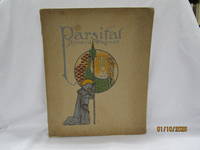
1918rif. 55752Vienna: M. Munk. Good. 1918. First Edition. Softcover. Original pictorial wraps. Spine worn pages loose in binding. 26 of 27 un-numbered leaves. Color illustrations. Text in German. ; quarto . M. Munk paperback
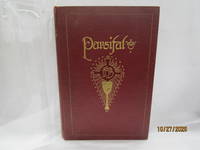
1912rif. 54914NY: Thomas Y. Crowell. Very Good. 1912. First Edition. Hardcover. Original gilt-stamped burgundy cloth. First American trade edition. Illustrated by Pogany including tipped-in color plates. Spine gilt darkened wear to spine ends/edges with small loss to spine heel. Long closed tear along gutter of one of the preliminary pages. ; quarto . Thomas Y. Crowell hardcover
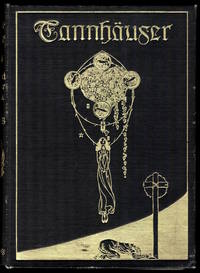
rif. 1262New York: Brentano's. Very Good with no dust jacket. Hardcover. Lacks the elusive dust jacket. Rubbing to edges corners hinges and spine ends. Previous owner's name in ink on front pastedown. The front endpaper has a small abrasion possibly from sticker removal. Pastedowns and endpapers lightly toned.; Tannhäuser the full title being Tannhäuser and the Minnesängers' Contest at Wartburg is Richard Wagner's epic poetic opera of the opposition of sacred otherworldly love and profane worldly love. The mythical character Tannhäuser is a medieval German poet and songwriter who abandons his chaste Elizabeth and descends to be with Venus in her ethereal subterranean realm of Venusberg. Dissatisfied he ascends to the real-worldly Wartburg. reunites with Elisabeth enters the songwriting contest of the Minnesängers and horrifies the staid pious listeners with his song of earthly sensual love. In disgrace he repairs to Rome to do penance. Meeting the Pope he is not absolved but instead is cursed. Although Venus welcomes him to return to her he learns that the despairing Elizabeth has died by her own hand. Finding her in her funeral procession he begs her soul to forgive him then he dies. All of this is written poetically as the libretto for Wagner's score in three acts. Translated into five parts by prolific Irish poet author and translator T. W. Thomas William Hazen Rolleston. Rolleston was ideal for the task having lived in Germany being fluent in the language and having a poetic sense for recreating Wagner's story in verse form. The original work was first published in 1900 and a Harrap edition with similarities to this one in 1910 and 1911. There is no date of publication for this edition but it would be before 1933 when Brentano's sold its publishing department to Coward-McCann. While the Brentano's and Harrap editions have similarities they use differing sets of Pogany's illustrations some illustrations use differing colors and page frames are different. What sets this edition apart are the 114 mildly-erotic illustrations depicting the story's human and otherworldly characters as god-like perfect beings. Hungarian book illustrator Willy Pogany's sensuous Art Nouveau pen-and-ink drawings and paintings place these characters in dreamy ethereal scenarios. Collated and all illustrations are present. This work was published by Brentano's in variants with differing sizes and differing quantities and types of illustrations. This variant has 12 tipped-in color plates 25 monochrome plates and 77 in-text cuts and ornaments. Most pages have text and cuts within a floral frame printed in light rose. The illustrations in the first four and last monochrome plates are overprinted in this second color. Pogany used this style of 2-color printing to good effect in this and other books such as Walk Me Through My Dreams by Joe Lindsay. Unpaginated but 127 pages. In serif and calligraphic text on fine paper head of the text block trimmed. At the tail of the last plate it's stated "Printed by H. & J. Pillans & Wilson Edinburgh." Pogany's gilt illustration in blind on black buckram over boards. Gilt title and decoration to spine. With the ownership signature of William M. Emerson President 1948-1977 of the Fred L. Emerson Foundation a community services philanthropic organization in North Central New York. Clean inside and out attractive and about Very Good.; Drawings; Large 8vo 9" - 10" tall; 127 pages . N.D. Brentano's hardcover
1911rif. 70440New York:: Thomas Y. Crowell & Co 1911. publisher's cloth decorated in gold and colors in glassine wrapper and publisher's two-part decorated box. Ink gift inscription on the illustrated front free endpaper; otherwise a lovely copy in slightly used glassine. The box shows the lightest of use. . Large 8vo. Illustrated throughout by Willy Pogany. Thomas Y. Crowell & Co,, hardcover
rif. 30185London: George G. Harrap and Co. . Signed limited deluxe edition no.283 of 525 signed by Pogany 4to. unpaginated publisher’s full pictorial vellum gilt pictorial endpapers tipped-in colour plates b/w plates decorations in colour throughout; a fine copy. London: George G. Harrap and Co., hardcover
1911rif. 61781London:: G. G. Harrap & Co. 1911. First trade edition. publisher's gilt full morocco t.e.g. Leather slightly rubbed at corners and joints; tight and sound; contents fine. Large 8vo. Illustrated throughout by Willy Pogany. G. G. Harrap & Co., hardcover
rif. 017225New York; 1911: Thomas Y. Crowell & Co. First Edition. Quarto. no pagination translated by T.W. Rolleston beautifully illustrated by Willy Pogany each page illustrated in black often with accents or red contains 16 tipped in color plates pictorial endpapers accented in blue red tan and gray. A striking production of Wagner's dramatic poem of fantasy brilliantly illustrated by Pogany bound in gray pictorial cloth accented in blue black and gilt spine gilt some general finger soiling and rubbing. A very nice copy of this spectacular work. Thomas Y. Crowell & Co unknown