Henry CHAPRONT - VOLTAIREBiblio.com

10 543 résultats
1929réf. 78211Paris: A l'enseigne du Pot Cassé 1929. Fine. A l'enseigne du Pot Cassé Paris 1929 12.50 x 19 cm broché New edition one of 50 numbered copies on Japan paper deluxe issue. Handsome copy despite the spine showing two small traces of sunning at head and foot. Work illustrated with wood engravings in head- and tailpieces by Henry Chapront. A l'enseigne du Pot Cassé unknown
1927réf. 78245Paris: A l'enseigne du Pot Cassé 1927. Fine. A l'enseigne du Pot Cassé Paris 1927 12.50 x 19 cm broché New edition one of 50 numbered copies on Japan paper deluxe issue. Handsome copy. Work illustrated with wood engravings in head- and tailpieces by Geneviève Rostan. A l'enseigne du Pot Cassé unknown
1930réf. 78522Paris: A l'enseigne du Pot Cassé 1930. Fine. A l'enseigne du Pot Cassé Paris 1930 12.50 x 19 cm broché New edition of the French translation established by Samuel Kahen one of 50 numbered copies on Japan paper deluxe copy. Handsome copy. Work illustrated with wood engravings in head- and tailpieces by Louis Moreau. A l'enseigne du Pot Cassé unknown
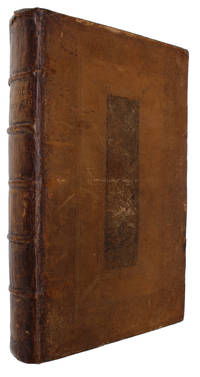
1733réf. 60085London C. Davis and A. Lyon 1733. 8vo. Lovely contemporary full Cambridge-style binding with five raised bands to spine and blindstamped ornamental borders to boards. . Double gilt line-borders to boards. All edges of boards with gilt borders. Gilt title to spine. Hinges neatly and professionally re-inforced. Internally very nice clean and fresh. A lovely crisp and large copy with good margins printed on heavy fine paper. 16 -including preface contents advertisements 253 1 18 -Index pp. The important actual first edition of this highly celebrated key work of the Enlightenment in which the anecdote of how Newton discovered gravity the story about Newton and the falling apple appeared for the first time together with the description of the difference between the physical world view of the English and the French the "plenum" and the "vacuum". This seminal work in which Voltaire famously depicts British philosophy science society and culture in comparison to French can be viewed as the Enlightenment equivalent to Tocqueville's "Democracy in America". This series of essays which is based on Voltaire's experiences when living in England was actually written by Voltaire mostly in English which he mastered to perfection. It has often been presumed that the first edition of the work was that published in French in 1734 but actually the present English edition constitutes the actual first appearance of the work as well as the version that is closest to Voltaire's intention as the French language version is the re-written one and the English version the original. Curiously almost all modern English versions are translations into English of the French edition instead of the original English version making this edition of the utmost importance.After the original English edition of 1733 two French editions soon followed the first in 1734. Unlike the British the French resented the book and already in 1734 the French Parliament issued an order for the author's arrest and condemned the work causing the impact of it in France to be delayed. The book was burned for being "dangerous to religion and civil order". At the same time the work became a bestseller in Britain and as much as 14 editions of the work were published in the eighteenth century. "Inspired by Voltaire's two-year stay in England 1726-8 this is one of the key works of the Enlightenment. Exactly contemporary with Gulliver's Travels and The Beggar's Opera Voltaire's controversial pronouncements on politics philosophy religion and literature have placed the Letters among the great Augustan satires. Voltaire wrote most of the book in English in which he was fluent and witty and it fast became a bestseller in Britain. He re-wrote it in French as the Lettres philosophiques and current editions in English translate his French." Nicholas Cronk Introduction to the Oxford's Classics edition from 1999.The great French philosopher Voltaire was greatly impressed by the philosophical and scientific achievements of the English especially those of Newton Locke and Bacon. As a disseminator of scientific knowledge Voltaire came to play a great rôle in the popularization of Newtonian science and its discoveries the present work being a prime example. Although the work was condemned by the French authorities it still came to play a great rôle in the spreading of Newtonian ideas in France. The present work generally came to play a dominant rôle in Enlightenment accounts of the history of science and philosophy. The work focuses on British science and thought and uses the accounts of these to emphasize what is lacking in French society and French thought. The work is generally very critical towards the French "ancient régime" and when Voltaire here discusses the emergence of empiricism it is viewed as an English tradition that stands in opposition to the French rationalist tradition with Descartes as the prime example. This view is taken over by the following Enlightenment historians of science and philosophy e.g. d'Alembert see for instance his "Preliminary Discourse" of 1751. Some of the most influential passages of the work are probably those on Bacon who Voltaire sees as the founder of modern experimental science Newton and Descartes. Letters XIV on Descartes and Newton XV on attraction and XVI on Newton's Optics from 1704 are among the most influential essays of the work. In XVI Voltaire reflects upon Newton's "Optics" and the way that he rejected Descartes' theory and set out his own account of the properties of light. In XV he presents the first account of Newton and the falling apple: "As he was walking one Day in his Garden and saw some Fruits fall from a Tree he fell into profound Meditation on that Gravity the Cause of which had so long been sought but in vain by all the Philosophers whilst the Vulgar think there is nothing mysterious in it. He said to himself that from what height soever in our Hemisphere those Bodies might descend their Fall wou'd certainly be in the Progression discover'd by Galileo; and the Spaces they run thro' would be as the Square of the Times. Why may not this Power which causes heavy Bodies to descend and is the fame without any sensible Diminution at the remotest Distance from the Center of the Earth or on the Summits of the highest Mountains; Why said Sir Isaac may not this Power extend as high as the Moon." pp. 127-28.But perhaps the most famous passage in the volume is the opening of Letter XIV: "A Frenchman who arrives in London will find Philosophy like every Thing else very much chang'd there. He had left the World a "plenum" and he now finds it a "vacuum". At Paris the Universe is seen compos'd of Vortices of subtile Matter; but nothing like it is seen in London. In France 'tis the Pressure of the Moon that causes the Tides; but in England 'tis the Sea that gravitates towards the Moon; so that when you think that the Moon should make it Flood with us those Gentlemen fancy it should be Ebb which very unluckily cannot be prov'd." pp. 109-10. hardcover
réf. 1578633613.Ghardcover. Good. Access codes and supplements are not guaranteed with used items. May be an ex-library book. hardcover
1977réf. 020413Lincoln: Penmaen Press 1977. First Edition. Hardcover. Light marking to cloth along spine. Near Fine in a Near Fine slipcase. Lynd Ward. Quarto in cloth-backed boards. Of 200 numbered copies of this special edition this copy not numbered but marked "O.S." out-of-series. Illustrated with six wood engravings by Lynd Ward. SIGNED by artist Lynd Ward Anthony Hecht the translator and Arthur Wilson who wrote the introduction. Hand-printed by Michael McCurdy and Evelyn Clarke with Ward's engravings struck from the blocks. There were also 100 deluxe copies and 200 trade copies. Prospectus laid in. Penmaen Press hardcover
1966réf. mon0000117153Garnier-Flammarion Tours Impr. 1966-01-01. Paperback. Good. in x in x in. Mild general wear. Pages clean. Binding sound but creased. Garnier-Flammarion Tours, Impr. paperback
réf. 4789682-6Penguin Publishing Group. Used - Good. Pages intact with minimal writing/highlighting. The binding may be loose and creased. Dust jackets/supplements are not included. Stock photo provided. Product includes identifying sticker. Better World Books: Buy Books. Do Good. Penguin Publishing Group unknown
réf. 115135ABParis: Blaizot; 1927. 225 x 27 cm. 6 Bll. 176 S. 3 Bll. Halbfranzband in Maroquin. Pergamentüberzug mit goldener Spiralmusterprägung. Meistereinband von und gestempelt mit "René & Michel Kieffer". Sehr guter Zustand. Kurzroman von Voltaire in dem ein Nordamerikaner an der Küste der Bretagne landet und durch eine Verwechslung bei einem Prior und dessen Schwester aufgenommen wird. Durch seine Ehrlichkeit weil er "ganz naiv stets sagt was er denkt und tut was er will" nennt man ihn den Harmlosen; und da ihm die Kunst der Heuchelei fremd ist stehen ihm viele Enttäuschungen in der Adelsgesellschaft des franz. 18. Jhdts bevor. Voltaire erreicht es so die europäische Kultur in ihrem Zusammenstoß mit der unverbildeten Person des Harmlosen lächerlich und fragwürdig zu machen. siehe auch KLL. Eines von 350 num. Exemplaren auf Vélin-de-Rives-Bütten. Die Zeichungen und der Buchschmuck in diesem Band von Bernard Naudin 1876-1946 zählen zu seinen schönsten Arbeiten. 1927 unknown
1983réf. 70601Paris: Gallimard Bibliothèque de La Pléiade 1983. Fine. Gallimard Bibliothèque de La Pléiade Paris 1983 10.50 x 18 cm reliure de l'éditeur sous étui First edition. Publisher's binding in full grained brown sheep orange top edge smooth spine decorated with gilt fillets. Rich iconography. Fine copy complete with its dust jacket cellophane wrapper and slipcase. Two small lacks to the cellophane wrapper and a marginal stain on the rear panel of the dust jacket. Gallimard, Bibliothèque de La Pléiade unknown
1919réf. 6269BB1919. 2 Bände. Berlin Gustav Kiepenheuer 1919. Mit Illustrationen von Moreau Le Jeune nach alten Vorlagen. Orig.-Pergamentbande mit reicher Rücken- und Deckelvergoldung sowie Kopfgoldschnitt. Eines von 150 nummerierten Exemplaren. - Papier gebräunt und wenig stockfleckig. Einband berieben und fleckig. Die Deckel verzogen. unknown
1942réf. 5878BB1942. Zürich Les belles feuilles 1942. 4°. 2 Bl. 115 4 S. 2 Bl. Mit 1 Frontispiz mehreren Textillustr. u. der Suite in 12 losen Tafeln nach Holzschnitten von Imre Reiner. Lose Bogen in illustr. brosch. Orig.-Umschlag sowie Suite in Bütten-Mappe zus. in Halbpergament-Chemise u. Orig.-Pappschuber dieser leicht berieben u. lichtrandig. SIK II 856 für Reiner. - Unnumeriertes nicht signiertes Ex. von 170 GA 232 mit kompletter Suite in dieser Form normalerweise numeriert u. signiert des ersten Druckes der "Belles Feuilles" auf Rives-Bütten. Imre Reiner 1900-1987 geb. in Ungarn war in den 20er Jahren als Graphiker in London Paris New York und ab 1931 in Ruvigliana bei Lugano als Maler Typograph Graphiker u. Illustrator tätig. unknown
1765réf. 4481CB1765. 2 in 1 Band. Genève Cramer 1765. 8°. 292 283 S. Mit 1 gest. Tafel 1 Textholzschn. und einigen Holzschnittvignetten. Lederband der Zeit. Erschien ebenfalls anonym erstmals ebenda 1759-1763 in 2 Bänden. - Nur wenig stockfleckig. Einband berieben und bestossen. unknown
1772réf. 30301AB1772. 8 Bände. Lausanne François Grasset 1772. 8°. Pappbände der Zeit mit verg. Rückensch. Papier vereinzelt stockfleckig. Einbände berieben und bestossen Rücken verblichen. unknown
1946réf. 24076AB1946. Stockholm Jan Förlag 1946. 8°. 167 1 S. Mit 1 farb. Frontispiz u. 7 ganzs. farb. Illustr. von A. Hallman. Farb. illustr. Orig.-Broschur leicht gebräunt. Text in französischer Sprache. unknown
1930réf. 019495Paris: Editions Nilsson 1930. First Edition. Wraps. Foxing throughout not affecting the illustrations. The fragile illustrated paper dustwrapper is intact but for small chips on the spine and has neatly detached from the book. Very Good. Octavo 6-3/4" x 9-1/8" in stiff paper binding with a thin brown paper cover with watercolor decorations on front and rear panels as well as the spine. The French text is accompanied by 6 hand-colored pochoir plates by Robert Polack on the same thin paper tipped in. Editions Nilsson paperback
2011réf. 5761London; Folio Society 2011. 2011. Hard Cover. LIMITED EDITION SIGNED BY ARTIST. Number 673 in an edition limited to only 1000 copies for sale to members of the Folio Society. Square quarto pp 205. 18 full page colour plates by Quentin Blake plus numerous line drawings within text. Full deep maroon Nigerian goatskin with gilt titles to spine and upper board top edge gilt; housed in grey paper-covered slipcase with titles blocked in gold. Pristine - appears unread. Signed and numbered by artist Quentin Blake in blue ink to limitation leaf. Minor scuffs to slipcase only- a Fine copy in Near Fine slipcase. Voltaire's satirical classic translated by Tobias Smollett and Introduced by Julian Barnes. Candide was first published in France in 1759 and Smollett's translation formed part of his thirty-five-volume edition of Voltaire's works published between 1761 and 1765; this edition follows the first edition in English with minor emendations. London; Folio Society, 2011. hardcover
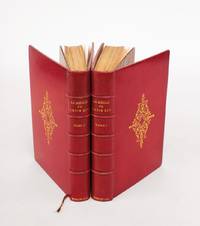
1751réf. 65145à Berlin: Chez C. F. Henning 1751. Fine. Chez C. F. Henning à Berlin 1751 8.50 x 14.50 cm 2 volumes reliés First edition displaying all the distinctive features of its publication: it presents no capital letters except at the beginning of paragraphs and it is the very first work to have been printed with Voltaire's spelling. Our copy is complete with its errata leaf which is often missing. Later bindings 19th century in full red morocco Jansenist spines with five raised bands dates and places gilt at foot boards struck at center with large gilt typographical fleurons double gilt fillets on leading edges and headcaps pastedowns lined with blue morocco presenting a wide gilt decorative border monogrammed bookplates mounted on the pastedowns of each volume following endpapers of combed paper all edges gilt bindings signed Chambolle-Duru. Superb copy perfectly established in a binding signed by a master of French bookbinding. Chez C. F. Henning hardcover
1983réf. 67818Paris: Gallimard Bibliothèque de La Pléiade 1983. Fine. Gallimard Bibliothèque de La Pléiade Paris 1983 10.50 x 18 cm reliure de l'éditeur sous étui First edition. Publisher's full brown grained sheepskin orange top edge smooth spine decorated with gilt fillets. Richly illustrated. Handsome copy complete with its dust jacket cellophane wrapper and slipcase which has a small stain at foot. Gallimard, Bibliothèque de La Pléiade unknown
1771réf. 56745No place No printer 1771. Contemp. hcalf. Spine gilt. Gilt lettering. A paperlabel pasted on upper part of spine. Stamp on both title-pages. VIII478 pp. A few scattered brownspots. Collection complette des Oeuvres de Mr. de Voltaire. Tome 12. Separately printed unknown
1843réf. 33932AB1843. Leipzig Brockhaus = Ausgewählte Bibliothek der Classiker des Auslandes Band 17 1843 8° XLVIII 206 S. mit Zeilenzählern Glanzvorsatzseiten Text: Fraktur Leineneinband der Zeit mit goldener Rückenbeschriftung der Rücken etwas aufgehellt alter Besitzervermerk auf Vorsatzseite zu Beginn und am Schluß etwas altersbraunfleckig sonst ein schönes sauberes Exemplar. Abholung im Ladengeschäft in Frankfurt am Main Nordend ggü. Musterschule möglich. Das spart die Portokosten. Pickup at the store in Frankfurt am Main Nordend close to Musterschule is possible. It saves the shipping costs. unknown
1973réf. 018769New York: Limited Editions Club 1973. Hardcover. Fine in a Fine slipcase. May Neama. Quarto 7-1/2" x 11-1/4" bound in quarter white cowhide leather and scarlet linen with a gilt-lettered white linen diagonal strip on each cover. Copy #887 of 1500 illustrated with color plates by May Neama and SIGNED by the artist on the colophon page. Limited Editions Club hardcover
1803réf. 35599Paris Pierre Didot An XI 1803. Small 8vo. Bound in 2 fine contemporary full mottled calf. Richly gilt backs. 230223 pp. unknown
1755réf. 13554Berlin M. Sansouci 1755. Blank cont. papercovers. Backstrip worn. Engraved portr.XXII404 pp. Apart from a few brownspots in the text internally good. unknown
1744réf. 38273A Londres but Paris no printer 1744. Small 8vo. Contemp. full mottled calf raised bands richly gilt back. Previous owners stamp on tp. Engraved portrait Newton engraved titlevignette VIII5-121-232209-4714 pp. The text is complete and continous despite the odd pagination. Having 8 engraved plates 1 folding and many textengravings. A few leaves with contemporary marginal notes. Internally fine and clean. Second or third edition a contrefacon not printed in London but in Paris. "Voltaires's importence for the history of science lies particularly in his having composed a famous popularization of Newton Élemens de la philosophie de Nrwton 1738 while also collaborating with his companion and mistress Émilie marquise de Chatelet on her translation of the Principia into French and more generally in his having referred with the lightness of touch that made him a serious critic of the human condition his moral philosophy to what he took to be Newtonian and hence a correct account of physical reality." DSB XIV:p.83 The work has been called one of the most beautifull illustrated scientific works at all.- This edition not in Gray's Bibliography. hardcover