12 225 résultats
PARIS, L'Elan - 1947 / 1949 - 2 volumes In-8 ° - Brochés - T.I : Frontispice S.G. en photo - Photographies HT - 554 pages - Rousseurs en couverture et 4ème plat détaché sinon très propre intérieurement - T.II : Fac-similé du Manuscrit et des croquis faits à la plume par l'auteur - 664 pages - comme neuf
1935réf. 12209Imprimerie & Phototypie Frazier-Soye Montassier & Odent'hal Succ 1935 374 pages IN4. 1935. broché. 374 pages. Ouvrage du général André Mollandin publié en 1935 préfacé par les frères Tharaud qui relate les joies et les leçons du vol en avion. Le livre contient 378 pages et 150 planches de photographies aériennes offrant un témoignage illustré sur l'expérience de l'aviation à cette époque
réf. 40369P., Chapelot, 1916, 2 volumes in 8° brochés, XXXII-405 et 391 pages ; 2 frontispices ; 2 plats détachés.
1858réf. 15910Paris Hachette et Cie 1858 In-12 356+12 pp, traduits de l'anglais et annotés par l'auteur de L'Inde contemporaine, 1 carte dépliante in-fine, rares rousseurs éparses. Décors gaufrés sur les plats, titre doré au dos. Déchirure sans manque sur coiffe en tête, frottis et coupes émoussées.
réf. CZC-13596condamnés à mort pour délits politiques, depuis le commencement de la Monarchie jusqu'à nos jours; avec les lettres qu'ils ont écrites dans leurs prisons. Recueillis & rédigé d'après les chroniques et journaux du temps. Table ( extraits) Janne d'Arc - Henri II - Louis XVI - Custine - Duc d’Orléans - Charlotte Corday - Camille Desmoulin - Marie-Antoinette - Maréchal Ney - Lavoisier - Murat - César, etc... volume in8, 200x130, relié demi cuir, frottements, bon état intérieur, 344pp. Peu courant. Paris, Alexis Eymery & Baudouin frères, 1818 ref/207
2003réf. 799952003 Sans lieu, L'Auteur, Décembre 2003, grand in 8° broché, 351 pages ; très importante iconographie en noir et en couleurs ; couverture illustrée.
réf. 55210P., Plon, 1895, in 8° broché, XLII-479 pages ; quelques rares piqûres ; couverture légèrement fanée.
1945réf. 293721945 Paris, Plon, 1945-1946, 3 volumes in 8° brochés, IV-297, 435 et 330 pages ; tome III non coupé ; quelques rousseurs ; couvertures un peu fanées, celle du Tome II tachée.
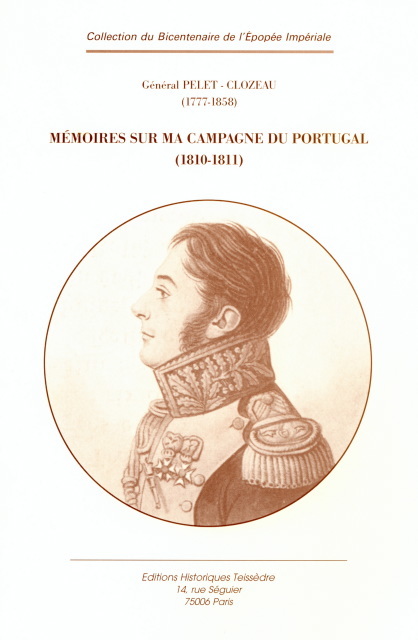
réf. 100054Paris, Éditions Historiques Teissèdre, 2003 16 x 24 cm, 706 pp., 8 cartes, broché.
réf. 4275paris librairie victor lecoffre 1911 - In 8 relié demi basane titre frappé 471 pages
réf. 15935P., Calmann-Levy, (1900), in 12 relié demi-basane, dos à nerfs, 267 pages, portrait en frontispice, photographies hors-texte et carte dépliante.
1944réf. 132221944 new york Editions de la Maison Française, 1944 fort volume in8, reliure demi chagrin rouge,, dos à nerfs, caissons ornés de fleurons, titre doré, 460 pp un portrait photographique en frontispice
réf. SONG0967407443Used: Good unknown
réf. 0428141536.Gpaperback. Good. Access codes and supplements are not guaranteed with used items. May be an ex-library book. paperback
réf. 0259584266.Gpaperback. Good. Access codes and supplements are not guaranteed with used items. May be an ex-library book. paperback
réf. 0243849192.Gpaperback. Good. Access codes and supplements are not guaranteed with used items. May be an ex-library book. paperback
réf. 1528041232.Gpaperback. Good. Access codes and supplements are not guaranteed with used items. May be an ex-library book. paperback
réf. 1390496805.Gpaperback. Good. Access codes and supplements are not guaranteed with used items. May be an ex-library book. paperback
1987Fine English Paperback., Fine., 20 x 14 cm., 133 p., b/w ills., "Düziçi Köy Enstitüsü ve sonrasi kimi anilarim.", Ahmet Lütfi Daglar, Kadioglu Matbaasi, Ank., 1987. Signed by author.
1939Fine English Paperback. 4to. (30 x 21 cm). In English. 49, [1] p., 16 numerous b/w plates, 1 folded map. Constantinople during the era of Mohammed the Conqueror, 1453-1481 (Maps, explanations, indices).
1983Fine German Paperback. Roy. 8vo. (24 x 17 cm). In German and Turkish. [ix], [1], 36 p. Cevat Memduh Altar's first meeting with Paul Hindemith and his memories about it. Paul Hindemith, (1895-1963), was a prolific German composer, violist, violinist, teacher and conductor. In the 1920s, he became a major advocate of the Neue Sachlichkeit (new objectivity) style of music. The Nazis' relationship to Hindemith's music was complicated. Some condemned his music as "degenerate" (largely based on his early, sexually charged operas such as Sancta Susanna). In December 1934, during a speech at the Berlin Sports Palace, Germany's Minister of Propaganda Joseph Goebbels publicly denounced Hindemith as an "atonal noisemaker". The Nazis banned his music in October 1936 and he was subsequently included in the 1938 Entartete Musik (Degenerate Music) exhibition in Düsseldorf.[10] Other officials working in Nazi Germany, though, thought that he might provide Germany with an example of a modern German composer, as, by this time, he was writing music based in tonality, with frequent references to folk music. During the 1930s, he made a visit to Cairo and several to Ankara. He accepted an invitation from the Turkish government to oversee the creation of a music school in Istanbul in 1935, after Goebbels had pressured him to request an indefinite leave of absence from the Berlin Academy. In Turkey, he was the leading figure of a new music pedagogy in the era of president Kemal Atatürk. His deputy was Eduard Zuckmayer, (1896-1977). Hindemith led the reorganization of Turkish music education and the early efforts to establish the Turkish State Opera and Ballet. He did not stay in Turkey so long as many other émigrés, but he greatly influenced Turkish musical life; the Ankara State Conservatory owes much to his efforts. Young Turkish musicians regarded Hindemith as a "real master", and he was appreciated and greatly respected. Cevad Memduh Altar, (1902-1995), is one of the leading intellectuals of the republic period as a Turkish music historian, educator and director.
2016New English Paperback. Pbo. 4to. (29 x 24 cm). In English, French, and Turkish. 267 p., ills. Anatolian travels 19th century.= Périples Anatoliens XIXe siècle.= Anadolu seyahatleri, 19. yüzyil. This exhibition is the second phase of a series of exhibitions dedicated to the eastern routes of travelers. The series began with "Smyrna in the 18th and 19th Centuries: A Western Perspective", organized at the Arkas Art Center in 2013. The first exhibition looked at Izmir as a beginning point of the journey by exhibiting works and documents that were left behind by travelers, while this exhibition foregrounds the scientific missions of the French, looking at Anatolia as seen by Western travelers beginning their journey in Izmir. This exhibition looks at the information gathered from travel books, documents, photographs, etchings, and portraits to offer a comparative perspective on 19th century Anatolia¿s social, economic, and cultural structure. The exhibition¿s perspective is critically distant to the Orientalist viewpoint that betrayed the East for the sake of aesthetic and cultural goals; the aim is to prioritize the contributions of scientific expeditions to show the reality of the East. The expedition route begins in Izmir and goes through Western Anatolia, the Mediterranean, Eastern Anatolia, Troy, Bursa, Istanbul, Ankara, and the Black Sea region
2018New English Paperback. Demy 8vo. (21 x 14 cm). In English. 390 p. Istanbul's Great War: Public Order, Crime and Punishment in the Ottoman Capital, 1914-1918 is a study of the social and economic life in an imperial capital at a time when the first total war of history swept through Europe, hitting the entire Ottoman Empire up to its borderlands in the arab Peninsula. The book focuses on the impact of wartime conditions on life in a city of nearly a million citizens, with a specific emphasis on public order, crime and punishment. The author, deniz dölek-Sever, takes us through a six-chapter panorama of four years of hardship in the Ottoman capital during the war, analyzing various aspects of public order, crime and punishment as experienced daily by both Muslim and non-Muslim inhabitants of Istanbul, and as perceived by the state. In doing so, her study uncovers inner workings behind state officials' policies on public order and crime. Tracing instruments of surveillance and control and various crime categories, and making extensive use of primary sources, the work provides a unique understanding of public order and crime, as well as practices of punishment in a period when the Committee of Union and Progress reigned over the political life of the Ottoman empire. Istanbul's Great War is an attempt to bring a fresh approach to the current literature on wartime Ottoman Empire.
2014New English Paperback. Pbo. Demy 8vo. (21 x 14 cm). In English. 240 p. This work represents an attempt to understand the frame of mind that the members of the Committee of Union and Progress bore through the Revolution of 1908 up to the disintegration of the Ottoman Empire. As such, it is largely based on the memoirs of Committee members and those of their contemporaries. The book's main argument is that, along with the nationalism of the era and the rise of the "individual," various related concepts such as gender and homeland were also being re-evaluated and re-valued in the minds of those who lived through this period. The book focuses on some of the ideas articulated most clearly and repeatedly in these memoirs, such as komitacilik (brigandage) and hope; as well as others that were crucial in defining an individual, such as one's occupation and their understanding of the new concept of "liberty." Noteworthy was conception and role of women in these memoirs, as it can be observed that, among other roles, women were often also seen as stand-ins for homeland. An exploration is also made of the boundaries of the "homeland," as invented (and reinvented) by the Young Turk cadres, and the emotional investment in such a notion. Lastly, the work questions the new lens of nationalism that the memoirists employed to view the communities of the empire. By using the Arabs and the Armenians within the Ottoman society as case studies, the book shows that "nationality" then was not - or at least not yet--a fixed identity, but rather a variety of contextual roles that were performed on a daily basis.".