189 résultats
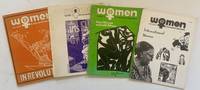
1970réf. 178751970. Women: A Journal of Liberation 1970 to 1975 documenting feminist cultural expression and ideological debate within the Women's Liberation Movement during the early second wave period. The material reflects feminist print culture illustrating themes of gender roles domestic life labor sexuality and global political struggle and offering insight into how activists writers and artists articulated women's experiences and demands for social transformation. It supports research into feminist media intersectional discourse and the evolution of women-centered publishing in the United States. Archive includes: 1 Women: A Journal of Liberation Vol. 1 No. 4. Summer 1970. Baltimore MD: Women: A Journal of Liberation Inc. 1970. This issue's theme is "In Revolution" and its cover bears an image of a shouting woman breaking through chains her chin lifted in determination. On the back wrapper is a photographic collage of feminists and a woman behind bars sweat dripping down her forehead. Articles discuss Vietnam the Russian Revolution Rosa Luxembourg and various current events relating to the women's movement. 2 Women: A Journal of Liberation Vol. 2 No. 1 Fall 1970. Baltimore MD: Women: A Journal of Liberation Inc. 1970. An issue on women in the arts with articles on female authors women in music and film children's literature focused on women female visual artists and women as muse. Cover features a purple print of a woman sitting in a chair and hiding her face from view captioned "model in art class". 3 Women: A Journal of Liberation Vol. 2 No. 2 Winter 1971. Baltimore MD: Women: A Journal of Liberation Inc. 1970. This issue is titled "How We Live and With Whom" and includes articles on family marriage and homelife. Many of these articles explore marital and familial issues affecting women in the 70s including the difficulties of divorce sex education for young girls and alternative lifestyles like communal living. 4 Women: A Journal of Liberation Vol. 3 No. 2 Winter 1972. Baltimore MD: Women: A Journal of Liberation Inc. 1972. Titled "Building a New Culture". An issue exploring the role of women in culture and the impact of popular culture on women including articles on women in music theater and sports as well as women's studies and sociology. Cover features a green print of five women dancing in a circle. 5 Women: A Journal of Liberation Vol. 3 No. 4. Baltimore MD: Women: A Journal of Liberation Inc. 1974. This issue is titled "International Women" and bears cover images of an older woman wearing a bandana and prints of Native women a Black woman and a Vietnamese woman holding artillery in one hand and a baby in another. Articles discuss Vietnam women in the Cuban Revolution Nisei women Chicana culture and various current events relating to the women's movement. 6 Women: A Journal of Liberation Vol. 4 No. 2 Spring 1975. Baltimore MD: Women: A Journal of Liberation Inc. 1975. Titled "The Cost of Living" this is issue centers around the relationship between women and money. Includes articles on women in the workforce welfare living in poverty and women supporting themselves independently. This topic would have been especially relevant in the mid-70s when the Equal Credit Opportunity Act opened up new financial opportunities for women in the US. Six issues spanning 1970 to 1975 each approximately 11 x 8.25 inches. This period coincides with significant developments in U.S. feminist organizing including expanded discourse on workplace equality reproductive rights and financial independence as well as increased attention to global and intersectional perspectives within the movement. The journal's combination of political analysis creative expression and visual design situates it within a broader network of feminist periodicals that shaped activist and intellectual exchange. Light handling wear covers and pages well-preserved with strong color and clarity; overall very good condition. A cohesive and visually distinctive grouping illustrating the breadth of feminist thought and cultural production in the early 1970s. unknown books
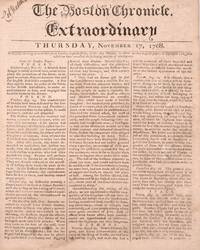
1768réf. 339729Boston 1768. 4pp. Disbound. Signature of Col. Hatch. 4pp. Includes mostly European news but notes under the date Sept. 8: "Both the tenour and purport of all the late dispatches from America is That the colonists will never give up their liberties" and lists the regiments on duty in America. The final column on the last page gives local news including a reference to non-importation: "We hear the senior class at Harvard college have unanimously agreed to take their degrees next commencement dressed in black cloth of the manufacture of this country unknown books
1848réf. 41215Washington: George S. Gideon 1848. Broadside 8" x 12-1/2." Very Good. Gideon promises that his paper "will be emphatically a National Press designed for circulation in every section of the country. The object of the paper will be to harmonize the action and promote the efficient organization of the Whig party as well as to diffuse its principles and arouse its spirit and enthusiasm." Subscription costs are printed after which Gideon signs in type from Washington in June 1848. Beneath Gideon's name is a recommendation from seven members of the Whig Executive Committee of Congress urging support for the Paper which "will prove a vehicle of useful political information and if generally circulated will contribute powerfully to the desired change in the Administration of the Government." There follows a section for persons to sign up for subscriptions with their post office addresses. Our copy has no names listed. Not located on OCLC as of August 2025. George S. Gideon unknown books
1863réf. 41296Richmond 1863. Folio 11-1/2" x 16." Elaborately engraved masthead. 8pp pp 33-40. Printed in four columns per page. Disbound. A couple of tears repairs and small loss. Good plus. Portraits of Major John H. Mosby and Major John Pelham are on the first page. Accompanying detailed stories celebrate Mosby's "indominable energy and reckless daring" and mourn the death of "The Gallant Pelham." Advertisements news from the Blockade poems and war news complete the issue. unknown books
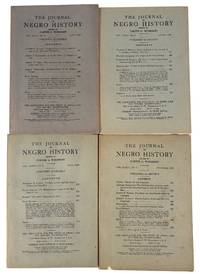
1942réf. 217921942. Woodson Carter Godwin. The Journal of Negro History. 1942-1949. Foundational issues of the journal established by Carter G. Woodson documenting the institutionalization of Black historical scholarship in the United States and advancing early academic study of African American military service political rights and diaspora culture. Issued by the Association for the Study of Negro Life and History which Woodson co-founded in 1915 these volumes situate Black experience within national and Atlantic frameworks including Revolutionary War service Reconstruction governance and twentieth-century military participation. The selection highlights how mid-century scholars constructed a documentary record of African American life in direct response to exclusion from mainstream historiography with particular emphasis on suffrage labor naval service and racial legislation. Woodson Carter Godwin ed. The Journal of Negro History. Washington D.C.: Association for the Study of Negro Life and History 1942 1947 1949. Four issues. 1 Jackson Luther P. "Virginia Negro Soldiers and Seamen in the American Revolution." The Journal of Negro History. Vol. XXVII No. 3. Washington D.C.: ASNLH 1942. Establishes early documentation of African American military participation in the Revolutionary War. Additional contents include Frank J. Klingberg's study of Jamaican legislation 1837 Ronald V. Sires's analysis of the Jamaica Slave Insurrection Loan 1832-1863 and Harold Courlander's "Profane Songs of the Haitian People" presenting vernacular cultural material from Haiti. 2 Wesley Charles H. "Negro Suffrage in the Period of Constitution-Making 1787-1865." The Journal of Negro History. Vol. XXXII No. 2. Washington D.C.: ASNLH 1947. Examines the development of Black political rights before the Civil War. Herbert Aptheker's "The Negro in the Union Navy" and Lawrence D. Reddick's "The Negro in the United States Navy during World War II" connect nineteenth-century and contemporary military service while Mercer Cook's essay surveys modern Haitian literature. 3 Lofton Williston H. "Northern Labor and the Negro during the Civil War." The Journal of Negro History. Vol. XXXIV No. 3. Washington D.C.: ASNLH 1949. Traces relationships between African American workers and Northern labor movements. Sidney Kaplan's "The Miscegenation Issue in the Election of 1864" analyzes race in wartime political discourse and Morris U. Schappes reprints Ernestine L. Rose's address on West Indian emancipation preserving a nineteenth-century abolitionist voice. 4 Bernstein Leonard. "The Participation of Negro Delegates in the Constitutional Convention of 1868 in North Carolina." The Journal of Negro History. Vol. XXXIV No. 4. Washington D.C.: ASNLH 1949. Documents Black political participation in Reconstruction governance. Additional contributions include Joseph H. Taylor on disfranchisement in Alabama Jessie P. Guzman on Monroe Nathan Work's scholarly contributions and a reprinted 1774 letter by Phillis Wheatley identified by Benjamin Quarles. These issues were published during World War II and the early Cold War when African American military service abroad and civil rights struggles at home intensified scholarly and political attention to Black history. Articles on the Union Navy and World War II naval service align with wartime debates over segregation and citizenship while studies of suffrage Reconstruction conventions and disfranchisement reflect renewed examination of constitutional rights in the context of emerging civil rights activism. Four issues in publisher's printed wrappers each approximately 108 to 118 pages. Light wear occasional foxing and minor soiling to wrappers; overall very good to near fine. A cohesive grouping illustrating how Black historians and intellectuals built an evidentiary foundation for African American history as a formal academic discipline in the mid twentieth century. unknown books
1967réf. 235281967. Woodson Carter Godwin. The Journal of Negro History traces Black historical scholarship from the civil rights movement of the late 1960s to the constitutional battles over affirmative action in the early 1980s. Kenneth B. Clark a psychologist whose work with Mamie Phipps Clark on children and racial segregation was cited in Brown v. Board of Education opens the January 1968 issue with "The Present Dilemma of the Negro" while other issues examine racial thought in colonial America Black sailors in the Navy and merchant service discipline under industrial slavery in the Old South antislavery agents working with free Black communities from 1833 to 1838 and the Bakke Weber and Fullilove affirmative-action cases. William M. Brewer and Alton Hornsby Jr. eds. The Journal of Negro History. Washington D.C.: The Association for the Study of Negro Life and History Inc. 1967-1982. Nine quarterly issues. Vol. LIII Nos. 3 and 4 July and October 1967; Vol. LIII Nos. 1 and 2 January and April 1968; Vol. LIV Nos. 1 2 3 and 4 January April July and October 1969; Vol. LV No. 1 January 1970; and Vol. LXVII No. 3 Fall 1982. Including writings "The Emergence of DuBois As An African Nationalist"; Max Welborn "Racial Massacre In Atlanta September 22 1906"; Valeria W. Weaver "The Failure Of Civil Rights 1875-1883 And Its Repercussions"; and "The Ethel Johns Report: Black Women In The Nursing Profession 1925." These issues show Woodson's program in the decades after civil rights activism brought Black historical scholarship into debates over school desegregation voting rights enforcement affirmative action and the recovery of African origins in Atlantic slavery. January 1969 number includes the annual report "The Mis-Education of The Negro" tying the Association's current work to Woodson's critique of American schooling while the 1982 number places King's memory Central African slavery Black women's nursing labor affirmative action and Civil War freedom claims in the same scholarly forum. A compact run of The Journal of Negro History that connects ASALH's Woodson-era mission to late twentieth-century scholarship on enslavement civil rights enforcement African Diaspora origins Black labor and affirmative action law. Wrappers show toning some scattered stains with some issues showing binding weakness; interiors remain readable. Overall very good condition. unknown books
1997réf. 211481997. Journal of Lesbian Studies published between 1997 and 2000 documents the institutionalization of lesbian studies and queer feminist scholarship within late twentieth-century academic publishing. Founded in 1997 the journal created an interdisciplinary forum examining lesbian history identity sexuality politics health media representation literature labor geography and cultural production while maintaining explicit connections to grassroots lesbian activism and feminist organizing. The publication reflects the expansion of LGBTQ studies within universities during the 1990s and illustrates how lesbian scholars and writers developed dedicated intellectual spaces addressing issues often marginalized within both mainstream academia and broader feminist discourse. Through peer-reviewed essays theoretical debates editorials poetry and reviews the journal provides primary-source evidence for the study of lesbian feminist thought queer theory sexuality studies and the development of LGBTQ academic institutions at the turn of the twenty-first century. Binghamton New York: The Haworth Press 1997-2000. Archive of 16 issues in 13 volumes comprising an unbroken run of the journal's first four years of publication. Published quarterly. 1 Journal of Lesbian Studies. Vol. 1 No. 1. 1997. 145 pages. First issue published following the founding of the journal. Includes Margaret Schneider's "Sappho Was Right-On Adolescent: Growing Up Lesbian." 2 Journal of Lesbian Studies. Vol. 1 No. 2. 1997. 286 pages. Special issue: "Classics in Lesbian Studies Part II" including Lillian Faderman's "Who Hid Lesbian History." 3 Journal of Lesbian Studies. Vol. 1 No. 3/4. 1997. 194 pages. Includes Sheila Jeffreys's "Transgender Activism: A Lesbian Feminist Perspective." 4 Journal of Lesbian Studies. Vol. 2 No. 1. 1998. 110 pages. Special issue: "Gateways to Improving Lesbian Health and Healthcare." 5 Journal of Lesbian Studies. Vol. 2 No. 2/3. 1998. 238 pages. Special issue: "Acts of Passion: Sexuality Gender and Performance." 6 Journal of Lesbian Studies. Vol. 2 No. 4. 1998. 132 pages. Special issue: "Living 'Difference': Lesbian Perspectives on Work and Family Life." 7 Journal of Lesbian Studies. Vol. 3 No. 1/2. 1999. 258 pages. "The Lesbian Polyamory Reader: Open Relationships Non-Monogamy and Casual Sex" edited by Marcia Munson and Judith Stelboum. 8 Journal of Lesbian Studies. Vol. 3 No. 3. 1999. 155 pages. Includes Dawn Atkins's "Lesbian Sex Scandals: Sexual Practices Identities and Politics." 9 Journal of Lesbian Studies. Vol. 3 No. 4. 1999. 161 pages. Special issue: "Lesbians Levis and Lipstick: The Meaning of Beauty in Our Lives." 10 Journal of Lesbian Studies. Vol. 4 No. 1. 2000. 174 pages. Includes Gill Valentine's "From Nowhere to Everywhere: Lesbian Geographies." 11 Journal of Lesbian Studies. Vol. 4 No. 2. 2000. 173 pages. Includes Gabriele Griffin's "'Romancing the Margins': Lesbian Writing in the 1990s." 12 Journal of Lesbian Studies. Vol. 4 No. 3. 2000. 143 pages. Includes Mary Eichbauer's "Imagining a Life: Natalie Clifford Barney." 13 Journal of Lesbian Studies. Vol. 4 No. 4. 2000. 164 pages. Special issue: "Lesbian Self-Writing: The Embodiment of Experience." Published during a formative period in the consolidation of LGBTQ and queer studies within higher education the journal reflects expanding scholarly attention to lesbian identity sexuality race health geography and feminist politics. The breadth of contributors from the United States Canada and Europe demonstrates the increasingly international scope of lesbian scholarship during the late twentieth century while the range of themes addressed across the archive documents major debates within queer theory and lesbian feminist discourse at the time. Minor handling wear throughout. Overall very good condition. Substantial early archive of one of the foundational academic journals dedicated specifically to lesbian studies and queer feminist scholarship. unknown books
1827réf. 755831827. Fascinating Anthology of Legal Essays The Law Journal. A Collection of Law Tracts Published in the Years 1825 & 1826 in the Law Journal Which is a Monthly Publication Sold to Annual Subscribers Only. Vol I. London: Published by J.W. Paget 1827. iv 328 pp. Bound with Law Tracts Published in the Years 1828 & 1829 in The Law Journal Which is a Monthly Publication Sold to Annual Subscribers Only. Vol. II. London: Published by J.W. Paget 1830. viii 206 16 pp. Quarto 9" x 7". Later three-quarter calf over cloth lettering piece and gilt fillets and publication date to spine. Light rubbing to boards moderate rubbing to extremities a few cracks to text block. Moderate toning to interior light soiling and foxing in a few places faint dampstaining to a few leaves. $450. Complete as issued. Fascinating for their insight into the English bar of the early nineteenth century these volumes are anthologies of articles from The Law Journal. Contents include "On the Claim of Executors to the Residue of Their Testator's Personal Estate" "Observations on the Title to Lands Derived Through Inclosure Acts" "Analysis of 'Preston's Essay on Estates'" "A Collection of Cases on the Question Whether Trustees Take the Legal Estate Or Not" "A Practical Treatise on the Law Relative to Attornies Solicitors and Their Agents" and "Suggestions as to the Course of Study to be Adopted And the Selection of Books By Parties Designed for Attornies and Solicitors." Catalogue of the Library of the Harvard Law School 1909 I:1132. unknown books
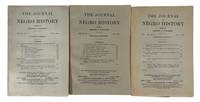
1924réf. 217871924. Woodson Carter Godwin. The Journal of Negro History. Archive of three landmark issues published between 1924 and 1928 documenting the institutional development of African American historical scholarship during the early twentieth century. The material records Black intellectual production historical recovery and scholarly publishing through the Association for the Study of Negro Life and History founded by Carter G. Woodson and Jesse E. Moorland in 1915. These issues include Black scholarship challenging white supremacist interpretations of Reconstruction slavery labor and African diasporic history through archival research and independent academic publication. The journal served as one of the central vehicles through which African American historians established scholarly networks disseminated original research and institutionalized the study of Black history within American intellectual life. The archive provides primary-source evidence for the emergence of modern African American historiography and the scholarly movement that later gave rise to Negro History Week and Black History Month. Woodson Carter Godwin ed. The Journal of Negro History. Lancaster PA and Washington D.C.: The Association for the Study of Negro Life and History 1924 1926 and 1928. Three issues in publisher's printed wrappers comprising Vol. IX No. 3 July 1924; Vol. XI No. 3 July 1926; and Vol. XIII No. 3 July 1928. Each issue measures approximately 10 x 6.5 inches and ranges between 120 and 176 pages. 1 Vol. IX No. 3 July 1924. Devoted primarily to Alrutheus Ambush Taylor's major study "The Negro in South Carolina During the Reconstruction" examining demographic change labor transition religion education and political organization in the post-emancipation South. Written while Taylor served as the first full-time Black researcher employed by Woodson's organization the study foregrounds African American agency during Reconstruction and anticipates interpretive frameworks later expanded by W.E.B. Du Bois in Black Reconstruction. 2 Vol. XI No. 3 July 1926. Continues Taylor's Reconstruction scholarship with "The Negro in the Reconstruction of Virginia" detailing Black political participation church organization disenfranchisement campaigns and the reestablishment of white political control in Virginia after Reconstruction. The article constitutes one of the earliest extended scholarly treatments of Black Reconstruction politics in the state. 3 Vol. XIII No. 3 July 1928. Broadens the journal's scope beyond the Reconstruction South through studies including N. Andrew N. Cleven's "The First Panama Mission and the Congress of the United States" W. Sherman Savage's early survey "The Negro in the History of the Pacific Northwest" and Jean Trapp's "The Liverpool Movement for the Abolition of the English Slave Trade." The issue additionally includes Ruth A. Fisher's extensive 109-page documentary compilation "Extracts from the Records of the African Companies" reproducing archival material relating to British commercial participation in the transatlantic slave trade. These issues record the emergence of African American historical scholarship as an organized intellectual discipline during a period when Black historians faced systematic exclusion from mainstream academic institutions and publishing networks. The journal's sustained attention to Reconstruction history preceded revisionist scholarship that later transformed the field with early interpretations centered on Black political participation labor and institutional development rather than Lost Cause narratives dominant in white historiography of the era. Studies on the Pacific Northwest Panama and British antislavery movements extend the journal's diasporic approach to Black history beyond the American South. Minor edgewear and faint toning to wrappers; overall very good condition. An archive of foundational African American historical scholarship and one of the central publishing achievements of twentieth-century Black intellectual life. unknown books
1820réf. 165851820. Tuckerman H. P. Poetry and prayer journal 1820-1830 documents early nineteenth-century manuscript album culture within Anglo-American Protestant communities with particular attention to women's devotional writing moral instruction and shared literary practices. The volume supports research into gendered authorship religious education and the circulation of poetic and didactic texts in the early republic where handwritten albums functioned as spaces for communal inscription. The presence of multiple hands across dated entries demonstrates a participatory literary culture structured around kinship and social networks while recurring themes of childhood piety mortality and moral virtue situate the text within contemporary evangelical and didactic traditions. Tuckerman H. P. Poetry and prayer journal. Circa 1820-1830. Manuscript volume with 53 handwritten entries by multiple contributors including poems hymns and devotional reflections. Entries include a hymn composed for the British and Foreign School Society emphasizing education and moral uplift through the metaphor "Oh stream of knowledge when thy tides.Forget not then the flowers" alongside gendered moral instruction concluding "woman's Happiest destiny Is only - to be good." Biblical passages including references to Luke 2 appear throughout accompanied by original prayers such as an 1827 entry: "Heaven sees no sight so fair As happy childhood bowed in prayer." Several texts address mortality and impermanence including reflections such as "Life is but a scanty ledge.suspended o'er a fathomless abyss" and a memorial poem introduced as written by a young man shortly before death from consumption invoking Romantic-era associations with illness and artistic sensibility. Additional entries focus on natural landscapes including "Spring Mountain" 1828 which situates spiritual reflection within pastoral imagery. The volume includes an original drawing of a mother and child signed "S. Tuckerman" as well as two pencil drawings of forest scenes reinforcing the integration of visual and literary expression within album practices. This manuscript emerges from a period in which evangelical Protestantism moral education movements and literary cultivation intersected within domestic and semi-public spheres particularly among women and youth. The reference to the British and Foreign School Society situates the volume within transatlantic educational reform efforts emphasizing literacy and moral discipline. The collaborative nature of the entries aligns with early nineteenth-century album traditions where social exchange and authorship were intertwined. Such materials provide insight into how religious belief gender norms and literary expression were internalized and reproduced within everyday practice. Original red half morocco binding with owner's name "H. P. Tuckerman" in gilt on front cover; approximately 120 pages with writing on 76 pages; includes three original drawings; measures 9 x 7 1/2 inches. Light toning and minimal foxing throughout; very good condition. A substantive example of early American manuscript culture linking devotional life gendered authorship and communal literary exchange. unknown books
1943réf. 217911943. Woodson Carter Godwin. The Journal of Negro History. Archive of three significant issues published between 1943 and 1946 documenting the continued expansion of African American historical scholarship during the Second World War and immediate postwar period. The material records Black intellectual production historical recovery and interdisciplinary scholarship through the editorial and publishing work of the Association for the Study of Negro Life and History founded by Carter G. Woodson and Jesse E. Moorland in 1915. These issues include archival evidence and field research on slavery Black political organization African diasporic identity labor systems and racial discrimination across the United States the Caribbean and Latin America. The journal served as one of the central institutional vehicles through which African American scholars circulated research challenging dominant white historical narratives while building an international framework for Black historical studies. The archive provides primary-source evidence for the maturation of mid-century African American historiography and the broadening geographic scope of Black intellectual inquiry during the 1940s. Woodson Carter Godwin ed. The Journal of Negro History. Washington D.C.: The Association for the Study of Negro Life and History 1943 and 1946. Three issues in publisher's printed wrappers comprising Vol. XXVIII No. 3 July 1943; Vol. XXXI No. 3 July 1946; and Vol. XXXI No. 4 October 1946. Each issue measures approximately 10 x 6.5 inches and ranges between 111 and 137 pages. 1 Vol. XXVIII No. 3 July 1943. Includes Vincent W. Byas' "Ethnologic Aspects of the Martinique Creole" examining Creole identity and cultural formation in the French Caribbean; John Hope Franklin's influential "Slaves Virtually Free in Ante-Bellum North Carolina" reassessing the legal and social complexities of slavery in the Upper South; W. Sherman Savage's "The Contest over Slavery between Illinois and Missouri" addressing sectional political tensions; and Arthur J. Alexander's "Federal Officeholders in New York State as Slaveholders 1789-1805" documenting Northern political participation in slavery. 2 Vol. XXXI No. 3 July 1946. Features Charles W. Cobb Jr.'s "The Outlook Regarding State FEPC Legislation" analyzing anti-discrimination policy and fair employment campaigns during the early civil rights era; Mozell C. Hill's "The All-Negro Communities of Oklahoma: The Natural History of a Social Movement" documenting Black autonomous communities and rural self-governance in Oklahoma; and Gonzalo Aguirre Beltrán's "Tribal Origins of Slaves in Mexico" tracing African ethnic origins and cultural survivals within Mexican slavery and the broader Atlantic world. 3 Vol. XXXI No. 4 October 1946. Opens with the Annual Report of the Director and includes Bernard H. Nelson's "Confederate Slave Impressment Legislation 1861-1865" examining the forced wartime conscription of enslaved labor; Marion J. Russell's "American Slave Discontent in Records of the High Courts" focusing on legal evidence of enslaved resistance; Bella Gross' "The First National Negro Convention" revisiting antebellum Black political organizing; and John A. Schutz and Maud O'Neil's "Arthur Holt Anglican Clergyman Reports on Barbados 1725-1733" documenting Caribbean plantation society through missionary observation. These issues record the international and interdisciplinary character of African American scholarship under Woodson's editorial leadership during the 1940s. Contributors examine Black political organization labor systems diasporic identity formation and legal structures across multiple regions of the Atlantic world. Work by John Hope Franklin Charles W. Cobb Jr. Gonzalo Aguirre Beltrán and other scholars reflects the journal's role in shaping modern African American and African diasporic historiography during the mid-twentieth century. Light edge toning and faint foxing to wrappers with minor handling wear; overall very good to near fine condition. An archive documenting the intellectual development and international reach of Black historical scholarship in the World War II and immediate postwar era. unknown books
1876réf. 167211876. Wakelee Cora B. Diary 1876 records a young Connecticut student's firsthand account of the Centennial Exposition alongside later entries documenting her high school achievements and social writing practices. The manuscript provides primary evidence of how a young woman experienced and interpreted the first official World's Fair held in the United States while also preserving the social and literary conventions of adolescent friendship in the late nineteenth century. The diary supports research into youth education gendered experience at national exhibitions and the integration of public spectacle into personal narrative. Wakelee Cora B. Diary. 1876-1881. Manuscript volume containing 48 handwritten pages including early entries partially overwritten with inscription "Cora B. Wakelee Huntington Conn. May 22 1876" on the front endpaper. The opening section details Wakelee's visit to the Philadelphia exposition describing exhibits with specificity: a large-scale model of Niagara Falls "160 ft long and 80 ft high" state buildings including a New England log house furnished with objects "100 years old or over" and displays of industrial production such as carpet weaving and tinware manufacturing. She records encounters with global and historical curiosities including "Egyptian mummies" horticultural specimens such as fig orange lemon and pineapple trees and commemorative objects tied to George Washington including his carriage and textile portraits. Later entries document her academic life including transcribed newspaper recognition of her spelling achievement and scholarship prizes. Pages 14 through 48 contain a substantial collection of short poems and inscriptions intended for autograph albums combining sentimental and humorous tones such as "Though short our acquaintance has been.Permit me to call you my friend" alongside moral reflections and religious wishes. The volume also includes original mourning verse for a deceased acquaintance "Mattie Otis passed away.She has gone yes gone forever" situating personal loss within poetic expression. The diary emerges from a period in which international expositions functioned as sites of national identity formation and technological display while expanding educational opportunities exposed young women to broader cultural experiences. Wakelee's account demonstrates how large-scale public events were absorbed into individual memory and recorded alongside everyday academic and social life. The inclusion of autograph album verses reflects widespread practices among students where poetry circulated as a medium of friendship and remembrance. Original leather boards; approximately 48 pages of manuscript content; measures 8 x 5 inches. Losses to spine and loose hinges; some toning throughout; good condition. A combined record of the 1876 exposition as experienced by a young attendee and of late nineteenth-century female student literary culture. unknown books
1939réf. 38801Amsterdam 1939. paperback. very good. Orgaan van de Maatschappij tot Bewordering der Bouwkunst Bond van Nederlandsche Architecten B.N.A. en het Genootschap Architectura et Amicitia. 60ste Jaargang. No. 1 - 52. 7 Jan. - 30 Dec. 1939. Illustrated. 52 vols. thin folio printed wrappers; some pp. stuck together else fine. Amsterdam 1939. One year run of this technical journal edited by H. G. J. Schelling B. T. Boeyinga et al. unknown books
1865réf. NF1575JOURNAL DES DEMOISELLES TRENTE-TROISIEME ANNEE Au Bureau Du Journal 1865 first edition all 12 monthly issues including ECHO du Petit Courrier des Dames bound in half leather and cloth a good to very good copy with very good or better contents. A highly collected publication as each issue has full color fashion plates. This volume has no less than 46 such full color plates in fine condition save for 4 which have a small hole to the upper margin nowhere near entering the color illustrations and one fold-out black & white illustration the second such fold-out plate is compromised. Au Bureau Du Journal hardcover books
1940réf. 221961940. Chinese-language newspaper issue. World War II era New York City. This publication documents Chinese American civic participation and wartime communication during the Second World War presenting news of the Pacific theater alongside appeals for support of the United States war effort and coverage of U.S.-China relations. The issue demonstrates how Chinese-language press served immigrant communities by combining political reporting public service messaging and commercial advertising linking local Chinatown life to global conflict and diaspora identity. Chinese-language newspaper four large-format pages measuring approximately 22 x 18 inches densely printed with traditional Chinese characters illustrations and advertisements. The pages include articles reporting on military developments in the Pacific and commentary on the Republic of China's wartime position alongside columns addressing local community concerns. A prominent advertisement urges readers to "BUY UNITED STATES WAR BONDS AND STAMPS" illustrated with a colonial soldier placing patriotic messaging directly within a Chinese-language context. One photograph shows a woman in military uniform shaking hands with another Chinese American woman before an American flag with a caption identifying her as part of a women's volunteer service corps assisting the U.S. military. Advertisements for laundries restaurants funeral homes and import-export businesses list addresses in Manhattan Brooklyn and Philadelphia indicating a network of Chinese American commercial life across the region. Published during a period when Chinese Americans navigated exclusionary immigration policy and wartime nationalism such newspapers provided a platform for political alignment with the United States while maintaining ties to China's resistance against Japanese expansion. Coverage of war bonds volunteer service and overseas conflict situates the issue within broader efforts by Chinese American communities to assert belonging and contribute materially to the war. Edge chipping and fold splits with minor wear; text remains clear and legible; overall good. A substantial example of Chinese American wartime print culture documenting diaspora engagement with both U.S. civic life and international conflict. unknown books
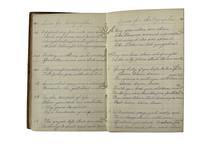
1906réf. 218101906. Manuscript medical remedy book from Devonport England compiled between 1903 and 1915 and preserving a striking record of everyday therapeutic practice in the years immediately preceding the global influenza pandemic that would soon devastate Europe. Written in ink in a clear and highly legible hand across 36 pages of a ruled notebook measuring 7.75" x 6.5" the volume gathers dozens of medicinal formulas for ailments ranging from bronchitis neuralgia rheumatism and digestive complaints to deep ulcers eye conditions sore throats winter coughs and childhood illnesses. Particularly notable are repeated entries for "influenza" appearing years before the outbreak retrospectively termed the Spanish Flu revealing how influenza already existed as a familiar and recurring medical threat within Edwardian Britain long before the catastrophic pandemic wave of 1918-1920 transformed it into one of the deadliest public health disasters of the modern era. The notebook therefore captures an important transitional moment in the history of epidemic disease: a period when influenza was treated as a common but serious seasonal illness through localized mixtures tonics expectorants and domestic pharmaceutical preparations rather than through coordinated state medicine or modern antiviral therapies. These entries provide unusually direct evidence of how ordinary practitioners dispensers or caretakers approached influenza treatment in the years immediately before the Spanish Flu pandemic altered both public consciousness and medical infrastructure surrounding contagious respiratory disease. The remedies themselves demonstrate the hybrid world of early twentieth-century medicine where domestic caregiving folk therapeutics and increasingly professionalized pharmacy overlapped. Familiar household substances such as witch hazel and paregoric appear beside pharmaceutical compounds later restricted or abandoned by mid-century medicine. Several preparations include age-specific dosages for children while others focus on strengthening mixtures cough remedies liniments lotions and wound treatments. A handful of entries are dated including one reading "June 29 1903" and another attributed to an individual identified as "A. Wilson." Accompanied by three inserted paper ephemera pieces including an index of herbs and chemicals and two additional recipe slips one bearing a postage stamp from the "Plymouth . Society Dispensing Dept. Fore St. Devonport." The overall character strongly suggests compilation by someone with regular access to a dispensary or chemist environment though not necessarily a formally licensed pharmacist operating instead within the fluid boundary between domestic medical care and industrialized pharmaceutical practice in prewar England. Well rubbed with losses to spine and extremities; interior remains clear and legible with minor foxing. Good overall condition. unknown books
1988réf. 223401988. Baim Tracy ed. Outlines: The Voice of the Gay and Lesbian Community. 1988. These issues document LGBTQ community life and political activism in Chicago during the late 1980s with sustained coverage of the HIV/AIDS crisis hate crimes legislation electoral politics and cultural production. Published during the final years of the Reagan administration the newspaper provides contemporaneous reporting on public health policy grassroots protest and legal developments affecting gay and lesbian communities while also recording nightlife arts and local organizing. The material establishes Outlines as a community-centered publication linking local Chicago reporting to national debates on rights visibility and health. Baim Tracy ed. Outlines: The Voice of the Gay and Lesbian Community. Chicago: Lambda Publications 1988. Seven issues. 1 Outlines. Vol. 1 No. 31. January 7 1988. Front-page coverage of the Hate Crimes Statistics Act campaign with reporting on congressional pressure to document bias crimes and a photograph of AIDS activists arrested during a San Francisco vigil; includes articles on AIDS survival studies and federal health funding. 2 Outlines. Vol. 1 No. 33. January 21 1988. Reports on Illinois public health adoption of voluntary HIV/AIDS contact tracing alongside coverage of California Democratic Party policy shifts and legal updates on an ACLU case concerning a police raid on Carol's Bar. 3 Outlines. Vol. 1 No. 34. January 28 1988. Leads with "National Syphilis Research to Start" addressing STI research during the AIDS crisis; includes reporting on activist arrests experimental antiviral treatments and local fundraising efforts for Howard Brown Health Center. 4 Outlines. Vol. 1 No. 37. April 1988. Election-focused issue examining presidential candidates' positions on gay rights; includes interviews with Alison Bechdel and Heather Bishop and commentary on corporate sponsorship and cultural production. 5 Outlines. Vol. 1 No. 38. May 1988. Features coverage of corporate advertising controversy AIDS Action Week interviews with Chicago Mayor Eugene Sawyer and a profile of writer Edmund White. 6 Outlines. Vol. 2 No. 3. August 1988. Covers LGBTQ-inclusive softball leagues and community athletics protests at the Democratic Convention and literary features on Judy Grahn and Alix Dobkin. 7 Outlines. Vol. 2 No. 5. October 1988. Extensive reporting on national activism including the NAMES Quilt in Washington the Kowalski Thompson guardianship case and presidential campaign dynamics with photographs of protests and community gatherings. These issues were produced during a period of intensified activism around AIDS policy civil rights and public visibility when LGBTQ publications served as critical sources of information and coordination. Coverage of health initiatives legal battles and national elections reflects the intersection of local organizing and broader political change while cultural features document artistic and social life within the community. Light toning and edge wear consistent with newsprint; creasing from handling; issues complete and legible; overall very good. A concentrated archive of a Chicago-based LGBTQ newspaper capturing activism public health discourse and cultural life in 1988. unknown books
1862réf. 280305Richmond: Richmond Examiner 1862. unbound. very good. 2 pages of text on a single sheet 23 inches x 16 inches. Folded down the center and twice across the sheet. Richmond: Richmond Examiner 1862. Very good On the front page is an extensive article on the Confiscation Act of 1862 and its passage by Congress. Included in the article is the text of Abraham Lincoln's Message on the act's constitutionality. The Confiscation Act gave legal authority to courts to implement the legal seizure of land and property from citizens who aided the Confederacy. Also in the act was a clause allowing emancipation of slaves in the Confederacy that lived in areas of Union occupation. Most of the rest of the text on both pages are small articles on Civil War battles and political news in the Confederacy. The publisher of the Richmond Examiner became anti-Jefferson Davis' political and military actions as the Civil War progressed. Richmond Examiner unknown books
1944réf. 15819Ft. McClellan Alabama: Special Service Office 1944. Newspapers. Paper. Near fine. The Daily War Flashes published in 1944 at the Infantry Replacement Training Center at Ft. McClellan Alabama. This archive begins on D-Day June 6 1944 with Daily News Release #135 through #229 September 23 1944. Lacking only #227. All printed on newspaper stock with punch holes along top edge. Text in black title banner in red print. A few previously folded along center line. A scarce archive of the early Allied invasion of Europe for the infantry soldier in training at Ft. McClellan Alabama. During World War II Fort McClellan in Anniston Alabama was a critical U.S. Army training center. Established in 1917 the base expanded significantly during the war to train hundreds of thousands of soldiers primarily for the infantry. It hosted the Chemical Warfare Service preparing troops to handle chemical threats and was a site for Military Police MP training. The Women's Army Corps WAC also had one of its primary training centers at Fort McClellan. The base featured extensive training grounds including firing ranges and obstacle courses along with barracks medical facilities and recreational amenities to support the soldiers. Special Service Office unknown books
1940réf. 014787Freeman Journal Co 1940. Book. Fine. Hardcover. 1st Edition. 8vo - over 7¾ - 9¾" tall. Fine Copy In Like Jacket Very Scarce in This Condition Beautiful Fresh Copy Without Wear. First Year of Cooperstown Induction. Freeman Journal Co Hardcover books
2006réf. 651692006. Yale Law Journal. New Haven Conn.: Yale Law Journal Co. Inc. Volumes 62 to 115 no.8 1952-2006. Bound volumes: 62 to 95 upper red and lower black spine labels; 99 to 101; 103 to 106; 108 navy blue buckram in 63 books. Paperback volumes. 107 no.1-8 109 no.1 to 111 no.8 115 no.1-8 in 40 books. Ex-library with stamps spine labels and letters "LL" marked to heads of spines on volumes 62 to 95 else good condition. Reprint Price USD 5695. Special $695. The Yale Law Journal is a student-run law review affiliated with the Yale Law School. Published continuously since 1891 it is one of the most cited legal publications in the nation and usually generates the highest number of citations per published article. unknown books
1996réf. 655081996. 16 linear feet. 16 linear feet. Yale Law Journal. New Haven Conn.: Yale Law Journal Co. Inc. Volumes. 69 to 105 1959-1996 bound books. Volume. 100 no.5 Paper back. Together 79 volumes. Ex-library with stamps dampstaining to margins of 9 volumes. Not effecting legibility else good condition. 16 linear feet of shelf space. $695. The Yale Law Journal is a student-run law review affiliated with the Yale Law School. Published continuously since 1891 it is one of the most cited legal publications in the nation and usually generates the highest number of citations per published article. unknown books
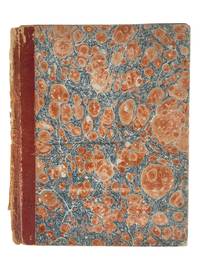
1851réf. 218121851. Science Medicine & TechnologyMilitary & WarLabor Environment & Welfare Manuscript industrial journal documenting the British lead shot industry patent culture and metallurgical manufacturing during the height of the Victorian industrial economy. Primarily England and Wales 1851-1853. Approximately 50 pages written in ink in a highly legible hand bound in an octavo-format notebook measuring 8 x 6.5 inches. Quarter red leather over marbled boards. Ownership inscription to front endpaper: "John R. Tracy / Nov 1852." An unusually detailed firsthand record of mid-19th-century industrial innovation centered on the manufacture of lead shot at a moment when Britain's expanding military infrastructure mining economy and heavy industry were increasingly dependent on large-scale metallurgical production. Compiled by John R. Tracy the manuscript documents the development and attempted commercialization of what he repeatedly identifies as a "Shot Patent" likely an improvement to the production or grading of lead shot associated with the traditional shot tower process. Rather than functioning merely as a technical notebook the volume captures the broader industrial system surrounding invention in Victorian Britain: factory inspections patent negotiations industrial espionage concerns business networking licensing discussions and the competitive culture of ironmasters and lead manufacturers operating across England and Wales. The manuscript opens in October 1852 and proceeds through a sequence of dated entries recording Tracy's travel and meetings with manufacturers engineers and industrial firms. These entries reveal the practical realities of introducing a new industrial process into Britain's established lead trade where manufacturers guarded technical methods closely and approached outside inventors with skepticism. On October 26 Tracy records receiving "letters of introduction to Messrs. A. B. Brown & Green" and to "Platt Bros." illustrating the importance of personal industrial networks and recommendation systems within Victorian manufacturing culture. Another entry dated November 5 describes a meeting arranged through "Mr. Maxwell of Messrs. Norton Theakers" followed by Tracy's note of "Much of 'shot etc.'-a rather funny conversation but on the whole. appointment for tomorrow @ 10 1/2" capturing the uncertain and often informal negotiations surrounding industrial patents. Particularly revealing is Tracy's November 6 account of visiting the Flintshire lead smelting firm Newton Keates & Co. where he describes the guarded and competitive atmosphere surrounding lead shot production. Tracy recounts that permission to inspect the works was "at-first-refused in rather a John Bullish manner" before eventually being granted under supervision. He writes perceptively about the mixture of suspicion and curiosity that surrounded industrial patents noting that the proprietor "wished to know the price upon the Patent" but that he deliberately withheld a valuation because "there was no use to let him have the bait to look at before he was hungry enough to bite." The language throughout reveals how industrial innovation in this period depended not simply on invention itself but on strategic secrecy negotiation and control over proprietary manufacturing knowledge. One of the manuscript's most important sections is a full-page listing titled "Lead Works in the United Kingdom in 1852" identifying more than two dozen lead works and manufacturers across Britain. Firms including Walker Parker & Co. Newton Keates & Co. and Richmond Anchor Co. are listed alongside annotations describing their production specialties including "sheet" "pipes" "shot" "white lead" and "pig." The page functions as a rare industrial survey of Britain's lead industry during a period of rapid military and industrial expansion documenting the interconnected infrastructure supporting ammunition production construction materials piping paint manufacture and metallurgical processing. Later entries contain detailed observations of shot-manufacturing equipment at a Chester lead works including descriptions of shot towers ranging from 76 to 96 feet in height and the use of perforated metal grading systems to regulate molten lead as it fell into spherical form. Tracy records the operation with notable technical specificity: "The shot are dropped through a perforated metal-the holes being smaller at the upper end and increasing in size as you get to the lower cylinder." Accompanying diagrams depict feed bins drop tubes sieves and sorting mechanisms apparently intended to improve efficiency or shot-size consistency beyond earlier tower methods. Tracy critically evaluates the machinery as well remarking that certain sieve boxes "seem inadequate for the work" and comparing the process economically to that employed by "D. De Roy & Co.'s works." The notebook therefore preserves not merely abstract invention but active industrial analysis and comparative manufacturing study. The manuscript is documenting metallurgy patent culture and military-industrial production in the decades preceding the major arms expansions of the later nineteenth century. Lead shot remained essential not only for hunting and civilian markets but for military supply systems deeply tied to imperial expansion and industrial warfare. Tracy's notebook reveals the increasingly professionalized yet still highly personal world through which industrial technologies circulated in Victorian Britain where factory visits guarded conversations handwritten technical sketches and negotiated introductions formed the practical infrastructure of innovation. Spine mostly perished with binding delicately held together; boards rubbed and worn. Interior exceptionally clean and highly legible throughout. A substantial and unusually revealing manuscript documenting Victorian industrial manufacturing patent strategy and the lead shot trade during a formative period in British industrial history. unknown books
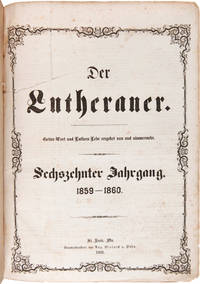
1860réf. 58540St. Louis: Wiebusch und Sohn 1860-1863. Missouri Civil War Newspaper Lutheran German-language newspaper founded in 1844 by Carl Ferdinand Wilhelm Walther 1811-87. The paper and its founder were key components in introducing the idea of an umbrella church for Lutherans in America and the Midwest founding in 1847 the German Evangelical Lutheran Synod of Missouri Ohio and Other States. In the 1840s and '50s Germans were the largest immigrant group in America settling heavily in the Midwest. Four volumes bound in one. 2208; 200 of 208; 4208 lacks pp.137-144; 2200pp. Vol. 17 lacks issue 26. Vol. 18 lacks issue 18. Folio. Half morocco and marbled boards. Spine and corners heavily worn front cover detached. Titlepage of first volume torn; second and third leaves heavily torn with some minor loss. Light to moderate foxing and wear. Else good. hardcover books
réf. B306546-1Kamakura-shi Shiruku Rodo Kenkyujo 1990-2004. Vols. 3 - 5 7 - 9. Lrg. 4to. Cloth. With: Festschrift Ikuo Hirayama. Studies in Silk Road Coins and Culture: Papers in Honour of Professor Ikuo Hirayama On His 65th Birthday. Edited by Katsumi Tanabe Joe Cribb Helen Wang. Silk Road Art and Archaeology. Special volume 1997. 332pp. Prof. illus. Lrg. 4to. Cloth. Kamakura The Institute of Silk Road Studies 1997. Kamakura-shi (Shiruku Rodo Kenkyujo), 1990-2004. hardcover books