36 020 résultats
réf. DADAX1854090712New unknown
1876réf. 16353Montréal 1876
réf. DADAX3110217856New unknown
réf. SONG0198187505Used: Good unknown
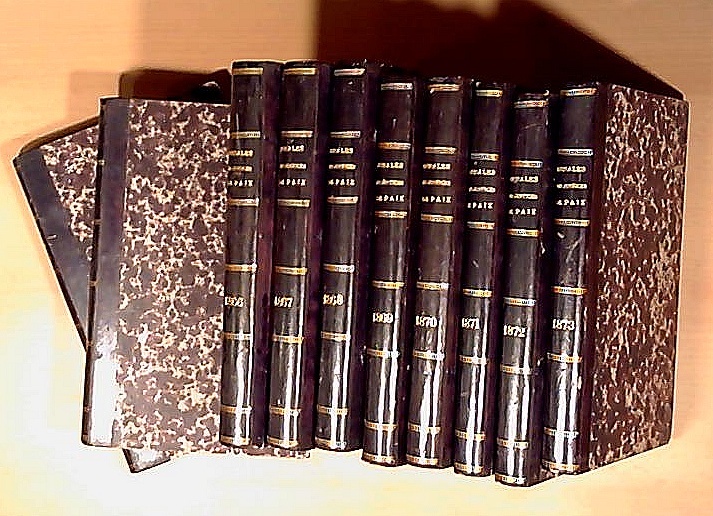
1875réf. 103812Couverture rigide. 10 volumes 16 x 24 cm d'environ 400 pages, reliures demi basane en très bon état.
réf. 73937Sitka Alaska Territory: Alaskan Publishing Company 600. First edition. Newspaper dated January 30 1886. Folio. 4 pp. Typical folds with some areas of separation that have been repaired with Scotch tape including central horizontal fold of front page. Remarkably nice condition. No copies at auction according to RBH.Very early Alaska Territorial newspaper with news regarding the territory and advertisements for local businesses printed just 19 years after the Territory was purchased from Russia. The Alaskan a Sitka newspaper published from 1885-1907 was an important voice for Alaska. The newspaper was managed by a Miss Cassia Patton. She was a fierce proponent of sending Native American children to "white schools." Patton first came to Sitka in 1889. She taught school then owned the Alaskan newspaper . She was supported in all this by her brother-in-law Governor Brady. Alaskan Publishing Company unknown
réf. 5300CARIBBEAN TRAVEL JOURNAL. Diary. 101 pages. The Caribbean. c. 1908-9. The handwritten journal belonging to C. B. Benson of Hudson New York. The diary recounts Bensons experience on an organized cruise group visit to Caribbean locations such as St. Thomas Puerto Rico Kingston Jamaica Caracas Venezuela Panama City Panama Port of Spain Trinidad and Martinique. Benson records his experiences in each location including his impressions of the town the locals sights he visited and local travel. He visited forts a school churches a mill a sugar plantation and Carnival celebrations. Benson took his tour during the era of colonial rule the attitudes of which infuse both his experiences and observations. Based on his mention of an earthquake in Kingston Jamaica taking place a year or two before he travelled in 1908 or 1909. St. Thomas where we arrived about 6 A.M. mid morning Jan 26 is one of the Virgin group and we found her framed and frescoed in the principal churches. Columbus in 1493 gave the group of 100 islands rocks andwhich comprise the group. St. Thomas is 13 miles in length and 3 miles in width at its broadest. And I guess we walked the length of it speaking broadly and in the abstract at this distance.The heat of the tropical sun also takes its toll and blurs our ideas of time and distance somewhat. The town of Charlotte Amelia contains 13000 inhabitants merchants and black babies and they are all dressed in their Sunday best to receive us properly.Thursday morning at 8 we went ashore at Porto sic Rico.Returning thro the village streets we stopped at the market place and noticed the display of fruits in baskets a couple of men seated on low stools with blacks in front of them.a native womanwas entertaining us in the middle of the road with a dance.When passing the island of Haiti.Do you know why we do not stop at the Island of Haiti No There are cannibals there there are so many fat people aboard you would lose your wife At St Thomas the American council held open house and received some of us who dared to invade this solitude.An hours railroad ride which was made interesting by stops at every littleand station where the bare legged boy with the oil gun in hand squirted oilbearings sic of the cars and engine. As it was before the 17 miles came to an end the rear axle of the parlor car so called because it had leather covered reclining seats caught fire. But when this happened we were nearly at the end of our journey and we were not delayed much. At the sugar plantation where we detrained we found we had some distance to walk downto the sugar mill. As there was no path and the sticky wet ground to soil made worse by the heavy rain of the night before.A sugar mill is never a clean place.The process is somewhat intricate but way he likened to the process of brewing.The cane piled up in the yard is boiled in a number of vats then is run off with barrels and in a black and solid state in shipped to the Refineries at New York. The fiber of the cane is then hardened and dried and is fed to the furnaces to boilcane. After return to the town San Juan we visited the shops. Walked out to the fort at the entrance of the harbor. The town is excellently policed and paved in the principal streets with telegram blocks.As this day was Thursday we concluded that every day was wash day for the native women and girls who for want of other diversions spend most of their time in this form of dissipation. Even the balconies of the main public street filled with traffic of street cars carriages and drays had their fill of wash some of which are found laying in the street having been carried down by the wind. No one had appropriated it as yet; and we did not add it to our collection of souvenirs. At the officers quarters I applied for a permit of the officer of the day to enter the fort San Cristobal the fort commanding the entrance to the harbor.The fort was like most forts. The high tower gave a commanding view of the town and harbor. Then we visited the Governors Palace. In the Reception Room hanging on opposite sides facing each other are life sized oil paintings of McKinley & Cleveland. In the garden were some large palms tropical ferns a fountain &.Jan 29. early in the morning we were at Kingston in Jamaica. The channel is narrow and tortuous but well Taking a local pilot we soonopposite itof three vessels one of which was the Princess Louise that was caught in the hurricane here three years ago andthe larger of the three vessels was trying to pick up the light from the light house which had been blown down. This destruction of the hurricane.After driving about a mile thru the city the destruction to the buildings & pavements made by the earthquake here a year or two ago half of the city seems to be in ruins and no attempt has been made apparently to rebuild & restore the city. Thousands of lives were lost here at that time which did immense damage to the fruits. Most of the uninhabitable part of the island belongs to the United Fruit Company a Boston Corporation who ships immense quantities of bananas from Port Antonio. Owing to recent destruction by fire of Hotel Litchfield our stop at the port of San Antonio and stay of night at the Hotel was omitted. An excursion across the island by train to Mandeville was arranged in its place.The town of Colon in its principle streets are paved with brick and appear clean. We noticed many buzzards. The air was clear and there was a delightful cool breeze blowing.We stopped at all of the stations going to Panama and noted the wonderful impressions made by the Sanitary Commission. The well ventilated and screened houses. The plan for disposal of garbage the open drainage the cleared landsBut of course the facts are here bug and drain all working to the mutual exclusion of some ideas to the American white employers. Therefore after a few months they must have a reaction in the States toand detach themselves from all absorbing facts. The fighting for life againstfires. Most things arebetween the white employers and the black employees. So we find the White Bar and the Black Bar The White Employees The Silver White Employees &c as signs on the cars intended to carry workmen back and forth from the works.Caracas the capital of Venezuela is about 3000 ft up but the sun in the middle of the day we found very hot.Plaza Bolivar was decorated with rows of colored electric lights. They are preparing for the Carnival season which ushers in Lent in Catholic countries. The market place had counters for dry goods highly colored handkerchiefs etc. Another section was devoted to fruits vegetables etc. We noticed some very large apricots. Mr. Bolivar apparently has done a great deal for his native town. He has given his name while the people furnished the funds for the largest parks a street and the coinage of the plutocrats.The Spaniard theHildago -in his easy subjugation of thepleasure loving tropical savage has replaced the native of simple taste and left in his place the mongrel half-breed with all the vices of the conqueror and none of the virtues of theIndian savage. The diary is in very good condition. It is mostly written in pencil but is quite legible. hardcover
réf. 5300CARIBBEAN TRAVEL JOURNAL. Diary. 101 pages. The Caribbean. c. 1908-9. The handwritten journal belonging to C. B. Benson of Hudson New York. The diary recounts Bensons experience on an organized cruise group visit to Caribbean locations such as St. Thomas Puerto Rico Kingston Jamaica Caracas Venezuela Panama City Panama Port of Spain Trinidad and Martinique. Benson records his experiences in each location including his impressions of the town the locals sights he visited and local travel. He visited forts a school churches a mill a sugar plantation and Carnival celebrations. Benson took his tour during the era of colonial rule the attitudes of which infuse both his experiences and observations. Based on his mention of an earthquake in Kingston Jamaica taking place a year or two before he travelled in 1908 or 1909. St. Thomas where we arrived about 6 A.M. mid morning Jan 26 is one of the Virgin group and we found her framed and frescoed in the principal churches. Columbus in 1493 gave the group of 100 islands rocks andwhich comprise the group. St. Thomas is 13 miles in length and 3 miles in width at its broadest. And I guess we walked the length of it speaking broadly and in the abstract at this distance.The heat of the tropical sun also takes its toll and blurs our ideas of time and distance somewhat. The town of Charlotte Amelia contains 13000 inhabitants merchants and black babies and they are all dressed in their Sunday best to receive us properly.Thursday morning at 8 we went ashore at Porto sic Rico.Returning thro the village streets we stopped at the market place and noticed the display of fruits in baskets a couple of men seated on low stools with blacks in front of them.a native womanwas entertaining us in the middle of the road with a dance.When passing the island of Haiti.Do you know why we do not stop at the Island of Haiti No There are cannibals there there are so many fat people aboard you would lose your wife At St Thomas the American council held open house and received some of us who dared to invade this solitude.An hours railroad ride which was made interesting by stops at every littleand station where the bare legged boy with the oil gun in hand squirted oilbearings sic of the cars and engine. As it was before the 17 miles came to an end the rear axle of the parlor car so called because it had leather covered reclining seats caught fire. But when this happened we were nearly at the end of our journey and we were not delayed much. At the sugar plantation where we detrained we found we had some distance to walk downto the sugar mill. As there was no path and the sticky wet ground to soil made worse by the heavy rain of the night before.A sugar mill is never a clean place.The process is somewhat intricate but way he likened to the process of brewing.The cane piled up in the yard is boiled in a number of vats then is run off with barrels and in a black and solid state in shipped to the Refineries at New York. The fiber of the cane is then hardened and dried and is fed to the furnaces to boilcane. After return to the town San Juan we visited the shops. Walked out to the fort at the entrance of the harbor. The town is excellently policed and paved in the principal streets with telegram blocks.As this day was Thursday we concluded that every day was wash day for the native women and girls who for want of other diversions spend most of their time in this form of dissipation. Even the balconies of the main public street filled with traffic of street cars carriages and drays had their fill of wash some of which are found laying in the street having been carried down by the wind. No one had appropriated it as yet; and we did not add it to our collection of souvenirs. At the officers quarters I applied for a permit of the officer of the day to enter the fort San Cristobal the fort commanding the entrance to the harbor.The fort was like most forts. The high tower gave a commanding view of the town and harbor. Then we visited the Governors Palace. In the Reception Room hanging on opposite sides facing each other are life sized oil paintings of McKinley & Cleveland. In the garden were some large palms tropical ferns a fountain &.Jan 29. early in the morning we were at Kingston in Jamaica. The channel is narrow and tortuous but well Taking a local pilot we soonopposite itof three vessels one of which was the Princess Louise that was caught in the hurricane here three years ago andthe larger of the three vessels was trying to pick up the light from the light house which had been blown down. This destruction of the hurricane.After driving about a mile thru the city the destruction to the buildings & pavements made by the earthquake here a year or two ago half of the city seems to be in ruins and no attempt has been made apparently to rebuild & restore the city. Thousands of lives were lost here at that time which did immense damage to the fruits. Most of the uninhabitable part of the island belongs to the United Fruit Company a Boston Corporation who ships immense quantities of bananas from Port Antonio. Owing to recent destruction by fire of Hotel Litchfield our stop at the port of San Antonio and stay of night at the Hotel was omitted. An excursion across the island by train to Mandeville was arranged in its place.The town of Colon in its principle streets are paved with brick and appear clean. We noticed many buzzards. The air was clear and there was a delightful cool breeze blowing.We stopped at all of the stations going to Panama and noted the wonderful impressions made by the Sanitary Commission. The well ventilated and screened houses. The plan for disposal of garbage the open drainage the cleared landsBut of course the facts are here bug and drain all working to the mutual exclusion of some ideas to the American white employers. Therefore after a few months they must have a reaction in the States toand detach themselves from all absorbing facts. The fighting for life againstfires. Most things arebetween the white employers and the black employees. So we find the White Bar and the Black Bar The White Employees The Silver White Employees &c as signs on the cars intended to carry workmen back and forth from the works.Caracas the capital of Venezuela is about 3000 ft up but the sun in the middle of the day we found very hot.Plaza Bolivar was decorated with rows of colored electric lights. They are preparing for the Carnival season which ushers in Lent in Catholic countries. The market place had counters for dry goods highly colored handkerchiefs etc. Another section was devoted to fruits vegetables etc. We noticed some very large apricots. Mr. Bolivar apparently has done a great deal for his native town. He has given his name while the people furnished the funds for the largest parks a street and the coinage of the plutocrats.The Spaniard theHildago -in his easy subjugation of thepleasure loving tropical savage has replaced the native of simple taste and left in his place the mongrel half-breed with all the vices of the conqueror and none of the virtues of theIndian savage. The diary is in very good condition. It is mostly written in pencil but is quite legible. hardcover books
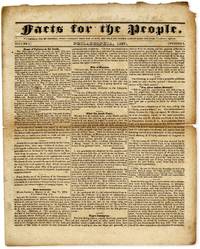
1837réf. 88394Philadelphia: Anti-slavery Society of the City and County of Philadelphia; printed by Merrihew & Gunn 1837. Single quarto issue 29cm x 23cm; ca. 11-1/2" x 9-1/4". Bifolium 4pp pages numbered 9-12. Issued monthly. Old horizontal fold at center as issued; small loss at upper margin away from printed area brief separations at folds without loss to text; complete and Good. Single issue of this very scarce presumably short-lived abolitionist newspaper published by Benjamin S. Jones under the auspices of the Anti-slavery Society of the City & County of Philadelphia. This copy with dated 1864 pencil ownership markings of "J.E. Jones" this possibly being the publisher's spouse the reformer abolitionist and suffragist Jane Elizabeth Jones née Hitchcock; 1816-1896. The paper's contents are devoted almost entirely to exposure of the injustices of the southern slave system with excerpts from Southern papers quoted and sharply rebuked by Jones' editorial comments. This issue also includes a brief notice of the progress of the recently-founded city of Houston Texas which now contained ".about 3000 people two hundred buildings four hotels thirteen retail stores and one wholesale establishment." The extracts quoted in this issue are generally dated from March April and May of 1837 leading us to suggest a May-June date for this issue. It is unclear how many issues of Facts for the People appeared. The only recorded example for a physical copy is at AAS which holds two unspecified issues with the annotation "sparse holdings." Not in LCP Afro-Americana. Not in Blockson. Anti-slavery Society of the City and County of Philadelphia; printed by Merrihew & Gunn unknown
1837réf. 88394Philadelphia: Anti-slavery Society of the City and County of Philadelphia; printed by Merrihew & Gunn 1837. Single quarto issue 29cm x 23cm; ca. 11-1/2" x 9-1/4". Bifolium 4pp pages numbered 9-12. Issued monthly. Old horizontal fold at center as issued; small loss at upper margin away from printed area brief separations at folds without loss to text; complete and Good. Single issue of this very scarce presumably short-lived abolitionist newspaper published by Benjamin S. Jones under the auspices of the Anti-slavery Society of the City & County of Philadelphia. This copy with dated 1864 pencil ownership markings of "J.E. Jones" this possibly being the publisher's spouse the reformer abolitionist and suffragist Jane Elizabeth Jones née Hitchcock; 1816-1896. The paper's contents are devoted almost entirely to exposure of the injustices of the southern slave system with excerpts from Southern papers quoted and sharply rebuked by Jones' editorial comments. This issue also includes a brief notice of the progress of the recently-founded city of Houston Texas which now contained ".about 3000 people two hundred buildings four hotels thirteen retail stores and one wholesale establishment." The extracts quoted in this issue are generally dated from March April and May of 1837 leading us to suggest a May-June date for this issue. It is unclear how many issues of Facts for the People appeared. The only recorded example for a physical copy is at AAS which holds two unspecified issues with the annotation "sparse holdings." Not in LCP Afro-Americana. Not in Blockson. Anti-slavery Society of the City and County of Philadelphia; printed by Merrihew & Gunn unknown books
réf. dola2059Ottawa: 1940. Articles include 'The Banff-Jasper Highway' by Edward E.Bishop 'Laurentian Ski-Ways' by H.P.Douglas 'Geology of the National Parks of Canada in the Rockies and Selkirks' by B.R.MacKay 'Eskimo Dogs of the Canadian Arctic' by J.Dewey Soper 'The North Pacific Coast - Its Human Mosaic' by Marius Barbeau 'Western Pilgrimage' by W.H.Currie 'Canada's Air Force Overseas' by James Ferguson 'Rubber and Its Manufacture in Canada' by Arthur L.Neal 'The Co-Operative Movement' by Evelyn S.Tufts 'Icelanders in Canada' by S.J.Sommerville 'Some National Historic Sites in Western Canada' by F.W.Howay 'A Road to Alaska' by Lawrence J.Burpee &c. The last issue is completely devoted to the Canadian Red Cross. 12 Issues. 8vo. numerous text maps & illus. cloth bound without the wrs. spine skewed. dola2059 Ottawa: 1940 hardcover
réf. dola2060Ottawa: 1941. Articles include 'Three Antarctic Years' by Launcelot Fleming Colin Bertram & Brian Roberts 'Greenland Our North-Eastern Neighbour' by D.A.Nichols 'Newfoundland - England's First Outpost Against the Discovery of the North-West Passage' by Edwin W.Mills 'Old Fort Kamloops' by F.Henry Johnson 'Old Canadian Silver' by Marius Barbeau 'Development of Radio Communication in Canada' by Arthur L.Neal 'North of the Great Lakes Lies Treasure' by Maurice Tremblay 'Canada's Hutterite Settlement' by C.Frank Steele 'The Big Muddy Valley of Southern Saskatchewan' by Edgar Houldsworth 'The New Canadian Corps' by Major C.P.Stacey 'Northern Ontario' by R.M.Smith 'Canada's Navy' by Lieut. E.H.Bartlett &c. 12 Issues. 8vo. numerous text maps & illus. cloth bound without the wrs. book block slightly skewed. dola2060 Ottawa: 1941 hardcover
1837réf. KC16640Paris: Achille Ricourt 1837. Hardcover. Good. 401pp. 8.5 x 11.25 French text. Starting as a weekly-illustrated journal LArtiste was published in Paris from 18311904 supplying "the richest single source of contemporary commentary on artists exhibitions and trends from the Romantic era to the end of the nineteenth century. Presumably the most important and innovative French fine arts journal encompassing: literature architecture sculpture painting engraving and music. TYPOGRAPHIE LACRAMPE ET COMP. RUE DAMIETTE 2. Full page decorative illustration preceding the Title page and signed in stone Albert Durer. Richly decorated with 50 single-leaf engravings vertical and horizontal most protected by tissue sometimes corresponding to the adjacent text. Good with the leather spine and marble covered boards rubbed with corners and edges bumped. Some pages thumbed with moderate foxing and soiling throughout; wrinkled and lightly worn early and late pages. Rear hinge split. Engravings generally clean and bright when protected by tissue. Achille Ricourt hardcover
1837réf. KC16640Paris: Achille Ricourt 1837. Hardcover. Good. 401pp. 8.5 x 11.25 French text. Starting as a weekly-illustrated journal LArtiste was published in Paris from 18311904 supplying "the richest single source of contemporary commentary on artists exhibitions and trends from the Romantic era to the end of the nineteenth century. Presumably the most important and innovative French fine arts journal encompassing: literature architecture sculpture painting engraving and music. TYPOGRAPHIE LACRAMPE ET COMP. RUE DAMIETTE 2. Full page decorative illustration preceding the Title page and signed in stone Albert Durer. Richly decorated with 50 single-leaf engravings vertical and horizontal most protected by tissue sometimes corresponding to the adjacent text. Good with the leather spine and marble covered boards rubbed with corners and edges bumped. Some pages thumbed with moderate foxing and soiling throughout; wrinkled and lightly worn early and late pages. Rear hinge split. Engravings generally clean and bright when protected by tissue. Achille Ricourt hardcover books
1968réf. 1869New York: Artists & Writers Militia/Black Mask 1968. Broadside poster. 16 1/4 x 21 1/2 inches. Large-format broadside newspaper featuring the poem "Poetry is Revolution" by LeRoi Jones along with a text by the editor Allen van Newkirk regarding Jones' arrest and its parallels with those of other African-Americans and calling for the "absolute necessity for total social & cultural revolution now if poetry is to go forward." Old fold lines and handling wear tape ghosts to verso. Artists & Writers Militia/Black Mask unknown
1813réf. 829801813. Rare Prospectus for a Legal Periodical: Only One Other Copy Known Legal Journal. Williams John of the Inner Temple. The Legal and Literary Journal and Mercantile Magazine. To be Continued Monthly And Number Three to be Published January 1st 1814. Conducted by John Williams Esq. Author of the Laws of Trade and Commerce &c. &c. Assisted by Several Literary and Commercial Gentlemen. London: S.n. circa 1813. 10-1/4" x 8" 26 cm x 20 cm broadside address of recipient and postmark to verso remnants of red wax seal. Moderate toning two horizontal fold lines. A very good copy of a rare item. $350. This is a rare and detailed prospectus for a periodical published under the guidance of John Williams a barrister and author of The Law of Wills and Codicils 1810 The Laws of Trade and Commerce 1812 and A Treatise on the Study and Practice of the Law 1823. Since the prospectus states that issue "Number Three" will be published in January 1814 it may be assumed that two issues had already been printed but today no issues of any date are found in Library Hub OCLC or in major libraries including the British Library or Library of Congress. This prospectus then with its five-part table giving the "Proposed Arrangement" of topics may preserve all that remains of the content and intentions of this serial. The themes of the "Legal Department" included "1. A Copious Epitome of the Decisions in the Courts of Law and Equity as also in the Prize Courts. 2. A Full and Faithful Abridgement of the Public Statutes Immediately on Their Receiving the Royal Signature. 3. Dissertations on Constitutional Subjects. 4. Dissertations on the Various Branches of Law" and 5. Legal Biography. " Rarely will a prospectus state its own print run but this one does: 3000 copies. As we find only one other exemplar in the world at Yale Law School the rarity may be calculated with unusual exactness: the survival rate for copies of this prospectus being one fifteenth of 1%. Yale's catalogue record does not indicate a manuscript address. Ours is addressed on its verso to Robert Thorpe 1771-1847 attorney and Clerk of the Peace in Alnwick Northumberland. There are many extant copies of Williams's treatises. By contrast his periodical The Legal and Literary Journal and its prospectus are his rarest productions by. unknown
1813réf. 829801813. Rare Prospectus for a Legal Periodical: Only One Other Copy Known Legal Journal. Williams John of the Inner Temple. The Legal and Literary Journal and Mercantile Magazine. To be Continued Monthly And Number Three to be Published January 1st 1814. Conducted by John Williams Esq. Author of the Laws of Trade and Commerce &c. &c. Assisted by Several Literary and Commercial Gentlemen. London: S.n. circa 1813. 10-1/4" x 8" 26 cm x 20 cm broadside address of recipient and postmark to verso remnants of red wax seal. Moderate toning two horizontal fold lines. A very good copy of a rare item. $350. This is a rare and detailed prospectus for a periodical published under the guidance of John Williams a barrister and author of The Law of Wills and Codicils 1810 The Laws of Trade and Commerce 1812 and A Treatise on the Study and Practice of the Law 1823. Since the prospectus states that issue "Number Three" will be published in January 1814 it may be assumed that two issues had already been printed but today no issues of any date are found in Library Hub OCLC or in major libraries including the British Library or Library of Congress. This prospectus then with its five-part table giving the "Proposed Arrangement" of topics may preserve all that remains of the content and intentions of this serial. The themes of the "Legal Department" included "1. A Copious Epitome of the Decisions in the Courts of Law and Equity as also in the Prize Courts. 2. A Full and Faithful Abridgement of the Public Statutes Immediately on Their Receiving the Royal Signature. 3. Dissertations on Constitutional Subjects. 4. Dissertations on the Various Branches of Law" and 5. Legal Biography. " Rarely will a prospectus state its own print run but this one does: 3000 copies. As we find only one other exemplar in the world at Yale Law School the rarity may be calculated with unusual exactness: the survival rate for copies of this prospectus being one fifteenth of 1%. Yale's catalogue record does not indicate a manuscript address. Ours is addressed on its verso to Robert Thorpe 1771-1847 attorney and Clerk of the Peace in Alnwick Northumberland. There are many extant copies of Williams's treatises. By contrast his periodical The Legal and Literary Journal and its prospectus are his rarest productions by. unknown books
réf. 37131New York: The Hobo News. Unbound. Fair. Undated but marked in pencil November 19 1946. Vol. 6 no. 47. Folded horizontally and very brittle at the folds - a fair only issue of this very uncommon tabloid for hobos. Picture of actress Joanne Dru and others several columns about hobos horse racing. The Hobo News unknown
réf. 37131New York: The Hobo News. Unbound. Fair. Undated but marked in pencil November 19 1946. Vol. 6 no. 47. Folded horizontally and very brittle at the folds - a fair only issue of this very uncommon tabloid for hobos. Picture of actress Joanne Dru and others several columns about hobos horse racing. The Hobo News unknown books
1961réf. 22130Simon & Schuster NY Trident Press 1961. HBDJ Yellow & Black with Gold Gilt Name & Title cover light Rub wear FoX 1961 1st edition 1st Printing Dates Match on Title & Copyright page Color Illustrated DJ light rub VG/VG wear & tiny Chips Extremities 181 pages . each ENTRY documented painstakingly so they are Authentic . First Edition. Hard Cover. Simon & Schuster NY Trident Press hardcover
1957réf. 223271957. Chinese American newspaper issue The Chinese Journal 美洲日報 published in New York on April 20 1957 offering a rich portrait of midcentury Chinese American life diasporic politics and community organizing during the Cold War era. Issued by the Chinese American World Publishing Corporation and described as "the most progressive intelligent and constructive Chinese daily newspaper in America" the publication served Chinese diaspora readers across the United States particularly on the East Coast providing essential coverage of international relations Chinese nationalist and anti Communist politics immigration developments and the economic life of Chinatown. Entirely printed in Chinese this issue reflects the linguistic and cultural continuity of immigrant communities while also documenting their engagement with global geopolitical tensions especially surrounding U.S. China relations Taiwan and Soviet diplomacy at a moment shaped by McCarthy era anxieties and shifting immigration policy. Vol. 30 No. 93. April 20 1957. Four pages approximately 17 x 22 inches. Headlines include "å€«æ•¦æ±ºå®šç¶æŒèˆ‡è¯è«‡åˆ¤æ”¿ç–" London decides to maintain policy of talks with China reporting on British Prime Minister Harold Macmillan's position on Chinese Communist diplomacy; "美如åå°ä¸æƒœå¬å›žä½¿ç¯€" If the United States opposes it is willing to recall its envoy reflecting U.S. State Department tensions; and "臺備原åé£›å½ˆé˜²è¡›è‡ºåŒ—é ˜ç©º" Taiwan prepares atomic missile defense to protect Taipei airspace capturing fears of mainland Chinese military expansion and Taiwan's strategic alignment with the United States. Additional reporting includes "蘇俄å°å¤–ä¿å¥½å’Œå¹³ç–ç•¥ 游說與æåš‡æ–½ä½µé€²" Soviet diplomacy mixes peace overtures with threats and coverage of a deadly flood disaster alongside cooperative infrastructure development. The issue also documents local Chinese American community life through notices from organizations such as the Lee Family Association æŽå…¬è¯èª¼æœƒ and advertisements for Chinese owned businesses including China Noodle Co. at 176 Park Row and Jade Florist & Curios at 10 Division Street. The rear page features a full advertising spread with stylized typesetting promoting firms such as United Trading Co. Lun Fat Co. and Quong Yuen Shing & Co. alongside imagery from American President Lines illustrating transnational shipping networks and the economic infrastructure of New York's Chinatown. Newsprint shows minor edge wear and expected brittleness with a horizontal fold small closed tears and light foxing; overall good. A highly uncommon and visually compelling primary source of particular importance to institutional collections focused on Chinese American history immigrant print culture Cold War media and the study of diaspora political consciousness in the twentieth century. unknown
1957réf. 223271957. Chinese American newspaper issue The Chinese Journal 美洲日報 published in New York on April 20 1957 offering a rich portrait of midcentury Chinese American life diasporic politics and community organizing during the Cold War era. Issued by the Chinese American World Publishing Corporation and described as "the most progressive intelligent and constructive Chinese daily newspaper in America" the publication served Chinese diaspora readers across the United States particularly on the East Coast providing essential coverage of international relations Chinese nationalist and anti Communist politics immigration developments and the economic life of Chinatown. Entirely printed in Chinese this issue reflects the linguistic and cultural continuity of immigrant communities while also documenting their engagement with global geopolitical tensions especially surrounding U.S. China relations Taiwan and Soviet diplomacy at a moment shaped by McCarthy era anxieties and shifting immigration policy. Vol. 30 No. 93. April 20 1957. Four pages approximately 17 x 22 inches. Headlines include "å€«æ•¦æ±ºå®šç¶æŒèˆ‡è¯è«‡åˆ¤æ”¿ç–" London decides to maintain policy of talks with China reporting on British Prime Minister Harold Macmillan's position on Chinese Communist diplomacy; "美如åå°ä¸æƒœå¬å›žä½¿ç¯€" If the United States opposes it is willing to recall its envoy reflecting U.S. State Department tensions; and "臺備原åé£›å½ˆé˜²è¡›è‡ºåŒ—é ˜ç©º" Taiwan prepares atomic missile defense to protect Taipei airspace capturing fears of mainland Chinese military expansion and Taiwan's strategic alignment with the United States. Additional reporting includes "蘇俄å°å¤–ä¿å¥½å’Œå¹³ç–ç•¥ 游說與æåš‡æ–½ä½µé€²" Soviet diplomacy mixes peace overtures with threats and coverage of a deadly flood disaster alongside cooperative infrastructure development. The issue also documents local Chinese American community life through notices from organizations such as the Lee Family Association æŽå…¬è¯èª¼æœƒ and advertisements for Chinese owned businesses including China Noodle Co. at 176 Park Row and Jade Florist & Curios at 10 Division Street. The rear page features a full advertising spread with stylized typesetting promoting firms such as United Trading Co. Lun Fat Co. and Quong Yuen Shing & Co. alongside imagery from American President Lines illustrating transnational shipping networks and the economic infrastructure of New York's Chinatown. Newsprint shows minor edge wear and expected brittleness with a horizontal fold small closed tears and light foxing; overall good. A highly uncommon and visually compelling primary source of particular importance to institutional collections focused on Chinese American history immigrant print culture Cold War media and the study of diaspora political consciousness in the twentieth century. unknown books
réf. DADAX1850755582New unknown
réf. DADAX044450432XNew unknown
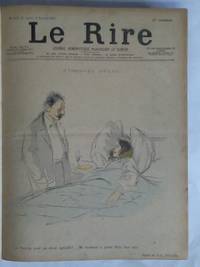
réf. 5L3446Félix Juven Paris 1897. Insgesamt ca. 624 illustrierte Seiten mit colorierten Titelseiten im Halbleinen-Einband mit goldgeprägtem Rückentitel quart Einband berieben/Namensstempel auf Vorsatz/Seiten altersgemäß gebräunt. - sonst durchgehend sauberes und ordentliches Exemplar / komplett / Nr. 150 wurde als Sondernummer gestaltet Staatsbesuch des Präsidenten Faure in Rußland von Toulose-Lautrec stammt eine weitere schwarzweiß Karikatur Nr. 117 und von Steinlen in den Nummern 148 und 157. Zahlreiche Beiträge schwarzweiß auch von Heidbrinck / Die Zeitschrift "Le Rire" das Gelächter wurde 1894 von Félix Juven gegründet der auch "La vie illustrée" herausgab. Sie erschien jeden Samstag und trieb nach einem Wort von Gustave Flaubert besonders in den Jahren bis zum ersten Weltkrieg 'die allgemeine Schweinerei wie in den Tagen von Bouvard und Pécuchet'. "Le Rire" demaskierte die "falschen Ärsche" von Politik und Gesellschaft und sparte die Kleinbürger dabei nicht aus. Dabei ist es heuzutage eine Banalität von der "Belle Epoque" zu sprechen und dabei zu vergessen daß diese Zeit nur für einige Zeitgenossen schön war. "Le Rire" beschäftigte die besten Zeichner der Zeit wie Toulouse-Lautrec Félix Vallotton Steinlein Forain Léandre der den Gotha du Rire erfand Caran d'Ache Charles Veber Charles Huard Rabier Abel Faivre Roubille Lucien Métivet um nur die bekanntesten unter ihnen zu nennen. Es gibt Karikaturen von Leandre die in ihrer Schärfe und Unversöhnlichkeit an die Arbeiten von Daumier erinnern / Vergl. Georg Pilz. Geschichte der Europäischen Karikatur Berlin 1976 / Text französisch - unknown