Newspaper ArchivesBiblio.com

34.648 risultati
rif. B9781387338290Paperback / softback. New. paperback
rif. 145672London Richard Bentley and Son 1878. 3vols. 306296320pp. 8vo. Original half leather with marbled boards rubbed and worn at extremities small tear to leather at lower corner on volume 2. Offsetting to free endpapers. Some scattered foxing. Gutters starting. Otherwise a very good copy. First edition. Not in Wolff London, Richard Bentley and Son 1878. hardcover
rif. 24254Wakefield Yorkshire EP Publishing 1973. xii324pp. 4to. Profusely illustrated in black and white. Original cloth in dustwrapper.Some bumping to corners but a very good copy. Facsimile of the 1862 original. Wakefield, Yorkshire, EP Publishing, 1973. hardcover
rif. 218341Sydney Society for Growing Australian Plants 1959-1967. 3 vols bound in green cloth. Vol 1: First 12 issues about 300pp. Vol 2: about 300pp plus bound in: Descriptive Catalogue of West Australian Plants edited by J.S. Beard 122pp. Vol 3: 384pp plus bound in: A Catalogue of Autralian Native Plants in Cultivation by E.M.M. & E.R. Boddy 74pp. All vols illustrated and in very good condition. Sydney, Society for Growing Australian Plants, 1959-1967. hardcover
2018rif. 230512003Pediment Publishing 2018. First Edition. Hardcover. Fine/Near Fine. 11x9x0. 2 Volume Hardcover set with DJ's Vol 1 First Edition 2018 Pediment Publishing 200 pages. Fine in a Near Fine DJ. Black cloth boards with silver spine titles - corners sharp. Just a whisper of shelf/edge wear to original DJ - now in mylar. ISBN-159725780X. Vol 2 First Edition 2019 Pediment Publishing 200 pages. Fine in a Near Fine DJ. Black cloth boards with silver spine titles - corners sharp. Just a whisper of shelf/edge wear to original DJ - now in mylar. ISBN-1597258474. Volume One covers the history of Rhode Island from the early years to 1939 through stunning memorable photos. Volume Two covers the 1940's and 1950's. All images are from the archives of The Providence Journal in addition to images shared by our readers. A superb First Edition set in DJ.LOC SS-TS-02 Pediment Publishing hardcover
1911rif. 178781911. The Trained Nurse and Hospital Review June 1911 documents the professional education clinical techniques and hospital administration concerns confronting American nurses during the expansion of hospital-based nurse training in the early twentieth century. Articles address injection techniques nursing programs and hospital security and administration placing practical bedside instruction beside discussion of the institutions in which nurses trained and worked. The issue dates from a period when hospital training schools played a dominant role in American nursing education and student nurses supplied much of the routine nursing labor within those institutions conditions that generated continuing debate over the balance between clinical service and formal instruction. The Trained Nurse and Hospital Review. New York: Lakeside Publishing Company June 1911. Approximately 10 x 6.75 inches. 408 pages. Articles cover injection procedures reviews of nursing programs and hospital administrative and security concerns. Advertisements at the front and rear promote medical uniforms equipment fashion and household goods preserving the commercial material presented to the journal's predominantly nursing readership alongside its professional content. The combination of technical articles institutional reporting and advertising records the expanding professional culture surrounding trained nursing and hospital work in the Progressive Era. The issue appeared while American nursing education was increasingly centered in hospital-operated training schools where students received extensive practical experience but were also relied upon for institutional labor. Its discussions of technique training and hospital management provide contemporary evidence of how nursing knowledge was communicated within that environment rather than through later accounts of professionalization. Page 333 is cut vertically with approximately half the page lacking. Some tearing at the stapled spine and light sunning to the cover not obscuring the bold title lettering. Overall good condition. unknown
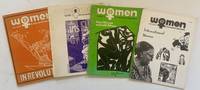
1970rif. 178751970. Women: A Journal of Liberation 1970 to 1975 documenting feminist cultural expression and ideological debate within the Women's Liberation Movement during the early second wave period. The material reflects feminist print culture illustrating themes of gender roles domestic life labor sexuality and global political struggle and offering insight into how activists writers and artists articulated women's experiences and demands for social transformation. It supports research into feminist media intersectional discourse and the evolution of women-centered publishing in the United States. Archive includes: 1 Women: A Journal of Liberation Vol. 1 No. 4. Summer 1970. Baltimore MD: Women: A Journal of Liberation Inc. 1970. This issue's theme is "In Revolution" and its cover bears an image of a shouting woman breaking through chains her chin lifted in determination. On the back wrapper is a photographic collage of feminists and a woman behind bars sweat dripping down her forehead. Articles discuss Vietnam the Russian Revolution Rosa Luxembourg and various current events relating to the women's movement. 2 Women: A Journal of Liberation Vol. 2 No. 1 Fall 1970. Baltimore MD: Women: A Journal of Liberation Inc. 1970. An issue on women in the arts with articles on female authors women in music and film children's literature focused on women female visual artists and women as muse. Cover features a purple print of a woman sitting in a chair and hiding her face from view captioned "model in art class". 3 Women: A Journal of Liberation Vol. 2 No. 2 Winter 1971. Baltimore MD: Women: A Journal of Liberation Inc. 1970. This issue is titled "How We Live and With Whom" and includes articles on family marriage and homelife. Many of these articles explore marital and familial issues affecting women in the 70s including the difficulties of divorce sex education for young girls and alternative lifestyles like communal living. 4 Women: A Journal of Liberation Vol. 3 No. 2 Winter 1972. Baltimore MD: Women: A Journal of Liberation Inc. 1972. Titled "Building a New Culture". An issue exploring the role of women in culture and the impact of popular culture on women including articles on women in music theater and sports as well as women's studies and sociology. Cover features a green print of five women dancing in a circle. 5 Women: A Journal of Liberation Vol. 3 No. 4. Baltimore MD: Women: A Journal of Liberation Inc. 1974. This issue is titled "International Women" and bears cover images of an older woman wearing a bandana and prints of Native women a Black woman and a Vietnamese woman holding artillery in one hand and a baby in another. Articles discuss Vietnam women in the Cuban Revolution Nisei women Chicana culture and various current events relating to the women's movement. 6 Women: A Journal of Liberation Vol. 4 No. 2 Spring 1975. Baltimore MD: Women: A Journal of Liberation Inc. 1975. Titled "The Cost of Living" this is issue centers around the relationship between women and money. Includes articles on women in the workforce welfare living in poverty and women supporting themselves independently. This topic would have been especially relevant in the mid-70s when the Equal Credit Opportunity Act opened up new financial opportunities for women in the US. Six issues spanning 1970 to 1975 each approximately 11 x 8.25 inches. This period coincides with significant developments in U.S. feminist organizing including expanded discourse on workplace equality reproductive rights and financial independence as well as increased attention to global and intersectional perspectives within the movement. The journal's combination of political analysis creative expression and visual design situates it within a broader network of feminist periodicals that shaped activist and intellectual exchange. Light handling wear covers and pages well-preserved with strong color and clarity; overall very good condition. A cohesive and visually distinctive grouping illustrating the breadth of feminist thought and cultural production in the early 1970s. unknown
1899rif. 179371899. 2 Issues of Englishwoman's Review. John Bale Sons and Danielsson Ltd: London July 15th 1899. January 15th 1902. Measures 8.5" x 5.5" inches. 224 pages. Soft covers. Both reviews open with an advertisement for the printer that reads "Office for the employment of women as compositors. Girls trained and employed for the last twenty years. Ladies and gentleman are invited to place their orders for printing where they will be executed by women in a style equal to the best. No slipshod work! No exorbitant prices!" The rest of both reviews is composed of articles news and reviews related to women's suffrage. Some titles include "Experiences Amongst Chinese Women" "The Political Position of Women in Canada." Together the two speak to the level of organization as well as the international focus of the movement as women collaborated across countries and continents reporting on successes and obstacles bolstering support for the cause by keeping readers well informed. Soft covers missing original covers. Clean front and back free endpapers instead. Texblocks tight and clean. Overall good condition. unknown
1971rif. 180891971. Good Times San Francisco: April 9 1971. Volume IV No. 27. Bold cover image shows group of women partially colored by a red star. Larger image above them of woman in pith helmet one hand on hip and the other extending a long barrel pistol with outstretched arm. Stories inside are advertised on front as "George Jackson Murder Alternative Schools Mexican Mushrooms Revolutionary Yoga." 16" x 11" inches. 26 pages. Back page a full spread photograph of George Jackson in red the text below reading "George Jackson Sept 23 1941 - Aug 21 1971." The Good Times Newspaper Collective was the primary underground newspaper of San Francisco throughout the late sixties and early seventies a hub for the anti-war movement the trials of political prisoners like Angela Davis political corruption in the city and shared community information. Its volunteer staff put out the paper until its last issue in 1972. Of the publication one volunteer wrote "We had to fight for the right to sell our papers in the streets.We covered stories from the perspective of the participants dodging clubs as we took notes. The lines were clear and we knew which side we were on." This issue covers the shooting death of George Jackson by prison guards at San Quentin where Jackson was being held. "He died revoluting against a society which had sentenced him to a life in prison for a $70 robbery committed when he was 19 years old. Seven of the 10 years were spent in solitary confinement." The issue also includes information for a women's anti-war march an editorial giving advice about taking legal action against landlords and a piece about the health department's crackdown on non-certified raw milk. A comic called "Fox" follows its protagonist the black activist "Dominique Fox" being framed for a bombing in this issue. Both news source and voice for radical activists this issue of Good Times provides an incisive look at the wide ranging interests opinions concerns and stories circulating within the counterculture movement embodied by San Francisco in the 1960s and 70s. Light foxing along edge of front cover. Very good condition. unknown
rif. A9780080440958Hardback. New. Provides a collection of articles from the year 2000. This work includes papers from the following journals: "Computers and Geotechnics Geotextiles" "Geomembranes International Journal of Rock Mechanics" "Mining Sciences Journal of Terramechanics Soil Dynamics" "Earthquake Engineering Tunnelling" and "Underground Space Technology". hardcover
1855rif. 56140Providence 1855. Folio broadside approx. 15½" x 11" text in double column beneath the running head the whole within a typographic border; some wrinkling but generally very good. First line: "Who knocks a stranger open let him in!" N.Y. Historical and Brown only in OCLC noting a John Miller imprint not present here. unknown
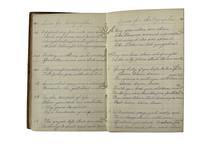
1876rif. 167211876. Wakelee Cora B. Diary 1876 records a young Connecticut student's firsthand account of the Centennial Exposition alongside later entries documenting her high school achievements and social writing practices. The manuscript provides primary evidence of how a young woman experienced and interpreted the first official World's Fair held in the United States while also preserving the social and literary conventions of adolescent friendship in the late nineteenth century. The diary supports research into youth education gendered experience at national exhibitions and the integration of public spectacle into personal narrative. Wakelee Cora B. Diary. 1876-1881. Manuscript volume containing 48 handwritten pages including early entries partially overwritten with inscription "Cora B. Wakelee Huntington Conn. May 22 1876" on the front endpaper. The opening section details Wakelee's visit to the Philadelphia exposition describing exhibits with specificity: a large-scale model of Niagara Falls "160 ft long and 80 ft high" state buildings including a New England log house furnished with objects "100 years old or over" and displays of industrial production such as carpet weaving and tinware manufacturing. She records encounters with global and historical curiosities including "Egyptian mummies" horticultural specimens such as fig orange lemon and pineapple trees and commemorative objects tied to George Washington including his carriage and textile portraits. Later entries document her academic life including transcribed newspaper recognition of her spelling achievement and scholarship prizes. Pages 14 through 48 contain a substantial collection of short poems and inscriptions intended for autograph albums combining sentimental and humorous tones such as "Though short our acquaintance has been.Permit me to call you my friend" alongside moral reflections and religious wishes. The volume also includes original mourning verse for a deceased acquaintance "Mattie Otis passed away.She has gone yes gone forever" situating personal loss within poetic expression. The diary emerges from a period in which international expositions functioned as sites of national identity formation and technological display while expanding educational opportunities exposed young women to broader cultural experiences. Wakelee's account demonstrates how large-scale public events were absorbed into individual memory and recorded alongside everyday academic and social life. The inclusion of autograph album verses reflects widespread practices among students where poetry circulated as a medium of friendship and remembrance. Original leather boards; approximately 48 pages of manuscript content; measures 8 x 5 inches. Losses to spine and loose hinges; some toning throughout; good condition. A combined record of the 1876 exposition as experienced by a young attendee and of late nineteenth-century female student literary culture. unknown
1820rif. 165851820. Tuckerman H. P. Poetry and prayer journal 1820-1830 documents early nineteenth-century manuscript album culture within Anglo-American Protestant communities with particular attention to women's devotional writing moral instruction and shared literary practices. The volume supports research into gendered authorship religious education and the circulation of poetic and didactic texts in the early republic where handwritten albums functioned as spaces for communal inscription. The presence of multiple hands across dated entries demonstrates a participatory literary culture structured around kinship and social networks while recurring themes of childhood piety mortality and moral virtue situate the text within contemporary evangelical and didactic traditions. Tuckerman H. P. Poetry and prayer journal. Circa 1820-1830. Manuscript volume with 53 handwritten entries by multiple contributors including poems hymns and devotional reflections. Entries include a hymn composed for the British and Foreign School Society emphasizing education and moral uplift through the metaphor "Oh stream of knowledge when thy tides.Forget not then the flowers" alongside gendered moral instruction concluding "woman's Happiest destiny Is only - to be good." Biblical passages including references to Luke 2 appear throughout accompanied by original prayers such as an 1827 entry: "Heaven sees no sight so fair As happy childhood bowed in prayer." Several texts address mortality and impermanence including reflections such as "Life is but a scanty ledge.suspended o'er a fathomless abyss" and a memorial poem introduced as written by a young man shortly before death from consumption invoking Romantic-era associations with illness and artistic sensibility. Additional entries focus on natural landscapes including "Spring Mountain" 1828 which situates spiritual reflection within pastoral imagery. The volume includes an original drawing of a mother and child signed "S. Tuckerman" as well as two pencil drawings of forest scenes reinforcing the integration of visual and literary expression within album practices. This manuscript emerges from a period in which evangelical Protestantism moral education movements and literary cultivation intersected within domestic and semi-public spheres particularly among women and youth. The reference to the British and Foreign School Society situates the volume within transatlantic educational reform efforts emphasizing literacy and moral discipline. The collaborative nature of the entries aligns with early nineteenth-century album traditions where social exchange and authorship were intertwined. Such materials provide insight into how religious belief gender norms and literary expression were internalized and reproduced within everyday practice. Original red half morocco binding with owner's name "H. P. Tuckerman" in gilt on front cover; approximately 120 pages with writing on 76 pages; includes three original drawings; measures 9 x 7 1/2 inches. Light toning and minimal foxing throughout; very good condition. A substantive example of early American manuscript culture linking devotional life gendered authorship and communal literary exchange. unknown
1860rif. 165691860. J. B. Remarks on the Obstacles to the More General Employment of Women and on the Means of Removing Them 1860. First edition of a pamphlet advocating expanded employment opportunities for British women and identifying discriminatory hiring practices opposition from male workers and limited occupational choices as causes of female poverty. Published through the English Woman's Journal a periodical closely associated with the Langham Place circle of women's rights reformers the pamphlet appeared during an organized campaign to open professions and skilled occupations previously reserved for men. Its author directly challenges workplace resistance to female labor: "Women however cannot be employed in England in this manner because of the jealousy of their fellow workmen. If a master were to employ women in any part of the business the whole of his workmen would strike at once." The passage identifies threatened industrial action by male employees as a practical obstacle to women's economic advancement even when employers were willing to hire them. J. B. Remarks on the Obstacles to the More General Employment of Women and on the Means of Removing Them. London: Published at the Office of the English Woman's Journal Company Limited 1860. First edition. 16 pages. Original paper wrappers measuring 8¼ x 5¼ inches. Reprinted from the English Woman's Journal the pamphlet examines barriers preventing women from obtaining sufficient paid employment and proposes measures to expand their opportunities. The author connects occupational exclusion with increasing demands upon public and private charitable institutions: "Workhouses were found to be overcrowded with able-bodies females while charities were besieged with women praying to be provided either with employment or bread." These observations link women's unemployment directly to poverty relief while the discussion of male workers' resistance identifies the exclusionary practices that prevented women from entering better-paid occupations. The pamphlet was published shortly after the establishment of the Society for Promoting the Employment of Women in 1859 an organization associated with Jessie Boucherett Barbara Leigh Smith Bodichon and other members of the Langham Place circle. The Society sought to expand women's access to commercial clerical and skilled employment through vocational training and direct engagement with employers. The pamphlet's discussion of workplace opposition and overcrowded workhouses provides contemporary evidence of the economic conditions these reformers sought to address preceding later campaigns for women's property rights and equal access to professions. Stain to upper left edge of front wrapper toning to final page and light pencil markings in margins. Very good condition. unknown
1987rif. 1591218771Curtis Media 1987. Hardcover. Acceptable. Readable copy. Pages may have considerable notes/highlighting. ~ ThriftBooks: Read More Spend Less.Cover and binding are worn but intact. A reading copy in fair condition. Boards betray fading and nicks and other signs of wear and imperfection commensurate with age. Binding is tight and structurally sound. Pages unmarked. Sealed in plastic for shipping. Secure packaging for safe delivery.Dust jacket quality is not guaranteed. Curtis Media hardcover
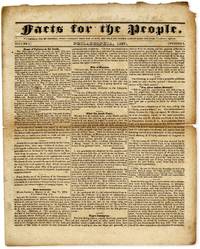
1837rif. 88394Philadelphia: Anti-slavery Society of the City and County of Philadelphia; printed by Merrihew & Gunn 1837. Single quarto issue 29cm x 23cm; ca. 11-1/2" x 9-1/4". Bifolium 4pp pages numbered 9-12. Issued monthly. Old horizontal fold at center as issued; small loss at upper margin away from printed area brief separations at folds without loss to text; complete and Good. Single issue of this very scarce presumably short-lived abolitionist newspaper published by Benjamin S. Jones under the auspices of the Anti-slavery Society of the City & County of Philadelphia. This copy with dated 1864 pencil ownership markings of "J.E. Jones" this possibly being the publisher's spouse the reformer abolitionist and suffragist Jane Elizabeth Jones née Hitchcock; 1816-1896. The paper's contents are devoted almost entirely to exposure of the injustices of the southern slave system with excerpts from Southern papers quoted and sharply rebuked by Jones' editorial comments. This issue also includes a brief notice of the progress of the recently-founded city of Houston Texas which now contained ".about 3000 people two hundred buildings four hotels thirteen retail stores and one wholesale establishment." The extracts quoted in this issue are generally dated from March April and May of 1837 leading us to suggest a May-June date for this issue. It is unclear how many issues of Facts for the People appeared. The only recorded example for a physical copy is at AAS which holds two unspecified issues with the annotation "sparse holdings." Not in LCP Afro-Americana. Not in Blockson. Anti-slavery Society of the City and County of Philadelphia; printed by Merrihew & Gunn unknown
rif. 0910133212.Gpaperback. Good. Access codes and supplements are not guaranteed with used items. May be an ex-library book. paperback
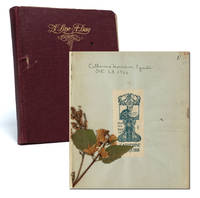
1911rif. 6011US Germany 1911. Red cloth over card with gilt to front board. All edges stained read. Measuring 200 x 170mm and containing 186 handwritten pages across five years. Dried flowers and theatre program loosely inserted at front. Ownership signature and bookplate of Catherine Harrison Squibb to front pastedown and endpaper with signature of the same to rear endpaper. A research rich and densely written diary the present would be useful in fields including but not limited to intergenerational wealth and its relationship to emotional abuse women's education and educational travel early 20th century reading habits modern friendship courtship and romance and women's increased mobility and travel. The second daughter of Charles Fellow Squibb himself the second son of pharmaceutical boss Dr. E. R. Squibb Catherine Harrison Squibb was raised in economic privilege. Her earliest years were spent in the Brooklyn townhouse built for her parents by her grandfather while her teen years were split between her father's historic estate of Welwood and her boarding school in Dresden. At Welwood Charles always considered as "the lesser son" according to his E.R.'s journals followed in his father's controlling footsteps by "purchasing polo ponies setting about learning to jump" and "insisting his children do the same.to maintain the lifestyle of the landed gentry" Belcher. This is confirmed in the opening entry of the diary October 25 1906 near Catherine's 16th birthday where she reports "I rode side-saddle with Rosalie in the morning.rode again in the afternoon ist richerverlobt! er est 62 --- alt!!" The numerous rides do not seem to entirely please Catherine as she hides her frustration in the German parenthetical roughly "he is engaged to be a judge! he is 62 years old!!". Three days later on her birthday she spends her time significantly differently clowning with her brother and aunt and "playing tennis in the afternoon." This becomes something of a tradition as her birthday entries report several times "played tennis all afternoon" She also notes her time in French and German lessons -- with German becoming more frequent during and after her time at school in Dresden especially when she wants to obfuscate her thoughts from unwanted readers. If this diary is any indication music and reading travel and school became refuges for Catherine. And she claimed as much time as she could to find independence and develop herself outside of Charles' strict rules. Her reading preferences reflect this desire to immerse herself in Jane Austen's world of social visits and balls where family conflict is eventually smoothed by a woman's exit to a loving partner and home of her own. "Good day!" she writes on April 29 1908 "Stayed in bed all day. I finished Pride & Prejudice and began Emma." This is contrast against her reaction to Charlotte Bronte's work on May 1 of the same year: "Cold & windy. We came in on the 9.30. Aunts at Welwood.had music lesson.I began Jane Eyre. Dismal book!" Her tone and word choice reflect the most happiness in these circumstances whereas riding is reported like a duty -- she may report what time of day and what horse but no expressions of joy accompany them. While the diary concludes in 1911 when Catherine is 21 we know that she would return to Europe from 1917-1919 as a nurse in WWI watching her own country battle her beloved Germany. Within the time her father had sold his birthright in Squibb and with "his extravagant lifestyle eating through his money quickly.he was forced to sell Welwood.not long thereafter he went to France" and never returned to the US Belcher. In 1920 she would marry veteran and shoe manufacturing foreman Raymond Pratt moving with him to Pasadena California and becoming a civic leader. Much deeper work can be done on Catherine's lives and relationships especially considering the current cultural trends of novels films and series depicting both the glamour and the emotional squalor of the 1%. unknown
rif. AB3-2-13-24-BCVery Good. Some light scratches on the cover and missing the box. Otherwise like new condition with no writing inside and clean pages. unknown
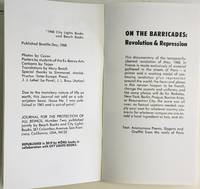
2019rif. 220344Londra: Morel Books - City Lights Books 2019. Legatura con punto metallico stapled binding. Perfetto Mint. Journal for the protection of all beings. Number Two. Fotografie in bianco e nero delle proteste del Maggio '68 a Parigi. I testi riproducono poesie slogan e graffiti anonimi raccolti per le strade di Parigi. Ripubblicato in collaborazione con City Lights San Francisco . Cm 30x165. pp. 40. Perfetto Mint. Nuova edizione New Edition. "Penso che qui ci sia un terreno comune tra il movimento americano e il movimento francese. È una protesta totale non solo contro mali specifici e contro carenze specifiche ma allo stesso tempo una protesta contro l'intero sistema di valori contro l'intero sistema di obiettivi contro l'intero sistema di spettacoli richiesto e praticato nella società consolidata. In altre parole è un rifiuto a continuare ad accettare e rispettare la cultura della società consolidata. Rifiutano non solo le condizioni economiche non solo le istituzioni politiche ma l'intero sistema di valori che sentono è marcio nel profondo. E in questo senso penso che si possa davvero parlare di una rivoluzione culturale nel senso che la protesta è diretta contro l'intero istituto culturale compresa la moralità della società esistente". Herbert Marcuse in quarta di copertina. Morel Books - City Lights Books, unknown
rif. C15566London. 21st Edition. Hardback. No Dust Jacket. Faint rubbing otherwise very good. 8vo. pp xxxiv 458. Original publisher's red cloth lettered gilt on spine and on front cover. No date 1986. hardcover
1972rif. b43577Boston: Order of the Universe Publications 1972. First Edition . Unbound. Near Fine. Photographs of Alan Watts. Near fine. Lengthy interview with Watts. Uncommon. Order of the Universe Publications unknown
1928rif. 111453At Sea: RMMS 'Aorangi' 1928. First Edition. Paperback. Very Good. At Sea RMMS 'Aorangi' 1928. Quarto 46 mimeographed pages with some illustrations and pictorial advertisements inserted in a printed wrapper with a printed leaf of advertising at each end. Overlapping colour pictorial title-wrappers attached to the contents which are stapled together through the inner margins without much attention paid to squaring up the edges; covers a little marked and creased with short tears to the overlapping edges now expertly sealed; in excellent condition. The front cover illustration is by G.B. Norton the other three surfaces of the wrappers carry shipboard illustrations or advertisements. The editorial page notes that the souvenir commemorates the ship's '24th Voyage South'. The 'Ocean Autographs' page has been signed by 12 passengers; there is a loosely-inserted card in the name 'Basham' and the signature of R. Basham on the rear cover. RMMS 'Aorangi' paperback
2005rif. 76706Pisa - Roma: Istituti Editoriali e Poligrafici Internazionali 2005. Brossura sovracoperta wrappers dust jacket. Perfetto Mint. Saggi di: Guido Rosada La scacchiera di Alice Pier Luigi Dall'Aglio Perché studiare la centurazione Umberto Vincentini Alessandro Launaro Concerning Landscape Gerard Chouquer Une nouvelle interpretation du corpus des Gromatici Veteres Michelangelo Casciano Acque e centuriazioni nel diritto romano Ilaria Di Cocco Carlotta Franceschelli Giuliano Pelfer Maria Luisa Marchi Fondi latifondi e proprietà imperiali nell'Ager Venusinus Chiara D'Inca Enrico Giorgi Antonio Marchiori. 8vo. pp. 240. Perfetto Mint. . Istituti Editoriali e Poligrafici Internazionali, unknown
1978rif. 20303Macerata: La Nuova Foglio Altro 1978. Rilegato tela cloth. Ottimo Fine. A cura di Vittorio Fagone. In antiporta riproduzione di due fogli di una lettera inedita di Antonio Bruni a Vittorio Sereni in cui sono specificate le caratteristiche editoriali di ''Corrente di Vita Giovanile''. La ristampa è corredata di un indice generale di un indice dei collaboratori e degli autori di un indice delle illustrazioni e riproduzioni d'arte. Cm 52x37. pp. 500 circa approx. 500 pages. Ottimo Fine. Edizione di 1000 esemplari. Ristampa anastatica di tutto il pubblicato Limited edition of 1000 copies. Anastatic reprint of the complete works. Corrente viene considerata la più significativa e consistente delle riviste giovanili degli anni Trenta V. Fagone La Nuova Foglio, Altro hardcover