33.045 Ergebnisse
1970Best.-Nr. 221271970. FeminismSocialismLaborLGBTQ Underground newspaper Kaleidoscope Milwaukee WI archive of two issues. Vol. 1 No. 7 Oct. 29-Nov. 11 1970; Vol. 3 No. 23 Jan. 15-22 1971. Two original issues from Milwaukee's radical newspaper Kaleidoscope a cornerstone of New Left feminist and countercultural expression in the Midwest. These issues exemplify the intersectional editorial voice of the paper prominently featuring articles on feminist self-determination LGBTQ liberation reproductive autonomy and anti-racist solidarity. The October 29-November 11 1970 issue is especially notable for its explosive front-page headline "OFF SEXIST PIGS!" and its radical feminist manifesto demanding an end to male chauvinism and gender oppression. The text includes direct calls for solidarity among women critiques of workplace discrimination at Harley-Davidson and shout-outs to revolutionary women including Bernadine Dohrn and Angela Davis. Inside readers encounter a full-page satirical parody of the Madison-Milwaukee Bugle-American that mocks local liberal media's co-optation of radical aesthetics alongside critiques of law enforcement welfare policy and censorship. The January 15-22 1971 anniversary issue celebrates four years of Kaleidoscope's publication and centers on both introspection and community engagement. It includes prominent articles such as "OBSTETRICS IN THE WRONG HANDS" which critiques institutionalized misogyny in medical practice and "GAY GUIDE" a resource for Milwaukee's LGBTQ community. A striking article titled "THE EMPEROR'S NEW CLOTHES" explores queer identity and resistance through the lens of Warhol superstar Holly Woodlawn whose image dominates the spread. Elsewhere "faggot faggot faggot" provides a bold reclamation of slurs while analyzing anti-queer violence and legal discrimination. The layout's creative typography and photo-collage aesthetic reflect the underground press's rejection of mainstream journalistic forms. Mild toning to edges with expected brittleness to newsprint; light chipping to spine fold of the earlier issue; both issues remain legible with strong contrast to ink and graphics. Overall very good condition. A powerful primary source capturing the radical ferment of early 1970s Milwaukee this set documents the convergence of feminist queer and anti-authoritarian movements in the heartland-a scarce and potent artifact of Midwest underground publishing. unknown books
1940Best.-Nr. 221961940. Chinese-language newspaper issue. World War II era New York City. This publication documents Chinese American civic participation and wartime communication during the Second World War presenting news of the Pacific theater alongside appeals for support of the United States war effort and coverage of U.S.-China relations. The issue demonstrates how Chinese-language press served immigrant communities by combining political reporting public service messaging and commercial advertising linking local Chinatown life to global conflict and diaspora identity. Chinese-language newspaper four large-format pages measuring approximately 22 x 18 inches densely printed with traditional Chinese characters illustrations and advertisements. The pages include articles reporting on military developments in the Pacific and commentary on the Republic of China's wartime position alongside columns addressing local community concerns. A prominent advertisement urges readers to "BUY UNITED STATES WAR BONDS AND STAMPS" illustrated with a colonial soldier placing patriotic messaging directly within a Chinese-language context. One photograph shows a woman in military uniform shaking hands with another Chinese American woman before an American flag with a caption identifying her as part of a women's volunteer service corps assisting the U.S. military. Advertisements for laundries restaurants funeral homes and import-export businesses list addresses in Manhattan Brooklyn and Philadelphia indicating a network of Chinese American commercial life across the region. Published during a period when Chinese Americans navigated exclusionary immigration policy and wartime nationalism such newspapers provided a platform for political alignment with the United States while maintaining ties to China's resistance against Japanese expansion. Coverage of war bonds volunteer service and overseas conflict situates the issue within broader efforts by Chinese American communities to assert belonging and contribute materially to the war. Edge chipping and fold splits with minor wear; text remains clear and legible; overall good. A substantial example of Chinese American wartime print culture documenting diaspora engagement with both U.S. civic life and international conflict. unknown books
1957Best.-Nr. 223271957. Chinese American newspaper issue The Chinese Journal 美洲日報 published in New York on April 20 1957 offering a rich portrait of midcentury Chinese American life diasporic politics and community organizing during the Cold War era. Issued by the Chinese American World Publishing Corporation and described as "the most progressive intelligent and constructive Chinese daily newspaper in America" the publication served Chinese diaspora readers across the United States particularly on the East Coast providing essential coverage of international relations Chinese nationalist and anti Communist politics immigration developments and the economic life of Chinatown. Entirely printed in Chinese this issue reflects the linguistic and cultural continuity of immigrant communities while also documenting their engagement with global geopolitical tensions especially surrounding U.S. China relations Taiwan and Soviet diplomacy at a moment shaped by McCarthy era anxieties and shifting immigration policy. Vol. 30 No. 93. April 20 1957. Four pages approximately 17 x 22 inches. Headlines include "倫敦決定ç¶æŒèˆ‡è¯è«‡åˆ¤æ”¿ç–" London decides to maintain policy of talks with China reporting on British Prime Minister Harold Macmillan's position on Chinese Communist diplomacy; "美如åå°ä¸æƒœå¬å›žä½¿ç¯€" If the United States opposes it is willing to recall its envoy reflecting U.S. State Department tensions; and "臺備原åé£›å½ˆé˜²è¡›è‡ºåŒ—é ˜ç©º" Taiwan prepares atomic missile defense to protect Taipei airspace capturing fears of mainland Chinese military expansion and Taiwan's strategic alignment with the United States. Additional reporting includes "蘇俄å°å¤–ä¿å¥½å’Œå¹³ç–ç•¥ 游說與æ嚇施併進" Soviet diplomacy mixes peace overtures with threats and coverage of a deadly flood disaster alongside cooperative infrastructure development. The issue also documents local Chinese American community life through notices from organizations such as the Lee Family Association æŽå…¬è¯èª¼æœƒ and advertisements for Chinese owned businesses including China Noodle Co. at 176 Park Row and Jade Florist & Curios at 10 Division Street. The rear page features a full advertising spread with stylized typesetting promoting firms such as United Trading Co. Lun Fat Co. and Quong Yuen Shing & Co. alongside imagery from American President Lines illustrating transnational shipping networks and the economic infrastructure of New York's Chinatown. Newsprint shows minor edge wear and expected brittleness with a horizontal fold small closed tears and light foxing; overall good. A highly uncommon and visually compelling primary source of particular importance to institutional collections focused on Chinese American history immigrant print culture Cold War media and the study of diaspora political consciousness in the twentieth century. unknown books
1988Best.-Nr. 223401988. Baim Tracy ed. Outlines: The Voice of the Gay and Lesbian Community. 1988. These issues document LGBTQ community life and political activism in Chicago during the late 1980s with sustained coverage of the HIV/AIDS crisis hate crimes legislation electoral politics and cultural production. Published during the final years of the Reagan administration the newspaper provides contemporaneous reporting on public health policy grassroots protest and legal developments affecting gay and lesbian communities while also recording nightlife arts and local organizing. The material establishes Outlines as a community-centered publication linking local Chicago reporting to national debates on rights visibility and health. Baim Tracy ed. Outlines: The Voice of the Gay and Lesbian Community. Chicago: Lambda Publications 1988. Seven issues. 1 Outlines. Vol. 1 No. 31. January 7 1988. Front-page coverage of the Hate Crimes Statistics Act campaign with reporting on congressional pressure to document bias crimes and a photograph of AIDS activists arrested during a San Francisco vigil; includes articles on AIDS survival studies and federal health funding. 2 Outlines. Vol. 1 No. 33. January 21 1988. Reports on Illinois public health adoption of voluntary HIV/AIDS contact tracing alongside coverage of California Democratic Party policy shifts and legal updates on an ACLU case concerning a police raid on Carol's Bar. 3 Outlines. Vol. 1 No. 34. January 28 1988. Leads with "National Syphilis Research to Start" addressing STI research during the AIDS crisis; includes reporting on activist arrests experimental antiviral treatments and local fundraising efforts for Howard Brown Health Center. 4 Outlines. Vol. 1 No. 37. April 1988. Election-focused issue examining presidential candidates' positions on gay rights; includes interviews with Alison Bechdel and Heather Bishop and commentary on corporate sponsorship and cultural production. 5 Outlines. Vol. 1 No. 38. May 1988. Features coverage of corporate advertising controversy AIDS Action Week interviews with Chicago Mayor Eugene Sawyer and a profile of writer Edmund White. 6 Outlines. Vol. 2 No. 3. August 1988. Covers LGBTQ-inclusive softball leagues and community athletics protests at the Democratic Convention and literary features on Judy Grahn and Alix Dobkin. 7 Outlines. Vol. 2 No. 5. October 1988. Extensive reporting on national activism including the NAMES Quilt in Washington the Kowalski Thompson guardianship case and presidential campaign dynamics with photographs of protests and community gatherings. These issues were produced during a period of intensified activism around AIDS policy civil rights and public visibility when LGBTQ publications served as critical sources of information and coordination. Coverage of health initiatives legal battles and national elections reflects the intersection of local organizing and broader political change while cultural features document artistic and social life within the community. Light toning and edge wear consistent with newsprint; creasing from handling; issues complete and legible; overall very good. A concentrated archive of a Chicago-based LGBTQ newspaper capturing activism public health discourse and cultural life in 1988. unknown books
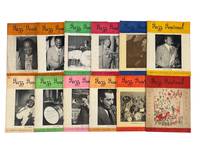
1950Best.-Nr. 223221950. Complete 1950 run of Jazz Journal Vol. 3 Nos. 1-12. London: L. M. Publications 1950. Complete run of the 1950 volume. Twelve issues with each issue around 20 pages. Black-and-white photo illustrations throughout. Printed paper wraps. Founded in 1948 by editor Sinclair Traill Jazz Journal became a critical platform for serious jazz criticism in Britain at a time when the country began appreciating the impact of African American musical innovation. This volume features twelve monthly issues each spotlighting legendary musicians in deeply reverent portraits: Louis Armstrong Baby Dodds Coleman Hawkins Fats Waller Earl Hines and others. The December cover has a Christmas theme. This archive is a window into Britain's postwar jazz awakening. The articles range from retrospectives to musicology and artist discographies. Floyd Levin's "The American Jazz Scene" captures the transatlantic tone of the journal mourning the death of Buster Wilson and lauding figures like Sidney Anderson and Kid Ory as vanguards of "authentic" jazz-framed as endangered in a postwar America increasingly seduced by commercialism. Meanwhile Derrick Stewart-Baxter's "Preachin' the Blues" traces rural-to-urban migration patterns in blues development analyzing Sleepy John Estes' discography and folk influences. The December issue features a full-page bibliophilic essay "A Case for Books" reviewing A Treasury of the Blues by W. C. Handy whom it names "the composer of the classic Memphis Blues and Joe Turner Blues" emphasizing the book's role in preserving "the true and historical survey of the blues." Taken together the essays discographies and image curation construct a coherent theory of jazz not only as music but as cultural heritage. Moderate and consistent soiling and creasing to wrappers; binding intact but some covers remain delicate. Occasional chipping at spine. Covers remain vivid with strong photographic contrasts. Overall good condition. A complete year's run of one of the earliest and most influential British jazz journals with signatures from leading musicians of the era such as Armstrong Dodds and Hawkins. unknown books
1988Best.-Nr. 223411988. Baim Tracy ed. Outlines: The Voice of the Gay and Lesbian Community archive 1988 to 1992 documents Chicago LGBTQ journalism during the AIDS crisis the expansion of queer community media and the intensification of legal cultural and political struggles over gay and lesbian public life. Tracy Baim co-founded Outlines in 1987 after co-founding Windy City Times in 1985 and contemporary accounts describe Outlines as part of a competitive and consequential Chicago LGBTQ newspaper environment that helped record local and national movement history. These issues show the cultural sphere of LGBTQ community journalism through interviews protest photography AIDS coverage lesbian conference reporting arts criticism legislative updates and international news offering insight into how queer periodicals connected Chicago readers to national politics women's culture legal advocacy and media representation. Outlines: The Voice of the Gay and Lesbian Community. Chicago: Lambda Publications 1988 to 1992. Five issues. Archive of five issues from Vol. 2 Nos. 4 and 7; Vol. 4 No. 12; and Vol. 5 Nos. 6 and 8 with visible contents including feature interviews community news protest reporting arts coverage AIDS-related material legal updates and national and international LGBTQ news. 1 Baim Tracy ed. Outlines: The Voice of the Gay and Lesbian Community. Vol. 2 No. 4. Chicago: Lambda Publications 1988. The September 1988 issue carries the headline "Michigan Fest" and centers a report on the Michigan Womyn's Music Festival with additional coverage of an AIDS benefit hosted by Circus Vargas Lily Tomlin and Robin Tyler performances activism against a state AIDS bill protest at the Republican National Convention and a profile of author John Rechy. The issue is especially useful for documenting lesbian cultural space AIDS-era benefit work electoral protest and queer literary visibility within one Chicago-based periodical. 2 Baim Tracy ed. Outlines: The Voice of the Gay and Lesbian Community. Vol. 2 No. 7. Chicago: Lambda Publications 1988. The December 1988 issue features "Torch Song Trilogy-An Interview with Harvey Fierstein" and includes coverage of gay and lesbian choruses queer bookstores LGBTQ representation at Carnegie Hall holiday community programming and World AIDS Day reflections. Its contents place queer performance memorial practice and community institutions within the same field of coverage. 3 Baim Tracy ed. Outlines: The Voice of the Gay and Lesbian Community. Vol. 4 No. 12. Chicago: Lambda Publications 1991. The May 1991 issue headed "3000 at Lesbian Confab" covers a major gathering of lesbian leaders includes an interview with Christie Hefner reports on plans for a Chicago LGBTQ community center and includes global LGBTQ coverage state legislative updates and a section for Asian American Heritage Month. The issue documents lesbian organizing community infrastructure international attention and race-conscious editorial programming. 4 Baim Tracy ed. Outlines: The Voice of the Gay and Lesbian Community. Vol. 5 No. 6. Chicago: Lambda Publications 1991. The November 1991 issue uses the cover title "Victims No More" and documents protests against Cracker Barrel's anti-gay hiring practices and California's veto of gay-rights legislation with a cover image of queer activists confronting authority. Contents include "Dykes Take the Capitol" visuals an interview with Lily Tomlin and legal coverage of Chicago Police Department accountability rulings and internal discipline decisions in a gay case placing street protest lesbian direct action celebrity interview and police accountability in direct relation. 5 Baim Tracy ed. Outlines: The Voice of the Gay and Lesbian Community. Vol. 5 No. 8. Chicago: Lambda Publications 1992. The January 1992 issue headed "World Review: Victories and Setbacks Marked a Momentous 1991" includes coverage of the Thompson/Kowalski guardianship victory international LGBTQ repression including Russia setbacks for LGBTQ political appointments in Chicago Gloria Steinem's Revolution from Within interviews with Dick Sargent and Joe Keenan and legal action against Cracker Barrel. The retrospective format shows how Outlines framed a single year through law family recognition international repression feminism popular culture and workplace discrimination. Mild handling wear age toning to newsprint and creasing consistent with circulation and storage very good overall. Concentrated AIDS-era and early 1990s LGBTQ press archive preserving Chicago-based coverage of lesbian organizing queer cultural production legal rights struggles anti-discrimination protest police accountability and national and international movement news. unknown books
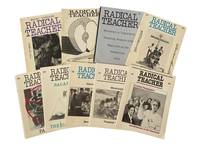
1981Best.-Nr. 223841981. SocialismLaborFeminismEducation Nine-issue archive of Radical Teacher a socialist and feminist journal devoted to theory and practice in education spanning the 1980s and early 90s. These issues capture a generation of leftist educators and scholars responding to U.S. imperialism apartheid racism sexism and structural inequality through pedagogical critique. The archive foregrounds writing by and about women and people of color particularly Black feminist educators women's studies pioneers and anti-racist activists in academia. Contributors include Sharon Dean Erlene Stetson Sara Freedman Cynthia Kinnard and Becky Thompson among others .Archive includes: 1 Radical Teacher No. 18 Spring 1981. Focuses on feminist teaching and women's studies. Opens with "Flower-Dust and Springtime: Harlem Renaissance Women" by Sharon Dean and Erlene Stetson-a rare educational examination of Zora Neale Hurston Georgia Douglas Johnson and other Black women writers. Essays include feminist teaching guides course design and critical reflections on pedagogy by and for women. Contributors include Nancy Schniedewind Cynthia Kinnard Berenice Fisher and Jean Robinson. Light edgewear. 2 Radical Teacher No. 21 1982. Issue theme: anti-imperialism and critical pedagogy. Features teaching on Nicaragua and essays on apartheid women college students and the return of the draft. Of special note is Renate Duelli-Klein's "Women College Students and Feminism" an intersectional analysis of women's shifting relationship to institutional politics. Also includes coverage of South African resistance and PACE Progressive Adult and Continuing Education. Moderate edge wear else clean. 3 Radical Teacher No. 32 Spring 1987. A cluster on women and labor in socialist Eastern Europe including "Education in Yugoslavia" and Madonne Miner's "Another Women's Play Doesn't That Make Like Number 6"-a critique of the marginalization of women's theatrical texts in English curricula. Also includes discussions of Simone de Beauvoir Fred Ho and Croom Helm and Cold War pedagogy. Light wear very good. 4 Radical Teacher No. 35 Summer 1988. Theme: Christianity and education. Articles examine radical Christianity teaching religion critically and confronting fundamentalism in schools. Notable contributions include Kathleen Sands on religion in the university and Caroline Zinsser on biblical literalism. While not a themed feminist issue several authors critique patriarchy in religious education. Minor corner crease. 5 Radical Teacher No. 36 1989. Family and education theme. Articles include Sara Freedman's "To Love and to Work" on the double burden of women teachers and mothers and Ynestra King's "Family Secrets" on teaching domestic violence. The issue challenges traditional conceptions of the nuclear family through a feminist lens. Excellent feminist scholarship by and about women. Light wear to spine. 6 Radical Teacher No. 37 1989. Theme: balancing the curriculum. Focuses on race gender and class integration in U.S. syllabi. Includes a collective essay by Marie Buncombe and Dorothy O. Helly on curriculum transformation and a review of Women Teaching for Change. Particularly rich in content on BIPOC authors and inclusive pedagogy. Near fine. 7 Radical Teacher No. 38 1990. Special issue on Mississippi Freedom Schools. Includes Charles Cobb Liz Fusco and Jimmy Garrett on education in the 1964 Freedom Summer with facsimiles of original curricula and poetry. Features Susan O'Malley's tribute to Myles Horton. An essential issue for those studying African American education SNCC pedagogy and movement schooling. Excellent condition. 8 Radical Teacher No. 40 1991. Issue on education and revolution. Focuses on Nicaragua Cuba Palestine and apartheid-era South Africa. Judy Brady's "Why Do Cuban Children Learn" and Ellen Fleischmann's "Education in the West Bank" are standout articles. Centers anti-imperialist and decolonial education frameworks. Light wear to fore-edge. 9 Radical Teacher No. 41 1992. Feminist Pedagogies and Difference in the Classroom. A landmark issue featuring Becky Thompson and Signe Disch on anti-oppression teaching Sarah Napier on elementary-level women's studies and Ruth Hsiao's guide to teaching Asian American literature. Noteworthy for its intersectional focus and diverse author pool including multiple women of color educators. Near fine. Overall condition very good with light handling wear and some edge toning. A rich pedagogical archive documenting the intersections of feminism socialism anti-racism and education in late 20th-century activist scholarship. unknown books
1966Best.-Nr. 214071966. Counterculture Archive of five issues of The Realist the groundbreaking satirical and political magazine founded by Paul Krassner. Known for its radical leftist stance and boundary-pushing commentary The Realist was a critical voice in the countercultural movements of the 1960s blending investigative journalism with dark humor and unflinching critiques of American politics war race relations and the establishment. With contributions from figures such as Robert Anton Wilson Abbie Hoffman and Timothy Leary the publication played a significant role in shaping the political satire of the New Left. Archive includes: 1 The Realist. Issue No. 64 February 1966. Features a striking illustrated cover satirizing American apathy with references to the infamous Kitty Genovese murder the Ku Klux Klan and the House Un-American Activities Committee HUAC. Inside Krassner and his contributors skewer the failures of American justice and political hypocrisy with their signature blend of absurdity and biting critique. This issue exemplifies The Realist's approach to humor as a vehicle for exposing societal failures particularly in race relations and government repression. 2 The Realist. Issue No. 65 March 1966. Includes Robert Anton Wilson's The Fatal Snowball Fight on Cumberland Avenue a darkly humorous piece that examines law enforcement's overreaction to a student snowball fight in Knoxville Tennessee. The article serves as a microcosm of broader societal tensions highlighting the growing rift between youth counterculture and the authoritarian establishment. Other articles in this issue continue The Realist's sharp critiques of the Vietnam War police violence and political paranoia. 3 The Realist. Issue No. 69 September 1966. features one of the magazine's most notable pieces An Impolite Interview with Timothy Leary in which the controversial LSD advocate discusses drug policy consciousness expansion and the First Amendment. This issue also includes The Day the Supreme Court Banned Vaseline a satirical jab at America's obscenity laws and the broader censorship debate as well as Modest Proposals: The Whitey Survival Manual which critiques racial politics in a manner characteristic of The Realist's provocative and often incendiary approach. The cover's headline Lyndon Johnson Loves Nervous Nellie reflects the magazine's ongoing lampooning of the Johnson administration's political anxieties. 4 The Realist. Issue No. 71 November 1966. Provides a prescient discussion of Hollywood's role in politics with the article Remember Next Tuesday: Get Tufts! which speculates on Ronald Reagan's political rise following his election as Governor of California. The cover features a photograph of Reagan highlighting The Realist's scrutiny of the merging of celebrity and political power-a theme that would become increasingly relevant in decades to come. 5 The Realist. Issue No. 72 December 1966. Robert Anton Wilson's The Cybernetic Revolution anticipates the impact of automation and artificial intelligence on society reflecting the counterculture's growing fascination with technology as both a tool of liberation and oppression. Renfreu Neff's Automation and Aberration explores the evolution of sexual mores arguing that traditional notions of deviance and perversion are becoming obsolete in the face of modernity. The issue like many from The Realist blurs the line between genuine inquiry and satirical exaggeration making it both thought-provoking and deeply irreverent. During the 1960s The Realist served as a crucial alternative press outlet for leftist anarchist and countercultural thought. At a time when mainstream media was constrained by Cold War conservatism and corporate control Krassner's magazine became a hub for irreverent unfiltered political satire. The publication targeted institutions such as the military-industrial complex religious orthodoxy and government censorship while also providing a platform for psychedelic culture civil rights and radical activism. All issues are in newsprint format with varying degrees of age toning and edge wear typical of publications of this period. Overall very good condition. An important collection from one of the defining underground publications of the 20th century. unknown books
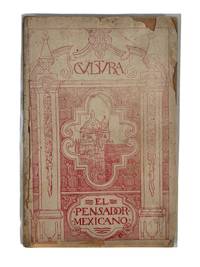
1918Best.-Nr. 216641918. González Obregón Luis. El Pensador Mexicano: Diálogos sobre cosas de su tiempo sacados del olvido 1918 returns José Joaquín Fernández de Lizardi's reformist literary persona to circulation during the post-revolutionary reconstruction of Mexican historical memory. González Obregón a historian and chronicler of Mexico City selected and presented dialogues associated with "El Pensador Mexicano" Lizardi's influential pseudonym using early republican and nineteenth-century commentary to address national identity civic criticism and cultural inheritance. The issue belongs to Mexican literary-historical culture illustrating how post-revolutionary editors used earlier political writing to recover models of social critique and public intellectual life. González Obregón Luis. El Pensador Mexicano: Diálogos sobre cosas de su tiempo sacados del olvido. México: Cultura 1918. First edition. T. VI Núm. 6. Portada de Valerio Prieto. 78 pages and one leaf. Original printed wrappers with red architectural cover design incorporating Mexico City's Metropolitan Cathedral 8vo. Bibliographic records identify the work as part of the Cultura series and note Valerio Prieto's cover while Stanford records the imprint as México: Typ. Murguía 1918. The wrappers' cathedral imagery links the publication visually to Mexico City's colonial and national past while the text's title "sacados del olvido" states its recovery project directly. Published in 1918 during the unsettled years following the Mexican Revolution and the 1917 Constitution the issue participates in a broader effort to define Mexican civic culture through historical recovery rather than through contemporary polemic alone. González Obregón's treatment of Lizardi places journalism dialogue and moral criticism within a lineage of Mexican public letters useful for studying post-revolutionary literary nationalism and the preservation of nineteenth-century intellectual traditions. Covers heavily worn with edge chipping significant loss to upper right and lower margins and spine creasing; interior pages browned but intact with foxing and minor corner wear; good. A fragile Cultura-series issue connecting post-revolutionary Mexican historical consciousness with the legacy of Lizardi's public criticism. unknown books
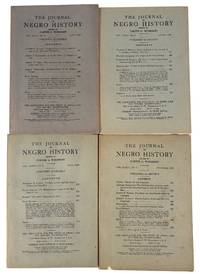
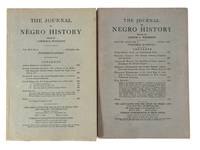
1942Best.-Nr. 217921942. Woodson Carter Godwin. The Journal of Negro History. 1942-1949. Foundational issues of the journal established by Carter G. Woodson documenting the institutionalization of Black historical scholarship in the United States and advancing early academic study of African American military service political rights and diaspora culture. Issued by the Association for the Study of Negro Life and History which Woodson co-founded in 1915 these volumes situate Black experience within national and Atlantic frameworks including Revolutionary War service Reconstruction governance and twentieth-century military participation. The selection highlights how mid-century scholars constructed a documentary record of African American life in direct response to exclusion from mainstream historiography with particular emphasis on suffrage labor naval service and racial legislation. Woodson Carter Godwin ed. The Journal of Negro History. Washington D.C.: Association for the Study of Negro Life and History 1942 1947 1949. Four issues. 1 Jackson Luther P. "Virginia Negro Soldiers and Seamen in the American Revolution." The Journal of Negro History. Vol. XXVII No. 3. Washington D.C.: ASNLH 1942. Establishes early documentation of African American military participation in the Revolutionary War. Additional contents include Frank J. Klingberg's study of Jamaican legislation 1837 Ronald V. Sires's analysis of the Jamaica Slave Insurrection Loan 1832-1863 and Harold Courlander's "Profane Songs of the Haitian People" presenting vernacular cultural material from Haiti. 2 Wesley Charles H. "Negro Suffrage in the Period of Constitution-Making 1787-1865." The Journal of Negro History. Vol. XXXII No. 2. Washington D.C.: ASNLH 1947. Examines the development of Black political rights before the Civil War. Herbert Aptheker's "The Negro in the Union Navy" and Lawrence D. Reddick's "The Negro in the United States Navy during World War II" connect nineteenth-century and contemporary military service while Mercer Cook's essay surveys modern Haitian literature. 3 Lofton Williston H. "Northern Labor and the Negro during the Civil War." The Journal of Negro History. Vol. XXXIV No. 3. Washington D.C.: ASNLH 1949. Traces relationships between African American workers and Northern labor movements. Sidney Kaplan's "The Miscegenation Issue in the Election of 1864" analyzes race in wartime political discourse and Morris U. Schappes reprints Ernestine L. Rose's address on West Indian emancipation preserving a nineteenth-century abolitionist voice. 4 Bernstein Leonard. "The Participation of Negro Delegates in the Constitutional Convention of 1868 in North Carolina." The Journal of Negro History. Vol. XXXIV No. 4. Washington D.C.: ASNLH 1949. Documents Black political participation in Reconstruction governance. Additional contributions include Joseph H. Taylor on disfranchisement in Alabama Jessie P. Guzman on Monroe Nathan Work's scholarly contributions and a reprinted 1774 letter by Phillis Wheatley identified by Benjamin Quarles. These issues were published during World War II and the early Cold War when African American military service abroad and civil rights struggles at home intensified scholarly and political attention to Black history. Articles on the Union Navy and World War II naval service align with wartime debates over segregation and citizenship while studies of suffrage Reconstruction conventions and disfranchisement reflect renewed examination of constitutional rights in the context of emerging civil rights activism. Four issues in publisher's printed wrappers each approximately 108 to 118 pages. Light wear occasional foxing and minor soiling to wrappers; overall very good to near fine. A cohesive grouping illustrating how Black historians and intellectuals built an evidentiary foundation for African American history as a formal academic discipline in the mid twentieth century. unknown books
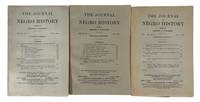
1924Best.-Nr. 217871924. Woodson Carter Godwin. The Journal of Negro History. Archive of three landmark issues published between 1924 and 1928 documenting the institutional development of African American historical scholarship during the early twentieth century. The material records Black intellectual production historical recovery and scholarly publishing through the Association for the Study of Negro Life and History founded by Carter G. Woodson and Jesse E. Moorland in 1915. These issues include Black scholarship challenging white supremacist interpretations of Reconstruction slavery labor and African diasporic history through archival research and independent academic publication. The journal served as one of the central vehicles through which African American historians established scholarly networks disseminated original research and institutionalized the study of Black history within American intellectual life. The archive provides primary-source evidence for the emergence of modern African American historiography and the scholarly movement that later gave rise to Negro History Week and Black History Month. Woodson Carter Godwin ed. The Journal of Negro History. Lancaster PA and Washington D.C.: The Association for the Study of Negro Life and History 1924 1926 and 1928. Three issues in publisher's printed wrappers comprising Vol. IX No. 3 July 1924; Vol. XI No. 3 July 1926; and Vol. XIII No. 3 July 1928. Each issue measures approximately 10 x 6.5 inches and ranges between 120 and 176 pages. 1 Vol. IX No. 3 July 1924. Devoted primarily to Alrutheus Ambush Taylor's major study "The Negro in South Carolina During the Reconstruction" examining demographic change labor transition religion education and political organization in the post-emancipation South. Written while Taylor served as the first full-time Black researcher employed by Woodson's organization the study foregrounds African American agency during Reconstruction and anticipates interpretive frameworks later expanded by W.E.B. Du Bois in Black Reconstruction. 2 Vol. XI No. 3 July 1926. Continues Taylor's Reconstruction scholarship with "The Negro in the Reconstruction of Virginia" detailing Black political participation church organization disenfranchisement campaigns and the reestablishment of white political control in Virginia after Reconstruction. The article constitutes one of the earliest extended scholarly treatments of Black Reconstruction politics in the state. 3 Vol. XIII No. 3 July 1928. Broadens the journal's scope beyond the Reconstruction South through studies including N. Andrew N. Cleven's "The First Panama Mission and the Congress of the United States" W. Sherman Savage's early survey "The Negro in the History of the Pacific Northwest" and Jean Trapp's "The Liverpool Movement for the Abolition of the English Slave Trade." The issue additionally includes Ruth A. Fisher's extensive 109-page documentary compilation "Extracts from the Records of the African Companies" reproducing archival material relating to British commercial participation in the transatlantic slave trade. These issues record the emergence of African American historical scholarship as an organized intellectual discipline during a period when Black historians faced systematic exclusion from mainstream academic institutions and publishing networks. The journal's sustained attention to Reconstruction history preceded revisionist scholarship that later transformed the field with early interpretations centered on Black political participation labor and institutional development rather than Lost Cause narratives dominant in white historiography of the era. Studies on the Pacific Northwest Panama and British antislavery movements extend the journal's diasporic approach to Black history beyond the American South. Minor edgewear and faint toning to wrappers; overall very good condition. An archive of foundational African American historical scholarship and one of the central publishing achievements of twentieth-century Black intellectual life. unknown books
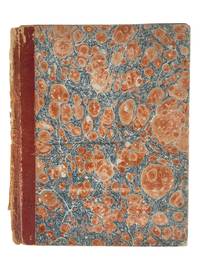
1851Best.-Nr. 218121851. Science Medicine & TechnologyMilitary & WarLabor Environment & Welfare Manuscript industrial journal documenting the British lead shot industry patent culture and metallurgical manufacturing during the height of the Victorian industrial economy. Primarily England and Wales 1851-1853. Approximately 50 pages written in ink in a highly legible hand bound in an octavo-format notebook measuring 8 x 6.5 inches. Quarter red leather over marbled boards. Ownership inscription to front endpaper: "John R. Tracy / Nov 1852." An unusually detailed firsthand record of mid-19th-century industrial innovation centered on the manufacture of lead shot at a moment when Britain's expanding military infrastructure mining economy and heavy industry were increasingly dependent on large-scale metallurgical production. Compiled by John R. Tracy the manuscript documents the development and attempted commercialization of what he repeatedly identifies as a "Shot Patent" likely an improvement to the production or grading of lead shot associated with the traditional shot tower process. Rather than functioning merely as a technical notebook the volume captures the broader industrial system surrounding invention in Victorian Britain: factory inspections patent negotiations industrial espionage concerns business networking licensing discussions and the competitive culture of ironmasters and lead manufacturers operating across England and Wales. The manuscript opens in October 1852 and proceeds through a sequence of dated entries recording Tracy's travel and meetings with manufacturers engineers and industrial firms. These entries reveal the practical realities of introducing a new industrial process into Britain's established lead trade where manufacturers guarded technical methods closely and approached outside inventors with skepticism. On October 26 Tracy records receiving "letters of introduction to Messrs. A. B. Brown & Green" and to "Platt Bros." illustrating the importance of personal industrial networks and recommendation systems within Victorian manufacturing culture. Another entry dated November 5 describes a meeting arranged through "Mr. Maxwell of Messrs. Norton Theakers" followed by Tracy's note of "Much of 'shot etc.'-a rather funny conversation but on the whole. appointment for tomorrow @ 10 1/2" capturing the uncertain and often informal negotiations surrounding industrial patents. Particularly revealing is Tracy's November 6 account of visiting the Flintshire lead smelting firm Newton Keates & Co. where he describes the guarded and competitive atmosphere surrounding lead shot production. Tracy recounts that permission to inspect the works was "at-first-refused in rather a John Bullish manner" before eventually being granted under supervision. He writes perceptively about the mixture of suspicion and curiosity that surrounded industrial patents noting that the proprietor "wished to know the price upon the Patent" but that he deliberately withheld a valuation because "there was no use to let him have the bait to look at before he was hungry enough to bite." The language throughout reveals how industrial innovation in this period depended not simply on invention itself but on strategic secrecy negotiation and control over proprietary manufacturing knowledge. One of the manuscript's most important sections is a full-page listing titled "Lead Works in the United Kingdom in 1852" identifying more than two dozen lead works and manufacturers across Britain. Firms including Walker Parker & Co. Newton Keates & Co. and Richmond Anchor Co. are listed alongside annotations describing their production specialties including "sheet" "pipes" "shot" "white lead" and "pig." The page functions as a rare industrial survey of Britain's lead industry during a period of rapid military and industrial expansion documenting the interconnected infrastructure supporting ammunition production construction materials piping paint manufacture and metallurgical processing. Later entries contain detailed observations of shot-manufacturing equipment at a Chester lead works including descriptions of shot towers ranging from 76 to 96 feet in height and the use of perforated metal grading systems to regulate molten lead as it fell into spherical form. Tracy records the operation with notable technical specificity: "The shot are dropped through a perforated metal-the holes being smaller at the upper end and increasing in size as you get to the lower cylinder." Accompanying diagrams depict feed bins drop tubes sieves and sorting mechanisms apparently intended to improve efficiency or shot-size consistency beyond earlier tower methods. Tracy critically evaluates the machinery as well remarking that certain sieve boxes "seem inadequate for the work" and comparing the process economically to that employed by "D. De Roy & Co.'s works." The notebook therefore preserves not merely abstract invention but active industrial analysis and comparative manufacturing study. The manuscript is documenting metallurgy patent culture and military-industrial production in the decades preceding the major arms expansions of the later nineteenth century. Lead shot remained essential not only for hunting and civilian markets but for military supply systems deeply tied to imperial expansion and industrial warfare. Tracy's notebook reveals the increasingly professionalized yet still highly personal world through which industrial technologies circulated in Victorian Britain where factory visits guarded conversations handwritten technical sketches and negotiated introductions formed the practical infrastructure of innovation. Spine mostly perished with binding delicately held together; boards rubbed and worn. Interior exceptionally clean and highly legible throughout. A substantial and unusually revealing manuscript documenting Victorian industrial manufacturing patent strategy and the lead shot trade during a formative period in British industrial history. unknown books
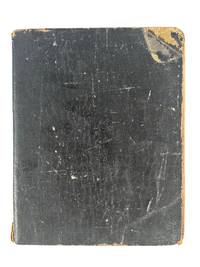
1906Best.-Nr. 218101906. Manuscript medical remedy book from Devonport England compiled between 1903 and 1915 and preserving a striking record of everyday therapeutic practice in the years immediately preceding the global influenza pandemic that would soon devastate Europe. Written in ink in a clear and highly legible hand across 36 pages of a ruled notebook measuring 7.75" x 6.5" the volume gathers dozens of medicinal formulas for ailments ranging from bronchitis neuralgia rheumatism and digestive complaints to deep ulcers eye conditions sore throats winter coughs and childhood illnesses. Particularly notable are repeated entries for "influenza" appearing years before the outbreak retrospectively termed the Spanish Flu revealing how influenza already existed as a familiar and recurring medical threat within Edwardian Britain long before the catastrophic pandemic wave of 1918-1920 transformed it into one of the deadliest public health disasters of the modern era. The notebook therefore captures an important transitional moment in the history of epidemic disease: a period when influenza was treated as a common but serious seasonal illness through localized mixtures tonics expectorants and domestic pharmaceutical preparations rather than through coordinated state medicine or modern antiviral therapies. These entries provide unusually direct evidence of how ordinary practitioners dispensers or caretakers approached influenza treatment in the years immediately before the Spanish Flu pandemic altered both public consciousness and medical infrastructure surrounding contagious respiratory disease. The remedies themselves demonstrate the hybrid world of early twentieth-century medicine where domestic caregiving folk therapeutics and increasingly professionalized pharmacy overlapped. Familiar household substances such as witch hazel and paregoric appear beside pharmaceutical compounds later restricted or abandoned by mid-century medicine. Several preparations include age-specific dosages for children while others focus on strengthening mixtures cough remedies liniments lotions and wound treatments. A handful of entries are dated including one reading "June 29 1903" and another attributed to an individual identified as "A. Wilson." Accompanied by three inserted paper ephemera pieces including an index of herbs and chemicals and two additional recipe slips one bearing a postage stamp from the "Plymouth . Society Dispensing Dept. Fore St. Devonport." The overall character strongly suggests compilation by someone with regular access to a dispensary or chemist environment though not necessarily a formally licensed pharmacist operating instead within the fluid boundary between domestic medical care and industrialized pharmaceutical practice in prewar England. Well rubbed with losses to spine and extremities; interior remains clear and legible with minor foxing. Good overall condition. unknown books
1931Best.-Nr. 217891931. Woodson Carter Godwin. The Journal of Negro History. Archive of two significant issues published in 1931 and 1938 documenting the institutional growth and expanding scholarly scope of African American historiography during the interwar period. The material records Black intellectual production historical scholarship and diasporic research through the editorial and publishing activities of the Association for the Study of Negro Life and History founded by Carter G. Woodson and Jesse E. Moorland in 1915. These issues include scholarship on slavery Reconstruction Black religious institutions international colonial politics abolitionist movements and urban Black life at a time when Black scholarship remained marginalized within predominantly white academic institutions. The journal served as one of the principal vehicles through which Black historians circulated archival research fostered interdisciplinary inquiry and established African American history as a formal academic field. The archive provides primary-source evidence for the maturation of Black historical studies and diasporic intellectual thought in the early twentieth century. Woodson Carter Godwin ed. The Journal of Negro History. Lancaster PA and Washington D.C.: The Association for the Study of Negro Life and History 1931 and 1938. Two issues in publisher's printed wrappers comprising Vol. XVI No. 4 October 1931 and Vol. XXIII No. 2 April 1938. Each issue measures approximately 10 x 6.5 inches and contains 125 and 144 pages respectively. 1 Vol. XVI No. 4 October 1931. Includes Eugene Portlette Southall's "The Attitude of the Methodist Episcopal Church South Toward the Negro from 1844 to 1870" examining racial theology and denominational policy during and after slavery. Rayford W. Logan contributes "The Anglo-Egyptian Sudan a Problem in International Relations" an early analysis of colonial governance and African international politics anticipating his later work in Pan-African and diplomatic studies. Leo H. Hirsch Jr.'s extensive "The Negro and New York 1783 to 1865" surveys slavery free Black life and antislavery politics in New York before the Civil War. The issue concludes with organizational reports and a memorial tribute titled "The Passing of George W. Cook." 2 Vol. XXIII No. 2 April 1938. Opens with Benjamin Quarles's "The Breach Between Douglass and Garrison" reassessing the political and ideological divide between Frederick Douglass and William Lloyd Garrison within abolitionist movements and Black political organizing. Charles H. Wesley contributes "The Abolition of Negro Apprenticeship in the British Empire" situating emancipation and labor reform within broader imperial and diasporic contexts. Anthropologists Hortense Powdermaker and Joseph Semper examine labor and education patterns among African Americans in Connecticut through "Education and Occupation among New Haven Negroes" while Waldemar Westergaard's "A St. Croix Map of 1796" analyzes plantation geography and Caribbean slavery through archival cartographic evidence. The issue additionally contains scholarly reviews in English and French reflecting the journal's international intellectual orientation. These issues record the widening methodological and geographic range of African American scholarship during the interwar years when Black historians connected local histories of slavery and segregation to international questions of empire labor abolition and diasporic identity. The journal's interdisciplinary composition includes historical research anthropology political analysis religious studies and archival geography within a single scholarly forum. Contributions by Rayford Logan Benjamin Quarles Charles H. Wesley and Hortense Powdermaker reflect the emergence of scholars and allied researchers who reshaped twentieth-century understandings of African American and diasporic history. Minor edgewear and faint toning to wrappers with light handling wear; overall very good condition. A pair of interwar issues documenting the consolidation and internationalization of early African American historical scholarship. unknown books
1943Best.-Nr. 217911943. Woodson Carter Godwin. The Journal of Negro History. Archive of three significant issues published between 1943 and 1946 documenting the continued expansion of African American historical scholarship during the Second World War and immediate postwar period. The material records Black intellectual production historical recovery and interdisciplinary scholarship through the editorial and publishing work of the Association for the Study of Negro Life and History founded by Carter G. Woodson and Jesse E. Moorland in 1915. These issues include archival evidence and field research on slavery Black political organization African diasporic identity labor systems and racial discrimination across the United States the Caribbean and Latin America. The journal served as one of the central institutional vehicles through which African American scholars circulated research challenging dominant white historical narratives while building an international framework for Black historical studies. The archive provides primary-source evidence for the maturation of mid-century African American historiography and the broadening geographic scope of Black intellectual inquiry during the 1940s. Woodson Carter Godwin ed. The Journal of Negro History. Washington D.C.: The Association for the Study of Negro Life and History 1943 and 1946. Three issues in publisher's printed wrappers comprising Vol. XXVIII No. 3 July 1943; Vol. XXXI No. 3 July 1946; and Vol. XXXI No. 4 October 1946. Each issue measures approximately 10 x 6.5 inches and ranges between 111 and 137 pages. 1 Vol. XXVIII No. 3 July 1943. Includes Vincent W. Byas' "Ethnologic Aspects of the Martinique Creole" examining Creole identity and cultural formation in the French Caribbean; John Hope Franklin's influential "Slaves Virtually Free in Ante-Bellum North Carolina" reassessing the legal and social complexities of slavery in the Upper South; W. Sherman Savage's "The Contest over Slavery between Illinois and Missouri" addressing sectional political tensions; and Arthur J. Alexander's "Federal Officeholders in New York State as Slaveholders 1789-1805" documenting Northern political participation in slavery. 2 Vol. XXXI No. 3 July 1946. Features Charles W. Cobb Jr.'s "The Outlook Regarding State FEPC Legislation" analyzing anti-discrimination policy and fair employment campaigns during the early civil rights era; Mozell C. Hill's "The All-Negro Communities of Oklahoma: The Natural History of a Social Movement" documenting Black autonomous communities and rural self-governance in Oklahoma; and Gonzalo Aguirre Beltrán's "Tribal Origins of Slaves in Mexico" tracing African ethnic origins and cultural survivals within Mexican slavery and the broader Atlantic world. 3 Vol. XXXI No. 4 October 1946. Opens with the Annual Report of the Director and includes Bernard H. Nelson's "Confederate Slave Impressment Legislation 1861-1865" examining the forced wartime conscription of enslaved labor; Marion J. Russell's "American Slave Discontent in Records of the High Courts" focusing on legal evidence of enslaved resistance; Bella Gross' "The First National Negro Convention" revisiting antebellum Black political organizing; and John A. Schutz and Maud O'Neil's "Arthur Holt Anglican Clergyman Reports on Barbados 1725-1733" documenting Caribbean plantation society through missionary observation. These issues record the international and interdisciplinary character of African American scholarship under Woodson's editorial leadership during the 1940s. Contributors examine Black political organization labor systems diasporic identity formation and legal structures across multiple regions of the Atlantic world. Work by John Hope Franklin Charles W. Cobb Jr. Gonzalo Aguirre Beltrán and other scholars reflects the journal's role in shaping modern African American and African diasporic historiography during the mid-twentieth century. Light edge toning and faint foxing to wrappers with minor handling wear; overall very good to near fine condition. An archive documenting the intellectual development and international reach of Black historical scholarship in the World War II and immediate postwar era. unknown books
1997Best.-Nr. 211481997. Journal of Lesbian Studies published between 1997 and 2000 documents the institutionalization of lesbian studies and queer feminist scholarship within late twentieth-century academic publishing. Founded in 1997 the journal created an interdisciplinary forum examining lesbian history identity sexuality politics health media representation literature labor geography and cultural production while maintaining explicit connections to grassroots lesbian activism and feminist organizing. The publication reflects the expansion of LGBTQ studies within universities during the 1990s and illustrates how lesbian scholars and writers developed dedicated intellectual spaces addressing issues often marginalized within both mainstream academia and broader feminist discourse. Through peer-reviewed essays theoretical debates editorials poetry and reviews the journal provides primary-source evidence for the study of lesbian feminist thought queer theory sexuality studies and the development of LGBTQ academic institutions at the turn of the twenty-first century. Binghamton New York: The Haworth Press 1997-2000. Archive of 16 issues in 13 volumes comprising an unbroken run of the journal's first four years of publication. Published quarterly. 1 Journal of Lesbian Studies. Vol. 1 No. 1. 1997. 145 pages. First issue published following the founding of the journal. Includes Margaret Schneider's "Sappho Was Right-On Adolescent: Growing Up Lesbian." 2 Journal of Lesbian Studies. Vol. 1 No. 2. 1997. 286 pages. Special issue: "Classics in Lesbian Studies Part II" including Lillian Faderman's "Who Hid Lesbian History." 3 Journal of Lesbian Studies. Vol. 1 No. 3/4. 1997. 194 pages. Includes Sheila Jeffreys's "Transgender Activism: A Lesbian Feminist Perspective." 4 Journal of Lesbian Studies. Vol. 2 No. 1. 1998. 110 pages. Special issue: "Gateways to Improving Lesbian Health and Healthcare." 5 Journal of Lesbian Studies. Vol. 2 No. 2/3. 1998. 238 pages. Special issue: "Acts of Passion: Sexuality Gender and Performance." 6 Journal of Lesbian Studies. Vol. 2 No. 4. 1998. 132 pages. Special issue: "Living 'Difference': Lesbian Perspectives on Work and Family Life." 7 Journal of Lesbian Studies. Vol. 3 No. 1/2. 1999. 258 pages. "The Lesbian Polyamory Reader: Open Relationships Non-Monogamy and Casual Sex" edited by Marcia Munson and Judith Stelboum. 8 Journal of Lesbian Studies. Vol. 3 No. 3. 1999. 155 pages. Includes Dawn Atkins's "Lesbian Sex Scandals: Sexual Practices Identities and Politics." 9 Journal of Lesbian Studies. Vol. 3 No. 4. 1999. 161 pages. Special issue: "Lesbians Levis and Lipstick: The Meaning of Beauty in Our Lives." 10 Journal of Lesbian Studies. Vol. 4 No. 1. 2000. 174 pages. Includes Gill Valentine's "From Nowhere to Everywhere: Lesbian Geographies." 11 Journal of Lesbian Studies. Vol. 4 No. 2. 2000. 173 pages. Includes Gabriele Griffin's "'Romancing the Margins': Lesbian Writing in the 1990s." 12 Journal of Lesbian Studies. Vol. 4 No. 3. 2000. 143 pages. Includes Mary Eichbauer's "Imagining a Life: Natalie Clifford Barney." 13 Journal of Lesbian Studies. Vol. 4 No. 4. 2000. 164 pages. Special issue: "Lesbian Self-Writing: The Embodiment of Experience." Published during a formative period in the consolidation of LGBTQ and queer studies within higher education the journal reflects expanding scholarly attention to lesbian identity sexuality race health geography and feminist politics. The breadth of contributors from the United States Canada and Europe demonstrates the increasingly international scope of lesbian scholarship during the late twentieth century while the range of themes addressed across the archive documents major debates within queer theory and lesbian feminist discourse at the time. Minor handling wear throughout. Overall very good condition. Substantial early archive of one of the foundational academic journals dedicated specifically to lesbian studies and queer feminist scholarship. unknown books
1972Best.-Nr. 204591972. LGBTQ Newspaper Gay. Vol. 3 Issue 67. January 10 1972. New York: Four Swords Inc. 20 pages. Measures 11" x 16". Early LGBTQ centered newspaper from New York discussing local events conflicts policy decisions and more affecting the LGBTQ community. This issues lead story discusses "Suburban Stonewall Shakes Long Island" an event from Nov. 19 1972 when Suffolk County Police raided a gay and lesbian bar called Corral bar in Long Island. The raid resulted in several customers being assaulted by police and several arrests all detailed int he article. Also included in this issue are feminist Kate Millett discussing violence in the women's revolution and a centerfold spread on Oscar Wilde. Clarke and Nichols the founders and publishers of the paper were lovers who worked together on this long-running tabloid and several books. Clarke was murdered in Mexico in 1975. The newspaper with stringers across the country and national distribution lasted until executive editors Lige Clarke and Jack Nichols resigned after issue 105. While the publishers planned to continue 105 appears to have been the final issue. Minor wear around edges and newspaper is starting to split at fold. Otherwise in very good condition offering a unique look at the LGBTQ community in New York in the 1970s and the issues they faced. unknown books
1967Best.-Nr. 206701967. African American Education Archive of five issues of The Journal of Negro Education: A Quarterly Review of Problems Incident to the Education of Negroes published by The Howard University Press for the Bureau of Educational Research Washington D.C. between 1967 and 1973. Original printed blue wrappers. Founded in 1932 by educator and psychologist Charles Henry Thompson the first African American to earn a doctorate in educational psychology and later Dean of Howard University's School of Education the journal became one of the most influential scholarly publications devoted to the study of Black education in the United States. Established during the era of Jim Crow segregation and continuing through the Civil Rights and Black Power movements the journal sought to collect and disseminate research on the education of African Americans critically evaluate educational policies and practices and encourage scholarly investigation into issues affecting Black students and communities. By the 1960s and 1970s it had become a leading forum for examining school desegregation educational inequality Black identity poverty higher education and the social consequences of racial discrimination. The archive includes five substantial issues published during a transformative period in American education and race relations: Winter 1967 Vol. XXXVI No. 1. Articles include Some Effects of Deprivation on Intelligence Achievement and Cognitive Growth; Notes on the Education of Negroes in North Carolina During the Civil War; The Negro Undergraduate Student: Factors Relative to Performance in Predominantly White State Colleges and Universities in Tennessee; and Beyond Poverty of Income. Published amid the national debate surrounding the War on Poverty and educational inequality. Spring 1967 Vol. XXXVI No. 2. Features studies on school improvement unemployment emotional development among Black youth and contemporary trends in Black education reflecting growing concern over urban poverty and unequal educational opportunity. Summer 1967 Vol. XXXVI No. 3. The annual Yearbook Number devoted to The Higher Education of Negro Americans: Prospects and Programs. Essays examine graduate education the role of predominantly white institutions in educating Black students educational opportunity and the experiences of Black college students in the South. Issued during a period of rapidly expanding college enrollment and increasing demands for equal access to higher education. Fall 1969 Vol. XXXVIII No. 4. Published in the aftermath of major civil rights legislation and amid widespread school desegregation efforts. Articles analyze academic desegregation interracial attitudes among college students self-concept among Black and white youth in segregated environments and methodological questions surrounding social science research on race. Winter 1973 Vol. XLII No. 1. Reflecting the intellectual climate of the Black Power era this issue includes studies such as Differences Between Black Youth Who Support the Black Panthers and the NAACP; Do Black Studies Make a Difference in Ghetto Children's Achievements and Attitudes; The Children of Immigrants in the Schools; and School Desegregation Socioeconomic Status Sex and the Aspirations of Negro Adolescents. The issue captures scholarly efforts to evaluate the impact of Black Studies programs and evolving forms of Black political and educational activism. Taken together these volumes document some of the most significant debates in twentieth-century African American educational history including segregation and desegregation educational deprivation Black identity formation civil rights Black Power access to higher education and the continuing struggle for educational equality. The contributors represent a generation of educators psychologists sociologists and policy researchers whose work helped shape both academic scholarship and public discussion of race and education in the United States. Light fading to wrappers primarily along spines and edges with minor staining and handling wear. Bindings remain sound and contents clean. Overall very good condition. An important scholarly archive documenting the evolution of Black educational thought during the Civil Rights and Black Power eras. unknown books
1969Best.-Nr. 209301969. Chicano Mexican-American El Grito: A Journal of Contemporary Mexican-American Thought. Berkley: Quinto Sol Publications 1969-1974. Archive of 2 journals. Each have 84 pages. El Grito was published to highlight scholarship and creative work by Mexican Americans from the United States between 1967 and 1974. Included in this archive are; 1 El Grito: a journal of contemporary Mexican-American thought; vol. II #2 Winter 1969. Highlighted articles include "The Historical and Intellectual Presence of Mexican-Americans" "The Negro Movement as an Anti-Revolution" and collected narratives and poetry by Chicano writers; and 2 Chicano Drama El Grito Book Series; Year VII June-August 1974. The introduction begins with a brief summation of Chicano theatre and it's emphasis on Mayan and Aztec mythology. It's contents include five Chicano dramas written by Alurista Carlos Morton and Alfonso C. Hernandez. El Grito was published by Quinto Sol the first fully independent publishing house to surface from the Chicano movement in the 1960s. The name "Quinto Sol" is Spanish for "Fifth Sun" and it refers to the Aztec myth of creation and destruction. El Grito was the first national academic Chicano literary journal ever published in the U.S. The journal whose name is Spanish for "the Shout" was "intended to raise awareness at what we could call a pan-Chicano/a nationalistic level". Considered an intellectual and independent critical space it became a place where Chicano scholars authors and artists could work to debunk the "culture of poverty" and other negative stereotypes attributed to Mexican Americans in the media at the time. The authors published in El Grito drew attention to the biases in academic realms regarding Mexican-Americans and attempted to rectify these blind spots. The texts became an important resource for those wanting to learn about the newly instituted discipline of Chicano Studies. El Grito also published advertisements geared towards high schools and other university departments to stress the importance of Quinto Sol materials in the classroom. Through the journal El Grito Quinto Sol played a pivotal role in the process of institutionalizing Chicano culture as a legitimate field of inquiry. Binding is tight and pages are clean aside from the title pages having some pencil markings. Overall very good condition. unknown books
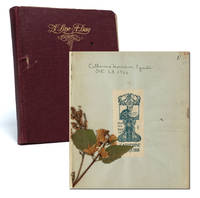
1911Best.-Nr. 6011US Germany 1911. Red cloth over card with gilt to front board. All edges stained read. Measuring 200 x 170mm and containing 186 handwritten pages across five years. Dried flowers and theatre program loosely inserted at front. Ownership signature and bookplate of Catherine Harrison Squibb to front pastedown and endpaper with signature of the same to rear endpaper. A research rich and densely written diary the present would be useful in fields including but not limited to intergenerational wealth and its relationship to emotional abuse women's education and educational travel early 20th century reading habits modern friendship courtship and romance and women's increased mobility and travel. The second daughter of Charles Fellow Squibb himself the second son of pharmaceutical boss Dr. E. R. Squibb Catherine Harrison Squibb was raised in economic privilege. Her earliest years were spent in the Brooklyn townhouse built for her parents by her grandfather while her teen years were split between her father's historic estate of Welwood and her boarding school in Dresden. At Welwood Charles always considered as "the lesser son" according to his E.R.'s journals followed in his father's controlling footsteps by "purchasing polo ponies setting about learning to jump" and "insisting his children do the same.to maintain the lifestyle of the landed gentry" Belcher. This is confirmed in the opening entry of the diary October 25 1906 near Catherine's 16th birthday where she reports "I rode side-saddle with Rosalie in the morning.rode again in the afternoon ist richerverlobt! er est 62 --- alt!!" The numerous rides do not seem to entirely please Catherine as she hides her frustration in the German parenthetical roughly "he is engaged to be a judge! he is 62 years old!!". Three days later on her birthday she spends her time significantly differently clowning with her brother and aunt and "playing tennis in the afternoon." This becomes something of a tradition as her birthday entries report several times "played tennis all afternoon" She also notes her time in French and German lessons -- with German becoming more frequent during and after her time at school in Dresden especially when she wants to obfuscate her thoughts from unwanted readers. If this diary is any indication music and reading travel and school became refuges for Catherine. And she claimed as much time as she could to find independence and develop herself outside of Charles' strict rules. Her reading preferences reflect this desire to immerse herself in Jane Austen's world of social visits and balls where family conflict is eventually smoothed by a woman's exit to a loving partner and home of her own. "Good day!" she writes on April 29 1908 "Stayed in bed all day. I finished Pride & Prejudice and began Emma." This is contrast against her reaction to Charlotte Bronte's work on May 1 of the same year: "Cold & windy. We came in on the 9.30. Aunts at Welwood.had music lesson.I began Jane Eyre. Dismal book!" Her tone and word choice reflect the most happiness in these circumstances whereas riding is reported like a duty -- she may report what time of day and what horse but no expressions of joy accompany them. While the diary concludes in 1911 when Catherine is 21 we know that she would return to Europe from 1917-1919 as a nurse in WWI watching her own country battle her beloved Germany. Within the time her father had sold his birthright in Squibb and with "his extravagant lifestyle eating through his money quickly.he was forced to sell Welwood.not long thereafter he went to France" and never returned to the US Belcher. In 1920 she would marry veteran and shoe manufacturing foreman Raymond Pratt moving with him to Pasadena California and becoming a civic leader. Much deeper work can be done on Catherine's lives and relationships especially considering the current cultural trends of novels films and series depicting both the glamour and the emotional squalor of the 1%. unknown books
1977Best.-Nr. 202351977. Armas José Donaldo Urioste Francisco Lomelí et al. De Colores Journal of Chicano Expression and Thought Vol. 3 No. 4 1977 belongs to the independent Chicano publishing culture that developed alongside the Chicano Movement and created outlets for literature criticism and intellectual debate outside established academic and commercial presses. Published in Albuquerque by Pajarito Publications De Colores brought Chicano writers and critics into direct conversation about the development and interpretation of Chicano literature; writings associated with the journal have subsequently entered scholarship on Chicano literary history and cultural criticism. Armas José Donaldo Urioste Francisco Lomelí et al. De Colores Journal of Chicano Expression and Thought. Vol. 3 No. 4. Albuquerque New Mexico: Pajarito Publications 1977. First edition. Softcover. 85 pages. The journal's editorial and critical circle included figures active in defining an emerging field of Chicano literary studies: Armas served as editor of De Colores while Lomelí and Urioste published criticism on contemporary Chicano writers and literature. The issue preserves Chicano writing and criticism in the periodical form through which much of the field's early intellectual discussion circulated during the 1970s. Published near the end of a decade in which Chicano writers established journals small presses literary anthologies and criticism devoted specifically to Mexican American experience and aesthetics this issue records that work from Albuquerque one of the important Southwestern centers of Chicano publishing. Later scholarship continues to cite De Colores articles in discussions of Chicano literature cultural politics and criticism documenting the journal's participation in the formation of the field. Minor shelf wear with some interior annotations. Overall very good condition. A 1977 issue preserving Chicano literary and critical discourse through an independent Albuquerque press. unknown books
1911Best.-Nr. 178781911. The Trained Nurse and Hospital Review June 1911 documents the professional education clinical techniques and hospital administration concerns confronting American nurses during the expansion of hospital-based nurse training in the early twentieth century. Articles address injection techniques nursing programs and hospital security and administration placing practical bedside instruction beside discussion of the institutions in which nurses trained and worked. The issue dates from a period when hospital training schools played a dominant role in American nursing education and student nurses supplied much of the routine nursing labor within those institutions conditions that generated continuing debate over the balance between clinical service and formal instruction. The Trained Nurse and Hospital Review. New York: Lakeside Publishing Company June 1911. Approximately 10 x 6.75 inches. 408 pages. Articles cover injection procedures reviews of nursing programs and hospital administrative and security concerns. Advertisements at the front and rear promote medical uniforms equipment fashion and household goods preserving the commercial material presented to the journal's predominantly nursing readership alongside its professional content. The combination of technical articles institutional reporting and advertising records the expanding professional culture surrounding trained nursing and hospital work in the Progressive Era. The issue appeared while American nursing education was increasingly centered in hospital-operated training schools where students received extensive practical experience but were also relied upon for institutional labor. Its discussions of technique training and hospital management provide contemporary evidence of how nursing knowledge was communicated within that environment rather than through later accounts of professionalization. Page 333 is cut vertically with approximately half the page lacking. Some tearing at the stapled spine and light sunning to the cover not obscuring the bold title lettering. Overall good condition. unknown books
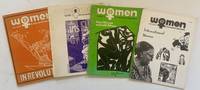
1970Best.-Nr. 178751970. Women: A Journal of Liberation 1970 to 1975 documenting feminist cultural expression and ideological debate within the Women's Liberation Movement during the early second wave period. The material reflects feminist print culture illustrating themes of gender roles domestic life labor sexuality and global political struggle and offering insight into how activists writers and artists articulated women's experiences and demands for social transformation. It supports research into feminist media intersectional discourse and the evolution of women-centered publishing in the United States. Archive includes: 1 Women: A Journal of Liberation Vol. 1 No. 4. Summer 1970. Baltimore MD: Women: A Journal of Liberation Inc. 1970. This issue's theme is "In Revolution" and its cover bears an image of a shouting woman breaking through chains her chin lifted in determination. On the back wrapper is a photographic collage of feminists and a woman behind bars sweat dripping down her forehead. Articles discuss Vietnam the Russian Revolution Rosa Luxembourg and various current events relating to the women's movement. 2 Women: A Journal of Liberation Vol. 2 No. 1 Fall 1970. Baltimore MD: Women: A Journal of Liberation Inc. 1970. An issue on women in the arts with articles on female authors women in music and film children's literature focused on women female visual artists and women as muse. Cover features a purple print of a woman sitting in a chair and hiding her face from view captioned "model in art class". 3 Women: A Journal of Liberation Vol. 2 No. 2 Winter 1971. Baltimore MD: Women: A Journal of Liberation Inc. 1970. This issue is titled "How We Live and With Whom" and includes articles on family marriage and homelife. Many of these articles explore marital and familial issues affecting women in the 70s including the difficulties of divorce sex education for young girls and alternative lifestyles like communal living. 4 Women: A Journal of Liberation Vol. 3 No. 2 Winter 1972. Baltimore MD: Women: A Journal of Liberation Inc. 1972. Titled "Building a New Culture". An issue exploring the role of women in culture and the impact of popular culture on women including articles on women in music theater and sports as well as women's studies and sociology. Cover features a green print of five women dancing in a circle. 5 Women: A Journal of Liberation Vol. 3 No. 4. Baltimore MD: Women: A Journal of Liberation Inc. 1974. This issue is titled "International Women" and bears cover images of an older woman wearing a bandana and prints of Native women a Black woman and a Vietnamese woman holding artillery in one hand and a baby in another. Articles discuss Vietnam women in the Cuban Revolution Nisei women Chicana culture and various current events relating to the women's movement. 6 Women: A Journal of Liberation Vol. 4 No. 2 Spring 1975. Baltimore MD: Women: A Journal of Liberation Inc. 1975. Titled "The Cost of Living" this is issue centers around the relationship between women and money. Includes articles on women in the workforce welfare living in poverty and women supporting themselves independently. This topic would have been especially relevant in the mid-70s when the Equal Credit Opportunity Act opened up new financial opportunities for women in the US. Six issues spanning 1970 to 1975 each approximately 11 x 8.25 inches. This period coincides with significant developments in U.S. feminist organizing including expanded discourse on workplace equality reproductive rights and financial independence as well as increased attention to global and intersectional perspectives within the movement. The journal's combination of political analysis creative expression and visual design situates it within a broader network of feminist periodicals that shaped activist and intellectual exchange. Light handling wear covers and pages well-preserved with strong color and clarity; overall very good condition. A cohesive and visually distinctive grouping illustrating the breadth of feminist thought and cultural production in the early 1970s. unknown books
1971Best.-Nr. 180891971. Good Times San Francisco: April 9 1971. Volume IV No. 27. Bold cover image shows group of women partially colored by a red star. Larger image above them of woman in pith helmet one hand on hip and the other extending a long barrel pistol with outstretched arm. Stories inside are advertised on front as "George Jackson Murder Alternative Schools Mexican Mushrooms Revolutionary Yoga." 16" x 11" inches. 26 pages. Back page a full spread photograph of George Jackson in red the text below reading "George Jackson Sept 23 1941 - Aug 21 1971." The Good Times Newspaper Collective was the primary underground newspaper of San Francisco throughout the late sixties and early seventies a hub for the anti-war movement the trials of political prisoners like Angela Davis political corruption in the city and shared community information. Its volunteer staff put out the paper until its last issue in 1972. Of the publication one volunteer wrote "We had to fight for the right to sell our papers in the streets.We covered stories from the perspective of the participants dodging clubs as we took notes. The lines were clear and we knew which side we were on." This issue covers the shooting death of George Jackson by prison guards at San Quentin where Jackson was being held. "He died revoluting against a society which had sentenced him to a life in prison for a $70 robbery committed when he was 19 years old. Seven of the 10 years were spent in solitary confinement." The issue also includes information for a women's anti-war march an editorial giving advice about taking legal action against landlords and a piece about the health department's crackdown on non-certified raw milk. A comic called "Fox" follows its protagonist the black activist "Dominique Fox" being framed for a bombing in this issue. Both news source and voice for radical activists this issue of Good Times provides an incisive look at the wide ranging interests opinions concerns and stories circulating within the counterculture movement embodied by San Francisco in the 1960s and 70s. Light foxing along edge of front cover. Very good condition. unknown books
1941Best.-Nr. 173141941. Bureau of Educational Research Howard University Washington DC. The Journal of Negro Education A Quarterly Review of Problems Incident to the Education of Negroes Racial Minorities and the Present International Crisis. July 1941. In original wrappers. 622 pages. Tear on spine toning on covers. Some foxing in interior and some wormholing on blank margin in bottom right of text block but absolutely legible. Fair to good condition. An interesting historical snapshot of world events through a Black lens. unknown books