34 087 résultats
réf. 1528303539.Gpaperback. Good. Access codes and supplements are not guaranteed with used items. May be an ex-library book. paperback
réf. M14359Rare set of 9 articles bound in one volume partly XEROX. E.J. Brill Leiden 1958-1975. First edition. In-8. Later cloth a fine copy. From the library of Egyptologist Charles Cornell Van Siclen III VSX. Language: English. This book ships from the USA shipping costs will be updated accordingly TXR. Relevant subjects: Egypt: Journals Egypt. unknown
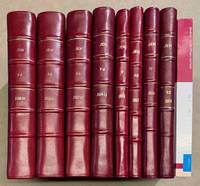
réf. M14377Rare complete set of 13 volumes bound in 9 volumes. E.J. Brill Leiden 2008-2020. First edition. In-8. First 9 volumes in contemporary half-leather last volume #13 in its original softcover. From the library of Egyptologist Charles Cornell Van Siclen III VSX. Language: English. This set ships from the USA shipping costs will be updated accordingly TXR. Relevant subjects: Egypt: Journals Egypt. unknown
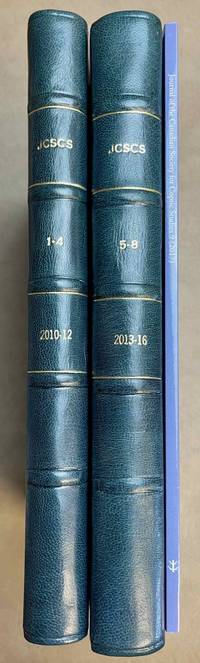
réf. M12722Complete run of 9 issues in 3 volumes. Gorgias Press Piscataway NJ 2010-2017. First edition. Volumes 1-4 and 5-8 bound in half-leather volume 9 in its original softcover. A fine set. From the library of Egyptologist Charles Cornell Van Siclen III VSX. Language: English - French/Français. This set ships from the USA shipping costs will be updated accordingly TXR. Relevant subjects: Egypt: Journals Egypt Coptic Language Texts & Writing Coptic Studies. unknown
réf. 1329839781.Gpaperback. Good. Access codes and supplements are not guaranteed with used items. May be an ex-library book. paperback
1980réf. 83658Lancaster CA: Society of Flight Test Engineers 1980. Presumed First Edition First printing of this issue. Wraps. Very good. Format is approximately 8.5 inches by 11 inches. 344 1 plus covers. Illustrations. References. Table of Contents contains: Flight Certification of the Cessna TU206G Amphibious Floatplane submitted by Robert K. Rice of the Cessna Aircraft Company Regression Analysis Method to Produce Bombing Tables submitted by I. B. Thaleshvar of the Aerospace Engineering Test Establishment Canadian Forces Base Cold Lake and A Computer Program for Aircraft Identification and Derivative Extraction submitted by Richard Hector David Maunder and Eugene Cliff;. The Society of Flight Test Engineers is a fraternity of engineers whose principal professional interest is the flight testing of aerospace vehicles. The Editor Edward N. Bradfield was employed for 35 years as a flight test engineer by the Air Force Flight Test Center Edwards Air Force Base California and later by the Northrop Grumman Corporation. His work included performance/flying qualities testing and systems evaluations on a variety of Air Force Navy and civilian aircraft including the B-l and B-2 bombers B-52G Cruise Missile Carrier F5F KC-135R Tanker C-5A Wing Modification C-130 YC-14 STOL Transport Boeing 737 French Mirage G P-1127 OV-1 A-4 and numerous classified aircraft programs some of which are on display in the Smithsonian Air and Space museum. Flight testing is a branch of aeronautical engineering that develops and gathers data during flight of an aircraft or atmospheric testing of launch vehicles and reusable spacecraft and then analyzes the data to evaluate the integrity and aerodynamic flight characteristics of the vehicle in order to validate the design including safety aspects. The flight test phase accomplishes two major tasks: 1 finding and fixing any design problems and then 2 verifying and documenting the vehicle capabilities for government certification or customer acceptance. The flight test phase can range from the test of a single new system for an existing vehicle to the complete development and certification of a new aircraft launch vehicle or reusable spacecraft. Therefore the duration of a particular flight test program can vary from a few weeks to many years. Military programs differ from commercial in that the government contracts with the aircraft manufacturer to design and build an aircraft to meet specific mission capabilities. These performance requirements are documented to the manufacturer in the aircraft specification and the details of the flight test program among many other program requirements are spelled out in the statement of work. In this case the government is the customer and has a direct stake in the aircraft's ability to perform the mission. Since the government is funding the program it is more involved in the aircraft design and testing from early-on. Often military test pilots and engineers are integrated as part of the manufacturer's flight test team even before first flight. The final phase of the military aircraft flight test is the Operational Test OT. OT is conducted by a government-only test team with the dictate to certify that the aircraft is suitable and effective to carry out the intended mission. Flight testing of military aircraft is often conducted at military flight test facilities. The US Navy tests aircraft at Naval Air Station Patuxent River and the US Air Force at Edwards Air Force Base. The U.S. Air Force Test Pilot School and the U.S. Naval Test Pilot School are the programs designed to teach military test personnel. The make-up of the Flight Test Team will vary with the organization and complexity of the flight test program however there are some key players who are generally part of all flight test organizations. The leader of a flight test team is usually a flight test engineer FTE or possibly an experimental test pilot. Other FTEs or pilots could also be involved. Other team members would be the Flight Test Instrumentation Engineer Instrumentation System Technicians the aircraft maintenance department mechanics electrical techs avionics technicians etc. Quality/Product Assurance Inspectors the ground-based computing/data center personnel plus logistics and administrative support. Engineers from various other disciplines would support the testing of their particular systems and analyze the data acquired for their specialty area. Since many aircraft development programs are sponsored by government military services military or government-employed civilian pilots and engineers are often integrated into the flight test team. The government representatives provide program oversight and review and approve data. Government test pilots may also participate in the actual test flights possibly even on the first/maiden flight. Society of Flight Test Engineers paperback
1980réf. 83661Lancaster CA: Society of Flight Test Engineers 1980. Presumed First Edition First printing of this issue. Wraps. Very good. Format is approximately 8.5 inches by 11 inches. 40 plus covers. Footnote. Formulae Illustrations. References. Table of Contents contains: A Stopping Performance Model for Aircraft with Forward or Reverse Thrust submitted by Lee G. Trlica Air Force Flight Test Center Edwards AFB; Numerical Method for Liquid Water Content Prediction in the Air Force Flight Test Center Icing Spray Cloud submitted by Charles M. Miller Air Force Flight Test Center Edwards AFB; and Numerical Methods for Extracting MIL-F-8785BASG Flying Qualities Parameters from Flight Test Data submitted by Larry E. Warren Grumman Data Systems Corporation. The Society of Flight Test Engineers is a fraternity of engineers whose principal professional interest is the flight testing of aerospace vehicles. The Editor Edward N. Bradfield was employed for 35 years as a flight test engineer by the Air Force Flight Test Center Edwards Air Force Base California and later by the Northrop Grumman Corporation. His work included performance/flying qualities testing and systems evaluations on a variety of Air Force Navy and civilian aircraft including the B-l and B-2 bombers B-52G Cruise Missile Carrier F5F KC-135R Tanker C-5A Wing Modification C-130 YC-14 STOL Transport Boeing 737 French Mirage G P-1127 OV-1 A-4 and numerous classified aircraft programs some of which are on display in the Smithsonian Air and Space museum. Flight testing is a branch of aeronautical engineering that develops and gathers data during flight of an aircraft or atmospheric testing of launch vehicles and reusable spacecraft and then analyzes the data to evaluate the integrity and aerodynamic flight characteristics of the vehicle in order to validate the design including safety aspects. The flight test phase accomplishes two major tasks: 1 finding and fixing any design problems and then 2 verifying and documenting the vehicle capabilities for government certification or customer acceptance. The flight test phase can range from the test of a single new system for an existing vehicle to the complete development and certification of a new aircraft launch vehicle or reusable spacecraft. Therefore the duration of a particular flight test program can vary from a few weeks to many years. Military programs differ from commercial in that the government contracts with the aircraft manufacturer to design and build an aircraft to meet specific mission capabilities. These performance requirements are documented to the manufacturer in the aircraft specification and the details of the flight test program among many other program requirements are spelled out in the statement of work. In this case the government is the customer and has a direct stake in the aircraft's ability to perform the mission. Since the government is funding the program it is more involved in the aircraft design and testing from early-on. Often military test pilots and engineers are integrated as part of the manufacturer's flight test team even before first flight. The final phase of the military aircraft flight test is the Operational Test OT. OT is conducted by a government-only test team with the dictate to certify that the aircraft is suitable and effective to carry out the intended mission. Flight testing of military aircraft is often conducted at military flight test facilities. The US Navy tests aircraft at Naval Air Station Patuxent River and the US Air Force at Edwards Air Force Base. The U.S. Air Force Test Pilot School and the U.S. Naval Test Pilot School are the programs designed to teach military test personnel. The make-up of the Flight Test Team will vary with the organization and complexity of the flight test program however there are some key players who are generally part of all flight test organizations. The leader of a flight test team is usually a flight test engineer FTE or possibly an experimental test pilot. Other FTEs or pilots could also be involved. Other team members would be the Flight Test Instrumentation Engineer Instrumentation System Technicians the aircraft maintenance department mechanics electrical techs avionics technicians etc. Quality/Product Assurance Inspectors the ground-based computing/data center personnel plus logistics and administrative support. Engineers from various other disciplines would support the testing of their particular systems and analyze the data acquired for their specialty area. Since many aircraft development programs are sponsored by government military services military or government-employed civilian pilots and engineers are often integrated into the flight test team. The government representatives provide program oversight and review and approve data. Government test pilots may also participate in the actual test flights possibly even on the first/maiden flight. Society of Flight Test Engineers paperback
1980réf. 83660Lancaster CA: Society of Flight Test Engineers 1980. Presumed First Edition First printing of this issue. Wraps. Very good. Format is approximately 8.5 inches by 11 inches. 36 plus covers. Footnote. Formulae Illustrations. References. Table of Contents contains: Aircraft Motion Analysis Using Limited Flight and Radar Data submitted by R. C. Wingrove NASA-Ames R. E. Bach NASA-Ames and E. K. Parks U. of Arizona Development of a Structural Overload Warning System for Modern High Performance Aircraft submitted by George W. Venorsky McDonnell Aircraft CompanyMeasurement and Correlation of Structural Response to Inlet Hammershock Phenomena on an F-14 Airplane submitted by John Auzins Grumman Aerospace Corporation. The Society of Flight Test Engineers is a fraternity of engineers whose principal professional interest is the flight testing of aerospace vehicles. The Editor Edward N. Bradfield was employed for 35 years as a flight test engineer by the Air Force Flight Test Center Edwards Air Force Base California and later by the Northrop Grumman Corporation. His work included performance/flying qualities testing and systems evaluations on a variety of Air Force Navy and civilian aircraft including the B-l and B-2 bombers B-52G Cruise Missile Carrier F5F KC-135R Tanker C-5A Wing Modification C-130 YC-14 STOL Transport Boeing 737 French Mirage G P-1127 OV-1 A-4 and numerous classified aircraft programs some of which are on display in the Smithsonian Air and Space museum. Flight testing is a branch of aeronautical engineering that develops and gathers data during flight of an aircraft or atmospheric testing of launch vehicles and reusable spacecraft and then analyzes the data to evaluate the integrity and aerodynamic flight characteristics of the vehicle in order to validate the design including safety aspects. The flight test phase accomplishes two major tasks: 1 finding and fixing any design problems and then 2 verifying and documenting the vehicle capabilities for government certification or customer acceptance. The flight test phase can range from the test of a single new system for an existing vehicle to the complete development and certification of a new aircraft launch vehicle or reusable spacecraft. Therefore the duration of a particular flight test program can vary from a few weeks to many years. Military programs differ from commercial in that the government contracts with the aircraft manufacturer to design and build an aircraft to meet specific mission capabilities. These performance requirements are documented to the manufacturer in the aircraft specification and the details of the flight test program among many other program requirements are spelled out in the statement of work. In this case the government is the customer and has a direct stake in the aircraft's ability to perform the mission. Since the government is funding the program it is more involved in the aircraft design and testing from early-on. Often military test pilots and engineers are integrated as part of the manufacturer's flight test team even before first flight. The final phase of the military aircraft flight test is the Operational Test OT. OT is conducted by a government-only test team with the dictate to certify that the aircraft is suitable and effective to carry out the intended mission. Flight testing of military aircraft is often conducted at military flight test facilities. The US Navy tests aircraft at Naval Air Station Patuxent River and the US Air Force at Edwards Air Force Base. The U.S. Air Force Test Pilot School and the U.S. Naval Test Pilot School are the programs designed to teach military test personnel. The make-up of the Flight Test Team will vary with the organization and complexity of the flight test program however there are some key players who are generally part of all flight test organizations. The leader of a flight test team is usually a flight test engineer FTE or possibly an experimental test pilot. Other FTEs or pilots could also be involved. Other team members would be the Flight Test Instrumentation Engineer Instrumentation System Technicians the aircraft maintenance department mechanics electrical techs avionics technicians etc. Quality/Product Assurance Inspectors the ground-based computing/data center personnel plus logistics and administrative support. Engineers from various other disciplines would support the testing of their particular systems and analyze the data acquired for their specialty area. Since many aircraft development programs are sponsored by government military services military or government-employed civilian pilots and engineers are often integrated into the flight test team. The government representatives provide program oversight and review and approve data. Government test pilots may also participate in the actual test flights possibly even on the first/maiden flight. Society of Flight Test Engineers paperback
1981réf. 83664Lancaster CA: Society of Flight Test Engineers 1981. Presumed First Edition First printing of this issue. Wraps. Good. Format is approximately 8.5 inches by 11 inches. 48 plus covers. Footnotes. Formulae Illustrations. References. Cover has some wear and curving. Table of Contents contains: Fuel conservation DC-9 Series 20/30/40 Extracted from the DC Flight Approach July 1979 issue published by Douglas Aircraft Company and Procedures and Analysis Techniques for Determining Static Air Minimum control Speeds submitted by Edward N. Bradfield Flight Test Center Edwards AFB. At the time of publication Bradfield was Chief of the Strategic Projects Branch. This article was extracted from an Office Memorandum authored by Mr. Bradfield. The Society of Flight Test Engineers is a fraternity of engineers whose principal professional interest is the flight testing of aerospace vehicles. The Editor Edward N. Bradfield was employed for 35 years as a flight test engineer by the Air Force Flight Test Center Edwards Air Force Base California and later by the Northrop Grumman Corporation. His work included performance/flying qualities testing and systems evaluations on a variety of Air Force Navy and civilian aircraft including the B-l and B-2 bombers B-52G Cruise Missile Carrier F5F KC-135R Tanker C-5A Wing Modification C-130 YC-14 STOL Transport Boeing 737 French Mirage G P-1127 OV-1 A-4 and numerous classified aircraft programs some of which are on display in the Smithsonian Air and Space museum. Flight testing is a branch of aeronautical engineering that develops and gathers data during flight of an aircraft or atmospheric testing of launch vehicles and reusable spacecraft and then analyzes the data to evaluate the integrity and aerodynamic flight characteristics of the vehicle in order to validate the design including safety aspects. The flight test phase accomplishes two major tasks: 1 finding and fixing any design problems and then 2 verifying and documenting the vehicle capabilities for government certification or customer acceptance. The flight test phase can range from the test of a single new system for an existing vehicle to the complete development and certification of a new aircraft launch vehicle or reusable spacecraft. Therefore the duration of a particular flight test program can vary from a few weeks to many years. Military programs differ from commercial in that the government contracts with the aircraft manufacturer to design and build an aircraft to meet specific mission capabilities. These performance requirements are documented to the manufacturer in the aircraft specification and the details of the flight test program among many other program requirements are spelled out in the statement of work. In this case the government is the customer and has a direct stake in the aircraft's ability to perform the mission. Since the government is funding the program it is more involved in the aircraft design and testing from early-on. Often military test pilots and engineers are integrated as part of the manufacturer's flight test team even before first flight. The final phase of the military aircraft flight test is the Operational Test OT. OT is conducted by a government-only test team with the dictate to certify that the aircraft is suitable and effective to carry out the intended mission. Flight testing of military aircraft is often conducted at military flight test facilities. The US Navy tests aircraft at Naval Air Station Patuxent River and the US Air Force at Edwards Air Force Base. The U.S. Air Force Test Pilot School and the U.S. Naval Test Pilot School are the programs designed to teach military test personnel. The make-up of the Flight Test Team will vary with the organization and complexity of the flight test program however there are some key players who are generally part of all flight test organizations. The leader of a flight test team is usually a flight test engineer FTE or possibly an experimental test pilot. Other FTEs or pilots could also be involved. Other team members would be the Flight Test Instrumentation Engineer Instrumentation System Technicians the aircraft maintenance department mechanics electrical techs avionics technicians etc. Quality/Product Assurance Inspectors the ground-based computing/data center personnel plus logistics and administrative support. Engineers from various other disciplines would support the testing of their particular systems and analyze the data acquired for their specialty area. Since many aircraft development programs are sponsored by government military services military or government-employed civilian pilots and engineers are often integrated into the flight test team. The government representatives provide program oversight and review and approve data. Government test pilots may also participate in the actual test flights possibly even on the first/maiden flight. Society of Flight Test Engineers paperback
1981réf. 83663Lancaster CA: Society of Flight Test Engineers 1981. Presumed First Edition First printing of this issue. Wraps. Good. Format is approximately 8.5 inches by 11 inches. 40 plus covers. Footnotes. Formulae Illustrations. References. Cover has some wear and creasing. Table of Contents contains: Supersonic Aircraft Test Experience: Test Techniques and Data Analysis Methods submitted by Richard Abrams Flight Test Center Edwards AFB and Hydroplaning and Coefficient of Friction in Wet Runway Testing submitted by Richard H. Danhof Flight Test Center Edwards AFB. The Society of Flight Test Engineers is a fraternity of engineers whose principal professional interest is the flight testing of aerospace vehicles. The Editor Edward N. Bradfield was employed for 35 years as a flight test engineer by the Air Force Flight Test Center Edwards Air Force Base California and later by the Northrop Grumman Corporation. His work included performance/flying qualities testing and systems evaluations on a variety of Air Force Navy and civilian aircraft including the B-l and B-2 bombers B-52G Cruise Missile Carrier F5F KC-135R Tanker C-5A Wing Modification C-130 YC-14 STOL Transport Boeing 737 French Mirage G P-1127 OV-1 A-4 and numerous classified aircraft programs some of which are on display in the Smithsonian Air and Space museum. Flight testing is a branch of aeronautical engineering that develops and gathers data during flight of an aircraft or atmospheric testing of launch vehicles and reusable spacecraft and then analyzes the data to evaluate the integrity and aerodynamic flight characteristics of the vehicle in order to validate the design including safety aspects. The flight test phase accomplishes two major tasks: 1 finding and fixing any design problems and then 2 verifying and documenting the vehicle capabilities for government certification or customer acceptance. The flight test phase can range from the test of a single new system for an existing vehicle to the complete development and certification of a new aircraft launch vehicle or reusable spacecraft. Therefore the duration of a particular flight test program can vary from a few weeks to many years. Military programs differ from commercial in that the government contracts with the aircraft manufacturer to design and build an aircraft to meet specific mission capabilities. These performance requirements are documented to the manufacturer in the aircraft specification and the details of the flight test program among many other program requirements are spelled out in the statement of work. In this case the government is the customer and has a direct stake in the aircraft's ability to perform the mission. Since the government is funding the program it is more involved in the aircraft design and testing from early-on. Often military test pilots and engineers are integrated as part of the manufacturer's flight test team even before first flight. The final phase of the military aircraft flight test is the Operational Test OT. OT is conducted by a government-only test team with the dictate to certify that the aircraft is suitable and effective to carry out the intended mission. Flight testing of military aircraft is often conducted at military flight test facilities. The US Navy tests aircraft at Naval Air Station Patuxent River and the US Air Force at Edwards Air Force Base. The U.S. Air Force Test Pilot School and the U.S. Naval Test Pilot School are the programs designed to teach military test personnel. The make-up of the Flight Test Team will vary with the organization and complexity of the flight test program however there are some key players who are generally part of all flight test organizations. The leader of a flight test team is usually a flight test engineer FTE or possibly an experimental test pilot. Other FTEs or pilots could also be involved. Other team members would be the Flight Test Instrumentation Engineer Instrumentation System Technicians the aircraft maintenance department mechanics electrical techs avionics technicians etc. Quality/Product Assurance Inspectors the ground-based computing/data center personnel plus logistics and administrative support. Engineers from various other disciplines would support the testing of their particular systems and analyze the data acquired for their specialty area. Since many aircraft development programs are sponsored by government military services military or government-employed civilian pilots and engineers are often integrated into the flight test team. The government representatives provide program oversight and review and approve data. Government test pilots may also participate in the actual test flights possibly even on the first/maiden flight. Society of Flight Test Engineers paperback
1981réf. 83662Lancaster CA: Society of Flight Test Engineers 1981. Presumed First Edition First printing of this issue. Wraps. Very good. Format is approximately 8.5 inches by 11 inches. 48 plus covers. Footnote. Formulae Illustrations. References. Table of Contents contains: Analytical Methods for Store Separation Flight Test submitted by Vernon Scott Ritchey Flight Test Center Edwards AFB and Airborne Video Instrumentation/Data Reduction submitted by James E. Soller McDonnell Aircraft Company. The Society of Flight Test Engineers is a fraternity of engineers whose principal professional interest is the flight testing of aerospace vehicles. The Editor Edward N. Bradfield was employed for 35 years as a flight test engineer by the Air Force Flight Test Center Edwards Air Force Base California and later by the Northrop Grumman Corporation. His work included performance/flying qualities testing and systems evaluations on a variety of Air Force Navy and civilian aircraft including the B-l and B-2 bombers B-52G Cruise Missile Carrier F5F KC-135R Tanker C-5A Wing Modification C-130 YC-14 STOL Transport Boeing 737 French Mirage G P-1127 OV-1 A-4 and numerous classified aircraft programs some of which are on display in the Smithsonian Air and Space museum. Flight testing is a branch of aeronautical engineering that develops and gathers data during flight of an aircraft or atmospheric testing of launch vehicles and reusable spacecraft and then analyzes the data to evaluate the integrity and aerodynamic flight characteristics of the vehicle in order to validate the design including safety aspects. The flight test phase accomplishes two major tasks: 1 finding and fixing any design problems and then 2 verifying and documenting the vehicle capabilities for government certification or customer acceptance. The flight test phase can range from the test of a single new system for an existing vehicle to the complete development and certification of a new aircraft launch vehicle or reusable spacecraft. Therefore the duration of a particular flight test program can vary from a few weeks to many years. Military programs differ from commercial in that the government contracts with the aircraft manufacturer to design and build an aircraft to meet specific mission capabilities. These performance requirements are documented to the manufacturer in the aircraft specification and the details of the flight test program among many other program requirements are spelled out in the statement of work. In this case the government is the customer and has a direct stake in the aircraft's ability to perform the mission. Since the government is funding the program it is more involved in the aircraft design and testing from early-on. Often military test pilots and engineers are integrated as part of the manufacturer's flight test team even before first flight. The final phase of the military aircraft flight test is the Operational Test OT. OT is conducted by a government-only test team with the dictate to certify that the aircraft is suitable and effective to carry out the intended mission. Flight testing of military aircraft is often conducted at military flight test facilities. The US Navy tests aircraft at Naval Air Station Patuxent River and the US Air Force at Edwards Air Force Base. The U.S. Air Force Test Pilot School and the U.S. Naval Test Pilot School are the programs designed to teach military test personnel. The make-up of the Flight Test Team will vary with the organization and complexity of the flight test program however there are some key players who are generally part of all flight test organizations. The leader of a flight test team is usually a flight test engineer FTE or possibly an experimental test pilot. Other FTEs or pilots could also be involved. Other team members would be the Flight Test Instrumentation Engineer Instrumentation System Technicians the aircraft maintenance department mechanics electrical techs avionics technicians etc. Quality/Product Assurance Inspectors the ground-based computing/data center personnel plus logistics and administrative support. Engineers from various other disciplines would support the testing of their particular systems and analyze the data acquired for their specialty area. Since many aircraft development programs are sponsored by government military services military or government-employed civilian pilots and engineers are often integrated into the flight test team. The government representatives provide program oversight and review and approve data. Government test pilots may also participate in the actual test flights possibly even on the first/maiden flight. Society of Flight Test Engineers paperback
réf. 138725247X.Gpaperback. Good. Access codes and supplements are not guaranteed with used items. May be an ex-library book. paperback
1993réf. 060037Chicago Illinois: University Of Chicago Press 1993. Book. Near Fine. Hardcover. 1st Edition. 8vo - over 7¾ - 9¾" tall. We Have Multiple Bound Sets Of Near Eastern Studies. 4 As New Quarterlies Bound Into One Yearly Volume. This One Is Volume 52 For The Year 1993. They Were Discarded From The A.R.E. Library At The Edgar Cayce Campus In Virginia Beach. The Bindings Are High Quality Library. Brown Linen With White Letters On Spine. There Is A Library Stamp From The Association For Research And Enlightenment A.R.E. Inside Bottom Of Front Board. We Have A Dozen Sets From The 1990'S And A Few Earlier Sets. This Set Covered The Larsa Goldsmith's Hoards Plus An Early Islamic Apocalyptic Plus The Origin And Development Of The Aramaic "Sallit" Clause And Book Reviews. Illustrated . University Of Chicago Press Hardcover
1996réf. 060038Chicago Illinois: University Of Chicago Press 1996. Book. Near Fine. Hardcover. 1st Edition. 8vo - over 7¾ - 9¾" tall. We Have Multiple Bound Sets Of Near Eastern Studies. 4 As New Quarterlies Bound Into One Yearly Volume. This One Is Volume 55 For The Year 1996. They Were Discarded From The A.R.E. Library At The Edgar Cayce Campus In Virginia Beach. The Bindings Are High Quality Library. Brown Linen With White Letters On Spine. There Is A Library Stamp From The Association For Research And Enlightenment A.R.E. Inside The Bottom Of Front Board. We Have A Dozen Sets From The 1990'S And A Few Earlier Sets. This Set Covered The Aegean Bronze Age And The Eruption Of The Volcano On The Cycladic Island Of Thera Plus In Vol 55 No. 2 The Migration Of Amili Scholars To Safavid Iran. And The Shifting Syntax Of Numerals In Biblical Hebrew. Plus Contains In Vol 55 Number 4. The Chronology Of The Senwosret Iii-Amenemhat Iii Royal Succesion. And Of Course Book Reviews. Reviews And Illustrated . University Of Chicago Press Hardcover
réf. 1387888684.Gpaperback. Good. Access codes and supplements are not guaranteed with used items. May be an ex-library book. paperback
réf. 1333870485.Gpaperback. Good. Access codes and supplements are not guaranteed with used items. May be an ex-library book. paperback
réf. 75-9135New York: Journal of Architectural Education 1989. 4to. Soft Cover ca. 70 pp. B&W Plates. Very Good. New York: Journal of Architectural Education, 1989 paperback
1990réf. mon0000024671Meriden-Stinehour Press 1990. Paperback. Very Good. in x in x in. Meriden-Stinehour Press paperback
1987réf. mon0000024677Meriden-Stinehour Press 1987. Paperback. Very Good. in x in x in. Meriden-Stinehour Press paperback
1989réf. mon0000024678Meriden-Stinehour Press 1989. Paperback. Very Good. in x in x in. Meriden-Stinehour Press paperback
1985réf. mon0000024676Meriden-Stinehour Press 1985. Paperback. Good. in x in x in. Small pen marking on top right front cover. Meriden-Stinehour Press paperback
1988réf. mon0000024674Meriden-Stinehour Press 1988. Paperback. Very Good. in x in x in. Meriden-Stinehour Press paperback
1989réf. mon0000024673Meriden-Stinehour Press 1989. Paperback. Very Good. in x in x in. Meriden-Stinehour Press paperback
1907réf. 2111902160200150Japanese Ophthalmological Society 1907. Soft Cover. Fine. Volume: 1 Japanese Ophthalmological Society paperback
réf. 1146584121.Gpaperback. Good. Access codes and supplements are not guaranteed with used items. May be an ex-library book. paperback