SHELLEY, Percy ByssheBiblio.com

9.519 Ergebnisse
Best.-Nr. 63939London: Edward Moxon 1839. FIRST COLLECTED EDITION. 4 vols. 8vo. 16.5 x 10.5 cm. Handsomely bound by Morrell in contemporary straight-grained citron morocco sides ruled with two gilt fillets spines with raised bands and richly gilt-decorated compartments each stamped with central fleuron device complementary red and green morocco labels gilt inner dentelles blue-coated endpapers all edges gilt. Engraved portrait frontispiece in first volume. An excellent set in superb bindings. First collected edition of Shelley's complete poems compiled by his wife Mary. Mary Shelley's collected edition of her husband's poetical works established him finally and irreversibly amongst the great poets of the English language. Pirate editions of Shelley's works had persuaded his father Sir Timothy that all hope of obscurity had passed and Mary was allowed to prepare a proper edition provided she included only a minimal amount of biographical information. "Mary Shelley brought Shelley into the mainstream of the national culture. He was no longer the author of a notorious banned poem Queen Mab only obtainable from shops specializing in blasphemy sedition and advice on birth control. He was the prophet of Prometheus Unbound one of the most ambitious attempts ever made to uplift life by literature and of other works such as the "Ode to the West Wind". The notes that Mary added are masterpieces of editing adding so immeasurably to the reader's understanding that nobody would now consider printing Shelley's poems without them" St Clair p. 492. London: Edward Moxon, 1839. hardcover
1843Best.-Nr. 245808London: Reprinted for Thomas Rodd Great Newport Street Compton & Ritchie Printers Middle Street Cloth Fair 1843. First edition. 16 pp. 1 vols. 8vo. Sewn as issued. In half blue morocco slipcase and chemise. Fine. First edition. 16 pp. 1 vols. 8vo. According to Wise: "In 1843 when advertising the present pamphlet for sale Rodd asserted that it was a facsimile reprint of an alleged original edition of which the author had printed twenty copies in 1816. No example of this mysterious original has ever been unearthed; no trace of it beyond Rodd's own statement has ever been discovered; and no mention of any kind either of its printing or distribution is to be found in the correspondence of Shelley or any of his friends. My own opinion is that no original ever existed that the private impression of twenty copies was a myth and that Rodd's so-called facsimile reprint of 1843 is in fact the actual princeps of the Address." Political essay arguing that the death of Princess Charlotte in childbirth was "a private grief" while the execution of three weavers for high treason in Derbyshire was a national tragedy. "The execution of Brandreth Ludlam and Turner is an event of quite a different character from the death of Princess Charlotte . It is a national calamity that we endure men to rule over us who sanction for whatever ends a conspiracy which is to arrive at its purpose through such a frightful pouring forth of human blood and agony . Liberty is dead!" Uncommon. Ashley V p. 64; Granniss Shelley pp. 43-44; Wise Shelley p. 46 Reprinted for Thomas Rodd, Great Newport Street (Compton & Ritchie, Printers, Middle Street, Cloth Fair) unknown
1843Best.-Nr. 245808London: Reprinted for Thomas Rodd Great Newport Street Compton & Ritchie Printers Middle Street Cloth Fair 1843. First edition. 16 pp. 1 vols. 8vo. Sewn as issued. In half blue morocco slipcase and chemise. Fine. First edition. 16 pp. 1 vols. 8vo. According to Wise: "In 1843 when advertising the present pamphlet for sale Rodd asserted that it was a facsimile reprint of an alleged original edition of which the author had printed twenty copies in 1816. No example of this mysterious original has ever been unearthed; no trace of it beyond Rodd's own statement has ever been discovered; and no mention of any kind either of its printing or distribution is to be found in the correspondence of Shelley or any of his friends. My own opinion is that no original ever existed that the private impression of twenty copies was a myth and that Rodd's so-called facsimile reprint of 1843 is in fact the actual princeps of the Address." Political essay arguing that the death of Princess Charlotte in childbirth was "a private grief" while the execution of three weavers for high treason in Derbyshire was a national tragedy. "The execution of Brandreth Ludlam and Turner is an event of quite a different character from the death of Princess Charlotte . It is a national calamity that we endure men to rule over us who sanction for whatever ends a conspiracy which is to arrive at its purpose through such a frightful pouring forth of human blood and agony . Liberty is dead!" Uncommon. Ashley V p. 64; Granniss Shelley pp. 43-44; Wise Shelley p. 46 Reprinted for Thomas Rodd, Great Newport Street (Compton & Ritchie, Printers, Middle Street, Cloth Fair) unknown books
2005Best.-Nr. SKU0490637Prentice Hall 2005-05-01. Spiral-bound. Good. Textbook May Have Highlights Notes and/or Underlining BOOK ONLYNO ACCESS CODE NO CD Ships with Emailed Tracking Prentice Hall unknown
1835Best.-Nr. 002398New York: Wallis & Newell 1835 1835. FIRST AMERICAN EDITION. 1 vol. 7-11/16" x 4-3/4" 228pp. bound in contemporary original floral grained mauve cloth gilt title to spine. Occasional minor foxing throughout inner and outer hinges fine head and foot of spine rubbed with some minor loss lacking rear blank endleaf bookplate to front pastedown matching ownership signature to front blank endleaf overall still a GOOD copy. Auction records locate only 3 copies EVER appearing at auction. Mary Shelley's most autobiographical work also published under the title of "The Beautiful Widow". "Lodore" follows the fortunes of Cornelia Lord Lodore's estranged wife and his daughter Ethel as they navigate societal expectations and personal struggles after Lodore's death with a focus on the relationships between women and the exploration of gender roles. New York: Wallis & Newell, 1835 hardcover
Best.-Nr. 3269London: Printed for C. and J. Ollier 1818 for 1817. FIRST EDITION of Shelley's longest and most spiritually revolutionary work. xxxii 270 pp. COMPLETE WITH THE DEDICATION LEAF THE FLY-TITLE with a quotation from Pindar in the original Greek AND THE ERRATA LEAF. This copy is from the COLLECTION OF ROBERT HOE the greatest of all American book collectors with his small finely gilt leather bookplate on front pastedown his auction catalogue volume IV part 2 lot 2917. TEXT CORRECTED in accordance with the errata leaf IN A CONTEMPORARY HAND. Printed on fine wove paper. Large 8vo. BEAUTIFULLY BOUND surely for Hoe IN FULL HAVANA MOROCCO HANDSOMELY GILT BY RIVIERE signed. Top edge gilt other edges uncut. Traces of wear to joints else FINE AND BRIGHT. For an interesting account of the publication of this volume see Buxton Forman's Shelley Library pp. 71-87. An outstanding copy of an important book. London: Printed for C. and J. Ollier, 1818 (for 1817) hardcover
Best.-Nr. FORT922810George Routledge and Sons. Used - Acceptable. Published in 1891. Rare binding variant. 12mo. Half-bound in beige cloth. Gilt lettering and decoration on spine. Blue cloth covered boards with white floral pattern. Top edges gilt. George Routledge and Sons hardcover
1931Best.-Nr. 40563New York: Grosset and Dunlap 1931. First Photoplay Edition illustrated with scene from the Universal Film starring Boris Karloff and directed by James Whale at front jacket panel. Uncommon. Almost Near Fine some shadowing at endpapers perhaps from an old jacket protector in Very Good dustjacket some light soiling chips at spine ends and flap corners less than dime sized chip at mid front spine edge. Grosset and Dunlap hardcover
1839Best.-Nr. 187817London: Edward Moxon 1839. Giving the productions of a sublime genius to the world First collected edition attractively bound by Peacock & Mansfield. Mary Shelley's collected edition of her husband's poetical works established him finally and irreversibly amongst the great poets of the English language. Pirated editions of Shelley's works had persuaded his father Sir Timothy that all hope of obscurity had passed and Mary was allowed to prepare a proper edition provided she included only a minimal amount of biographical information. "Mary Shelley brought Shelley into the mainstream of the national culture. He was no longer the author of a notorious banned poem Queen Mab only obtainable from shops specializing in blasphemy sedition and advice on birth control. He was the prophet of Prometheus Unbound one of the most ambitious attempts ever made to uplift life by literature and of other works such as the "Ode to the West Wind". The notes that Mary added are masterpieces of editing adding so immeasurably to the reader's understanding that nobody would now consider printing Shelley's poems without them" St Clair p. 492. 4 vols octavo 161 x 100 mm. Bound without the half-titles. Engraved portrait frontispiece in vol. I. Early 20th-century brown morocco by Peacock & Mansfield spines lettered in gilt compartments and covers ruled and decorated in gilt floral gilt board edges and turn-ins pale yellow endpapers edges gilt green silk bookmarker. Bookplate and ownership inscription of Henry Lloyd Gibbs c.1861-1907 to each vol one dated 1886. Minor soiling and rubbing to leather light foxing to outer leaves. A very good set. Dunbar Shelley Studies 345; Granniss 88; Wise p. 87. William St Clair The Godwins and the Shelleys: The Biography of a Family 1989. hardcover
Best.-Nr. 003235Mornay, 1932
1822Best.-Nr. 005307London: R. Carlile 1822 1822. SECOND EDITION CANCEL ISSUE. 1 vol. 8-9/16" X 5-3/8" 182pp.I title-page tipped onto a stub final leaf containing dedication poem "To Harriet" and the W. Clark's imprint to page 182 Clark's imprint was deliberately scraped away in some copies or covered over see note bound in contemporary 1/4 dark blue calf gilt decorated spine gilt lettered green morocco spine label marbled pastedowns and endpapers. No previous ownership markings inscriptions or bookplate internally clean and bright inner and outer hinges fine head and foot of spine fine A VERY GOOD COPY. The second published edition a reissue of the W. Clark sheets of 1821 by the radical publisher Richard Carlile who would have sympathized with the poem's attacks on dogma and on the state of society. For publishing the 1821 edition the publisher W. Clark was sentenced to four month's imprisonment. Some copies of Clark's edition reproduce the original text others omit the dedication to Harriet. Although Shelley's name appears on the title-page he denied any part in the production. After Clark's imprisonment the remaining sheets then fell into the hands of Carlile who reissued them with a new tipped in title page as in this copy and his imprint pasted over or mutilated not in this copy making this the earliest obtainable edition/issue. London: R. Carlile, 1822 unknown
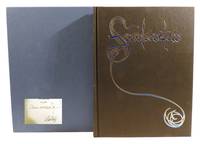
1999Best.-Nr. 336034New York: Dodd Mead & Company 1999. First Edition Thus; First Printing. Hardcover. Illustrated by Berni Wrightson. Near Fine in a Near Fine slipcase.; Numbered 388 of 500 printed copies. Third front end page signed by Berni Wrightson and Stephen King.; 192 pages; Signed by Associated. Dodd, Mead & Company hardcover
1887Best.-Nr. 143591London: Published for the Shelley Society by Reeves and Turner October 1887. True love in this differs from gold or clay / that to divide is not to take away First facsimile edition this one of only three copies printed on vellum and signed by the printers Richard Clay & Sons this from the library of the edition's publisher and editor H. Buxton-Forman President of the Shelley Society with his illustrated bookplate. Epipsychidion the title means "to/for a little soul/Psyche" was Shelley's intense lyrical love poem addressed to the "poor captive bird" Teresa "Emilia" Viviani a beautiful Italian countess of 19 years who was "imprisoned" in St Anna convent while her father sought her a suitable husband. The poem includes his notorious couplet in defence of free love: "True love in this differs from gold or clay / that to divide is not to take away". Octavo. Original blue boards printed paper label to spine. Very light wear at head of spine. A near-fine copy. Granniss 62; Wise p. 59. hardcover
1824Best.-Nr. AQ27586London: Printed for John and Henry L. Hunt 1824. xi 1 415pp. 1. Finely bound in nineteenth-century gilt-tooled red morocco by Maclehose of Glasgow marbled endpapers T.E.G others uncut. Extremities a trifle rubbed slightly marked corners a little bumped. Internally a little spotting to preliminaries else a fine generously margined unpressed copy. 'No man was ever more devoted than he to the endeavour of making those around him happy; no man ever possessed friends more unfeignedly attached to him. The ungrateful world did not feel his loss and the gap it made seemed to close as quickly over his memory as the murderous sea above his living frame. Hereafter men will lament that his transcendent powers of intellect were extinguished before they had bestowed on them their choicest treasures'. A finely bound example of the first edition of a collection of Shelley's verse assembled by his widow - Mary Wollstonecraft Shelley - after his death in Italy aged just 29 and lovingly prefaced by a biographical tribute which reveals much of the poet's nature the context of the composition of many of his works details of the couple's final years whilst Shelley was plagued by 'ill health and continual pain' and the circumstances of his death and burial: 'Rome received his ashes; they are deposited beneath its weed-grown wall and "the world's sole monument" is enriched by his remains'. The contents includes unpublished work gleaned from 'among his manuscript books' such as 'Julian and Maddalo' and 'The Witch of Atlas' translations - including 'The Cyclops from Eurypides' and 'Hymn to Mercury from Homer' - and other pieces either 'scattered in periodical works' or like 'Alastor or the Spirit of Solitude' already difficult to obtain in the 1820s. As William St. Clair notes in The Reading Nation in the Romantic Period 2004 the work was published 'by the help of a guarantee given by three friends of Mary Shelley' Bedddoes Proctor and Kelsall; just 500 copies were printed. Of these 309 copies - priced at 15s - were sold in two months 'but after the intervention of Shelley's father 160 copies in sheets and thirty one in boards were withdrawn and consigned to Sir. T. Shelley for destruction'. Mary Shelley's devotion to her husband's memory and determination to disseminate and republish his works - as demonstrated by this initial volume of Posthumous poems - continued throughout the 1820s and 1830s albeit frequently tempered by the continually disruptive actions of her father-in-law who was almost equally as determined to tie her hands in that regard - with stipulations on allowances for the upbringing of their son Percy Florence. Jackson p. 507. First edition. 8vo. Printed for John and Henry L. Hunt hardcover
1832Best.-Nr. 1751London: Edward Moxon. 1832. First edition. Small octavo. Publisher's original drab paper-covered boards. Page edges untrimmed. Complete with the half-title page and publisher's advertisement leaf at the rear. pp. i-v xxx 47 3. Near-contemporary gift inscription in ink to the front free endpaper "Henry Wright / 1839 / From J. Ellis". A very good copy the binding firm with essentially cosmetic cracking to the joints loss to the paper covering the spine marking to the boards and a little wear to the corners. The contents with light scattered foxing to the endpapers are otherwise wonderfully clean and crisp throughout. An appealing unsophisticated copy. The first edition of one of the greatest poems of political protest in the English language often regarded as the first modern statement of the principle of non-violent resistance. Written in response to the Peterloo Massacre in 1819 Shelley had first sent the manuscript for publication in the radical journal The Examiner. Its editor Leigh Hunt however withheld it from publication as he "thought that the public at large had not become sufficiently discerning to do justice to the sincerity and kind-heartedness of the spirit that walked in this flaming robe of verse" with the work ultimately not published until ten years after Shelley's untimely death. A powerful condemnation of tyranny the poem serves as an exhortation for the people to throw off the yoke of their oppressors through peaceful collective action: "Let a great assembly be / Of the fearless of the free". A work which has been read aloud to assembled crowds during many of the great struggles for political freedom and social change around the world from the nineteenth to the twenty-first century the oft-quoted final verse has remained the most stirring: "Rise like lions after slumber / In unvanquishable NUMBER! / Shake your chains to earth like dew / Which in sleep had fall'n on you: / YE ARE MANY - THEY ARE FEW." London: Edward Moxon. hardcover
1899Best.-Nr. 008114South Africa 1899. This is a compellingly interesting archive belonging to war correspondent Henry C. Shelley detailing events of the Boer War between 1899-1900 and in which Shelleys fellow war correspondent Winston S. Churchill features in a photograph in print and in correspondence. Henry "Harry" Charles Shelley - 1936 was a British author and journalist who in the words of The New York Times "for some years served as literary and dramatic critic on American newspapers." The archive includes 8 photographs annotated on versos one of which depicts a young Winston Churchill slouching insouciantly in a deck chair with his hands and feet crossed along with other war correspondents aboard the Royal Mail Ship R.M.S. Dunottar Castle one of General Sir Redvers Buller then Commander-in-Chief of British forces in South Africa and two of Edgar Wallace one of which is inscribed in pencil on verso Mr Edgar Wallace Reuters Author of a Kimberley poem published in the Cape Argus. The Editor sent 1000 copies for distribution among the troops. Also included are: five letters written by Shelley one on Dunottar Castle stationery; a unique programme for athletic sports which lists curious games such as chalking the pigs eye; a copy of The Weekly Mail edited by Harry C. Shelley; a Prospectus of Lectures which Shelley gave about the war; a printed passenger manifest for the R.M.S. Dunottar Castle which lists Mr. Winston Churchill and valet. Also included are four cartoons - a political cartoon drawn on the blank verso of a bill of lading depicting the emigration of the Boers to South Africa during the Great Trek of 1836-37 as well as a series of three thumbnail cartoon drawings each numbered and mounted on card of a goat bucking a camera man off a cliff. Harry C. Shelley was a war correspondent photographer and lecturer who spent 8 months with the British Army covering the Boer War in 1899-1900 writing for The King and Westminster Gazette and editing for The Weekly Mail. As his Prospectus of Lectures states "his experiences embrace actual knowledge and personal eyesight of all the chief events of the War on the Western side" going on to say "he was the only Correspondent who was allowed to make an ascent in the War Balloon and during the halt at Bloemfontein he was accorded special privileges by Lord Roberts to enable him to secure the only pictures in existence of many historic incidents transpiring in that town". In October 1899 the second Boer War erupted between the descendants of Dutch settlers in South Africa and the British. The Boer War was the most widely reported war up to the twentieth century with as many as 300 correspondents spending time in the field and was the longest and bloodiest conflict fought by British forces between 1815 and World War I Encyclopedia of War Journalism. Among this crowd of correspondents was a young Winston S. Churchill an adventure-seeking young cavalry officer and war correspondent who swiftly found himself in South Africa with the 21st Lancers and an assignment as press correspondent to The Morning Post. What made the war particularly brutal to the public was the preponderance of photographs taken by correspondents in the field and published for public consumption in British newspapers. Also present were the first cameramen to record moving pictures . The Boer War demarcates the shift in how the public sees conflicts the mediums in which they are exposed to it and unsurprisingly in turn how a nation frames the narrative of that conflict toward its own interests. All of which makes Shelley stand out among correspondents as he both wrote about and photographed the events it was rare to do both and some of the photographs he took of events during the war were the only pictures in existence Shelleys letters describe battle scenes soldier movements and preparation and the harsh conditions of South Africa. There are also beautiful touches of light-hearted description; in a letter to his wife Shelley humorously addresses the issue of the largest nuisance to war correspondents soldiers and Boers alike the flies: I really believe that if I stay here much longer I shall get so in the habit of waving my hands in front of my face that when I get back I shall be mistaken for a harmless lunatic. Particularly delicious is Shelleys distaste for one of the other war correspondents with whom Shelley travelled aboard the R.M.S. Dunottar Castle a young and then little-known Winston Churchill. Writing to his wife Carrie on Dunottar Castle stationery Shelley said of the men who are in my cabin that one Campbell was "a perfect gentleman & a right good fellow but the other Churchill is nothing but a cad" adding "when we get up to the front with the other press men it is likely he will have a rough time". By contrast Shelley found Rudyard Kipling whom he also met and who was similarly covering the war "exceedingly pleasant .full of high spirits". Churchill indeed had a rough time but one that proved his mettle and made his name. On 15 November 1899 only a month after he sailed for South Africa Churchill was captured during a Boer ambush of an armored train. His daring escape less than a month later rendered him a celebrity and helped launch his political career. Perhaps Shelleys description of Churchill as a cad is more of a slight against Churchills palpable ambitions which often polarized his acquaintances. Certainly an air of privilege and presumption accompanied Churchills manifest capability and courage; Shelley may have known that in addition to a valet Churchill took with him to South Africa sixty bottles of spirits twelve bottles of Roses Lime Juice and a supply of claret. Shelley was a successful and lauded war correspondent and very much Churchills senior but by the end of Churchills youthful twenty-fifth year not long after Shelley made his acquaintance Churchill had become one of the worlds highest paid war correspondents published his first five books made his first lecture tour of North America braved and breasted both battlefields and the hustings and shortly thereafter was elected to Parliament where he would take his first seat only weeks after the end of Queen Victorias reign. This archive provides a unique window on the context conflict and early career that forged Churchill. unknown
1931Best.-Nr. 018054Grosset & Dunlap 1931. Book. Fine. Hardcover. 1st Edition. 12mo - over 6¾ - 7¾" tall. Fine Copy In Like Jacket.The Original Jacket. Restoration to Inside.Rare In This Condition.The Great Photo Play Classic Of the 1931.Beautiful Copy. Grosset & Dunlap Hardcover
1931Best.-Nr. 018054Grosset & Dunlap 1931. Book. Fine. Hardcover. 1st Edition. 12mo - over 6¾ - 7¾" tall. Fine Copy In Like Jacket.The Original Jacket. Restoration to Inside.Rare In This Condition.The Great Photo Play Classic Of the 1931.Beautiful Copy. Grosset & Dunlap Hardcover books
Best.-Nr. 22394London: John Dicks. c.1872. First editon the first appearance in print of the very first dramatic adaptation of Frankenstein. Illustrated title vignette. 16pp. Sewn without wrappers. An excellent better than very good copy the pages with a little toning to the extremities are otherwise clean throughout and without inscriptions or stamps. The dramatizations of Frankenstein have always played a vital role in the popular dissemination of the story. The play was first performed in 1823 to an enthusiastic audience with Mary Shelley herself in attendance the immediate success of which brought about a second edition of the novel. Within three years of this first production came fourteen further dramatizations some more derived than others but the present adaptation the first of only four that can be found in print. The play was the first to introduce several popular Frankenstein tropes which has significantly influenced the public's perception of the Frankenstein myth. For instance: the introduction of the laboratory assistant here named Fritz now commonly known as Igor who is deployed as a comic foil; the monster never speaks; and finally the inclusion of the phrase "It lives!" which Frankenstein exclaims after the monster begins to rise. The publisher of the present small pamphlet John Dicks issued one play a week from 1864 until 1882 increasing to two a week thereafter amounting to a total of one thousand printed in the series. Further details and images for any of the items listed are available on request. All items are catalogued by humans. Lucius Books welcomes direct contact with our customers. London: John Dicks. [c.1872] unknown
Best.-Nr. 123472Cambridge Printed by W. Metcalfe and sold by Messrs. Gee & Bridges Market-Hill 1829. . First UK edition; 8vo; slightly toned and foxed; 19th-century dark blue straight-grained morocco gilt by Roger de Coverly inner dentelles gilt all edges gilt marbled endpapers sunning to spine and top quarter of boards; very good. This copy of Adonais was the first UK edition and second overall. It was printed in 1829 eight years after the death of John Keats to whom this elegy is dedicated. Keats and Shelley were introduced by a mutual friend in London in 1816. They began with a fairly tenuous friendship built upon both mutual admiration and rivalry. Yet the pair continued to exchange letters and when Shelley moved to Pisa with his wife the eminent Mary Shelley he invited Keats to stay with them upon the news of his failing health. As Keats made his way to their Italian home he stopped in Rome to recuperate from the journey however the final stages of tuberculosis were upon now upon him and he succumbed to the illness. Despite the morbid diagnosis many of Keats' friends and contemporaries attributed his death to a scathing review of his poem Hyperion by anonymous critic in the Quarterly Review which destroyed his spirit. In his poem Don Juan Byron writes ''Tis strange the mind that very fiery particle / Should let itself be snuffed out by an article.' By June 1821 a mere five months after the death of his friend Shelley published Adonais in Pisa. Shelley bemoaned his grief at the loss of a poet he respected so highly before urging the reader not to think only of Keats in death but to remember his life and work. Its British reprint in 1829 was an almost identical copy of the first edition this one also containing the preface which condemns the critic who caused such suffering to the poet. The Cambridge reprint of the work is often viewed as beings scarcer than the Pisan one W.M. Rosetti and remains one of history's most prominent elegies. Only a year later upon the death of Shelley some of his ashes were scattered alongside Keats' grave in Rome. This particular copy is finely bound by Roger de Coverly who was a celebrated binder of the Nineteenth Century and worked under Zaehnsdorf before beginning his own company is 1870 where he was commissioned several times by William Morris. Cambridge, Printed by W. Metcalfe, and sold by Messrs. Gee & Bridges, Market-Hill, 1829. hardcover
1903Best.-Nr. ST17129-027Edinburgh: Printed by Turnbull and Spears for Otto Schulze & Co September 1903. No. 25 OF 40 COPIES printed on Japanese Vellum. 208 x 176 mm. 8 3/4 x 7". v 289 1 pp. 1 leaf colophon. MOST ATTRACTIVE DARK BROWN CRUSHED MOROCCO GILT BY OTTO SCHULZE & CO. stamp-signed on front turn-in covers with complex strapwork frame raised bands spine compartments with lobed centerpiece gilt lettering gilt-ruled turn-ins top edge gilt other edges untrimmed. With woodcut white-vine border on title page and on the first page of three poems large white-vine initial printed in red on title page numerous six-line white-vine initials throughout. Printed in red and black. Nearly invisible short scratch near head of front board a couple of corners gently bumped trivial internal imperfections but A VERY FINE COPY with virtually no signs of use inside or out. This collection of poems by the great Romantic rebel is a strictly limited deluxe production from Edinburgh publisher Otto Schulze clearly intended to capitalize on the allure of books produced by the great English private presses. Operating during the first 10 or 15 years of the 20th century Schulze usually had his books printed by George Robb or as here Turnbull and Spears with some copies then finely bound under his firm's name. Such bindings often were done for rather than by the publisher or bookseller whose name is stamp-signed on the volume but since our volume says that the binding is by--and not for--Schulze we can only assume that our publisher had an in-house binder. Whether in-house or outsourced bindings signed by Schulze are consistently attractive but are not common: since 1975 ABPC has listed six such morocco bindings two of them described as "elaborate" or "extra.". Printed by Turnbull and Spears for Otto Schulze & Co unknown
1903Best.-Nr. ST17129-027Edinburgh: Printed by Turnbull and Spears for Otto Schulze & Co September 1903. No. 25 OF 40 COPIES printed on Japanese Vellum. 208 x 176 mm. 8 3/4 x 7". v 289 1 pp. 1 leaf colophon. MOST ATTRACTIVE DARK BROWN CRUSHED MOROCCO GILT BY OTTO SCHULZE & CO. stamp-signed on front turn-in covers with complex strapwork frame raised bands spine compartments with lobed centerpiece gilt lettering gilt-ruled turn-ins top edge gilt other edges untrimmed. With woodcut white-vine border on title page and on the first page of three poems large white-vine initial printed in red on title page numerous six-line white-vine initials throughout. Printed in red and black. Nearly invisible short scratch near head of front board a couple of corners gently bumped trivial internal imperfections but A VERY FINE COPY with virtually no signs of use inside or out. This collection of poems by the great Romantic rebel is a strictly limited deluxe production from Edinburgh publisher Otto Schulze clearly intended to capitalize on the allure of books produced by the great English private presses. Operating during the first 10 or 15 years of the 20th century Schulze usually had his books printed by George Robb or as here Turnbull and Spears with some copies then finely bound under his firm's name. Such bindings often were done for rather than by the publisher or bookseller whose name is stamp-signed on the volume but since our volume says that the binding is by--and not for--Schulze we can only assume that our publisher had an in-house binder. Whether in-house or outsourced bindings signed by Schulze are consistently attractive but are not common: since 1975 ABPC has listed six such morocco bindings two of them described as "elaborate" or "extra.". Printed by Turnbull and Spears for Otto Schulze & Co unknown books
1883Best.-Nr. SCX3119-1Original Complete Edition stated. Sixteen pages. Dick's Standard Plays Number 431. Also called Frankenstein. Orange paper wrappers with engraved pictorial scene on cover. 1883 date from ISFDB. Title listed as Presumption or the Fate of Frankenstein as that is the well-known title. Listed as Frankenstein by Worldcat with date 1883. Peake wrote Presumption or the Fate of Frankenstein with additional elements to Shelley's story--first performed in 1823. Trinity College Dick's Standard Plays Collection: "By the mid-1860s Dicks' cheap reprints of Shakespeare led to another expansion of the flourishing business. Around the same time he began publishing 'Dicks' standard plays'. Over 1000 titles were published over a twenty-year period –averaging more than one a week! " John Dicks paperback
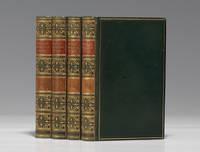
1839Best.-Nr. 1297641839. First Edition. SHELLEY Percy Bysshe. The Poetical Works of Percy Bysshe Shelley. Edited by Mrs. Shelley. London: Edward Moxon 1839. Four volumes. 12mo later full dark green calf raised bands tan and rust morocco spine labels elaborately gilt-decorated spines marbled endpapers and edges. $4000.First edition of Mary ShelleyÕs important edition of her husbandÕs poetical works with engraved frontispiece portrait of the poet by Finden finely bound.After Percy Shelley's death in 1822 Mary Shelley devoted herself to writing his biography and publishing his manuscripts. She first attempted to publish Shelley's poems in 1824 but his father Sir Timothy Shelley prevented further publication of Shelley's writings for 15 years. ""In 1839 the obstacles to an authentic edition having been removedÉ Mrs. Shelley published what was then supposed to be a definitive edition in four volumes enriched with biographical notes and some very beautiful lyrics which had remained in manuscript"" DNB. Lowndes 2374. A beautifully bound set in excellent condition. hardcover
1839Best.-Nr. 1297641839. First Edition. SHELLEY Percy Bysshe. The Poetical Works of Percy Bysshe Shelley. Edited by Mrs. Shelley. London: Edward Moxon 1839. Four volumes. 12mo later full dark green calf raised bands tan and rust morocco spine labels elaborately gilt-decorated spines marbled endpapers and edges. $4000.First edition of Mary ShelleyÕs important edition of her husbandÕs poetical works with engraved frontispiece portrait of the poet by Finden finely bound.After Percy Shelley's death in 1822 Mary Shelley devoted herself to writing his biography and publishing his manuscripts. She first attempted to publish Shelley's poems in 1824 but his father Sir Timothy Shelley prevented further publication of Shelley's writings for 15 years. ""In 1839 the obstacles to an authentic edition having been removedÉ Mrs. Shelley published what was then supposed to be a definitive edition in four volumes enriched with biographical notes and some very beautiful lyrics which had remained in manuscript"" DNB. Lowndes 2374. A beautifully bound set in excellent condition. hardcover books