ThucydidesBiblio.com

1 061 résultats
1978réf. 204508Franklin Center Pennsylvania: Franklin Library 1978. First Edition; First Printing. Hardcover. Near Fine Leather Bound. Printed on archival paper with gilded edges. The endsheets are of moire fabric with a silk ribbon page marker. Smyth sewing and concealed muslin joints to ensure the highest quality binding. This book is in full leather with hubbed spines.; Great Books of the Western World. Franklin Library hardcover
1980réf. CHAPthuTPWThe Franklin Library 1980-01-01. Leather Bound. Very Good. From the series "The 100 Greatest Books of All Time." Black leather with gilt decoration and four raised hubs on spine. Peach moire endpapers. Peach satin ribbon bound in as bookmark. Isolated light abrasion present to top and leading edge gilt. All text edges gilt corners sharp pages clean. The Franklin Library hardcover
1959réf. 085635Ann Arbor MI: University of Michigan Press 1959. Hardcover. Very Good/No Jacket. Very good clean tight condition. 2 volumes in nice slipcase. Text free of marks. Professional book dealer since 1999. All orders are processed promptly and carefully packaged with tracking. University of Michigan Press hardcover
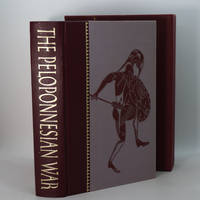
1994réf. FB4480 /25In a fitted box. Maroon cloth spine with gilt title. Warrior image on the mauve boards. This is a very rare book and one of the best produced by the Folio Society The History of the Peloponnesian War by Thucydides: A plague so devastating it destroyed belief in the gods; prisoners of war worked to death in quarries; statesmen debating military action with chilling pragmatism… The horrors dilemmas and costs of war have never been examined more urgently or more rigorously than by the Athenian general Thucydides who recorded the seismic conflict between democratic Athens and authoritarian Sparta that engulfed the Greek world for a generation from 431 BC. In language of unorthodox beauty Thucydides reveals how the same patriotic pride and self-belief that had repulsed the Persians years before brought Athens to the brink of annihilation. The History of the Peloponnesian War – one of the 'most heart-rending and yet coldly analytical accounts of calamity ever written' – speaks with stark immediacy to future generations of their most fundamental challenges and concerns. Translated by Benjamin Jowett edited and annotated by Chris Scarre and Maps by Denys Baker and index by Ailsa Heritage. The Peloponnesian War 431–404 BC was an ancient Greek war fought between Athens and Sparta and their respective allies for the hegemony of the Greek world. The war remained undecided for a long time until the decisive intervention of the Persian Empire in support of Sparta. Led by Lysander the Spartan fleet built with Persian subsidies finally defeated Athens and started a period of Spartan hegemony over Greece. Historians have traditionally divided the war into three phases. The first phase 431–421 BC was named the Ten Years War or the Archidamian War after the Spartan king Archidamus II who launched several invasions of Attica with the full hoplite army of the Peloponnesian League the alliance network dominated by Sparta. However the Long Walls of Athens rendered this strategy ineffective while the superior navy of the Delian League Athens' alliance raided the Peloponnesian coast to trigger rebellions within Sparta. The precarious Peace of Nicias was signed in 421 BC and lasted until 413 BC. Several proxy battles took place during this period notably the battle of Mantinea in 418 BC won by Sparta against an ad-hoc alliance of Elis Mantinea both former Spartan allies Argos and Athens. The main event was nevertheless the Sicilian Expedition between 415 and 413 BC during which Athens lost almost all its navy in the attempted capture of Syracuse an ally of Sparta. The Sicilian disaster prompted the third phase of the war 413–404 BC named the Decelean War or the Ionian War when the Persian Empire supported Sparta in order to recover the suzerainty of the Greek cities of Asia Minor incorporated into the Delian League at the end of the Persian Wars. With Persian money Sparta built a massive fleet under the leadership of Lysander who won a streak of decisive victories in the Aegean Sea notably at Aegospotamos in 405 BC. Athens capitulated the following year and lost all its empire; Lysander imposed puppet oligarchies on the former members of the Delian League including Athens where the regime was known as the Thirty Tyrants. The Peloponnesian War was followed ten years later by the Corinthian War 394–386 BC which although it ended inconclusively helped Athens regain its independence from Sparta. The Peloponnesian War reshaped the ancient Greek world. On the level of international relations Athens the strongest city-state in Greece prior to the war's beginning was reduced to a state of near-complete subjection while Sparta became established as the leading power of Greece. The economic costs of the war were felt all across Greece; poverty became widespread in the Peloponnese while Athens was completely devastated and never regained its pre-war prosperity. The war also wrought subtler changes to Greek society; the conflict between democratic Athens and oligarchic Sparta each of which supported friendly political factions within other states made war a common occurrence in the Greek world. Ancient Greek warfare meanwhile originally a limited and formalized form of conflict was transformed into an all-out struggle between city-states complete with atrocities on a large scale. Shattering religious and cultural taboos devastating vast swathes of countryside and destroying whole cities the Peloponnesian War marked the dramatic end to the fifth century BC and the golden age of Greece. Thucydides c. 460 – c. 400 BC was an Athenian historian and general. His History of the Peloponnesian War recounts the fifth-century BC war between Sparta and Athens until the year 411 BC. Thucydides has been dubbed the father of "scientific history" by those who accept his claims to have applied strict standards of impartiality and evidence-gathering and analysis of cause and effect without reference to intervention by the gods as outlined in his introduction to his work. He also has been called the father of the school of political realism which views the political behaviour of individuals and the subsequent outcomes of relations between states as ultimately mediated by and constructed upon fear and self-interest. His text is still studied at universities and military colleges worldwide. The Melian dialogue is regarded as a seminal work of international relations theory while his version of Pericles' Funeral Oration is widely studied by political theorists historians and students of the classics. More generally Thucydides developed an understanding of human nature to explain behaviour in such crises as plagues massacres and civil war. The Folio Society. hardcover
2009réf. SKU0602952Oxford University Press 2009-07-26. paperback. Good. 7x1x5. Textbook May Have Highlights Notes and/or Underlining BOOK ONLY-NO ACCESS CODE NO CD Ships with Tracking Oxford University Press paperback
2009réf. SKU0650459Oxford University Press 2009-07-26. paperback. New. 7x1x5. New Textbook Ships with Tracking Oxford University Press paperback
1982réf. Q-0394329783Modern Library 1982-01-01. Paperback. New. New. In shrink wrap. Looks like an interesting title! Modern Library paperback
1989réf. x-0226801063Univ of Chicago Pr 1989. Paperback. New. univ. of chicago press ed 1989 edition. 668 pages. 8.00x5.50x1.25 inches. Univ of Chicago Pr paperback
1989réf. 5iiiBe0062Chicago IL & London: The University of Chicago Press 1989. Book. Very Good. Trade Paperback. The Univ of Chicago Pr Edition 1989. 8vo or 8° Medium Octavo: 7¾" x 9¾" tall. 608 pp. Solidly bound copy with moderate external wear and clean text. Stains inside back-end and back cover page not affecting text. Light edge wear and shelf wear. Over-sized and/or over weight book; extra postage required. Please note that large and/or heavy items may incur an additional shipping charge. Pictures of actual copy -not displayed here!- available upon request. . The University of Chicago Press Paperback
réf. 6679164University of Chicago Press . Papeback. New. pp. 668 2 Maps Index University of Chicago Press unknown
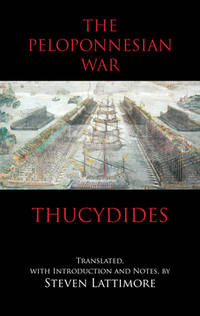
réf. 63447125Hackett Publishing Company Incorporated . Papeback. New. pp. 530 Hackett Publishing Company, Incorporated unknown
1964réf. RO80037953PENGUIN BOOKS. 1964. In-12. Broché. Bon état, Couv. convenable, Dos satisfaisant, Intérieur frais. 553 pages. Ouvrage en anglais. Quelques cartes en noir et blanc, hors-texte en fin d'ouvrage. Manque une partie en-tête sur la page de faux-titre.. . . . Classification Dewey : 420-Langue anglaise. Anglo-saxon
réf. 1333036264.Gpaperback. Good. Access codes and supplements are not guaranteed with used items. May be an ex-library book. paperback
2010réf. DADAX1165230623Kessinger Publishing 2010-09-10. hardcover. New. 6.00x1.00x9.00. Buy with confidence. Excellent Customer Service & Return policy. Kessinger Publishing hardcover
2008réf. DADAX1437411983Kessinger Publishing 2008-12-22. hardcover. New. 6.00x1.00x9.00. Buy with confidence. Excellent Customer Service & Return policy. Kessinger Publishing hardcover
2010réf. DADAX1165124033Kessinger Publishing 2010-09-10. paperback. New. 6.00x0.82x9.00. Buy with confidence. Excellent Customer Service & Return policy. Kessinger Publishing paperback
1881réf. 62807xvi 322 pages complete with map main text in Greek with notes in English Published by Macmillan and Co hardcover
2013réf. x-0521612586Cambridge Univ Pr 2013. Paperback. New. 1st edition. 576 pages. 8.27x5.51x1.50 inches. Cambridge Univ Pr paperback
2013réf. x-0521847745Cambridge Univ Pr 2013. Hardcover. New. 1st edition. 754 pages. 9.00x5.75x1.75 inches. Cambridge Univ Pr hardcover
1588réf. 4174Geneva: Excudebat Henricus Stephanus 1588. SECOND ESTIENNE EDITION corrected by Estienne and with numerous additions. Printed in two sizes of the ‘grecs du roi’ types of Claude Garamond. There are numerous historiated initials and decorative head- and tail-pieces. The Estienne "Noli altum sapere" device appears on the title page. Hardcover. Fine. A fine tall copy in contemporary blind-ruled vellum edges of the text block sprinkled red and blue. The text is in very nice condition lightly toned with minor blemishes A FEW small ink stains sm. burn hole in margin of one leaf ss2 small rust spot g3-5 v. light dampstain at corner light damp to lower outer margin of final few signatures title and verso of final leaf lightly soiled. Provenance: 1. Ownership inscription dated 1595 of the German jurist political philosopher and seven-time rector of the University of Tübingen Christoph Besold 1577-1638. Besold was a close friend of Johannes Kepler whom he met while studying at Tübingen at which time he purchased this book. Besold championed Kepler's theories while at Tübingen and in 1626 he participated in the trial of Kepler's mother who was accused of witchcraft and ultimately acquitted. As a political philosopher Besold proposed a form of mixed constitution in which the ‘rights of majesty’ are divided between the prince and the assembly of estates. For his evolving views see his “De consilio politico axiomata”1622 “De statu reipublicae mixtu”revised ed. 1625 and “Principium et finis politicae”1626. For his views on Democracy in particular see his 1623 “Discursus politici” esp. Chapter III “De Democratia”. 2. Small stamp of the Donaueschingen Hofbibliothek library sold 1999-2001 on verso of the title. Second Estienne edition generally considered the best sixteenth century edition of Thucydides’ history of the Peloponnesian War. The war was fought from 431–404 BC “between the two leading city-states in ancient Greece Athens and Sparta. Each stood at the head of alliances that between them included nearly every Greek city-state. The fighting engulfed virtually the entire Greek world and it was properly regarded by Thucydides as the most momentous war up to that time. With Athens’ defeat . . . the most culturally advanced Greek state was brought into final eclipse.” Britannica "For this new edition Estienne has corrected the Greek text and scholia as well as further revised Lorenzo Valla's Latin translation which is now printed on the same page with the Greek text in parallel columns while the Greek scholia are printed at the foot of the page. Estienne has also added marginal concordances to his first edition. Among the other important additions are Estienne's ‘Proparasceue’ Preparation to the reading of the Greek scholia which is to this day a most valuable exposition of the special vocabulary and technical terminology used by the Greek scholiasts; his annotations on the text and scholia of the first two books Renouard as well as Carter and Muir in PMM wrongly attribute these annotations to Isaac Casaubon; the Thucydidean Chronology of David Chytraeus and the Greek Life of Thucydides by Marcellinus with a Latin translation by Casaubon." Quoted from Schreiber's "The Estiennes" "The standards and methods of Thucydides as a contemporary historian have never been bettered. Thucydides has been valued as he hoped; statesmen as well as historians men of affairs as well as scholars have read and profited by him"PMM 102. “Thucydides kept rigidly to his theme: the history of a war—that is a story of battles and sieges of alliances hastily made and soon broken and most important of the behaviour of peoples as the war dragged on and on of the inevitable “corrosion of the human spirit.” He vividly narrates exciting episodes and carefully describes tactics on land and sea. He gives a picture direct in speeches indirect in the narrative of the ambitious imperialism of Athens—controlled ambition in Pericles reckless in Alcibiades debased in Cleon—ever confident that nothing was impossible for them resilient after the worst disaster. He shows also the opposing picture of the slow steadiness of Sparta sometimes so successful at other times so accommodating to the enemy. “His record of Pericles’ speech on those killed in the first year of the war is the most glowing account of Athens and Athenian democracy that any leading citizen could hope to hear. It is followed in of course due chronological order by a minutely accurate account of the symptoms of the pestilence “so that it may be recognized by medical men if it recurs” and a moving description of the demoralizing despair that overtook men after so much suffering and such heavy losses—probably more than a quarter of the population most of it crowded within the walls of the city died. “Equally moving is the account of the last battles in the great harbour of Syracuse and of the Athenian retreat. In one of his best-known passages he analyzes by a most careful choice of words almost creating the language as he writes the moral and political effects of civil strife within a state in time of war. By a different method in speeches he portrays the hard fate of the town of Plataea due to the long-embittered envy and cruelty of Thebes and the faithlessness of Sparta and the harsh brutality of Cleon when he proposed to execute all the men of the Aegean island city of Mytilene. Occasionally he is forced into personal comment as on the pathetic fate of the virtuous and much-liked Athenian Nicias. “He had strong feelings both as a man and as a citizen of Athens. He was filled with a passion for the truth as he saw it which not only kept him free from vulgar partiality against the enemy but served him as a historian in the accurate narrative of events—accurate in their detail and order and also in their relative importance. He does not for example exaggerate the significance of the campaign he himself commanded nor does he offer a self-defense for his failure. Characteristically he mentions his exile not as an event of the war but in his “second preface”—after the peace of 421—to explain his opportunities for wider contacts. By the end of the 4th c. BC “the philosopher Theophrastus coupled Thucydides with Herodotus as a founder of the writing of history. Little is known of what the scholars of Alexandria and Pergamum did for his book; but copies of it were being made in considerable numbers in Egypt and so doubtless elsewhere from the 1st to the 5th century AD. By the 1st century BC as is clear from the writings of Cicero and Dionysius who vainly disputed his preeminence Thucydides was established as the great historian and since that time his fame has been secure.” Britannica. Excudebat Henricus Stephanus hardcover
1588réf. 1936Geneva: Excudebat Henricus Stephanus 1588. SECOND ESTIENNE EDITION corrected by Estienne and with numerous additions. Printed in two sizes of the ‘grecs du roi’ types of Claude Garamond. There are numerous historiated initials and decorative head- and tail-pieces. The Estienne "Noli altum sapere" device appears on the title page. Hardcover. Fine. Bound in contemporary calf rebacked. The boards are framed by a single gold fillet. Central wreath-like cartouches also gilt are stamped at the centers of both boards. The text is in very good condition with good margins. There is however a bit of worming affecting the text in the first part. Second Estienne edition generally considered the best sixteenth century edition of Thucydides’ history of the Peloponnesian War. The war was fought from 431–404 BC “between the two leading city-states in ancient Greece Athens and Sparta. Each stood at the head of alliances that between them included nearly every Greek city-state. The fighting engulfed virtually the entire Greek world and it was properly regarded by Thucydides as the most momentous war up to that time. With Athens’ defeat . . . the most culturally advanced Greek state was brought into final eclipse.” Britannica "For this new edition Estienne has corrected the Greek text and scholia as well as further revised Lorenzo Valla's Latin translation which is now printed on the same page with the Greek text in parallel columns while the Greek scholia are printed at the foot of the page. Estienne has also added marginal concordances to his first edition. Among the other important additions are Estienne's ‘Proparasceue’ Preparation to the reading of the Greek scholia which is to this day a most valuable exposition of the special vocabulary and technical terminology used by the Greek scholiasts; his annotations on the text and scholia of the first two books Renouard as well as Carter and Muir in PMM wrongly attribute these annotations to Isaac Casaubon; the Thucydidean Chronology of David Chytraeus and the Greek Life of Thucydides by Marcellinus with a Latin translation by Casaubon." Quoted from Schreiber's "The Estiennes" "The standards and methods of Thucydides as a contemporary historian have never been bettered. Thucydides has been valued as he hoped; statesmen as well as historians men of affairs as well as scholars have read and profited by him"PMM 102. “Thucydides kept rigidly to his theme: the history of a war—that is a story of battles and sieges of alliances hastily made and soon broken and most important of the behaviour of peoples as the war dragged on and on of the inevitable “corrosion of the human spirit.” He vividly narrates exciting episodes and carefully describes tactics on land and sea. He gives a picture direct in speeches indirect in the narrative of the ambitious imperialism of Athens—controlled ambition in Pericles reckless in Alcibiades debased in Cleon—ever confident that nothing was impossible for them resilient after the worst disaster. He shows also the opposing picture of the slow steadiness of Sparta sometimes so successful at other times so accommodating to the enemy. “His record of Pericles’ speech on those killed in the first year of the war is the most glowing account of Athens and Athenian democracy that any leading citizen could hope to hear. It is followed in of course due chronological order by a minutely accurate account of the symptoms of the pestilence “so that it may be recognized by medical men if it recurs” and a moving description of the demoralizing despair that overtook men after so much suffering and such heavy losses—probably more than a quarter of the population most of it crowded within the walls of the city died. “Equally moving is the account of the last battles in the great harbour of Syracuse and of the Athenian retreat. In one of his best-known passages he analyzes by a most careful choice of words almost creating the language as he writes the moral and political effects of civil strife within a state in time of war. By a different method in speeches he portrays the hard fate of the town of Plataea due to the long-embittered envy and cruelty of Thebes and the faithlessness of Sparta and the harsh brutality of Cleon when he proposed to execute all the men of the Aegean island city of Mytilene. Occasionally he is forced into personal comment as on the pathetic fate of the virtuous and much-liked Athenian Nicias. “He had strong feelings both as a man and as a citizen of Athens. He was filled with a passion for the truth as he saw it which not only kept him free from vulgar partiality against the enemy but served him as a historian in the accurate narrative of events—accurate in their detail and order and also in their relative importance. He does not for example exaggerate the significance of the campaign he himself commanded nor does he offer a self-defense for his failure. Characteristically he mentions his exile not as an event of the war but in his “second preface”—after the peace of 421—to explain his opportunities for wider contacts. By the end of the 4th c. BC “the philosopher Theophrastus coupled Thucydides with Herodotus as a founder of the writing of history. Little is known of what the scholars of Alexandria and Pergamum did for his book; but copies of it were being made in considerable numbers in Egypt and so doubtless elsewhere from the 1st to the 5th century AD. By the 1st century BC as is clear from the writings of Cicero and Dionysius who vainly disputed his preeminence Thucydides was established as the great historian and since that time his fame has been secure.” Britannica. Excudebat Henricus Stephanus hardcover
2026réf. LRB44000035Paris: Editions Recreasoft 2026 : . 586 . Français : Réimpression à la demande. Édition originale : 1506 i.e. 1526. Ouvrage en grec caractères grecs. Cette édition rare rassemble les oeuvres de Thucydide accompagnées de commentaires anciens essentiels rendant l'auteur plus accessible. Elle constitue une ressource précieuse pour les études classiques et l'histoire antique. Images du livre non contractuelles English: Print-on-demand reprint. Original edition : 1506 i.e. 1526. Text in Greek Greek script. This rare edition combines the works of Thucydides with essential ancient commentaries making the author more accessible. It is a valuable resource for classical studies and ancient history. Book images are non-contractual. Editions Recreasoft. Softcover. New. Editions Recreasoft paperback
2026réf. LRB545143Paris: Editions Recreasoft 2026 Reliure rigide hardcover. Langue : Latin. Environ 852 pages. Français : Réimpression à la demande. Édition originale : 1790-1804. Édition savante du De bello Peloponnesiaco en huit livres accompagnée du texte grec et d'un appareil critique latin caractéristique des grandes éditions érudites du XVIIIe et du début du XIXe siècle. Cette publication intéressera les collectionneurs d'humanités classiques les bibliothèques d'étude et les lecteurs recherchant une présentation philologique de Thucydide avec commentaires et mise en perspective savante. Images du livre non contractuelles English : Print-on-demand reprint. Original edition : 1790-1804. Scholarly edition of De bello Peloponnesiaco in eight books with the Greek text and a Latin critical apparatus characteristic of major learned editions of the late eighteenth and early nineteenth centuries. This volume will appeal to collectors of classical studies academic libraries and readers seeking a philological presentation of Thucydides with scholarly commentary and textual attention. Book images are non-contractual. Editions Recreasoft. Softcover. New. Editions Recreasoft paperback
2026réf. LRB1008095Paris: Editions Recreasoft 2026 : . 536 . Français : Réimpression à la demande. Édition originale : 1819. Ouvrage fondamental de lhistoriographie grecque présentant le récit de la guerre du Péloponnèse avec des notes savantes en latin. Cette édition en langue grecque intéressera les chercheurs en histoire antique en philologie classique et en études helléniques ainsi que les collectionneurs déditions savantes du dix-neuvième siècle. Images du livre non contractuelles English : Print-on-demand reprint. Original edition : 1819. A foundational work of Greek historiography presenting the account of the Peloponnesian War with Latin scholarly notes. This Greek-language edition will appeal to researchers in ancient history classical philology and Hellenic studies as well as collectors of nineteenth-century scholarly editions. Book images are non-contractual. Editions Recreasoft. Softcover. New. Editions Recreasoft paperback
2026réf. LRB1009948Paris: Editions Recreasoft 2026 Reliure rigide hardcover. Langue : Latin. Environ 998 pages. Printed on premium paper. Français : Réimpression à la demande. Édition originale : 1594. Édition latine du De Bello Peloponnesiaco de Thucydide dans la version révisée et annotée par Henri Estienne puis remaniée par Aemilius Portus. Ouvrage majeur de l'historiographie antique il réunit en huit livres le récit de la guerre du Péloponnèse avec un intérêt particulier pour la tradition humaniste du texte et son travail de correction philologique. Images du livre non contractuelles English : Print-on-demand reprint. Original edition : 1594. Latin edition of Thucydides' De Bello Peloponnesiaco in the revised text associated with Henri Estienne and further corrected by Aemilius Portus. A major work of ancient historiography it presents the history of the Peloponnesian War in eight books and is of notable interest for the humanist transmission of the text and its philological revision. Book images are non-contractual. Editions Recreasoft. Softcover. New. Editions Recreasoft paperback