TheophrastusBiblio.com
628 resultados
ref. 1104723999.Gpaperback. Good. Access codes and supplements are not guaranteed with used items. May be an ex-library book. paperback
ref. 1120940451.Gpaperback. Good. Access codes and supplements are not guaranteed with used items. May be an ex-library book. paperback
ref. 112094046X.Gpaperback. Good. Access codes and supplements are not guaranteed with used items. May be an ex-library book. paperback
ref. 1018462066.Ghardcover. Good. Access codes and supplements are not guaranteed with used items. May be an ex-library book. hardcover
ref. 1020655461.Ghardcover. Good. Access codes and supplements are not guaranteed with used items. May be an ex-library book. hardcover
ref. 1021721611.Gpaperback. Good. Access codes and supplements are not guaranteed with used items. May be an ex-library book. paperback
ref. 1021037826.Ghardcover. Good. Access codes and supplements are not guaranteed with used items. May be an ex-library book. hardcover
ref. 1021193771.Gpaperback. Good. Access codes and supplements are not guaranteed with used items. May be an ex-library book. paperback
1564ref. 60128vo. 112 ff pages 2 and 110-112 are blank. Bound in modern paneled calf with gilt-stamped fleurons on front and back covers raised bands. Generally good. The first edition of this plague treatise by Paracelsus Theophrastus Bombastus von Hohenheim 1493-1541 the "Luther of Medicine" and one of the key figures in the history of medicine. Written originally in Nördlingen in 1529-1530 it remained unpublished during Paracelsus' lifetime and subsequently taken up and edited for publication by the Paracelsian scholar Adam von Bodenstein 1528-1577. The latter dedicated it to Johann Rudolph Stör von Störenberg Abbot of Murbach and Luders. In addition to the study on pestilence the text includes two short works by Paracelsus: "Vom Preservatiff durch den Schwebel" and "Von der Mummia." In the primary tract Paracelsus for the first time presents his complex theory on the origins of the plague which he believed were the result of astrological and corporeal events set in motion by human sins. "This anthropocentric view of an individual disease is in harmony with Paracelsus' whole philosophy and indeed with Renaissance philosophy in general" Pagel p. 179. Paracelsus also postulates the importance of the principle of sulphur the corresponding agent of the planet Mars in pestilence's causation. He believed that sulphur hidden in three minerals—antimony arsenic and marcasite—affected three corresponding organs: the groin the axillae and the ears. The chapters on causation are followed by sections on remedies. The doctor must cure the agent causing the disease rather than the symptoms of the disease Paracelsus writes. Humoral pathology and its insistence on diet is of no use. "Paracelsus' plague remedies include sulphur spirit of vitriol sulphur sublimate and metals also—for external treatment of boils—toads and decoctions of beetles designed to remove the evil of magnetic attraction but herbs and drugs as prescribed by Ficino and Agrippa are greatly amplified and still appear in a prominent place" Pagel pp. 180-181 n. 151. The editor of this volume Adam von Bodenstein was one of the key figures in the revival of Paracelsian ideas in the German lands in the middle of the sixteenth century. A son of a radical reformer he believed in transmutation of metals into gold and played a key role in the publication of over 80 works by Paracelsus. For his Paracelsianism he was excluded from the faculty and council of Basel University. OCLC records US copies at NYAM NLM Wash. U and UMn. Karl Sudhoff Bibliographia Paracelsica Berlin 1894 60; Walter Pagel Paracelsus: An Introduction to Philosophical Medicine in the Era of the Renaissance Boston 1982 2nd revised edition; Georgiana D. Hedesan "Alchemy Potency Imagination Paracelsus's Theories of Poison" in John Arrizabalaga Ole Peter Grell Andrew Cunningham eds. It All Depends on the Dose: Poisons and Medicines in European History. The History of Medicine in Context Series New York 2018 pp. 81-102; Peter J. Forshaw "'Paradoxes Absurdities and Madness:' Conflict over Alchemy Magic and Medicine in the Works of Andreas Libavius and Heinrich Khunrath" Early Science and Medicine vol. 13 no. 1 2008 pp. 53-81. Paul Messerschmidt hardcover
ref. 44912London: A J Valpy 1831. 24mo; burgundy leather over marbled boards; xvi 159 pages; b&w illustrations; front hinge is cracked and boards are rubbed else a very good clean tight copy. London: A J Valpy, 1831 hardcover
1976ref. 180380As new in publishers original shrink wrap. No dust jacket as issued. University Of Notre Dame Press hardcover
ref. B9781166324469New. unknown
ref. AH269-BUniversity of Notre Dame Press 1975. Hbk 105pp no dj as issued now in custom acetate jacket appears unread and an excellent clean tight and unmarked copy as new University of Notre Dame Press, 1975, hardcover
ref. B9781165116515New. unknown
ref. B9781167216183New. unknown
ref. B9781167244469New. unknown
ref. B9781165551071New. unknown
ref. B9781165158065New. unknown
ref. B9781165514465New. unknown
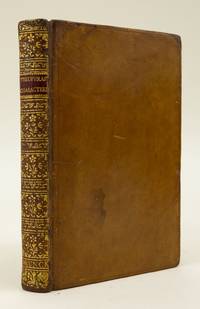
1599ref. ST16215hLugduni Lyon: Excudebat Guichard Julliéron apud Antoine de Harsy 1599. Editio Altera Second Edition; EDITIO PRINCEPS of books 24-28. 173 x 109 mm. 6 7/8 x 4 1/4". 12 p.l. 349 1 pp. 24 leaves.Edited by Isaac Casaubon. 18th century French polished calf smooth spine gilt in compartments with central floral sprig surrounded by leaf tools gilt lettering of owner's name Brunck at tail of spine red morocco label marbled endpapers older repairs to joints. Printer's device on title page. Text in Greek and Latin. Title page with ink ownership inscription of Bibliothèque Villelufpen and Richard Brunck; isolated ink marginalia in Hebrew Arabic Greek or Latin. Dibdin II 501; STC French 419; Graesse VII 125; USTC 158510. ◆A couple of short scratches and two small water stains to upper board shallow chip to head of spine leaves somewhat browned due to paper quality a couple of tiny rust spots but a very good copy clean and fresh internally in a sound binding. From the library of a notable--and perhaps notorious--classical scholar this is an important edition of the Greek philosopher's "Characters" with Isaac Casaubon's revisions to his translation and commentary of 1592 and the addition of five sections printed here for the first time that Casaubon had recently discovered at the Palatine Library. One of the earliest known works of psychology "Characters" contains pithy descriptions of the various types of human foibles noted by the Oxford Companion for their "remarkable vivacity and keenness of observation." A pupil of Aristotle and the master's successor as head of the school of Peripatetic philosophy Theophrastus ca. 371 - ca. 287 B.C. wrote widely on a number of subjects ranging from ethics to physics to botany he is considered the "father" of the last discipline. He would have considered these descriptions of such characters as "The Flattering Man" "The Stupid Man" and "The Oligarch" a minor work but it is one that has weathered the centuries. The present translation and commentary marked a milestone in the life of the great classical scholar Isaac Casaubon 1559-1614. Sandys says "It is not until we reach his commentary on the 'Characters' of Theophrastus 1592 that we find a work that is marked by his distinctive merit an interpretation of a text of the most varied interest founded on wide reading and consummate learning. It was a work that won the highest praise from Scaliger." Dibdin called the commentary "a rich mine of Grecian literature." Former owner Richard François Philippe Brunck 1729-1803 was a classical scholar of considerable note who devoted his leisure to the critical revision of the Greek poets. According to Britannica "He spent considerable sums of money in publishing editions of the Greek classics." Flaunting the established mode of editing and criticism he did not hesitate to make clarifying changes to difficult or inscrutable passages of text--whether these alterations were supported by manuscript authorities or not. Deprived of his royal pension by the French Revolution Brunck was forced to sell portions of his library in 1790 and again in 1801. Excudebat Guichard Julliéron apud Antoine de Harsy unknown
ref. B9781165220816New. unknown
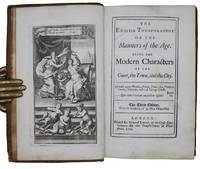
1708ref. AQ28440London: Printed for Bernard Lintott 1708. 14 384pp. With an engraved frontispiece. Contemporary panelled calf calf lettering-piece. Extremities worn upper joint split lower joint starting loss to head-cap. Endpapers browned scattered spotting early inked ownership inscription of George Leslie to REP. Armorial bookplate to FEP of Scottish advocate and philosopher Henry Home Lord Kames 1696-1782. An extended edition of an early eighteenth-century work of moral philosophy sometimes attributed to lexicographer and journalist Abel Boyer 1667-1729. First printed in 1702 the book collects aphorisms and observations on contemporary character types and traits social institutions and behaviour drawn from the writings of La Bruyere La Rochefoucauld and others. ESTC T85463. Third edition. 8vo. Printed for Bernard Lintott unknown
ref. 2091202133303449Nanundo Phoenix N.A. Soft Cover. Fine. Number of pages: 124p Size: 20cm Nanundo Phoenix paperback
1904ref. 35800Jena Germany: Eugen Diederichs. Fair with no dust jacket. 1904. Hardcover. Original white leather spine with printed boards. Text in German. Joint split along spine front board nearly detached. Text block is still sound. PO name to title page else unmarked. ; 8vo 8" - 9" tall; 401 pages . Eugen Diederichs hardcover