Louis ARAGON - Francis CREMIEUXBiblio.com
6769 risultati
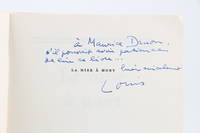
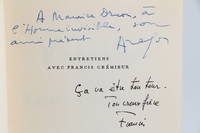
1964rif. 80808Paris: Gallimard 1964. Fine. Gallimard Paris 1964 12 x 19 cm broché First edition on ordinary paper. Handsome copy. Precious and fine autograph inscription signed by Louis Aragon to Maurice Druon: ""A Maurice Druon à l'homme invisible son ami présent. Aragon"" ""To Maurice Druon to the invisible man his present friend. Aragon"" with an additional autograph inscription signed by Francis Crémieux: ""Ca va être ton tour. Ton creux frère. Francis."" ""It's going to be your turn. Your hollow brother. Francis."" Gallimard unknown
1965rif. 82054Paris: Gallimard 1965. Fine. Gallimard Paris 1965 14 x 20.50 cm broché First edition a Service de Presse advance copy. Handsome copy. Precious and fine autograph inscription signed by Louis Aragon: ""A Maurice Druon s'il pouvait avoir patience de lire ce livre. Louis"" ""To Maurice Druon if he could have the patience to read this book. Louis"". Gallimard unknown
1940rif. 011291Mexico: Ediciones de la Universidad Nacional Autonoma 1940. Yellow hardcover buckram binding square and tight. lightly bumped corners very light soiling to covers. Pages yellowed some foxing to glossy plates. 139 pages of text followed by 135 pages of artwork in b/w. Artists: Augustin Lazo Carlos Merida Rufino Tamayo Julio Castellanos David Alfaro Siqueiros Diego Rivera Jose Clemente Orozco. Size: Small 4to - over 9¾" - 12" Tall. Illus. by Plates. 1st Edition. Hardcover. Good/No Jacket. Ediciones de la Universidad Nacional Autonoma Hardcover
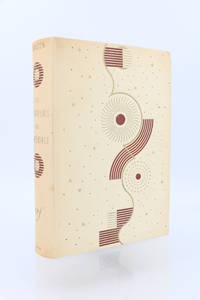
1948rif. 92155Paris: Gallimard 1948. Fine. Gallimard Paris 1948 11.50 x 18 cm reliure de l'éditeur First edition one of 1040 numbered copies printed on Navarre alfa paper. Publisher's paper-covered boards after Paul Bonet's original design. Endpapers fully shaded throughout as often encountered. Gallimard hardcover
1986rif. 92107Paris: Gallimard 1986. Fine. Gallimard Paris 1986 14.50 x 21.50 cm broché First edition one of 41 numbered copies on Rives pure rag vellum the only deluxe paper issue after 31 copies on Holland paper. A very fine copy. Introduction and notes by Edouard Ruiz. Gallimard hardcover
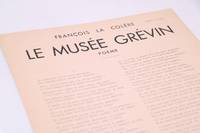
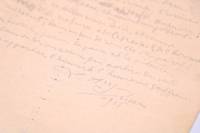
1943rif. 91945s. l. Paris Paris: n. p. Éditions de Minuit 1943. Fine. n. p. Éditions de Minuit s. l. Paris Paris s. d. 1943 21.20 x 27 cm une feuille dépliante ENGLISH DESCRIPTION ON DEMAND Rare édition originale de ce chef-d'uvre de la littérature de la Résistance publié dans le secret atelier parisien des éditions de Minuit sous forme de placard dépliant de six pages un des quelques exemplaires de luxe sur papier couché rose comportant la mention ""Prix 10 francs"" en tête du premier feuillet. L'édition en volume parue chez la bibliothèque française a sans douté été publiée simultanément en zone sud. Exemplaire dans un état de fraicheur exceptionnel. Le Musée Grévin considéré dès sa parution comme « Les Châtiments de 1943 » Les étoiles déc. 1943 n° 14 restera avec Liberté de Paul éluard « un des chefs-d'uvre de la littérature clandestine ». Dans L'Intelligence en guerre parue dès 1945 Louis Parrot écrira à son propos : « ce poème traversé d'images éblouissantes est en même temps qu'une condamnation sans appel des traîtres une prière un acte de foi envers leurs malheureuses victimes. Il peint en termes vengeurs les misérables qui les livrèrent aux bourreaux et évoque le visage de tant de femmes françaises torturées. » Cette oeuvre majeure de la résistance est en effet une des toutes premières évocations publiques et la première littéraire du camp d'Auschwitz : « Aux confins de Pologne existe une géhenne dont le nom siffle et souffle une affreuse chanson. Ausschwitz ! Ausschwitz ! Ausschwitz ! sic ô syllabes sanglantes ! Ici l'on vit ici l'on meurt à petit feu. On appelle cela l'exécution lente. Une part de nos curs y périt peu à peu ». En 1949 sur l'exemplaire offert à ses amis Germaine et Eugène Henaff Aragon affirmera dans une note manuscrite que l'édition de la bibliothèque française fut imprimée deux mois avant celle des éditions de Minuit. Mais le poète écrira sur le même exemplaire que : « dans le voyage où Elsa et moi apportions à Paris . le manuscrit de ce poème . destiné à Vercors pour les éditions clandestines . une fouille des voyageurs faillit empêcher jamais la parution de ce manuscrit. ». Aragon précise d'ailleurs que venant d'apprendre « la mort de Maïe Politzer et de Danielle Casanova » mortes à Auschwitz les 6 mars et 9 mai 1943 il acheva dans le train son poème avec « les deux strophes en octosyllabes de la page 11 » Collection du Musée national de la Résistance. Les bibliographes s'accordent ajourd'hui sur la vraissemblable simulatnéité - approximative - de la parution en zone Sud à la Bibliothèque Francaise et en zone nord chez Minuit du plus important brulot poétique de la seconde guerre avec Poésie et vérité d'Eluard qui comprend son fameux poème : Liberté. bibliographes se trouvent aujourd'hui dans l'incapacité de définir une chronologie fiable pour les différents tirages de Minuit. Cependant la variété des tirages de Minuit - avec ou sans mention d'éditeur avec ou sans prix sur papier blanc courant ou papier rose couché - rendent impossible l'édification d'une chronologie de ces éditions clandestines. Toutefois les rares exemplaires de la Bibliothèque Francaise dont l qui constituent avec certitude l'édition originale de la zone Sud sont susceptibles d'apporter un éclairage essentiel. En effet la couverture jaune de cette édition qui fut réalisée selon Aragon « dans un petit stock de papier mural pour salle de bain trouvé à Lyon » affiche en pied ""prix 10 Francs"" soit le même prix que celui imprimé en tête des papiers roses de Minuit. Cette concordance des prix nous incite à considérer la période de publication des quelques exemplaires de luxe sur papier rose à l'aune de celle de la bibliothèque Française et donc à considérer égaelement comme édition originale le tirage courant présentant la même composition typographique. La date de fin de rédaction imprimée en fin du poème ""aout-septembre 1943"" est presque simultanée à l'impression. On peut d'ailleurs confirmer avec pré n. p. [Éditions de Minuit] unknown
1915rif. 92341n. l. 1915. Fine. Aragon's Earliest Known Poem: The Birth of a Poet Soon to be Buried Beneath the Shells of the Great War n. l. 31 mars 1915 15.3 x 19.7 cm Un feuillet Autograph poem by Louis Aragon signed and dated 31 March 1915. Fourteen lines written in pencil on a single leaf with unpublished autograph calculations on the verso. Published in 2008 by Michel Apel-Muller in Le Continent Aragon special issue of LHumanité 2008 p. 17 and reissued under the title Poème in Le Rayonnement international dAragon Strasbourg coll. Recherches croisées Aragon / Elsa Triolet no. 16 2018 p. 251. Numerous traces of handling with vertical and horizontal folds that have caused minor paper losses without affecting the text. A precious fragment of literary history this sonnet published only in 2008 is the earliest known poem by Aragon according to its discoverer Michel Apel-Muller. Aragon wrote this lyrical reverie inspired by Baudelaires Parisian tableaux and by the Parnassian poets at the age of eighteen. He gifted it to his schoolfriend and inspiration for his novel Anicet Pierre Maison who succumbed to the Spanish flu in 1918 after fighting in the war. The Seine The pontoons draw away toward the hill That bounds the horizon with a bluish silhouette. The river bends at the foot of the quivering slope Of April reborn amid the hawthorn. In the red reflection of the setting sun Rises the factory black smoking and alive. The smoke and the sky are tinged with sanguine; A house stands and smiles at the passer-by. How life rises from this valley and how The work of nature and the labour of man Unite in a tone of evening rust! One senses amid the peace and the silence The song of birds that will rise from the vale To bring love to human suffering. translation our own Absent from accounts of Aragons life up to Philippe Forests most recent biography the sonnet was given to Pierre Maison this schoolfriend who had enlisted ahead of his call-up and who like Apollinaire succumbed to the Spanish flu in 1918. Aragon portrayed him in Anicet before burying the painful memory by assuming the characters identity in the famous phrase Anicet is me. Before André Breton and Drieu La Rochelle it was with Pierre Maison that he shared a profound intellectual friendship. Paradoxically this newly discovered princeps sonnet by Aragon comes accompanied by a rare wealth of context. The verses can be read in the light of a letter itself long unpublished addressed to Pierre Maison a few months later. This sprawling letter reveals that this poetic landscape of the Seine is in fact a memory: I thought of our good old discussions of days gone by. The memory came back to me as I was defending Wagner from the day we had gone down the Seine together talking about The Flying Dutchman Do you remember The weather was fine but the sun had something indefinably sad about it and the new spring resembled an autumn. When we stopped on the bank past Javel the sun was already low though it was not yet five oclock sic. Its rays already weakened and horizontal came from behind the distant hill where the houses along the Seine cling the river vanishing swiftly around a bend. Despite the dark green mass of the trees on the opposite bank bent over the flowing water everything seemed covered with an imperceptible tinge of rust: one might have said sic it was the dusty grip of the great city so near at hand upon the countryside. rise. And behind in an evening haze the hills of Meudon rose tier upon tier their woods concealing arbours and open-air taverns. This bleak landscape animated only by the movement of the Seine still lives on intensely in my memory. Aragon makes an almost literal reference to the poem which had captured on the spot this aesthetic emotion of the young student during an escapade among a band of high-spirited companions soon to be separated by the war: Aragon reminded me in unknown
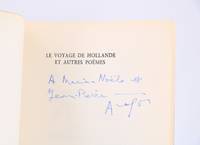
1965rif. 92375Paris: Seghers 1965. Fine. Seghers Paris 1965 12.8 x 19 cm Broché New edition.A very good copy.Signed presentation copy inscribed by Louis Aragon to his friends Marie-Noëlle and Jean-Pierre Lecointre. Seghers unknown
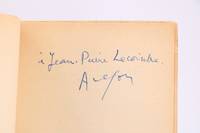
1954rif. 92374Paris: Gallimard 1954. Fine. Gallimard Paris 1954 12 x 18.7 cm Broché First edition on ordinary paper. A pleasant copy despite two small areas of sunning at the head and foot of the spine. Signed presentation copy inscribed by Louis Aragon to Jean-Pierre Lecointre. Gallimard unknown
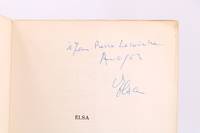
1959rif. 92377Paris: Gallimard 1959. Fine. Gallimard Paris 1959 18.7 x 23.7 cm Broché First edition one of 105 numbered copies on wove paper the only large-paper copies after 35 on Holland paper.Press clippings laid in having left a slight offset on the colophon page at the end of the volume.A pleasing copy.Signed presentation inscription from Louis Aragon to Jean-Pierre Lecointre further enhanced by Elsa Triolet's autograph signature. Gallimard unknown
2007rif. SBBIH-SV5FBHYCCXQ6Edelsa Grupo Didascalia S.A. 2007. paperback. Acceptable. Please see the condition note after this for details if this is missing please consider Acceptable to mean poor quality that could include major staining water damage writing missing dustjacket etc etc. Our books are dispatched from a Yorkshire former cotton mill. We list via barcode/ISBN so please note that the images are stock images and may not be the exact copy you receive furthermore the details about edition and year might not be accurate as many publishers reuse the same ISBN for multiple editions and as we simply scan a barcode or enter an ISBN we do not check the validity of the edition data when listing. If you're looking for an exact edition please don't order at least not without checking with us first although we don't always have time to check. We aim to dispatch prompty the service used will depend on order value and book size. We can ship to most countries see our shipping policies. Payment is via Abe only. Edelsa Grupo Didascalia, S.A. paperback
1964rif. SBBIH-W4VCXOEK427CFondo de Cultura Económica. 1964. hardcover. Good. Our good condition books are generally good for reading but not for gifting or collecting. They could have imperfections such as creasing fanning inscriptions margin notes yellowing staining on edge or cover or pages bumps scuffs etc etc sometimes multiple of these. It's a wide category that encompasses anything that isn't almost-new down to anything that is slightly better than poor. We would NOT recommend gifting Good books - these should be considered reading copies. Our books are dispatched from a Yorkshire former cotton mill. We list via barcode/ISBN so please note that the images are stock images and may not be the exact copy you receive furthermore the details about edition and year might not be accurate as many publishers reuse the same ISBN for multiple editions and as we simply scan a barcode or enter an ISBN we do not check the validity of the edition data when listing. If you're looking for an exact edition please don't order at least not without checking with us first although we don't always have time to check. We aim to dispatch prompty the service used will depend on order value and book size. We can ship to most countries see our shipping policies. Payment is via Abe only. Fondo de Cultura Económica. hardcover
1947rif. 92565Paris: Gallimard 1947. Fine. Gallimard Paris 1947 13.50 x 20 cm reliure de l'éditeur Definitive edition one of 1040 numbered copies on alfa paper. Publisher's binding after the original design by Paul Bonet. Spine slightly faded as is commonly the case. Gallimard unknown
rif. 11254555-nnew. unknown
1944rif. 91075Paris: Éditions de Minuit 1944. Fine. Éditions de Minuit Paris 1944 11.3 x 16.8 cm Broché First public edition of this text by Jean Cassou written under the pseudonym Jean Noir one of 50 numbered copies on Madagascar paper from the deluxe issue.A fine copy. Éditions de Minuit unknown
1944rif. 91064Paris: Éditions de Minuit 1944. Fine. Éditions de Minuit Paris 1944 11.7 x 16.7 cm Broché First public edition of this text written under the pseudonym François la Colère one of 50 numbered copies on Madagascar paper the deluxe issue. Rare and fine copy. Éditions de Minuit unknown
1954rif. 91778Paris: Gallimard 1954. Fine. Gallimard Paris 1954 12 x 19 cm Broché First edition one of the press review copies. Precious signed autograph inscription by Eugène Guillevic: ""à Tristan Tzara ces trente et un sonnets qu'il n'aime pas avec espoir quand-même et affection. Guillevic."" Gallimard unknown
1947rif. 24152Paris: Maeght Editeur 1947. Illustrated Wraps. Near Fine/Very Good . Henri Matisse. A very presentable copy of the 1947 1st edition. #004 of 950 copies issued on "Velin superieur". The book consists of the "5-color cover and the 17 full-page illustrations including 1 frontispiece and 1 original out-of-text lithograph 1 wood gouge and 14 unpublished heliogravures composed and laid out by Matisse. The printing of the illustrations and texts was done by Draeger Freres". Clean and Near Fine. And in a crisp Near Fine dustjacket AND a VG to Near Fine example of the outer glassine dustjacket with just a touch of chipping at the lower-edges. And finally sturdy examples of the unprinted gray card chemise and slipcase. Maeght Editeur unknown
rif. 50202806-nnew. unknown
rif. 50202806like new. unknown
rif. 46130305-nnew. unknown
rif. 46130305like new. unknown
rif. 45817496-nnew. unknown