Schibeci StefaniaMareMagnum

545 risultati
2014brossura
1920Edizione originale. Esemplare n. 365 dei 375 tirati in carta simil Japon (tiratura complessiva di 515 esemplari). Lievemente sbiadito ai margini della brossura e al dorso, uno strappetto di pochi mm sul margine di c. [5], lontano dal testo, nel complesso un ottimo esemplare. Punta più alta e insieme manifesto del Dadaismo belga, «Le Pan Pan au cul du nu nègre» fu composto da Pansaers nel 1919 e vide la luce nel 1920 a Bruxelles. Era l'opera prima dell'autore di origini fiamminghe, che negli anni dell'occupazione tedesca aveva fondato la rivista «Résurrection», di taglio fortemente antimilitarista, internazionalista e schierata a favore della rivoluzione russa (venne per questo presto censurata). L'opera è suddivisa in due parti: la prima, intitolata «Le Nu Nègre», è composta interamente in prosa, con un susseguirsi di aforismi, frasi brevi e spezzate, parole affastellate in rapida successione, a volte evidenziate graficamente dall'uso del bold, incuranti della sintassi. «L'Aphorisme est un cataplasme de consolation: Vivre est une maladie imaginaire», annuncia in apertura Pansaers, chiarendo immediatamente l'intonazione del libro. --- Nella seconda parte, intitolata «Pan-Pan», irrompere invece la poesia: ma Pansaers impiega il verso solo in funzione ritmica, riducendolo a espressione onomatopeica che riproduce il suono dei tamburi che scandiscono il ritmo serrato di una danza: «Une bonne finale se danse. Avis aux amateurs: Ici commence le / Pan-Pan / avec les absents / Pan-pan / qui le dansent ailleurs à cette même heure / Pan-pan-Pan-pan / Pan-pan / pan». La sperimentazione formale, pur portata all'estremo, non offusca però le idee politiche dell'autore, il suo anticapitalismo, l'avversione al colonialismo e la forte denuncia dell'omicidio di Rosa Luxemburg: è così che i tonfi del tamburo che invita alla danza si tramutano nei colpi di pistola sparati dall'assassino: «Pan-pan – Pan-pan / Rosa la rouge / Pan-pan / Pan-pan-rouge!». L’opera fu accolta con grande favore, e permise a Pansaers di essere riconosciuto come uno dei campioni dei Dadaisti: «Depuis longtemps je n'avais pas été à pareille fête», scrisse André Breton dopo aver letto «Le Pan Pan». --- Per dare conto della personalità, non solo sul piano artistico, di Pansaers (1885-1922), basti il ritratto che ne fece un altro grande esponente del Dadaismo, Philippe Soupault: «Sa personnalité était extrêmement forte. Et je me souviens que, par exemple, il a beaucoup impressionné un homme qui était difficile à impressionner, qui était Picabia. Picabia avait le sens de cette espèce de force qu'il y avait chez Pansaers. Il avait un côté tragique, c'est extraordinaire. Il s'appelait Clément, ce qui était insensé quand on pense à son personnage, c'était une sorte de contradiction. C'était un révolté. Il avait cette espèce de puissance de la révolte qui n'existait pas chez beaucoup de gens mais qui chez lui était quelque chose de vital» («Contre l’oubli: un dadaïste, Clément Pansaers», RTB, 16 juin 1968). --- La figura di Pansaers venne per anni dimenticata: a partire dagli anni ‘70 del Novecento si è assistito a una decisa riscoperta dell'autore, oramai collocato tra i grandi esponenti del Dadaismo europeo. Nell'ambito della rivalutazione del suo lavoro, tutte le sue opere sono state ristampate, compresi i numeri di «Résurrection». Ornano l'edizione due belle tavole incise dall'autore, una in antiporta, l'altra all'ultima carta.
1934Edizione originale. CON DEDICA Dedica autografa dell'autore. Bruniture per la qualità della carta. Completo della scheda editoriale delle Editions Surrealistes in 16°, con una lunga presentazione di Tristan Tzara.
1975con numerose ill. in b/n n. testo. Brossura originale illustrata, sovraccoperta in carta lucida con titoli. Saggi di diversi autori, tra cui M. Carrouges, M. de Certeau, J. Clair, J.-F. Lyotard, A. Schwarz, M. Serres, H. Szeemann. Testo in italiano e in inglese. Con questa celebre esposizione il dadaismo fa la sua comparsa alla Biennale di Venezia. Catalogo della mostra tenutasi a Venezia, Magazzini del Sale, nel 1975. Minime e leggere macchioline di foxing ai tagli. Ottimo esemplare. Allegato dépliant più volte ripiegato di guida e introduzione alla mostra, con testi di V. Gregotti, M. Carrouges, H. Szeeman.
1989Mm 130x210 Volume cartonato con sovraccoperta illustrata a colori, 430 pagine con illustrazioni in bianco e nero e a colori su tavole fuori testo. Opera in ottime condizioni. SPEDIZIONE IN 24 ORE DALLA CONFERMA DELL'ORDINE.
1977rif. 12044Belgique, Bruxelles, Issy Brachot & Tom Gutt éditeurs, 1977. In-8 agrafé non paginé, de 24 pages, au format 21 x 16,2 cm. Couverture avec titre imprimé. Plats légèrement insolés, avec minuscule tache au 1er plat. Intérieur frais. Exemplaire non coupé. Poèmes surréalistes par le créateur de de Nestor Burma. Un des 20 exemplaires du tirage de tête, numérotés sur vergé Ingres d'Arches en chiffres romains ( n° X ), signés par Léo Malet. Très bel état de fraicheur. Rarissime édition originale, surtout en tirage de tête.
1965rif. 028183Paris Gallimard 1965 Un fort volume in-4 (21 x 28cm), 428 pp. Reliure éditeur, toile noire à la Bradel, auteur et titre sur le dos et sur le plat supérieur, jaquette illustrée. (frottis en pourtour de jaquette). Riche iconographie en noir et en couleurs.
1919rif. 110071919 un volume, broché (paperback) petit in-octavo, dos muet (spine - no title), dos et couverture greige très légèrement défraîchie (spine and cover lightly faded)à cause de très rares et légères rousseurs (rares and lights redness marks), première de couverture rempliée imprimée (front cover printed) et quatrième de couverture rempliée ornée (cover illustrated) d'une vignette en noir "marque" de l'éditeur, tranches non rognées (edges no smooth), long papier (fore-edge - great paper), envoi autographe manuscrit de l'Auteur sur la page de garde (author's autograph on the flyleaf) à Marcel Herrand (directeur du théatre des mathurins) : " ...à Marcel Herrand son ami (signé) Jean Cocteau 1er Janvier 1919...." à l'encre noire et à l'encre bleue en haut à gauche : "...à mon Marcel Jean (petite étoile) 1951 (!) ..." (30 ans après quand même....c'est dire si leur amitié durait depuis longtemps), justification du tirage limité à 510 exemplaires - 1 des 10 exemplaires sur papier vieux japon , exemplaire N° 1 avec les initiales J.C. (exemplaire de jean Cocteau ) (limited edition - 510 copies were printed, N°1 specimen of the author), sans illustration (no illustration), une correction manuscrite de jean Cocteau à l'encre noire sur la première et deuxième ligne du texte de la première page et un rajout au crayon en haut de la 5ème page et des traits et du texte souligné au crayon pages 50/51 permettant de mieux entrevoir ce poème constitué d'onomatopées...., sans pagination (137 pages), 1919 Paris Editions de La Sirène Editeur, avec joints : une lettre de Jean Cocteau à Marcel Herrand + un télégramme envoyé par Jean Cocteau au même le même Jour + un talon de billet pour la première de "Le Chateau du Carrefour" Théatre des Mathurins Rideau de Paris. Lettre : (en-tête en haut à gauche) " 2 octobre 1951, très cher Marcel, Toi seul peux faire un tour de force de ce genre. Si Poulenc a peur de ce tour de force - demande à Arthur Honegger..(5 ligne plus loin) je t'embrasse Jean (étoile) " + un Télégramme tampon encre violette 10 15 3 oct 51, cachet Paris 123 13 h 40 3X rue d'anjou (encre noire) adressée à Marcel Herrand theatre des mathurins rue des Mathurins Paris 123, Texte : 1021 de ST JEAN CAP FERRAT 197 33 3 0935 HEUREUX TON PROJET STOP DEMANDE MUSIQUE POULENC .(trois ligne plus loin..)..= JEAN = + un talon de billet rose foncé de 10,7 centimètres de haut par 7 centimètres de large.
1989rif. 145419Pauvert Paris, Pauvert, 1989. In-8 broché, couverture rempliée de 146 pages. Préface de Louis Janover. Très bon état
rif. 68757L'échoppe, Envois, 1987, non paginé, broché, partiellement non coupé, légères traces d'usage, bon état.
1970rif. 1255451970 Alexandre Tolas - 1970 - In-8, broché, couverture à rabats illustrée - Sans pagination - Un des 1500 exemplaires sur papier Ventura constituants l'édition originale - 14 illustrations hors texte en N&B et couleurs
1978rif. 1253561978 Galerie Le Triskèle - 1978 - Plaquette in-8 sans pagination de 35 pages environ - Illustrations en N&B dans le texte - Ouvrage publié à l'occasion des expositions "Collages" du 17 novembre au 16 décembre et "Assemblages, Dessins, Peintures" du 19 décembre au 13 janvier, à la Galerie Le Triskèle
rif. awd-1148Verona, Corubolo & Castiglioni, 1970. In-4 relié par l’éditeur, dos en chagrin bleu nuit, titre doré, filets dorés aux mors, tête or, étui, 42 pp.
rif. 2Paris, Club français du livre, 1964; in-8° carré, pleine toile de jute beige avec décor de lettres entrelacées. Avec un portrait de l'auteur par Modigliani en frontispice.
rif. 170112ENFormat 17,5 x 22,5 cm, non paginé ( 30 pages environ), éditions Alexandre Jolas 1968, tiré à 1500 exemplaires sur papier Ventura. Reproductions d’œuvres de Max Ernst, principalement des collages. Peinture, sculpture, surréalisme, dadaïsme.
1969rif. 2087Editions Pierre Belfond 1969. In-8 cartonnage éditeur de 204 pages au format 13,5 x 22 cm. Jaquette et illustrations originales par Max Ernst. Petit manque en haut du 4ème plat de la jaquette. Dos et intérieur frais. Textes de Edward Lear, Victor Hugo, Lewis Carroll, Charles Cros, Arthur Rimbaud, Alfred Jarry, Raymond Roussel, Francis Picabia, Jean Arp, Tristan Tzara, Jean Cocteau, Louis Aragon, Benjamin Péret, Henri Michaux, Robert Desnos, Raymond Queneau, etc. Textes réunis et présentés par Henri Parisot. Traductions par Henri Parisot, Armel Guerne, Robert Valançey, et Max Ernst. Tirage unique à 3000 exemplaires numérotés sur alfa ( n° 2262 ). Edition originale, peu courante.
rif. 10617Bruxelles. Didier Devillez, éditeur. Collection " Fac-Simile ". 2002. In-8° broché. 16 [+ 32] pages. Très bon état.
rif. 006344Paris 0 In-12 en hauteur En feuilles, couverture illust Edition originale
rif. 006825Paris 0 3 fascicules in-4 brochés, couv. illustrées Edition originale
1957rif. 008903Paris Le Petit silence illustré 1957 In-12 en hauteur En feuilles, couverture illust Edition originale
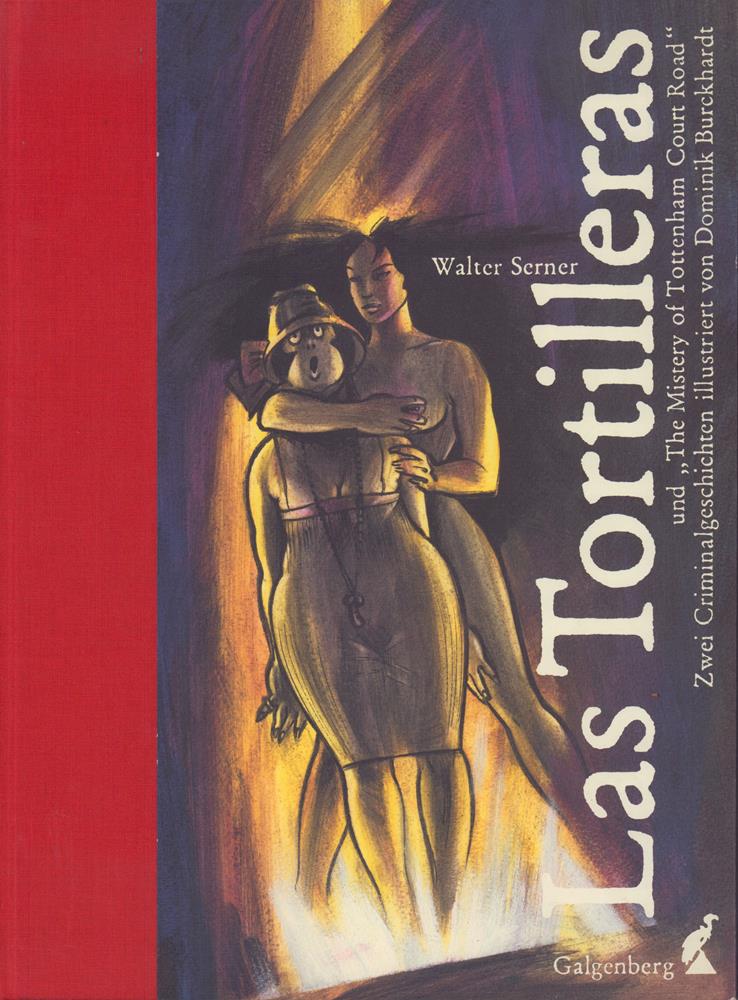
1991rif. 68164(Hamburg, Verlag am Galgenberg, 1991). 55 S. Mit zahlr. farb. Illustr. 4to (31 x 23,5 cm). Farb. illustr. OHLn.
1963rif. 4437Editions Jean-Jacques Pauvert 1963. In-8 broché de 152 pages au format 14 x 19 cm. Couvertures mauves avec titre imprimé. Dos carré. Plats et intérieur parfaist. Portrait de Tristan Tzara et dessins hors texte en noir par Francis Picabia. Bibliographie de l'auteur en début de volume. Etat proche du neuf. Contient la réédition des " Sept Manifestes Dada " publiés par P.J. Baudry en 1924, enrichi en édition originale en volumes de " Lampisteries ", textes publiés par l'auteur entre 1917 et 1922 dans différentes publications.
1960In 4, cm 25 x 32 pp. 159 con piu' di ottanta illustrazioni a colori applicate anche a piena pagina, nel testo. Legatura in tela editoriale con evidenti segni d'uso e del tempo. Bruniture alla coperta, un piccolo strappo lungo la linea esterna del dorso. Priva di sovraccoperta. Questa opera racconta attraverso il testo e le immagini le correnti artistiche e i grandi pittori del '900 che hanno rivoluzionato la storia della pittura partendo da Manet, considerato il maggiore interprete della pittura pre-impressionista, fino ad approdare a Mondrian che tutti questi stili sperimenta fino a fissare i suoi proncipi estetici nel neoplasticismo. Testo in lingua francese.
Paris, Editions de l'Illustration Baschet 1961 - 2 volumes gr.in-4 (29,5 x 38,2 cm) reliure toile éditeur -Incrustation du titre sur le 1 plat - illusttations couleurs contre-collées ou NB - 146 + table - 146 pages - très propre- Fauvisme - Cubisme - Futurisme - Orphisme ( R. Delaunay ) - Peinture métaphysique - Les Indépendants ou Peintres d'Expression - Les Naïfs - Naissance du Non-figuratif - Néo-Plasticisme - Purisme - Dadaisme - Surréalisme - Néo-Réalisme - Réalisme impressionniste - Réalisme humaniste - Réalisme expressionniste - La nouvelle Figuration de la Nature - Les Abstraits.
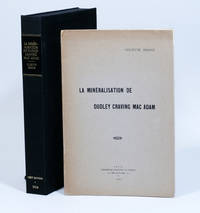
1924rif. 2729Paris: Imprimerie Croutzet et Depost 1924. First edition. Original wrappers. Very Good. FIRST EDITION of Roche's surreal dadaist roman à clef exposing the misogynistic world of the French avant-garde. With annotations likely in Roche's hand. Like too many women artists of the early twentieth century French writer and artist Juliette Roche 1884 - 1980 has been long overshadowed by her male contemporaries. Roche came of age amidst leading artistic and literary salons of early 20th century Paris. She studied at Académie Ranson then considered the absolute best art school in Paris and was an early adopter of Cubism. However she is most closely associated with Dadaism. Despite Dada being a movement of absolute rebellion it harbored the normalized misogyny of the early twentieth century. Roche's most explicit critique of this discrepancy of rebellion vs repression can be found in La Minéralisation de Dudley Craving Mac Adam her groundbreaking novella. Part satire and part Dada nonsense the thinly veiled roman à clef is a prime example of the daring poetic style that Roche developed while living in New York during World War I. Having watched artistic vanguards come and go in Paris' salons and exhibitions Roche observed the New York City hijinks of Francis Picabia French 1879 - 1953 and Marcel Duchamp 1887 - 1968 with a level of detachment that alluded their American peers. She had close access to Picabia perhaps too close: in 1917 he and his wife Gabrielle Buffet-Picabia moved into an apartment directly beneath one Roche shared with her husband Albert Gleizes a French artist and philosopher who helped popularize Cubism on the Upper West Side. While Roche admired Picabia's iconoclasm she was disturbed by the misogyny she saw in works like his manometres where woman as 'la machine' was at best a manipulable object at worst the butt of a private joke. If taking Roche's ambivalence towards and her neighborly proximity to Picabia into consideration the novella could be inspired in part by an age-old story: pure contempt of one's neighbor. The novella is an indirect indictment of certain illicit behaviors Roche found annoying and dangerous. She synthesizes her fellow expatriates' personalities and physical traits to create the decadent Mac'Adam and the men he encounters on the day of his demise. Picabia becomes Mac'Adam. Swiss writer and boxer Arthur Craven 1887 - 1918 lends his name to the protagonist while becoming Lloyd Willow. Juliette Roche herself appears as Juliette Granite a play on words since roche means rock in French. Roche spins the narrative in poetic and surreal fragments at turns absurd and others told in a stream-of-consciousness style. La Minéralisation moves beyond conventional storytelling to allow readers into the minds of her characters through rich interior monologues revealing in each case her estimation of the particular model's idiosyncrasies. Roche seemed to find the antics of the all-male world of the Dadaists to be too limited and they're wickedly satirized among these pages. Written in ink on the first page is "Publié dans 'La Vie des Lettres' en 1921 / New York 1918" and there are a few words written on page 20 in the same hand. It appears to be Roche's handwriting from the few samples we've seen but we can't guarantee it. Paris: Imprimerie Croutzet et Depost 1924. Thin octavo 33pp terminal blank original printed wrappers stapled as issued; custom box. Small tear and split at top of spine; a near-fine extremely well-preserved copy. EXCEEDINGLY RARE: We can find records of no other copies that have been on the market. References: Burke Carolyn "Recollecting Dada: Juliette Roche." Women in Dada: Essays on Sex Gender and Identity edited by Naomi Sawelson-Gorse MIT Press 1998 557. Imprimerie Croutzet et Depost unknown books