Galerie Le TriskèleLivre Rare Book

571 résultats
1978réf. 1253561978 Galerie Le Triskèle - 1978 - Plaquette in-8 sans pagination de 35 pages environ - Illustrations en N&B dans le texte - Ouvrage publié à l'occasion des expositions "Collages" du 17 novembre au 16 décembre et "Assemblages, Dessins, Peintures" du 19 décembre au 13 janvier, à la Galerie Le Triskèle
réf. awd-1148Verona, Corubolo & Castiglioni, 1970. In-4 relié par l’éditeur, dos en chagrin bleu nuit, titre doré, filets dorés aux mors, tête or, étui, 42 pp.
réf. 2Paris, Club français du livre, 1964; in-8° carré, pleine toile de jute beige avec décor de lettres entrelacées. Avec un portrait de l'auteur par Modigliani en frontispice.
réf. 170112ENFormat 17,5 x 22,5 cm, non paginé ( 30 pages environ), éditions Alexandre Jolas 1968, tiré à 1500 exemplaires sur papier Ventura. Reproductions d’œuvres de Max Ernst, principalement des collages. Peinture, sculpture, surréalisme, dadaïsme.
1969réf. 2087Editions Pierre Belfond 1969. In-8 cartonnage éditeur de 204 pages au format 13,5 x 22 cm. Jaquette et illustrations originales par Max Ernst. Petit manque en haut du 4ème plat de la jaquette. Dos et intérieur frais. Textes de Edward Lear, Victor Hugo, Lewis Carroll, Charles Cros, Arthur Rimbaud, Alfred Jarry, Raymond Roussel, Francis Picabia, Jean Arp, Tristan Tzara, Jean Cocteau, Louis Aragon, Benjamin Péret, Henri Michaux, Robert Desnos, Raymond Queneau, etc. Textes réunis et présentés par Henri Parisot. Traductions par Henri Parisot, Armel Guerne, Robert Valançey, et Max Ernst. Tirage unique à 3000 exemplaires numérotés sur alfa ( n° 2262 ). Edition originale, peu courante.
réf. 10617Bruxelles. Didier Devillez, éditeur. Collection " Fac-Simile ". 2002. In-8° broché. 16 [+ 32] pages. Très bon état.
réf. 006344Paris 0 In-12 en hauteur En feuilles, couverture illust Edition originale
réf. 006825Paris 0 3 fascicules in-4 brochés, couv. illustrées Edition originale
1957réf. 008903Paris Le Petit silence illustré 1957 In-12 en hauteur En feuilles, couverture illust Edition originale
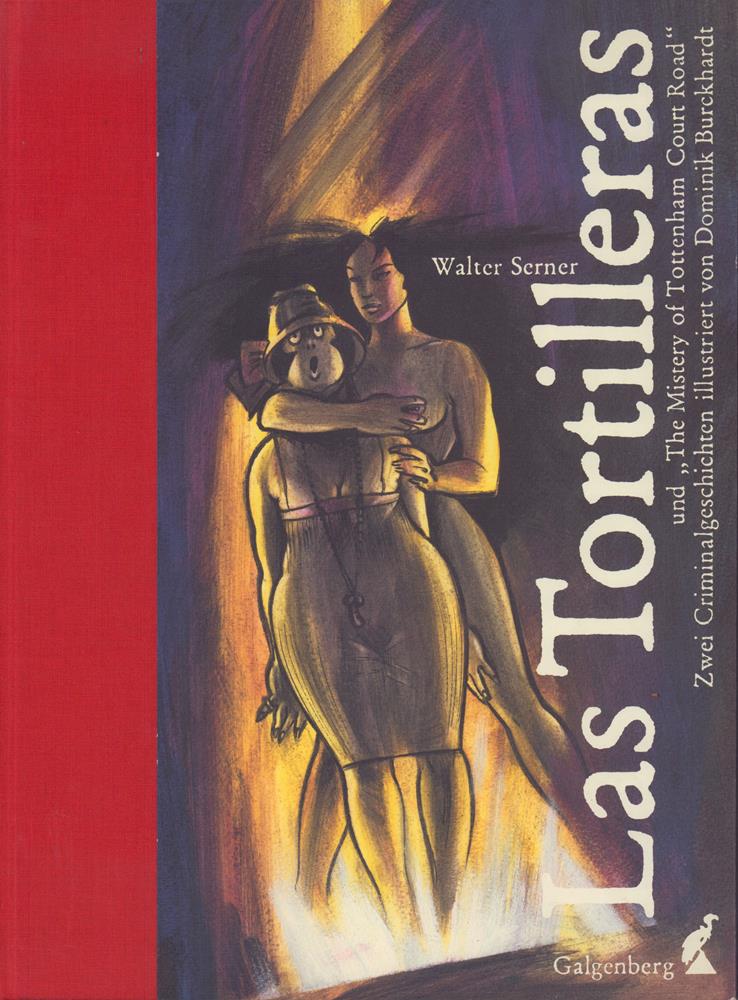
1991réf. 68164(Hamburg, Verlag am Galgenberg, 1991). 55 S. Mit zahlr. farb. Illustr. 4to (31 x 23,5 cm). Farb. illustr. OHLn.
1963réf. 4437Editions Jean-Jacques Pauvert 1963. In-8 broché de 152 pages au format 14 x 19 cm. Couvertures mauves avec titre imprimé. Dos carré. Plats et intérieur parfaist. Portrait de Tristan Tzara et dessins hors texte en noir par Francis Picabia. Bibliographie de l'auteur en début de volume. Etat proche du neuf. Contient la réédition des " Sept Manifestes Dada " publiés par P.J. Baudry en 1924, enrichi en édition originale en volumes de " Lampisteries ", textes publiés par l'auteur entre 1917 et 1922 dans différentes publications.
1960In 4, cm 25 x 32 pp. 159 con piu' di ottanta illustrazioni a colori applicate anche a piena pagina, nel testo. Legatura in tela editoriale con evidenti segni d'uso e del tempo. Bruniture alla coperta, un piccolo strappo lungo la linea esterna del dorso. Priva di sovraccoperta. Questa opera racconta attraverso il testo e le immagini le correnti artistiche e i grandi pittori del '900 che hanno rivoluzionato la storia della pittura partendo da Manet, considerato il maggiore interprete della pittura pre-impressionista, fino ad approdare a Mondrian che tutti questi stili sperimenta fino a fissare i suoi proncipi estetici nel neoplasticismo. Testo in lingua francese.
Paris, Editions de l'Illustration Baschet 1961 - 2 volumes gr.in-4 (29,5 x 38,2 cm) reliure toile éditeur -Incrustation du titre sur le 1 plat - illusttations couleurs contre-collées ou NB - 146 + table - 146 pages - très propre- Fauvisme - Cubisme - Futurisme - Orphisme ( R. Delaunay ) - Peinture métaphysique - Les Indépendants ou Peintres d'Expression - Les Naïfs - Naissance du Non-figuratif - Néo-Plasticisme - Purisme - Dadaisme - Surréalisme - Néo-Réalisme - Réalisme impressionniste - Réalisme humaniste - Réalisme expressionniste - La nouvelle Figuration de la Nature - Les Abstraits.
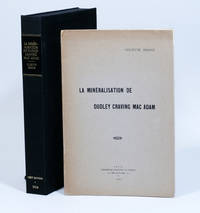
1924réf. 2729Paris: Imprimerie Croutzet et Depost 1924. First edition. Original wrappers. Very Good. FIRST EDITION of Roche's surreal dadaist roman à clef exposing the misogynistic world of the French avant-garde. With annotations likely in Roche's hand. Like too many women artists of the early twentieth century French writer and artist Juliette Roche 1884 - 1980 has been long overshadowed by her male contemporaries. Roche came of age amidst leading artistic and literary salons of early 20th century Paris. She studied at Académie Ranson then considered the absolute best art school in Paris and was an early adopter of Cubism. However she is most closely associated with Dadaism. Despite Dada being a movement of absolute rebellion it harbored the normalized misogyny of the early twentieth century. Roche's most explicit critique of this discrepancy of rebellion vs repression can be found in La Minéralisation de Dudley Craving Mac Adam her groundbreaking novella. Part satire and part Dada nonsense the thinly veiled roman à clef is a prime example of the daring poetic style that Roche developed while living in New York during World War I. Having watched artistic vanguards come and go in Paris' salons and exhibitions Roche observed the New York City hijinks of Francis Picabia French 1879 - 1953 and Marcel Duchamp 1887 - 1968 with a level of detachment that alluded their American peers. She had close access to Picabia perhaps too close: in 1917 he and his wife Gabrielle Buffet-Picabia moved into an apartment directly beneath one Roche shared with her husband Albert Gleizes a French artist and philosopher who helped popularize Cubism on the Upper West Side. While Roche admired Picabia's iconoclasm she was disturbed by the misogyny she saw in works like his manometres where woman as 'la machine' was at best a manipulable object at worst the butt of a private joke. If taking Roche's ambivalence towards and her neighborly proximity to Picabia into consideration the novella could be inspired in part by an age-old story: pure contempt of one's neighbor. The novella is an indirect indictment of certain illicit behaviors Roche found annoying and dangerous. She synthesizes her fellow expatriates' personalities and physical traits to create the decadent Mac'Adam and the men he encounters on the day of his demise. Picabia becomes Mac'Adam. Swiss writer and boxer Arthur Craven 1887 - 1918 lends his name to the protagonist while becoming Lloyd Willow. Juliette Roche herself appears as Juliette Granite a play on words since roche means rock in French. Roche spins the narrative in poetic and surreal fragments at turns absurd and others told in a stream-of-consciousness style. La Minéralisation moves beyond conventional storytelling to allow readers into the minds of her characters through rich interior monologues revealing in each case her estimation of the particular model's idiosyncrasies. Roche seemed to find the antics of the all-male world of the Dadaists to be too limited and they're wickedly satirized among these pages. Written in ink on the first page is "Publié dans 'La Vie des Lettres' en 1921 / New York 1918" and there are a few words written on page 20 in the same hand. It appears to be Roche's handwriting from the few samples we've seen but we can't guarantee it. Paris: Imprimerie Croutzet et Depost 1924. Thin octavo 33pp terminal blank original printed wrappers stapled as issued; custom box. Small tear and split at top of spine; a near-fine extremely well-preserved copy. EXCEEDINGLY RARE: We can find records of no other copies that have been on the market. References: Burke Carolyn "Recollecting Dada: Juliette Roche." Women in Dada: Essays on Sex Gender and Identity edited by Naomi Sawelson-Gorse MIT Press 1998 557. Imprimerie Croutzet et Depost unknown
1924réf. 2729Paris: Imprimerie Croutzet et Depost 1924. First edition. Original wrappers. Very Good. FIRST EDITION of Roche's surreal dadaist roman à clef exposing the misogynistic world of the French avant-garde. With annotations likely in Roche's hand. Like too many women artists of the early twentieth century French writer and artist Juliette Roche 1884 - 1980 has been long overshadowed by her male contemporaries. Roche came of age amidst leading artistic and literary salons of early 20th century Paris. She studied at Académie Ranson then considered the absolute best art school in Paris and was an early adopter of Cubism. However she is most closely associated with Dadaism. Despite Dada being a movement of absolute rebellion it harbored the normalized misogyny of the early twentieth century. Roche's most explicit critique of this discrepancy of rebellion vs repression can be found in La Minéralisation de Dudley Craving Mac Adam her groundbreaking novella. Part satire and part Dada nonsense the thinly veiled roman à clef is a prime example of the daring poetic style that Roche developed while living in New York during World War I. Having watched artistic vanguards come and go in Paris' salons and exhibitions Roche observed the New York City hijinks of Francis Picabia French 1879 - 1953 and Marcel Duchamp 1887 - 1968 with a level of detachment that alluded their American peers. She had close access to Picabia perhaps too close: in 1917 he and his wife Gabrielle Buffet-Picabia moved into an apartment directly beneath one Roche shared with her husband Albert Gleizes a French artist and philosopher who helped popularize Cubism on the Upper West Side. While Roche admired Picabia's iconoclasm she was disturbed by the misogyny she saw in works like his manometres where woman as 'la machine' was at best a manipulable object at worst the butt of a private joke. If taking Roche's ambivalence towards and her neighborly proximity to Picabia into consideration the novella could be inspired in part by an age-old story: pure contempt of one's neighbor. The novella is an indirect indictment of certain illicit behaviors Roche found annoying and dangerous. She synthesizes her fellow expatriates' personalities and physical traits to create the decadent Mac'Adam and the men he encounters on the day of his demise. Picabia becomes Mac'Adam. Swiss writer and boxer Arthur Craven 1887 - 1918 lends his name to the protagonist while becoming Lloyd Willow. Juliette Roche herself appears as Juliette Granite a play on words since roche means rock in French. Roche spins the narrative in poetic and surreal fragments at turns absurd and others told in a stream-of-consciousness style. La Minéralisation moves beyond conventional storytelling to allow readers into the minds of her characters through rich interior monologues revealing in each case her estimation of the particular model's idiosyncrasies. Roche seemed to find the antics of the all-male world of the Dadaists to be too limited and they're wickedly satirized among these pages. Written in ink on the first page is "Publié dans 'La Vie des Lettres' en 1921 / New York 1918" and there are a few words written on page 20 in the same hand. It appears to be Roche's handwriting from the few samples we've seen but we can't guarantee it. Paris: Imprimerie Croutzet et Depost 1924. Thin octavo 33pp terminal blank original printed wrappers stapled as issued; custom box. Small tear and split at top of spine; a near-fine extremely well-preserved copy. EXCEEDINGLY RARE: We can find records of no other copies that have been on the market. References: Burke Carolyn "Recollecting Dada: Juliette Roche." Women in Dada: Essays on Sex Gender and Identity edited by Naomi Sawelson-Gorse MIT Press 1998 557. Imprimerie Croutzet et Depost unknown books
1947Il volume presenta la dedica autografa firmata Tristan Tzara e datata aprile 1947
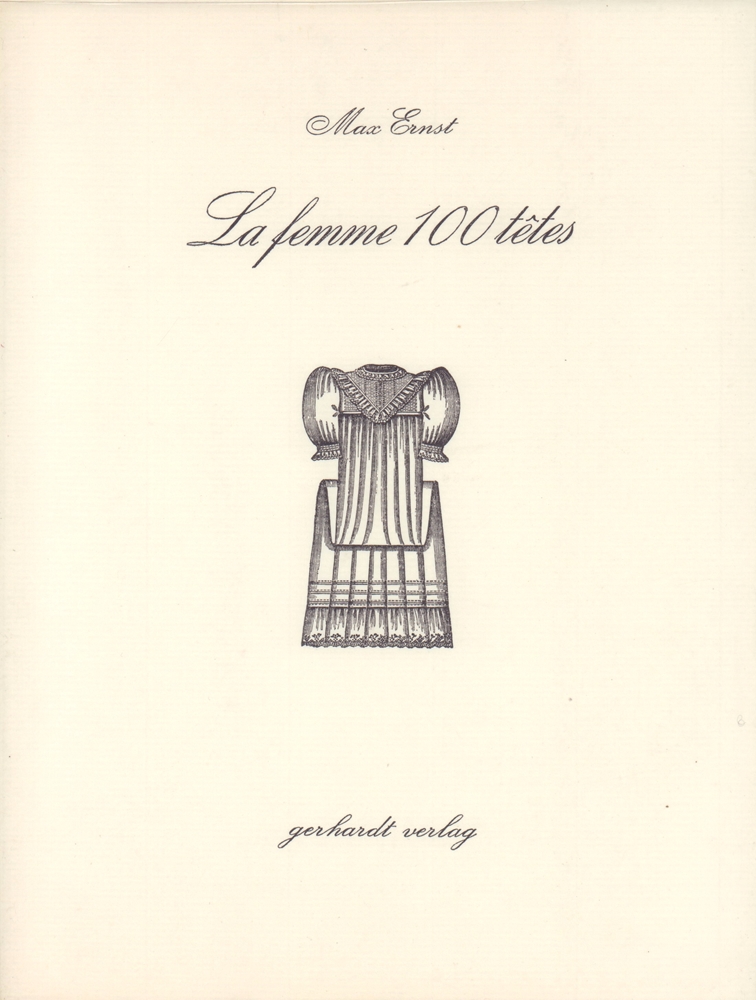
1962réf. 71140(Berlin), Gerhardt Verlag, (1962). 328 nn. S. Mit sehr zahlr. Abb. Gr.-8vo (25 x 19 cm). Illustr. OKart.
1953Edizione originale nella tiratura di testa. CON DEDICA Esemplare XXXIII/L nella tiratura di testa dei soli 50 a grandi margini «sur Vélin d’Arches», ben completo della litografia originale a colori di Léger, siglata a inchiostro blu; firme autografe del poeta e dell’artista al colophon. In condizioni quasi perfette, conservato in cofanetto di pregio in mezza pelle. Unica collaborazione tra il già dadaista poeta franco-rumeno e il pittore francese campione del cubismo. Monod, Manuel, n. 10798 ; Saphire, Léger: The Complete Graphic Work, p. 210
1953prima edizione. Ottimo esemplare. Raccolta di testi di vario argomento pubblicati dal 1936 al 1952, qui riuniti per la prima volta. Scrive la storica dell’arte Lydia Gasman sul titolo: «Breton’s “la clé des champs” [sic] is mainly in the hands of Breton himself. [Anna] Balakian writes that Breton's symbolic "clé des champs" is the key to the mysteries of the subjective "field" within and of the objective "field” of necessity». Gasman, «Mystery, Magic and Love in Picasso, 1925-1938: Picasso and the Surrealist Poets», Columbia University, 1986, pagina 239
1965- La Brèche, Paris Novembre 1965, 15,5x22,5cm, broché. - Edition originale. Contributions deJ. Mayoux, G. Sebbag, K. White, J. Pierre, J. Schuster ... Illustrations de Toyen, J. Camacho, G. der Kervokian, U. Sterpini, K. Klapheck... Plats très légèrement salis sans gravité. [ENGLISH DESCRIPTION ON DEMAND]
1964- La Brèche, Paris Juin 1964, 15,5x22,5cm, broché. - Edition originale. Contributions de R. Benayoun, M. de Chazal, R. Ivsic, J. Mansour, ... Illustrations de Toyen, J.P. Silbermann, J. Camacho, G. der Kervokian, J. Rosenquist... Agréable exemplaire. [ENGLISH DESCRIPTION ON DEMAND]
1963- La Brèche, Paris Octobre 1963, 15,5x22,5cm, broché. - Edition originale. Contributions de A. Breton, J. Mansour, P. Alechinsky, A. Chavée, R. Ivsic... Illustrations de Toyen, M. Parent, I. Castellanos, J.C. Leboucher, M. W. Svanberg... Agréable exemplaire. [ENGLISH DESCRIPTION ON DEMAND]
1963- La Brèche, Paris Février 1963, 15,5x22,5cm, broché. - Edition originale. Contributions de J.F. Revel, R. Benayoun, A. Breton, P. de Massot, Arrabal, J. Mayoux, ... Illustrations de J. Camacho, J. Benoît, P. Molinier, J. Styrsky, M. Bounoure... Petits manques angulaires sur le premier plat, une mouillure marginale sur les pages suivantes s'amenuisant pour disparaître au gré des pages. [ENGLISH DESCRIPTION ON DEMAND]
1962- La Brèche, Paris Mai 1962, 15,5x22,5cm, broché. - Edition originale. Contributions de A. Breton, V. Bounoure, R. Benayoun, J. Mayoux, J. Markale... Illustrations de Toyen, J. Benoît, . cabanel, M. Parent... Agréable exemplaire. [ENGLISH DESCRIPTION ON DEMAND]
1959réf. 29303Editions Arabie-sur-Seine 1987. In-8 broché de 24 pages au format 22,5 x 16 cm. Couverture spécialement conçue et illustrée par Jules Pérahim. Dos carré muets. Plats et intérieur frais. Fac-similé de l'édition originale, parue aux éditions Surréalistes en 1939, avec un commentaire d'Édouard Jaguer publié en 1984 dans la revue " Ellébore " n° 8. Tirage unique à 300 exemplaires numérotés sur beau papier ( n° 27 ). Edition en partie originale, en état proche du neuf.