705 996 résultats
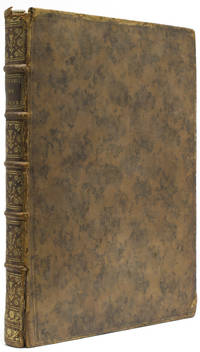
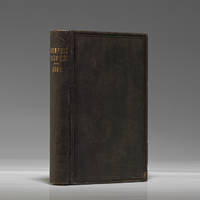
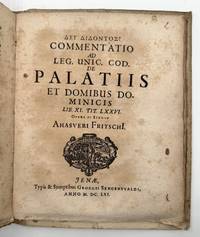
1661réf. 372198Cologne: Kinchium 1661. Mallinckrot: Engraved additional title dated 1639. 20 125 11pp. Kortholt: 8 56pp. Fritsch: 6 74 2pp. 4to. Early drab paper boards alla rustica binding on three cords manuscript title on spine text uncut. Foxing and heavily toned. Provenance: Princes of Liechtenstein armorial bookplate. Mallinckrot: Engraved additional title dated 1639. 20 125 11pp. Kortholt: 8 56pp. Fritsch: 6 74 2pp. 4to. Mallinckrot's monograph published on the occasion of the celebration of the second centenary of Gutenberg's invention is the first thorough investigation of the early testimonies to the discovery of printing with the author in favor of Mainz against Haarlem. The work contains the first use of the word "incunabula" in connection with printing. The additional title engraved by Loeffler includes portraits of Gutenberg Faust and Shakespeare and a scene in a printing shop. The second work here bound following Mallinckrot is Protestant theologian Kortholt's study on the origins of mathematics and astronomy asserting the Greeks were taught by Chaldeans and Egyptians. Bigmore & Wyman 2:16 Kinchium unknown books
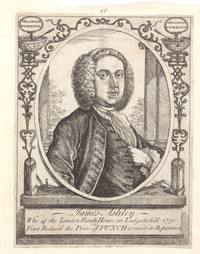
réf. 267136London: Thomas Worlidge n.d. ca mid-18th century. Engraved portrait of James Ashley in cartouche flanked by ornate pedestals supporting two punch bowls with engraved caption as above by Thomas Worlidge. 1 vols. 7-9/16 x 5-3/4 in. A strong impression laid down light creases from prior folding small pin hole near engraved caption. Engraved portrait of James Ashley in cartouche flanked by ornate pedestals supporting two punch bowls with engraved caption as above by Thomas Worlidge. 1 vols. 7-9/16 x 5-3/4 in. Scarce trade card of James Ashley proprietor of the London Coffee House and Punch-House 1731-1776 who was "London's leading purveyor of Punch in the eighteenth century" Wondrich Punch p. 65 and "the world's first celebrity mixologist the first man to become famous for compounding and selling a mixed drink" ibid p. 172. Ashley a former cheese merchant opened his Punch-House in 1731 in Ludgatehill London. Extensive advertising in London papers as well as the distinct ornate pedestals surmounted by iron punch bowls which flanked its entrance made the London Punch-House one of the most well-known drinking establishments in the city. Clientele included Hogarth Boswell Oliver Goldsmith and Benjamin Franklin. A large sign outside of the Punch-House echoes the caption on this trade card "Pro bono publico. James Ashley in 1731 first reduced the price of punch raised its reputation and brought it into universal esteem." Ashley did indeed reduce the price of punch - from 8 shillings for punch made from a quart of arrack to 6 shillings - but his great innovation was to offer punch in smaller portions in servings as small as two ounces. These small servings made to order for the customer were the precursor to the modern cocktail. This trade card is engraved by Ashley's friend Thomas Worlidge 1700-1766 dubbed "the English Rembrandt" who also engraved portraits of Ashley's wife and one Mrs. Graywood the bar-keep at the London Punch-House. Not in ESTC Thomas Worlidge unknown books
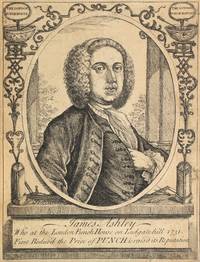
réf. 267079London: Thomas Worlidge mid-18th century. Engraved portrait of James Ashley in cartouche flanked by ornate pedestals supporting two punch bowls with engraved caption as above by Thomas Worlidge. 7-9/16 x 5-3/4 in. A strong impression with very slight rubbing and discoloration. Engraved portrait of James Ashley in cartouche flanked by ornate pedestals supporting two punch bowls with engraved caption as above by Thomas Worlidge. 7-9/16 x 5-3/4 in. Scarce trade card of James Ashley proprietor of the London Coffee House and Punch-House 1731-1776 who was "London's leading purveyor of Punch in the eighteenth century" Wondrich Punch p. 65 and "the world's first celebrity mixologist the first man to become famous for compounding and selling a mixed drink" ibid p. 172. Ashley a former cheese merchant opened his Punch-House in 1731 in Ludgatehill London. Extensive advertising in London papers as well as the distinct ornate pedestals surmounted by iron punch bowls which flanked its entrance made the London Punch-House one of the most well-known drinking establishments in the city. Clientele included Hogarth Boswell Oliver Goldsmith and Benjamin Franklin. A large sign outside of the Punch-House echoes the caption on this trade card "Pro bono publico. James Ashley in 1731 first reduced the price of punch raised its reputation and brought it into universal esteem." Ashley did indeed reduce the price of punch - from 8 shillings for punch made from a quart of arrack to 6 shillings - but his great innovation was to offer punch in smaller portions in servings as small as two ounces. These small servings made to order for the customer were the precursor to the modern cocktail. This trade card is engraved by Ashley's friend Thomas Worlidge 1700-1766 dubbed "the English Rembrandt" who also engraved portraits of Ashley's wife and one Mrs. Graywood the bar-keep at the London Punch-House. Not in ESTC Thomas Worlidge unknown books
1793réf. 325411New- York: Printed by Friar McLean No. 41 Hanover-Square 1793. First edition printed in an edition of 200 copies; the introduction states: "In Friary Wednesday November 13th 1793 On Motion resolved That the Thanks of the Society be presented to Brother Samuel L. Mitchill. That two hundred copies of Brother S. L. Mitchill's Oration be printed. for use of the Members of the Friary. 34pp. A good copy. The fragile marbled wrappers are worn on spine and extremities of covers with loss to most of spine revealing sewning on spine upper edge of front cover and the entire text pages have an early uneven two-inch brown stain with some tears and loss to paper at blank top margin of first few printed pages. The stain is visible on unprinted verso of front cover and front flyeaf and at unprinted top margin of title page and all text pages in upper blank margin only-- the printed text is complete and entire printed text is quite fresh and clean. First edition printed in an edition of 200 copies; the introduction states: "In Friary Wednesday November 13th 1793 On Motion resolved That the Thanks of the Society be presented to Brother Samuel L. Mitchill. That two hundred copies of Brother S. L. Mitchill's Oration be printed. for use of the Members of the Friary.". 34pp. A rare publication; unrecorded by OCLC with no citation for this publication. OCLC cites seven other individual publications by Samuel L. Mitchell including the following: -- The life exploits and precepts of Tammany the famous Indian chief : being the anniversary oration pronounced before the Tammany Society or Columbian Order in the old Presbyterian church in the city of New-York on Tuesday the 12th May 1795. New- York: Printed by J. Buel . 1795. A biography in 36 pages. -- Some of the memorable events and occurrences in the life of Samuel L. Mitchill etc. New York : s.n. 1826. -- An address to the citizens of New-York : who assembled in the Brick Presbyterian Church to celebrate the twenty-third anniversary of American independence. New-York Printed and sold by George F. Hopkins at Washington's Head 84 Maiden-Lane.1800. -- A discourse on the character and services of Thomas Jefferson more especially as a promoter of natural and physical science. Pronounced by request before the New York Lyceum of Natural History on the 11th October 1826. Printed by Friar McLean, No. 41, Hanover-Square unknown books
1898réf. 54189New York: Orcutt Co 1898. Lithograph in colors 49cm x 32.5cm 19" x 12-3/4". Printed on thin coated stock text in three lines below large central image of a bearded laborer. Small marginal loss at left away from printed area; a few small marginal tears small area of ink specks at left of image. Overall Very Good. The artwork is unsigned; date and artist supplied by us see below. Original newsstand advertising poster for the April 1898 issue of Century illustrated with a dramatic portrait of a coal worker by the prominent Canadian-American illustrator Jay Hambidge 1867-1924. The portrait is one of a dozen or so by Hambidge published to illustrate an article by Henry Edward Drood on the recent disruptions in the Pennsylvania anthracite fields. In its magazine appearance this portrait is captioned "A Factor in the Problem Italian" and illustrates a passage by Drood on the problems of immigrant enfranchisement: ".A vote of the English-speaking man who reads these words will carry no more weight in deciding the destinies of our nation than the ballot cast by any one of thousands of foreigners who have become naturalized citizens as a matter of business; who care nothing for our country except as a place wherein to make money.who believe firmly in witchcraft and are content to eat and sleep and fight among themselves like so many half-domesticated animals." Despite its ungenerous intent this modern viewer senses a quiet dignity in the eyes of Hambidge's subject leaving a far better impression to posterity than Drood's xenophobic ranting. An atrractive example. The poster does not appear to be separately catalogued by any OCLC member institution. Orcutt Co unknown books
1931réf. 24326n.p.: The Central Press Association 1931. The cartoon shows a young man trying to solicit a pretty neighbor's help while a black handyman rushes to an inopportune rescue. 1 vols. 10-1/2 x 10-1/2 inches. The cartoon shows a young man trying to solicit a pretty neighbor's help while a black handyman rushes to an inopportune rescue. 1 vols. 10-1/2 x 10-1/2 inches. A vintage cartoon by the artist who later created the popular comic strip "Skeets". The Central Press Association unknown books
1854réf. 14986Boston: Little Brown 1854. Seventh Edition. 3 vols. 8vo. Dark brown 3/4 morocco raised bands on spine marbled sides and endpapers t.e.g. some light foxing mostly to prelims else fine and attractive. With the signature in each volume of Geo. Shea and the dates 1858 and 1859: an endpaper note identifies him as being a judge. Seventh Edition. 3 vols. 8vo. A nice copy of a large-type edition of this standard and important work. Shea was the Chief-Justice of the Marine Court. Little, Brown unknown books
1900réf. 28014London: Various publishers 1900. First Editions. 8 vols. 8vo. Bound in 3/4 brown polished calf t.e.g. by Bickers & Son London. With the bookplate of R.D. Jackson. First Editions. 8 vols. 8vo. Various publishers unknown books
1838réf. 35862Paris: F. Bonnaire; Dupuis Dumarsais 1838. First editions of vols. I-IV; second edition of vol. V. Illustrated with folding charts maps facsimiles and numerous engravings after Johannot Raffet and others. 5 vols. 8vo. Mid-nineteenth-century quarter calf and blue marbled boards. Bookplates. Some rubbing to extremities. First editions of vols. I-IV; second edition of vol. V. Illustrated with folding charts maps facsimiles and numerous engravings after Johannot Raffet and others. 5 vols. 8vo. F. Bonnaire; Dupuis Dumarsais unknown books
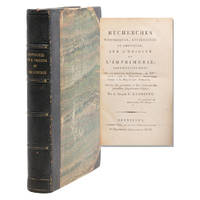
1740réf. 36937La Haye: La Veuve Le Vier et Pierre Paupie 1740. First edition. Engraved allegorical frontispiece by Schley. 2 parts in one volumes. 1 vols. 4to. Contemporary French mottled calf gilt spine marbled endpapers. Upper joint starting at bottom and apart from some minor toning this is a lovely unsophisticated copy in contemporary dress. First edition. Engraved allegorical frontispiece by Schley. 2 parts in one volumes. 1 vols. 4to. Printed by Prosper Marchand a Huguenot publisher and journalist who fled France in 1709 the work appeared at the 300th anniversary of the invention of printing. Marchand writes that he produced the book "a la sollicitation de quelques amis qui ont cru que le troisième jubile ou la troisième année séculaire de l'imprimerie reveilleroit infailliblement la curiosité du publique touchant l'origine de ce bel art at the request of some friends who believed that the third jubilee or the tercentenary of printing would infallibly wake the public curiosity concerning the origin of this beautiful art." The allegorical frontspiece by J.V. Schley show Minerva and Mercury descending from Heaven granting the gift of printing to Germany who in turn gives it to England Holland France and Italy. Bigmore & Wyman II p. 22 La Veuve Le Vier et Pierre Paupie unknown books
1931réf. 24346n.p.: The Central Press Association 1931. The cartoon shows a black man asleep in bed dreaming about being asleep on a bed of roses and on a tropical isle. 1 vols. 10-1/2 x 10-1/2 inches. Fine. The cartoon shows a black man asleep in bed dreaming about being asleep on a bed of roses and on a tropical isle. 1 vols. 10-1/2 x 10-1/2 inches. A vintage cartoon by the artist who later created the popular comic strip "Skeets". The Central Press Association unknown books
1754réf. 28549Londres: Aux dépens de la Compagnie 1754. First edition. 2 vols. 12mo. Contemporary mottled calf leather spine labels. Despite a small chip at foot of spine of volume I this is a very pretty set. First edition. 2 vols. 12mo. Barbier II 827 Aux dépens de la Compagnie unknown books
1940réf. 9388London: Printed by Order of the Trustees 1940. 1992 Reprint Edition by Maurizio Martino one of 450 copies NYC NY. 1 vols. 8vo. Brick red cloth. New. 1992 Reprint Edition by Maurizio Martino one of 450 copies NYC NY. 1 vols. 8vo. A fine reprint of this invaluable reference work conveniently bound in four volumes. Printed by Order of the Trustees unknown books
1769réf. 36938Leipzig; Wien: Johan Paul Krauss 1769. First Edition. With 24 folding plates. xxv 436 12 index & errata; xl 524 18 index & errata. 1 vols. 8vo. Contemporary three quarter red morocco and marbled boards spine label. Exterior worn tear at foot of spine internally tight and clean. A very good copy. First Edition. With 24 folding plates. xxv 436 12 index & errata; xl 524 18 index & errata. 1 vols. 8vo. Includes notices of Berlin artists graphic arts engravers early woodcuts & woodcut books history of printing and account of a journey through Lower Saxony Westphalia & and Holland. Part Two with striking images from early printed books such as the "Eagle of John" from Ars Memorandi includes "a dissertation on the earliest forms of wood-cutting as applied to the illustration . Heinecken conjectures that Gutenberg took the idea of printing from the playing-card makers who are said to have been the first engravers of historical subjects intermingled with texts. . Heinecken is of opinion that their first productions were taken from wooden blocks." Bigmore & Wyman. Bigmore & Wyman p.320 Johan Paul Krauss unknown books
1799réf. 214620Brussels: Emmanuel Plon 1799. First edition. 2 engraved plates 5 text engravings. 1 vols. 8vo. Half morocco and marbled boards. Slight foxing. First edition. 2 engraved plates 5 text engravings. 1 vols. 8vo. Bigmore & Wyman I 418 "One of the monument of typographical bibliography" Emmanuel Plon unknown books
1931réf. 24328n.p.: The Central Press Association 1931. The cartoon titled "High Finance" shows a man in evening clothes arranging the loan of a nickel from a skeptical black man less formally dressed. 1 vols. 10-1/2 x 10-1/2 inches. The cartoon titled "High Finance" shows a man in evening clothes arranging the loan of a nickel from a skeptical black man less formally dressed. 1 vols. 10-1/2 x 10-1/2 inches. A vintage cartoon by the artist who later created the popular comic strip "Skeets". The Central Press Association unknown books
réf. acs1371Yale Historical Publications Manuscripts and Edited Texts XIX Published under the direction of the Department of History 1945. Containing a bookplate for Ethel Cutler Freeman Anthropologist and the first female trustee of the American Institute of Anthropology who worked with the Seminoles. Octavo brown cloth hardcover gilt lettering 252 pp. Near Fine with a badly torn dust jacket laid-in at rear. hardcover books
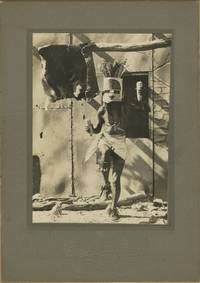
1903réf. BK0104Jacksonville Illinois: E. L. Young 1903. Original silver gelatin photograph of a Native American dancer in elaborate performance dress mounted on the studio card of E. L. Young. The sitter is shown in an animated pose before what appears to be a temporary canvas or exhibition structure holding dance implements and wearing ankle ornaments. Mount approximately 4 ¼ x 6 inches photograph 3 x 4 inches. Pencil identification of Young's Jacksonville studio to verso. Excellent. A photograph of an Indigenous American dancer likely made during the appearance of a traveling Wild West or related exhibition company in Jacksonville. Although the sitter has not been identified the Jacksonville location and apparent temporary showground setting suggest that the image records a performer from a traveling show rather than a western ethnographic portrait. In fact Pawnee Bill's Wild West appeared in the city in 1903;1 Pawnee Bill's company was among the largest touring Wild West groups of the period and employed Native performers as a major component of its program. We find no other examples and scant record of the photographer E.L. Young though a surviving cabinet card dated 1900 was offered online at the time of writing. 1 "PAWNEE BILL" Jacksonville Journal Courier October 16 1903 7. . E. L. Young unknown books
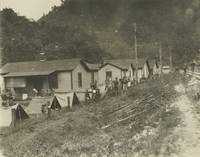
1921réf. BK0110No place 1921. Original press photograph 8 ¼ x 6 ½ inches. Typed caption affixed to verso with Reference Department stamp and editorial markings. Very good plus. A photograph of federal troops sent into the West Virginia coalfields during the final stages of the Battle of Blair Mountain showing soldiers from Fort Thomas Kentucky setting up tents outside miners' homes at Sharples West Virginia. The Battle of Blair Mountain was the culmination of several years of violent conflict between coal miners mine operators and law enforcement in southern West Virginia. In late August 1921 thousands of armed miners marched toward Logan County where they encountered a force of deputies mine guards state police and volunteers entrenched along Blair Mountain. President Warren G. Harding responded by ordering federal troops into the region; approximately 2100 soldiers were ultimately dispatched from several posts including Fort Thomas. Their arrival on September 2-3 effectively ended the fighting as miners unwilling to engage the United States Army surrendered their weapons and returned home. The caption identifies the scene as "Troops for Fort Thomas setting up" at "Sharples the last mining town to the front" with "The line of battle in on sic Blair Mt. shown in back ground." The soldiers are described as "non-coms" and "hard boiled." The image appears to be one of a documented series published by the Huntington Advertiser on September 11 1921; the West Virginia State Archives records the same scene and caption among contemporary newspaper photographs relating to Blair Mountain.1 1 West Virginia Archives & History "Newspaper Photos Relating to The Battle of Blair Mountain" accessed October 6 2026 https://archive.wvculture.org/history/labor/mwnews.html. . unknown books
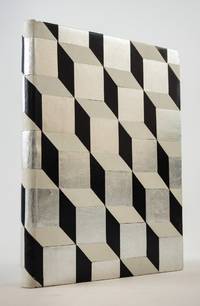
1912réf. ST20811Paris: Eugène Figuière et Cie 1912. FIRST EDITION. PRESENTATION COPY. 240 x 185 mm. 9 1/2 x 7 1/2". 44 pp. 2 leaves. STRIKING 3-D OPTICAL ILLUSION BINDING BY A. CONTRERAS stamp-signed on front turn-in WITH AN ALL-OVER DESIGN OF CUBES rendered in black white and silver morocco smooth spine. In older probably original brown woodgrain drop-back box backed with black buckram. With 26 black & white photographic reproductions of works by Cézanne Picasso Derain Braque Metzinger Laurencin Gleizes Léger Duchamp Picabia and original owner Juan Gris printed on glossy white paper. WITH A HALF TITLE INSCRIPTION in French OF GREAT IMPORTANCE FROM ONE OF THE CO-AUTHORS translated as: "To the painter Juan Gris with all my best wishes J Metzinger." Occasional underlinings in blue pencil. Text leaves with overall light browning and occasional foxing due to paper stock lower corner of half title restored and fore edge with minor chipping otherwise a fine copy the plates clean and bright and the binding unworn. Penned by two Cubist artists this is a highly resonant association copy of the first major treatise on the Cubism movement presented to noted Cubist painter Juan Gris and later put into an illusionistic binding composed of variably colored cubes that seem to jump off the surface. Albert Gleizes 1881-1953 and Jean Metzinger 1883-1956 had painted in both Post-Impressionist and Fauvist styles before their interest in exploring form and structure as well as light and color led them to the style that would become Cubism. Influenced by Cézanne's "brick-by-brick" technique and Poincaré's writings on space and time the new movement sought to examine objects from a mobile perspective and to depict multiple views of a subject in one painting. In "On Cubism" they explain: "An object has not one absolute form; it has many. It has as many as there are planes in the region of perception." The work features black & white illustrations of Cubist paintings by the authors and by fellow pioneers Picasso Braque Derain and Juan Gris to whom this copy was presented by Metzinger. Born in Madrid as José Victoriano González-Pérez 1887-1927 Gris studied engineering before moving to Paris to pursue art. First working as an illustrator for periodicals he was inspired by Metzinger to begin painting seriously. His training in engineering helped him appreciate the importance of mathematics in painting a realization triggered according to art historian John Richardson by Metzinger's painting "Le Goûter Tea Time" exhibited at the Salon d'Automne in 1911. Our volume was later in the collection of and probably bound for Chilean architect and collector Carlos Alberto Cruz 1939-2022. We have been unable to find more information on our binder "A. Contreras" but it seems possible that he was also Chilean as the Valparaiso-based Cruz owned a number of bindings signed with that name. Eugène Figuière et Cie unknown books
1866réf. 1235341866. First Edition. BLACK HISTORY WASHBURNE Elihu. B. Memphis Riots and Massacres. 30th Congress 1st Session. House of Representatives. Report No. 101. Washington D. C.: Government Printing Office 1866. Octavo contemporary pebbled brown cloth rebacked with original spine laid down; pp. 1 2-394. $1600.First edition of the July 1866 congressional Report of the House Select Committee containing hundreds of pages of official testimony and eyewitness accounts of the brutal May 1866 Memphis Massacre that killed over 45 Black men women and children and destroyed hundreds of Black homes and churches sending ""the unmistakable message that the North may have won the war but it did not win the hearts and minds of the white ruling class that clung to white supremacy.""The 1866 Memphis massacre was ignited by a quarrel between a white man and a Black man. ""A group of recently discharged Black veterans intervened and a white crowd began to gather"" Foner Black Reconstruction 262. Eyewitnesses reported that as the dispute escalated a white Memphis policeman told some of the Black men ""'Your old father Abe Lincoln is dead and damned.' This phrase reported more than once by those who later testified to the House Select Committee sums up the attitude of many of those who perpetrated the Massacre."" One man who was shot but survived testified that he saw white men drag a Black man out of a house and shoot him ""'right in his mouth.' Another man then 'kicked him over and shot him again.' Said he 'God damn you you will never be free again.' The violence of the first three days of May 1866É sent the unmistakable message that the North may have won the war but it did not win the hearts and minds of the white ruling class that clung to white supremacy and Black inferiority. White southerners refused to abandon their 'property interest' in Black livesÉ If 'war is politics continued by other means'"" then the violence in Memphis ""could be understood as the Civil War continued by other means"" Donald When the Rule of Law Breaks Down 1631-39. Before the violence subsided in Memphis ""one of the bloodiest outbreaks in this violent eraÉ at least 48 persons all but two of them Black lay dead five Black women had been raped and hundreds of Black dwellings churches and schools were pillaged or destroyed"" Foner 262.An investigator reported: ""'women and children were shot in bed.' An African American womanÉ 'was shot and then thrown into the flames of a burning house and consumed'É in some instances houses were set ablaze and armed men guarded them to prevent the escape of those insideÉ In the aftermath no arrests or attempts at prosecution were made. Federal civil-rights enforcement was lacking andÉ Memphis Mayor Park washed his hands of the matter"" Schermerhorn ""Civil-Rights Laws"" Atlantic. That July the House of Representatives Select Committee issued this Report. Herein refusing to call the three days in Memphis a ""riot"" it declares the violence a ""massacreÉ the mob finding itself under the protection and guidance of official authorityÉ was actuated by feelings of the most deadly hatred to the colored race."" Nevertheless there were still ""no arrests no trials and no convictions."" To historian Calvin Schermerhorn the violence of those days in 1866 continues to have ""a powerful legacyÉ the Lorraine Motel where Martin Luther King Jr. was shot sits only a few blocks from the site of the Memphis Massacre of 1866"" Atlantic. First edition: House of Representatives Report No. 101: ""July 25 1866ÑOrdered to be printed."" First text leaf with small marginal notation ""x 16521."" 1874 library bookplate.Interior very fresh with minor expert repairs to rear blanks both pastedowns and front inner hinge. An excellent copy of a very scarce book. hardcover books
1989réf. vot607Taipei: Chen Kuei-miao May 1 1989. Quarto cream textured boards hardcover gilt lettering red endpapers 92 pp. Fine in a Fine dust jacket. Contents: Dextrous and Colorful Chinese Embroidery; Cotton Robe; Chan Robe; Dogwood; Flowers with Sprays and Leaves; Embroidered Phoenix with Two Heads; Embroidered Portrait; Plum Bamboo and a Parrot Mother Bird with Baby Birds; Sun Rising over a Turbulent Sea; Plum Bamboo and Birds; Screen Embroidered with Chrysanthemum; Hibiscuses and Green Birds; Hibiscuses and a Crab; Grapes and a Squirrel; Autumn Hibiscus and Butterflies; White Falcon; Embroidered Portrait of Bodhisatlva Avalokitesvara; Four Joys in Early Spring; Royal Mother of the West Riding a Phoenix; Poetic Introduction to the Le-shou Hall by Emperor Ch’ien-lung; West Lake -- Two Peaks Piercing through Clouds; Caissia; Everlasting Verdure of Elysian Parks -- Graceful and Charming; Everlasting Verdure of Elysian Parks -- Splendid Reunion; Screen Embroidered with Characters; Embroidered Character Shou Composed of Flowering Plants; Embroidered Character Hsi Composed of Flowers and Birds; Couplet Embroidered with Characters Composed of Flowering Plants; Embroidered Couplet; Mural Decoration Embroidered with Dieties of Good Fortune Position Longerity and Joy; Offerings Made on New Year’s Day; Screen Embroidered with a Phoenix; Screen Embroidered with Immortals Rejoicing in Longevity; Embroidered Tablecloth; Embroidered Tablecloth; Embroidered Tablecloth; Chair Cover Embroidered with Offerings; Embroidered Portrait of Kuan Yu; Screen Embroidered with Flowers and Birds; Lateral Curtain Embroidered with Flowers and Birds; Lateral Curtain Embroidered with Flowers and Birds; Embroidered Flowers and Birds; Mandarin Ducks in a Lotus Pond;’ Embroidered Screens for Spring Summer Autumn and Winter; Embroidered Screen with a Pine Tree and Cranes; Embroidered Screen Expressive of Wealth and High Position; Lace on the Sleeves of the Robe; Lace on the Sleeves of the Robe; Gold Lace on the Sleeves of the Robe; Imperial Robe Detail; Lace on the Sleeves of the Robe; Chango-o Flying to the Moon. Chen Kuei-miao, May 1, 1989. hardcover books
1975réf. vot153Glendale California: The Arthur H. Clark Company 1975. First Edition. Octavo blue cloth hardcover gilt letters uncut 249 pp. Fine. Contents: Quebec Origins; To Santa Fe; Big Business; Money and Fame; A Look South; Disenchantment in Chihuahua; Trail Blazing; Farewell Missouri; To California; Finding a Railroad; The Last Ride; Trail’s End; Forgotten Glory; Dramatis Personae; Appendices: Chronology Contemporary Appraisals The Aubry Journals; Bibliography; Index. From Foreword:. Aubry was no obscure petty trader on the frontier. From 1846 to 1854 he was the busiest most effective merchant on the Saint Louis - Santa Fe - Chihuahua - California routes. His caravans were usually large and his speed and reliability in getting the goods to the right market ahead of others was well known throughout the country. Along with this mercantile reputation he developed a talent for individual travel that has never been surpassed. His eight-hundred mile trip on horseback from Santa Fe to Independence in five days is a record most likely to stand forever. Unsatisfied with the route found by earlier travelers Aubry spent money and valuable time in finding short-cuts on the Santa Fe and Chihuahua trails. When the United States government planned a series of surveys to find the best railroad route to the Pacific Aubry at great personal expense made two overland trips from San Francisco to Santa Fe. This route along the 35th Parallel was later followed by the Santa Fe Railroad. Although a few historians have mentioned some of these events they have entirely missed the man. Aubry enjoyedin fact cultivated national acclaim. But he wanted his name also to be associated with the highest personal characteristics. Honesty bravery reliability integrity -- these and similar noble attributes were consistently assigned to Abury by all who knew him. There was no major collection of Aubry Papers partly because of his early tragic death but there are useful scattered items in various libraries and archives. The Arthur H. Clark Company, 1975. First Edition. hardcover books
1966réf. vita5827Caldwell Idaho: The Caxton Printers Ltd. 1966. Signed and inscribed by the Author. Octavo red cloth hardcover xix 333 pp. Good with cello tape to endpapers; in a like mylar protected dust jacket. Photographs gladly provided upon request. From dust jacket: The Civl War was in a sense a “musical war.” During the first year alone an estimated two thousand musical compositions were produced and the outpouring continued so that by the end of the conflict more music had been created played and sung perhaps than during all our other wars combined. Abraham Lincoln -- rail-splitter circuit lawyer preserver of the Union and emancipator of the slaves -- was no musician. Yet he was extremely fond of music and as President he probably heard more music than any other occupant of the White House. He heard the old patriotic tunes and the new songs of the Civil War period. He listened to bands choruses and soloists. He came to know the songs and the singers the bands and their leaders. He heard exuberant serenaders outside the White House and quiet singers within; he heard noisy bands in the streets of Washington and he listened to their soft strains at evening in many of the “hundred circling camps.” Here as told by Kenneth A. Bernard is an account of the music of the era and of Lilncoln’s relationship to it. Against a background of specific events Professor Bernard shows how the music of the war was inspired how it inspired and affected the soldiers and the folk back home and finally how it inspired and affected Lincoln himself. Lincoln and the Music of the Civil War presents a fresh approach to an understanding and appreciation of the emotional side of the great conflict. No President before or since has been sung to and played to as much as was Lincoln. No President enjoyed the sound and sentiment of music any more than did Lincoln. The Caxton Printers, Ltd., 1966. hardcover books
1941réf. vita5513New York: Farrar & Rinehart Inc. 1941. Octavo gray cloth hardcover gilt letters map illus. endpapers xviii 941 pp. Very Good with darkened spine and edges light edgewear. Farrar & Rinehart, Inc., (1941). hardcover books