1,061 results
1928ref. 230704052043ybvkJapan, Osaka Mainichi Schimbun / Tokyo Nichinichi shinbun, Showa 3 (1928). 61 of 62, smaller (12: ca. 14 x 9,5 cm), medium-size (34 of 35: ca. 19 x 14,5 / 14,5 x 19 cm) and largesize (15: ca. 20,5 x 26 cm) original vintage photographs in 14 titled brown orig. delivery-envelopes (ca. 30 x 22 cm); each envelope-folder contains a loose sheet with detailed explanations of every photograph.
1945ref. 143891945. Jeppson Morris R. Autograph Letter Signed written after World War II a first person technical and eyewitness account by the weapons officer of the Enola Gay the B 29 aircraft that dropped the first atomic bomb on Hiroshima on 6 August 1945. As one of eight Army Air Forces second lieutenants recruited to support Los Alamos weapons development Jeppson occupied a rare operational position linking laboratory science to combat deployment. In the present two page letter written entirely in his hand in question and answer format he explains his recruitment after advanced electronics and radar training at Harvard and MIT and his assignment to the 509th Bomb Group at Wendover Utah. He describes working under Dr. Edward Doll of Los Alamos on the bomb's fuzing system including radar height detection noting that "Los Alamos civilian scientists were not permitted to fly combat missions" and recounts test drops of dummy bombs over the Salton Sea. His narrative situates him among the very small circle beyond senior scientists who understood the weapon's intended use as he was responsible for arming the fuzing system inside the bomb bay shortly before release over Hiroshima. Jeppson Morris R. Autograph Letter Signed. No place no date. Two pages on yellow lined paper written in ink signed "Sincerely Morris R. Jeppson." In response to a question about J. Robert Oppenheimer Jeppson recounts a May 1945 flight in which "The sole passenger was Dr. Oppenheimer. This very gracious man was smiling to visit with me and he answered my questions about where I should attend graduate school in nuclear physics after the war" recommending the University of California Berkeley. He emphasizes the strict compartmentalization of the Manhattan Project: "Because of very tight security restrictions neither of us ever mentioned nuclear weapons." The letter provides granular insight into the operational secrecy of the project the integration of military officers into laboratory development and the transition from experimental design to battlefield use at the close of World War II. Numerous corrections and annotations appear throughout reflecting careful retrospective clarification. Paper clean and fully legible signature strong. Overall condition: excellent. unknown
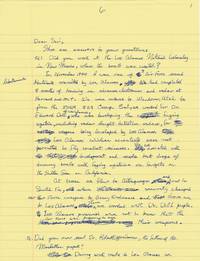
1945ref. 143891945. Jeppson Morris R. Autograph Letter Signed written after World War II a first person technical and eyewitness account by the weapons officer of the Enola Gay the B 29 aircraft that dropped the first atomic bomb on Hiroshima on 6 August 1945. As one of eight Army Air Forces second lieutenants recruited to support Los Alamos weapons development Jeppson occupied a rare operational position linking laboratory science to combat deployment. In the present two page letter written entirely in his hand in question and answer format he explains his recruitment after advanced electronics and radar training at Harvard and MIT and his assignment to the 509th Bomb Group at Wendover Utah. He describes working under Dr. Edward Doll of Los Alamos on the bomb's fuzing system including radar height detection noting that "Los Alamos civilian scientists were not permitted to fly combat missions" and recounts test drops of dummy bombs over the Salton Sea. His narrative situates him among the very small circle beyond senior scientists who understood the weapon's intended use as he was responsible for arming the fuzing system inside the bomb bay shortly before release over Hiroshima. Jeppson Morris R. Autograph Letter Signed. No place no date. Two pages on yellow lined paper written in ink signed "Sincerely Morris R. Jeppson." In response to a question about J. Robert Oppenheimer Jeppson recounts a May 1945 flight in which "The sole passenger was Dr. Oppenheimer. This very gracious man was smiling to visit with me and he answered my questions about where I should attend graduate school in nuclear physics after the war" recommending the University of California Berkeley. He emphasizes the strict compartmentalization of the Manhattan Project: "Because of very tight security restrictions neither of us ever mentioned nuclear weapons." The letter provides granular insight into the operational secrecy of the project the integration of military officers into laboratory development and the transition from experimental design to battlefield use at the close of World War II. Numerous corrections and annotations appear throughout reflecting careful retrospective clarification. Paper clean and fully legible signature strong. Overall condition: excellent. unknown books
ref. 2090202118202530Not Available N.A. Soft Cover. Fine. The book is in fine condition. Not Available paperback
1974ref. 2090202120415479Mitsugishi 1974. Soft Cover. Fine. Number of books: 1 Mitsugishi paperback
1975ref. 2090202120407907Hiroshima Prefecture 1975. Soft Cover. Fine. Number of books: 1 Hiroshima Prefecture paperback
ref. 2090202118203293Not Available N.A. Soft Cover. Fine. The book is in fine condition. Not Available paperback
2002ref. 2090202120101074Not Available 2002. Soft Cover. Fine. Number of books: 15 Not Available paperback
2002ref. 2090202120301073Not Available 2002. Soft Cover. Fine. Number of books: 15 Not Available paperback
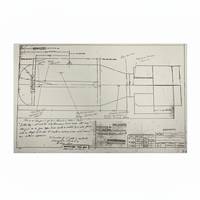
1945ref. 125961945. World War IIAtomic Bomb Van Kirk Theodore J. "Dutch". Single blueprint copy inscribed and signed dated "6 Aug 1945." Single blueprint sheet. Annotated blueprint of "Little Boy" the uranium-235 atomic bomb detonated over Hiroshima on August 6 1945 inscribed and explained by Theodore Van Kirk navigator of the B-29 Enola Gay during the first wartime use of a nuclear weapon. Developed under the direction of the Manhattan Project the bomb marked a decisive technological and geopolitical rupture at the close of World War II inaugurating the nuclear age and reshaping global military doctrine. Approximately 70000 people were killed as a direct result of the blast with comparable numbers injured rendering the event one of the most consequential military actions of the twentieth century. Black-and-white blueprint copy approximately 18 x 24 inches illustrating the internal configuration of "Little Boy" employing the gun-type assembly method in which a sub-critical uranium-235 projectile was fired into a hollow uranium-235 target to achieve supercritical mass and initiate a nuclear chain reaction. Van Kirk has added detailed manuscript notations in pencil and ink identifying principal components including the "Neutron Source" "Steel Tamper" "Gunpowder" "Explosion Device" "Highly Sensitive Radio Antennae" "Uranium 235 'Bullet' Fired into Target to Create a Critical Mass" and "Uranium 235 Hollowed out Target." Along the margin in black ink he writes: "This is a blue print of our Hiroshima Atomic bomb 'Little Boy.' It was the only uranium bomb made. The bomb was designed as a gun type bomb with a bullet of U-235 fired into a U-235 target to create a critical mass." Signed below in blue ink: "Theodore J 'Dutch' Van Kirk Navigator - Enola Gay 6 Aug 1945." The design of "Little Boy" was finalized by early 1945 and reflected a conservative engineering approach intended to ensure detonation reliability despite the unprecedented nature of atomic warfare. As a navigational officer on the mission Van Kirk occupied a critical operational role in delivering the weapon to its target and his explanatory annotations reveal how participants later articulated the bomb's mechanics and singular status as the only uranium-based device used in combat. Minor edge wear and light handling marks; blueprint lines sharp and legible; manuscript annotations and signature clear and strong. Overall very good to near fine condition. unknown
1945ref. 125961945. World War IIAtomic Bomb Van Kirk Theodore J. "Dutch". Single blueprint copy inscribed and signed dated "6 Aug 1945." Single blueprint sheet. Annotated blueprint of "Little Boy" the uranium-235 atomic bomb detonated over Hiroshima on August 6 1945 inscribed and explained by Theodore Van Kirk navigator of the B-29 Enola Gay during the first wartime use of a nuclear weapon. Developed under the direction of the Manhattan Project the bomb marked a decisive technological and geopolitical rupture at the close of World War II inaugurating the nuclear age and reshaping global military doctrine. Approximately 70000 people were killed as a direct result of the blast with comparable numbers injured rendering the event one of the most consequential military actions of the twentieth century. Black-and-white blueprint copy approximately 18 x 24 inches illustrating the internal configuration of "Little Boy" employing the gun-type assembly method in which a sub-critical uranium-235 projectile was fired into a hollow uranium-235 target to achieve supercritical mass and initiate a nuclear chain reaction. Van Kirk has added detailed manuscript notations in pencil and ink identifying principal components including the "Neutron Source" "Steel Tamper" "Gunpowder" "Explosion Device" "Highly Sensitive Radio Antennae" "Uranium 235 'Bullet' Fired into Target to Create a Critical Mass" and "Uranium 235 Hollowed out Target." Along the margin in black ink he writes: "This is a blue print of our Hiroshima Atomic bomb 'Little Boy.' It was the only uranium bomb made. The bomb was designed as a gun type bomb with a bullet of U-235 fired into a U-235 target to create a critical mass." Signed below in blue ink: "Theodore J 'Dutch' Van Kirk Navigator - Enola Gay 6 Aug 1945." The design of "Little Boy" was finalized by early 1945 and reflected a conservative engineering approach intended to ensure detonation reliability despite the unprecedented nature of atomic warfare. As a navigational officer on the mission Van Kirk occupied a critical operational role in delivering the weapon to its target and his explanatory annotations reveal how participants later articulated the bomb's mechanics and singular status as the only uranium-based device used in combat. Minor edge wear and light handling marks; blueprint lines sharp and legible; manuscript annotations and signature clear and strong. Overall very good to near fine condition. unknown books