Theodore Van Kirk; Hiroshima Atomic BombBiblio.com
1.271 Ergebnisse
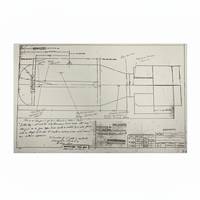
1945Best.-Nr. 125961945. World War IIAtomic Bomb Van Kirk Theodore J. "Dutch". Single blueprint copy inscribed and signed dated "6 Aug 1945." Single blueprint sheet. Annotated blueprint of "Little Boy" the uranium-235 atomic bomb detonated over Hiroshima on August 6 1945 inscribed and explained by Theodore Van Kirk navigator of the B-29 Enola Gay during the first wartime use of a nuclear weapon. Developed under the direction of the Manhattan Project the bomb marked a decisive technological and geopolitical rupture at the close of World War II inaugurating the nuclear age and reshaping global military doctrine. Approximately 70000 people were killed as a direct result of the blast with comparable numbers injured rendering the event one of the most consequential military actions of the twentieth century. Black-and-white blueprint copy approximately 18 x 24 inches illustrating the internal configuration of "Little Boy" employing the gun-type assembly method in which a sub-critical uranium-235 projectile was fired into a hollow uranium-235 target to achieve supercritical mass and initiate a nuclear chain reaction. Van Kirk has added detailed manuscript notations in pencil and ink identifying principal components including the "Neutron Source" "Steel Tamper" "Gunpowder" "Explosion Device" "Highly Sensitive Radio Antennae" "Uranium 235 'Bullet' Fired into Target to Create a Critical Mass" and "Uranium 235 Hollowed out Target." Along the margin in black ink he writes: "This is a blue print of our Hiroshima Atomic bomb 'Little Boy.' It was the only uranium bomb made. The bomb was designed as a gun type bomb with a bullet of U-235 fired into a U-235 target to create a critical mass." Signed below in blue ink: "Theodore J 'Dutch' Van Kirk Navigator - Enola Gay 6 Aug 1945." The design of "Little Boy" was finalized by early 1945 and reflected a conservative engineering approach intended to ensure detonation reliability despite the unprecedented nature of atomic warfare. As a navigational officer on the mission Van Kirk occupied a critical operational role in delivering the weapon to its target and his explanatory annotations reveal how participants later articulated the bomb's mechanics and singular status as the only uranium-based device used in combat. Minor edge wear and light handling marks; blueprint lines sharp and legible; manuscript annotations and signature clear and strong. Overall very good to near fine condition. unknown
1945Best.-Nr. 125961945. World War IIAtomic Bomb Van Kirk Theodore J. "Dutch". Single blueprint copy inscribed and signed dated "6 Aug 1945." Single blueprint sheet. Annotated blueprint of "Little Boy" the uranium-235 atomic bomb detonated over Hiroshima on August 6 1945 inscribed and explained by Theodore Van Kirk navigator of the B-29 Enola Gay during the first wartime use of a nuclear weapon. Developed under the direction of the Manhattan Project the bomb marked a decisive technological and geopolitical rupture at the close of World War II inaugurating the nuclear age and reshaping global military doctrine. Approximately 70000 people were killed as a direct result of the blast with comparable numbers injured rendering the event one of the most consequential military actions of the twentieth century. Black-and-white blueprint copy approximately 18 x 24 inches illustrating the internal configuration of "Little Boy" employing the gun-type assembly method in which a sub-critical uranium-235 projectile was fired into a hollow uranium-235 target to achieve supercritical mass and initiate a nuclear chain reaction. Van Kirk has added detailed manuscript notations in pencil and ink identifying principal components including the "Neutron Source" "Steel Tamper" "Gunpowder" "Explosion Device" "Highly Sensitive Radio Antennae" "Uranium 235 'Bullet' Fired into Target to Create a Critical Mass" and "Uranium 235 Hollowed out Target." Along the margin in black ink he writes: "This is a blue print of our Hiroshima Atomic bomb 'Little Boy.' It was the only uranium bomb made. The bomb was designed as a gun type bomb with a bullet of U-235 fired into a U-235 target to create a critical mass." Signed below in blue ink: "Theodore J 'Dutch' Van Kirk Navigator - Enola Gay 6 Aug 1945." The design of "Little Boy" was finalized by early 1945 and reflected a conservative engineering approach intended to ensure detonation reliability despite the unprecedented nature of atomic warfare. As a navigational officer on the mission Van Kirk occupied a critical operational role in delivering the weapon to its target and his explanatory annotations reveal how participants later articulated the bomb's mechanics and singular status as the only uranium-based device used in combat. Minor edge wear and light handling marks; blueprint lines sharp and legible; manuscript annotations and signature clear and strong. Overall very good to near fine condition. unknown books
2002Best.-Nr. 2090202120101074Not Available 2002. Soft Cover. Fine. Number of books: 15 Not Available paperback
2002Best.-Nr. 2090202120301073Not Available 2002. Soft Cover. Fine. Number of books: 15 Not Available paperback
Best.-Nr. 2090202118203293Not Available N.A. Soft Cover. Fine. The book is in fine condition. Not Available paperback
1975Best.-Nr. 2090202120407907Hiroshima Prefecture 1975. Soft Cover. Fine. Number of books: 1 Hiroshima Prefecture paperback
1974Best.-Nr. 2091502135500776Not Available 1974. Soft Cover. Fine. Number of pages: 463 pages 291 pages Size: 21 x 29 cm Not Available paperback
1974Best.-Nr. 2090202120415479Mitsugishi 1974. Soft Cover. Fine. Number of books: 1 Mitsugishi paperback
1933Best.-Nr. 2092902141401519Not Available 1933. Soft Cover. Fine. Number of books: 3 Not Available paperback
Best.-Nr. 2090202118202530Not Available N.A. Soft Cover. Fine. The book is in fine condition. Not Available paperback
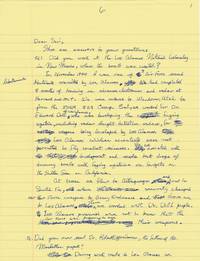
1945Best.-Nr. 143891945. Jeppson Morris R. Autograph Letter Signed written after World War II a first person technical and eyewitness account by the weapons officer of the Enola Gay the B 29 aircraft that dropped the first atomic bomb on Hiroshima on 6 August 1945. As one of eight Army Air Forces second lieutenants recruited to support Los Alamos weapons development Jeppson occupied a rare operational position linking laboratory science to combat deployment. In the present two page letter written entirely in his hand in question and answer format he explains his recruitment after advanced electronics and radar training at Harvard and MIT and his assignment to the 509th Bomb Group at Wendover Utah. He describes working under Dr. Edward Doll of Los Alamos on the bomb's fuzing system including radar height detection noting that "Los Alamos civilian scientists were not permitted to fly combat missions" and recounts test drops of dummy bombs over the Salton Sea. His narrative situates him among the very small circle beyond senior scientists who understood the weapon's intended use as he was responsible for arming the fuzing system inside the bomb bay shortly before release over Hiroshima. Jeppson Morris R. Autograph Letter Signed. No place no date. Two pages on yellow lined paper written in ink signed "Sincerely Morris R. Jeppson." In response to a question about J. Robert Oppenheimer Jeppson recounts a May 1945 flight in which "The sole passenger was Dr. Oppenheimer. This very gracious man was smiling to visit with me and he answered my questions about where I should attend graduate school in nuclear physics after the war" recommending the University of California Berkeley. He emphasizes the strict compartmentalization of the Manhattan Project: "Because of very tight security restrictions neither of us ever mentioned nuclear weapons." The letter provides granular insight into the operational secrecy of the project the integration of military officers into laboratory development and the transition from experimental design to battlefield use at the close of World War II. Numerous corrections and annotations appear throughout reflecting careful retrospective clarification. Paper clean and fully legible signature strong. Overall condition: excellent. unknown
1945Best.-Nr. 143891945. Jeppson Morris R. Autograph Letter Signed written after World War II a first person technical and eyewitness account by the weapons officer of the Enola Gay the B 29 aircraft that dropped the first atomic bomb on Hiroshima on 6 August 1945. As one of eight Army Air Forces second lieutenants recruited to support Los Alamos weapons development Jeppson occupied a rare operational position linking laboratory science to combat deployment. In the present two page letter written entirely in his hand in question and answer format he explains his recruitment after advanced electronics and radar training at Harvard and MIT and his assignment to the 509th Bomb Group at Wendover Utah. He describes working under Dr. Edward Doll of Los Alamos on the bomb's fuzing system including radar height detection noting that "Los Alamos civilian scientists were not permitted to fly combat missions" and recounts test drops of dummy bombs over the Salton Sea. His narrative situates him among the very small circle beyond senior scientists who understood the weapon's intended use as he was responsible for arming the fuzing system inside the bomb bay shortly before release over Hiroshima. Jeppson Morris R. Autograph Letter Signed. No place no date. Two pages on yellow lined paper written in ink signed "Sincerely Morris R. Jeppson." In response to a question about J. Robert Oppenheimer Jeppson recounts a May 1945 flight in which "The sole passenger was Dr. Oppenheimer. This very gracious man was smiling to visit with me and he answered my questions about where I should attend graduate school in nuclear physics after the war" recommending the University of California Berkeley. He emphasizes the strict compartmentalization of the Manhattan Project: "Because of very tight security restrictions neither of us ever mentioned nuclear weapons." The letter provides granular insight into the operational secrecy of the project the integration of military officers into laboratory development and the transition from experimental design to battlefield use at the close of World War II. Numerous corrections and annotations appear throughout reflecting careful retrospective clarification. Paper clean and fully legible signature strong. Overall condition: excellent. unknown books
1928Best.-Nr. 230704052043ybvkJapan, Osaka Mainichi Schimbun / Tokyo Nichinichi shinbun, Showa 3 (1928). 61 of 62, smaller (12: ca. 14 x 9,5 cm), medium-size (34 of 35: ca. 19 x 14,5 / 14,5 x 19 cm) and largesize (15: ca. 20,5 x 26 cm) original vintage photographs in 14 titled brown orig. delivery-envelopes (ca. 30 x 22 cm); each envelope-folder contains a loose sheet with detailed explanations of every photograph.
1958Best.-Nr. 2090202120415187Not Available 1958. Soft Cover. Fine. Number of books: 1 Not Available paperback
1980Best.-Nr. 2090202120415821Hiroshima Prefecture 1980. Soft Cover. Fine. Number of books: 1 Hiroshima Prefecture paperback
1972Best.-Nr. 2090202120414621Kanbe Town History Publishing Section 1972. Soft Cover. Fine. Number of books: 1 Kanbe Town History Publishing Section paperback
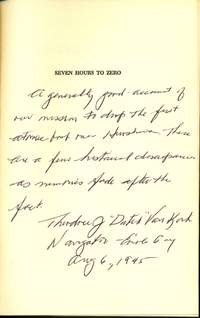
1945Best.-Nr. 114571945. Marx Joseph L. Seven Hours to Zero. 1967 account of the planning and execution of the atomic bombing of Hiroshima containing a signed annotation by Theodore J. "Dutch" Van Kirk navigator of the B 29 bomber Enola Gay. The book addresses the events leading to the United States' use of atomic weapons against Japan on August 6 1945 the mission that introduced nuclear warfare into modern military history and contributed directly to the end of the Second World War in the Pacific. Van Kirk one of the three principal crew members aboard the aircraft that delivered the uranium bomb over Hiroshima inscribed the title page with a critical assessment of the narrative: "A generally good account of our mission to drop the first atomic bomb over Hiroshima. There are a few historical discrepancies as memories fade after the fact. Theodore J 'Dutch' Van Kirk Navigator Enola Gay August 6 1945." The inscription provides a firsthand comment by a participant whose navigational calculations guided the aircraft to its target during the mission. Marx Joseph L. Seven Hours to Zero. New York: Putnam 1967. Signed commentary by Theodore J. "Dutch" Van Kirk on the title page. Hardback with dust jacket. The volume presents a narrative reconstruction of the hours leading to the Hiroshima bombing and the military planning undertaken by the United States Army Air Forces during the closing phase of the Pacific War. Van Kirk's handwritten note identifies his role as navigator of the Enola Gay and directly addresses the historical accuracy of the work. The Hiroshima mission represented a turning point in twentieth century military and political history demonstrating the destructive capacity of nuclear weapons and initiating the nuclear age that shaped Cold War international relations. Theodore J. "Dutch" Van Kirk served as navigator under pilot Paul W. Tibbets and bombardier Thomas Ferebee during the mission determining the flight path that brought the aircraft over Hiroshima on the morning of August 6 1945. Inscribed copies of historical works by individuals directly involved in the atomic bombing provide documentary testimony from participants whose recollections and interpretations continue to influence debates over nuclear warfare military decision making and the closing stages of the Second World War. Light handling wear to dust jacket and boards consistent with age. Overall condition very good. unknown
1945Best.-Nr. 114571945. Marx Joseph L. Seven Hours to Zero. 1967 account of the planning and execution of the atomic bombing of Hiroshima containing a signed annotation by Theodore J. "Dutch" Van Kirk navigator of the B 29 bomber Enola Gay. The book addresses the events leading to the United States' use of atomic weapons against Japan on August 6 1945 the mission that introduced nuclear warfare into modern military history and contributed directly to the end of the Second World War in the Pacific. Van Kirk one of the three principal crew members aboard the aircraft that delivered the uranium bomb over Hiroshima inscribed the title page with a critical assessment of the narrative: "A generally good account of our mission to drop the first atomic bomb over Hiroshima. There are a few historical discrepancies as memories fade after the fact. Theodore J 'Dutch' Van Kirk Navigator Enola Gay August 6 1945." The inscription provides a firsthand comment by a participant whose navigational calculations guided the aircraft to its target during the mission. Marx Joseph L. Seven Hours to Zero. New York: Putnam 1967. Signed commentary by Theodore J. "Dutch" Van Kirk on the title page. Hardback with dust jacket. The volume presents a narrative reconstruction of the hours leading to the Hiroshima bombing and the military planning undertaken by the United States Army Air Forces during the closing phase of the Pacific War. Van Kirk's handwritten note identifies his role as navigator of the Enola Gay and directly addresses the historical accuracy of the work. The Hiroshima mission represented a turning point in twentieth century military and political history demonstrating the destructive capacity of nuclear weapons and initiating the nuclear age that shaped Cold War international relations. Theodore J. "Dutch" Van Kirk served as navigator under pilot Paul W. Tibbets and bombardier Thomas Ferebee during the mission determining the flight path that brought the aircraft over Hiroshima on the morning of August 6 1945. Inscribed copies of historical works by individuals directly involved in the atomic bombing provide documentary testimony from participants whose recollections and interpretations continue to influence debates over nuclear warfare military decision making and the closing stages of the Second World War. Light handling wear to dust jacket and boards consistent with age. Overall condition very good. unknown books
1931120 pages. George F. Carraher Jr.'s copy with his handwritten details inside back board. Numerous autographs throughout. Features photos of WWII heroes Butch O'Hare, namesake of Chicago's International Airport, and Paul Tibbets, pilot of the Enola Gay which dropped warfare's first atomic bomb on the Japanese city of Hiroshima. O'Hare appears in his class photo on page 35, on page 64 as a member of the "A" football team, on page 80 as a member of "D" Company, and as a member of Phi Delta on page 85. Tibbets appears with the former owner of this book in a group photo of their Sophomore Class on page 36 and as a member of the Rifle Team on page 76. Green endpapers tanned at edges. Above-average wear. Major soiling to handsomely gilted forest green front board. Binding intact. A worthy copy of this wonderful memento. Book
1965Best.-Nr. 2092902141401531Not Available 1965. Soft Cover. Fine. Number of books: 12 Not Available paperback
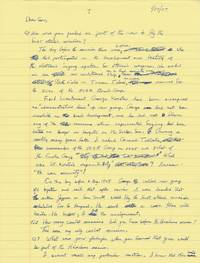
1945Best.-Nr. 143931945. Jeppson Morris R. Autograph letter recounting his role in the Hiroshima atomic bombing mission written by the weapons test officer aboard the B 29 Enola Gay the aircraft that delivered the first atomic weapon used in warfare on 6 August 1945. Morris Jeppson served as the electronic officer responsible for the bomb's fuzing system and for arming the uranium bomb known as "Little Boy" shortly before it was released over Hiroshima. His recollections provide firsthand testimony concerning the selection of the mission crew the operational procedures followed aboard the aircraft and the technical responsibilities associated with the deployment of the atomic weapon during the closing days of World War II. Jeppson Morris R. Autograph Letter Signed. Three pages written on yellow lined paper composed as responses to a series of questions concerning the Hiroshima mission. The manuscript appears to be a draft with numerous corrections and annotations with both the questions and answers written in Jeppson's hand. Addressing how he was selected to fly on the mission Jeppson recounts: "The day before the mission there were 6 of us who had participated in the development and testing of the electronic fuzing system for atomic weapons. George called our group of 6 together and said it was decided that whether Jeppson or Lt. Leon Smith would fly the first mission scheduled for 6 August. He said a coin toss will decide. He tossed I got the assignment." When asked about his role aboard the aircraft Jeppson describes assisting Captain William Parsons in preparing the weapon after takeoff and monitoring the bomb's electronic fuzing system during the flight. He explains that shortly before the bombing run he entered the bomb bay and "replaced an electrical component plug in the bomb with a red coded plug that armed the bomb so that it would self detonate when it reached an elevation above ground of about 1800 feet." The letter concludes with reflections on the mission's perceived outcome noting that the detonation confirmed the operational success of the weapon's design. The Hiroshima bombing represented the first combat use of nuclear weapons and marked a decisive technological and political turning point at the end of World War II. Personnel involved in the Manhattan Project and the 509th Composite Group later became central witnesses to the development and deployment of atomic weapons. Jeppson's manuscript responses offer detailed technical and personal recollections concerning the operational procedures aboard the Enola Gay including the late decision to arm the weapon in flight and the responsibilities assigned to the crew members who developed the bomb's electronic fuzing system. The document provides insight into the internal mechanics of the Hiroshima mission as remembered by the officer who physically armed the weapon shortly before its release. Signed "Morris R. Jeppson" in a different pen. Light handling wear; overall excellent condition. A detailed firsthand account of the technical preparation and execution of the first atomic bombing mission. unknown
1945Best.-Nr. 143931945. Jeppson Morris R. Autograph letter recounting his role in the Hiroshima atomic bombing mission written by the weapons test officer aboard the B 29 Enola Gay the aircraft that delivered the first atomic weapon used in warfare on 6 August 1945. Morris Jeppson served as the electronic officer responsible for the bomb's fuzing system and for arming the uranium bomb known as "Little Boy" shortly before it was released over Hiroshima. His recollections provide firsthand testimony concerning the selection of the mission crew the operational procedures followed aboard the aircraft and the technical responsibilities associated with the deployment of the atomic weapon during the closing days of World War II. Jeppson Morris R. Autograph Letter Signed. Three pages written on yellow lined paper composed as responses to a series of questions concerning the Hiroshima mission. The manuscript appears to be a draft with numerous corrections and annotations with both the questions and answers written in Jeppson's hand. Addressing how he was selected to fly on the mission Jeppson recounts: "The day before the mission there were 6 of us who had participated in the development and testing of the electronic fuzing system for atomic weapons. George called our group of 6 together and said it was decided that whether Jeppson or Lt. Leon Smith would fly the first mission scheduled for 6 August. He said a coin toss will decide. He tossed I got the assignment." When asked about his role aboard the aircraft Jeppson describes assisting Captain William Parsons in preparing the weapon after takeoff and monitoring the bomb's electronic fuzing system during the flight. He explains that shortly before the bombing run he entered the bomb bay and "replaced an electrical component plug in the bomb with a red coded plug that armed the bomb so that it would self detonate when it reached an elevation above ground of about 1800 feet." The letter concludes with reflections on the mission's perceived outcome noting that the detonation confirmed the operational success of the weapon's design. The Hiroshima bombing represented the first combat use of nuclear weapons and marked a decisive technological and political turning point at the end of World War II. Personnel involved in the Manhattan Project and the 509th Composite Group later became central witnesses to the development and deployment of atomic weapons. Jeppson's manuscript responses offer detailed technical and personal recollections concerning the operational procedures aboard the Enola Gay including the late decision to arm the weapon in flight and the responsibilities assigned to the crew members who developed the bomb's electronic fuzing system. The document provides insight into the internal mechanics of the Hiroshima mission as remembered by the officer who physically armed the weapon shortly before its release. Signed "Morris R. Jeppson" in a different pen. Light handling wear; overall excellent condition. A detailed firsthand account of the technical preparation and execution of the first atomic bombing mission. unknown books
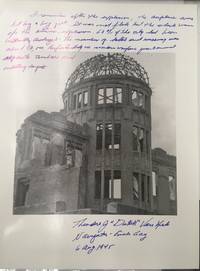
1945Best.-Nr. 127381945. Van Kirk Theodore J. signed and inscribed photograph of the Hiroshima Atomic Dome created post-1945 represents a direct visual and textual reflection by the navigator of the B-29 Enola Gay on the devastation wrought by the first atomic bomb used in warfare. Theodore "Dutch" Van Kirk 1921-2014 responsible for navigation during the 6 August 1945 mission from Tinian here annotates an image of the ruined cityscape transforming a documentary photograph into a vehicle for personal recollection and justification. The item supports research into World War II memory culture strategic bombing doctrine and the ways in which atomic bomb participants publicly framed civilian casualties and the ethics of total war in subsequent decades. Van Kirk Theodore J. Inscribed photograph. 8 ½ x 11 inches. Black-and-white photograph depicting the Hiroshima Atomic Dome standing amid surrounding devastation the skeletal structure isolated against a flattened urban landscape. In ink Van Kirk writes: "I remember after the explosion the airplane was hit with a big jolt It was not flak but the shock wave effect of an atomic explosion. 60% of the city had been instantly destroyed. The number of killed and missing was 80000. Unfortunately in modern warfare you cannot separate civilian and military targets. - Theodore J. 'Dutch' Van Kirk Navigator - Enola Gay 6 August 1945." The inscription combines operational memory-the shock wave striking the aircraft-with statistical casualty figures and a broader statement about the nature of twentieth-century warfare. Signed within the text. Produced decades after the event and dated to the day of the mission the photograph reflects the enduring historical reckoning with Hiroshima's destruction and the moral arguments advanced by those who carried out the bombing. Van Kirk's juxtaposition of physical sensation in the aircraft with quantified urban devastation links technical execution to human consequence while his statement regarding the inseparability of civilian and military targets situates the image within debates over strategic bombing and nuclear ethics. Minor surface wear and light handling marks; image clear with strong tonal contrast; inscription bold and fully legible. Overall very good to near fine condition. A significant inscribed image uniting one of the most recognizable architectural remnants of Hiroshima with a candid reflection by a principal participant in the first atomic bombing mission. unknown
1945Best.-Nr. 127381945. Van Kirk Theodore J. signed and inscribed photograph of the Hiroshima Atomic Dome created post-1945 represents a direct visual and textual reflection by the navigator of the B-29 Enola Gay on the devastation wrought by the first atomic bomb used in warfare. Theodore "Dutch" Van Kirk 1921-2014 responsible for navigation during the 6 August 1945 mission from Tinian here annotates an image of the ruined cityscape transforming a documentary photograph into a vehicle for personal recollection and justification. The item supports research into World War II memory culture strategic bombing doctrine and the ways in which atomic bomb participants publicly framed civilian casualties and the ethics of total war in subsequent decades. Van Kirk Theodore J. Inscribed photograph. 8 ½ x 11 inches. Black-and-white photograph depicting the Hiroshima Atomic Dome standing amid surrounding devastation the skeletal structure isolated against a flattened urban landscape. In ink Van Kirk writes: "I remember after the explosion the airplane was hit with a big jolt It was not flak but the shock wave effect of an atomic explosion. 60% of the city had been instantly destroyed. The number of killed and missing was 80000. Unfortunately in modern warfare you cannot separate civilian and military targets. - Theodore J. 'Dutch' Van Kirk Navigator - Enola Gay 6 August 1945." The inscription combines operational memory-the shock wave striking the aircraft-with statistical casualty figures and a broader statement about the nature of twentieth-century warfare. Signed within the text. Produced decades after the event and dated to the day of the mission the photograph reflects the enduring historical reckoning with Hiroshima's destruction and the moral arguments advanced by those who carried out the bombing. Van Kirk's juxtaposition of physical sensation in the aircraft with quantified urban devastation links technical execution to human consequence while his statement regarding the inseparability of civilian and military targets situates the image within debates over strategic bombing and nuclear ethics. Minor surface wear and light handling marks; image clear with strong tonal contrast; inscription bold and fully legible. Overall very good to near fine condition. A significant inscribed image uniting one of the most recognizable architectural remnants of Hiroshima with a candid reflection by a principal participant in the first atomic bombing mission. unknown books
1945Best.-Nr. 125481945. Van Kirk Theodore J. handwritten autograph letter signed 6 August 1945 provides a first-person account by the navigator of the B-29 Enola Gay addressing fears of blast damage and radiation exposure during the Hiroshima atomic bombing mission. As navigator on the aircraft that delivered the first deployed atomic weapon in warfare Van Kirk 1921-2014 occupied a critical operational role requiring precise calculations of speed altitude and distance to ensure both mission success and crew survival. This manuscript directly supports research into World War II strategic bombing the operational realities of the Manhattan Project and contemporary military understanding of radiation hazards at the moment nuclear weapons entered combat. His reflections reveal not only technical planning but also the limited scientific certainty conveyed to flight crews regarding the bomb's destructive and radiological effects. Van Kirk Theodore J. 6 August 1945. Two pages. Approximately 8.5 x 11 inches. In this holograph letter written in question-and-answer format Van Kirk addresses the risks anticipated by the crew: "Did you have any fears about the effects the atomic bomb would have on the Enola Gay and the crew Yes. The fact that the bombs shock waves might destroy or damage the airplane was a major concern." He recalls being advised by a scientist that "we think the airplane will be OK if you're 9 miles away when the bomb explodes" and explains that "it was to get speed and altitude - and therefore distance - that we stripped down our airplanes. We were 12 miles away when the bomb exploded." Regarding radiation he writes: "We were not greatly concerned. We were told that the mushroom shaped cloud was deadly radiation and to stay clear of it. Otherwise no equipment to protect from radiation. No crew members were affected." He signs "Sincerely / Theodore J 'Dutch' Van Kirk / Navigator - Enola Gay / 6 Aug. 1945." The manuscript preserves his phrasing underscoring the mixture of scientific briefing operational adaptation and residual uncertainty that characterized the mission. Composed retrospectively and dated to the day of the bombing the letter reflects how participants later articulated their understanding of radiation at a time when its long-term biological effects were not yet fully grasped by the broader public or as Van Kirk's statement suggests by operational crews. His emphasis on distance calculations and aircraft modification illustrates the intersection of scientific theory and practical military execution in August 1945 when strategic air power entered the nuclear age. The acknowledgment that no protective equipment was provided and that crews relied primarily on avoidance of the mushroom cloud contributes to the evidentiary record of early nuclear risk assessment within the U.S. Army Air Forces. Minor edge wear and light handling creases; ink strong and fully legible; paper clean. Overall very good to near fine condition. A substantive self-authored reflection on blast mechanics and radiation awareness at the inception of atomic warfare. unknown