Fumio HiroshimaBiblio.com
Applications in Rigorous Quantum Field Theory
ref. A9783110403503Hardback. New. hardcover

The Saint Bookstore · United Kingdom£114.42≈ €136.66
1,313 results
ref. DADAX1579125387New unknown
ref. DADAX3642834302New unknown
ref. DADAX433301204XNew unknown
ref. SONG3642341659Used: Good unknown
ref. DADAX0060742844New unknown
ref. DADAX0226482375New unknown
ref. DADAX0385157010New unknown
ref. DADAX0714642029New unknown
ref. DADAX0802714455New unknown
ref. DADAX0807845477New unknown
ref. DADAX0870117351New unknown
ref. SONG1555714048Used: Good unknown
ref. SONG433301204XUsed: Good unknown
1980ref. KOS06800053TBD 1980. Soft Cover. Fine. KOS06800053 TBD paperback
ref. A9783110403503Hardback. New. hardcover
1945ref. 221391945. Editor unknown. Atlanta Journal August 6 1945 records the first American newspaper cycle responding to the atomic bombing of Hiroshima a military and political event that introduced nuclear weapons into warfare and reshaped the final phase of World War II. The issue supports research into wartime journalism anti-Japanese racial language in the American press home-front reception of nuclear warfare and the public announcement of the atomic age; Hiroshima was bombed on August 6 1945 and President Truman's statement described the bomb as having "more power than 20000 tons of T.N.T." Atlanta Journal. Atlanta Georgia. August 6 1945. Final Home Edition. Number of pages and size not stated. Front-page headlines include "Atomic Power Bomb Loosed on Jap Cities" "Death Charge Equals 20000 Tons of TNT" and "Japs Fail to Scratch New Hornet in Terrific 14-month War Cruise." The headlines preserve the immediacy of American reporting on Hiroshima as well as the racialized wartime language used in mainstream newspapers during the Pacific War. General handling wear good overall. A same-day Southern newspaper issue documenting how the first use of atomic warfare entered American public consciousness through mass-circulation news. unknown
1945ref. 193451945. Van Kirk Theodore "Dutch." Signed poster reproducing the navigator's log of the August 6 1945 Enola Gay mission documents the flight that delivered the first atomic bomb used in warfare. Van Kirk served as navigator aboard the B-29 plotting the aircraft's course from North Field on Tinian to Hiroshima and back during a mission that initiated the wartime use of nuclear weapons and transformed military strategy international relations and public understanding of technological destruction. The National Museum of the United States Air Force records that the Enola Gay departed at 2:45 a.m. and released the uranium bomb known as "Little Boy" over Hiroshima later that morning. The poster provides a signed visual chronology for the study of World War II aviation operational navigation the Manhattan Project and the beginning of the nuclear age. Hiroshima Mission Navigator's Log of the Enola Gay. Issuer place and date of printing not identified. Poster reproducing three manuscript pages entirely in Van Kirk's hand; dimensions not supplied. The successive entries trace the mission from takeoff through navigation toward Japan the bombing run and the aircraft's return to base. The log records the 0245 departure the turn onto a 345-degree heading and the climb to 30800 feet with "BOMB AWAY" entered at 0915. These operational notations reduce the mission to headings altitudes times and navigational actions preserving the procedural language by which the crew recorded an event of extraordinary human consequence. Signed at the bottom "Theodore J. 'Dutch' Van Kirk Navigator-Enola Gay Hiroshima Aug. 6 1945." Because the three manuscript pages are photographically or mechanically reproduced the poster should not be described as Van Kirk's original wartime log; only the concluding inscription and signature are represented as original autograph material. The Enola Gay's release of "Little Boy" over Hiroshima marked the first use of a nuclear weapon in war; the bomb detonated approximately 1800 feet above the city. The reproduced entries offer an operational perspective distinct from later narrative accounts showing how the navigator organized the mission through timed observations and course calculations while leaving the destruction below largely outside the log's technical vocabulary. No creasing staining fading tears or edge losses are identified; reproduced manuscript images and Van Kirk's signed inscription remain clear near fine. Signed commemorative record joining the navigator's minute-by-minute flight chronology with direct identification by the last surviving member of the Enola Gay crew. unknown
ref. DADAX1108835279New unknown
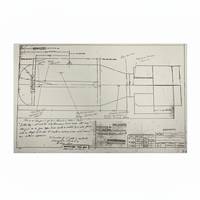
1945ref. 125961945. World War IIAtomic Bomb Van Kirk Theodore J. "Dutch". Single blueprint copy inscribed and signed dated "6 Aug 1945." Single blueprint sheet. Annotated blueprint of "Little Boy" the uranium-235 atomic bomb detonated over Hiroshima on August 6 1945 inscribed and explained by Theodore Van Kirk navigator of the B-29 Enola Gay during the first wartime use of a nuclear weapon. Developed under the direction of the Manhattan Project the bomb marked a decisive technological and geopolitical rupture at the close of World War II inaugurating the nuclear age and reshaping global military doctrine. Approximately 70000 people were killed as a direct result of the blast with comparable numbers injured rendering the event one of the most consequential military actions of the twentieth century. Black-and-white blueprint copy approximately 18 x 24 inches illustrating the internal configuration of "Little Boy" employing the gun-type assembly method in which a sub-critical uranium-235 projectile was fired into a hollow uranium-235 target to achieve supercritical mass and initiate a nuclear chain reaction. Van Kirk has added detailed manuscript notations in pencil and ink identifying principal components including the "Neutron Source" "Steel Tamper" "Gunpowder" "Explosion Device" "Highly Sensitive Radio Antennae" "Uranium 235 'Bullet' Fired into Target to Create a Critical Mass" and "Uranium 235 Hollowed out Target." Along the margin in black ink he writes: "This is a blue print of our Hiroshima Atomic bomb 'Little Boy.' It was the only uranium bomb made. The bomb was designed as a gun type bomb with a bullet of U-235 fired into a U-235 target to create a critical mass." Signed below in blue ink: "Theodore J 'Dutch' Van Kirk Navigator - Enola Gay 6 Aug 1945." The design of "Little Boy" was finalized by early 1945 and reflected a conservative engineering approach intended to ensure detonation reliability despite the unprecedented nature of atomic warfare. As a navigational officer on the mission Van Kirk occupied a critical operational role in delivering the weapon to its target and his explanatory annotations reveal how participants later articulated the bomb's mechanics and singular status as the only uranium-based device used in combat. Minor edge wear and light handling marks; blueprint lines sharp and legible; manuscript annotations and signature clear and strong. Overall very good to near fine condition. unknown
1945ref. 125481945. Van Kirk Theodore J. handwritten autograph letter signed 6 August 1945 provides a first-person account by the navigator of the B-29 Enola Gay addressing fears of blast damage and radiation exposure during the Hiroshima atomic bombing mission. As navigator on the aircraft that delivered the first deployed atomic weapon in warfare Van Kirk 1921-2014 occupied a critical operational role requiring precise calculations of speed altitude and distance to ensure both mission success and crew survival. This manuscript directly supports research into World War II strategic bombing the operational realities of the Manhattan Project and contemporary military understanding of radiation hazards at the moment nuclear weapons entered combat. His reflections reveal not only technical planning but also the limited scientific certainty conveyed to flight crews regarding the bomb's destructive and radiological effects. Van Kirk Theodore J. 6 August 1945. Two pages. Approximately 8.5 x 11 inches. In this holograph letter written in question-and-answer format Van Kirk addresses the risks anticipated by the crew: "Did you have any fears about the effects the atomic bomb would have on the Enola Gay and the crew Yes. The fact that the bombs shock waves might destroy or damage the airplane was a major concern." He recalls being advised by a scientist that "we think the airplane will be OK if you're 9 miles away when the bomb explodes" and explains that "it was to get speed and altitude - and therefore distance - that we stripped down our airplanes. We were 12 miles away when the bomb exploded." Regarding radiation he writes: "We were not greatly concerned. We were told that the mushroom shaped cloud was deadly radiation and to stay clear of it. Otherwise no equipment to protect from radiation. No crew members were affected." He signs "Sincerely / Theodore J 'Dutch' Van Kirk / Navigator - Enola Gay / 6 Aug. 1945." The manuscript preserves his phrasing underscoring the mixture of scientific briefing operational adaptation and residual uncertainty that characterized the mission. Composed retrospectively and dated to the day of the bombing the letter reflects how participants later articulated their understanding of radiation at a time when its long-term biological effects were not yet fully grasped by the broader public or as Van Kirk's statement suggests by operational crews. His emphasis on distance calculations and aircraft modification illustrates the intersection of scientific theory and practical military execution in August 1945 when strategic air power entered the nuclear age. The acknowledgment that no protective equipment was provided and that crews relied primarily on avoidance of the mushroom cloud contributes to the evidentiary record of early nuclear risk assessment within the U.S. Army Air Forces. Minor edge wear and light handling creases; ink strong and fully legible; paper clean. Overall very good to near fine condition. A substantive self-authored reflection on blast mechanics and radiation awareness at the inception of atomic warfare. unknown
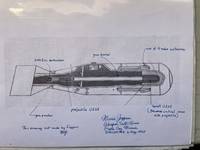
1945ref. 125771945. Jeppson Morris. Hand-annotated diagram of the "Little Boy" atomic bomb 1945 provides a direct technical interpretation of the weapon used in the bombing of Hiroshima by a participant who bridged both its development and deployment. As weapons officer aboard the Enola Gay and a scientist present at Los Alamos Laboratory Jeppson occupied a rare dual role linking the Manhattan Project's design phase with the operational execution of nuclear warfare. His annotations explain the internal structure and function of the uranium gun-type bomb offering a contemporaneous explanation of how critical mass was achieved and how the weapon was triggered. The document situates technical knowledge of nuclear fission within the lived experience of those responsible for its first use in warfare during World War II. Jeppson Morris. "Little Boy" atomic bomb diagram. United States 1945. One-page black-and-white printed diagram with extensive handwritten annotations and arrows in ink signed at lower margin "Morris Jeppson / Weapon Test Officer / Enola Gay Mission / HIROSHIMA 6 Aug. 1945." The annotations identify and explain key components including "target U235" "projectile 235" and the process by which the bomb "Becomes critical mass with projectile" along with labeled elements such as the "electric detonator" "gun barrel" and "one of 4 radar antennas." The markings function as a technical overlay to the printed schematic clarifying both structure and mechanism from the perspective of the officer responsible for in-flight arming and monitoring of the device. The atomic bombing of Hiroshima marked the first combat use of nuclear weapons and introduced a new phase of warfare defined by unprecedented destructive capacity and strategic implications. Jeppson's role in both the scientific and operational dimensions of the mission positions this document within the immediate transmission of specialized knowledge from laboratory to battlefield. His annotations provide insight into how participants understood and communicated the bomb's function contributing to the historical record of nuclear science military technology and the transformation of warfare at the end of World War II. Light handling wear; diagram remains clear with strong legible annotations and signature. Overall very good. unknown
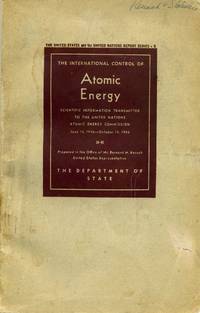
1946ref. 99751946. United States Department of State. The International Control of Atomic Energy: Scientific Information Transmitted to the United Nations Atomic Energy Commission June 14 1946 - October 14 1946 1946 constitutes one of the earliest formal U.S. government submissions to the United Nations Atomic Energy Commission outlining proposed mechanisms to regulate nuclear weapons following the atomic bombings of Japan. Issued in the immediate aftermath of World War II and within one year of the atomic bombing of Hiroshima the report presents a technical and policy framework focused on controlling fissile materials as the primary safeguard against proliferation. This copy bears a direct inscription by Theodore Van Kirk navigator of the Enola Gay on August 6 1945 linking the theoretical policy proposals of international governance with firsthand participation in the first operational use of atomic weapons. Van Kirk underscores a central conclusion of the report by writing: "As stated on p. 164 The best control measure for the prevention of atomic bomb manufacture are those intended to prevent the accumulation of the essential fissionable materials" followed by his identification: "Theodore Van Kirk - Navigator - Enola Gay 6 Aug. 1945." United States Department of State. The International Control of Atomic Energy: Scientific Information Transmitted to the United Nations Atomic Energy Commission June 14 1946 - October 14 1946. Washington D.C.: Department of State 1946. Softcover volume measuring approximately 6 x 9 inches 195 pages. The work compiles scientific data policy recommendations and diplomatic proposals submitted to the United Nations concerning the international management of atomic energy and the prevention of nuclear weapons development. The inscription appears on the title page in Van Kirk's hand directly referencing a specific passage within the text and reinforcing its central argument regarding material control. Produced during the earliest phase of postwar nuclear diplomacy the report aligns with U.S. efforts to establish international oversight of atomic energy before the escalation of Cold War arms competition. The presence of Van Kirk's annotation situates the document within both policy formation and military execution bridging governmental attempts at regulation with the lived experience of atomic warfare. Light wear to covers with minor handling; internally clean; inscription clear and legible. Overall very good condition. unknown
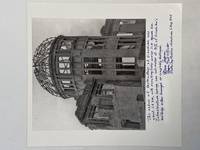
1945ref. 127651945. Jeppson Morris. Inscribed photograph of the Hiroshima Atomic Dome following the atomic bombing provides a quantified assessment of destruction written by the weapons officer responsible for arming the bomb aboard the Enola Gay on August 6 1945. As the individual who physically armed the device prior to release Morris Jeppson links technical execution of the mission with retrospective evaluation of its effects. His inscription records measured estimates of blast radius fire spread and infrastructure damage contributing to the historical record of how participants in the bombing articulated its scale and consequences in numerical terms. Jeppson Morris. Hiroshima Atomic Dome photograph. United States post-1945. Black-and-white photograph measuring approximately 9 x 8.5 inches inscribed in ink by Morris Jeppson. The inscription reads: "The radius of destruction of Hiroshima was about 1.6 km with resulting fires across 11.4 square km. Infrastructure damage was estimated at 90% of Hiroshima's buildings either damaged or completely destroyed. Morris Jeppson - Weapon Test Officer - Enola Gay Mission - Hiroshima 6 Aug. 1945." The image depicts the Atomic Dome one of the few surviving structures near the hypocenter paired with Jeppson's statistical summary of destruction integrating visual evidence with numerical interpretation. The Hiroshima bombing introduced a new scale of urban destruction defined by nuclear technology with immediate and long-term consequences for civilian populations and infrastructure. Jeppson's inscription reflects how participants in the mission communicated its impact through measurable data aligning with postwar efforts to document and understand the physical effects of atomic weapons. The combination of a landmark image of the Atomic Dome with a participant-authored damage assessment offers a primary source for the study of nuclear warfare urban devastation and the translation of technological force into quantifiable outcomes. Light handling wear; photograph remains clean with strong legible inscription. Overall very good. unknown
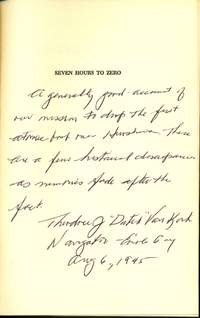
1945ref. 114571945. Marx Joseph L. Seven Hours to Zero. 1967 account of the planning and execution of the atomic bombing of Hiroshima containing a signed annotation by Theodore J. "Dutch" Van Kirk navigator of the B 29 bomber Enola Gay. The book addresses the events leading to the United States' use of atomic weapons against Japan on August 6 1945 the mission that introduced nuclear warfare into modern military history and contributed directly to the end of the Second World War in the Pacific. Van Kirk one of the three principal crew members aboard the aircraft that delivered the uranium bomb over Hiroshima inscribed the title page with a critical assessment of the narrative: "A generally good account of our mission to drop the first atomic bomb over Hiroshima. There are a few historical discrepancies as memories fade after the fact. Theodore J 'Dutch' Van Kirk Navigator Enola Gay August 6 1945." The inscription provides a firsthand comment by a participant whose navigational calculations guided the aircraft to its target during the mission. Marx Joseph L. Seven Hours to Zero. New York: Putnam 1967. Signed commentary by Theodore J. "Dutch" Van Kirk on the title page. Hardback with dust jacket. The volume presents a narrative reconstruction of the hours leading to the Hiroshima bombing and the military planning undertaken by the United States Army Air Forces during the closing phase of the Pacific War. Van Kirk's handwritten note identifies his role as navigator of the Enola Gay and directly addresses the historical accuracy of the work. The Hiroshima mission represented a turning point in twentieth century military and political history demonstrating the destructive capacity of nuclear weapons and initiating the nuclear age that shaped Cold War international relations. Theodore J. "Dutch" Van Kirk served as navigator under pilot Paul W. Tibbets and bombardier Thomas Ferebee during the mission determining the flight path that brought the aircraft over Hiroshima on the morning of August 6 1945. Inscribed copies of historical works by individuals directly involved in the atomic bombing provide documentary testimony from participants whose recollections and interpretations continue to influence debates over nuclear warfare military decision making and the closing stages of the Second World War. Light handling wear to dust jacket and boards consistent with age. Overall condition very good. unknown
1945ref. 117821945. Van Kirk Theodore J. "Atomic Bomb Explosion Over Hiroshima" signed statement recounting the August 6 1945 atomic bombing mission documents direct eyewitness testimony from the navigator of the Enola Gay the aircraft that delivered the first atomic bomb used in warfare. The document supports research into World War II air operations atomic warfare and firsthand participant narratives of the Hiroshima mission. As navigator Van Kirk occupied a central operational role in the execution of the flight and his account provides detailed observational evidence of the bombing sequence targeting and immediate visual aftermath. Van Kirk Theodore J. Signed statement titled "Atomic Bomb Explosion Over Hiroshima." 1 page. The typed document includes handwritten corrections and additions in blue ink by Van Kirk including the insertion "Over Hiroshima" in the title. The narrative records precise operational timing and targeting details stating: "Our plane was over Hiroshima at 0815 hours. The bomb fell away from the aircraft at 0915:17 Tinian time. It hit right on target on the Aioi Bridge in Hiroshima." Van Kirk further describes the visual effects immediately following detonation: "The first thing we saw was a big white cloud. It was probably 40000 feet already and around the base of that cloud the entire city of Hiroshima was covered with smoke and dust and you couldn't observe a thing down there." The statement also includes reflective commentary on the mission's intended strategic purpose noting pilot Paul Tibbets' assertion that the weapon could "shorten or end the war." Signed in full "Theodore J 'Dutch' Van Kirk." The document originates from one of the most consequential military actions of the twentieth century the atomic bombing of Hiroshima which marked the introduction of nuclear weapons into warfare and directly preceded Japan's surrender. As a participant-generated account it offers primary evidence of crew understanding mission execution and immediate perception of the bomb's effects complementing official military records and later historical analyses. The inclusion of precise times named targets and observational detail enhances its value for reconstructing the operational chronology of the mission. Light handling wear; otherwise well-preserved with clear text and signature. Overall very good condition. unknown