Mazda Motor Co (Hiroshima, Japan).Biblio.com

1 270 résultats
réf. 63-3658Hiroshima Japan: Mazda Motor Co. 1972. 8vo. 64 pp. Oblong. Soft Covers Very Good with creasing & minor staining to covers. Illustrated fold-out wiring diagram. Hiroshima, Japan: Mazda Motor Co., 1972. paperback
2026réf. x-1032762314Taylor & Francis Ltd 2026. Paperback. New. 262 pages. 6.14x0.59x9.21 inches. Taylor & Francis Ltd paperback
1975réf. 2090202120408343future company 1975. Soft Cover. Fine. Number of books: 1 future company paperback
1975réf. 2092902137405007future company 1975. Soft Cover. Fine. Number of books: 2 future company paperback
1983réf. 2090202120412503Keisuisha 1983. Soft Cover. Fine. Number of books: 1 Keisuisha paperback
1980réf. KOS02201522Art Publishing 1980. Soft Cover. Fine. KOS02201522 Art Publishing paperback
2004réf. 2090202120411098Nikakai 2004. Soft Cover. Fine. Number of books: 1 Nikakai paperback
1964réf. 2090202120411063Mitsubishi Shipbuilding Co. Ltd. Hiroshima Shipyard 1964. Soft Cover. Fine. Number of books: 1 Mitsubishi Shipbuilding Co., Ltd. Hiroshima Shipyard paperback
2010réf. 2090202120413367Soshi-sha 2010. Soft Cover. Fine. Number of books: 1 Soshi-sha paperback
2010réf. 2091502135419244Soshisha August Library 2010. Soft Cover. Fine. Number of books: 1 Soshisha August Library paperback
1982réf. 2090202120414519Hiroshima Prefecture Agricultural Cooperative Printing Office 1982. Soft Cover. Fine. Number of books: 1 Hiroshima Prefecture Agricultural Cooperative Printing Office paperback
1985réf. 100546BBNeubrandenburg, Stadt- und Bezirksbibliothek, 1985. 8°. 32 S. Original-Broschur.
1946réf. 5121946 - broché - Editions J. de Gigord - Collection Les savoirs modernes - 1946 - In-8 (19,5 x 14 cm) broché - 61 pages - Quelques illustrations (schémas) en noir et blanc - Préface de André GEORGE
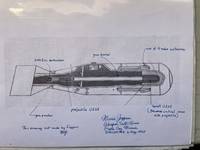
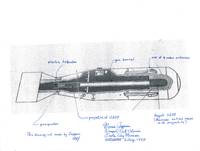
1945réf. 125771945. Jeppson Morris. Hand-annotated diagram of the "Little Boy" atomic bomb 1945 provides a direct technical interpretation of the weapon used in the bombing of Hiroshima by a participant who bridged both its development and deployment. As weapons officer aboard the Enola Gay and a scientist present at Los Alamos Laboratory Jeppson occupied a rare dual role linking the Manhattan Project's design phase with the operational execution of nuclear warfare. His annotations explain the internal structure and function of the uranium gun-type bomb offering a contemporaneous explanation of how critical mass was achieved and how the weapon was triggered. The document situates technical knowledge of nuclear fission within the lived experience of those responsible for its first use in warfare during World War II. Jeppson Morris. "Little Boy" atomic bomb diagram. United States 1945. One-page black-and-white printed diagram with extensive handwritten annotations and arrows in ink signed at lower margin "Morris Jeppson / Weapon Test Officer / Enola Gay Mission / HIROSHIMA 6 Aug. 1945." The annotations identify and explain key components including "target U235" "projectile 235" and the process by which the bomb "Becomes critical mass with projectile" along with labeled elements such as the "electric detonator" "gun barrel" and "one of 4 radar antennas." The markings function as a technical overlay to the printed schematic clarifying both structure and mechanism from the perspective of the officer responsible for in-flight arming and monitoring of the device. The atomic bombing of Hiroshima marked the first combat use of nuclear weapons and introduced a new phase of warfare defined by unprecedented destructive capacity and strategic implications. Jeppson's role in both the scientific and operational dimensions of the mission positions this document within the immediate transmission of specialized knowledge from laboratory to battlefield. His annotations provide insight into how participants understood and communicated the bomb's function contributing to the historical record of nuclear science military technology and the transformation of warfare at the end of World War II. Light handling wear; diagram remains clear with strong legible annotations and signature. Overall very good. unknown
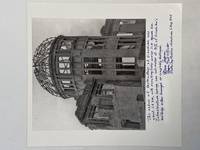
1945réf. 127651945. Jeppson Morris. Inscribed photograph of the Hiroshima Atomic Dome following the atomic bombing provides a quantified assessment of destruction written by the weapons officer responsible for arming the bomb aboard the Enola Gay on August 6 1945. As the individual who physically armed the device prior to release Morris Jeppson links technical execution of the mission with retrospective evaluation of its effects. His inscription records measured estimates of blast radius fire spread and infrastructure damage contributing to the historical record of how participants in the bombing articulated its scale and consequences in numerical terms. Jeppson Morris. Hiroshima Atomic Dome photograph. United States post-1945. Black-and-white photograph measuring approximately 9 x 8.5 inches inscribed in ink by Morris Jeppson. The inscription reads: "The radius of destruction of Hiroshima was about 1.6 km with resulting fires across 11.4 square km. Infrastructure damage was estimated at 90% of Hiroshima's buildings either damaged or completely destroyed. Morris Jeppson - Weapon Test Officer - Enola Gay Mission - Hiroshima 6 Aug. 1945." The image depicts the Atomic Dome one of the few surviving structures near the hypocenter paired with Jeppson's statistical summary of destruction integrating visual evidence with numerical interpretation. The Hiroshima bombing introduced a new scale of urban destruction defined by nuclear technology with immediate and long-term consequences for civilian populations and infrastructure. Jeppson's inscription reflects how participants in the mission communicated its impact through measurable data aligning with postwar efforts to document and understand the physical effects of atomic weapons. The combination of a landmark image of the Atomic Dome with a participant-authored damage assessment offers a primary source for the study of nuclear warfare urban devastation and the translation of technological force into quantifiable outcomes. Light handling wear; photograph remains clean with strong legible inscription. Overall very good. unknown
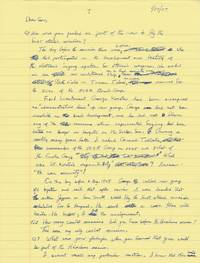
1945réf. 143931945. Jeppson Morris R. Autograph letter recounting his role in the Hiroshima atomic bombing mission written by the weapons test officer aboard the B 29 Enola Gay the aircraft that delivered the first atomic weapon used in warfare on 6 August 1945. Morris Jeppson served as the electronic officer responsible for the bomb's fuzing system and for arming the uranium bomb known as "Little Boy" shortly before it was released over Hiroshima. His recollections provide firsthand testimony concerning the selection of the mission crew the operational procedures followed aboard the aircraft and the technical responsibilities associated with the deployment of the atomic weapon during the closing days of World War II. Jeppson Morris R. Autograph Letter Signed. Three pages written on yellow lined paper composed as responses to a series of questions concerning the Hiroshima mission. The manuscript appears to be a draft with numerous corrections and annotations with both the questions and answers written in Jeppson's hand. Addressing how he was selected to fly on the mission Jeppson recounts: "The day before the mission there were 6 of us who had participated in the development and testing of the electronic fuzing system for atomic weapons. George called our group of 6 together and said it was decided that whether Jeppson or Lt. Leon Smith would fly the first mission scheduled for 6 August. He said a coin toss will decide. He tossed I got the assignment." When asked about his role aboard the aircraft Jeppson describes assisting Captain William Parsons in preparing the weapon after takeoff and monitoring the bomb's electronic fuzing system during the flight. He explains that shortly before the bombing run he entered the bomb bay and "replaced an electrical component plug in the bomb with a red coded plug that armed the bomb so that it would self detonate when it reached an elevation above ground of about 1800 feet." The letter concludes with reflections on the mission's perceived outcome noting that the detonation confirmed the operational success of the weapon's design. The Hiroshima bombing represented the first combat use of nuclear weapons and marked a decisive technological and political turning point at the end of World War II. Personnel involved in the Manhattan Project and the 509th Composite Group later became central witnesses to the development and deployment of atomic weapons. Jeppson's manuscript responses offer detailed technical and personal recollections concerning the operational procedures aboard the Enola Gay including the late decision to arm the weapon in flight and the responsibilities assigned to the crew members who developed the bomb's electronic fuzing system. The document provides insight into the internal mechanics of the Hiroshima mission as remembered by the officer who physically armed the weapon shortly before its release. Signed "Morris R. Jeppson" in a different pen. Light handling wear; overall excellent condition. A detailed firsthand account of the technical preparation and execution of the first atomic bombing mission. unknown
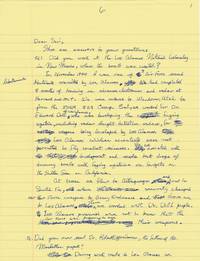
1945réf. 143891945. Jeppson Morris R. Autograph Letter Signed written after World War II a first person technical and eyewitness account by the weapons officer of the Enola Gay the B 29 aircraft that dropped the first atomic bomb on Hiroshima on 6 August 1945. As one of eight Army Air Forces second lieutenants recruited to support Los Alamos weapons development Jeppson occupied a rare operational position linking laboratory science to combat deployment. In the present two page letter written entirely in his hand in question and answer format he explains his recruitment after advanced electronics and radar training at Harvard and MIT and his assignment to the 509th Bomb Group at Wendover Utah. He describes working under Dr. Edward Doll of Los Alamos on the bomb's fuzing system including radar height detection noting that "Los Alamos civilian scientists were not permitted to fly combat missions" and recounts test drops of dummy bombs over the Salton Sea. His narrative situates him among the very small circle beyond senior scientists who understood the weapon's intended use as he was responsible for arming the fuzing system inside the bomb bay shortly before release over Hiroshima. Jeppson Morris R. Autograph Letter Signed. No place no date. Two pages on yellow lined paper written in ink signed "Sincerely Morris R. Jeppson." In response to a question about J. Robert Oppenheimer Jeppson recounts a May 1945 flight in which "The sole passenger was Dr. Oppenheimer. This very gracious man was smiling to visit with me and he answered my questions about where I should attend graduate school in nuclear physics after the war" recommending the University of California Berkeley. He emphasizes the strict compartmentalization of the Manhattan Project: "Because of very tight security restrictions neither of us ever mentioned nuclear weapons." The letter provides granular insight into the operational secrecy of the project the integration of military officers into laboratory development and the transition from experimental design to battlefield use at the close of World War II. Numerous corrections and annotations appear throughout reflecting careful retrospective clarification. Paper clean and fully legible signature strong. Overall condition: excellent. unknown
1945réf. 125791945. Jeppson Morris annotated "Little Boy" atomic bomb diagram signed in reference to the Hiroshima mission of August 6 1945 documents firsthand technical interpretation of the first nuclear weapon used in war. The sheet holds historical value for the study of the Manhattan Project atomic weapons deployment and the operational knowledge carried by members of the Enola Gay crew. Jeppson's role as Weapons Test Officer gives the document particular importance since the annotations do not merely identify the bomb after the fact but explain its mechanism from the perspective of a participant directly involved in its wartime use. Jeppson Morris. Annotated diagram of "Little Boy." 1 page. Black and white printed diagram with extensive handwritten notations and signature. The diagram shows the internal arrangement of the bomb's major components with Jeppson adding arrows and manuscript labels identifying the "target U235" the "projectile 235" the "electric detonator" the "gun barrel" and "one of 4 radar antennas." He further explains the bomb's operation in functional terms noting where the uranium projectile would strike and that it "Becomes critical mass with projectile." Signed at the bottom "Morris Jeppson / Weapon Test Officer / Enola Gay Mission / HIROSHIMA 6 Aug. 1945." The notations transform the printed diagram into a participant-marked technical document linking design terminology and mission-specific memory. The document is tied directly to the bombing of Hiroshima the event that introduced nuclear warfare and altered the political and military history of the twentieth century. Its interpretive value lies in the combination of technical content and eyewitness association: the sheet preserves not only a schematic of the bomb itself but also the language used by a mission participant to explain how the weapon functioned. That combination makes it useful for examining how atomic technology was understood by military personnel at the point where scientific development and combat deployment converged. Minor handling wear; otherwise well-preserved with clear manuscript annotations and signature. Overall very good condition. unknown
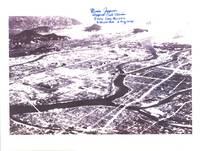
1976réf. 125641976. Jeppson Morris signed photograph of Hiroshima after the August 6 1945 atomic bombing linking the physical destruction of the city to a member of the Enola Gay mission crew. Jeppson served as assistant weaponeer aboard the B 29 and had responsibility for weapons testing and arming procedures associated with the "Little Boy" atomic bomb; shortly before the aircraft reached Hiroshima he removed its safety devices and inserted the arming plugs. The photograph therefore combines a post bombing view of Hiroshima with the autograph and mission identification of a participant directly involved in preparing the weapon for use. Black and white photograph 11 x 8 1/2 inches showing the devastated Hiroshima landscape after the atomic bombing. Few structures remain visible beyond foundations and other remnants while burned tree trunks stand amid the cleared terrain. Jeppson has signed and inscribed the image "Morris Jeppson - Weapons Test Officer - Enola Gay Mission- Hiroshima-6 Aug 1945" explicitly identifying his role aircraft target and mission date. The Enola Gay dropped the first atomic weapon used in combat over Hiroshima on August 6 1945. Jeppson's inscription gives the image direct association with the mission and preserves his own description of his position as "Weapons Test Officer" while contemporary institutional histories also identify him as assistant weaponeer to Captain William S. Parsons. The visible destruction provides a stark record of the consequences of the bombing while Jeppson's signed identification connects that aftermath to the personnel responsible for carrying and arming the weapon. Condition not stated. unknown
1945réf. 143891945. Jeppson Morris R. Autograph Letter Signed written after World War II a first person technical and eyewitness account by the weapons officer of the Enola Gay the B 29 aircraft that dropped the first atomic bomb on Hiroshima on 6 August 1945. As one of eight Army Air Forces second lieutenants recruited to support Los Alamos weapons development Jeppson occupied a rare operational position linking laboratory science to combat deployment. In the present two page letter written entirely in his hand in question and answer format he explains his recruitment after advanced electronics and radar training at Harvard and MIT and his assignment to the 509th Bomb Group at Wendover Utah. He describes working under Dr. Edward Doll of Los Alamos on the bomb's fuzing system including radar height detection noting that "Los Alamos civilian scientists were not permitted to fly combat missions" and recounts test drops of dummy bombs over the Salton Sea. His narrative situates him among the very small circle beyond senior scientists who understood the weapon's intended use as he was responsible for arming the fuzing system inside the bomb bay shortly before release over Hiroshima. Jeppson Morris R. Autograph Letter Signed. No place no date. Two pages on yellow lined paper written in ink signed "Sincerely Morris R. Jeppson." In response to a question about J. Robert Oppenheimer Jeppson recounts a May 1945 flight in which "The sole passenger was Dr. Oppenheimer. This very gracious man was smiling to visit with me and he answered my questions about where I should attend graduate school in nuclear physics after the war" recommending the University of California Berkeley. He emphasizes the strict compartmentalization of the Manhattan Project: "Because of very tight security restrictions neither of us ever mentioned nuclear weapons." The letter provides granular insight into the operational secrecy of the project the integration of military officers into laboratory development and the transition from experimental design to battlefield use at the close of World War II. Numerous corrections and annotations appear throughout reflecting careful retrospective clarification. Paper clean and fully legible signature strong. Overall condition: excellent. unknown books
1945réf. 125771945. Jeppson Morris. Hand-annotated diagram of the "Little Boy" atomic bomb 1945 provides a direct technical interpretation of the weapon used in the bombing of Hiroshima by a participant who bridged both its development and deployment. As weapons officer aboard the Enola Gay and a scientist present at Los Alamos Laboratory Jeppson occupied a rare dual role linking the Manhattan Project's design phase with the operational execution of nuclear warfare. His annotations explain the internal structure and function of the uranium gun-type bomb offering a contemporaneous explanation of how critical mass was achieved and how the weapon was triggered. The document situates technical knowledge of nuclear fission within the lived experience of those responsible for its first use in warfare during World War II. Jeppson Morris. "Little Boy" atomic bomb diagram. United States 1945. One-page black-and-white printed diagram with extensive handwritten annotations and arrows in ink signed at lower margin "Morris Jeppson / Weapon Test Officer / Enola Gay Mission / HIROSHIMA 6 Aug. 1945." The annotations identify and explain key components including "target U235" "projectile 235" and the process by which the bomb "Becomes critical mass with projectile" along with labeled elements such as the "electric detonator" "gun barrel" and "one of 4 radar antennas." The markings function as a technical overlay to the printed schematic clarifying both structure and mechanism from the perspective of the officer responsible for in-flight arming and monitoring of the device. The atomic bombing of Hiroshima marked the first combat use of nuclear weapons and introduced a new phase of warfare defined by unprecedented destructive capacity and strategic implications. Jeppson's role in both the scientific and operational dimensions of the mission positions this document within the immediate transmission of specialized knowledge from laboratory to battlefield. His annotations provide insight into how participants understood and communicated the bomb's function contributing to the historical record of nuclear science military technology and the transformation of warfare at the end of World War II. Light handling wear; diagram remains clear with strong legible annotations and signature. Overall very good. unknown books
1945réf. 143931945. Jeppson Morris R. Autograph letter recounting his role in the Hiroshima atomic bombing mission written by the weapons test officer aboard the B 29 Enola Gay the aircraft that delivered the first atomic weapon used in warfare on 6 August 1945. Morris Jeppson served as the electronic officer responsible for the bomb's fuzing system and for arming the uranium bomb known as "Little Boy" shortly before it was released over Hiroshima. His recollections provide firsthand testimony concerning the selection of the mission crew the operational procedures followed aboard the aircraft and the technical responsibilities associated with the deployment of the atomic weapon during the closing days of World War II. Jeppson Morris R. Autograph Letter Signed. Three pages written on yellow lined paper composed as responses to a series of questions concerning the Hiroshima mission. The manuscript appears to be a draft with numerous corrections and annotations with both the questions and answers written in Jeppson's hand. Addressing how he was selected to fly on the mission Jeppson recounts: "The day before the mission there were 6 of us who had participated in the development and testing of the electronic fuzing system for atomic weapons. George called our group of 6 together and said it was decided that whether Jeppson or Lt. Leon Smith would fly the first mission scheduled for 6 August. He said a coin toss will decide. He tossed I got the assignment." When asked about his role aboard the aircraft Jeppson describes assisting Captain William Parsons in preparing the weapon after takeoff and monitoring the bomb's electronic fuzing system during the flight. He explains that shortly before the bombing run he entered the bomb bay and "replaced an electrical component plug in the bomb with a red coded plug that armed the bomb so that it would self detonate when it reached an elevation above ground of about 1800 feet." The letter concludes with reflections on the mission's perceived outcome noting that the detonation confirmed the operational success of the weapon's design. The Hiroshima bombing represented the first combat use of nuclear weapons and marked a decisive technological and political turning point at the end of World War II. Personnel involved in the Manhattan Project and the 509th Composite Group later became central witnesses to the development and deployment of atomic weapons. Jeppson's manuscript responses offer detailed technical and personal recollections concerning the operational procedures aboard the Enola Gay including the late decision to arm the weapon in flight and the responsibilities assigned to the crew members who developed the bomb's electronic fuzing system. The document provides insight into the internal mechanics of the Hiroshima mission as remembered by the officer who physically armed the weapon shortly before its release. Signed "Morris R. Jeppson" in a different pen. Light handling wear; overall excellent condition. A detailed firsthand account of the technical preparation and execution of the first atomic bombing mission. unknown books
1945réf. 127651945. Jeppson Morris. Inscribed photograph of the Hiroshima Atomic Dome following the atomic bombing provides a quantified assessment of destruction written by the weapons officer responsible for arming the bomb aboard the Enola Gay on August 6 1945. As the individual who physically armed the device prior to release Morris Jeppson links technical execution of the mission with retrospective evaluation of its effects. His inscription records measured estimates of blast radius fire spread and infrastructure damage contributing to the historical record of how participants in the bombing articulated its scale and consequences in numerical terms. Jeppson Morris. Hiroshima Atomic Dome photograph. United States post-1945. Black-and-white photograph measuring approximately 9 x 8.5 inches inscribed in ink by Morris Jeppson. The inscription reads: "The radius of destruction of Hiroshima was about 1.6 km with resulting fires across 11.4 square km. Infrastructure damage was estimated at 90% of Hiroshima's buildings either damaged or completely destroyed. Morris Jeppson - Weapon Test Officer - Enola Gay Mission - Hiroshima 6 Aug. 1945." The image depicts the Atomic Dome one of the few surviving structures near the hypocenter paired with Jeppson's statistical summary of destruction integrating visual evidence with numerical interpretation. The Hiroshima bombing introduced a new scale of urban destruction defined by nuclear technology with immediate and long-term consequences for civilian populations and infrastructure. Jeppson's inscription reflects how participants in the mission communicated its impact through measurable data aligning with postwar efforts to document and understand the physical effects of atomic weapons. The combination of a landmark image of the Atomic Dome with a participant-authored damage assessment offers a primary source for the study of nuclear warfare urban devastation and the translation of technological force into quantifiable outcomes. Light handling wear; photograph remains clean with strong legible inscription. Overall very good. unknown books
1945réf. 125791945. Jeppson Morris annotated "Little Boy" atomic bomb diagram signed in reference to the Hiroshima mission of August 6 1945 documents firsthand technical interpretation of the first nuclear weapon used in war. The sheet holds historical value for the study of the Manhattan Project atomic weapons deployment and the operational knowledge carried by members of the Enola Gay crew. Jeppson's role as Weapons Test Officer gives the document particular importance since the annotations do not merely identify the bomb after the fact but explain its mechanism from the perspective of a participant directly involved in its wartime use. Jeppson Morris. Annotated diagram of "Little Boy." 1 page. Black and white printed diagram with extensive handwritten notations and signature. The diagram shows the internal arrangement of the bomb's major components with Jeppson adding arrows and manuscript labels identifying the "target U235" the "projectile 235" the "electric detonator" the "gun barrel" and "one of 4 radar antennas." He further explains the bomb's operation in functional terms noting where the uranium projectile would strike and that it "Becomes critical mass with projectile." Signed at the bottom "Morris Jeppson / Weapon Test Officer / Enola Gay Mission / HIROSHIMA 6 Aug. 1945." The notations transform the printed diagram into a participant-marked technical document linking design terminology and mission-specific memory. The document is tied directly to the bombing of Hiroshima the event that introduced nuclear warfare and altered the political and military history of the twentieth century. Its interpretive value lies in the combination of technical content and eyewitness association: the sheet preserves not only a schematic of the bomb itself but also the language used by a mission participant to explain how the weapon functioned. That combination makes it useful for examining how atomic technology was understood by military personnel at the point where scientific development and combat deployment converged. Minor handling wear; otherwise well-preserved with clear manuscript annotations and signature. Overall very good condition. unknown books
1976réf. 125641976. Jeppson Morris signed photograph of Hiroshima after the August 6 1945 atomic bombing linking the physical destruction of the city to a member of the Enola Gay mission crew. Jeppson served as assistant weaponeer aboard the B 29 and had responsibility for weapons testing and arming procedures associated with the "Little Boy" atomic bomb; shortly before the aircraft reached Hiroshima he removed its safety devices and inserted the arming plugs. The photograph therefore combines a post bombing view of Hiroshima with the autograph and mission identification of a participant directly involved in preparing the weapon for use. Black and white photograph 11 x 8 1/2 inches showing the devastated Hiroshima landscape after the atomic bombing. Few structures remain visible beyond foundations and other remnants while burned tree trunks stand amid the cleared terrain. Jeppson has signed and inscribed the image "Morris Jeppson - Weapons Test Officer - Enola Gay Mission- Hiroshima-6 Aug 1945" explicitly identifying his role aircraft target and mission date. The Enola Gay dropped the first atomic weapon used in combat over Hiroshima on August 6 1945. Jeppson's inscription gives the image direct association with the mission and preserves his own description of his position as "Weapons Test Officer" while contemporary institutional histories also identify him as assistant weaponeer to Captain William S. Parsons. The visible destruction provides a stark record of the consequences of the bombing while Jeppson's signed identification connects that aftermath to the personnel responsible for carrying and arming the weapon. Condition not stated. unknown books