Hiroshima, FumioBiblio.com

1 270 résultats
réf. 9813293047.Gpaperback. Good. Access codes and supplements are not guaranteed with used items. May be an ex-library book. paperback
2019réf. x-9813293047Springer Verlag 2019. Paperback. New. 152 pages. 9.25x6.10x0.39 inches. Springer Verlag paperback
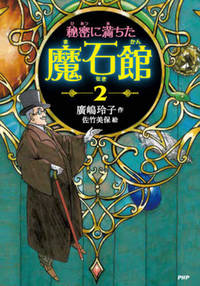
2020réf. x-4569789463PHP Kenkyujo 2020. Hardcover. New. Japanese language. 5.12x0.55x7.40 inches. PHP Kenkyujo hardcover
réf. 53231089like new. unknown
réf. 53231089-nnew. unknown
réf. 4569789463.Ghardcover. Good. Access codes and supplements are not guaranteed with used items. May be an ex-library book. hardcover
19962 vols., roy. 4to., First Edition, text in Japanese, Main Volume with many hundreds of coloured and monochrome photographs (a number folding) in the text, CD Portfolio with coloured illustrated booklet and CD in oyster case; Main Volume in brown cloth, upper board and backstrip lettered in blue, CD Portfolio in white boards, both volumes housed in publisher's card slip-case, a near fine copy. SCARCE.
1945réf. 129721945. Field Marshall III publisher. The Chicago Sun August 7 1945 documents the first full day of American press coverage following the atomic bombing of Hiroshima and the sudden public disclosure of the secret wartime program that produced the weapon. The United States dropped the uranium bomb "Little Boy" on Hiroshima on August 6 and President Harry S. Truman announced its use the same day disclosing the existence of the atomic bomb and declaring that the release of atomic energy opened a new era in humanity's understanding of natural forces. The issue is particularly significant for showing how a mass-circulation American newspaper initially presented the bomb through three interconnected narratives: the destructive results of atomic science the formerly secret industrial infrastructure of the Manhattan Project and expectations for the peacetime uses of atomic power. It provides primary-source evidence for the study of Hiroshima World War II journalism the public revelation of the Manhattan Project nuclear technology and the opening of the atomic age. The Chicago Sun. Chicago: The Chicago Sun Tuesday August 7 1945. 22 pages printed recto and verso. Complete issue. The front page contains extensive atomic-bomb coverage including "Story of Our Secret Weapon"; "Scientists Tell Of Watching First Blast. Steel Tower is Vaporized; Cloud Rises 8 Miles"; and "Truman Visions New Era Powered by Atomic Force." A large photograph depicts an atomic-production facility at the Clinton Engineer Works at Oak Ridge Tennessee giving readers a first visual introduction to part of the immense industrial system that had operated under wartime secrecy. The Clinton Engineer Works served as the Manhattan Project's administrative headquarters and contained the K-25 S-50 and Y-12 facilities used in uranium-isotope separation; enriched uranium produced at Oak Ridge contributed directly to the Hiroshima weapon. The juxtaposition of the first atomic test industrial production Hiroshima and Truman's predictions for atomic energy illustrates how quickly American newspapers began constructing a public explanation for technology that had remained secret throughout most of the war. The August 7 date gives the issue considerable documentary immediacy: American readers were encountering the scale scientific origins industrial production and possible future applications of atomic energy almost simultaneously with learning of its use against a populated city. Truman's August 6 statement itself moved rapidly between military destruction and predictions that atomic energy might eventually supplement coal oil and hydroelectric power a dual framing closely echoed by the headlines preserved here. Oak Ridge's appearance on the front page is equally significant because the sprawling Tennessee installation had been created under extraordinary secrecy beginning in 1942 and encompassed several parallel processes for uranium enrichment. Light age toning and spotting with slight wear to edges; otherwise complete and well preserved. Very good. An unusually immediate newspaper record of the transition from a secret wartime weapons program to a publicly recognized atomic age published one day after Hiroshima and preserving the first explanations offered to American readers of the bomb its production and its anticipated consequences. unknown
1945réf. 129721945. Field Marshall III publisher. The Chicago Sun August 7 1945 documents the first full day of American press coverage following the atomic bombing of Hiroshima and the sudden public disclosure of the secret wartime program that produced the weapon. The United States dropped the uranium bomb "Little Boy" on Hiroshima on August 6 and President Harry S. Truman announced its use the same day disclosing the existence of the atomic bomb and declaring that the release of atomic energy opened a new era in humanity's understanding of natural forces. The issue is particularly significant for showing how a mass-circulation American newspaper initially presented the bomb through three interconnected narratives: the destructive results of atomic science the formerly secret industrial infrastructure of the Manhattan Project and expectations for the peacetime uses of atomic power. It provides primary-source evidence for the study of Hiroshima World War II journalism the public revelation of the Manhattan Project nuclear technology and the opening of the atomic age. The Chicago Sun. Chicago: The Chicago Sun Tuesday August 7 1945. 22 pages printed recto and verso. Complete issue. The front page contains extensive atomic-bomb coverage including "Story of Our Secret Weapon"; "Scientists Tell Of Watching First Blast. Steel Tower is Vaporized; Cloud Rises 8 Miles"; and "Truman Visions New Era Powered by Atomic Force." A large photograph depicts an atomic-production facility at the Clinton Engineer Works at Oak Ridge Tennessee giving readers a first visual introduction to part of the immense industrial system that had operated under wartime secrecy. The Clinton Engineer Works served as the Manhattan Project's administrative headquarters and contained the K-25 S-50 and Y-12 facilities used in uranium-isotope separation; enriched uranium produced at Oak Ridge contributed directly to the Hiroshima weapon. The juxtaposition of the first atomic test industrial production Hiroshima and Truman's predictions for atomic energy illustrates how quickly American newspapers began constructing a public explanation for technology that had remained secret throughout most of the war. The August 7 date gives the issue considerable documentary immediacy: American readers were encountering the scale scientific origins industrial production and possible future applications of atomic energy almost simultaneously with learning of its use against a populated city. Truman's August 6 statement itself moved rapidly between military destruction and predictions that atomic energy might eventually supplement coal oil and hydroelectric power a dual framing closely echoed by the headlines preserved here. Oak Ridge's appearance on the front page is equally significant because the sprawling Tennessee installation had been created under extraordinary secrecy beginning in 1942 and encompassed several parallel processes for uranium enrichment. Light age toning and spotting with slight wear to edges; otherwise complete and well preserved. Very good. An unusually immediate newspaper record of the transition from a secret wartime weapons program to a publicly recognized atomic age published one day after Hiroshima and preserving the first explanations offered to American readers of the bomb its production and its anticipated consequences. unknown books
1985réf. 2090202120406581Hiroshima Prefecture 1985. Soft Cover. Fine. Number of books: 1 Hiroshima Prefecture paperback
1969réf. 115906Couverture souple. Revue 22 x 30 cm. 28 pages.
1933réf. 2080202105100450Not Available 1933. Soft Cover. Fine. Volume: 1 Not Available paperback
1929réf. 2090202122801495Not Available 1929. Soft Cover. Fine. Volume: 1 Not Available paperback
2006réf. 2090202120414756Hiroshima Girls' Academy 2006. Soft Cover. Fine. Number of books: 1 Hiroshima Girls' Academy paperback
1996réf. 2090202120101465Foundation Hiroshima Bereaved Family Association 1996. Soft Cover. Fine. Volume: 1 (Foundation) Hiroshima Bereaved Family Association paperback
1996réf. 2090202120301464Foundation Hiroshima Bereaved Family Association 1996. Soft Cover. Fine. Volume: 1 (Foundation) Hiroshima Bereaved Family Association paperback
1980réf. 2090202120406916Hiroshi-jima shiyakusho 1980. Soft Cover. Fine. Number of books: 1 Hiroshi-jima shiyakusho paperback
1996réf. 2090202120407948Hiroshima Bereaved Family Association 1996. Soft Cover. Fine. Number of books: 1 Hiroshima Bereaved Family Association paperback
1989réf. 2090202122801579Not Available 1989. Soft Cover. Fine. Volume: 1 Not Available paperback
1902réf. 2083002116204702Houbunkan Hidetaro Hiroshima 1902. Soft Cover. Fine. The book is in fine condition. Houbunkan Hidetaro Hiroshima paperback
1996réf. 3674Presses de la cité / Document 1996 230 pages 15 5cmx24cmx1 8cm. 1996. Broché. 230 pages. Le livre documente les bombardements atomiques d'Hiroshima et Nagasaki en août 1945 événements qui ont précipité la fin de la Seconde Guerre mondiale. Il aborde les conséquences humaines stratégiques et historiques de ces premières utilisations d'armes nucléaires
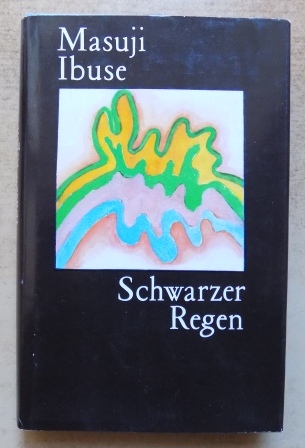
1984réf. 37207Aufbau-Verlag Berlin und Weimar. 1984. 370 Seiten. Oktav. 3. Auflage. Leinen mit Umschlag.
1982Text is in Japanese. 236 pages with a great many, often several per page, b&w photos taken in Japan very soon after the A-bomb explosions, both of survivors and their injuries and structural damage of all kinds, including close-ups of beams, trees, bridges, railroad tracks, etc. with maps specifying location of the adjacent photos. Many burn victims, many of which are children. Includes worn, folded and torn (1/2 page) 4-page fold-out photo of ground zero and surrounding city to mountains in the distance: totally decimated, a landscape of scorched rubble. Ex-library book with usual marks, stamps, etc. Library binding is solid with bent corners and text/interior is marked on a few pages with script in Japanese -- otherwise clean . A rare historical document. Publication information requires translation.
1984réf. 2090202120406878Sanso Old and Youth Association Federation 1984. Soft Cover. Fine. Number of books: 1 Sanso Old and Youth Association Federation paperback
1975réf. 2090202118109045Educational Publishing Center 1975. Soft Cover. Fine. The book is in fine condition. Educational Publishing Center paperback