1 270 résultats
1979réf. BN620110Basic Books 1979. 1979. Hardcover. Hiroshima and Nagasaki : the Physical Medical and Social Effects of the Atomic Bombings Hiroshima and Nagasaki : the Physical Medical and Social Effects of the Atomic Bombings The Committee for the Compilation of Materials on Damage Caused by the Atomic Bombs in Hiroshima and Nagasaki. Basic Books hardcover
1960réf. 2090202120402522Hiroshima City Industry Bureau Tourism Division 1960. Soft Cover. Fine. Number of books: 1 Hiroshima City Industry Bureau Tourism Division paperback
1945réf. 117821945. Van Kirk Theodore J. "Atomic Bomb Explosion Over Hiroshima" signed statement recounting the August 6 1945 atomic bombing mission documents direct eyewitness testimony from the navigator of the Enola Gay the aircraft that delivered the first atomic bomb used in warfare. The document supports research into World War II air operations atomic warfare and firsthand participant narratives of the Hiroshima mission. As navigator Van Kirk occupied a central operational role in the execution of the flight and his account provides detailed observational evidence of the bombing sequence targeting and immediate visual aftermath. Van Kirk Theodore J. Signed statement titled "Atomic Bomb Explosion Over Hiroshima." 1 page. The typed document includes handwritten corrections and additions in blue ink by Van Kirk including the insertion "Over Hiroshima" in the title. The narrative records precise operational timing and targeting details stating: "Our plane was over Hiroshima at 0815 hours. The bomb fell away from the aircraft at 0915:17 Tinian time. It hit right on target on the Aioi Bridge in Hiroshima." Van Kirk further describes the visual effects immediately following detonation: "The first thing we saw was a big white cloud. It was probably 40000 feet already and around the base of that cloud the entire city of Hiroshima was covered with smoke and dust and you couldn't observe a thing down there." The statement also includes reflective commentary on the mission's intended strategic purpose noting pilot Paul Tibbets' assertion that the weapon could "shorten or end the war." Signed in full "Theodore J 'Dutch' Van Kirk." The document originates from one of the most consequential military actions of the twentieth century the atomic bombing of Hiroshima which marked the introduction of nuclear weapons into warfare and directly preceded Japan's surrender. As a participant-generated account it offers primary evidence of crew understanding mission execution and immediate perception of the bomb's effects complementing official military records and later historical analyses. The inclusion of precise times named targets and observational detail enhances its value for reconstructing the operational chronology of the mission. Light handling wear; otherwise well-preserved with clear text and signature. Overall very good condition. unknown
1999réf. 237899Berlin : Philo, 1999. 187 S. : Ill., 21 cm. Bibliothekseinband, Broschiert.
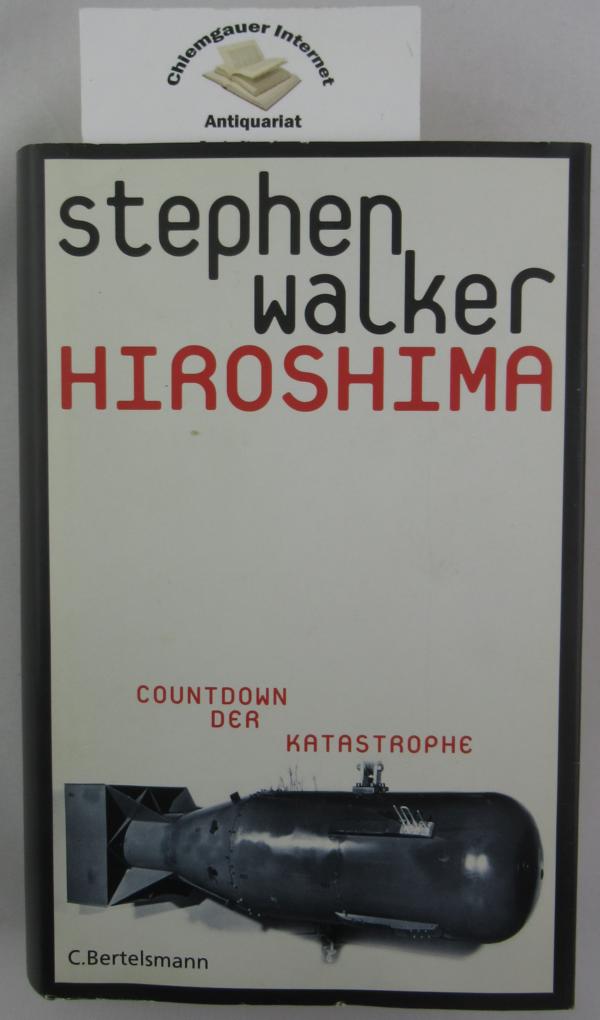
2005réf. 255522München : Bertelsmann, 2005. 399 Seiten. 22 cm Originalpappband mit Original-Schutzumschlag.
1981réf. 1419099New York: Basic Books 1981. First English Edition. Hardcover. Octavo xlv 706 pages. In Very Good condition with Very Good minus dust jacket. Jacket is off white with black text some sunning to spine small closed tears to upper edge light shelfwear. Price uncut "$37.50". Text is lightly age toned some very light stains to fore edge of textblock. Shelved in ND-B. 1419099. FP New Rockville Stock. Basic Books hardcover books
1945réf. 117821945. Van Kirk Theodore J. "Atomic Bomb Explosion Over Hiroshima" signed statement recounting the August 6 1945 atomic bombing mission documents direct eyewitness testimony from the navigator of the Enola Gay the aircraft that delivered the first atomic bomb used in warfare. The document supports research into World War II air operations atomic warfare and firsthand participant narratives of the Hiroshima mission. As navigator Van Kirk occupied a central operational role in the execution of the flight and his account provides detailed observational evidence of the bombing sequence targeting and immediate visual aftermath. Van Kirk Theodore J. Signed statement titled "Atomic Bomb Explosion Over Hiroshima." 1 page. The typed document includes handwritten corrections and additions in blue ink by Van Kirk including the insertion "Over Hiroshima" in the title. The narrative records precise operational timing and targeting details stating: "Our plane was over Hiroshima at 0815 hours. The bomb fell away from the aircraft at 0915:17 Tinian time. It hit right on target on the Aioi Bridge in Hiroshima." Van Kirk further describes the visual effects immediately following detonation: "The first thing we saw was a big white cloud. It was probably 40000 feet already and around the base of that cloud the entire city of Hiroshima was covered with smoke and dust and you couldn't observe a thing down there." The statement also includes reflective commentary on the mission's intended strategic purpose noting pilot Paul Tibbets' assertion that the weapon could "shorten or end the war." Signed in full "Theodore J 'Dutch' Van Kirk." The document originates from one of the most consequential military actions of the twentieth century the atomic bombing of Hiroshima which marked the introduction of nuclear weapons into warfare and directly preceded Japan's surrender. As a participant-generated account it offers primary evidence of crew understanding mission execution and immediate perception of the bomb's effects complementing official military records and later historical analyses. The inclusion of precise times named targets and observational detail enhances its value for reconstructing the operational chronology of the mission. Light handling wear; otherwise well-preserved with clear text and signature. Overall very good condition. unknown books
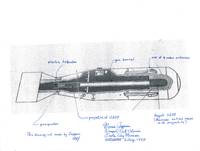
1945réf. 125791945. Jeppson Morris annotated "Little Boy" atomic bomb diagram signed in reference to the Hiroshima mission of August 6 1945 documents firsthand technical interpretation of the first nuclear weapon used in war. The sheet holds historical value for the study of the Manhattan Project atomic weapons deployment and the operational knowledge carried by members of the Enola Gay crew. Jeppson's role as Weapons Test Officer gives the document particular importance since the annotations do not merely identify the bomb after the fact but explain its mechanism from the perspective of a participant directly involved in its wartime use. Jeppson Morris. Annotated diagram of "Little Boy." 1 page. Black and white printed diagram with extensive handwritten notations and signature. The diagram shows the internal arrangement of the bomb's major components with Jeppson adding arrows and manuscript labels identifying the "target U235" the "projectile 235" the "electric detonator" the "gun barrel" and "one of 4 radar antennas." He further explains the bomb's operation in functional terms noting where the uranium projectile would strike and that it "Becomes critical mass with projectile." Signed at the bottom "Morris Jeppson / Weapon Test Officer / Enola Gay Mission / HIROSHIMA 6 Aug. 1945." The notations transform the printed diagram into a participant-marked technical document linking design terminology and mission-specific memory. The document is tied directly to the bombing of Hiroshima the event that introduced nuclear warfare and altered the political and military history of the twentieth century. Its interpretive value lies in the combination of technical content and eyewitness association: the sheet preserves not only a schematic of the bomb itself but also the language used by a mission participant to explain how the weapon functioned. That combination makes it useful for examining how atomic technology was understood by military personnel at the point where scientific development and combat deployment converged. Minor handling wear; otherwise well-preserved with clear manuscript annotations and signature. Overall very good condition. unknown books
1962Fayard 1962, In-8 broché, couverture illustrée. 299 pages. Trés bon état.
1955238p. Hardcover Good condition in fair d.j. fair
1985réf. 100546BBNeubrandenburg, Stadt- und Bezirksbibliothek, 1985. 8°. 32 S. Original-Broschur.
in-8, 235 pages, illustrations h.t. n/b, broché, couverture illustree. Bel exemplaire [CA30-2]
1996réf. 2090202120410675Chugoku Shimbun 1996. Soft Cover. Fine. Number of books: 1 Chugoku Shimbun paperback
1996réf. 2090202120101419Chugoku Shimbun 1996. Soft Cover. Fine. Number of pages: 187p Size: B5 size Number of books: 1 Chugoku Shimbun paperback
1996réf. 2090202120301418Chugoku Shimbun 1996. Soft Cover. Fine. Number of pages: 187p Size: B5 size Number of books: 1 Chugoku Shimbun paperback
1960In 8°, br. edit., pp. 311,(13); coll. "Saggi. 272"; mancanze lievi alla br., per il resto copia molto buona. (m309/d)
1983réf. 30530München, Deutscher Taschenbuch Verlag GmbH & Co. KG, 1983. 3. Auflage, 19. bis 28. Tausend 219 Seiten , 18 cm, kartoniert
1958Milano, 1958, stralcio con copertina posticcia muta, pp. 313/326 con numerose illustrazioni e tavole fotografiche. - !! ATTENZIONE !!: Con il termine estratto (o stralcio) intendiamo riferirci ad un fascicolo contenente un articolo di rivista, sia che esso sia stato stampato a parte utilizzando la stessa composizione sia che provenga direttamente da una rivista. Le pagine sono indicate come "da/a", ad esempio: 229/231 significa che il testo è composto da tre pagine. Quando la rivista di provenienza non viene indicata é perchè ci è sconosciuta. - !! ATTENTION !!: : NOT A BOOK : “estratto” or “stralcio” means simply a few pages, original nonetheless, printed in a magazine. Pages are indicated as in "from” “to", for example: 229/231 means the text comprises three pages (229, 230 and 231). If the magazine that contained the pages is not mentioned, it is because it is unknown to us.
1978réf. 1246032Gazzetta-Verlag; Wien, 1978. 96 Seiten; Illustr.; 29,5 cm; kart.
2010br. L'impiego della bomba atomica ha segnato un punto di non ritorno, facendo di Hiroshima il simbolo del rischio di autodistruzione della specie umana. Solo nel 2010, per la prima volta dalla fine della Seconda guerra mondiale, un ambasciatore degli Stati Uniti ha presenziato all'annuale cerimonia di commemorazione. Un libro agile, di facile lettura, ma che non trascura nulla delle premesse, delle circostanze e delle gravi conseguenze di un atto che sino a oggi nessun paese ha osato replicare. La censura americana durante l'occupazione militare, l'autocensura dei politici giapponesi, la discriminazione nei confronti delle vittime (e tra le vittime), il ruolo del cinema, dell'arte e della letteratura, i libri di testo, la difficile memoria di un evento per cui si faticava a trovare un nome sono i momenti di una battaglia per imporre la propria interpretazione della storia.
2010br. L'impiego della bomba atomica ha segnato un punto di non ritorno, facendo di Hiroshima il simbolo del rischio di autodistruzione della specie umana. Solo nel 2010, per la prima volta dalla fine della Seconda guerra mondiale, un ambasciatore degli Stati Uniti ha presenziato all'annuale cerimonia di commemorazione. Un libro agile, di facile lettura, ma che non trascura nulla delle premesse, delle circostanze e delle gravi conseguenze di un atto che sino a oggi nessun paese ha osato replicare. La censura americana durante l'occupazione militare, l'autocensura dei politici giapponesi, la discriminazione nei confronti delle vittime (e tra le vittime), il ruolo del cinema, dell'arte e della letteratura, i libri di testo, la difficile memoria di un evento per cui si faticava a trovare un nome sono i momenti di una battaglia per imporre la propria interpretazione della storia.
1989réf. 2090202120408722Hiroshima Agricultural Improvement and Extension Office 1989. Soft Cover. Fine. Number of books: 1 Hiroshima Agricultural Improvement and Extension Office paperback
1969réf. 115906Couverture souple. Revue 22 x 30 cm. 28 pages.
1933réf. 2080202105100450Not Available 1933. Soft Cover. Fine. Volume: 1 Not Available paperback
2000réf. 2080302106803744Hiroshima Society for Historical Studies 2000. Soft Cover. Fine. Size: A5 version 100 pages Number of books: 1 Hiroshima Society for Historical Studies paperback