Theodore Van Kirk; Hiroshima Atomic BombBiblio.com
212 résultats
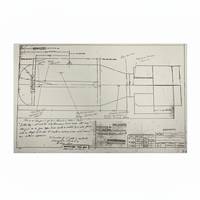
1945réf. 125961945. World War IIAtomic Bomb Van Kirk Theodore J. "Dutch". Single blueprint copy inscribed and signed dated "6 Aug 1945." Single blueprint sheet. Annotated blueprint of "Little Boy" the uranium-235 atomic bomb detonated over Hiroshima on August 6 1945 inscribed and explained by Theodore Van Kirk navigator of the B-29 Enola Gay during the first wartime use of a nuclear weapon. Developed under the direction of the Manhattan Project the bomb marked a decisive technological and geopolitical rupture at the close of World War II inaugurating the nuclear age and reshaping global military doctrine. Approximately 70000 people were killed as a direct result of the blast with comparable numbers injured rendering the event one of the most consequential military actions of the twentieth century. Black-and-white blueprint copy approximately 18 x 24 inches illustrating the internal configuration of "Little Boy" employing the gun-type assembly method in which a sub-critical uranium-235 projectile was fired into a hollow uranium-235 target to achieve supercritical mass and initiate a nuclear chain reaction. Van Kirk has added detailed manuscript notations in pencil and ink identifying principal components including the "Neutron Source" "Steel Tamper" "Gunpowder" "Explosion Device" "Highly Sensitive Radio Antennae" "Uranium 235 'Bullet' Fired into Target to Create a Critical Mass" and "Uranium 235 Hollowed out Target." Along the margin in black ink he writes: "This is a blue print of our Hiroshima Atomic bomb 'Little Boy.' It was the only uranium bomb made. The bomb was designed as a gun type bomb with a bullet of U-235 fired into a U-235 target to create a critical mass." Signed below in blue ink: "Theodore J 'Dutch' Van Kirk Navigator - Enola Gay 6 Aug 1945." The design of "Little Boy" was finalized by early 1945 and reflected a conservative engineering approach intended to ensure detonation reliability despite the unprecedented nature of atomic warfare. As a navigational officer on the mission Van Kirk occupied a critical operational role in delivering the weapon to its target and his explanatory annotations reveal how participants later articulated the bomb's mechanics and singular status as the only uranium-based device used in combat. Minor edge wear and light handling marks; blueprint lines sharp and legible; manuscript annotations and signature clear and strong. Overall very good to near fine condition. unknown
1963Book is in excellent condition with lightly bumped corners, very light edge wear to dark red cloth covers with gilt print at spine. Binding is solid and square, exterior shows no other blemishes, text/interior is clean and free of marking of any kind. Dust jacket shows extensive edge wear, small tears at hinge, top spine, scuffing, small stain. Contents include: Organization of the profession, The Japanese hotel, Transport and tourism, Town planning in evolution, Architectural education The architects, etc. Featured buildings or sights include Frank Lloyd Wright's Imperial Hotel, Diet Library, Gakushuin University, Museum of western art, memorial hall at Hiroshima, Sakakura's art gallery, Town hall, Gotsu, museum at Matsue, Dentsu building Osaka, Hasshokan hotel at Nagoya, Kenzo Tange hotel at Atami and a great many others. Architects featured in chapter "Architects" : Antonin Raymond, Togo Murano, Junzo Sakakura, Isao Sibaoka, Tsutomu Ikota, Hideo Kosaka, Kunio Maekawa, Kenzo Tange, Hirosohi Oe, Takamasa Yoshizaka, Yoshinobu Ashihara, Kiyonori Kikutake, and many others. Copyright 2011 Pistil Books
200374 pages. Features: Parallel and Linked Genocides - Iraq and Palestine; The Nazification of Israel; The Growing Clamor for Ethnic Cleansing; Anti-Semitism and the Beirut Pogrom; George Bush and the American Empire; Ground Zero - Hiroshima haunts 9/11; and much more. Average wear. Unmarked. A sound copy. Book
1998réf. 28839Hiroshima Japan : Hiroshima Peace Cultural Foundation 1998. First Edition. Paperback. Color-printed presentation box-set fine very slight toning to the edge . Corners sharp with an overall tight bright and clean impression. ; 0 pages; Description: 1 vol. : plates ; 24 cm. Subjects: World War 1939-1945 --Hiroshima Japan --History --Photo-journalism. UNdated. Date is suggested/cannot be verified. Hiroshima (Japan) : Hiroshima Peace Cultural Foundation paperback
1952In folio. Dim. 40x30,5 cm. Pp. da 30 a 40+(4). Numero del 25 gennaio 1952 della rivista settimanale "Ali" di aviazione. "Ali" il periodico degli aviatori italiani nasce a Milano il 28 Marzo 1944 per essere pubblicato fino al 28 Aprile 1945 quando si interruppe a causa della guerra. Riappare nel 1951 fino al 1977 variando più volte di nome. Tra gli articoli presenti: Tecnica di riflesso, C.c.2 Caproni Campini Primato italiano, Aviazione cino coreana, Villaggio Milano, I delta di Lippisch a reazione, MAntova, LA morte è discesa a Hiroshima ecc... Numerose notizie di attualità e foto d'epoca all'interno. In buone condizioni. Copertina editoriale in buone condizioni generali con lievi usure ai margini e dorso. Legatura assente. All'interno le pagine si presentano in ottime condizioni con rare fioriture. Number of the 25th of january 1952 of the weekly magazine "Ali" of aviation. "Ali" the magazine of italian aviators was born in Milan the 28th of March 1944 to be published until the 28th of April 1945 when it was blocked due to the war. It reappeared in 1951 until 1977 changing names different times. Between the articles inside: Technique of reflexion, C.c.2 Caproni Campini Primato italiano, Aviation Chine Chorea, Village Milan, I delta di Lippisch, Mantova, death in Hiroshima ecc... Different information of actuality and photoes inside. In good conditions. Editorial cover in good general conditions slightly worn in the edges and spine. (see the photo). Binding is almost missing. Inside pages are in good conditions with occasional foxings.
1981réf. KFZZQ100522Hiroshima City Museum of Contemporary Art 1981. Soft Cover. Fine. KFZZQ100522 Hiroshima City Museum of Contemporary Art paperback
réf. 5332HIROSHIMA. An archive of 22 original aerial photographs of Japan at the end of World War II; seven of them are marked “Hiroshima” on the verso. The photos were likely taken by a bomber crewman who flew over Hiroshima and other parts of Japan. The near-total flattening of Hiroshima is obvious in some images and there are images of horrific destruction perhaps from firebombing. Each image measures 4 ½” x 4”. Some has some minor scuffing and loss to the image and all have mounting remnants to the verso from where they were once attached to an album. unknown books
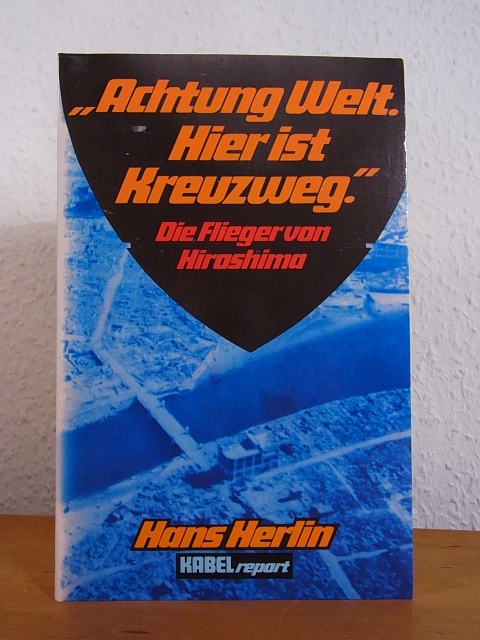
1983réf. 96699Hamburg: Ernst Kabel Verlag, 1983. 21,5 cm ; kart.
1995réf. 174782New York Tokyo and Washington DC: Weatherhill in association with Arthur M. Sackler Gallery Smithsonian Institution 1995. Second printing. Oblong softcover. Exhibition catalog for a show that ran November 20 1994 through July 9 1995. Foreword by Milo Cleveland Beach. A look at the baskets of Hiroshima Kazuo. Includes numerous color and black and white illustrations. A fine copy in French style wrappers. Weatherhill in association with Arthur M. Sackler Gallery, Smithsonian Institution unknown books
Folio 160p., illus. SOFTCOVER. Paperback Very good condition
1998réf. V34825Hamburg (Gruner + Jahr AG) [1998] (= wöchentliche Beilage zum Stern). 4°, illustrierter Originalumschlag ( Klammerheftung) 30 S., Abbildungen, 1
1980In 4°; 45, (19) pp. Brossura editoriale illustrata. Tiratura di 1000 esemplari. Prima edizione di questa monografia dedicata alla 2° Biennale Internazionale della pietra "Città di Marino" nella quale venne presentata l'opera del grande scultore giapponese, nato a Kozan (Hiroshima) nel 1942. Kuetani fu allievo di Pericle Fazzini.