30 591 résultats
1863réf. 51386Mobile: S. H. Goetzel 1863. First edition 16mo 3 parts in 1; pp. 2 ii 220; 104; 47 1; 97-108 Bugle Signals; xiv index 2 ads; 38 engraved plates 8 folding; original paper-covered boards rebacked in blue cloth sometime in the 20th century; boards worn text occasionally dampstained and foxed without the front free endpaper and hinges with old archival paper repair; but in all a good sound and compelling copy of a poorly made book. Parrish & Willingham 5116. S. H. Goetzel unknown books
1944réf. 62-187BN.p. c. 1944 or 1945. 1944. Probably published in Germany at war's end. 7 vols: Many Folding maps. Much statistical information. Originally classified Secret. This set covers American planning and operations for Overlord & operations in Normandy up to Operation Cobra the Activation of Third Army. and the breakout. Omar Bradley was command general during the period. Ex.lib. Much wear at extremities. 4th vol missing front end paper binding loose on vol. 5. Fair Set. Hardcover. Fair. N.p., c. 1944 or 1945. Hardcover
1872réf. 3731PARIS-NANCY. BERGER-LEVRAULT ET CIE, LIBRAIRES-EDITEURS. 1872-1902. 30 ANNEES COMPLETES, DEPUIS LA PREMIERE ANNEE, EN 60 VOLUMES IN-8 (14,5 X 22 CENTIMETRES ENVIRON), RELIURE D’EPOQUE 1/2 CHAGRIN VERT, PUIS 1/2 VEAU VERT, DOS LISSE ORNE DE FILETS DORES, TITRE DORE. ILLUSTRE DE TRES NOMBREUSES PLANCHES DEPLIANTES HORS TEXTE, REPRESENTANT L’EVOLUTION DE L’ARTILLERIE DURANT CETTE PERIODE RICHE EN INVENTIONS ET SYSTEMES NOUVEAUX. ON JOINT LA « PARTIE OFFICIELLE » DE LA REVUE DE 1872 A 1894, EN 8 VOLUMES RELIES A L’IDENTIQUE. ENSEMBLE RARE EN 68 VOLUMES. QUELQUES TRACES D'USURE EXTERIEURE, QUELQUES DOS PASSES, SINON BEL EXEMPLAIRE. .
réf. 234138S.l. [Saumur], s.d. (1894) in-4 oblong (30 x 35 cm), [8] ff. n. ch., regroupant 46 petits tirages photographiques (8 x 5 cm) sur carton fort monté sur onglet, tous légendés au crayon de bois, [2] ff. vierges, maroquin bleu nuit, dos à nerfs muet orné de filets à froid, encadrement de simple filet doré sur les plats, plat supérieur orné de quatre ferrures en argent aux angles, dont l'une comportant l'inscription gravée "Les officiers du 5e Régiment de chasseurs à leur colonel. 19 février 1894", chiffre EP en lettres d'argent poussé au centre du plat supérieur, tranches dorées, encadrement de guirlande à froid sur les contreplats, gardes doublées de moire bleue (reliure de l'époque). Charnière supérieure légèrement frottée.
réf. 226504Turin, Imprimerie royale, s.d. (1759) in-8, XXXX pp., 372 pp., [2] ff. n. ch. (imprimatur et errata), avec un portrait gravé de Charles-Emmanuel III en médaillon en haut de la dédicace, basane fauve marbrée, dos lisse cloisonné et fleuronné, armes sur les plats, pièce de titre, tranches rouges Armes un peu usées au premier plat.
réf. 13979488Leipzig: Verlag von M. Hessling, 1884 album in folio (32,5 x 40,5 cm), titre sur feuillet cartonné et 15 photographies (29,5 x 16,5 cm) montées sur carton. Chemise d'éditeur à rabats en percaline rouge, décorée du portrait du Kaiser et du titre, petites usures, petite trace jaune sur le 1er plat, manque le rabat inférieur, photographies en parfait état, bel exemplaire. (Reliure de Fr. Legel, Leipzig).
1700réf. 3201A AMSTERDAM. CHEZ HENRI SCHELTE. 1700. BEL ENSEMBLE DE 13 AQUARELLES, 12 A PLEINE PAGE ET UNE ILLUSTRANT LE FEUILLET DE TITRE, TOUTES MONTEES SUR ONGLET EN UN VOLUME (32,5 X 41 X 2 CENTIMETRES ENVIRON) RELIURE A LA BRADEL 1/2 CHAGRIN ROUGE A COINS, PLATS RECOUVERTS DE PERCALINE GRISE, TITRE DORE SUR DOS LISSE. COMPREND:- FEUILLET DE TITRE MANUSCRIT, ILLUSTRE PAR UN TROMPETTE DU 9° CUIRASSIERS (1828).- TROMPETTE DU 1° REGIMENT DE CUIRASSIERS DE LA GARDE ROYALE (1824).- TROMPETTE DU 2° REGIMENT DE CUIRASSIERS DE LA GARDE ROYALE. TENUE DE SERVICE. (1825-1830). REMONTE SUR DES CHEVAUX GRIS VERSES AU REGIMENT PAR LA COMPAGNIE DES GRENADIERS A CHEVAL DE LA MAISON DU ROI, LORS DE SON LICENCIEMENT.- MARECHAL-DES-LOGIS TROMPETTE DU 2° REGIMENT DE CUIRASSIERS DE LA GARDE ROYALE. GRANDE TENUE. (1825).- TROMPETTE DU 1° REGIMENT DE CUIRASSIERS DE LA GARDE ROYALE. PETITE TENUE DE SERVICE (1825).- TROMPETTE DU REGIMENT DE CUIRASSIERS DE LA REINE. (1° REGIMENT. 1816).- TROMPETTE DU REGIMENT DE CUIRASSIERS DU DAUPHIN. (2° REGIMENT). GRANDE TENUE. (1816).- JEUNE TROMPETTE DU REGIMENT DE CUIRASSIERS D’ANGOULEME. (3° REGIMENT). GRANDE TENUE. (1816).- TROMPETTE DU REGIMENT DE CUIRASSIERS DE BERRY. (4° REGIMENT). GRANDE TENUE. (1816).- TROMPETTE DU REGIMENT DE CUIRASSIERS D’ORLEANS. (5° REGIMENT). PETITE TENUE DE SERVICE. (1816).- TROMPETTE DU REGIMENT DE CUIRASSIERS D’ORLEANS. (5° REGIMENT). GRANDE TENUE. (1816).- TROMPETTE DU REGIMENT DE CUIRASSIERS DE CONDE. (6° REGIMENT). GRANDE TENUE. (1818).- TROMPETTE DU REGIMENT DE CUIRASSIERS DE CONDE. (6° REGIMENT). GRANDE TENUE. (1816). D’APRES UNE AQUARELLE DU LIEUTENANT-COLONEL JOLY (CABINET DES ESTAMPES).TRES BEL ENSEMBLE, D’UNE TRES BELLE QUALITE D’EXECUTION.
1844réf. 1793A PARIS. CHEZ J. DELAHAYE, EDITEUR. 1844. IN-8 (16,5 X 24 X 0,5 CENTIMETRES ENVIRON) DE (4) + 59 PAGES, RELIURE A LA BRADEL DE L’EDITEUR, CARTONNAGE JAUNE AVEC TITRE IMPRIME EN NOIR. ILLUSTRE DE DEUX PLANCHES EN NOIR HORS TEXTE LITHOGRAPHIEES PAR AUGUSTE BRY. EDITION ORIGINALE. OUVRAGE TRES RARE. LE MARECHAL BUGEAUD AVAIT AUTORISE MONSEIGNEUR DUPUCH A NEGOCIER L’ECHANGE DE PRISONNIERS. L’UN DES DELEGUES EST BERBRUGGER QUI LIVRE ICI UN COMPTE-RENDU DETAILLE DE CETTE MISSION. «LES DELEGUES NE FURENT PAS RECUS PAR ABD-EL-KADER MECONTENT DE CE QU’ILS VINSSENT NEGOCIER SEULEMENT L’ECHANGE DES PRISONNIERS ET NON TRAITER DE LA PAIX. CE FUT LE DEY DE MILIANA QUI ECHANGEA AVEC EUX LES SIGNATURES.» PETITS DEFAUTS SANS GRAVITE, SINON BON EXEMPLAIRE.
1823réf. 898A PARIS. CHEZ PILLET AINE, IMPRIMEUR-LIBRAIRE, ET CHEZ ANSELIN ET POCHARD, LIBRAIRES. 1823. 2 VOLUMES IN-8 (13,5 X 21 X 6,5 CENTIMETRES ENVIRON) DE (4) + II + 444 ET (4) + 460 PAGES, RELIURE D’EPOQUE PLEIN VEAU RACINE, DOS LISSE ORNE DE FLEURONS DORES, GRECQUE DOREE ENCADRANT LES PLATS, FILET DORE SUR COUPES, TITRE DORE SUR ETIQUETTE MAROQUIN ROUGE, TRANCHES MARBREES. ILLUSTRE D’UN FRONTISPICE GRAVE PAR COUCHE FILS D’APRES BAGETTI (PASSAGE DU NIEMEN), SOUS SERPENTE, ET DE 4 TABLEAUX DEPLIANTS. L’ATLAS PAR BRUSSEL DE BRULART, RELIE A LA SUITE DU SECOND VOLUME SE COMPOSE DE 5 CARTES DEPLIANTES GRAVEES PAR CHAMOUÏN ET TARDIEU : UNE CARTE GENERALE DU THEATRE DE LA GUERRE FINEMENT REHAUSSEE A L’AQUARELLE, UNE CARTE DU NORD DE LA LITUANIE, CELLE DU MIDI DE CETTE MEME PROVINCE, UNE DES GOUVERNEMENTS DE MOSCOU ET DE SMOLENSK, ET UN PLAN DE LA BATAILLE DE LA MOSKOWA (EGALEMENT APPELEE BATAILLE DE BORODINO). EDITION ORIGINALE RARE. L'UNE DES MEILLEURES RELATIONS DE LA CAMPAGNE DE RUSSIE, REDIGE PAR L'UN DE SES PRINCIPAUX ACTEURS. CAPITAINE D'ARTILLERIE, AIDE DE CAMP DE MURAT, LE MARQUIS DE CHAMBRAY FUT FAIT PRISONNIER PAR LES RUSSES PENDANT LA RETRAITE DE RUSSIE EN 1812 ET MAINTENU EN CAPTIVITE EN UKRAINE OU IL RECUEILLIT LES MATERIAUX POUR LA REDACTION DE CET OUVRAGE REPUTE ET L’UN DES MIEUX DOCUMENTES SUR CETTE CELEBRE CAMPAGNE. BEL EXEMPLAIRE.
réf. 20796Tapuscrit in-folio (297 mm), nombreuses et quelquefois importantes annotations, suppressions, ajouts manuscrits, de 338 ff. recto, reliés en un volume, demi-maroquin vert foncé, titre doré au dos ; nombreuses photographies imprimées ou clichés originaux et autres documents (statistiques, courbes, etc.).
réf. 220093À Amsterdam, Aux Dépens de la Compagnie, 1724 2 vol. in-4, [16]-448 pp. et [16]-552 pp., veau brun, dos ornés à nerfs, tranches mouchetées de rouge (reliure de l'époque). Mouillures claires marginales, brunissures notamment sur les planches. Ex-libris Roger Magadoux.
réf. 83400Ottawa, Lithographed at the Survey Office, 1889, 1 volume in-4 de 265x185 mm environ, 324 pages, demi reliure à coins en cuir noir, dos à 5 nerfs portant titres dorés, orné de filets dorés qui soulignent les nerfs, contient des figures dans le texte et 5 planches hors texte, 1 carte d'envoi de l'auteur. Légères rousseurs sur les pages de garde, petite trace blanche sur le dernier plat, sinon bon état. Un des 50 exemplaires de cette première édition, publiée au sein des Services d'arpentage (Canada), à l'usage des employés de l'équipe. Hommage de l'auteur sous forme de carte. (Nous laissons une enveloppe jointe contenant quelques photographies anciennes sans rapport avec l'ouvrage).
1921réf. 569PARIS. EDITIONS DE LA BANDEROLE. 1921-1924. 3 VOLUMES IN-8 (21,5 X 26,5 X 11,5 CENTIMETRES ENVIRON) DE (4) + 86 + (3), (6) + 123 + (6) ET (4) + 278 + (3) PAGES, RELIURE D’EPOQUE PLEIN MAROQUIN VERT SAPIN, DOS A CINQ NERFS SOULIGNES DE FILETS VERT D’EAU, AVEC NOM DE L’ILLUSTRATEUR ET MONOGRAMME P. M. DORES EN QUEUE, TITRE DORE SUR ETIQUETTE VEAU ROUGE, TETE DOREE, PLATS ENCADRES D’UN FILET VERT D’EAU ET MOSAIQUE D’UN FILET DE BOX ROUGE, CONTREPLATS ET GARDES DOUBLES DE DAIM VERT D’EAU, COUVERTURES ILLUSTREES D'UNE VIGNETTE ET DOS CONSERVES. CONTIENT :- LA BOULE DE GUI. ILLUSTRE DE 47 COMPOSITIONS D’ANDRE DUNOYER DE SEGONZAC (1884-1974), 42 DESSINS REPRODUITS DANS LE TEXTE ET 5 POINTES SECHES ORIGINALES HORS TEXTE, DONT LE FRONTISPICE. EDITION ORIGINALE ET PREMIER TIRAGE LIMITE A 600 EXEMPLAIRES NUMEROTES, UN DES 519 SUR PAPIER LAFUMA TEINTE, CELUI-CI PORTANT LE NUMERO 557.- LE CABARET DE LA BELLE FEMME. ILLUSTRE DE 58 COMPOSITIONS D’ANDRE DUNOYER DE SEGONZAC (1884-1974), 50 DESSINS REPRODUITS DANS LE TEXTE ET 8 POINTES SECHES ORIGINALES HORS TEXTE, DONT LE FRONTISPICE. EDITION ORIGINALE ET PREMIER TIRAGE LIMITE A 640 EXEMPLAIRES NUMEROTES, UN DES 520 SUR VERGE DE RIVES, CELUI-CI PORTANT LE NUMERO 402.- LES CROIX DE BOIS. ILLUSTRE DE 63 COMPOSITIONS D’ANDRE DUNOYER DE SEGONZAC (1884-1974), 40 DESSINS REPRODUITS DANS LE TEXTE ET 23 GRAVURES DONT 10 POINTES SECHES ORIGINALES HORS TEXTE, Y COMPRIS LE FRONTISPICE. NOUVELLE EDITION COMPORTANT EN EDITION ORIGINALE DEUX CHAPITRES CENSURES DANS L’EDITION PRECEDENTE : L’ENNEMI DES VIEUX ET PERMISSIONNAIRES. PREMIERE EDITION ILLUSTREE ET PREMIER TIRAGE LIMITE A 600 EXEMPLAIRES NUMEROTES, UN DES 519 SUR PAPIER LAFUMA TEINTE, CELUI-CI PORTANT LE NUMERO 533.TRES BEL ENSEMBLE.
réf. 49296Bordeaux.Paris.1865.E.O.2 vols.in-4 demi-reliés.180 et 461 p.150 planches ( 2 planches en double.) Carte.Bel exemplaire avec qques piqùres.Demi-chagrin rouge avec caractères dorés.
1901réf. 2304PARIS. LA GIBERNE. 1901. GRAND ET FORT IN-4 (28,5 X 36 X 6 CENTIMETRES ENVIRON) DE XII + 379 PAGES RELIURE D’EPOQUE 1/2 MAROQUIN VERT A COINS SOULIGNEE D’UN DOUBLE FILET DORE, DOS A 5 NERFS ORNE DE FLEURONS DORES A L’AIGLE IMPERIALE, TITRE ET TETE DORES, COUVERTURE ET DOS CONSERVES (H. MORALES, RELIEUR A POITIERS). LES 60 PLANCHES HORS TEXTE SONT TOUTES SOUS SERPENTE LEGENDEE. EDITION ORIGINALE. TIRAGE LIMITE A 650 EXEMPLAIRES NUMEROTES, UN DES 600 SUR VELIN GLACE, CELUI-CI PORTANT LE NUMERO 402. OUVRAGE RARE ET RECHERCHE. PETITS DEFAUTS EXTERIEURS SANS AUCUNE GRAVITE, SINON BEL EXEMPLAIRE, DOS DECORATIF.
réf. 824STATUETTE EN BRONZE A PATINE BRUNE, SIGNEE SUR LA TERRASSE «E. FREMIET», SUR SOCLE EN BRONZE DORE PORTANT L’INSCRIPTION GRAVEE: «SAPEUR D’INFANTERIE 1854». HAUTEUR: 28,7 CENTIMETRES ENVIRON (SOCLE INCLUS). DE LA SERIE DES UNIFORMES DE L’ARMEE FRANCAISE, MODELE EXPOSE AU SALON DE 1859. 55 DE CES STATUETTES AVAIENT ETE COMMANDEES PAR NAPOLEON III ET DESTINEES AU PRINCE IMPERIAL. LES ORIGINAUX EN CIRE FURENT DETRUITS LORS DE L’INCENDIE DES TUILERIES EN 1871. TRES BEL ETAT.
1772réf. 2941A PARIS. DE L’IMPRIMERIE ROYALE. 1772. IN-4 (20,5 X 26 X 4,5 CENTIMETRES ENVIRON) DE (6) + XVI + 514 + (2) + CVII ET (1) PAGES, RELIURE D'EPOQUE PLEIN VEAU MARBRE, DOS A CINQ NERFS ORNE DE CAISSONS A FLEURONS DORES, TITRE DORE SUR ETIQUETTE MAROQUIN HAVANE, FILETS DORES SUR COUPES, TRANCHES ROUGES. BELLE ILLUSTRATION GRAVEE SUR CUIVRE COMPOSEE D’UN BEAU FRONTISPICE PAR EISEN, GRAVE PAR DE GHENDT; D’UN FLEURON SUR LE TITRE PAR DE SEVE, GRAVE PAR PATAS; D’UN PORTRAIT DU COMTE DE PROVENCE, GRAVE PAR VOYSARD, D’APRES MICHEL VANLOO; DE 4 JOLIES VIGNETTES PAR EISEN, GRAVEES PAR DELAUNAY, MASSARD ET DE LONGUEIL; DE 2 FIGURES PAR EISEN, GRAVEES PAR BAQUOY ET DE 3 CULS-DE-LAMPE PAR LES-MEMES, EN PREMIER TIRAGE (COHEN. 427-428). EDITION ORIGINALE, PUBLIEE AUX FRAIS DES ORDRES DE SAINT-LAZARE ET DE NOTRE-DAME DU MONT-CARMEL (SAFFROY. I. 4491). FONDE AU XII° SIECLE EN TERRE-SAINTE, L’ORDRE DE SAINT-LAZARE SE CONSACRAIT A L’ACCEUIL ET A LA DEFENSE DES LEPREUX. BIENTOT INSTALLE EN FRANCE, IL Y FUT ENTIEREMENT RAPATRIE AU XIII° SIECLE. EN 1608 IL FUT FUSIONNE PAR HENRI IV AVEC L’ORDRE DE NOTRE DAME DU MONT-CARMEL, NOUVELLEMENT CREE ET QUI AVAIT VOCATION A LUTTER CONTRE L’HERESIE PROTESTANTE. AU XVIII° SIECLE, LES GRANDS MAITRES EN FURENT TOUS DES PRINCES DU SANG. RARE. BEL EXEMPLAIRE.
1757réf. 2658A AMSTERDAM. CHEZ CHATELAIN IMPRIM. LIB. 1757. IN-12 (9,7 X 16,2 X 2,7 CENTIMETRES ENVIRON) DE (8) + XXXVIII + 244 ET XXIV PAGES, RELIURE D'EPOQUE PLEIN VEAU MARBRE, DOS A CINQ NERFS ORNE DE CAISSONS A FLEURONS DORES, TITRE DORE SUR ETIQUETTE MAROQUIN HAVANE, TRANCHES ROUGES. EDITION ORIGINALE RARE. (BARBIER. III. 760). PETITES TRACES D'USURE EXTERIEURE SANS GRAVITE, SINON BON EXEMPLAIRE.
1837réf. 3808PARIS. H. FOURNIER AINE, EDITEUR. LONDRES. SAUNDERS & OTLEY. 1837-1838. 6 TOMES EN 3 VOLUMES IN-8 (13,5 X 21,5 X 16 CENTIMETRES ENVIRON) DE (4) + VIII + 495, (4) + 504, (4) + 520, (4) + II + 448 + (1), (4) + 544 + (1) ET (4) + 814 PAGES, RELIURE D'EPOQUE 1/2 VEAU FAUVE, DOS A QUATRE NERS ORNE D'UN JOLI DECOR DE FLEURONS DORES, TITRE DORE SUR ETIQUETTE MAROQUIN NOIR, TRANCHES MARBREES. SANS LA CARTE DES OPERATIONS EN VIRGINIE EN 1781, QUI MANQUE SOUVENT ET NE SEMBLE PAS AVOIR ETE RELIEE D’ORIGINE DANS CET EXEMPLAIRE. EDITION ORIGINALE TRES RARE. BON EXEMPLAIRE, DANS UNE RELIURE STRICTEMENT CONTEMPORAINE. .
réf. 214785Paris, Louis Tirpenne, s.d. (1855) in-folio, un feuillet de notice historique, avec plan ; et 5 planches lithographiées sur fond teinté, en feuilles sous couverture crème imprimée, ébarbée. Couverture un peu défraichie.
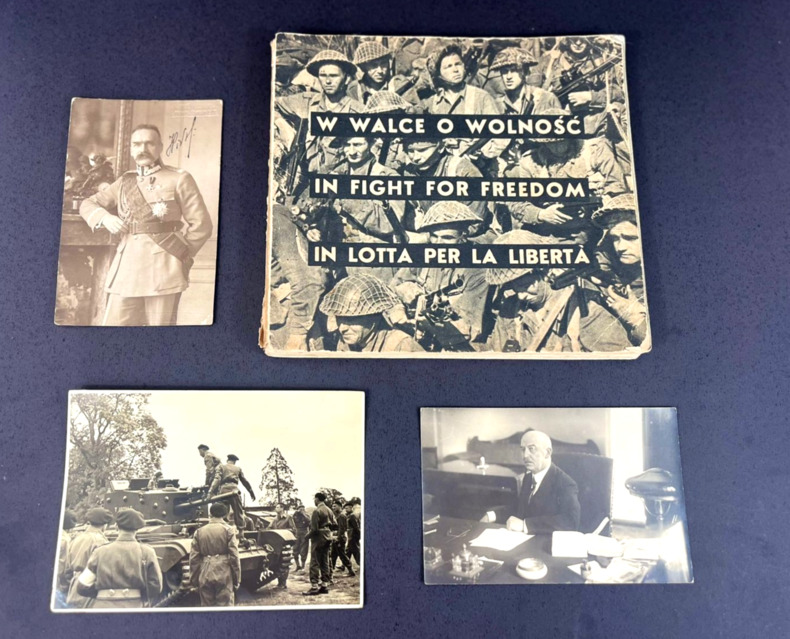
1945réf. 517This is a set which belonged to Janusz Gluchowski, a high-ranking Polish military officer at the time of the WW2. The set contains three original B&W pictures. First one: undated postcard showing Marshal Jozef Pilsudski, signed by himself in black ink, 8.5 x 13.5 cm, with two embossed mentions above and below. Second picture: undated postcard showing Poland President Gabriel Narutowicz, with a written mention on the back. Third picture: 11 x 15.5 cm photograph. General Tadeusz Bór-Komorowski inspecting a British Cromwell tank, accompanied by Polish officers of the 3rd Armored Regiment (3 puk pancerny). The image was captured during an official ceremony in the city of Kelso, Scotland, in the immediate post-war period, on June 15, 1945. The scene shows the General in an observation position, climbing onto the tank while surrounded by Polish soldiers. The tank corresponds to a British model widely used by Polish forces in exile during the Western European campaign. On the reverse, the following handwritten inscriptions appear: VI 1945, Kelso. N. Wódz gen. Bór-Komorowski dokonuje inspekcji 3 p. panc. N. Wódz w towarzystwie bryg. puku na czogu." / June 15, 1945, Kelso The book is an illustrated three-languages (Polish, English and Italian) set commemorating the struggles of the Polish II Corps. Edited by Wyda Rererat [Referat] Kultury i Prasy Kresowej Dywizji Piechoty in Rome, 1945. Oblong book of 21 x 19 cm, unpaginated (144 pp.). Cover detached. Endpapers and first page show Janusz Gluchowski's stamp. In publisher's photographically illustrated wrappers. Each page contains a photographic image or a photomontage accompanied with a short text in three languages. Front cover shows some wear and tear, the binding is a bit loose - we would advise having this book bound. The Polish II Corps was a major tactical and operational unit recruited from Polish deportees in the Soviet Gulags in 1943. First they fought in the Middle East, and in 1944 February they were transferred to Italy and as independent part of the British Army to fight in the Italian campaign, in the battles of Monte Cassino and Ancona and also the Battle of Bologna during the final offensive in Italy in 1945. The book goes through the story of Poland and the later established Polish II Corps, starting with the German and Soviet occupation in 1939. It shows the deportation of Poles to forced labour to the Gulag and, after the Polish-Russian Military Agreement in 1941, the establishment of the Polish Army on Soviet soil, also their military training and their fights in various battles. Janusz Julian Gluchowski was a Major General in the Polish Army during the Second Polish Republic. He was born on August 6, 1888, in Bukowa. He fought in the Polish Legions in World War I, the Polish-Ukrainian War, the Polish-Soviet War, and the invasion of Poland by Nazi Germany, Slovakia, and the Soviet Union in 1939, which culminated in the start of World War II. In his adolescence, he attended high school in Czstochowa. In 1905, he became a member of the Combat Organization of the Polish Socialist Party and was wounded in the hand during an attack near Czstochowa. To avoid arrest by the Russian authorities, he left for Belgium, where he studied at the University of Liège. He returned to divided Poland around 1910 and settled in Austrian Galicia. In 1912 he graduated from the Officers' School of the Riflemen's Association in Stroza, near Krakow. In the early hours of August 1914, he commanded a platoon in Oleandria and was Wadysaw Belina-Pramowski's representative during the legendary attack of the so-called Seven Lancers of Belina (Uaska siódemka). On August 6th, together with the First Cadre Company, he left Krakow and marched to Miechów. In October 1914 he was promoted to Lieutenant (Poruchik) and, in November 1916, to Rittmeister (Cavalry Master). Until 1917 he served in the First Uhlan Regiment of the Polish Legions. After the Oath Crisis (Kryzys przysigowy) he was interned first in Fort Beniaminów and later in Werl. Released in October 1918, he went to Lublin, where, in early November, he formed the Third Ulan Regiment (later renamed the Seventh Ulan Regiment of Lublin). Along with his unit, he fought in the Polish-Soviet War. On May 29, 1920, he was promoted to Polkovnik. He was transferred in July 1920 to Eastern Galicia, taking command of the First Cavalry Brigade, fighting against the Soviets in Galicia and Volhynia. After the war, he remained in this position until 1925, when he was transferred to the Fourth Cavalry Brigade. Promoted to Brigadier General on March 16, 1927. Appointed commander of the Center for Higher Military Studies on June 4, 1930, and three years later, after the death of General Stanislaw Tessaro, he was appointed commander of Military District X in Przemyl. In October 1935, he became Deputy Minister of Military Affairs. In the early days of the 1939 invasion of Poland, Gluchowski ordered General Walerian Czuma to prepare the defense of Warsaw. In mid-September 1939, he fled to Romania. After his escape, he managed to travel to the Middle East and, in January 1941, received orders to go to London. In October 1941, he was appointed Commander of the Training Brigade stationed in Scotland. On September 23, 1943, he was appointed commander of all Polish Army units stationed in Great Britain, except the First Independent Parachute Brigade, which remained under the authority of the Commander-in-Chief. He was promoted to Major General on June 1, 1945. He decided not to return to Soviet-occupied Poland and remained in Great Britain. He frequently criticized the Soviet regime and the Soviet occupation authorities in postwar Poland. Furthermore, he was one of the founders and president of the Jozef Pilsudski Institute in London. He was, therefore, an active member of the Polish community in Great Britain. He was president and honorary member of several Polish veterans' organizations. He died on June 11, 1964, in London, England.
réf. 218204Lieux divers, 1809-1811 in-8 et in-4,
1839réf. 252PARIS. J. CORREARD, EDITEUR D’OUVRAGES MILITAIRES. 1839. IN-8 BROCHE (15 X 22,5 X 0,5 CENTIMETRES ENVIRON) DE (4) + 60 PAGES, COUVERTURE ORANGE IMPRIMEE EN NOIR. ACCOMPAGNE DE SON ATLAS (34 X 25 X 1 CENTIMETRES), RELIURE A BRADEL DE L’EDITEUR, CARTONNAGE ORANGE, TITRE IMPRIME EN NOIR, DE (4) PAGES ET 10 PLANCHES, DONT UNE EN COULEURS. EDITION ORIGINALE ET UNIQUE, RARISSIME AVEC SON ATLAS (INCONNUE DE TULARD). QUELQUES DEFAUTS EXTERIEURS, SINON BON EXEMPLAIRE.
réf. 235011À Paris, chez Antoine Boudet, 1744 11 vol. in-12, basane brune, dos à nerfs orné, tranches rouges (rel. de l'époque). Qqs épid. sur les plats.
1540réf. 003398Gaetano, in Venetia In-12 (15,5 x 11 cm), 1 bl., titre avec encadrement, 2 ff., 4 ff., 1 bl., 87 ff. numérotés, 1 bl., reliure demi-vélin crème, titre manuscrit au dos (reliure ancienne).