31 174 résultats
1913réf. 381597Washington: Government Printing Office 1913. Hardcover. Very Good. First edition. Three volumes. House Documents No. 1346 and No. 1346 part 2 62d Congress 3d Session 1912-1913 and House Reports No. 92 and No. 92 part 2 63d Congress 1st Session 1913. Complete as issued in one cloth bound volume and one cloth box; and one cloth bound volume. Octavos. Bound volume: 172pp. folding maps; box: 16 folding maps and 3 folding diagrams; bound volume: 19 6pp. 1 folding map and 1 folding chart. Moderate soiling to the cloth boards a very good set. An extensive topographical survey of the Alaska Territory conduced by Major Jay J. Morrow of the US Army Corps of Engineers. A scarce complete set of the two-volume House Document with the folding maps in fine condition and the additional one-volume House Report bound with 48 other reports. Government Printing Office hardcover books
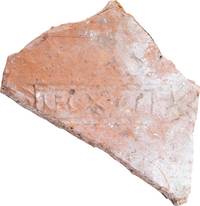
réf. 1106Carnuntum c62AD-200AD. Fragment of a reddish clay brick with the stamp of Legio X Gemina Pia Fidelis “"LEG X C PF" the 10th Roman legion of 5280 men split into 10 cohorts. Mortar layer on the back otherwise a very good and well preserved stamp. Ex collection Piscator 1959. Cf. on this piece Brandl op. cit. no. 187-190. 6 1/2" x 4" x 1 1/4" Legio X Gemina was formed from the disbanded Legio X the first Roman legion levied personally by Julius Caesar in 58 BCE. It distinguished itself as one of the four legions used by Caesar in his invasion of Gaul fought for Octavian and Antony against Brutus and Cassius in the Battle of Philippi in 42 BCE and followed Antony in his campaigns against Parthia and Armenia 36-34 BCE. The legion surrendered to Octavian after the Battle of Actium in 31 BCE losing its prestigious name Equestris as punishment and receiving veterans from other legions which earned it the cognomen "Gemina" twin. After service in the Cantabrian Wars and brief deployments to various frontier posts the legion was sent to Carnuntum a fortress on the Danube between current day Vienna and Bratislava in about 61 CE where it remained vigilant against Germanic threats. Following participation in Trajan's Second Dacian War the legion moved twice more first to Aquincum Budapest in 103 CE then finally to Vindobona Vienna in 114 CE where they remained stationed defending the Danube frontier until the 5th century though vexillationes were periodically sent for campaigns in Judaea Mauritania and Parthia. Red clay bricks like these were a common building material in Roman architecture from about the time of Augustus and making bricks was among the chores for Roman soldiers during their down time. unknown
réf. 1106Carnuntum c62AD-200AD. Fragment of a reddish clay brick with the stamp of Legio X Gemina Pia Fidelis “"LEG X C PF" the 10th Roman legion of 5280 men split into 10 cohorts. Mortar layer on the back otherwise a very good and well preserved stamp. Ex collection Piscator 1959. Cf. on this piece Brandl op. cit. no. 187-190. 6 1/2" x 4" x 1 1/4" Legio X Gemina was formed from the disbanded Legio X the first Roman legion levied personally by Julius Caesar in 58 BCE. It distinguished itself as one of the four legions used by Caesar in his invasion of Gaul fought for Octavian and Antony against Brutus and Cassius in the Battle of Philippi in 42 BCE and followed Antony in his campaigns against Parthia and Armenia 36-34 BCE. The legion surrendered to Octavian after the Battle of Actium in 31 BCE losing its prestigious name Equestris as punishment and receiving veterans from other legions which earned it the cognomen "Gemina" twin. After service in the Cantabrian Wars and brief deployments to various frontier posts the legion was sent to Carnuntum a fortress on the Danube between current day Vienna and Bratislava in about 61 CE where it remained vigilant against Germanic threats. Following participation in Trajan's Second Dacian War the legion moved twice more first to Aquincum Budapest in 103 CE then finally to Vindobona Vienna in 114 CE where they remained stationed defending the Danube frontier until the 5th century though vexillationes were periodically sent for campaigns in Judaea Mauritania and Parthia. Red clay bricks like these were a common building material in Roman architecture from about the time of Augustus and making bricks was among the chores for Roman soldiers during their down time. unknown books
réf. BRG-29_8_372CreateSpace Independent Publishing Platform 2015-01-10. paperback. Very Good. 7x1x10. Very Good condition.Crisp pages. Clean cover and pages. Book shows minimal shelf wear. No highlighting/marking. Not Satisfied Contact us to get a refund. CreateSpace Independent Publishing Platform paperback
réf. BRG-29_8_371CreateSpace Independent Publishing Platform 2015-01-10. paperback. Very Good. 7x1x10. Very Good condition.Crisp pages. Clean cover and pages. Book shows minimal shelf wear. No highlighting/marking. Not Satisfied Contact us to get a refund. CreateSpace Independent Publishing Platform paperback
1919réf. 12692Washington DC: Presumed United States Government Printing Office 1919. Presumed First Edition First printing. Hardcover. Good. C.C.P. 400. Volume I: viii 713 3 pages. Figures 1 fold-out. Tables. Appendices. Index. Boards quite weak and partially restrengthened with glue. Pencil name inside front board Cover/spine is scuffed and has worn edges. Grayish binding. Volume II: viii 342 2 pages. Figures including several fold-outs. Tabular information. Index. No board weakness noted. Red binding. This is a mixed set due to different color of binding. In a 1918 journal article the functions of the Committee on Classification of Personnel in the Army were enumerated as: 1 classifying personnel according to their military qualifications 2 establishing the Trade-Tests division 3 enlisting the occupational needs of units in a division 4 extending the personnel work to staff corps troops 5 establishing the Central Personnel Bureau 6 appointing a committee on education and special training 7 organizing the War Service Exchange 8 rating the officers and candidates for commissions in the Officers Training Camps 10 cooperating with the Provost Marshall General 11 reducing the army paper work 12 enlisting the intelligence ratings of army men and 13 selecting aviators and navy men. The Committee on Classification of Personnel in the Army subsequently became The Classification Division Adjutant-Generals Department. The personnel system of the United States Army developed during 1917 and 1918 was an answer to the demand for a method of increasing the speed and efficiency of mobilization by utilizing to the best advantage the training experience and other qualifications which recruits brought with them from civil life. The system was planned and introduced largely through the efforts of the Committee on Classification of Personnel in the Army a civilian body working under the jurisdiction of the Adjutant General of the Army. The history of this movement is dole in Volume I. Volume II contains "The Personnel Manual". It gives detailed instructions for the actual operation of the personnel system as finally evolved and used during the latter part of 1918. This manual is the product of the experience of a year and is issued in complete form as a series of helpful suggestions so that the Army may profit by them in peace as well as in any future emergency. Presumed United States Government Printing Office hardcover
1796réf. 173179London: War Office 1796. Hardcover. Good cover edges bumped cover soiled interior tight. Red leather boards with gilt lettering on spine 98 pp 29 leaves of plates 27 folded. Printed for the War Office. The 18th century was a wealth of knowledge exploration and rapidly growing technology and expanding record-keeping made possible by advances in the printing press. War Office hardcover
1796réf. 173179London: War Office 1796. Hardcover. Good cover edges bumped cover soiled interior tight. Red leather boards with gilt lettering on spine 98 pp 29 leaves of plates 27 folded. Printed for the War Office. The 18th century was a wealth of knowledge exploration and rapidly growing technology and expanding record-keeping made possible by advances in the printing press. War Office hardcover books
1889réf. 64-222Whitlock c. 1889. 1889. Volume I: Complete set of 44 color plates with text in original leather covers. Plates 15x17". Oversize. List of plates available on request. Water staining to all page bottoms & upper right corner to plate VIII. Front cover off. Binding Poor. Plates Fair to Good. Hardcover. Good. Illus. by Ogden H.A. Whitlock, c. 1889. Hardcover
1964réf. 83699Washington DC: Department of the Army Headquarters 1964. Presumed First Edition First printing. Three hole punched with metal fasteners. Fair. Format is approximately 9 inches by 11 inches. 6 pages plus many tabs with one or more pages per tabbed section. Rare surviving original copy. Ink notation on front cover. Pages 1/2 is ahead of page 'i' The contents include: Introduction including Instructions for the use of the nuclear play calculator Strike Assessment Procedures including sections for cannons free rockets missiles air delivered weapons atomic demolition munitions and new weapons; Damage Determination ReferencesSample Problem Strike Assessment and Nuclear Play Calculator Aids in envelope. The Aids are present. This manual includes tabbed sections on Cannons Rockets Missiles Air-delivered weapons Atomic Demolition Munitions and then by yield from 0.5 KT through 5 MT. The Tab for I KT is mislabeled 1 MT. This manual provides guidance on procedures and techniques for nuclear play during tactical exercises. This manual provides the necessary aids for the Aggressor to determine the damage to United States and Allied forces from nuclear strikes. The weapons systems in this manual are based on material contained in the Handbook on Aggressor Military Forces FM 30-102. Aids envelop includes 8 plastic sheets of horizontal dispersion templates for cannons free rockets and Guided missiles and air delivered weapons and Damage circle templates for 1:50000 and 1:25000. The nuclear play calculator is a device for applying performance probabilities to nuclear delivery systems. The horizontal dispersion template is an aid used to determine the actual ground zero of a nuclear weapon. The damage circle template is an aid used in conjunction with the damage letters to evaluate the damage to personnel and equipment. The target element table describes target categories and the damage to be expected within each letter damage circle. The Damage circle radii tables are a series of tables showing the damage radii based on the height of burst and the weapon yield. This manual reflects the state-of-the-art the state of knowledge the state of training and the state-of-tactical nuclear weapons employment during the height of the cold war after the Cuban Missile Crisis and before the focus of the Army shifted to ground combat in Vietnam. Department of the Army, Headquarters unknown
1920Very Good Turkish, Ottoman (1500-1928) Original illustrated wrappers. Chipping on top edge and front cover. Occasional foxing on pages. Overall a good copy. Roy. 8vo. (23 x 15 cm). In Ottoman script (Old Turkish with Arabic letters). 103 p., b/w plates (19 unnumbered b/w plates and 1 map). First edition of this extremely rare first-hand and historically significant eyewitness account of the Syrian and the Suez Canal Operations during the Great War by an Ottoman soldier and statesman. Erden describes in this book his return to Istanbul after his military attaché duty in Paris and his departure to Damascus to join the 4th Army in Syria under the command of Cemal Pasha (1872-1922). He then discusses the Arab Revolt in Hejaz and its possible effects on the Ottoman Empire (The Arab Uprising was initiated by Sharif Hussein bin Ali in June 1916 during the Great War with the aim of creating an independent and united Arab state comprising of Aden in Yemen and Aleppo in Syria against the Imperial Ottoman). After disclosing his views and the actions of the army in the region, he goes on to describe Jerusalem, the Suez Canal, and the wars that took place there. Erden gave new information on the reasons and results of the Canal operation, the condition of the Turkish army along Palestine and Syria fronts, the relations among the Turkish staff, and the nature of the Arab revolt through his views and observations in Egypt, Palestine, and Syria fronts accumulated as he was Cemal Pasha's chief of staff. Erden was a Turkish soldier and war historian. After graduating from the Military Academy in 1903, he worked in the units and headquarters in Yemen, as the staff of the 3rd Corps in the Balkan War and as the Paris Military Attaché. During the Great War, he served as the Chief of Staff of the 4th Army within the entourage of Admiralty Minister Cemal Pasha in Syria. Özege 16174. Kursun p. 51.
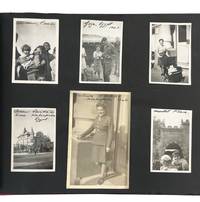
1946réf. 236311946. Large Women's Army Corps photo album depicting the overseas enlistment of an American servicewoman stationed in Egypt during the transition from wartime operations to postwar occupation 1946 to 1947. Pictured in combat training with rifles at leisure among identified companions and both wartime facilities and tourist institutions the album records the WAC servicewoman "Alma" serving abroad with uncommon continuity. The photographs document troop transport military facilities friendships archaeological excursions and encounters with Egyptian civilian life. The album also documents the conditions in Giza Egypt and abroad one photograph captioned "Prisoners working in chains. Nile Valley. Egypt. Feb. 1946" preserves a stark record of Egyptian penal labor within an album otherwise centered on 'Women's military service travel and postwar life. Photo album of approximately 130 silver gelatin photographs ranging from approximately 3 x 5 to 6 x 8 inches many in Egypt with additional views of the Atlantic crossing Persia and the United States 1946 to 1947. Most photographs have captions identifying or partially identifying 12 individuals and 17 distinct locations with dates scattered throughout. The album begins with pre-departure images in Long Beach California followed by the inscription "Myself aboard U.S.A.T. Thomas H. Barry. April '46" and "One cold day in the Atlantic. April 1946" documenting the voyage overseas. The album follows the creator through Heliopolis Cairo Payne Field Camp Huckstep the American Red Cross Club AMET N.A.A.F.I. Giza Memphis Alexandria the Nile Barrage Wadi Saloum and Abadan Persia. Informal portraits identify companions including Joyce Sheila Wollaston Johnnie Wollaston Peggy Cynthia Wendy Alma Tommy Mrs. Wollaston and "our N.I. friend with Woolly." Military life appears alongside moments of leisure rooftop gatherings athletic poses weddings camel riding and portraits of fellow American servicemen and WAC personnel. The photographs include training scenes of WAC personnel handling rifles during military instruction a reminder that women serving overseas were expected to maintain basic weapons proficiency despite their primarily noncombat assignments. The creator photographed Queen Farida's residence in Heliopolis street scenes labeled "Market Place" Sharia Ibrahim Egyptian children local families a native boy in Heliopolis village architecture at Giza archaeological remains at Memphis the Step Pyramid the supposed Tomb of Queen Nefertiti excavations captioned "Part of city excavated 6000 years old" and a striking image captioned "Prisoners working in chains. Nile Valley. Egypt. Feb. 1946." The album is distinguished by its female perspective on an overseas theater typically documented through the experiences of male soldiers. Rather than combat operations it records the work and daily lives of American servicewomen showing rifle instruction military compounds troop transport friendships organized recreation and independent travel through Egypt and Persia as experienced by a WAC member. That combination places gender at the center of the archive documenting how women occupied and navigated the American military presence abroad during the immediate postwar period. Light surface wear consistent with use; photographs well preserved and firmly mounted in the original red cord-bound album. Overall in very good condition. A sustained photographic record of an American Women's Army Corps member experiencing military service overseas travel and everyday life across the eastern Mediterranean during the closing chapter of the Second World War with most photographs retaining contemporary manuscript captions identifying locations dates and individuals throughout. unknown
1946réf. 236311946. Large Women's Army Corps photo album depicting the overseas enlistment of an American servicewoman stationed in Egypt during the transition from wartime operations to postwar occupation 1946 to 1947. Pictured in combat training with rifles at leisure among identified companions and both wartime facilities and tourist institutions the album records the WAC servicewoman "Alma" serving abroad with uncommon continuity. The photographs document troop transport military facilities friendships archaeological excursions and encounters with Egyptian civilian life. The album also documents the conditions in Giza Egypt and abroad one photograph captioned "Prisoners working in chains. Nile Valley. Egypt. Feb. 1946" preserves a stark record of Egyptian penal labor within an album otherwise centered on 'Women's military service travel and postwar life. Photo album of approximately 130 silver gelatin photographs ranging from approximately 3 x 5 to 6 x 8 inches many in Egypt with additional views of the Atlantic crossing Persia and the United States 1946 to 1947. Most photographs have captions identifying or partially identifying 12 individuals and 17 distinct locations with dates scattered throughout. The album begins with pre-departure images in Long Beach California followed by the inscription "Myself aboard U.S.A.T. Thomas H. Barry. April '46" and "One cold day in the Atlantic. April 1946" documenting the voyage overseas. The album follows the creator through Heliopolis Cairo Payne Field Camp Huckstep the American Red Cross Club AMET N.A.A.F.I. Giza Memphis Alexandria the Nile Barrage Wadi Saloum and Abadan Persia. Informal portraits identify companions including Joyce Sheila Wollaston Johnnie Wollaston Peggy Cynthia Wendy Alma Tommy Mrs. Wollaston and "our N.I. friend with Woolly." Military life appears alongside moments of leisure rooftop gatherings athletic poses weddings camel riding and portraits of fellow American servicemen and WAC personnel. The photographs include training scenes of WAC personnel handling rifles during military instruction a reminder that women serving overseas were expected to maintain basic weapons proficiency despite their primarily noncombat assignments. The creator photographed Queen Farida's residence in Heliopolis street scenes labeled "Market Place" Sharia Ibrahim Egyptian children local families a native boy in Heliopolis village architecture at Giza archaeological remains at Memphis the Step Pyramid the supposed Tomb of Queen Nefertiti excavations captioned "Part of city excavated 6000 years old" and a striking image captioned "Prisoners working in chains. Nile Valley. Egypt. Feb. 1946." The album is distinguished by its female perspective on an overseas theater typically documented through the experiences of male soldiers. Rather than combat operations it records the work and daily lives of American servicewomen showing rifle instruction military compounds troop transport friendships organized recreation and independent travel through Egypt and Persia as experienced by a WAC member. That combination places gender at the center of the archive documenting how women occupied and navigated the American military presence abroad during the immediate postwar period. Light surface wear consistent with use; photographs well preserved and firmly mounted in the original red cord-bound album. Overall in very good condition. A sustained photographic record of an American Women's Army Corps member experiencing military service overseas travel and everyday life across the eastern Mediterranean during the closing chapter of the Second World War with most photographs retaining contemporary manuscript captions identifying locations dates and individuals throughout. unknown books
1996réf. 2081502111905359Danketsu 1996. Soft Cover. Fine. The book is in fine condition. Danketsu paperback
réf. Z1-C-049-01279Rarebooksclub.com. Used - Like New. Used - Like New. Book is new and unread but may have minor shelf wear. Ships from UK in 48 hours or less usually same day. Your purchase helps support Sri Lankan Children's Charity 'The Rainbow Centre'. 100% money back guarantee. We are a world class secondhand bookstore based in Hertfordshire United Kingdom and specialize in high quality textbooks across an enormous variety of subjects. We aim to provide a vast range of textbooks rare and collectible books at a great price. Our donations to The Rainbow Centre have helped provide an education and a safe haven to hundreds of children who live in appalling conditions. We provide a 100% money back guarantee and are dedicated to providing our customers with the highest standards of service in the bookselling industry. Rarebooksclub.com unknown
1918réf. 72-1383GPO 1918. 1918. 1st ed. Copy 2287. 96p. Photos. Folding illustrations. Line drawings. In original tan cloth binder. Fine copy. 1st. Hardcover. Fine. GPO, 1918. Hardcover
réf. DADAX0356051102New unknown
19588vo., First Edition, with fine portrait frontispiece and 65 plates and maps (a number full-page) on 39; original red cloth, gilt back, red top (lightly faded as often), a near fine copy in unclipped dustwrapper. SIGNED BY THE AUTHOR ON FRONT FREE ENDPAPER. One of the key military memoirs of the twentieth century, this is as much an autobiography as a soldier's account of war. Written entirely by 'Monty' himself (in pencil, as so many of his official communications were composed), this characteristically straightforward (and often politically outspoken) account covers boyhood, early service with the Warwickshires, WWII and beyond (notably, about a third of the work covers his post-war career as CIGS and after). For technical military detail we look to the author's other works; here we find the simple account of a 'soldier who kept the faith'. A great read from one of the unforgettable leaders of his times. SIGNED COPIES ARE VERY SCARCE IN THIS CONDITION. Baxter 268; Enser, p.277.
réf. DADAX0809485753New unknown
1839réf. 770481839 Paris, Imprimerie Royale, 1839, petit in 4° relié demi-veau cerise, dos à faux nerfs orné, VIII-310 pages ; quelques rousseurs ; frottis à la reliure, coiffes usées.
1761réf. 36002Paris G. Lamesle mars 1761 in-16 basane fauve modeste, dos lisse cloisonné et fleurdelisé, encadrement de simple filet à froid sur les plats, tranches rouges [Rel. de l'époque]
1760réf. 36001Paris G. Lamesle avril 1760 in-16 veau fauve marbré, dos lisse cloisonné et orné de semis fleurdelisés dorés, pièce de titre cerise, encadrement de simple filet à froid sur les plats, tranches rouges [Rel. de l'époque], coiffe supérieure rognée
1807réf. 21313Pont-A-Mousson; Nancy; Paris Delahaye-Haener; Magimel 1807 -in-4 demi-basane 1 tome de texte et 1 tome d'Atlas reliés en 1 volume, reliure demi-basane (half binding sheepskin in-4) vert foncé grand in-quarto (30 x 23 cm), dos long (spine without raised band), décoré or (gilt decoration), à filets et roulette or (gilt line and fillets), titre et tomaison frappés or (gilt title), triple filets "or" en place des nerfs avec deux filets fins "or" intercalés, papier marbré vert et noir aux plats (cover with marbled paper), petit manque à la coiffe de tête, dos au cuir fatigué frotté mais intérieur parfait, toutes tranches lisses (all smooth edges), 298 pp + Atlas de 32 planches hors-texte gravées en noir (certaines dépliantes), 1807 Pont-à-Mousson : [Fleuret] ; Nancy : Delahaye-Haener ; Paris : Magimel Editeurs,
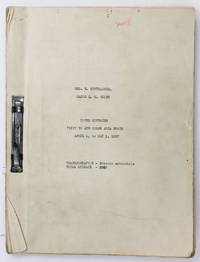
1937réf. 4173N.p. 1937. Very good. 353pp. rectos only including fifty-nine vernacular sepia-toned photographs measuring 2.5 x 3.5 inches and a few maps and manuscript diagrams. Typed self wrappers brad-bound. Minor creasing and dust-soiling to wrappers. Clean internally. A profusely illustrated report with a few hand-drawn diagrams and numerous manuscript emendations focused on various U.S. Army installations in the American Southeast. The author Major George H. Schumacher of the U.S. Army's Quartermaster Corps visited several Army bases and other posts in Florida South Carolina North Carolina Alabama and Georgia in the Spring of 1937. His report includes inspection details notes on personnel recommended repairs and other information for each site he visited on his 3065-mile tour beginning with Fort Barrancas and Key West in Florida to Fort Moultrie in South Carolina to Fort Bragg and Raleigh Cemetery in North Carolina Fort McClellan in Alabama and ending with a couple of bases in Georgia. The text of the report is supplemented with almost sixty annotated photographs which are interspersed throughout. A sampling of the photographs includes the Bachelor Quarters in Key West the CCC Camp at Fort Taylor the St. Augustine Cemetery a WPA road under construction at Fort Moultrie various buildings at Fort Bragg and the Raleigh Cemetery a road and bridge at Fort McClellan and various features at Georgia forts Screven and Oglethorpe. A unique production and an informative assessment of 1930s Army installation in the American South and Southeast. unknown
1937réf. 4173N.p. 1937. Very good. 353pp. rectos only including fifty-nine vernacular sepia-toned photographs measuring 2.5 x 3.5 inches and a few maps and manuscript diagrams. Typed self wrappers brad-bound. Minor creasing and dust-soiling to wrappers. Clean internally. A profusely illustrated report with a few hand-drawn diagrams and numerous manuscript emendations focused on various U.S. Army installations in the American Southeast. The author Major George H. Schumacher of the U.S. Army's Quartermaster Corps visited several Army bases and other posts in Florida South Carolina North Carolina Alabama and Georgia in the Spring of 1937. His report includes inspection details notes on personnel recommended repairs and other information for each site he visited on his 3065-mile tour beginning with Fort Barrancas and Key West in Florida to Fort Moultrie in South Carolina to Fort Bragg and Raleigh Cemetery in North Carolina Fort McClellan in Alabama and ending with a couple of bases in Georgia. The text of the report is supplemented with almost sixty annotated photographs which are interspersed throughout. A sampling of the photographs includes the Bachelor Quarters in Key West the CCC Camp at Fort Taylor the St. Augustine Cemetery a WPA road under construction at Fort Moultrie various buildings at Fort Bragg and the Raleigh Cemetery a road and bridge at Fort McClellan and various features at Georgia forts Screven and Oglethorpe. A unique production and an informative assessment of 1930s Army installation in the American South and Southeast. unknown books