32 625 résultats
1921réf. 381472Washington: Government Printing Office 1921. Softcover. Very Good. First edition. Two volumes: the 1913 topographical and engineering survey and the 1921 Federal Power Commission report undertaken to determine the feasibility of constructing a hydroelectric power plant at Great Falls on the Potomac River now a protected National Park. The 1913 survey was issued as House Document No. 1400 62d Congress 3d Session. Portfolio. 143pp. 1 folding chart bound in linen cloth wrappers and 64 loose folding maps and plans complete as issued in the original publisher's cloth portfolio box with cloth tie. Moderate soiling to the portfolio very good. Prepared under the direction of the Secretary of War by the US Army Corps of Engineers. The 1921 report was issued as Senate Document No. 403 66th Congress 3rd Session. Quarto. 179pp. 28 numbered folding maps folding color chart and plates. Also complete as issued in the original publisher's cloth. A very good or better set scarce in the trade with the many folding maps in the portfolio and bound volume in fine condition. Government Printing Office unknown
1921réf. 381472Washington: Government Printing Office 1921. Softcover. Very Good. First edition. Two volumes: the 1913 topographical and engineering survey and the 1921 Federal Power Commission report undertaken to determine the feasibility of constructing a hydroelectric power plant at Great Falls on the Potomac River now a protected National Park. The 1913 survey was issued as House Document No. 1400 62d Congress 3d Session. Portfolio. 143pp. 1 folding chart bound in linen cloth wrappers and 64 loose folding maps and plans complete as issued in the original publisher's cloth portfolio box with cloth tie. Moderate soiling to the portfolio very good. Prepared under the direction of the Secretary of War by the US Army Corps of Engineers. The 1921 report was issued as Senate Document No. 403 66th Congress 3rd Session. Quarto. 179pp. 28 numbered folding maps folding color chart and plates. Also complete as issued in the original publisher's cloth. A very good or better set scarce in the trade with the many folding maps in the portfolio and bound volume in fine condition. Government Printing Office unknown books
1911réf. 381165Washington: Government Printing Office 1911. Hardcover. Very Good. First edition. Two volumes. 62d Congress 1st Session 1911. 1. Portfolio House Document No. 76: 19pp. stapled and 31 large folding maps numbered 0-30. Complete as issued in cloth portfolio with cloth tie. Light soiling to the portfolio box and topedge of the folded maps very good. 2. Octavo House Document No. 81: 55pp. and 10 large folding maps and charts numbered 1-10. Complete as issued in cloth also very good. Each volume with a shelf numbered spine. A topographical and engineering survey and report prepared under the direction of the Secretary of War by the U.S. Army Corps of Engineers. A handsome set scarce in the trade. Government Printing Office hardcover books
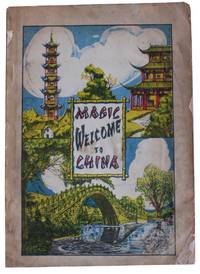
1947réf. 6092Nanking China: Engineer Section Army Advisory Group 1947. Good. 9½" x 6¾". Illustrated thin card wrappers. Pp. 5 88 1. Good: lacking the map; wrappers heavily soiled and worn with some loss to edges and spine; internally very good with light toning at extremities. This is a heavily illustrated guidebook to China produced for the wives and families of American soldiers. The first section provided a "Greeting" and backdrop of information: "This small booklet is intended to give you an insight into China from the point of view of an American Army or Navy family. Your husband may be stationed in Shanghai Nanking Hankow Hangchow Tsingtao or Peiping. We have tried to tell you a little about each of these places: where you will live what kind of a home you may expect to find awaiting you and what there is to do and see." At the time of publication the United States Army Advisory Group was stationed in Nanking the Nationalist capital. Americans stayed on in China post-World War II through 1949 after Congress passed the Economic Cooperation Act of 1948 to administer the European Recovery Program. We know this program better as the Marshall Plan; the same legislation included $460 million in military and economic aid to China. The bulk of the book was dedicated to Shanghai as the authors expected that "you will all want to go there from your home station to shop in its fabulous stores and to enjoy a little of its cosmopolitan atmosphere." Readers were assured that once they "forget the filth in the streets the crowds and all of the peculiarities which will at first probably surprise and shock you Shanghai will grow on you - that is its biggest asset." Several pages provided information on Shanghai including tips on shopping hotels theaters and restaurants and "a doctor's advice for your health." A section on places of worship interestingly included Jewish temples and there's also a brief history of the city. The book also devoted five- to ten-page sections respectively on the cities of Nanking Peiping Hankow Hangchow Chengtu and Tsingtao. The book boasts a beautifully colored front wrapper along with 58 illustrations and 38 photographic images. The illustrations were by Gyula Singer a Jewish artist who according to an oral history escaped the Nazi occupation of Austria by moving to Shanghai. He later relocated to New York where he ran a commercial design business with a specialty in theater backdrops. OCLC shows five copies over two entries. Engineer Section, Army Advisory Group unknown
1947réf. 6092Nanking China: Engineer Section Army Advisory Group 1947. Good. 9½" x 6¾". Illustrated thin card wrappers. Pp. 5 88 1. Good: lacking the map; wrappers heavily soiled and worn with some loss to edges and spine; internally very good with light toning at extremities. This is a heavily illustrated guidebook to China produced for the wives and families of American soldiers. The first section provided a "Greeting" and backdrop of information: "This small booklet is intended to give you an insight into China from the point of view of an American Army or Navy family. Your husband may be stationed in Shanghai Nanking Hankow Hangchow Tsingtao or Peiping. We have tried to tell you a little about each of these places: where you will live what kind of a home you may expect to find awaiting you and what there is to do and see." At the time of publication the United States Army Advisory Group was stationed in Nanking the Nationalist capital. Americans stayed on in China post-World War II through 1949 after Congress passed the Economic Cooperation Act of 1948 to administer the European Recovery Program. We know this program better as the Marshall Plan; the same legislation included $460 million in military and economic aid to China. The bulk of the book was dedicated to Shanghai as the authors expected that "you will all want to go there from your home station to shop in its fabulous stores and to enjoy a little of its cosmopolitan atmosphere." Readers were assured that once they "forget the filth in the streets the crowds and all of the peculiarities which will at first probably surprise and shock you Shanghai will grow on you - that is its biggest asset." Several pages provided information on Shanghai including tips on shopping hotels theaters and restaurants and "a doctor's advice for your health." A section on places of worship interestingly included Jewish temples and there's also a brief history of the city. The book also devoted five- to ten-page sections respectively on the cities of Nanking Peiping Hankow Hangchow Chengtu and Tsingtao. The book boasts a beautifully colored front wrapper along with 58 illustrations and 38 photographic images. The illustrations were by Gyula Singer a Jewish artist who according to an oral history escaped the Nazi occupation of Austria by moving to Shanghai. He later relocated to New York where he ran a commercial design business with a specialty in theater backdrops. OCLC shows five copies over two entries. Engineer Section, Army Advisory Group unknown books
1862réf. 160225-MG61Philadelphia: George W. Childs 1862. very good hardcover. 1862 hinges tight no marks some foxing endpapers very nice copy. Hard Cover. Very Good/No Dust Cover. George W. Childs Hardcover
1867réf. 20057Washington: Government Printing Office 1867. FIRST EDITIONS. First work with 178 figures; second with 5 photographic plates; third with 1 plate and errata slip. 5 heliotype plates and 1 engraved plate. Contemporary half morocco over boards worn on edges all edges marbled; a portion of pages 323/324 of first section torn away affecting text though a photocopy is included otherwise interior excellent. First editions of these three catalogues. The catalogue of the surgical section was edited by Alfred Woodhull 1837-1921. J.J. Woodward 1833-1884 edited the medical section and Edward Curtis 1838-1912 edited the microscopical section. Thousands of specimens are described nearly all the aftermath of the Civil War. Mostly human specimens the name and rank of the donor is noted as well as a brief summary of the context in which the injury or illness leading to death or amputation occurred. The catalogues also include comprehensive collections of surgical instruments medical artifacts including prosthetics and battlefield medical supplies and historical documents related to military medicine. The surgical section contains descriptions of over 4700 specimens “varying from cranium to tumors graphically detailing the wounds suffered by thousands of soldiers during the Civil War. The attending physician’s name is listed with each case. Many of these descriptions are specifically related to injuries which are further enumerated in the Medical and Surgical History of the War of the Rebellion” Rutkow. That catalogue is also significant because it is “the first publication that actually gives an idea as to the number and type of photographs taken by or for army physicians” during the war Burns. The third part contains a plate depicting an “Apparatus for Microphotography” and five plates depicting photographs of tissue specimens taken with this apparatus. The editors of the second and third parts Edward Curtis and Joseph Woodward performed the autopsy on Abraham Lincoln. Curtis was an early pioneer of photomicrography. The Army Medical Museum was founded in 1862 by U.S. Army Surgeon General William A. Hammond as a center for the collection of specimens for research in military medicine and surgery. Hammond directed medical officers in the field to collect "specimens of morbid anatomy.together with projectiles and foreign bodies removed" and to forward them to the newly founded museum for study. During and after the war Museum staff took pictures of wounded soldiers showing the effects of gunshot wounds as well as results of amputations and other surgical procedures. The information collected was compiled into six volumes of The Medical and Surgical History of the War of the Rebellion published between 1870 and 1883. Burns Early Medical Photography in America 1839-1883 New York 1983; Rutkow. The History of Surgery in the United States 1775-1900 San Francisco 1988. Government Printing Office unknown
1867réf. 20057Washington: Government Printing Office 1867. FIRST EDITIONS. First work with 178 figures; second with 5 photographic plates; third with 1 plate and errata slip. 5 heliotype plates and 1 engraved plate. Contemporary half morocco over boards worn on edges all edges marbled; a portion of pages 323/324 of first section torn away affecting text though a photocopy is included otherwise interior excellent. First editions of these three catalogues. The catalogue of the surgical section was edited by Alfred Woodhull 1837-1921. J.J. Woodward 1833-1884 edited the medical section and Edward Curtis 1838-1912 edited the microscopical section. Thousands of specimens are described nearly all the aftermath of the Civil War. Mostly human specimens the name and rank of the donor is noted as well as a brief summary of the context in which the injury or illness leading to death or amputation occurred. The catalogues also include comprehensive collections of surgical instruments medical artifacts including prosthetics and battlefield medical supplies and historical documents related to military medicine. The surgical section contains descriptions of over 4700 specimens “varying from cranium to tumors graphically detailing the wounds suffered by thousands of soldiers during the Civil War. The attending physician’s name is listed with each case. Many of these descriptions are specifically related to injuries which are further enumerated in the Medical and Surgical History of the War of the Rebellion” Rutkow. That catalogue is also significant because it is “the first publication that actually gives an idea as to the number and type of photographs taken by or for army physicians” during the war Burns. The third part contains a plate depicting an “Apparatus for Microphotography” and five plates depicting photographs of tissue specimens taken with this apparatus. The editors of the second and third parts Edward Curtis and Joseph Woodward performed the autopsy on Abraham Lincoln. Curtis was an early pioneer of photomicrography. The Army Medical Museum was founded in 1862 by U.S. Army Surgeon General William A. Hammond as a center for the collection of specimens for research in military medicine and surgery. Hammond directed medical officers in the field to collect "specimens of morbid anatomy.together with projectiles and foreign bodies removed" and to forward them to the newly founded museum for study. During and after the war Museum staff took pictures of wounded soldiers showing the effects of gunshot wounds as well as results of amputations and other surgical procedures. The information collected was compiled into six volumes of The Medical and Surgical History of the War of the Rebellion published between 1870 and 1883. Burns Early Medical Photography in America 1839-1883 New York 1983; Rutkow. The History of Surgery in the United States 1775-1900 San Francisco 1988. Government Printing Office unknown books
1949réf. 78-1954Raritan Arsenal 1949. 1949. 479p. Photos. Line drawings. Large Wraps. Fine Copy. Paperback. Fine. Book. Raritan Arsenal, 1949. Paperback
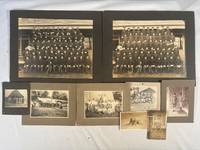
1909réf. 224671909. Soldier Harold Howard's person documentaation of service in the 11th U.S. Cavalry during the period of American military occupation and intervention in Cuba following the Spanish American War. These photographs place an enlisted cavalryman within the broader framework of U.S. expansionist policy in the Caribbean under the Platt Amendment when American troops were repeatedly deployed to Cuba to oversee political stability infrastructure and economic interests. The archive includes identified images of Sgt. Harold Howard and captures both formal military organization and informal daily life offering a ground-level record of U.S. cavalry presence during a period of continued occupation and reintervention including the second U.S. occupation of Cuba from 1912 to 1913. Archive of nine vintage silver gelatin photographs ranging approximately from 3.5 x 5 inches to 10 x 13 inches many mounted to original photographer boards and some annotated in ink or pencil. Two large-format formal group portraits depict Troop K 11th U.S. Cavalry at Fort Oglethorpe Georgia 1913 showing soldiers in full dress uniform arranged in tiered formation with visible regimental flag marked "11" and "K" with Howard identified in one image. Smaller photographs include a group portrait of U.S. cavalrymen in Pinar del Río Cuba dated 1908 showing soldiers in campaign dress posed near a stable as well as candid camp scenes featuring cooking areas barracks life and assembled troops. Two photo postcards function as personal correspondence with handwritten messages from Howard dated April 1 and September 9 1913 addressed to Mrs. A. L. Howard in Maine referencing weather conditions and upcoming exhibition drills providing direct evidence of mobility and routine within cavalry service. Additional images include a cabinet card of two uniformed soldiers and a scene depicting Black Cuban civilians posed near a thatched structure situating U.S. military presence within local social environments. Taken together the archive documents the lived experience of a U.S. cavalryman operating within the infrastructure of American imperial policy in the Caribbean linking domestic military bases such as Fort Oglethorpe with overseas deployment in Cuba. The photographs record both the formal visual culture of the U.S. Army and the everyday conditions of enlisted service while the inclusion of Cuban subjects and locations underscores the entanglement of military occupation with local populations. General edge wear throughout with occasional pinholes adhesive remnants and minor chipping to mounts; some toning to boards. Photographs remain clear and stable with annotations legible. Overall very good condition. unknown
1909réf. 224671909. Soldier Harold Howard's person documentaation of service in the 11th U.S. Cavalry during the period of American military occupation and intervention in Cuba following the Spanish American War. These photographs place an enlisted cavalryman within the broader framework of U.S. expansionist policy in the Caribbean under the Platt Amendment when American troops were repeatedly deployed to Cuba to oversee political stability infrastructure and economic interests. The archive includes identified images of Sgt. Harold Howard and captures both formal military organization and informal daily life offering a ground-level record of U.S. cavalry presence during a period of continued occupation and reintervention including the second U.S. occupation of Cuba from 1912 to 1913. Archive of nine vintage silver gelatin photographs ranging approximately from 3.5 x 5 inches to 10 x 13 inches many mounted to original photographer boards and some annotated in ink or pencil. Two large-format formal group portraits depict Troop K 11th U.S. Cavalry at Fort Oglethorpe Georgia 1913 showing soldiers in full dress uniform arranged in tiered formation with visible regimental flag marked "11" and "K" with Howard identified in one image. Smaller photographs include a group portrait of U.S. cavalrymen in Pinar del Río Cuba dated 1908 showing soldiers in campaign dress posed near a stable as well as candid camp scenes featuring cooking areas barracks life and assembled troops. Two photo postcards function as personal correspondence with handwritten messages from Howard dated April 1 and September 9 1913 addressed to Mrs. A. L. Howard in Maine referencing weather conditions and upcoming exhibition drills providing direct evidence of mobility and routine within cavalry service. Additional images include a cabinet card of two uniformed soldiers and a scene depicting Black Cuban civilians posed near a thatched structure situating U.S. military presence within local social environments. Taken together the archive documents the lived experience of a U.S. cavalryman operating within the infrastructure of American imperial policy in the Caribbean linking domestic military bases such as Fort Oglethorpe with overseas deployment in Cuba. The photographs record both the formal visual culture of the U.S. Army and the everyday conditions of enlisted service while the inclusion of Cuban subjects and locations underscores the entanglement of military occupation with local populations. General edge wear throughout with occasional pinholes adhesive remnants and minor chipping to mounts; some toning to boards. Photographs remain clear and stable with annotations legible. Overall very good condition. unknown books
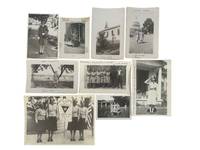
1943réf. 220591943. Women's Army Corps service photographs dated 1943 to 1944 document the participation of enlisted women in U.S. Army support operations during World War II with particular attention to transportation training environments and stateside military life. The images identify individual service members including Hilda Goble described in captions as an "ambulance driver during War II" and Abbie E. Bachelder situating named women within the broader expansion of female labor following the establishment of the Women's Army Corps in 1942. These photographs support research into women's military service wartime labor structures and the integration of women into logistical and medical support roles essential to the functioning of the U.S. Army during the war. Archive consists of 9 original silver gelatin photographs most approximately 3 x 5 inches several with scalloped or deckled edges and period ink captions identifying subjects and dates. Two portraits show Hilda Goble in full uniform standing before a porch and saluting each inscribed "Hilda Goble Ambulance driver during War II" documenting her role in transporting injured personnel within military systems. A group photograph captioned "Ambulance Driver Team War II Hilda Goble" depicts seven uniformed women indicating coordinated service within ambulance units. Additional images include a portrait labeled "Abbie E Bachelder / June - 1944" showing a uniformed WAC posed before a landscape of barracks buildings and another dated 1943 identifying Bachelder outside a wooden structure. A photograph captioned "Oct 29 - 1944 / Reims" shows two women identified as Roberta and Abbie posed on the grounds of the U.S. Capitol indicating travel or official assignment within government contexts. Other photographs depict WAC personnel standing near a military chapel and within training or hospital environments while one image titled "Marine Corps Wives of America - Hdqtrs Chap 1" shows four women beneath an organizational banner documenting affiliated civic or support networks connected to military service. These images documents the Women's Army Corps expantion to meet wartime labor demands assigning women to clerical transportation medical and logistical roles across domestic and overseas installations. The presence of ambulance drivers within the archive demonstrates the direct involvement of women in medical transport and support infrastructure while scenes at the U.S. Capitol and organized groups indicate both official recognition and the development of social and institutional networks among servicewomen. Light edge wear and minor creasing with one photograph showing tape residue; images otherwise clear with captions legible; overall very good condition. This archive provides a concentrated visual record of named WAC personnel and their roles within the operational and social framework of the U.S. Army during World War II. unknown
1943réf. 220591943. Women's Army Corps service photographs dated 1943 to 1944 document the participation of enlisted women in U.S. Army support operations during World War II with particular attention to transportation training environments and stateside military life. The images identify individual service members including Hilda Goble described in captions as an "ambulance driver during War II" and Abbie E. Bachelder situating named women within the broader expansion of female labor following the establishment of the Women's Army Corps in 1942. These photographs support research into women's military service wartime labor structures and the integration of women into logistical and medical support roles essential to the functioning of the U.S. Army during the war. Archive consists of 9 original silver gelatin photographs most approximately 3 x 5 inches several with scalloped or deckled edges and period ink captions identifying subjects and dates. Two portraits show Hilda Goble in full uniform standing before a porch and saluting each inscribed "Hilda Goble Ambulance driver during War II" documenting her role in transporting injured personnel within military systems. A group photograph captioned "Ambulance Driver Team War II Hilda Goble" depicts seven uniformed women indicating coordinated service within ambulance units. Additional images include a portrait labeled "Abbie E Bachelder / June - 1944" showing a uniformed WAC posed before a landscape of barracks buildings and another dated 1943 identifying Bachelder outside a wooden structure. A photograph captioned "Oct 29 - 1944 / Reims" shows two women identified as Roberta and Abbie posed on the grounds of the U.S. Capitol indicating travel or official assignment within government contexts. Other photographs depict WAC personnel standing near a military chapel and within training or hospital environments while one image titled "Marine Corps Wives of America - Hdqtrs Chap 1" shows four women beneath an organizational banner documenting affiliated civic or support networks connected to military service. These images documents the Women's Army Corps expantion to meet wartime labor demands assigning women to clerical transportation medical and logistical roles across domestic and overseas installations. The presence of ambulance drivers within the archive demonstrates the direct involvement of women in medical transport and support infrastructure while scenes at the U.S. Capitol and organized groups indicate both official recognition and the development of social and institutional networks among servicewomen. Light edge wear and minor creasing with one photograph showing tape residue; images otherwise clear with captions legible; overall very good condition. This archive provides a concentrated visual record of named WAC personnel and their roles within the operational and social framework of the U.S. Army during World War II. unknown books
1945réf. 60292USA, 1945. Some minor wear to edges and covers-overall very good. Illustrated by black and white photos. 68 pp. + Attached letter to Whom It May Concern from Waldemar Westergaard Chief United States Office of War Information, Copenhagen and a letter from Berlingske Tidende from 01.05.80 to Fonsmark. Composition - Major Alfred L. Howes. Art Work - T/Sgt. John S. Denney. Copy Preparation - T/3 Chas W. Denney. Photographs - 163d Signal Photo Company. Printing - 649th Topo Battalion.
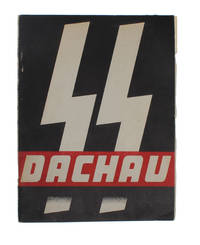
1945réf. 60292USA 1945. Some minor wear to edges and covers-overall very good. Illustrated by black and white photos. 68 pp. Attached letter to Whom It May Concern from Waldemar Westergaard Chief United States Office of War Information Copenhagen and a letter from Berlingske Tidende from 01.05.80 to Fonsmark. Composition - Major Alfred L. Howes. Art Work - T/Sgt. John S. Denney. Copy Preparation - T/3 Chas W. Denney. Photographs - 163d Signal Photo Company. Printing - 649th Topo Battalion. First edition of the "Dachau US Army Report" is a compilation of reports photographs and documents related to the liberation of the Dachau concentration camp by American troops during World War II. Dachau the first concentration camp built by Nazi Germany was operational from 1933 to 1945. The book includes eyewitness accounts of the atrocities committed by the Nazis at the camp as well as information on the history and organization of the camp. This report is based on two days and primarily focuses on one aspect of life in Dachau - the internal organization of the camp the evidence of self-administration among the prisoners the emergence of special control and pressure groups and the position of various social political and national groups within this organizational framework. It was intended to serve as a historical record of the events at Dachau and as a warning against the dangers of fascism and genocide. unknown
1817réf. 66691London: printed for the author. Sold by Longman and Co. Baldwin and Co.; Law and Whittaker; Black Parbury and Allen; Egerton; Westley and Parrish; and all other booksellers 1817. First edition 8vo pp. xxx 2 608; uncut and largely unopened; original drab paper-covered boards printed paper label on spine; label slightly chipped affecting 2 letters corners bumped front joint starting; all else very good and sound. Includes sections on Waterloo The Reduction of Algiers The Battle of Albuera Operations in the Eastern Seas Java The Capture of Martinique Corunna Capture Off Santo Domingo Egypt Mahratta War etc. Includes a lengthy list of subscribers including the Dukes of Kent Cumberland and Cambridge the Duke of Wellington Sir Stamford Raffles and many other naval and military figures. printed for the author. Sold by Longman and Co. Baldwin and Co.; Law and Whittaker; Black, Parbury, and Allen; Egerton; Westley unknown
1817réf. 66691London: printed for the author. Sold by Longman and Co. Baldwin and Co.; Law and Whittaker; Black Parbury and Allen; Egerton; Westley and Parrish; and all other booksellers 1817. First edition 8vo pp. xxx 2 608; uncut and largely unopened; original drab paper-covered boards printed paper label on spine; label slightly chipped affecting 2 letters corners bumped front joint starting; all else very good and sound. Includes sections on Waterloo The Reduction of Algiers The Battle of Albuera Operations in the Eastern Seas Java The Capture of Martinique Corunna Capture Off Santo Domingo Egypt Mahratta War etc. Includes a lengthy list of subscribers including the Dukes of Kent Cumberland and Cambridge the Duke of Wellington Sir Stamford Raffles and many other naval and military figures. printed for the author. Sold by Longman and Co. Baldwin and Co.; Law and Whittaker; Black, Parbury, and Allen; Egerton; Westley unknown books
2008réf. DADAX0226841723University of Chicago Press 2008-06-01. hardcover. New. 5.00x0.50x6.50. Buy with confidence. Excellent Customer Service & Return policy. University of Chicago Press hardcover
1919réf. 69-1191Toul France & Nancy: HQ Air Service 2d Army/Berger-Levrault April 1919. 1919. "Second Army Air Service Book". About 150p. Photos. Illustrations. Brown & Green cloth. Beginning to splitt at top of front gutter. Very Good Copy. Hardcover. Very Good. HQ Air Service, 2d Army,/Berger-Levrault, April 1919. Hardcover
1900réf. AMO-4198Pour vos beaux yeux. Album en couleurs (colorié au pochoir - ateliers Greningaire). Par Albert Guillaume. Préface de Coquelin Cadet. H. Simonis Empis, éditeur, s. d. (1900). Format 35,5 x 28 cm. Couverture illustrée en couleurs (premier plat) et 20 planches imprimées en couleurs (coloriage au pochoir par Greningaire) (avec 1 feuillet de faux-titre, 1 feuillet de titre et 2 feuillets de préface). Superbe et très rare tirage de luxe sur papier du Japon à 13 exemplaires seulement signé par l'artiste Exemplaire dérelié. Tête dorée. Superbe état de fraicheur des couvertures (les deux plats sont conservés en très bon état). A relier (un cartonnage papier serait le bienvenu). Voir photos de l'annonce. Très rare dans ce tirage.
1770réf. 35220Paris G. Lamesle 1770 in-16 broché sous couverture de papier coquille du XIXe siècle
1755réf. 35997Paris G. Lamesle mai 1755 in-16 basane fauve modeste, dos à nerfs cloisonné et fleurdelisé [Rel. de l'époque], manque de cuir en coiffe inférieure, dos très frotté
1742réf. 143P., Barois, 1742; un volume relié en plein veau marbré, dos orné de fers dorés, tranches rouges (reliure de l'époque), mouillures très pâles dans la marge des derniers feuillets), 24pp., 320pp., (2)
1792réf. PHO-1270Paris, Chez Plassant, 1792. ATLAS seul in-4, en feuilles , titre , liste des planches , 4 cartes dépliantes et 88 planches dont 19 à double page , non rogné , pages de titre et liste des planches légèrement effrangés et salies
194364 pages. Features: Nice colour ad for Dominion Oilcloth & Linoleum inside front cover includes illustration of amourous military couple; Nice colour-illustrated Pepsi ad features pretty blonde and illustration of boys fishing; News digest includes The Marsh Report, 'Cradle to Grave' security, and more; Nice one-page illustrated Canadian Pacific Air Lines ad explains their substantial contributions to the war effort, amid dramatic air and land battle scene; Colour Ritz cracker ad includes service man and woman; Editorial discusses how the war has tarnished certain words and lifted others; Ford Motor Company one-page ad with illustration of Canadian troops in firefight; One-page Northern Electric ad includes illustration of deHavilland Mosquito; Friendly Invasion - great photo-illustrated article on construction of the Alaska Highway, with photo of Felix Murawski, 74th Engineers of Oklahoma City; Pigs' Feet (short story); The Penalty is Death (short story); Canada's Future Housing - photo-illustrated article explains ideas to be borrowed from Great Britain and the U.S.; Chowder Boy (short story); Sea Water Gurney's Boy (short story); Hollywood News and photos; One-page Parker Pen ad shows mailman handing mother a letter beneath caption "Your boy writes often now!"; Beer is Booze; One-page ad for the T. Sisman Shoe Co. includes great illustration of soldier on motorcycle; Canadian General Electric half-page ad boldly proclaims "Vitamins For Victory"; Woodbury Powder ad includes nice photo of Lana Turner; Magnificent centrefold two-colour (red and black) Victory Bonds ad entitled "Shoulder Your Own Share" includes text on left and, on right, a large illustration of Madame Chiang Kai-Shek super-imposed over scene of fighting in her war-torn China; Army Meals Go Modern - nice photo-illustrated article explains and illustrates meal preparation for the gigantic 7,000 man "army restaurant" at Webb Hall in Toronto; Nice colour one-page ad for Heinz Tomato soup includes illustration of tomato-headed aristocrat in top hat and monocle; Fashion illustrations; Is Your Daughter Happy in the Service? - article with photos of Daisy Horner of Dorset, Ontario, Dolly Mawson and Gay Sutton of Toronto, Elizabeth Cook from Creemore, Wren Barbara McClelland of Toronto, and twins AW2 Beryl and AW2 Daphne MacPhee of Charlottetown; Fashion article; Quotes from around the world; Elaborately colour-illustrated Canadian Pacific - Canadian National Victory Bond ad inside back cover entitled 'A Profession of Faith' includes calligraphy explaining their faith in Canada's future; Nice colour Wabasso Cottons ad on back cover shows mother, daughter and sewing machine; and more. Unmarked with moderate wear. Covers detached as one. A quality copy of this excellent wartime issue. Book