30 592 résultats
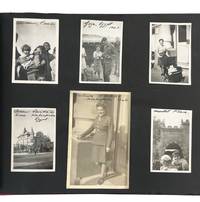
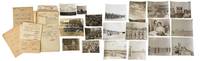
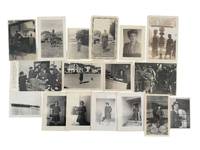
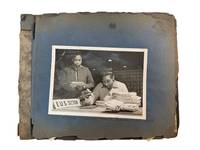
1944réf. 240281944. World War II photograph album belonging to an African American servicewoman partially identified as Julia associated with the historic 6888th Central Postal Directory Battalion known as the "Six Triple Eight" the only predominantly Black all-female Women's Army Corps unit deployed overseas during World War II. Commanded by Major Charity Adams the battalion consisted of 855 women tasked with clearing enormous backlogs of undelivered military mail in England and France. Working around the clock in segregated conditions the women successfully restored correspondence between American servicemen and their families making an essential contribution to wartime morale. The album documents Black women's military service from training and assignments in Texas during 1944 to postwar France in 1945 preserving personal relationships named fellow servicewomen and their experiences in a military establishment still governed by racial segregation. Photo album containing over 80 items including 25 original personal photographs 54 real photo postcards and souvenir photographs and approximately 14 pieces of ephemera United States and Europe 1944-1946. Album measures 9" x 11" while photos and pieces measure approximately 2" x 3" to 4" x 6". Many album leaves captioned. Photographs include ten views of Midland Army Air Field Texas where an album caption reads "Midland Texas / 1944 - Girls I was stationed with / Midland Army Air Base." One photograph shows a Black servicewoman standing beside a WAC section sign while another identifies three women as Tracy Givens Irma Newsome and Nan Jones. Additional photographs depict uniformed Black women assembled outside military barracks Black male soldiers and servicewomen in informal gatherings. A photograph of Black women handling stacks of correspondence at an "E.U.S. Section" desk is captioned "Paris France Mail Service Nov 1945" directly documenting the overseas postal work central to the battalion's mission. A signed portrait of a Black naval serviceman reads "Just for Julia - Johnny" accompanied by a 1945 Texas naval base caption. The album also includes a photograph of white uniformed women noted as having been taken by a friend in Texas. European souvenir photographs record travels through France Switzerland and Brussels including Parisian monuments and architectural landmarks. Among the accompanying material are wartime greeting cards addressed to Julia newspaper clippings concerning a Black servicewomen an original embroidered military shoulder patch Japanese-issued Philippine pesos and German currency. The photographs and handwritten annotations preserve individual identities and personal connections rarely documented in official military histories. Album covers missing. Original blue album leaves exhibit edge chipping tears discoloration and general age wear; photographs and ephemera remain largely well preserved. Overall in very good condition. unknown books
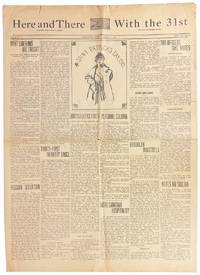
1919réf. 47912Vladivostok Siberia: 31st Infantry Regiment 1919. Very Good -. Vladivostok Siberia: 31st Infantry Regiment 1919. First Edition. Oversized tabloid 59.5cm; 6pp. Folds chips and a few splits along edges; paper toned and a bit brittle; Good to Very Good. Quite scarce publication from the 31st Infantry Regiment published "Every Once In A While" "Wherever We Happen To Be." This issue was published during the Russian Civil War and the United States' failed Siberian Intervention. The paper itself is full of local and international news and leads with an article "What Siberians Are Taught: One Paper Says America Treats the Russians in the Same Way as Negroes." We find three holdings in OCLC at the Hoover Institution Montana State and U.S. Army War College. 31st Infantry Regiment unknown books
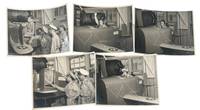
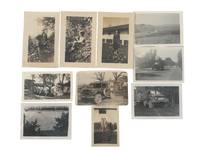
1942réf. 235381942. World War II U.S. Army Air Forces Link Trainer training photo archive of five large format silver gelatin prints circa 1942 to 1945 documenting simulator instruction during the wartime expansion of American military flight training using the first effective training device. The men wear Army Air Forces uniforms aviation badges officer caps and the winged star shoulder sleeve insignia commonly called the Hap Arnold emblem an insignia approved in 1942 for AAF personnel. The photographs place the pilot inside a ground based cockpit trainer while instructors and fellow cadets observe a visual record of how instrument procedure radio communication and cockpit discipline were taught before airborne practice. Invented by Edwin Albert Link in 1929 the Link Trainer was the world's first widely successful and effective mechanical flight simulator. Affectionately dubbed the "Blue Box" it revolutionized aviation by allowing pilots to safely train for blind instrument-only flying and poor weather conditions without leaving the ground. Photo archive of 5 silver gelatin photographs 8 x 10 inches United States circa 1942 to 1945. The photographs show Army Air Forces cadets and officers in a training room with a large cockpit simulator built with stub wings a tail round U.S. star insignia hinged canopy panels external bracing and a cockpit just large enough for one seated trainee. Several images show a trainee wearing headphones and working inside the enclosed trainer; another shows a man raising the canopy while holding a hand microphone; another shows three uniformed men observing a cadet seated at the controls. One image shows a pilot being congratulated or greeted at the simulator door by three officers with a placard on the fuselage reading "International flight." Visible uniform details include the AAF shoulder patch on a cadet's sleeve pilot or aircrew wings over shirt pockets aviation branch collar devices and officer cap insignia linking the group to the Army Air Forces rather than the postwar U.S. Air Force. The Link Trainer became one of the defining instruments of World War II flight instruction because it moved dangerous lessons in blind flying night navigation instrument reading and radio procedure into a controlled classroom setting. The U.S. Army Air Corps had adopted the device before the war and wartime mobilization turned simulator instruction into a standard component of pilot preparation as the Army Air Forces trained pilots at unprecedented scale for bomber fighter transport and liaison service. These photographs are strongest where they show the training process itself: the student isolated inside the cockpit the instructor watching from outside the headset and microphone linking simulated flight to communication procedure and the fuselage marked for an "International flight" exercise. Light curling and occasional creasing; some handling marks in the margins. Overall good condition. A focused visual record of World War II Army Air Forces simulator training and the classroom machinery that converted cadets into wartime pilots. unknown books
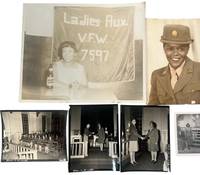
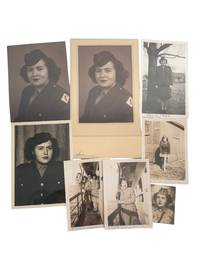
1945réf. 235821945. African American women's military photograph archive 1945 documenting the admittance of African American women into military service through the Women's Army Corps with racially segregated assignments to units and institutions reflecting both the expansion of wartime opportunities and the persistence of official segregation in the United States. Notably three images feature 8th Service Command uniform insignia associated with African American contributions to the Army Service Forces ASF in the American South and Southwest during WWII. Operating under Jim Crow laws the command's Black service members faced segregated living conditions while performing essential logistical duties vital to the overall Allied war effort. The photographs By 1945 fewer than ten thousand Black women had served in the WAC a small fraction of the more than 150000 women who entered the corps during the war making photographic documentation of their service comparatively uncommon. The images move between military ceremony portraiture and veterans' organizational life preserving evidence of Black women's participation in institutions from which they had long been excluded and the pervasive nature of war time segregation into ceremonies and collectives for veterans. Photo archive of 6 silver gelatin and sepia toned photographs ranging from approximately 3 x 5 to 8 x 10 inches United States circa 1945. The photographs show African American women in U.S. Army uniforms including a formal portrait of a smiling servicewoman in dress uniform and cap; a snapshot of a uniformed woman posed outside military housing or barracks; and three official large format photographs depicting a military ceremony attended by an audience composed largely of Black women in uniform. One image records a presentation of an award likely for "good conduct" by a male officer to a female service member while another shows two women shaking hands on a stage before assembled personnel. "8svc-13-45-2287" appears on one of the official photographs likely indicating military photographic documentation produced in 1945. An additional photograph depicts a woman seated before a banner reading "Ladies Aux. V.F.W. 7597" linking the group to The New Murray Bell VFW Post 7597 and its Ladies Auxiliary located in Farrell Pennsylvania which historically served as an important hub for Black veterans and their families. Named in honor of Murray Bell a Black soldier from Farrell the post was established as a segregated space where African American veterans of foreign wars and their spouses could find community support and advocacy during an era when mainstream veterans' organizations routinely excluded them. The archive includes documentation of the closing year of World War II when African American women served in segregated Women's Army Corps units at training centers hospitals administrative installations and overseas assignments while confronting restrictions that mirrored the broader racial order of the United States. Their service preceded President Truman's Executive Order 9981 of 1948 which formally initiated the desegregation of the armed forces. Photographs of Black women in uniform from this period remain considerably less common than images documenting white WAC personnel. The group records uniforms rank structure military ritual and African American female participation in institutions operating under segregation at the moment the wartime military establishment was beginning to confront demands for racial equality. Scattered fading and minor curling to smaller prints; several photographs with edge wear and age toning. Overall in good condition. unknown books
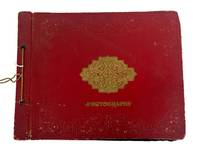
1946réf. 236311946. Large Women's Army Corps photo album depicting the overseas enlistment of an American servicewoman stationed in Egypt during the transition from wartime operations to postwar occupation 1946 to 1947. Pictured in combat training with rifles at leisure among identified companions and both wartime facilities and tourist institutions the album records the WAC servicewoman "Alma" serving abroad with uncommon continuity. The photographs document troop transport military facilities friendships archaeological excursions and encounters with Egyptian civilian life. The album also documents the conditions in Giza Egypt and abroad one photograph captioned "Prisoners working in chains. Nile Valley. Egypt. Feb. 1946" preserves a stark record of Egyptian penal labor within an album otherwise centered on 'Women's military service travel and postwar life. Photo album of approximately 130 silver gelatin photographs ranging from approximately 3 x 5 to 6 x 8 inches many in Egypt with additional views of the Atlantic crossing Persia and the United States 1946 to 1947. Most photographs have captions identifying or partially identifying 12 individuals and 17 distinct locations with dates scattered throughout. The album begins with pre-departure images in Long Beach California followed by the inscription "Myself aboard U.S.A.T. Thomas H. Barry. April '46" and "One cold day in the Atlantic. April 1946" documenting the voyage overseas. The album follows the creator through Heliopolis Cairo Payne Field Camp Huckstep the American Red Cross Club AMET N.A.A.F.I. Giza Memphis Alexandria the Nile Barrage Wadi Saloum and Abadan Persia. Informal portraits identify companions including Joyce Sheila Wollaston Johnnie Wollaston Peggy Cynthia Wendy Alma Tommy Mrs. Wollaston and "our N.I. friend with Woolly." Military life appears alongside moments of leisure rooftop gatherings athletic poses weddings camel riding and portraits of fellow American servicemen and WAC personnel. The photographs include training scenes of WAC personnel handling rifles during military instruction a reminder that women serving overseas were expected to maintain basic weapons proficiency despite their primarily noncombat assignments. The creator photographed Queen Farida's residence in Heliopolis street scenes labeled "Market Place" Sharia Ibrahim Egyptian children local families a native boy in Heliopolis village architecture at Giza archaeological remains at Memphis the Step Pyramid the supposed Tomb of Queen Nefertiti excavations captioned "Part of city excavated 6000 years old" and a striking image captioned "Prisoners working in chains. Nile Valley. Egypt. Feb. 1946." The album is distinguished by its female perspective on an overseas theater typically documented through the experiences of male soldiers. Rather than combat operations it records the work and daily lives of American servicewomen showing rifle instruction military compounds troop transport friendships organized recreation and independent travel through Egypt and Persia as experienced by a WAC member. That combination places gender at the center of the archive documenting how women occupied and navigated the American military presence abroad during the immediate postwar period. Light surface wear consistent with use; photographs well preserved and firmly mounted in the original red cord-bound album. Overall in very good condition. A sustained photographic record of an American Women's Army Corps member experiencing military service overseas travel and everyday life across the eastern Mediterranean during the closing chapter of the Second World War with most photographs retaining contemporary manuscript captions identifying locations dates and individuals throughout. unknown books
1940réf. 238411940. American women's wartime service photo archive belonging to an unidentified WAC member depicting women in US military and hospital uniforms during World War II as mobilization opened military and medical assignments previously closed to women. Congress established the Women's Army Auxiliary Corps through Public Law 77-554 on May 15 1942; Public Law 78-110 converted it into the Women's Army Corps with full Army status on July 1 1943. Approximately 150000 women served as WAACs or WACs in administrative communications transportation mechanical medical and other assignments. Army Nurse Corps strength grew from fewer than 1000 nurses in December 1941 to more than 59000 by the end of the war. The personal snapshots place formal service dress beside caregiving public ceremony travel and off duty friendships recording how wartime mobilization entered women's daily lives. Photo archive of 18 silver gelatin photographs ranging from 2.5 x 3 to 3 x 4 inches New York City and other United States locations circa 1942 to 1945. Many of the women are seen in multiple photos with one standing out in most. The photos depict women in tailored dark uniforms wear neckties garrison or brimmed caps and collar devices; one woman in trousers and a service shirt stands beside an Army corporal while another gestures amid a crowded city street in a white crowned cap. Hospital and caregiving scenes include women in aprons and pale duty dresses three women in matching protective work garments and two attendants posed with infants and a young Black child. Additional views record a marching formation uniformed pairs and groups women seated outside Gothic institutional buildings a formal ceremony with bouquets and the flag hung facade of St. Patrick's Cathedral in New York City. The archive connects the wartime service preceding the Women's Armed Services Integration Act of June 12 1948 with the histories of military dress nursing women's labor institutional life and friendship outside official publicity settings. Occasional creasing edge wear surface scratches fading and curling; overall in good condition. Its movement between duty uniforms hospital clothing city streets ceremonial dress and relaxed group portraits preserves the range of public and private experience created by women's wartime service through the lens of one member of the Woman's Army Corps. unknown books
1942réf. 238741942. World War II era photo album documenting men and women in military service civilian labor and domestic life from the early 1940s through 1961 centered on a network of relatives and friends identified through contemporary inscriptions. The strongest photographs date from the American mobilization of World War II placing Army and Navy service within the family relationships maintained by wives children parents and extended kin during wartime separation. A 1944 sequence from Frederick County Virginia extends the record beyond military service to men engaged in civilian construction work while later photographs follow the family into the postwar decades. Photo album containing approximately 160 silver gelatin photographs varying in size from 2 x 2 inches to 5 x 5.5 inches United States chiefly 1940s but ranging approximately from the 1930s to 1961. Named subjects include Wesley Stewart Mrs. Annie Stewart Mrs. Alice Stewart Esther Stewart Mae Orr Mary Orr Natalie Powell Daisy Neff and Frances and Dick Beard the latter identified in Texas. Several generations appear in yards beside houses and automobiles holding infants visiting relatives and posing in couples and family groups. Wartime photographs show men in U.S. Navy uniforms a man in Army uniform with a woman in civilian dress and a young woman repeatedly photographed in an enlisted Women's Army Corps uniform including with two young girls and informally with a child. The album also contains young women carrying books outside a brick institutional building a graduation portrait and a 1944 Frederick County sequence in which men work among heavy timbers at an active construction site. Later photographs record automobiles children and relatives through the 1950s and into 1961. Handwritten inscriptions establish relationships among the subjects and preserve the language through which photographs circulated within the family including "your wife Mae Orr" "Mrs. Annie Stewart" and "Esther Stewart." The photographs of the uniformed woman belong to the first generation of American women admitted to Army service on a mass scale. Congress created the Women's Army Auxiliary Corps in May 1942 and converted it into the Women's Army Corps in 1943 bringing women into the Army itself; approximately 210000 women served in the WAC during World War II at home and overseas. WAC personnel filled clerical communications transportation technical administrative and other noncombat assignments while the album's photographs of young women with books and at graduation record education as another route into the expanding public and professional lives of wartime women. The family's presence in Frederick County situates part of the album in Virginia's northern Shenandoah Valley an agricultural and market region centered on Winchester whose wartime labor demands drew civilian workers and late in the war German prisoners of war into its important orchard economy. The album continues after demobilization through graduation marriage children automobiles travel and domestic life into 1961. Moderate wear throughout including water staining and discoloration fading occasional creasing and cracking surface wear and wear to the album covers and mounts; individual photographs vary in preservation. Overall in fair to good condition. unknown books
1979réf. 239721979. Cynthia Fredrickson U.S. Army photo archive 1979 to 1980 documenting a newly commissioned woman officer during the first years of the Army's fully integrated force following the abolition of the Women's Army Corps. Fredrickson belonged to the first generation of women officers whose careers began after the Army eliminated the WAC as a separate corps and assimilated women into its other branches a transition that placed female soldiers within the same institutional structure as their male counterparts while combat arms remained closed to them. Public Law 95-485 abolished the WAC effective October 20 1978 only months before the period represented here; by the end of fiscal year 1979 more than 61000 women were serving in the active Army alongside approximately 23000 in the Army Reserve and more than 14000 in the National Guard. Fredrickson's portraits and informal snapshots record what this transition looked like at the level of an individual junior officer: dress uniforms and branch insignia fatigues and camouflage field equipment military installations and the domestic spaces through which military service also passed. Photo archive of 15 color photographs ranging from 3.25 x 2 to 3.5 x 5 inches 1979 to 1980. Fredrickson appears repeatedly in uniform including formal portraits in Army green service dress with her "Fredrickson" nameplate officer insignia ribbons and shoulder insignia; informal photographs in fatigues and cap; camouflage clothing with boots and field gear; and several domestic images made before or after duty. One photograph places her outside a building marked "Headquarters 104th Division" with additional signs for "Advisor 104 Div" "HHC 104 Div" and "Recruiting 104 Div" situating the personal photographs within a specific Army organizational setting. Several snapshots show Fredrickson in utility uniform at a military installation including one beside another woman soldier identified by the name tape "Lee" while others show her in a vehicle inside a kitchen or posed with packed field equipment. A verso inscription identifies her explicitly as "2nd Lieut Cynthia Fredrickson." The alternation between formal commissioned officer portraits working uniforms field clothing and ordinary domestic surroundings gives the archive a close record of how military identity was worn and inhabited by a young woman officer at the moment when women were no longer administratively separated into their own Army corps. Fredrickson entered this environment at the end of a thirty year process that began with the Women's Armed Services Integration Act of 1948 which granted women permanent Regular Army and Army Reserve status but preserved the Women's Army Corps as a distinct institution. By the 1970s the shift to the all volunteer force expanding occupational opportunities for women integrated training experiments and studies of women serving in mixed units had weakened the rationale for maintaining that separate structure. The Army began gender integrated basic training at Fort Jackson in 1977 and Public Law 95-485 removed the statutory basis for the WAC the following year; Army histories describe its disestablishment as the integration of female soldiers into the Army mainstream and the opening of career development and promotion within the same branch structure as male soldiers. Fredrickson's 1979 to 1980 photographs therefore date not simply from the broader era of women entering military service but from the immediate aftermath of the Army's formal dismantling of sex segregated corps organization when junior women officers were among the first to build careers inside the newly integrated system. Light surface and edge wear occasional fading and handling marks with scattered minor abrasions. Overall in very good condition. A concentrated visual record of a young woman officer serving at the threshold between the separate Women's Army Corps and the gender integrated United States Army. unknown books
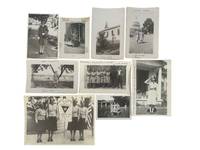
1944réf. 240421944. Women's Army Corps photo archive documenting service and personal relationships during World War II and its immediate aftermath partially identified and captioned. Established in 1943 following its auxiliary predecessor the WAC gave women military status within the Army. These portraits and snapshots document the service life relationships friendships and recreational activities accompanying women's expanding military participation. Photo archive of 28 black and white photographs including studio portraits and vernacular snapshots with one WAC recruitment brochure circa 1944-1946. Des Moines Iowa; Philadelphia Pennsylvania; Chicago Illinois; San Diego California; and Italy. Several women recur throughout some identified en verso. 9 photos trace to a woman named Sylvia; she appears in uniformed portraits and aboard a boat during an outing captioned "Boat Trip to Provincetown June 1946" Massachusetts. Another photograph places her at Fort Devens Massachusetts in March 1946; a portrait mount bears a photographic-service sticker from Camp Edward Massachusetts. Particularly noteworthy is the stamp on the reverse of her portrait reading "Compliments / Boston / Jewish Welfare Board / Army & Navy Club" documenting a connection with Jewish military welfare services without establishing her religious identity. One photo shows a woman standing before the U.S. Grant Hotel in San Diego. One photo shows a woman smiling in uniform with the en verso written caption "July - 44 / me - by the lake Chicago - beforer going on duty." Another photo shows a group of WACs in a military vehicle being driven by a man in uniform signs in the distance read in Italian. Other named women include "Lorraine Montecarlo" and "Barbara Bobby Evans. Another set of photos showcase a WAC in a domestic setting with a sailor. The accompanying recruitment brochure declares "The Army needs more WACs at once!" and that "Every eligible woman is needed!" The WAC's establishment in July 1943 granted its members military status and Army pay and benefits replacing the more limited protections of auxiliary service. Their work helped sustain Army operations at home and overseas while opening military occupations to women on an unprecedented scale. Handwritten identifications and dated captions connect the portraits with particular places and social occasions. Some toning and edge wear with mounting remnants on some versos and pronounced corner wear to one print. Prints and captions remain legible and clear. Overall in very good condition. This archive preserves the intimate and active duty lives of just some of the 150000 women that served in the Women's Army Corps and its auxiliary predecessor during World War II. unknown books
1950réf. 231531950. WACKorean War Women's Army Corps photo album compiled by Sgt. Elizabeth Adamek of Cairnbrook PA ca. early to mid 1950s extensively recording enlisted women in post-1948 U.S. Army administrative operations at Camp Zama Japan during the Korean War period. Elizabeth Adamek later Elizabeth Adamek Pierce 1932-2016 served approximately twenty years in the United States Army as an administrative assistant and instructor including service in Japan and the Korean Theater during the Korean War. Adamek is shown several times in uniform with her twin sister Cpl. Cristania Adamek indicating the sisters served in the WAC around the same time period. This album documents postwar U.S. Army overseas base administration showing how clerical labor recordkeeping and office management were carried out by WAC personnel during the Korean War. Images of Hill and fellow servicewomen engaged in office work reveal women's roles in the Army's daily bureaucratic and logistical functions while stationed abroad. A comprehensive primary-source documentation of the operational role of women within permanent peacetime Army structures following the formal establishment of the Women's Army Corps in 1948. Photo archive of approximately 240 silver gelatin photographs from Camp Zama Japan and the United States circa early to mid 1950s. The album is housed in a Japanese lacquer-style postbound binding with black paper leaves containing a mixture of small snapshot prints deckle-edge photographs and larger mounted images. The visual content centers on Hill frequently shown in WAC uniform posed in front of barracks administrative buildings and landscaped areas as well as inside office environments seated at desks surrounded by stacked files paperwork and card index systems. Several images explicitly depict clerical workspaces including a servicewoman operating a typewriter beside filing drawers reinforcing the administrative function of WAC personnel. A clearly legible building sign reads "Camp Zama 8030th Army Unit APO 50" situating the album within a specific military unit structure. Additional photographs include formal military reviews with officers and dignitaries group portraits of uniformed women before display walls and social scenes in dining facilities and clubs. Off-duty life is extensively documented through images of Japanese urban streets market stalls rail platforms commercial signage shrine gateways temple architecture zoo enclosures and landscaped gardens alongside recreational scenes such as swimming roadside travel and barracks exteriors collectively illustrating both the operational and social dimensions of overseas Army life. Adamek is posed throughout the album with a romantic partner one Sgt. Kidder whose service at Camp Zama is also documented extensively. The album captures the workings of U.S. Army overseas base administration demonstrating the process by which women in the Women's Army Corps sustained military infrastructure through administrative labor. Camp Zama functioned as a major logistical and support installation during the Korean War era and the photographs provide insight into the women that maintained its operations while also recording the social networks and cultural encounters experienced by American service personnel in postwar Japan. Elizabeth Adamek Pierce's obituary in The Oklahoman indicates she was honorably discharged from the US Army in 1971 after which she relocated to Oklahoma City and worked in an administrative role with the OKC Police Department. Adamek was a member of the Civil Air Patrol the VFW Post 1335 and a volunteer at Tinker Air Force Base in Oklahoma City. Light edge wear and chipping to album leaves occasional corner wear scattered fading and softness to prints and general handling wear to the binding; overall good condition. A cohesive and well-identified visual record of women's military service in the U.S. Army in East Asia. unknown books
1942réf. 233621942. Army Air Forces B-25 pilot training at Columbia Army Air Base documented in the records of 2nd Lt. Floyd J. Good: flight records a B-25 questionnaire training papers base photographs and an associated TB-25 cockpit checklist marked "Horg L. M. / 45-B / C-1." Good served in the 376th Squadron 309th Bombardment Group and his records track day and night flying first pilot time instructor time combat crew entries and related duty. One later flight sheet notes that Good was "killed in accidental explosion July 1944." The Horg checklist dated January 26 1945 contains working cockpit procedures for takeoff single-engine drills supercharger use landing and shutdown. 1943 to 1945 chiefly Columbia Army Air Base Columbia South Carolina. Mixed archive of 66 items including 17 Individual Flight Record sheets 29 black-and-white photographs Good's Pilot's Information File and related training status medical and administrative papers a multi-page "B-25 Questionnaire" with handwritten answers and one folding "TB-25 CHECK LIST" with printed procedures and pencil notes. Good's flight records and training papers date from 1943 to 1944. Seventeen Individual Flight Record sheets and related forms record his progress through B-25 training including aircraft type flight hours instructor time medical classification and duty status. The B-25 questionnaire contains handwritten answers concerning hydraulic pressure emergency brakes landing gear flaps bomb bay doors and cockpit procedure. Columbia Army Air Base photographs circa 1943 to 1944. Twenty-nine photographs include classroom instruction before a chalked airfield diagram formation drill a band and flag ceremony barracks leisure barbering reading room interiors B-25 activity on the field and aircrew posed in flight gear before aircraft. Several versos carry crop measurements or layout marks. The presence of a wartime B-25 flight checklist dated January 26 1945 records this period in which B-25s remained in active combat service. Horg L. M. "TB-25 CHECK LIST." Folding cockpit checklist marked "HORG" and "Horg L. M. / 45-B / C-1" with sections for pre-inspection starting engines taxi single-engine stopping and starting drills before takeoff climb landing and stopping procedure. Pencil reminders include "BOOSTERS ON / WHEELS DOWN" "LEARN" and "150 FLAPS." The checklist remained in use during the final wartime training cycle when Army Air Forces pilots were still being prepared for medium-bomber operations for seven months before Japan's surrender. Its dated procedures add a wartime cockpit component to Good's stateside B-25 training material including instructions for an aircraft then used in Allied tactical bombing anti-shipping and ground-support missions. Columbia Army Air Base trained medium-bomber pilots for B-25 operations that included tactical bombing anti-shipping strikes airfield attacks and ground-support missions across the Mediterranean and Pacific theaters. Good's records include flight time medical status instructor approval and technical examination requirements. Horg's checklist specifies cockpit procedures including single-engine control at 140 m.p.h. supercharger use above 11000 feet booster pump commands landing-gear timing and radio calls. The classroom photographs personnel and training papers flight records and cockpit checklist preserve distinct stages of B-25 pilot instruction from ground training and administrative qualification to flight-line work and emergency cockpit procedure. Documents and checklist with toning filing holes creasing soiling and handling wear; photographs with light fading silvering and occasional surface abrasions. Overall good condition. unknown books
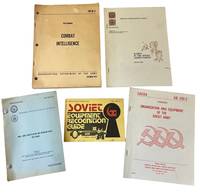
réf. 235111973. Cold War U.S. military instruction archive of government-produced manuals and intelligence studies showing how the Army trained soldiers to recognize enemy weapons report battlefield information and classify Soviet military power. The archive includes a U.S. Army field manual which explains how battlefield reports became military intelligence. The Soviet weapons guide was produced to teach soldiers how to identify AKM rifles RPG-7 launchers Sagger missiles SA-7 antiaircraft missiles mortars and antitank guns in the field. Major Mitzi D. Leibst's DIA study Women in the Soviet Armed Forces broadens the archive from weapons to manpower showing how U.S. intelligence counted Soviet women's military service as part of the enemy's total fighting capacity. Five U.S. Army and Defense Intelligence Agency manuals and studies on combat intelligence Soviet equipment recognition small arms identification Soviet force organization and women in the Soviet armed forces. Washington D.C.; Fort Monroe Virginia; Charlottesville Virginia; Fort Leavenworth Kansas; Department of the Army Defense Intelligence Agency U.S. Army Training and Doctrine Command U.S. Army Foreign Science and Technology Center and Combined Arms Combat Developments Activity 1973 to 1978. 1 United States Department of the Army. FM 30-5 Combat Intelligence. Washington D.C.: Headquarters Department of the Army 30 October 1973. Chapters cover intelligence functions collection processing dissemination order of battle counterintelligence maps and aerial imagery. Approximately 200 pages. 2 United States Army Training and Doctrine Command. TC 30-3 Soviet Equipment Recognition Guide. Fort Monroe Virginia: U.S. Army Training and Doctrine Command 11 April 1975. A soldier's pocket-style recognition guide using photographs cartoons role labels and specifications to teach Soviet weapons identification. 50 pages. 3 Johnson Harold E. Small Arms Identification and Operation Guide Free World. DST-1110H-163-76. Washington D.C.: Defense Intelligence Agency December 1976. A DIA intelligence product prepared by the U.S. Army Foreign Science and Technology Center and approved for public release with an August 1976 information cutoff. 316 pages. 4 Leibst Mitzi D. Women in the Soviet Armed Forces. DDI-1100-109-76. Washington D.C.: Defense Intelligence Agency March 1976. Prepared for the Ground Forces/MBFR Branch Soviet/Warsaw Pact Division the study identifies gaps in data on Soviet women's strength service and quality of service while compiling law history and personnel evidence. 19 Pages. 5 United States Army Combined Arms Combat Developments Activity. HB 550-2 Organization and Equipment of the Soviet Army. Fort Leavenworth Kansas: Threats Division Concepts Doctrine and Literature Directorate Combined Arms Combat Developments Activity 31 July 1978. Prepared to assist battle simulations and standardize Soviet-type organizational and equipment data. Approximately 60 pages. The archive records the practical underside of Cold War intelligence where enemy knowledge moved into manuals for soldiers analysts and training commands. Its strongest pairing is the DIA women's study and the Soviet Equipment Recognition Guide: one expands Soviet force analysis into gender law and manpower while the other teaches ordinary soldiers to identify enemy weapons in the field. Wrappers show toning handling wear staining creasing staple wear punch holes and light soil; interiors remain legible with tables captions illustrations photographs and institutional markings intact. Overall in good condition. The group preserves how U.S. military institutions taught personnel to recognize report and classify Soviet military power during the Cold War. unknown books
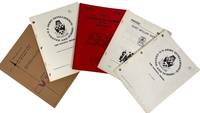
réf. 229591974. Cold War U.S. Defense Official U.S. Army intelligence and doctrinal publications on Soviet equipment and artillery produced at key Cold War moments when Soviet conventional forces missile technology and weapons systems were undergoing rapid modernization. These publications illustrate how American military institutions trained analysts and officers to identify Warsaw Pact weapons systems and to interpret Soviet organizational doctrine at a time when NATO planners were assessing conventional force balances and missile developments across Europe. Archive of 5 manuals from the 1970s-80s. Ranging from the immediate post-Vietnam period through the Reagan-era reintensification of U.S.-Soviet strategic competition these manuals document how American military institutions trained analysts intelligence officers and commanders to identify classify and counter Soviet equipment from tanks and artillery to missiles and aircraft using standardized imagery technical profiles and organizational analysis. Collectively the materials illustrate the evolution of U.S. threat perception as it moved from broad equipment identification toward increasingly specialized assessments of missile systems and advanced weapons platforms. Archive includes: 1 U.S. Army Missile Command. Technical Report RD-SS-86-10. Redstone Arsenal Alabama: U.S. Army Missile Command September 1986. Produced at Redstone Arsenal during the late Cold War missile buildup this technical report represents a shift toward highly specialized analysis of weapons and rocketry. This book demonstrates rigorous mathematical treatment of Rhode's theory of monopulse radar a foundational signal-processing method that enabled precise real-time tracking and guidance of missiles and aircraft during the Cold War. 2 U.S. Army Intelligence Center and School. Communist Weapons and Equipment Handbook. Fort Huachuca Arizona: USAICS January 1976. This handbook SupR 66152 explicitly marked as superseding earlier editions from 1971 and 1972 reflects the institutional updating of intelligence curricula in response to changing Communist bloc arsenals. Intended for classroom and field use it consolidates identification criteria hazards to identification and dichotomous keys revealing how U.S. intelligence sought to systematize recognition of Warsaw Pact weaponry during a period of détente. 3 Department of the Army Combined Arms Combat Developments Activity CACDA. Organization and Equipment of the Soviet Army. Fort Leavenworth Kansas: Headquarters Department of the Army 31 July 1978. Issued as Handbook HB 550-2 and distributed under special controls this striking red-covered manual analyzes Soviet ground force organization and equipment at a moment when NATO planners were reassessing conventional force balances in Europe. The text stresses its role in simulations and training exercises linking Soviet organizational structure directly to anticipated battlefield employment. 4 Department of the Army Soviet Artillery Doctrine. RB 30-3. Fort Leavenworth Kansas May 1976. This handbook corrects and updates specific technical and identification details within Organization and Equipment of the Soviet Army highlighting the dynamic nature of Cold War intelligence production and the continual need to revise assessments as new information about Soviet systems emerged. 5 U.S. Army Intelligence Center and School. Soviet Equipment. Fort Huachuca Arizona: USAICS March 1974. Issued as Supplemental Reading SupR 62810 this manual was designed as a study aid for intelligence students learning to identify Soviet equipment through imagery. The preface emphasizes mastery of visual recognition skills prior to classroom instruction with appendices organized by equipment type; tactical vehicles tanks artillery rocket launchers antiaircraft systems aircraft and electronic equipment; underscoring the centrality of imagery intelligence IMINT during the Cold War. Each manual shows light to moderate handling wear consistent with training and professional use including staple binding punched holes for binders minor edge wear toning and occasional marks; all text remains legible and intact. Overall very good condition. Together this archive offers a revealing primary-source record of how the U.S. Army studied taught and revised its understanding of Soviet equipment and missile capabilities across three decisive Cold War decades making it particularly relevant for collections focused on military intelligence history missile development and U.S.-Soviet strategic rivalry. unknown books
1945réf. 225281945. Women History World War II WWII Women's Army Corps photo archive documenting women's military service during World War II and the expansion of women's logistical and technical roles within the United States Army. The photographs record daily activity surrounding Women's Army Corps personnel including ambulance operation vehicle maintenance military training environments and informal moments of rest and recreation. Established in 1943 Women's Army Corps enabled women to enter the Army in noncombat roles that were essential to wartime mobilization including clerical work communications mechanics and medical transport. The images document this institutional transformation through scenes of uniformed women working with military vehicles operating ambulances and participating in the broader infrastructure of wartime military camps. One photograph shows a WAC standing in full service uniform before a low administrative building while others depict women outdoors in wooded settings during moments of leisure illustrating both the disciplined and personal dimensions of wartime service. Archive of 20 gelatin photographs created during the 1940s depicting Women's Army Corps personnel military vehicles and associated Army training activities. Photographs measure approximately 3.5 x 5 inches. The photographs show WAC members in both uniform and off duty settings including outdoor portraits and camp scenes. Several images focus on military ambulances and transport vehicles bearing visible Army markings such as "U.S. ARMY 432621" and "AMB-34." Verso inscriptions provide firsthand commentary on military duties and equipment including one caption reading "This is my new AMBULANCE hope you like it sis. safe & OK" and another written beside an ambulance photograph noting "good old Baker 5 kept me from walking." Operational scenes include soldiers crouched behind sandbags with a handwritten note identifying personnel as "Eselinger Conrad Palmer Carvey Boss." Other photographs document the broader military environment surrounding WAC activity including a drill or parade ground and a large motor pool with rows of Army trucks one marked "U.S. Army 008909" positioned in front of a multi story barracks. Additional annotated images identify fellow servicemen and technical details of equipment including "Hines Gallop and myself. Gallop is a jeep driver from North Carolina" and another describing "my radio on right fender" while one photograph is labeled simply "motor pool." Women's Army Corps personnel served throughout the United States and overseas during World War II performing essential logistical and administrative work that supported Allied military operations. Ambulance drivers such as the woman referenced in the captions transported wounded soldiers during training exercises and operational deployments and were often responsible for maintaining their own vehicles in field conditions. WAC members later served across European theaters including England France and Italy after the Allied landings in 1944 contributing to the wartime medical evacuation system that moved casualties from combat zones to field hospitals and rear medical facilities. Light edge wear mild surface handling and faint silvering to some prints; overall very good condition. These photographs document both the operational infrastructure of wartime motor transport and the presence of women within that system illustrating how the mobilization of female personnel expanded the technical and logistical capacities of the U.S. Army during the global conflict. unknown books
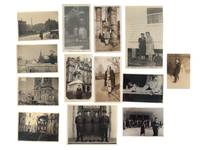
1945réf. 214301945. WWII era Women's Army Corps photo archive documenting servicewomen including two African Americansand four partially identified individuals. Creation of the WAC in 1942 marked the first permanent institutional incorporation of women into the U.S. Army placing female personnel into administrative communications intelligence and logistical roles across both domestic bases and overseas commands. One photograph identified on the verso as "Gynnie Polly Corsica '45" provides additional documentation of Black women serving overseas in segregated Army units during the final year of the war. Archive of 18 silver gelatin photographs from W.W.II. Photographs measure approximately 3 x 2 inches to 6 x 3.5 inches. The images depict American servicewomen in a range of wartime contexts including official uniform portraits informal snapshots and scenes taken in European cities damaged by combat. Several photographs show women wearing standard WAC dress uniforms with garrison caps and enlisted insignia while others depict personnel wearing British style battledress associated with American administrative units stationed in Europe. One photograph shows three uniformed personnel two women and one man standing at attention before a formal government building likely in Britain. Another image places a uniformed American servicewoman before the gilded equestrian statue of Joan of Arc in Paris a landmark associated with Allied presence in liberated France. Additional photographs depict ruined urban landscapes with bombed churches and collapsed structures suggesting scenes from Germany or France shortly after liberation. A photograph inscribed "Chattanooga Tenn." shows a woman standing in civilian clothing at the entrance of a home indicating a stateside context connected to the servicewoman's life before or after deployment. Another photograph labeled "Ann & Lillie Mother" shows two women standing outside a residence likely relatives of one of the servicewomen. Women's military service expanded rapidly during World War II as the War Department created organizations such as the Women's Army Corps and the Navy's WAVES to address labor shortages across the armed forces. Overseas deployments placed WAC personnel in newly liberated European cities and military headquarters throughout the Allied command structure. Light toning minor edge wear and occasional handling marks. Overall very good condition. Although African American women served within segregated units their participation in overseas assignments including Mediterranean theater postings marked a significant shift from earlier military policy which had typically limited Black women's service to domestic assignments within segregated support units. unknown books
1944réf. 218341944. Women's History Military History Photography Unidentified photographer Women's Army Corps photographs mid 1940s document female military service during World War II and provide direct visual evidence of women's roles within the U.S. Army following the formal incorporation of the Women's Army Corps in 1943. The images record administrative work training routines and social life among enlisted servicewomen situating WAC personnel within the broader wartime expansion of women's participation in military infrastructure. The archive supports research into gendered labor in the armed forces wartime mobilization and the institutional integration of women into military systems. United States including Fort Lee Virginia and Westfield Massachusetts mid 1940s. Archive of 17 silver gelatin photographs ranging from approximately 3.5 x 2.5 inches to 5.5 x 3.5 inches with manuscript annotations on several versos identifying locations and contexts. The photographs depict WAC servicewomen in uniform engaged in administrative duties formation drills and off duty activities. One image shows a woman seated at a desk beneath a clock with a nameplate reading "M.V. Ramsey WAC" with visible chevrons indicating rank while others show groups gathered around mess tables standing in inspection formation or marching in coordinated drills. Outdoor scenes include annotated locations such as "Flattop - Ft. Lee Va." and "Taken in Westfield a suburb of Springfield" as well as a roadside photograph showing two servicewomen beneath directional signage indicating distances to nearby Massachusetts cities. Several portraits focus on individual women posed in multiple settings near military installations suggesting personal documentation of service life. The archive situates WAC service within the broader reorganization of the U.S. military during World War II when women assumed clerical logistical and support roles essential to sustaining wartime operations. Training centers such as Fort Lee and regional encampments in Massachusetts functioned as key sites for integrating women into military systems while maintaining structured discipline and hierarchy. These photographs document both institutional expectations and informal camaraderie among servicewomen illustrating how gender roles were renegotiated within military contexts during the war. Light curling and minor surface creasing to some photographs; most remain well preserved with strong tonal clarity. Overall very good condition. A cohesive photographic record of women's military service and daily life within the Women's Army Corps during World War II. unknown books
1943réf. 220591943. Women's Army Corps service photographs dated 1943 to 1944 document the participation of enlisted women in U.S. Army support operations during World War II with particular attention to transportation training environments and stateside military life. The images identify individual service members including Hilda Goble described in captions as an "ambulance driver during War II" and Abbie E. Bachelder situating named women within the broader expansion of female labor following the establishment of the Women's Army Corps in 1942. These photographs support research into women's military service wartime labor structures and the integration of women into logistical and medical support roles essential to the functioning of the U.S. Army during the war. Archive consists of 9 original silver gelatin photographs most approximately 3 x 5 inches several with scalloped or deckled edges and period ink captions identifying subjects and dates. Two portraits show Hilda Goble in full uniform standing before a porch and saluting each inscribed "Hilda Goble Ambulance driver during War II" documenting her role in transporting injured personnel within military systems. A group photograph captioned "Ambulance Driver Team War II Hilda Goble" depicts seven uniformed women indicating coordinated service within ambulance units. Additional images include a portrait labeled "Abbie E Bachelder / June - 1944" showing a uniformed WAC posed before a landscape of barracks buildings and another dated 1943 identifying Bachelder outside a wooden structure. A photograph captioned "Oct 29 - 1944 / Reims" shows two women identified as Roberta and Abbie posed on the grounds of the U.S. Capitol indicating travel or official assignment within government contexts. Other photographs depict WAC personnel standing near a military chapel and within training or hospital environments while one image titled "Marine Corps Wives of America - Hdqtrs Chap 1" shows four women beneath an organizational banner documenting affiliated civic or support networks connected to military service. These images documents the Women's Army Corps expantion to meet wartime labor demands assigning women to clerical transportation medical and logistical roles across domestic and overseas installations. The presence of ambulance drivers within the archive demonstrates the direct involvement of women in medical transport and support infrastructure while scenes at the U.S. Capitol and organized groups indicate both official recognition and the development of social and institutional networks among servicewomen. Light edge wear and minor creasing with one photograph showing tape residue; images otherwise clear with captions legible; overall very good condition. This archive provides a concentrated visual record of named WAC personnel and their roles within the operational and social framework of the U.S. Army during World War II. unknown books
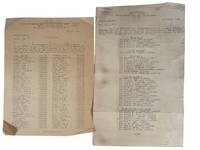
1943réf. 220421943. U.S. Army issuer Special Orders documents 1943-1944 documenting the mobilization assignment and promotion of women in the Women's Army Corps during World War II. The archive illuminates a system of military recruitment training allocation and hierarchical advancement revealing how women were enlisted processed and promoted within a gender segregated military structure.These documents show the mechanisms by which the Army expanded its personnel base to include women formalizing their roles through standardized orders logistical coordination and rank progression. U.S. Army. Special Orders. Southern New York Recruiting and Induction District and APO 501 Services of Supply 1943-1944. U.S. Army's mobilization of women for wartime service documents. This archive highlighting how gender and race intersected within a segregated military structure. Five pages of typed military orders documenting the enlistment and rank advancements of dozens of women into the Women's Army Corps WAC during World War II during a critical and unprecedented phase of American military expansion. These internal "Special Orders" were issued from U.S. Army Headquarters one from the Southern New York Recruiting and Induction District dated 28 September 1943 3 pages and the other from APO 501 Services of Supply Special Troops dated 25 August 1944 2 pages. The first document-marked "RESTRICTED"-lists 161 women who have "been enlisted this date as Privates in the WAC AUS UP without delay for New York N.Y. to Daytona Beach." These orders formalize the transfer of recruits to basic training at the Second WAAC Training Center in Florida a site where both Black and white women were trained in segregated units. Typed names include "KENNEDY DOROTHY R." "RAY RITA T." "ROBERTS ROSA" and "ROSS GRACE". The document also makes note that "the QMC will issue six 6 meal tickets to one hundred and sixty one 161 WACs" revealing both the scale and logistical efforts involved in transporting and sustaining the newly enlisted women. It is signed by R.C. Burgess 1st Lt. WAC AUS WAC adjutant and includes careful routing for distribution and duplication. The second document issued nearly a year later reflects the internal promotion structure within the WAC. It includes detailed lists of women being promoted across multiple ranks-from Private to Private First Class Technician Third through Fifth Grades and up to Master Sergeant. It begins: "Upon recommendation of the Chiefs of Section. the following temporary promotions are announced in WAC Service Unit USA SOS APO 501." Among those promoted: "Sgt HELEN P. SUTTON" "T/5 HELEN E. SHROOP" "Pvt DOROTHY R. KENNEDY" again appearing from the earlier enlistment list and "Sgt MARGARET H. STERLING" named Master Sergeant. The appearance of some of these women in both documents indicates successful progression within the ranks underscoring the opportunities for women-albeit within a racially stratified command-for advancement and formal recognition. Edges of the paper show chipping and creasing Minor staining to the lower half of the 1944 document. All text remains fully legible. Overall very good condition. A compelling and tangible record of women's military service during World War II. These documents record the expansion and institutionalization of women's military service during World War II when the WAC became a central component of U.S. Army personnel strategy. The inclusion of detailed enlistment lists and promotion orders demonstrates how women were incorporated into existing military systems while operating within segregated units shaped by prevailing racial policies. The progression of individuals across documents illustrates continuity of service and advancement opportunities within constrained structures. Edge wear chipping and creasing with minor staining to the 1944 document; text fully legible; overall very good condition. A concentrated administrative record of women's wartime service and the operational systems governing their roles. unknown books
1947réf. 28740Washington DC: United States Army Air Forces. Very Good. ca.1947. First Edition. Hardcover. no dust jacket probably as issued light external soiling a little darkening to the spine. charts maps A massive catalog of all and I do mean all the photo-technical data related to the photography both still and motion picture both black & white and color of "Operation Crossroads" the first two post-World War II nuclear bomb tests conducted at Bikini Atoll in the South Pacific in July 1946. The first test took place on July 1 and was nicknamed "Able Day"; the second on July 25 was "Baker Day." The names were directly taken from the first two letters of the Joint Army/Navy Phonetic Alphabet. The stated purpose of the tests was to assess the level of damage that the massive explosions would inflict on naval vessels of various kinds that were stationed in the vicinity; all humans were evacuated from the ships although a large number of small animals were placed on board thousands of rats; hundreds of goats pigs and mice; and even a few dozen guinea pigs in order to measure the effects on them of the radiation emitting from the blasts. Short version: not good. The two tests were designed to measure the effects of two different kinds of explosions: the Able bomb was an "air burst" detonated 520 above the surface; the Baker bomb was suspended beneath a landing craft and detonated 80 feet underwater. The stated purpose of this catalog was "to provide a systematically-combined record of photography available from the two operations for study measurement and analysis purposes." The bulk of its 756 pages is devoted to reproductions of the three data sheets that documented each roll of film that was shot: 1 the "Film Data Sheet" giving the technical specs of the camera and a summary of its coverage; 2 the "Time and Position Data Sheet" with detailed data on each individual exposure; and 3 the "Aircraft Track and Position Chart" a map of Bikini Atoll with the positions of each camera-carrying aircraft plotted thereon. Those aircraft by the way were essentially drones operated by radio remote control and the cameras were automatic so that no humans needed to be too close to the blasts. There are also at the beginning of both the Able and Baker sections abstracts of the contents of each roll of film. Example: "This roll shows phenomena from fireball through development of mushroom cloud in a series of exposures made in rapid succession 3 per second." Although the volume itself was apparently not classified neither was it a U.S. Government Printing Office issue intended for wide circulation; it's stated in a couple of places that "a limited number of additional copies of this publication are available" and informs the reader where to procure them. Its obvious purpose was to facilitate the users' ability to locate the film footage or still photography needed for purposes of their own analysis and it's likely that a certain level of security clearance was required. There is however this note among the introductory matter: "All data and sheets pertaining to Able Day Sortie H and bomb carrying aircraft have been deleted from this catalog and will be found in a classified addendum." Keeping wraps on info about the plane that actually dropped the Able bomb I can understand but I wonder what the deal was with "Sortie H" A small amount of the film footage documented here was incorporated into the official U.S. Government documentary film of the events called "Operation Crossroads: Able and Baker Day Tests Bikini Atoll Summer 1946" released in 1949. One would hope that all this photography has been preserved in the National Archives -- maybe even the stuff from the mysterious "Sortie H." The present volume is quite rare with OCLC recording just three copies: at the Smithsonian Institution in Washington DC; the Air University Library at Maxwell AFB in Montgomery Alabama; and at the Phillips Research Site Technical Library which was merged in 1997 into the Air Force Research Laboratory at Wright-Patterson AFB in Ohio the OCLC link however is dead -- the latter two of which I suspect are not readily if at all accessible by the public. NOTE by the way that there is no actual photography reproduced in this book: it's strictly a non-visual catalog. . United States Army Air Forces hardcover books
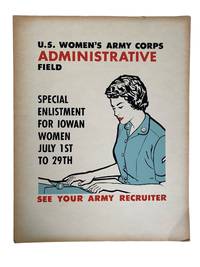
1944réf. 207311944. Archive of two items related to the Women's Army Corps W.A.C. 1 The WAC Officer: A Guide to Successful Leadership. Washington: United States Government Printing Office 1944. A February 1945 pamphlet distributed by the War Department. 2 U.S. Women's Army Corps poster. Poster reads: US Women's Army Corps Administrative Field Special Enlistment For Iowan Women July 1st to 29th See Your Army Recruiter. 11" x 14.75". Depicts a young woman in military dress typing on a typewriter to represent the openings in the Administrative division of the Women's Army Corps. The WAC was a great source of pride for many women during WWII as it allowed them to patriotically contribute to their country's war efforts. The WAC during WWII were trained to handle auxiliary functions for the military as switchboard operators mechanics drivers stenographers armorers to maintain and repair smalls arms & heavy weapons which they unfortunately weren't allowed to use and many other war-time support operations. Uncommon. In very good condition overall. unknown books
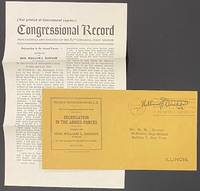
1951réf. 186401951. Dawson William L. African American congressman from Chicago and World War I veteran of the segregated 366th Infantry Regiment House of Representatives speech delivered April 13 1951 addressing segregation in the United States armed forces during the early years of the Cold War. Dawson served in Congress for nearly three decades and became the first African American to chair a congressional committee. His speech was delivered during a critical period in the history of American civil rights and military policy following President Harry Truman's 1948 Executive Order 9981 directing the desegregation of the armed forces. Debates in Congress during the early 1950s addressed the pace and implementation of integration and Dawson used the floor of the House to argue that racial segregation contradicted the principles for which American soldiers fought. Dawson William L. "Segregation in the Armed Forces." Speech of Hon. William L. Dawson of Illinois in the House of Representatives April 13 1951. Congressional Record 82nd Congress First Session. Single printed sheet measuring approximately 6 x 9 inches preserved with original mailing envelope. The printed text reproduces Dawson's remarks opposing segregation within the military establishment. In the speech Dawson declared: "If there is one place in America where there should not be segregation that place is in the armed services among those who fight for this country." He continued with a broader appeal to constitutional ideals and national unity: "I would give up this life of mine to preserve this country and every American in it white or black. Deny to me today if you will all that American citizenship stands for I will still fight to preserve our Nation knowing that someday under the Constitution of the United States all of these restrictions will be removed and that we will move forward before the world as one people American people joined in a democracy which shall set the pattern for all the world." Dawson's remarks formed part of the ongoing political struggle over civil rights and military policy during the early Cold War. The Korean War had begun the previous year and questions about equality within the armed forces remained under active debate as the military implemented Truman's desegregation order. Dawson's own wartime service in a segregated unit during World War I informed his critique of racial discrimination within the military establishment. As a senior African American political leader in Congress his advocacy contributed to broader legislative and political pressure supporting the continued dismantling of segregation in the armed forces. Minor wear consistent with age; overall condition very good. unknown books
1899réf. 185571899. Wagner Arthur L.; Kelley Assistant Adjutant-General; Jerrold J.D. The United States Army and Navy: From the Era of the Revolution to the Close of the Spanish-American War 1899 presenting a comprehensive late nineteenth-century account of American military development with direct relevance to the study of warfare institutional organization and expansion of U.S. military power. The work surveys major conflicts including the Revolutionary War Mexican War Indian Wars and Spanish-American War situating the latter within a period of overseas engagement and changing strategic priorities. It also provides detailed treatment of military structure including administrative divisions pay systems and operational organization within the Army alongside parallel developments in the Navy. Naval sections address earlier conflicts such as the War of 1812 and engagements with Tripoli and France as well as contemporary actions including Manila Bay and Santiago de Cuba reflecting the emergence of the United States as a naval power at the close of the nineteenth century. Wagner Arthur L.; Kelley; Jerrold J.D. The United States Army and Navy: From the Era of the Revolution to the Close of the Spanish-American War; with Accounts of Their Organization Administration and Duties. Akron Ohio: The Werner Company 1899. First edition. Oblong folio measuring approximately 18 x 13.5 inches illustrated with 43 full-color lithographic plates on heavy stock comprising 25 army subjects and 18 navy subjects each accompanied by descriptive text on protective tissue guards. The plates depict soldiers officers and marines in uniform battlefield scenes and naval vessels including battleships and cruisers providing visual representation of personnel equipment and engagements across multiple conflicts. Single oblong folio volume in dark blue cloth with gilt title on the front board. Light wear to edges of spine and boards; text and plates clean and well-preserved; overall very good condition. A large-format illustrated survey of United States military history and organization at the close of the nineteenth century. unknown books
1912réf. 381342Washington: Government Printing Office 1912. Hardcover. Very Good. First edition. Multiple House Documents 62d Congress 2d Session 1911-1912 bound in a four volume set. Thick octavos. Each volume contains numerous folding topographical maps and plates. Complete as issued in the original publisher's cloth. The cloth bindings are moderately toned and soiled with light dampstaining at some page margins good or better overall. Contains detailed topographical and engineering surveys of important rivers and harbors throughout the country and including Kauai Hawaii. Prepared under the direction of the Secretary of War by the US Army Corps of Engineers. A scarce complete set with the folding maps in very good condition. Government Printing Office hardcover books
1914réf. 381724Washington: Government Printing Office 1914. Hardcover. Very Good. First edition. Multiple House Documents 63d Congress 2d Session 1913-1914 bound in a two volume set. Thick octavos. Each volume contains large folding maps folding charts and plates. Complete as issued in the original publisher's cloth. Moderate soiling to the boards hinges are a little shaken rear hinge of volume 2 is split very good. Contains extensive surveys of many important rivers and harbors throughout the country including the Hudson River at Ossining N.Y.; Richmond Harbor Cal. Norfolk Harbor Va.; the waterway from Charleston S.C. to Savannah G.A.; Key West Harbor Fla.; Napa River Cal. the New York Harbor upper bay and Bay Ridge and Red Hook channels. Prepared under the direction of the Secretary of War by the US Army Corps of Engineers. A nice set scarce in the trade with the folding maps in fine condition. Government Printing Office hardcover books
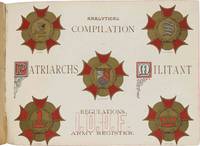
1892réf. 31753Cincinnati Oh.: Cohen & Co. 1892. With Beautiful Chromolithographs An incredibly extensive compilation of rules and regulations for the Patriarchs Militant of the fraternal organization known as the Independent Order of Odd Fellows I.O.O.F. Included are military rosters ceremonial procedures and organizational by-laws. The forty handsome chromolithographic plates depict all manner of military insignia dress and uniform. 4xiv269pp. plus addendum of forty chromolithographic plates. Portrait. Oblong octavo. Original pebbled cloth gilt. Worn at spine ends and corners. Front hinge cracked. Internally clean save for a few pencil emendations. A very good copy. hardcover books