30 213 résultats
1865réf. 1359792Philadelphia: J. B. LIippincott 1865. Hardcover. Quarto 166 pp with plates. Good; bound in contemporary green cloth with 3/4 green leather gilt titling to spine with some areas of discoloration to covers and wear to spine edges and corners; binding tight; marbled text block clean; liquid damage to top edge of several front pages pages else clean; plates intact and present as indicated; b/w illustrations throughout; MF consignment. 1359792. Special Collections. J. B. LIippincott hardcover books
1865réf. 1359794Philadelphia: J. B. LIippincott 1865. Hardcover. Quarto 166 pp with plates. Good; bound in contemporary black cloth with 3/4 leather gilt titling to spine with some areas of discoloration to covers and extensive wear to spine edges and corners; binding tight; marbled text block clean; pages clean; plates intact and present as indicated; b/w illustrations throughout; ex-library copy with usual markings including a bookplate to front pastedown institutional stamps to several pages and call number written in pencil; MF consignment. 1359794. Special Collections. J. B. LIippincott hardcover books
1919réf. 20200131New York: McConnell Printing Company 1919. General wear. Minor stains. Rusted staples. 15pp. Illustrated wraps.Camp Merritt was an army base that was activated for use during WWI located in Dumont and Cresskill NY. The booklet features information and images from photographs of the camp buildings various administrative offices money and post exchange tailor shops hospital enlisted men's clubs officer clubs churches recreations/entertainment spaces movie theater library etc. vocational training courses and classrooms telegraph office visitor center soldier quarters and information how to get to the base from surrounding areas such as New York City. The front cover has a blue engraving of a fire place with the following quote engraved on the mantle "We make War Against War". This fire place was actually located in Merritt Hall on the base which was the enlisted men's club. The back cover has the seal of the camp with the caption "Merritt-Men" underneath. Included are several black and white printed photographs of the camp its grounds and buildings as well as a map of the camp itself at the back of the booklet. Camp Merritt would be decommissioned after the war in 1919 and sold to the Harris Brothers Company of Chicago in 1920. Unfortunately the buildings of the camp were destroyed during a series of fires shortly there after. OCLC 4 Mar 2020. Measures 7 1/2" by 4 1/2" It was one of three camps under the control of the New York Port of Embarkation US Army command that oversaw the movement of US troops and supplies from NY/NJ to overseas destinations. Camp Merritt had the capacity to hold 38000 transient troops. When the troops were ready to be deployed they would march to Old Closter Dock at Alpine Landing and take ferry boats to piers in Hoboken NJ and from there head to Europe and the Western Front. All total of the approximately four million troops sent to Europe in WWI about one million were funneled through Camp Merritt. This booklet was given to troops as they returned from overseas most likely after the war finished in November 1918 and started returning home in 1919. McConnell Printing Company unknown books
1943réf. 196078GPO 1943 1943-01-01. Paperback. Good. Light blue paper wraps- minor wear. Has a good binding no marks or notations. 69 pp. Original publication not a reprint. GPO, 1943 paperback books
1973réf. 186924US Army Armor School 1973. Softcover. Good. Mild cover wear. Has a good binding no marks or notations. tnos US Army Armor School paperback books
1917réf. 187991Gibson Bros 1917. First Edition. Softcover. Good. Brown paper wraps have worn corners and edges. Has a good binding. Rear endpaper has pencil notations from a Lt. Lutrell San Diego. Pencil notations to the text are in the same hand. All fold outs are included and in good condition. Gibson Bros paperback books
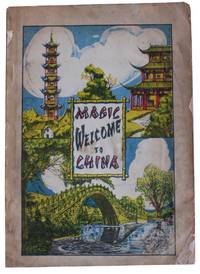
1947réf. 6092Nanking China: Engineer Section Army Advisory Group 1947. Good. 9½" x 6¾". Illustrated thin card wrappers. Pp. 5 88 1. Good: lacking the map; wrappers heavily soiled and worn with some loss to edges and spine; internally very good with light toning at extremities. This is a heavily illustrated guidebook to China produced for the wives and families of American soldiers. The first section provided a "Greeting" and backdrop of information: "This small booklet is intended to give you an insight into China from the point of view of an American Army or Navy family. Your husband may be stationed in Shanghai Nanking Hankow Hangchow Tsingtao or Peiping. We have tried to tell you a little about each of these places: where you will live what kind of a home you may expect to find awaiting you and what there is to do and see." At the time of publication the United States Army Advisory Group was stationed in Nanking the Nationalist capital. Americans stayed on in China post-World War II through 1949 after Congress passed the Economic Cooperation Act of 1948 to administer the European Recovery Program. We know this program better as the Marshall Plan; the same legislation included $460 million in military and economic aid to China. The bulk of the book was dedicated to Shanghai as the authors expected that "you will all want to go there from your home station to shop in its fabulous stores and to enjoy a little of its cosmopolitan atmosphere." Readers were assured that once they "forget the filth in the streets the crowds and all of the peculiarities which will at first probably surprise and shock you Shanghai will grow on you - that is its biggest asset." Several pages provided information on Shanghai including tips on shopping hotels theaters and restaurants and "a doctor's advice for your health." A section on places of worship interestingly included Jewish temples and there's also a brief history of the city. The book also devoted five- to ten-page sections respectively on the cities of Nanking Peiping Hankow Hangchow Chengtu and Tsingtao. The book boasts a beautifully colored front wrapper along with 58 illustrations and 38 photographic images. The illustrations were by Gyula Singer a Jewish artist who according to an oral history escaped the Nazi occupation of Austria by moving to Shanghai. He later relocated to New York where he ran a commercial design business with a specialty in theater backdrops. OCLC shows five copies over two entries. Engineer Section, Army Advisory Group unknown books
1951réf. 72711Washington: GPO. Very Good. 1951. Softcover. U. S. Army field manual. 258 pages tan printed wrappers light use wear Good condition. . GPO paperback books
1968réf. 60674Washington D. C.: Department of the Army. Very Good. 1968. Softcover. 431pp. printed wraps wraps are slightly scuffed and toned slightly cocked otherwise a Very Good copy. . Department of the Army paperback books
1969réf. 61451Washington D. C.: Department of the Army. Very Good. 1969. Paperback. ROTCM 145-101. 196 pages complete in printed wrappers. Light soil but close to Very Good. . Department of the Army paperback books
réf. 6136Worcester: Published by Comrade Henry N.Evans 1879. 8vo 8.25" x 6.5 gilt chromolithographic wrappers. 80 pp. numerous b&w illus. A scarce GAR almanac celebrating the hard-won victory of the over the rebellion summarizing the events with the addition of an astronomical calendar for 1880 compiled by C.H. Metcalf. The front wrapper's diamond design includes symbols and the names of four Grand Army Corps: Sheridan Cavalry Wilson's Cavalry Engineer & Pontonier and Hancock's First Corps Veterans. Three full-page engravings are captioned "Memorial Day" "First Blood-The 6th Massachusetts Volunteers in Baltimore" and "Prisoners' Camp or 'Pen' Andersonville Ga." The majority of ads are from Worcester Mass. businesses including The Parker Gun Bush's Liver Pills J.R. Torrey Razors and Straps and the Taylor & Farley Parlor Chapel and Hall Organs on back wrapper. Membership of the Grand Army was open to any honorably discharged soldier or sailor who served between April 1861 and April 1865. No person who had borne arms against the United States was eligible. The stated goals of the Grand Army were to create solidarity and support for veterans and to preserve the ideals of the constitution against potential disloyalty. CONDITION: Detached front wrapper chipping at edges light soiling on back wrapper toned. Worcester: Published by Comrade Henry N.Evans, 1879 unknown books
réf. 6373Washington D. C. : Pentagon 1943. 2 5" x 7' original photographs 10 8.5" x 11" sheets typed on both sides. Images and excerpts from a publisher's prospectus for the 1957 publication "Northwest African: Seizing the Initiative in the West" including a silver print image of two World War II officers on horseback with a departing column of troops in the background; also a portrait of author and historian George F. Howe and a typed description of the book. CONDITION: Very good. Washington, D. C. : Pentagon, 1943 unknown books
réf. 526Mimeograph with stipple and ink illustrations 5 leaves of text presenting a timeline ; 5 leaves of names and addresses for company personnel. 8vo. Very good. Front wrapper embellished with stamps in red indicating "Top Secret" "Secret" "Confidential" "Restricted" all crossed out in blue pen under which "Aw What the Hell!" is written in black ink. 526 A curious memento of a Forward Echelon Command Party company's involvement in the liberation of Paris with a timeline showing the group's movements from July 11 to September 28 1944 and current addresses for members. Self-published paperback books
1945réf. 8784Headquarters-U.S. Army Air Forces. Revised May 1945. Punch and clipbound in stylized titled coloured pictorial wrappers. Small 4to. Classified "Restricted" and marked as such on each page. Introduction by General Hap Arnold Commanding General of the Army Air Forces Profusely illustrated with photographs drawings schematics diagrams some fold-out cutaways etc. Arguably the most famous aircraft of the Second World War the Boeing B-17 Flying Fortress was the spearhead of the American daylight bombing offensive in Europe from beginning to end as well as serving in every other theatre of war. No single aircraft type contributed more to the defeat of the Luftwaffe which enabled tangible expression to be given to the controversial U. S. policy for the strategic assault of Germany by day in the face of formidable political argument as well as desperate enemy opposition. Few other aircraft of the war gained the universal affection of their aircrew over so long an operational periods did the B-17 Green . This manual served the dual purpose of training checklist and working handbook for B-17 pilot airplane commanders. Graphically intensive the manual covers all aspects of the Flying Fortress from operational duties and command to construction flight navigation weaponry emergencies etc. A very rare highly prized memento of aviation and military. history Owners ink signature to front cover. Ink stamp of Salem Army Airdrome HQ dated 1945 to title Page and inside rear cover. Usual rust offset from metal binding pins to front and rear inside covers.Binding pin protruding slightly onto front cover. Mild sporadic soiling to rear cover.Light wear to edges. A crisp bright Very Good copy of this original rare relic of Aviation History. Headquarters-U.S. Army Air Forces. unknown books
1942réf. 5521Baton Rouge. Army and Navy Publishing Co. 1942. Pictorial embossed blue cloth with embossed 8th Army Air Corps shield to front cover in vibrant colour. Pictorial endsheets. 4to. Profusely illustrated with photographs. A stunning and rare annual depicting life and cadet training for young pilots headed for Air Combat.Facinating. Fine. A lovely copy. Army and Navy Publishing Co. hardcover books
1944réf. 5862Washington D. C. Headquarters Army Air forces. 1944. Punch tabbed pictorial boards. Small 4to. Illustrated with photographs drawings diagrams cutaways etc. Complete manual of all aspects of aircraft and combat flying for Second World War pilots. Exacting thorough Mild wear to extremities. A Very Good copy. Headquarters, Army Air forces. hardcover books
1837Sm. folio, 4pp (2pp text), with fine woodcut arms of Victoria at head; disbound, a remarkably crisp, clean copy. I Victoriae Cap. 31; granted Royal Assent 12 July 1837
19888vo., First Edition, with a frontispiece and very numerous coloured and monochrome photographs and illustrations in the text; original coloured pictorial wrappers, a fine copy.
18742 vols., 8vo., First Edition, with a folding facsimile on blue stock and a double-page map as frontispieces, a folding map and a double-page map, and two large folding maps (one coloured in outline) in pocket at rear of second volume, some very mild occasional foxing, fore-edges dusty; original decorative cloth blocked in blind, gilt backs, uncut, covers moderately soiled (boards to volume two stained with black ink), volume one neatly rebacked with original backstrip (faded) laid down else a good, firm, sound copy of a work scarce in any condition. This volume bears the neat contemporary signature of 'Frank Cooper' and the following holograph inscription: 'Maps drawn by my brother Harry, who was with Colonel Colley as Adjutant of Transport. Col. Colley, afterwards Sir G[eorge]. Pomeroy Colley, was killed in the fatal action of Majuba Hill in Natal fighting against the Boers'. Henry Brackenbury was Assistant Military Secretary to Wolseley; Cooper (as stated correctly above) was sometime Adjutant of Transport during the campaign. The official records were placed by Wolseley at Brackenbury's disposal 'without reservation' and augmented by the latter's private journal which he kept whilst serving at headquarters. The account of Captain Glover's expedition is taken entirely from letters between Wolseley and himself. The missions of Captains Butler and Dalrymple are described from their own letters. Frank Cooper's signature is dated 1874; the Battle of Majuba Hill took place on 27th February 1881 during the First South African War (this action was, incidentally, the last occasion on which British regimental colours were carried into battle). It would seem, therefore, that this was originally Frank Cooper's copy (until at least 1881) which then passed into the Brackenbury family. It was then in the library of Major-General Charles Booth Brackenbury (1831-1890) and bears his signature on the half-title of the second volume. The author's elder brother, he spent his career in the Royal Artillery culminating in his appointment as Director of Artillery Studies at Woolwich, from which position no-one did more to spread sound ideas throughout the service on tactical changes demanded by the advancement in weapons technology. On Charles's death this copy passed to his youngest son, Hereward Irenius Brackenbury and bears his engraved armorial bookplate on front paste-down of first volume. Hereward Brackenbury was a talented engineer and director of the prominent defence contractor Hawthorn Leslie & Co. The Brackenbury family was well represented in nearly all the British wars of the nineteenth century. THIS IS AN IMPORTANT AND DESIRABLE FAMILY COPY SHOWING MULTIPLE ASSOCIATIONS WITH THE AUTHOR OF A CLASSIC VICTORIAN CAMPAIGN MEMOIR.
18374pp (two blank), folio, with fine woodblock arms of Victoria at head, a remarkably crisp, clean copy ideal for framing and display. 1 Victoriae cap 29; granted royal assent 12 July 1837
19368vo., interleaved with blanks throughout, small neat signature on front free endpaper; regimental green cloth, gilt badge on upper cover, red cloth back lettered in gilt, corners very lightly frayed else a very good, bright, clean copy. Appendices include sample forms, list of books to be maintained by companies, and instructions for officers' dress. The record of 1 and 2 Bns covers the period 1758 to 1936, including lists of officers and order of precedence of LI regiments. With unusually detailed index. SCARCE.
1948Sm. 8vo., original printed wrappers, wire-stitched as issued, a near fine copy.
18388vo., Second Edition, with 57 engraved plates, and numerous diagrams and tables in the text, some light and inoffensive spotting, neat contemporary signature on front free endpaper; original rose cloth, leather label lettered and framed in gilt mounted on upper boards, backstrip and joints mildly sunned else a very good, crisp, clean copy in contemporary binding. This copy was formerly in the library of Ralph Gillingham of Manor Farm, Pilsdon near Bridport in Dorset, and bears his holograph signature on front free endpaper. Loosely inserted is a holograph letter dated 1915 from a member of the Hannams family (successors of the Gillinghams at Pilsdon) confirming the gift of this copy to Major (later Lt.-Col.) Sir William Colfox . Sir William Philip Colfox, 1st Baronet (1888-1966), educated at Eton and Woolwich, served during the Great War as Major in the Royal Field Artillery. Wounded in 1917, he was awarded the MC and taught classics and mathematics at Eton for the remainder of the conflict. After the war he entered politics as MP first for Dorset North and then Dorset West. In 1920 he served as Minister for Pensions. During WWII he ran the Home Guard in West Dorset and continued to teach classics and mathematics at Colfox School in Bridport. A lovely copy in wholly unrestored contemporary state. De Ros's detailed manual was first published in 1835. Third and fourth issues are dated 1844 and 1853. All editions are scarce. No edition is listed in NUC; BLPC records only the third and fourth editions.
19538vo., First Edition, with a portrait frontispiece, 2 coloured plates, numerous plates in monochrome and diagrams in the text; original red cloth, upper board and backstrip blocked and lettered in silver, a very good, bright, clean copy. With numerous trade advertisements at front and rear.
19112 vols., 8vo., First Edition, with coloured frontispieces (original tissue guards present), titles in red and black, 6 coloured plates of uniform, 78 plates in monochrome, and numerous illustrations and 10 maps in the text, some very light and inoffensive spotting; original regimental navy cloth, upper boards with regimental badge blocked in gilt, white and black, gilt backs, gilt tops, uncut, boards of second volume faded at lower edge else a very good, bright, clean, crisp copy. VERY SCARCE, ESPECIALLY IN THIS CONDITION. Sutcliffe, p.80; White, p.21.