8 943 résultats
réf. 22020386like new. unknown
réf. 20949403like new. unknown
réf. 20543929like new. unknown
réf. 22020401like new. unknown
réf. 23710525like new. unknown
réf. 22245815like new. unknown
réf. 20950146like new. unknown
réf. 21038416like new. unknown
réf. 22020392like new. unknown
réf. 22246020like new. unknown
réf. 20543914like new. unknown
réf. 23708698like new. unknown
réf. 23708684like new. unknown
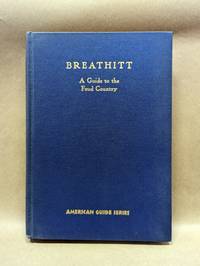
1941réf. 90215Northpoint NY: Bacon Percy & Daggett 1941. Presumed First Edition First printing. Hardcover. Good. xx 202 pages. Illustrations. Maps. Chronology. Bibliography. Index. No dust jacket present. Some cover wear noted. Writing inside both covers. Some page soiling noted. This is one of the American Guide series. The cover title is "Guide to Miami and Environs". Foreword by Marjory Stoneman Douglas. The books in the series were to contain accurate and thorough accounts of American history according to a letter to State directors on the project. Each book's primary purpose was to not only outline the history of the individual states but the following as well: Geography Agriculture Tourist attractions Ethnic groups ArchitectureArts and Industry. Three different types of guides were published: state regional and city guides. Each guide had its own distinct features but followed the same uniform structure. The city guides had the most narrow scope out of all three types as the focus was on a single location. Because of this their maps could be in the greatest detail not only giving an overview of a city's layout but individual neighborhoods as well. City Guides highlighted points of special interest in greater detail. In the Philadelphia guide sites such as Carpenters' Hall and Girard College an-all boys boarding school in the city's northern section each had several pages dedicated to them. The maps that were included in each book added value to them as material objects and not just literature. With the increasing mobility afforded by the number of Americans who owned automobiles the guides served as reliable and durable resources for travelers moving throughout the country. The American Guide Series includes books and pamphlets published from 1937 to 1941 under the auspices of the Federal Writers' Project FWP a Depression-era program that was part of the larger Works Progress Administration in the United States. The American Guide Series books were compiled by the FWP but printed by individual states and contained detailed histories of each of the then 48 states of the Union with descriptions of every major city and town. The series not only detailed the histories of the 48 states but provided insight to their cultures as well. In total the project employed over 6000 writers. The format was uniform comprising essays on the state's history and culture descriptions of its major cities automobile tours of important attractions and a portfolio of photographs. Many books in the project have been updated by private companies or republished without updating. Although not then a state a guide for Alaska was published and also for Puerto Rico but not for Hawaii. If there had been room in Rocinante I would have packed the W.P.A. Guides to the States all forty-eight volumes of them.The complete set comprises the most comprehensive account of the United States ever got together and nothing since has approached it." — John Steinbeck Travels with Charley 1962. As part of the Federal Writers' Project established under the Emergency Relief Appropriation Act of 1935 and the Works Progress Administration over 6500 men and women were employed around the country as writers collecting stories interviews and photographs on a variety of subjects. The project attracted many unemployed writers and artists offering a wage of twenty dollars a week. President Franklin D. Roosevelt enlisted Henry Alsberg a journalist and playwright to head the project. As part of this the FWP developed and published a series of books that served as guides to the 48 existing states. Each book's primary purpose was to not only outline the history of the individual state but its culture and geography as well. Their predecessor Baedeker's Handbook for Travelers: United States lacked much of what was needed to give a picture of America during the 1930s. Alsberg insisted that the new series of books paint a picture of American culture as a whole and celebrate the nation's diversity. From 1937 to 1941 thousands of writers set out around the country to capture America's culture conducting fieldwork interviewing citizens and observing and recording folk traditions and local customs. Writers from all over the country sought to capture American culture during the Great Depression a difficult task given the dire circumstances. Alsberg tasked Benjamin A. Botkin a folklorist and scholar with running the folklore division of the project. Botkin was responsible for coordinating and managing the writers a task that was too large for Alsberg to handle as the volume of work coming in was plentiful for the project. In this role Botkin not only influenced the writers' folklore division but also had a great influence on their coverage of culture. The project's beginnings did not come without challenges. During its infancy various writers' organizations pressured the project because of the parameters that were set by the FWP. With the project bringing many established writers back into the workforce the Authors' Guild of America became aggressive in the pursuit of relaxing guidelines for the writers and also developed a disdain for the project's employment of writers with a lack of experience. With the FWP's main focus on creating jobs for the unemployed the Author's Guild and organizations similar to it continued to criticize the amateurism of many writers on the project. The solution to this critique was a simple one: find enough work for all of the writers. The roles of the writers enlisted to work on the project not only included their initial role as writers but also as photographers geographers and cartographers allowing the creation of additional white collar jobs. Bacon, Percy & Daggett hardcover
1939réf. 08202502KKNew York: Hastings House 1st Edition 1939. Hardcover with textured linen boards 244 pages. Dust jacket is in poor condition partly due to the inexpensive coarse-grained paper used: backstrip darkened small chips open and closed tears repaired with document tape on reverse side. See our photos. End papers discolored with "59." in felt tip marker inside front cover. Pages lightly toned with minor foxing here and there. Original order form laid in. Fold-out map inside back cover is intact. Solidly bound with a straight spine. If not for the poor condition of the dust jacket this would be listed as "Very Good". ABOUT THE BOOK: THE OREGON TRAIL is third in the series of highway guidebooks prepared by the Federal Writers' Project. It is primarily a guidebook but it is also a history told after the first chapter in geographical rather than chronological sequence.--Jacket blurb. The Federal Writers' Project was one of five independent branches of the Works Progress Administration WPA established in the summer of 1935 by President Franklin Delano Roosevelt. Unlike the Civilian Conservation Corps 1932 where young men worked on roads bridges and dams the Works Progress Administration employed non-construction workers as well as laborers. In Oregon the Federal Writers' Project was the most visible white-collar agency of the WPA."--The Oregon Encyclopedia. Illustrated with 26 photographs and a colored map. The book was sponsored by the Oregon Trail Memorial Association. Hastings House hardcover
1941réf. 11586Northport NY: Bacon Percy & Daggett 1941 Book. Good. Hardcover. Good hardback in blue cloth w/gilt lettering. P.O. inscription to ffep minor wear to extremities foxing to epps mild toning to edges--otherwise clean and tight. Bacon, Percy & Daggett hardcover
1940réf. 031078Hillsboro Illinois: Printed By The Montgomery News 1940. Soft cover. Good. 8vo - over 7¾" - 9¾" tall. No Edition Or Printing Stated. Includes Bibliographical References. Stapled Binding With Wrap. The Book Has No Ownership Information Present And The Text Appears To Be Clean And Without Marks. The Cover Has Light Wear And Moderate Soiling. Post Card Depicting The Historic Montgomery County Courthouse Hillsboro Illinois Completed In 1872 Printed By The Montgomery News paperback
1945réf. 017862Washington D. C.: Superintendent Of Documents 1945. Hardcover. Good/No Jacket. 8vo - over 7¾" - 9¾" tall. No Edition Or Printing Stated. Moderate Wear With Bumping To The Spine Ends. Ownership Stamp On The Ffep And The Last Pastedown. Bound In Blue With Gilt Maritime Seal On The Front And Gilt Lettering On The Spine. Hinges Sound. Page Edges Brown Due To Age. Superintendent Of Documents hardcover
1943réf. 89874Washington DC: U.S. Government Printing Office 1943. Presumed First Edition First printing. Single sheet printed on both sides. Good. The format is approximately 8 inches by 10.5 inches. Folded in half and again in half. Illustrations. Page 1 is titled Why Canned Fruits Vegetables and Soups Are Rationed and Page 2 it title How to Use Your New Ration Book To Buy Canned or Bottled Fruits Vegetables Souls and Juices; Frozen Fruits and Vegetables; Dried Fruits. Use Your OLD Ration Book for Sugar and Coffee. This discusses how items are rationed. This is specific to War Ration Book Two. It discusses BLUE stamps POINT stamps. NUMBER on the POINT stamps. Letters show when to use the stamps. It was noted that citizens "may use ALL the books of the household to buy processed foods for the household. Anyone you wish can take the ration books to the store to do the buying for you or ours household. Rationing is the controlled distribution of scarce resources goods or services or an artificial restriction of demand. Rationing controls the size of the ration which is one person's allotted portion of the resources being distributed on a particular day or at a particular time. Rationing in the United States was introduced in stages during World War II with the last of the restrictions ending in June 1947. The Office of Price Administration OPA was established within the Office for Emergency Management of the United States government by Executive Order 8875 on August 28 1941. The OPA had the power to place ceilings on all prices except agricultural commodities and to ration supplies of other items including tires automobiles shoes nylon sugar gasoline fuel oil coffee meats and processed foods. In the summer of 1941 rationing in the United Kingdom increased because of military needs and German attacks on shipping in the Battle of the Atlantic. The British government appealed to Americans to conserve food to help the UK. The Office of Price Administration OPA warned Americans of potential gasoline steel aluminum and electricity shortages. It believed that with factories converting to military production and consuming many critical supplies rationing would become necessary if the country entered the war. The OPA established a rationing system after the attack on Pearl Harbor on 7 December. The work of issuing ration books and exchanging used stamps for certificates was handled by some 5500 local ration boards of mostly volunteer workers selected by local officials. Many levels of rationing went into effect. Some items such as sugar were distributed evenly based on the number of people in a household. Other items like gasoline or fuel oil were rationed only to those who could justify a need. Restaurant owners and other merchants were accorded more availability but had to collect ration stamps to restock their supplies. In exchange for used ration stamps ration boards delivered certificates to restaurants and merchants to authorize procurement of more products. The work of issuing ration books and exchanging used stamps for certificates was handled by some 5500 local ration boards of mostly volunteer workers selected by local officials. Many levels of rationing went into effect. Some items such as sugar were distributed evenly based on the number of people in a household. Other items like gasoline or fuel oil were rationed only to those who could justify a need. Restaurant owners and other merchants were accorded more availability but had to collect ration stamps to restock their supplies. In exchange for used ration stamps ration boards delivered certificates to restaurants and merchants to authorize procurement of more products. Each ration stamp had a generic drawing of an airplane gun tank aircraft carrier ear of wheat fruit etc. and a serial number. Some stamps also had alphabetic lettering. The kind and amount of rationed commodities were not specified on most of the stamps and were not defined until later when local newspapers published for example that beginning on a specified date one airplane stamp was required in addition to cash to buy one pair of shoes and one stamp number 30 from ration book four was required to buy five pounds of sugar. The commodity amounts changed from time to time depending on availability. Red stamps were used to ration meat and butter and blue stamps were used to ration processed foods. To enable making change for ration stamps the government issued "red point" tokens to be given in change for red stamps and "blue point" tokens in change for blue stamps. The red and blue tokens were about the size of dimes 0.63 inches and were made of thin compressed wood fiber material because metals were in short supply. There was a black market in stamps. To prevent this the OPA ordered vendors not to accept stamps that they themselves did not tear out of books. Buyers however circumvented this by saying sometimes accurately as the books were not well-made that the stamps had "fallen out". In actuality they may have acquired stamps from other family members or friends or the black market. U.S. Government Printing Office unknown
1943réf. 89881Washington DC: U.S. Government Printing Office 1943. Presumed First Edition Presumed original issuance to this recipient. Single sheet printed on both sides. Good. The format is approximately 5 inches by 4 inches. This application was sent to OPA Mailing Center in Chicago IL and has a cancelled 3 cent stamp and a cancelation date of in June 1943. This apparently was returned to the applicant who was Arthur S. Galvin of Assumption IL. We believe that this belonged to Arthur Steven Galvin who was born 8 June 1915 - Assumption Christian County Illinois USA and who died 30 August 1989 - Assumption Christian County Illinois USA This RARE surviving ephemera would be appropriate for a museum exhibit or as an important artifact in a prized collection. Rationing is the controlled distribution of scarce resources goods or services or an artificial restriction of demand. Rationing controls the size of the ration which is one person's allotted portion of the resources being distributed on a particular day or at a particular time. Rationing in the United States was introduced in stages during World War II with the last of the restrictions ending in June 1947. The Office of Price Administration OPA was established within the Office for Emergency Management of the United States government by Executive Order 8875 on August 28 1941. The OPA had the power to place ceilings on all prices except agricultural commodities and to ration supplies of other items including tires automobiles shoes nylon sugar gasoline fuel oil coffee meats and processed foods. In the summer of 1941 rationing in the United Kingdom increased because of military needs and German attacks on shipping in the Battle of the Atlantic. The British government appealed to Americans to conserve food to help the UK. The Office of Price Administration OPA warned Americans of potential gasoline steel aluminum and electricity shortages. It believed that with factories converting to military production and consuming many critical supplies rationing would become necessary if the country entered the war. The OPA established a rationing system after the attack on Pearl Harbor on 7 December. The work of issuing ration books and exchanging used stamps for certificates was handled by some 5500 local ration boards of mostly volunteer workers selected by local officials. Many levels of rationing went into effect. Some items such as sugar were distributed evenly based on the number of people in a household. Other items like gasoline or fuel oil were rationed only to those who could justify a need. Restaurant owners and other merchants were accorded more availability but had to collect ration stamps to restock their supplies. In exchange for used ration stamps ration boards delivered certificates to restaurants and merchants to authorize procurement of more products. The work of issuing ration books and exchanging used stamps for certificates was handled by some 5500 local ration boards of mostly volunteer workers selected by local officials. Many levels of rationing went into effect. Some items such as sugar were distributed evenly based on the number of people in a household. Other items like gasoline or fuel oil were rationed only to those who could justify a need. Restaurant owners and other merchants were accorded more availability but had to collect ration stamps to restock their supplies. In exchange for used ration stamps ration boards delivered certificates to restaurants and merchants to authorize procurement of more products. Each ration stamp had a generic drawing of an airplane gun tank aircraft carrier ear of wheat fruit etc. and a serial number. Some stamps also had alphabetic lettering. The kind and amount of rationed commodities were not specified on most of the stamps and were not defined until later when local newspapers published for example that beginning on a specified date one airplane stamp was required in addition to cash to buy one pair of shoes and one stamp number 30 from ration book four was required to buy five pounds of sugar. The commodity amounts changed from time to time depending on availability. Red stamps were used to ration meat and butter and blue stamps were used to ration processed foods. To enable making change for ration stamps the government issued "red point" tokens to be given in change for red stamps and "blue point" tokens in change for blue stamps. The red and blue tokens were about the size of dimes 0.63 inches and were made of thin compressed wood fiber material because metals were in short supply. There was a black market in stamps. To prevent this the OPA ordered vendors not to accept stamps that they themselves did not tear out of books. Buyers however circumvented this by saying sometimes accurately as the books were not well-made that the stamps had "fallen out". In actuality they may have acquired stamps from other family members or friends or the black market. U.S. Government Printing Office unknown
1942réf. 89878Washington DC: U.S. Government Printing Office 1942. Presumed First Edition Presumed original issuance to this recipient. Single sheet printed on one side. Good. The format is approximately 7 inches by 3.75 inches. Folded in half and folded again. This RARE surviving ephemera would be appropriate for a museum exhibit or as an important artifact in a prized collection. This appears to have been issued to Cathryn Graham Assumption City in Christian County in the State of Illinois. This Sugar Purchase Certificate was for 52 pounds of sugar pursuant to Rationing Order No. R. It was issued by Local Rationing Board No. 11-1. It is dated May 27 - 42 and was signed by Harold R. Horton Registrar. This copy of a triplicate document was to be retained by the original holder. Rationing is the controlled distribution of scarce resources goods or services or an artificial restriction of demand. Rationing controls the size of the ration which is one person's allotted portion of the resources being distributed on a particular day or at a particular time. Rationing in the United States was introduced in stages during World War II with the last of the restrictions ending in June 1947. The Office of Price Administration OPA was established within the Office for Emergency Management of the United States government by Executive Order 8875 on August 28 1941. The OPA had the power to place ceilings on all prices except agricultural commodities and to ration supplies of other items including tires automobiles shoes nylon sugar gasoline fuel oil coffee meats and processed foods. In the summer of 1941 rationing in the United Kingdom increased because of military needs and German attacks on shipping in the Battle of the Atlantic. The British government appealed to Americans to conserve food to help the UK. The Office of Price Administration OPA warned Americans of potential gasoline steel aluminum and electricity shortages. It believed that with factories converting to military production and consuming many critical supplies rationing would become necessary if the country entered the war. The OPA established a rationing system after the attack on Pearl Harbor on 7 December. The work of issuing ration books and exchanging used stamps for certificates was handled by some 5500 local ration boards of mostly volunteer workers selected by local officials. Many levels of rationing went into effect. Some items such as sugar were distributed evenly based on the number of people in a household. Other items like gasoline or fuel oil were rationed only to those who could justify a need. Restaurant owners and other merchants were accorded more availability but had to collect ration stamps to restock their supplies. In exchange for used ration stamps ration boards delivered certificates to restaurants and merchants to authorize procurement of more products. The work of issuing ration books and exchanging used stamps for certificates was handled by some 5500 local ration boards of mostly volunteer workers selected by local officials. Many levels of rationing went into effect. Some items such as sugar were distributed evenly based on the number of people in a household. Other items like gasoline or fuel oil were rationed only to those who could justify a need. Restaurant owners and other merchants were accorded more availability but had to collect ration stamps to restock their supplies. In exchange for used ration stamps ration boards delivered certificates to restaurants and merchants to authorize procurement of more products. Each ration stamp had a generic drawing of an airplane gun tank aircraft carrier ear of wheat fruit etc. and a serial number. Some stamps also had alphabetic lettering. The kind and amount of rationed commodities were not specified on most of the stamps and were not defined until later when local newspapers published for example that beginning on a specified date one airplane stamp was required in addition to cash to buy one pair of shoes and one stamp number 30 from ration book four was required to buy five pounds of sugar. The commodity amounts changed from time to time depending on availability. Red stamps were used to ration meat and butter and blue stamps were used to ration processed foods. To enable making change for ration stamps the government issued "red point" tokens to be given in change for red stamps and "blue point" tokens in change for blue stamps. The red and blue tokens were about the size of dimes 0.63 inches and were made of thin compressed wood fiber material because metals were in short supply. There was a black market in stamps. To prevent this the OPA ordered vendors not to accept stamps that they themselves did not tear out of books. Buyers however circumvented this by saying sometimes accurately as the books were not well-made that the stamps had "fallen out". In actuality they may have acquired stamps from other family members or friends or the black market. U.S. Government Printing Office unknown
1942réf. 89908Washington DC: Office of Price Administration U.S. Government Printing Office 1942. Presumed First Edition First issuance to this individual. Front and back covers printed on one side staple bound. Fair. The format is approximately 5.75 inches by 4.25 inches Front and back stapled with sheets of removable stamps originally within. MANY War Ration stamps remain Red E F R S T Blue N P Q R S T E F M L K J H G Z Y X W V U Numbers include 1 2 5 and 8. One Blue 5 is detached by present! Office of Price Administration stamp present on front. . Issued by Local Board 6286-1 of Shelby Illinois. This was issued by F. E. Galbreath. This was issued undated. Signed by the issuing official and William A. Ditzler. War ration books varied in design and content throughout the war years. Some were simple booklets with basic information while others included more elaborate instructions and patriotic messages. The stamps inside were often brightly colored and featured images of everyday items like shoes and cooking oil serving as a constant reminder of the sacrifices being made for the war effort. War Ration Book Two - January 1943 was the property of the United States Government. It is unlawful to sell or give it to any other person or to use it or permit anyone else to use it except to obtain rationed goods for the person to whom it was issued. Persons who violate Rationing Regulations are subject to $10000 fine or imprisonment or both. By 1944 whisky had disappeared from liquor store shelves as distilleries converted to the production of industrial alcohol. New car production was banned beginning January 1 1942 as former auto plants switched to the production of military vehicles. The 1943 war ration book is a unique and valuable collectible item that offers a glimpse into the United States’ war effort during World War II. The 1943 war ration book was issued to the American public in 1943 as part of the United States’ war effort. It was used to allocate food fuel and other essential resources to ensure fair distribution and minimize waste. The book contained a series of coupons which could be redeemed for specific goods and services such as gasoline tires sugar and coffee. Civilians first received ration books—War Ration Book Number One or the "Sugar Book"—on 4 May 1942 through more than 100000 schoolteachers PTA groups and other volunteers. Sugar was the first consumer commodity rationed with all sales ended on 27 April 1942 and resumed on 5 May with a ration of 1 2 pound 8 oz per person per week half of normal consumption. Bakeries ice cream makers and other commercial users received rations of about 70% of normal usage. Coffee was rationed nationally on 29 November 1942 to 1 pound every five weeks about half of normal consumption in part because of German attacks on shipping from Brazil. As of 1 March 1942 dog food could no longer be sold in tin cans and manufacturers switched to dehydrated versions. As of 1 April 1942 anyone wishing to purchase a new toothpaste tube then made from metal had to turn in an empty one. By June 1942 companies also stopped manufacturing metal office furniture radios television sets phonographs refrigerators vacuum cleaners washing machines and sewing machines for civilians. By the end of 1942 ration coupons were used for nine other items: typewriters gasoline bicycles shoes rubber footwear silk nylon fuel oil and stoves. Meat lard shortening and food oils cheese butter margarine processed foods canned bottled and frozen dried fruits canned milk firewood and coal jams jellies and fruit butter were rationed by November 1943. Many retailers welcomed rationing because they were already experiencing shortages of many items due to rumors and panics such as flashlights and batteries after Pearl Harbor. Ration Book Number Five is a very rare ration book only issued to very few people. By the end of 1942 ration coupons were used for nine other items: typewriters gasoline bicycles shoes rubber footwear silk nylon fuel oil and stoves. Meat lard shortening and food oils cheese butter margarine processed foods canned bottled and frozen dried fruits canned milk firewood and coal jams jellies and fruit butter were rationed by November 1943. Many retailers welcomed rationing because they were already experiencing shortages of many items due to rumors and panics such as flashlights and batteries after Pearl Harbor. Ration Book Number Five is a very rare ration book only issued to very few people. Office of Price Administration, U.S. Government Printing Office unknown
1942réf. 89889Washington DC: Office of Price Administration U.S. Government Printing Office 1942. Presumed First Edition First issuance to this individual. Single sheet printed on one side. Fair. The format is approximately 5.25 inches by 6.5 inches folded--with War Ration stamps 19 20 and 22 still attached. Issued by Local Board 82-82 of Wayne County Michigan. This includes the Certificate of Registrar made out to Alena Alta Smith of the city of Detroit. She is reported to be 5 foot 6 inches 190 pounds with black eyes brown hair and 36 years old. She has signed the Certificate of Book Holder that is part of this sheet. This was issued on May 4 1942 by Oscar G. Christensen of Local Board No. 82-82 This was issued on the FIRST day of distribution! Detroit and the industrial region surrounding it was plunged into semi-darkness as all except street lights and in war factories went out for fifteen minutes during a blackout drill on May 4 1942. Civilians first received ration books—War Ration Book Number One or the "Sugar Book"—on 4 May 1942 through more than 100000 schoolteachers PTA groups and other volunteers. Sugar was the first consumer commodity rationed with all sales ended on 27 April 1942 and resumed on 5 May with a ration of 1 2 pound 8 oz per person per week half of normal consumption. Bakeries ice cream makers and other commercial users received rations of about 70% of normal usage. Coffee was rationed nationally on 29 November 1942 to 1 pound every five weeks about half of normal consumption in part because of German attacks on shipping from Brazil. As of 1 March 1942 dog food could no longer be sold in tin cans and manufacturers switched to dehydrated versions. As of 1 April 1942 anyone wishing to purchase a new toothpaste tube then made from metal had to turn in an empty one. By June 1942 companies also stopped manufacturing metal office furniture radios television sets phonographs refrigerators vacuum cleaners washing machines and sewing machines for civilians. By the end of 1942 ration coupons were used for nine other items: typewriters gasoline bicycles shoes rubber footwear silk nylon fuel oil and stoves. Meat lard shortening and food oils cheese butter margarine processed foods canned bottled and frozen dried fruits canned milk firewood and coal jams jellies and fruit butter were rationed by November 1943. Many retailers welcomed rationing because they were already experiencing shortages of many items due to rumors and panics such as flashlights and batteries after Pearl Harbor. Ration Book Number Five is a very rare ration book only issued to very few people. By the end of 1942 ration coupons were used for nine other items: typewriters gasoline bicycles shoes rubber footwear silk nylon fuel oil and stoves. Meat lard shortening and food oils cheese butter margarine processed foods canned bottled and frozen dried fruits canned milk firewood and coal jams jellies and fruit butter were rationed by November 1943. Many retailers welcomed rationing because they were already experiencing shortages of many items due to rumors and panics such as flashlights and batteries after Pearl Harbor. Ration Book Number Five is a very rare ration book only issued to very few people. Office of Price Administration, U.S. Government Printing Office unknown
1942réf. 89902Washington DC: Office of Price Administation 1942. Presumed First Edition First printing thus. Single sheet printed on both sides. Good. The format is approximately 5 inches by 1.375 inches. Rare surviving item of War Rationing ephemera. This was originally attached to an application to obtain War Ration Book No. 3. The Office of Price Administration OPA was established within the Office for Emergency Management of the United States government by Executive Order 8875 on August 28 1941. The functions of the OPA were originally to control money price controls and rents after the outbreak of World War II. President Franklin D. Roosevelt inaugurated the Council of National Defense Advisory Commission on May 29 19404 to include Price Stabilization and Consumer Protection Divisions. Both divisions merged to become the Office of Price Administration and Civilian Supply OPACS within the Office for Emergency Management by Executive Order 8734 on April 11 1941. Civil supply functions were transferred to the Office of Production Management. It became an independent agency under the Emergency Price Control Act January 30 1942. The OPA had the power to place ceilings on all prices except agricultural commodities and to ration scarce supplies of other items including tires automobiles shoes nylon sugar gasoline fuel oil coffee meats and processed foods. At the peak almost 90% of retail food prices were frozen. It could also authorize subsidies for production of some of those commodities. Rationing is the controlled distribution of scarce resources goods or services or an artificial restriction of demand. Rationing controls the size of the ration which is one person's allotted portion of the resources being distributed on a particular day or at a particular time. Rationing in the United States was introduced in stages during World War II with the last of the restrictions ending in June 1947. In the summer of 1941 rationing in the United Kingdom increased because of military needs and German attacks on shipping in the Battle of the Atlantic. The British government appealed to Americans to conserve food to help the UK. The Office of Price Administration OPA warned Americans of potential gasoline steel aluminum and electricity shortages. It believed that with factories converting to military production and consuming many critical supplies rationing would become necessary if the country entered the war. The OPA established a rationing system after the attack on Pearl Harbor on 7 December. The work of issuing ration books and exchanging used stamps for certificates was handled by some 5500 local ration boards of mostly volunteer workers selected by local officials. Many levels of rationing went into effect. Some items such as sugar were distributed evenly based on the number of people in a household. Other items like gasoline or fuel oil were rationed only to those who could justify a need. Restaurant owners and other merchants were accorded more availability but had to collect ration stamps to restock their supplies. In exchange for used ration stamps ration boards delivered certificates to restaurants and merchants to authorize procurement of more products. Each ration stamp had a generic drawing of an airplane gun tank aircraft carrier ear of wheat fruit etc. and a serial number. Some stamps also had alphabetic lettering. The kind and amount of rationed commodities were not specified on most of the stamps and were not defined until later when local newspapers published for example that beginning on a specified date one airplane stamp was required in addition to cash to buy one pair of shoes and one stamp number 30 from ration book four was required to buy five pounds of sugar. The commodity amounts changed from time to time depending on availability. Red stamps were used to ration meat and butter and blue stamps were used to ration processed foods. To enable making change for ration stamps the government issued "red point" tokens to be given in change for red stamps and "blue point" tokens in change for blue stamps. The red and blue tokens were about the size of dimes 0.63 in and were made of thin compressed wood fiber material because metals were in short supply. There was a black market in stamps. To prevent this the OPA ordered vendors not to accept stamps that they themselves did not tear out of books. Buyers however circumvented this by saying sometimes accurately as the books were not well-made that the stamps had "fallen out". In actuality they may have acquired stamps from other family members or friends or the black market. Most rationing restrictions ended in August 1945 except for sugar rationing which lasted until 1947 in some parts of the country. Office of Price Administation unknown
1943réf. 89911Washington DC: Office of Price Administration U.S. Government Printing Office 1943. Presumed First Edition First issuance to this individual. Front and back covers printed on one side with stamp sheets inside. Fair. The format is approximately 11.5 inches by 4.25 inches This has sheets of removable stamps originally within. MANY War Ration stamps remain some with numbers and letter some with numbers and illustrations. Office of Price Administration stamp present on front with number 144930EL different from number on the booklet! This was issued undated. Signed by Arcelia C. Ditzler. War ration books varied in design and content throughout the war years. Some were simple booklets with basic information while others included more elaborate instructions and patriotic messages. The stamps inside were often brightly colored and featured images of everyday items like shoes and cooking oil serving as a constant reminder of the sacrifices being made for the war effort. War Ration Book Two - January 1943 was the property of the United States Government. It is unlawful to sell or give it to any other person or to use it or permit anyone else to use it except to obtain rationed goods for the person to whom it was issued. Persons who violate Rationing Regulations are subject to $10000 fine or imprisonment or both. By 1944 whisky had disappeared from liquor store shelves as distilleries converted to the production of industrial alcohol. New car production was banned beginning January 1 1942 as former auto plants switched to the production of military vehicles. This is believed to belong to Arcelia Ceora “Celia” Chapman Ditzler Born 8 Sep 1854 in Ohio who died Aug 1952 Shelby County Illinois. This War Ration Books listed Shelbyville Illinois as Mrs. Ditzler's city and state. The 1943 war ration book is a unique and valuable collectible item that offers a glimpse into the United States’ war effort during World War II. The 1943 war ration book was issued to the American public in 1943 as part of the United States’ war effort. It was used to allocate food fuel and other essential resources to ensure fair distribution and minimize waste. The book contained a series of coupons which could be redeemed for specific goods and services such as gasoline tires sugar and coffee. Civilians first received ration books—War Ration Book Number One or the "Sugar Book"—on 4 May 1942 through more than 100000 schoolteachers PTA groups and other volunteers. Sugar was the first consumer commodity rationed with all sales ended on 27 April 1942 and resumed on 5 May with a ration of 1 2 pound 8 oz per person per week half of normal consumption. Bakeries ice cream makers and other commercial users received rations of about 70% of normal usage. Coffee was rationed nationally on 29 November 1942 to 1 pound every five weeks about half of normal consumption in part because of German attacks on shipping from Brazil. As of 1 March 1942 dog food could no longer be sold in tin cans and manufacturers switched to dehydrated versions. As of 1 April 1942 anyone wishing to purchase a new toothpaste tube then made from metal had to turn in an empty one. By June 1942 companies also stopped manufacturing metal office furniture radios television sets phonographs refrigerators vacuum cleaners washing machines and sewing machines for civilians. By the end of 1942 ration coupons were used for nine other items: typewriters gasoline bicycles shoes rubber footwear silk nylon fuel oil and stoves. Meat lard shortening and food oils cheese butter margarine processed foods canned bottled and frozen dried fruits canned milk firewood and coal jams jellies and fruit butter were rationed by November 1943. Many retailers welcomed rationing because they were already experiencing shortages of many items due to rumors and panics such as flashlights and batteries after Pearl Harbor. Ration Book Number Five is a very rare ration book only issued to very few people. By the end of 1942 ration coupons were used for nine other items: typewriters gasoline bicycles shoes rubber footwear silk nylon fuel oil and stoves. Meat lard shortening and food oils cheese butter margarine processed foods canned bottled and frozen dried fruits canned milk firewood and coal jams jellies and fruit butter were rationed by November 1943. Many retailers welcomed rationing because they were already experiencing shortages of many items due to rumors and panics such as flashlights and batteries after Pearl Harbor. Ration Book Number Five is a very rare ration book only issued to very few people. Office of Price Administration, U.S. Government Printing Office unknown