ZABARELLA FRANCESCO.Livre Rare Book

5 226 résultats
1674réf. P1-06-0Dom, Petri Frambotti, 1674. In-4 (200x145 mm), relié plein vélin époque, charnière faible, (16), 391 pp, (29). Deuxième édition parue la même année que la première. Avec 59 figures de Médailles dont 48 recto verso, 4 figures de Blason dont l’une répétée une fois, 6 Initiales gravées et 2 Culs-de-Lampe dont l’un répété 3 fois et une belle Marque de l’Imprimeur à la fin : « À l’image de Minerve appuyée sur un olivier, avec une devise : Pacis opus ». L’ouvrage est divisé en 4 parties dont les 3 dernières consacrées en partie à Byzance et à l’empire Ottoman. Ouvrage peu commun.
réf. 117477Paris, Chez Sebastien Mabre-Cramoisy 1669, 380x260mm, VI - 714 + 722pages, reliure veau marbré de l’époque avec titre, et ornementations dorés au dos à six nerfs. Toutes tranches rouge. Bordure fleurie. Manque un bout du cuir au dos, coiffe inférieure manquante, coins émoussés et charnières craquelées, néanmoins reliure solide. Cachet de bibliothèque et mouillures sur le haut des coins des pages 537 à 540, autrement bel exemplaire, intérieur propre.
1856réf. AQ242771856. Manuscript on paper. Single bifolium. With original stamped envelope. Old horizontal and vertical folds. Short tears at folds cross-written on terminal page. Envelope worn and soiled. An autograph letter in the hand of private Thomas Arms of the 12th Royal Lancers addressed to his sister written at Scutari Istanbul 17th January 1856 two months prior to the cessation of hostilities during the Crimean War. Arms references his participation in the Battle of Tchernaïa the fall of Sebastopol and the conditions he and his fellow soldiers had to endure: 'You wished for some small token from Sebastopol but I had nothing but a Russian musket and bayonet and those I sold to one of our officers as I have no means of sending it to England.things are very dear 1lb of bread here is 1/6 meat we cannot buy for any price we give 2 shillings for a bottle of porter or ale and we are only getting half allowance of rum to what we used to get and there it is a great deal of gambling amongst the troops'. The cross-written portion of the letter is of particular note for a passing mention of reformer of army medical services and of nursing organisation Florence Nightingale 1820-1910: 'Dear sister their sic are some kind ladies in these hospitals and kind nurses here to attend upon you. Miss Nightingale is here and Miss Roberts and some more very amicable from England'. . unknown
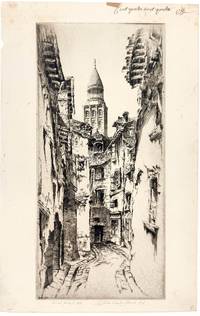
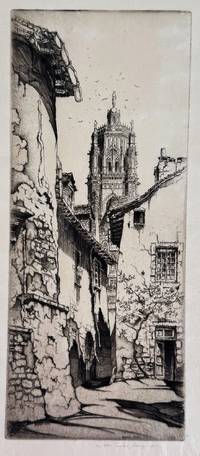
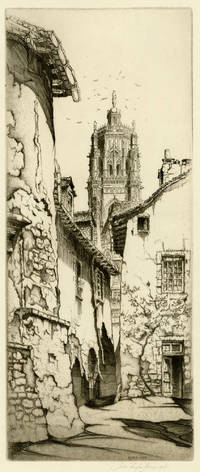
1928réf. 23171928. Very good. Etching with drypoint on antique cream laid paper 12 x 5 9/16 305 x 142 mm; sheet 13 1/4 x 8 1/2 inches 337 x 216 mm. Signed dated and inscribed in the lower margin in pencil. Although Fletcher specifies only 2 trial proofs Arms himself has inscribed "Trial Proof VII" in pencil in the lower margin. An impression aside from the regular edition of 100 printed on 18th century paper with a contemporary inscription in ink in the upper right corner which reads "Cent quatre vingt quatre" one hundred twenty four. There are some areas of light discoloration in the margins that date to the origin of the paper. Printed by Frederick Reynolds assisted by Henry Carling. A magnificently detailed impression in excellent condition. Fletcher 212. Périgueux has one of the most extensive old towns in the Dordogne department in France. The Périgueux Cathedral was originally built in the 12th century but it was rebuilt by the architect Paul Abadie between 1852 and 1895. The base of the bell tower was part of the original church. Today the square bell tower has three tiers pierced with arches that support a tall dome. In Arms' etching the bell tower looms above a narrow cobblestone alley lined with ancient stone buildings. In perhaps a tribute to Whistler Arms left building surfaces unmarked by his etching needle. Light vertical passages draw the viewer's eye toward the darker more detailed center of the image. One's eyes move upward with the play of shadow texture and light toward the imposing domed bell tower. Born in 1887 in Washington DC John Taylor Arms studied at Princeton University and ultimately earned a degree in architecture at the Massachusetts Institute of Technology in 1912. With the outbreak of W.W.I Arms served as an officer in the United States Navy and it was during this time that he turned his focus to printmaking having published his first etching in 1919. His first subjects were the Brooklyn Bridge near the Navy Yard and it was during his wartime travel that Arms created a series of extraordinarily detailed etchings based on gothic cathedrals and churches he visited in France and Italy the plate for Guardians of the Spire was created in 1921. He used what was available to him namely sewing needles and a magnifying glass to create the incredibly rich and fine detail that his etchings are known for. Upon his return to New York after the war Arms enjoyed a successful career as a graphic artist created a series of etchings of American cities and published Handbook of Print Making and Print Makers Macmillan 1934. He served as President of the Society of American Graphic Artists and in 1933 was made a full member of the National Academy of Design. Arms died in Fairfield Connecticut in 1953. unknown
1937réf. 10391937. Superb. Etching on antique cream laid paper with an "England" watermark; 13 7/8 x 8 5/8 inches 353 x 221 mm full margins. Signed dated titled numbered "III" and inscribed in pencil. One of approximately 175 third state of 4 impressions before the inscription was removed. In superb condition. French Church Series No. 39. Paper: Arms was typical of the artists of this period - he was obsessed with paper a mania for collecting paper that could/would improve an edition. The quantity he left after his death distributed by his wife to fellow artists witnesses his love for finely made paper -paper interesting because of texture color distinctive weave. The earliest paper known to have been used by Arms came from a Baptismal Register Kirchen Ordnung The Reformed Church Middletown Dauphin County Pennsylvania 1708 bought in a bookshop in Philadelphia. His early prints 1915-1919 evidence paper taken from old books with gilded edges. Some prints appear on stationary from the Cisalpine Napoleonic Italy still bearing the estampe of the office or department; others carry penned ink page numbers taken from old ledgers of the Eighteenth Century-all beautiful shades of grey blue and green handmade ribbed and otherwise. Some of his color aquatints were printed on full sheets of heavy chine or Japanese vellum giving a sense of luxury in the richness of the stock and the width of the margins. There was a myriad of modern papers gleaned in England France Italy and the United States. -William Dolan Fletcher A Man For All Times p. 15. unknown
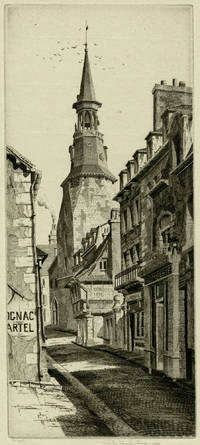
1932réf. 10431932. Superb. Etching on green-hued antique laid Japon paper 9 7/16 x 4 1/16 240 x 104 mm full margins. Signed dated and inscribed "Ed. 100 II." One of a total edition on 124 impressions printed by David Strang. French Series No. 33. In superb condition with one spot of light brown discoloration in the lower right margin well outside of image area. Fletcher 246. This etching was awarded the Bronze Medal of Honor in Graphics Annual Exhibition Painters and Sculptors Society of New Jersey Jersey City NJ 1951. Paper: Arms was typical of the artists of this period - he was obsessed with paper a mania for collecting paper that could/would improve an edition. The quantity he left after his death distributed by his wife to fellow artists witnesses his love for finely made paper -paper interesting because of texture color distinctive weave. The earliest paper known to have been used by Arms came from a Baptismal Register Kirchen Ordnung The Reformed Church Middletown Dauphin County Pennsylvania 1708 bought in a bookshop in Philadelphia. His early prints 1915-1919 evidence paper taken from old books with gilded edges. Some prints appear on stationary from the Cisalpine Napoleonic Italy still bearing the estampe of the office or department; others carry penned ink page numbers taken from old ledgers of the Eighteenth Century-all beautiful shades of grey blue and green handmade ribbed and otherwise. Some of his color aquatints were printed on full sheets of heavy chine or Japanese vellum giving a sense of luxury in the richness of the stock and the width of the margins. There was a myriad of modern papers gleaned in England France Italy and the United States. -William Dolan Fletcher A Man For All Times p. 15. unknown
1925réf. 8291925. Very good. Etching on cream wove paper 6 x 4 inches 153 x 102 mm full margins. Signed in pencil lower margin. From the edition of 150 printed by Frederick Reynolds. Fletcher 163. This work was commissioned by The Print Connoissuer and served as the frontispiece for the October 1925 issue. Illustrated on p. 52 Dorothy Noyes Arms Churches of France Note: according to Fletcher Arms was assisted in work on this plate by Kerr Eby both concluding "neither very successful. unknown
1926réf. 20491926. Very good. Etching on extremely delicate antique Japon laid paper 12 x 5 305 x 127 mm; sheet 15 3/4 x 7 1/8 inches 400 x 178 mm full margins. In very good condition. A magnificently detailed and rich impression with rich burr and good inking on rare paper. Fletcher states that even though the plate was completed in 1926 it was not published until 1927. Fletcher 189. Born in 1887 in Washington DC John Taylor Arms studied at Princeton University and ultimately earned a degree in architecture at the Massachusetts Institute of Technology in 1912. With the outbreak of W.W.I Arms served as an officer in the United States Navy and it was during this time that he turned his focus to printmaking having published his first etching in 1919. His first subjects were the Brooklyn Bridge near the Navy Yard and it was during his wartime travel that Arms created a series of extraordinarily detailed etchings based on gothic cathedrals and churches he visited in France and Italy the plate for Guardians of the Spire was created in 1921. He used what was available to him namely sewing needles and a magnifying glass to create the incredibly rich and fine detail that his etchings are known for. Upon his return to New York after the war Arms enjoyed a successful career as a graphic artist created a series of etchings of American cities and published Handbook of Print Making and Print Makers Macmillan 1934. He served as President of the Society of American Graphic Artists and in 1933 was made a full member of the National Academy of Design. Arms died in Fairfield Connecticut in 1953. unknown
1927réf. 10441927. Excellent. Etching on antique wove Catalunya-Spain watermarked paper 12 x 5 inches 305 x 127 mm full margins. Signed and dated in pencil lower margin. In excellent condition with light toning along the left margin outside of the image area. An impression from the regular edition of 120 printed by Frederick Reynolds. Fletcher 189. Paper: Arms was typical of the artists of this period - he was obsessed with paper a mania for collecting paper that could/would improve an edition. The quantity he left after his death distributed by his wife to fellow artists witnesses his love for finely made paper -paper interesting because of texture color distinctive weave. The earliest paper known to have been used by Arms came from a Baptismal Register Kirchen Ordnung The Reformed Church Middletown Dauphin County Pennsylvania 1708 bought in a bookshop in Philadelphia. His early prints 1915-1919 evidence paper taken from old books with gilded edges. Some prints appear on stationary from the Cisalpine Napoleonic Italy still bearing the estampe of the office or department; others carry penned ink page numbers taken from old ledgers of the Eighteenth Century-all beautiful shades of grey blue and green handmade ribbed and otherwise. Some of his color aquatints were printed on full sheets of heavy chine or Japanese vellum giving a sense of luxury in the richness of the stock and the width of the margins. There was a myriad of modern papers gleaned in England France Italy and the United States. -William Dolan Fletcher A Man For All Times p. 15. unknown
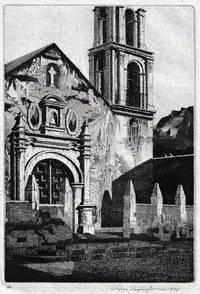
1944réf. 10151944. Very good. Etching on bluish-grey antique laid paper 5 x 3 5/8 inches 127 x 93 mm signed dated and inscribed "III" in pencil lower margin. A proof impression from the third state of 3 after the reduction of the plate and before the regular edition of 72. Printed by David Strang. In very good condition with some minor reddish toning around the extreme sheet edges and in a stripe occurring diagonally across the top sheet area all well outside of image area. Fletcher 340B. Demonstration Series No. 93 Mexican Series No. 1 3rd state Note: Fletcher states that there is confusion regarding the third state in its edition. On prints in the Arms family collection the size is 3 proofs plus an edition of 36 however Fletcher reports that in 1949 Arms told him there were only two proofs and an edition of 72. Fletcher states to own an impression of this work which is annotated "III Ed. 72." Paper: Arms was typical of the artists of this period - he was obsessed with paper a mania for collecting paper that could/would improve an edition. The quantity he left after his death distributed by his wife to fellow artists witnesses his love for finely made paper -paper interesting because of texture color distinctive weave. The earliest paper known to have been used by Arms came from a Baptismal Register Kirchen Ordnung The Reformed Church Middletown Dauphin County Pennsylvania 1708 bought in a bookshop in Philadelphia. His early prints 1915-1919 evidence paper taken from old books with gilded edges. Some prints appear on stationary from the Cisalpine Napoleonic Italy still bearing the estampe of the office or department; others carry penned ink page numbers taken from old ledgers of the Eighteenth Century-all beautiful shades of grey blue and green handmade ribbed and otherwise. Some of his color aquatints were printed on full sheets of heavy chine or Japanese vellum giving a sense of luxury in the richness of the stock and the width of the margins. There was a myriad of modern papers gleaned in England France Italy and the United States. -William Dolan Fletcher A Man For All Times p. 15. unknown
2010réf. 657870Knopf 2010. First Edition. Unknown. Fair/Fair. THE AUTHOR'S PERSONAL COPY - David Shields' own personal working copy of his most influential and controversial book REALITY HUNGER with his extensive notes and markings for appearances and teaching. Heavily annotated and marked up. A fair copy at best shows heavy wear and signs of use. If you want one copy of a book intimately connected with the author from his heavy post-publication use - this would be it. First edition stated hardcover in jacket. Knopf unknown
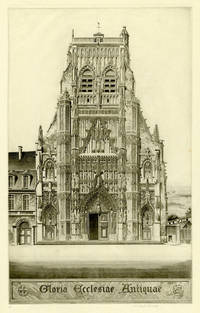
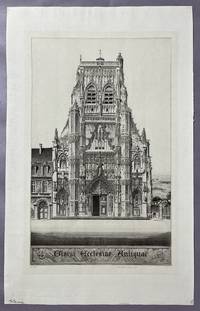
1937réf. 0059521937. No Binding. Fine. Etching. John Taylor Arms. American Artist 1887-1953. Fletcher 307 iii/IV edition 75. Image size: 13 7/8 x 8 5/8 inches; paper size: 18 1/4 x 11 1/2 inches. SIGNED and dated 1937 in pencil. Inscribed "Ed.75 III." A fine impression with full margins printed on J. WHATMAN watermarked paper. The raisonne lists an edition of 175 for this state. Depicting the western façade of the abbey church of Saint-Riquier which is considered one of the most beautiful examples of Flamboyant Gothic architecture in the Hauts-de-France region in northern France. John Taylor Arms is considered one of the most famous printmakers of the first half of the century. He is mostly noted for his etchings of medieval architecture as this etching attests. His work can be found in most major collections of American prints. unknown
réf. 13104Arms John Taylor. BEAVER HOUSE AU NORD. Fletcher 88. Etching 1920. An Artist's Proof printed by Fredrick Reynolds. Signed and dated in pencil by Arms lower right and incscribed "Artist's Proof" lower left. The edition was 75 of which 10 impressions were titled "Au Nord."5 7/8 x 7 7/8 inches 150 x 201 mm. framed to 17 x 18 inches. In excellent condition. This print is scarce. unknown
réf. 13103Arms John Taylor American 1887-1953. LA COLEGAITA TORO. Fletcher 284. Etching 1935. Edition of 153. Signed by Arms in ink lower right and inscribed by him in ink lower left "Private Collection b ii." In excellent condition. 9 3/4 x 12 3/4 inches 248 x 324 mm. plate framed to 18 3/4 x 21 1/2 inches. Spanish Church series #12. Fletcher lists this as one of Arms' "Preferred Plates" and which he apparently kept in his own collection. unknown
réf. 13105Arms John Taylor. PUERTA DEL OBISPO ZAMORA THE BISHOP'S DOOR ZAMORA. Fletcher 266. Etching 1933. Edition 160 of which this is likely one of the 25 printed by Rigal in 1933 135 were printed in 1937-38 by Strang. Listed by Flether as one of Arms' "Preferred Plates." Spanish Church Series #9. 12 1/2 x 7 1/8 inches 318 x 183 mm. plate framed to 23 x 17 1/4 inches. In excellent condition. unknown
1835réf. 16427Paris, Crapelet, 1835 ; grand in-8 ; demi-chagrin à coins bleu-roi, dos à nerfs, titre doré, tête dorée (reliure ancienne) ; (4), VIII, 110, (2) pp., frontispice lithographié par Thierry Frères, d'après V. Adam, représentant le Monument de la Bataille des Trente élevé dans la Lande de Mi-voie, 6 planches de blasons reproduisant les blasons des 30 chevaliers bretons qui combattaient. Ce volume contient aussi le fac-similé de 2 pages du manuscrit original.
2018réf. 26459Editions Delirium 2018.In-4 broché de 305 pages au format 16,5 x 26 cm sous coffret rigide illustrée au format 17,5 x 4 x 27,5 cm. Couverture alternative et illustrations de Richard Corben sur scénarios de Richard Corben, Jan Strnad, Beth Corben Reed et Mike Shields. Magnifique hommage aux recueils de magazines d’horreur et de fantastique d’antan, et aux grands classiques du genre comme " Les Contes de la Crypte, Creepy ou Eerie ". Tirage de luxe limité à 100 exemplaires, avec édition enrichie de suppléments exceptionnels inédits : Goodies ( 10 cartes postales au format 11 x 15,5 et 10 marque-pages au format 5,5 x 15 cm tirés en sérigraphie ), mais aussi des histoires en plus et des couvertures additionnelles, ainsi qu’un magazine " Creepy " inédit de 30 pages avec des histoires qui ne feront pas l’objet d’une publication à part. Exceptionnel exemplaire accompagné d’un certificat numéroté, signé par Richard Corben. Etat de neuf sous blister. Rarissime édition originale, épuisée à parution.
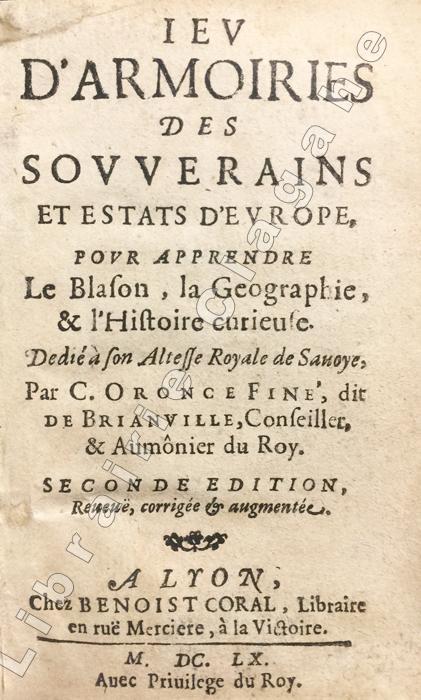
1660réf. 9246Lyon, Benoist Coral, 1660 ; in-24 ; pleine percaline bleue à décor floral, filets et titre dorés au dos (reliure du XIXe) ; (16) ff. dont titre et 2 planches gravées, 209 pp.
1867réf. 20643Tours Georget-Joubert 1867 in-8 broché 1 fort volume, broché marron in-octavo Editeur (paperback in-8 Editor)(25 x 16,5 cm), dos muet cassé avec manques de papier en marge de la couverture, 1ère de couverture imprimée en noir défraichie, 4ème de couverture pliée avec manque de papier, toutes tranches non-rognées (all edges no smooth), sans illustrations (no illustration), fines et légères rousseurs, 1208 Pages, 1867 Tours, Georget-Joubert Editeur,
1689In-8°; bella antiporta incisa su rame + pp. (24), 336, (22) con la Table des noms des maison dont les armoiries son contenu en cet ouvrage, 28 tavole a piena pagina incise su rame con numerosissimi esempi di stemmi, e nel testo numerosi legni illustrano le spiegazioni dei termini dell’arte del blasone. Trattato tecnico sull’arte araldica, in cui si illustra la storia, e l’importanza di quest’arte, e ogni metodo di partizione, terminologia e scelta degli emblemi per fare gli stemmi; l’interesse dichiarato dall’autore è quello di fornire scientificità a questa tecnica. Legatura in piena pelle con tassello, titolo e fregi in oro al dorso.
2004réf. 31910Lathuile - Haute-Savoie, Éditions du Gui, 2004. 2 volumes in-8 (15 x 24,5 cm), 388 pp plus un volume non paginé : fac-similé du manuscrit Français 5230 conservé au départements des manuscrits occidentaux de la Bibliothèque nationale de France. Planches d'armoiries en couleurs. Reliés pleine toile éditeur marron, auteurs, titre et éditeur en lettres dorées en dos pour le vol de texte, un tome avec fer doré sur le plat pour l'armorial, étui illustré.
1909Pages 173-212 + xxiv ads. Features: Nostalgic photo-illustrated ad for the Coldwell Lawn Mower Company; The Garden in Your Town - Prize Competition; Homes of American Artists - "Fernbrook,", the Summer Home of Thomas Shields Clarke, Lenox, MA - great photo-illustrated article; Practical Suggestions for Domestic Ventilation; A Small Brick House at Concord, MA - Built for Mr. Charles Francis Adams - A Leanto House of the 17th Century Reproduced in Brick; Flower-box Beauty; The Porch Sitting-Room - a wonderful centerfold compilation of twelve photos of Pleasant Outdoor Resting Places; Creating a Small Country Home; Historic Mansions of the Rappahannock River - "Sabine Hall" - one of the famous Carter Homesteads in Virginia - article with marvelous photos; Watercress Culture in France - wonderful photo-illustrated article; A House Built for J.L. Johnson, Esq., at Hackensack, NJ; Ants and Bees as Pets; "Penllyn House", the Residence of Arthur King Wood, Esq., at Ardsley-On-Hudson, NY; The Best Twenty Annuals for the Flower Garden; Nice one-page illustrated article for Wm. Knabe & Co. pianos; Photo-illustrated ad for the Grand Trunk railway system promotes Temagami, Northern Ontario, "A New Place to Shoot and Fish"; Illustrated ad for Elkhart (horse-drawn) Buggies; Interesting photo-ad for the Clinton Wire Cloth Company shows a 15,000 gallon concrete tank built for Edmund Tatham of Katonah, NY; Sensational color back cover ad for The Hartford Rubber Works Co. shows lady watching cars speed by; and more. Average wear and external soiling. Minor moisture exposure. Chip from upper left corner of front cover. Middle eight pages loose but present. A worthy copy of this charming vintage issue. Book
1915Pages 93-108 (16 pages in this issue). Features: Why the Money Trust Wants War - Part IV, by Charles A. Collman - connections betwen Trust companies and munitions makers; President Wilson Should Take Counsel Against England Also for Violated Dignity, by William Bayard Hale; The War of 1920 (continued); United States Senator G.M. Hitchcock's Plea for an Embargo on Arms; Bravo Dr. Dumba!; The Sinking of the Hesperian - False Flag Attack?; Credit Where Credit is Due - President Wilson has resisted the demands of the war manufacturers to join the war; Pope Benedict renews his efforts to restore peace; Professor John A Walz Endorses this publication; News from Germany - floating hospitals; and more. Unmarked. Average wear. A sound copy. Magazine
réf. DADAX1560233656New unknown
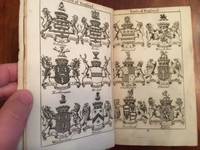
1784réf. 168431784. Kimber Edward. The New Peerage; or Ancient and Present State of the Nobility of England 1784 provides a systematic account of the genealogies titles and heraldic identities of the English peerage during the late eighteenth century a period in which lineage and inherited status structured political authority and social hierarchy. Expanding upon earlier editions the work compiles detailed records of peers by tenure summons or creation including their familial descent marriages and issue alongside heraldic insignia that visually reinforced aristocratic identity. The volume supports research into British social structure genealogical documentation and the institutional role of nobility in governance prior to nineteenth-century reform. Kimber Edward. The New Peerage; or Ancient and Present State of the Nobility of England. Containing a Genealogical Account of All the Peers; Whether by Tenure Summons or Creation. London: W. Owen 1784. Volume I only of three. Small octavo 482 pages bound in full leather. Includes 38 pages of armorial plates at the front illustrating coats of arms crests supporters and mottoes associated with noble families. The text presents extensive genealogical entries detailing lineage collateral branches and familial relationships within the English aristocracy. An armorial bookplate is affixed to the interior. Issued as a revised and expanded edition of the earlier 1766 publication the 1784 volume reflects continued interest in codifying noble lineage during a period when genealogical accuracy carried legal and social significance. Such compilations functioned as reference tools for matters of inheritance title legitimacy and social standing and were used by scholars officials and members of the gentry. Surviving examples of both the original and revised editions appear limited in institutional holdings indicating constrained distribution and long-term retention within private collections. Leather binding worn with bumped corners; front cover detached; initial leaves loose; rear board fragile; pages toned with moderate foxing; overall in fair condition. unknown