Shields, GregBiblio.com

5 182 résultats
réf. 1647483484.Ghardcover. Good. Access codes and supplements are not guaranteed with used items. May be an ex-library book. hardcover
1929réf. 1251968ny: Macmillan Company 1929. 1st Edition 1st Printing. Hardcover. Very Good/Very Good. folio. 51 reproductions of etchings and drawings by John Taylor Arms. dj in chippping along edges sunned edges clipped price in mylar; blue c w/gilt titles; 179 clean unmarked pages. Includes descriptions of 40 churches including Notre Dame de Paris Mont St. Michel Chartres Rouen etc. Macmillan Company hardcover
1932réf. P2889Used; Good. 54-F-10 The Macmillan Company 1932 Hardcover. No dust jacket. Text is clean and unmarked. Covers have light wear. Book Condition: Good . 1932. HARDCOVER. hardcover
réf. 0070568014.Ghardcover. Good. Access codes and supplements are not guaranteed with used items. May be an ex-library book. hardcover
1972réf. 9545Ottawa Canada: Borealis Press 1972. Very Good . Ottawa Canda: Borealis Press 1972. First Edition. Slim octavo 19cm.; publisher's orange and purple card wrappers; 660pp. Faint glue residue to rear wrapper from previously removed price sticker spine lightly sunned else Very Good to Near Fine. The Pulitzer Prize-winning author's first book a poetry collection. Borealis Press unknown
réf. 0934780285.Gpaperback. Good. Access codes and supplements are not guaranteed with used items. May be an ex-library book. paperback
1877réf. 2164New York: Charles Scribner's Armstrong 1877. 609pp with index of subjects and authors catalog of editors of 1876 Previous owner`s signatures. Gold stamp cross with wings and gold lettering on the spine. Binding worn at extremities. First Edition. Hard Cover. Good. 9 3/4 X 6 1/2. Charles Scribner's, Armstrong Hardcover
réf. 1297791169.Ghardcover. Good. Access codes and supplements are not guaranteed with used items. May be an ex-library book. hardcover
1993réf. 010535Toronto: Random House of Canada 1993. Beautiful crisp clean unread copy of the true first edition of this book that was the winner of both the Pulitzer Prize and the Governor's General Award and the National Book Critics Award. Shortlisted for the Booker Prize. . First Edition. Hard Cover. Fine/Fine. Random House of Canada Hardcover
réf. 0915525003.Gpaperback. Good. Access codes and supplements are not guaranteed with used items. May be an ex-library book. paperback
2004réf. 112914Crocker Art Museum 2004. Paperback. Fine/No jacket. Signed by David J. Carlson one of the authors on the title page. Crocker Art Museum paperback
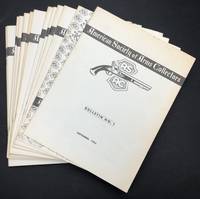
1970réf. H29299Dallas: Harry C. Knode 1970. Wraps. Very good. Nos. 1-21 lacking no. 4. 11.5 x 8.5 inches wraps 30-45 pp. each illlustrated very good light wear and soil occasional pencil note and price stickers the last issue no. 21 is a reprint from 1984 the others look original. Harry C. Knode unknown
réf. 19674Shields South Shields Northumberland . 27 February no year circa 1786 . 4pp. 4to. In fair condition on aged and worn paper. An excellent letter on an unusual subject written in forthright style. The author – who like the recipient is a member of the local mercantile community – gets down to business immediately: 'Sir The late great demand for Bottles in England was the effect of Mr Pits sic commercial Treaty with France. A Bottle in France costs the Manufacturer nearly double to what an english Bottle costs one reason of which is the French have no other fuel than Newcastle Coals One Keel of Coal at Rochelle stands to twenty five Pounds; in the river Tyne one Keel stands the Bottle Manufacturer to about four Pounds.' He proceeds to discuss excise duty English beer imported into France merchants. He poses the question: 'should no infringement be made on this Treaty will the Bottle Trade continue to flourish and be a desirable object of speculation I answer the profit which the English manufacturer now enjoys will gradually diminish though even the French treaty should be protracted a Century. Glass Houses will be multiplied in England & the loud clamour for Bottles will cease'. He recalls that sixteen years previously when 'unfortunately for myself' he became 'Wilsons private agent in London an Order for Bottles was obtained with great difficulty & much expense and tedious application did I use to conciliate the Friendship of Janson who was always deem'd a very eligible Customer I at last succeeded & fix'd him totally to the Shields Houses. Mr Wilson paid me with very liberal promises & Mr Deer without your interference will soon lose the valuable Customer I gain'd'. He presumes that the bottle trade 'will be slack this summer but flourish again on the approach of Winter.' He describes the 'vast local advantage' of the 'Shields Houses' as against the 'higher Houses'. He claims there are 'many enormous abuses' citing the fact that 'Mr Deer claims a Salary for no other reason that I know of than because he is Mr Deer.' He claims that Wilson has only ever paid Deer 'to make him hold his Tongue': 'if Mr Deer can produce any Book that he has kept for seven years back or prove any good that he has done by advice &c he may lay claim to his Salary. I will declare Wilsons Sentiments upon my honour or if required sanction my declaration by a legal oath'. Shields [ South Shields, Northumberland ]. 27 February [ no year, circa 1786 ]. unknown
réf. 0658002023.Gpaperback. Good. Access codes and supplements are not guaranteed with used items. May be an ex-library book. paperback
réf. 181947 Lodge Place London N.W. 8 June no year. 1p. 12mo. In good condition with tiny remains of labels from mount adhering to corners. He returns her 'Burlington Club permit' with 'thanks for the opportunity of seeing so brilliant a Collection' before concluding with regards to her husband and 'Holly'. 7 Lodge Place, London N.W. 8 June [no year]. unknown
1966réf. 86324Orange Massachusetts: The Enterprise and Journal 1966. Presumed First Edition First printing. Hardcover. Very good/Very good. Masha Arms Author photograph. 4m 272 pages Endpaper map. DJ is in a plastic sleeve. Minor edge soiling. Signed with sentiment by the author on page facing title page. Notation reads. With best wishes William T. Arms. Historical fiction set in Massachusetts during the French and Indian Wars. Salute to Courage is an exciting action story that mirrors the struggles of the pioneer settlers on the New England frontier during the final decade of the French and Indian wars. The major war events introduced in this work include Braddock's Defeat the Fall of Fort William Henry the capture of Louisburg of Fort Duquesne of Ticonderoga and of Quebec all show the influence of each of these events on the lives of the frontiersmen in their isolated stockaded forts. Colonel Ephraim William Lord Jeffrey Amherst Robert Rogers all appear in this work as does Abigail Crouch. William Tyler "Billy" Arms was born in 1904 in Deerfield and died in 1970. William's varied career began as a columnist for the New York Times. He later worked for the Foreign Broadcast Intelligence Service. His publications include The History of Leyden Massachusetts 1676-1959 1959 and Salute to Courage 1966. The French and Indian War 1754-1763 was a theater of the Seven Years' War which pitted the North American colonies of the British Empire against those of the French each side being supported by various Native American tribes. At the start of the war the French colonies had a population of roughly 60000 settlers compared with 2 million in the British colonies. The outnumbered French particularly depended on their native allies. Two years into the French and Indian War in 1756 Great Britain declared war on France beginning the worldwide Seven Years' War. Many view the French and Indian War as being merely the American theater of this conflict; however in the United States the French and Indian War is viewed as a singular conflict which was not associated with any European war. French Canadians call it the guerre de la Conquête 'War of the Conquest'. The British Pitt government fell due to disastrous campaigns in 1757 including a failed expedition against Louisbourg and the Siege of Fort William Henry; this last was followed by the Natives torturing and massacring their colonial victims. William Pitt came to power and significantly increased British military resources in the colonies at a time when France was unwilling to risk large convoys to aid the limited forces that they had in New France preferring to concentrate their forces against Prussia and its allies who were now engaged in the Seven Years' War in Europe. Between 1758 and 1760 the British military launched a campaign to capture French Canada. They succeeded in capturing territory in surrounding colonies and ultimately the city of Quebec 1759. The following year the British were victorious in the Montreal Campaign in which the French ceded Canada in accordance with the Treaty of Paris 1763. France also ceded its territory east of the Mississippi to Great Britain as well as French Louisiana west of the Mississippi River to its ally Spain in compensation for Spain's loss to Britain of Spanish Florida. Spain had ceded Florida to Britain in exchange for the return of Havana Cuba. France's colonial presence north of the Caribbean was reduced to the islands of Saint Pierre and Miquelon confirming Great Britain's position as the dominant colonial power in northern America. The Enterprise and Journal hardcover
1962réf. 87363Washington DC: United States Arms Control and Disarmament Agency 1962. Presumed First Edition First printing thus. Wraps. Good. xii 333 3 pages. Name of previous owner in ink on front cover. Cover has wear soiling and corner creases. The contents include Western and Soviet Positions in September 1961; The Sixteenth General Assembly; Renewed Negotiations in the Geneva Conference on the Discontinuation of Nuclear Weapon Testes November 1961-January 1962; Background on the Eighteen-Nation Disarmament Conference; Test-Ban Negotiations at the Eighteen-Nation Disarmament Conference; The Second Phase of the Eighteen-Nation Conference July 16-September 8 1962; and Documents. This account of the negotiations over the past year has been issued by the U.S. Government in order to provide a detailed and accurate record of developments on the continuing effort to end nuclear weapon tests. It supplements the historical and documentary reports published the the U.S. Department of State in the fall of 1961 Geneva Conference on the Discontinuance of Nuclear Weapon Tests: History and Analysis of Negotiations Department of State Publication 7258 1961. The present publication covers the period from September 1961 to the recess of the Eighteen-Nation Conference on September 8 1962 and consists of two main parts an historical narrative and a selection of pertinent documents related to the Conference negotiations to the consideration of the test cessation question in the United Nations and to other aspects of the problem. United States Arms Control and Disarmament Agency paperback
1951réf. 82365American Medical Association 1951. Reprinted with additions from The Journal of the American Medical Association September 1 1951 Vol. 147 pp. 50-54. Wraps. Good. Format is approximately 5.5 inches by 8.5 inches. 13 3 pages. Footnotes. Bibliography. It is unusual to have a 'reprint with additions' and have the page count go from about 5 pages to 13 pages assumes same print and page size. Name Donald J. Kimeldorf and number stamped on front. Initials and notation also on front. Minor corner creasing noted. The syndrome of acute radiation injury to be considered in this article is the term applied to the symptom complex or diseased state which results from exposure of the whole body or a major portion of it to the initial nuclear radiation of an atomic bomb. This term should be clearly distinguished from irradiation sickness which is commonly used to describe the symptom complex resulting from therapeutic irradiation. It should also be distinguished from surface radiation injury. This term is properly applied to injuries of the skin and subcutaneous tissues resulting from x-radiation or from contact or near contact with radioactive material such as fission products and induced radioactivity. Injuries of this type related to atomic energy are due largely to beta-ray-emitting isotopes. Internal radiation injury may result from the selective deposition such as in bone or thyroid of radioactive material that has been inhaled or absorbed through the gastrointestinal tract or wounds. Kimeldorf was a major scientific leader. His book with Ed Hunt entitled "Ionizing radiation: Neural function and behavior" is a thorough description of the physiological and behavioral effects of exposure to ionizing radiation. Charles L. Dunham was born in Evanston Illinois in 1906 and graduated from Yale University A.B. 1929 and the Rush Medical College of the University of Chicago M.D. 1934. He had no contact with nuclear medicine until he joined the Atomic Energy Commission in the summer of 1949 as Assistant Chief of the Medical Branch. Among his responsibilities at the AEC was its program in cancer research and the program on peaceful uses of the atom in medicine and medical research. When not too preoccupied with fallout and radiation health problems he used his position at the AEC to foster the development of nuclear medicine through the activities of the AEC medical laboratories and clinical facilities at Chicago Oak Ridge Brookhaven Berkeley and Los Angeles and through its nation-wide re search contract program. The AEC has honored him with its Distinguished Service Medal. Eugene P. Cronkite MD was born in Los Angeles California in 1917. He decided to pursue medicine and was accepted to Stanford University's medical school. After receiving his medical degree Dr. Cronkite joined the Navy and served as a medical corps lieutenant in World War II and as a director of the Naval Medical Research Institute in Maryland. He later left the Navy and began to study the effects of nuclear fallout. Among his subsequent achievements Dr. Cronkite identified links between radiation exposure and cancer developed a new treatment for leukemia and founded the International Society for Experimental Hematology. In 1971 he was elected president of ASH. Dr. Le Roy was a consultant to the Atomic Energy Commission and at one time a member of the Advisory Committee on Medical Uses of Isotopes of the Division of Licensing and Regulation of the Atomic Energy Commission. Shields Warren 26 February 1898 - 1 July 1980 was an American pathologist. He was among the first to study the pathology of radioactive fallout. American Medical Association paperback
1991réf. 79874McEwen TN: Accurate Arms Company Inc 1991. Second printing stated. Wraps. Very good. 32 pages. Oversized book measuring 11 inches by 8-1/2 inches. Includes Introduction Safety Notes and information on Handguns and Rifles. Also includes Loading Data for Accurate 2700 which requires high loading density as well as heavier bullet weights. Two items of ephemera have been laid in--one is a product flyer on Accurate Smokeless Powders and one on Data for Accurate 2015br. The Accurate 2015br news release was addressed to John Lyman The Tarheel Gunner who was a noted naval and arms authority. Smokeless powder is the name given to a number of propellants used in firearms and artillery that produce negligible smoke when fired unlike the gunpowder or black powder they replaced. The term is unique to the United States and is generally not used in other English-speaking countries which initially used proprietary names such as "Ballistite" and "Cordite" but gradually shifted to "propellant" as the generic term. The basis of the term smokeless is that the combustion products are mainly gaseous compared to around 55% solid products mostly potassium carbonate potassium sulfate and potassium sulfide for black powder. Despite its name smokeless powder is not completely free of smoke; while there may be little noticeable smoke from small-arms ammunition smoke from artillery fire can be substantial. This article focuses on nitrocellulose formulations but the term smokeless powder was also used to describe various picrate mixtures with nitrate chlorate or dichromate oxidizers during the late 19th century before the advantages of nitrocellulose became evident. Since the 14th century gunpowder was not actually a physical "powder" and smokeless powder can be produced only as a pelletized or extruded granular material.citation needed Smokeless powder allowed the development of modern semi- and fully automatic firearms and lighter breeches and barrels for artillery. Burnt gunpowder leaves a thick heavy fouling that is hygroscopic and causes rusting of the barrel. The fouling left by smokeless powder exhibits none of these properties though some primer compounds can leave hygroscopic salts that have a similar effect; non-corrosive primer compounds were introduced in the 1920s. This makes an autoloading firearm with many moving parts feasible which would otherwise jam or seize under heavy black powder fouling. Smokeless powders are classified as typically division 1.3 explosives under the UN Recommendations on the transportation of Dangerous goods - Model Regulations regional regulations such as ADR and national regulations. However they are used as solid propellants; in normal use they undergo deflagration rather than detonation. Accurate Arms Company, Inc paperback
1966réf. 80238Washington DC: U. S. Government Printing Office 1966. Presumed First Edition First printing thus. Wraps. Good. xiv 710 pages. Footnotes. Includes Foreword Topical List of Documents List of Abbreviations Documents Bibliography List of Persons List of Documents and Index. Includes Documents on Communist China Eighteen Nation Disarmament Committee Federal Republic of Germany France Latin America North Atlantic Treaty Organization Soviet Union United Nations United States and Warsaw Pact Organization. The Documents on Disarmament volumes issued annually since 1960 contain basic documents on disarmament arms control and related matters. International negotiations and the activities of the United States Arms Control and Disarmament Agency during 1965 are described in the annual report of the Agency which is printed at the end of the documents. Disarmament is the act of reducing limiting or abolishing weapons. Disarmament generally refers to a country's military or specific type of weaponry. Disarmament is often taken to mean total elimination of weapons of mass destruction such as nuclear arms. General and Complete Disarmament was defined by the United Nations General Assembly as the elimination of all WMD coupled with the "balanced reduction of armed forces and conventional armaments based on the principle of undiminished security of the parties with a view to promoting or enhancing stability at a lower military level taking into account the need of all States to protect their security." The U.S. Arms Control and Disarmament Agency ACDA was an independent agency of the United States government that existed from 1961 to 1999. Its mission was to strengthen United States national security by "formulating advocating negotiating implementing and verifying effective arms control nonproliferation and disarmament policies strategies and agreements." In so doing ACDA ensured that arms control was fully integrated into the development and conduct of United States national security policy. ACDA also conducted supported and coordinated research for arms control and disarmament policy formulation prepared for and managed U.S. participation in international arms control and disarmament negotiations and prepared operated and directed U.S. participation in international arms control and disarmament systems. In the 1970s emphasis of the agency was placed upon gaining an understanding of the strategic weapons capabilities of the Soviet Union and People's Republic of China. The electronic reconnaissance capability of the United States was expanded through federal agency research and private contract research utilizing radio frequency as well as optical technologies. The theory of this mission was that a clearer understanding of other nations' strategic capabilities was an important initial step in prevention of nuclear war. In 1997 the Clinton administration announced the partial integration of ACDA with the State Department as part of the reinvention of the agencies which implement the nation's foreign policy. The ACDA Director served as both the Under Secretary of State for Arms Control and International Security Affairs and a Senior Adviser to the President and the Secretary of State for Arms Control Nonproliferation and Disarmament. He communicated with the President through the Secretary of State. In his capacity as senior advisor to the president the Under Secretary attended and participated at the direction of the president in National Security Council NSC and subordinate meetings pertaining to arms control nonproliferation and disarmament and had the right to communicate through the Secretary of State with the President and members of the NSC on arms control nonproliferation and disarmament concerns. As of April 1 1999 ACDA was abolished and its functions merged into the Department of State. This was done pursuant to Pub.L. 105-277 112 Stat. 2681 enacted October 21 1998.4 In particular ACDA's four Bureaus were merged with the Bureau of Political-Military Affairs to form three new Bureaus: Political-Military Affairs Bureau of Arms Control and Bureau of Nonproliferation. The functions of the ACDA Director were replaced by the office of the Under Secretary of State for Arms Control and International Security Affairs and by the office of the Senior Advisor to the President and the Secretary of State for Arms Control Nonproliferation and Disarmament. U. S. Government Printing Office paperback
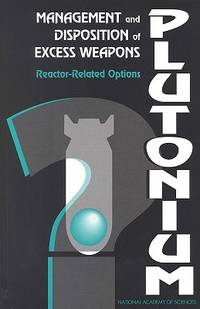
1995réf. 75031Washington DC: National Academy Press 1995. Presumed First Edition First printing. Trade paperback. Very good. xi 3 418 4 pages. Wraps Footnotes References. Boxes. Tables. Institutional stamp and ink notation on verso page ii. Within the next decade many thousands of U.S. and Russian nuclear weapons are slated to be retired as a result of nuclear arms reduction treaties and unilateral pledges. Hundreds of tons of plutonium and highly enriched uranium will no longer be needed for weapons purposes and will pose urgent challenges to international security. This is the supporting volume to a study by the Committee on International Security and Arms Control which dealt with all phases of the management and disposition of these materials. This technical study concentrates on the option for the disposition of plutonium looking in detail at the different types of reactors in which weapons plutonium could be burned and at the vitrification of plutonium and comparing them using economic security and environmental criteria. This is the supporting volume to a study by the Committee on International Security and Arms Control which dealt with all phases of the management and disposition of these materials. This technical study concentrates on the option for the disposition of plutonium looking in detail at the different types of reactors in which weapons plutonium could be burned and at the vitrification of plutonium and comparing them using economic security and environmental criteria. Within the next decade many thousands of U.S. and Russian nuclear weapons are slated to be retired as a result of nuclear arms reduction treaties and unilateral pledges. Hundreds of tons of plutonium and highly enriched uranium will no longer be needed for weapons purposes and will pose urgent challenges to international security. This is the supporting volume to a study by the Committee on International Security and Arms Control which dealt with all phases of the management and disposition of these materials. National Academy Press paperback
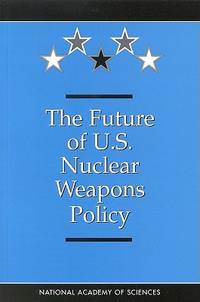
1997réf. 75336Washington DC: National Academy of Sciences 1997. presumed First Edition First printing. Trade paperback. Very good. viii 110 2 pages. Boxes. Notes. Appendixes. Cover has slight wear and soiling. The Committee on International Security and Arms Control CISAC is a standing committee of the National Academy of Sciences. CISAC was created in 1980 to bring the Academy's scientific and technical talent to bear on crucial problems of peace and security. This report was based on an exhaustive reexamination of the issues addressed tin the Committee's 1991 report on The Future of the U.S.-Soviet Nuclear Relationship. It describes the state to which U.S. and Russian nuclear forces and policies have evolved since the Cold War ended the reasons why further evolution is desirable and the shape of a regime of progressive constraints responses to these reasons. It concludes with a discussion of the conditions and means under which in the longer term it could becomes desirable and feasible to prohibit the possession of nuclear weapons altogether. National Academy of Sciences paperback
2009réf. 74641Washington DC: The National Academies Press 2009. Presumed First Edition First printing. Trade paperback. Very good. xiv 165 1 pages. A Note on Terminology. Footnotes. Boxes. List of Acronyms. H.R. 1585. The government's first Cooperative Threat Reduction CTR programs were created in 1991 to eliminate the former Soviet Union's nuclear chemical and other weapons and prevent their proliferation. The programs have accomplished a great deal: deactivating thousands of nuclear warheads neutralizing chemical weapons converting weapons facilities for peaceful use and redirecting the work of former weapons scientists and engineers among other efforts. The programs must be expanded to other regions and fundamentally redesigned as an active tool of foreign policy that can address contemporary threats from groups that are that are agile networked and adaptable. Global Security Engagement proposes how this goal can best be achieved. To meet the magnitude of new security challenges particularly at the nexus of weapons of mass destruction and terrorism Global Security Engagement recommends a new more flexible and responsive model that will draw on a broader range of partners than current programs have. As the fall of the Soviet Union appeared eminent the United States and their allies began to worry about the concept that the nuclear weapons held in smaller countries by the Soviet Union could fall or would fall into enemy hands. The Cooperative Threat Reduction CTR Program was an initiative housed within the Defense Threat Reduction Agency. The CTR program is better known as the Nunn-Lugar Act based on the Soviet Nuclear Threat Reduction Act of 1991 which was authored and cosponsored by Sens. Sam Nunn and Richard Lugar. According to the CTR website "the purpose of the CTR Program is to secure and dismantle weapons of mass destruction and their associated infrastructure in former Soviet Union states." Another explanation of purpose of the program is "to secure and dismantle weapons of mass destruction in states of the former Soviet Union and beyond". CTR provides funding and expertise for states in the former Soviet Union including Russia Ukraine Georgia Azerbaijan Belarus Uzbekistan and Kazakhstan to decommission nuclear biological and chemical weapon stockpiles as agreed by the Soviet Union under disarmament treaties such as SALT I. The National Academies Press paperback
2005réf. 73665Washington DC: The National Academies Press 2005. Presumed First Edition First printing. Trade paperback. Very good. xv 1 250 pages. Footnotes. Illustrations figures tables and boxes. Acronyms. Biographical Sketches of Committee Members. Cover has slight wear and soiling. Among the members were: John Steinbruner Susan Eisenhower Richard Garwin Rose Gottemoeller Spurgeon Keeney Albert Narath and Wolfgang Panofsky. In the United States and many other countries policy-makers are working to minimize the proliferation of nuclear weapons prevent terrorists from acquiring them and reduce the risks posed by existing nuclear arsenals. A new report from the National Academy of Sciences addresses the technical and institutional approaches and capabilities in transparency and monitoring that could be applied to any or all of these goals. The report does not analyze or make recommendations about the choices in U.S. nuclear weapon and nonproliferation policies or priorities that will continue to shape the context within which such approaches and capabilities might be applied. Save Cancel Bottom of Form 1 dressed not only nuclear issues but also those connected with chemical and biological weapons space weaponry and national missile defense and conventional forces and the arms trade. The year 2005 marked the 25th anniversary of the creation of the Committee on International Security and Arms CISAC by the National Academy of Sciences NAS. CISAC was formed at a time when the risks to the world from nuclear weapons seemed to be increasing. During a time of extraordinary tensions in U.S.-Soviet relations CISAC provided a nongovernmental channel of communication between Soviet and American scientists as a vehicle for exploring ways to reduce nuclear dangers. For several years the private off-the-record dialogue between CISAC and its Soviet counterpart group was one of the few links through which well-informed policy-connected individuals on the two sides could interact to pursue solutions to key technical problems related to nuclear arms control. Even after formal U.S.-Soviet arms control negotiations resumed the CISAC-initiated dialogues continued to be invaluable offering a vehicle for "back channel" discussions that were both less constrained and more analytical than those being pursued officially. In the 25 years since it was founded CISAC has broadened its efforts to include: bilateral dialogues and related workshops with similarly constituted groups in China and India; bilateral and multilateral meetings with European academies; the conduct of major studies of security and arms control problems and policies; the instigation of additional studies by specially constituted panels within the National Academies; and the organization of symposia and workshops to inform Academy members the wider technical community and the public at large about key issues at the intersection of science and technology with international security. The National Academies Press paperback
1998réf. 68705Saint Paul MN: Graywolf Press 1998. Reprint paperback edition. First printing stated. Trade paperback. Very good. Signed by author. Cover has slight wear and soiling. First edition. Trade paperback Glued binding. 246 p. Graywolf Rediscovery. From Wikipedia: "David Shields born July 22 1956 is an American author of nonfiction and fiction although much of his work resists generic classification. Shields born in Los Angeles in 1956 graduated from Brown University in 1978 Honors in English Literature magna cum laude Phi Beta Kappa. In 1980 he received an MFA in Fiction with honors from the University of Iowa Writers' Workshop. Shields' first novel Heroes was published in 1984. From 1985 to 1988 he was a visiting assistant professor at St. Lawrence University in Canton New York. In 1989 he published his second novel Dead Languages a book about a boy who stutters so badly that he worships words. Shields' third book Handbook for Drowning: A Novel in Stories 1992 marked the beginning of his shift from traditional literary fiction toward collage the blurring of genres essay and autobiography. This shift continued and deepened in such books as Remote: Reflections on Life in the Shadow of Celebrity 1996 Black Planet: Facing Race During an NBA Season 1999 Enough About You: Notes Toward the New Autobiography 2002 and The Thing About Life Is That One Day You'll Be Dead 2008. Shields' next book Reality Hunger: A Manifesto Knopf 2010 argues for the obliteration of distinctions between genres the overturning of laws regarding appropriation and the creation of new forms for a new millennium. Shields is Milliman Distinguished Writer-in-Residence at the University of Washington. He is also a member of the faculty in the Warren Wilson College MFA Program for Writers. His work has been translated into twenty languages. Shields lives in Seattle with his wife and daughter. Much of Shields' work embodies and enacts a critique of traditional categories within art and culture such as the boundary between fiction and nonfiction; for instance in Reality Hunger in which he argues for the abandonment of the traditional novelistic form because of its inadequacy in dealing with what he views as an increasingly fragmentary culture. Shields writes "I find it very nearly impossible to read a contemporary novel that presents itself unselfconsciously as a novel since it's not clear to me how such a book could convey what it feels like to be alive right now." In its place he advocates "collage" forms such as the lyric essay prose poetry and the "anti-novel built from scraps." Shields' books have generally been published to wide acclaim." Graywolf Press paperback