5 226 résultats
1954réf. 86113Library. As New. Paperback. FREE UPGRADE to Courier/Priority Shipping Upon Request - IN STOCK AND IMMEDIATELY AVAILABLE FOR SHIPMENT - AS NEW THE TEXT BLOCK IS PRISTINE CLEAN UNMARKED AND IN EXCELLENT CONDITION - - 8 pages; 1 illustrations. -- with a bonus offer-- . 1954. Library paperback
1975réf. 86112Art Center. As New. Paperback. FREE UPGRADE to Courier/Priority Shipping Upon Request - IN STOCK AND IMMEDIATELY AVAILABLE FOR SHIPMENT - AS NEW THE TEXT BLOCK IS PRISTINE CLEAN UNMARKED AND IN EXCELLENT CONDITION - - Corresponds to ASIN: B003X6154S. 76 pages; 28 illustrations. -- with a bonus offer-- . 1975. Art Center paperback
1975réf. 86111Art Center. As New. 1975. Paperback. FREE UPGRADE to Courier/Priority Shipping Upon Request - IN STOCK AND IMMEDIATELY AVAILABLE FOR SHIPMENT - AS NEW THE TEXT BLOCK IS PRISTINE CLEAN UNMARKED AND IN EXCELLENT CONDITION - - Corresponds to ASIN: B000VUMBAQ. 76 pages; 28 illustrations. Catalogue Raisonne Catalog Raisonné Complete Works Life and Work Raisonnee -- with a bonus offer . Art Center paperback
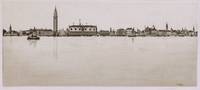
1930réf. 482New York: John Taylor Arms 1930. Superb. Etching on antique cream laid paper with a fancy "G" watermark 7 1/8 x 16 1/2 inches 182 x 442 mm full margins. Signed dated and inscribed "Ed. 70" in pencil lower margin. From a total edirion of 81 plus 5 trial proofs. Printed by Henry E. Carling. Number 18 from the Italian Series. A superb impression of this scarce print with all of the subtleties and details of the reflections in the water printing clearly. Fletcher 232 Illustrated: Page 192 Arms Dorothy Noyes "Hilltowns and Cities of Northern Italy". Along with his constant companion and wife Dorothy Noyes Arms spent decades exploring and documenting gothic structures throughout Europe. Noyes an accomplished travel writer had gifted Arms an etching set for Christmas in 1913 during the time that the couple called New York home. Arms having been trained in architecture was sparked and fascinated by the potential for exceptional precision that etching provided as a media. His immediate projects focused on the architectural wonderland that Manhattan presented but he quickly realized that it was no love affair for him. Jane Glaubinger PhD. Curator of Prints Cleveland Museum of Art quotes a manuscript owned by the Museum in which Arms confides "I can admire the skyscrapers of New York that unbelievable city which is a very gold mine for the architectural etcher but I do not love them and I cannot etch what I do not love." Glaubinger explains in her 2012 essay Images of Inspiration that Arms opined that the creation of art furthered the spiritual and moral improvement of mankind and he believed that Gothic cathedrals represented "the most significant expression of man's aspirations." Arms a dedicated and industrious devotee to detail saw printmaking as a vehicle for inspiring joy and uplift in contemporary society. Glaubinger continues "Over several decades Arms traveled throughout France Italy England and Spain drawing Gothic structures. These studies were the basis for the etchings he produced back in his Connecticut studio. Arms admired the craftsmanship of medieval art and aided by magnifying glasses used fine-gauge sewing needles set into wooden handles to draw the elaborate churches on copper plates. Extremely dedicated and industrious Arms rendered each building with exceptional precision spending 1000 hours or more on a single plate. He was a gifted draftsman and technical virtuoso who created compositions full of keenly observed details and nuanced light." Glaubinger Jane "Modern Gothic: The Etchings of John Taylor Arms" Cleveland Museum of Art 2012. John Taylor Arms unknown
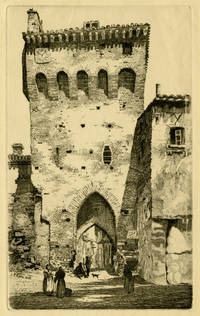
réf. 11331Arms John Taylor. Arms John Taylor. LA CHIESA BORGIO. F. 178. Etching 1926. Edition of 106 printed by Frederick Reynolds. Signed "Arms 1926" in the plate and signed in pencil in the margin. This Number 7 in the Italian series and is illustrated on page 8 of Dorothy Noyes Arms' "Hill Towns and Cities of Northern Italy." 6 1/8 x 4 1/2 inches 156 x 115 mm. In excellent condition. unknown
réf. 13103Arms John Taylor American 1887-1953. LA COLEGAITA TORO. Fletcher 284. Etching 1935. Edition of 153. Signed by Arms in ink lower right and inscribed by him in ink lower left "Private Collection b ii." In excellent condition. 9 3/4 x 12 3/4 inches 248 x 324 mm. plate framed to 18 3/4 x 21 1/2 inches. Spanish Church series #12. Fletcher lists this as one of Arms' "Preferred Plates" and which he apparently kept in his own collection. unknown
1924réf. 8261924. Superb. Etching on antique cream laid paper 5 x 2 inches 127 x 52 mm full margins. Signed and dated in pencil lower margin. From the editoin of 156 printed by Frederick Reynolds. In superb condition an excellent impression with good inking. Fletcher 141. Paper: Arms was typical of the artists of this period - he was obsessed with paper a mania for collecting paper that could/would improve an edition. The quantity he left after his death distributed by his wife to fellow artists witnesses his love for finely made paper -paper interesting because of texture color distinctive weave. The earliest paper known to have been used by Arms came from a Baptismal Register Kirchen Ordnung The Reformed Church Middletown Dauphin County Pennsylvania 1708 bought in a bookshop in Philadelphia. His early prints 1915-1919 evidence paper taken from old books with gilded edges. Some prints appear on stationary from the Cisalpine Napoleonic Italy still bearing the estampe of the office or department; others carry penned ink page numbers taken from old ledgers of the Eighteenth Century-all beautiful shades of grey blue and green handmade ribbed and otherwise. Some of his color aquatints were printed on full sheets of heavy chine or Japanese vellum giving a sense of luxury in the richness of the stock and the width of the margins. There was a myriad of modern papers gleaned in England France Italy and the United States. -William Dolan Fletcher A Man For All Times p. 15. unknown
1924réf. 23201924. Excellent. Etching on laid paper 13 1/2 x 7 1/2 343 x 191; sheet 16 1/2 x 11 inches 420 x 280 mm full margins. Signed and dated by Arms in the lower right corner. From the edition of 150 impressions printed in 1924 by Frederick Reynolds. Another edition of 50 impressions was subsequently printed by David Strang in 1938. According to Fletcher Arms mentioned a second state of the collaborative print but there appears to be no evidence of this in any known collection. Fletcher 144. Born in 1887 in Washington DC John Taylor Arms studied at Princeton University and ultimately earned a degree in architecture at the Massachusetts Institute of Technology in 1912. With the outbreak of W.W.I Arms served as an officer in the United States Navy and it was during this time that he turned his focus to printmaking having published his first etching in 1919. His first subjects were the Brooklyn Bridge near the Navy Yard and it was during his wartime travel that Arms created a series of extraordinarily detailed etchings based on gothic cathedrals and churches he visited in France and Italy the plate for Guardians of the Spire was created in 1921. He used what was available to him namely sewing needles and a magnifying glass to create the incredibly rich and fine detail that his etchings are known for. Upon his return to New York after the war Arms enjoyed a successful career as a graphic artist created a series of etchings of American cities and published Handbook of Print Making and Print Makers Macmillan 1934. He served as President of the Society of American Graphic Artists and in 1933 was made a full member of the National Academy of Design. Arms died in Fairfield Connecticut in 1953. unknown
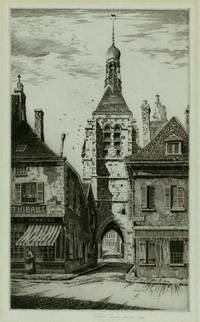
1932réf. 10431932. Superb. Etching on green-hued antique laid Japon paper 9 7/16 x 4 1/16 240 x 104 mm full margins. Signed dated and inscribed "Ed. 100 II." One of a total edition on 124 impressions printed by David Strang. French Series No. 33. In superb condition with one spot of light brown discoloration in the lower right margin well outside of image area. Fletcher 246. This etching was awarded the Bronze Medal of Honor in Graphics Annual Exhibition Painters and Sculptors Society of New Jersey Jersey City NJ 1951. Paper: Arms was typical of the artists of this period - he was obsessed with paper a mania for collecting paper that could/would improve an edition. The quantity he left after his death distributed by his wife to fellow artists witnesses his love for finely made paper -paper interesting because of texture color distinctive weave. The earliest paper known to have been used by Arms came from a Baptismal Register Kirchen Ordnung The Reformed Church Middletown Dauphin County Pennsylvania 1708 bought in a bookshop in Philadelphia. His early prints 1915-1919 evidence paper taken from old books with gilded edges. Some prints appear on stationary from the Cisalpine Napoleonic Italy still bearing the estampe of the office or department; others carry penned ink page numbers taken from old ledgers of the Eighteenth Century-all beautiful shades of grey blue and green handmade ribbed and otherwise. Some of his color aquatints were printed on full sheets of heavy chine or Japanese vellum giving a sense of luxury in the richness of the stock and the width of the margins. There was a myriad of modern papers gleaned in England France Italy and the United States. -William Dolan Fletcher A Man For All Times p. 15. unknown
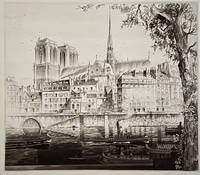
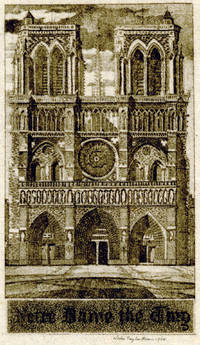
réf. 7751Arms John Taylor. Arms John Taylor. LE PENSEUR DE NOTRE DAME. F.136. Etching 1923. 1st State edition of 150. 12 5/8 x 10 1/8 inches; 322 x 252 mm. Signed in pencil. In excellent condition. Framed. unknown
1927réf. 23311927. Very good. Etching on antique watermarked Arches laid Japon paper with a deckle edge 8 x 12 1/2 inches 204 x 318 mm; sheet 12 1/4 x 17 3/4 311 x 451 mm full margins. One of only three recorded trial proof impressions aside from the regular edition of 100 printed by Frederick Reynolds. Signed dated and inscribed "Trial Proof No 3" in pencil in the lower margin. Age tone and one area of light soft rust colored discoloration in the lower left image area. A magnificent impression. Fletcher 205. unknown
1928réf. 9721928. Good. Etching on antique laid paper 6 9/16 x 3 15/16 inches 167 x 100 mm signed and dated in pencil lower margin. Potentially a trial proof impression aside from the unsigned edition of 1459. Non-archival tape residue along the top and bottom sheet edges recto well outside of image area. Scattered handling creases and general scattered soiling in the margins minor and unobtrusive. Fletcher 217. This work was commissioned by The Architectural Forum for their 1928 Christmas card. unknown
1933réf. 20421933. Excellent. Etching on cream laid paper with a deckle edge 12 5/8 x 8 11/16 322 x 222 mm; sheet 18 x 11 1/2 inches 457 x 291 mm full margins. Signed by both Arms and Eby in the lower right margin dated by Arms. In excellent condition with no visible defects. This plate was the work of both Arms and Eby: Arms doing the buildings Eby the figures and trees. It is for this reason the most problematic plate of either artist. According to Fletcher there were 6 states each of which was printed and reworked by both artists. Between the 5th and 6th state the plate was steeled desteeled rebitten and had additional work done by Eby and then refaced in steel. The 6th state edition resulted in 100 total impressions printed by Eby 50 for Eby 50 for Arms. Those for Eby were for distribution through Frederick Keppel & Co. and those for Arms for Kennedy & Co. After 62 pullings of the 5th state Eby stopped the edition; defaced the plate rebit the surface in the center of the plate particularly in the area of the figures resteeled the surface and finished the edition with 38 pullings. Since the plate was reworked this is considered an additional state bringing the total to 6. This impression appears to be one of the last state impressions from either the edition of 62 5th state impressions or the group 38 6th state impressions. In the lower right there appear the letters "sb" whether this lends a clue to this particular print's origin is something lost to history. Fletcher 270B. Born in 1887 in Washington DC John Taylor Arms studied at Princeton University and ultimately earned a degree in architecture at the Massachusetts Institute of Technology in 1912. With the outbreak of W.W.I Arms served as an officer in the United States Navy and it was during this time that he turned his focus to printmaking having published his first etching in 1919. His first subjects were the Brooklyn Bridge near the Navy Yard and it was during his wartime travel that Arms created a series of extraordinarily detailed etchings based on gothic cathedrals and churches he visited in France and Italy the plate for Guardians of the Spire was created in 1921. He used what was available to him namely sewing needles and a magnifying glass to create the incredibly rich and fine detail that his etchings are known for. Upon his return to New York after the war Arms enjoyed a successful career as a graphic artist created a series of etchings of American cities and published Handbook of Print Making and Print Makers Macmillan 1934. He served as President of the Society of American Graphic Artists and in 1933 was made a full member of the National Academy of Design. Arms died in Fairfield Connecticut in 1953. unknown
réf. 14036Arms John Taylor American 1887-1953. MEMENTO VIVARE NOTRE DAME EVREUX. Fletcher 407. Etching 1947. Number 47 of the French Church Series. This is Proof No. ii of four Trial Proofs printed by Charles White of the First State. There was an edition of 198 printed of the Second State. This proof is Numbered "ii" titled and signed by Arms all in pencil and further inscribed signed and dated 1948 "To my friend Martin Lewis with deep appreciation." A rare association copy. In excellent condition. unknown
1927réf. 874New York: Minton Balch 1927. Etched frontispiece signed by Heintzelman. Illustrated with twelve black & white plates. Bound in buff paper boards. Very good condition. Minton, Balch hardcover
réf. 13885Arms John Taylor. Arms John Taylor. MONT ST. MICHEL. Fletcher 182. Etching 1926. Edition of 100. Signed and dated in pencil. 15 x 11 3/4 inches 381 x 299 mm. plus full margins. Framed to 23 x 19 inches. Number 9 of the French Church series illustrated on page 64 of Dorothy Noyes Arms "Churches of Framce." In very good condition. unknown
réf. 10665Arms John Taylor. Arms John Taylor. MONT ST. MICHEL. Fletcher 182. Etching 1926. Edition of 100. Signed and dated in pencil. 15 x 11 3/4 inches 381 x 299 mm. Number 9 of the French Church series illustrated on page 64 of Dorothy Noyes Arms "Churches of Framce." In very good condition. unknown
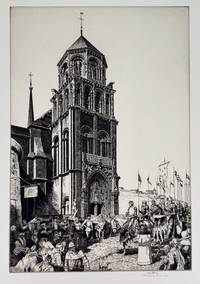
réf. 13887Arms John Taylor. NORTH PORTAL SENS. Fletcher 218. Etching 1929. Edition of 100 printed by Frederick Reynolds and Peter Platt in 1929 a later edition of 40 was printed in 1939. Signed and dated and inscribed "Second State" in pencil and signed dated and titled within the plate and also inscribed in the plate "North Portal Sens." Number 25 of the French Church series; illustrated in Dorothy Noyes Arms "Churches of France." 15 1/4 x 9 1/8 inches plate plus margins. Framed to 21 3/4 x 15 1/4 inches. In excellent condition. unknown
1925réf. 12221925. Excellent. Etching with aquatint on watermarked handmade F.J. Head & Co. laid paper 12 3/8 x 13 15/16 inches 315 x 354 mm full margins. Signed and dated in pencil lower right margin. Edition of 150 printed by Frederick Reynolds. In excellent condition with some minor toning and minor edge wear well outside of the image area. Fletcher 167 French Church series #7; illustrated in Dorothy Noyes Arms Churches of France p. 4. unknown
1931réf. 12661931. Good. Etching on bluish-grey wove paper 8 5/8 x 5 1/8 inches 221 x 130 mm full margins. Signed and dated in pencil. In good condition with light mat tone on the recto and various framer's notations in pencil in the lower margin on the verso. Second state of 2. Printed by Charles S. White. French Church Series No. 30. Fletcher 240. Illustrated as the frontispiece Contemporary American Etching American Art Dealers' Association New York 1931 limited edition. unknown
1935réf. 8191935. Superb. Etching on watermarked R Glover cream laid paper 11/2 x 7/8 inches 39 x 23 mm full margins. Signed and dated in pencil directly under the image and signed dated and titled in pencil in the lower margin. One of 12 trial proof impressions from the third state of 3 aside from the regular edition of 417. A superb impression with inky plate edges. Fletcher 290. Christmas Card Series No. 17 Miniature Series No. 18 French Church Series No. 37 Brooch Series No. 1 Paper: Arms was typical of the artists of this period - he was obsessed with paper a mania for collecting paper that could/would improve an edition. The quantity he left after his death distributed by his wife to fellow artists witnesses his love for finely made paper -paper interesting because of texture color distinctive weave. The earliest paper known to have been used by Arms came from a Baptismal Register Kirchen Ordnung The Reformed Church Middletown Dauphin County Pennsylvania 1708 bought in a bookshop in Philadelphia. His early prints 1915-1919 evidence paper taken from old books with gilded edges. Some prints appear on stationary from the Cisalpine Napoleonic Italy still bearing the estampe of the office or department; others carry penned ink page numbers taken from old ledgers of the Eighteenth Century-all beautiful shades of grey blue and green handmade ribbed and otherwise. Some of his color aquatints were printed on full sheets of heavy chine or Japanese vellum giving a sense of luxury in the richness of the stock and the width of the margins. There was a myriad of modern papers gleaned in England France Italy and the United States. -William Dolan Fletcher A Man For All Times p. 15. On an impression belonging to William Fletcher Arms stipulates that only Head thin ivory medium paper should be used for the editon. - William Dolan Fletcher A Man For All Times p. 187. unknown
1925réf. 8291925. Very good. Etching on cream wove paper 6 x 4 inches 153 x 102 mm full margins. Signed in pencil lower margin. From the edition of 150 printed by Frederick Reynolds. Fletcher 163. This work was commissioned by The Print Connoissuer and served as the frontispiece for the October 1925 issue. Illustrated on p. 52 Dorothy Noyes Arms Churches of France Note: according to Fletcher Arms was assisted in work on this plate by Kerr Eby both concluding "neither very successful. unknown
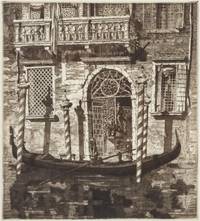
1931réf. 4731931. Superb. Etching and drypoint on cream-colored handmade laid paper with deckle edges 7 1/4 x 6 3/4 inches 185 x 171 mm edition of 100 full margins. Signed dated and numbered "Ed. 100" in pencil lower margin second state of three. Printed by Henry Carling New York. Extremely minor mat tone and some inky residue in the top right corner all unobtrusive and well outside of image area. An exquisite impression of this intricate image with astonishing detail and all the fine lines printing clearly. The image represents the first print which Arms printed on his own handmade paper. Framed handsomely with archival materials and museum grade glass in a wood gilt frame with a flower and garland motif. Illustrated: Dorothy Noyes Arms Hill Towns and Cities of Northern Italy p. 180; Anderson American Etchers Abroad 1880-1930; Eric Denker Reflections & Undercurrents: Ernest Roth and Printmaking in Venice 1900-1940 p. 116. Fletcher 233. Born in 1887 in Washington DC John Taylor Arms studied at Princeton University and ultimately earned a degree in architecture at the Massachusetts Institute of Technology in 1912. With the outbreak of W.W.I Arms served as an officer in the United States Navy and it was during this time that he turned his focus to printmaking having published his first etching in 1919. His first subjects were the Brooklyn Bridge near the Navy Yard and it was during his wartime travel that Arms created a series of extraordinarily detailed etchings based on Gothic cathedrals and churches he visited in France and Italy. He used what was available to him namely sewing needles and a magnifying glass to create the incredibly rich and fine detail that his etchings are known for. Upon his return to New York after the war Arms enjoyed a successful career as a graphic artist created a series of etchings of American cities and published Handbook of Print Making and Print Makers Macmillan 1934. He served as President of the Society of American Graphic Artists and in 1933 was made a full member of the National Academy of Design. In its most modern incarnation Palazzo dell'Angelo was constructed in or around 1570. The building which has a rich and storied history was erected upon the ruins of an earlier structure which predates the Gothic period. Some remnants of the earliest features of the residence were most certainly still visible when Arms visited as they are today. Having a background in architecture there's no question that Arms was moved by the beauty history and ingenuity represented in the physical structure. One thing specifically gives away Arms's passion for the architecture and that is the fact that he focused on the building's Moorish entranceway balustrade and two mullioned windows and not on the curious Gothic era bas-relief of an angel nestled into the facade of the building after which the structure is named. The sculpture itself doesn't appear in Arms's composition at all despite the fact that it is the feature of the building that is most famous in its folklore. Arms instead focuses on the oldest portion of the architecture even documenting some of the remnants of a fresco and a funerary stele for the freedman Tito Mestrio Logismo and his wife Mestria Sperata visible above the water level to the left of the door behind the gondola which was first described in 1436. Among the many notable bits of history regarding the Palazzo it has been documented that Tintoretto painted frescos of battle scenes on the facade of the building. The paintings have been lost to time and the elements but not entirely to history. The empty frame-like structure appearing in the brickwork to the left of the doorway an area which now lays oddly bare would have originally housed a fresco but now sits like a ghost where an untold number of eyes once gazed at something beautiful. Most famously however is the story of the origin of a small hole which appears in the facade of the building atop the figure of the bas-relief angel. Folklore has it that in 1552 Friar Matthew Bascio was invited to dinner by the Pallazzo's then resident Iseppo Pasini. Pasini was a very successful albeit unscrupulous attorney who made his fortune exploiting the poor. Pasini's exploits were so egregious it was rumored that he was perhaps under the influence of an evil spirit. The disturbing legend says that to his complete surprise when Friar Bascio was seated to dine that night he was waited upon by Pasini's bewitched pet monkey who he recognized immediately as the Devil himself. Upon this recognition Bascio was moved to squeeze the table cloth with his hand and saw that blood had leaked out of the linen. In this moment he cast the demon out of the house and during its departure the Devil made a hole in the wall through which he fled. It is said that the angel was placed in the facade below the hole to prevent the spirit from reentering. The hole is visible to this day above the angel on the building which still stands along a small canal behind the Piazza San Marco. After the building's Neoclassical remodel it served at the the senatorial residence of Italy's noble Ratta family. Arms's Palazzo dell'Angelo was awarded the Member's Prize at the 22nd Annual Exhibition Chicago Society of Etchers Art Institute of Chicago 1932. unknown
1925réf. 9111925. Excellent. Etching on antique cream laid paper 1 7/8 x 3 1/8 inches 49 x 79 mm full margins. Signed dated and titled in pencil lower margin. From the edition of 150 impressions printed by Arms and Frederick Reynolds in 1925. An additional 25 impressions were printed 1938 by David Strang at Henry Carling's studio in London. In excellent condition with some minor handling creases. Fletcher 160. Miniature Series No. 11 Paper: Arms was typical of the artists of this period - he was obsessed with paper a mania for collecting paper that could/would improve an edition. The quantity he left after his death distributed by his wife to fellow artists witnesses his love for finely made paper -paper interesting because of texture color distinctive weave. The earliest paper known to have been used by Arms came from a Baptismal Register Kirchen Ordnung The Reformed Church Middletown Dauphin County Pennsylvania 1708 bought in a bookshop in Philadelphia. His early prints 1915-1919 evidence paper taken from old books with gilded edges. Some prints appear on stationary from the Cisalpine Napoleonic Italy still bearing the estampe of the office or department; others carry penned ink page numbers taken from old ledgers of the Eighteenth Century-all beautiful shades of grey blue and green handmade ribbed and otherwise. Some of his color aquatints were printed on full sheets of heavy chine or Japanese vellum giving a sense of luxury in the richness of the stock and the width of the margins. There was a myriad of modern papers gleaned in England France Italy and the United States. -William Dolan Fletcher A Man For All Times p. 15. unknown
1993réf. 86110Academy. New. Paperback. FREE UPGRADE to Courier/Priority Shipping Upon Request - IN STOCK AND IMMEDIATELY AVAILABLE FOR SHIPMENT - Flawless copy brand new pristine never opened -- 116 pages; 71 illustrations. -- with a bonus offer-- . 1993. Academy paperback