Malthus, ThomasBiblio.com
577 résultats
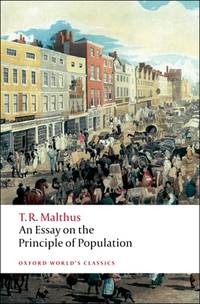
2008réf. SKU0635060Oxford University Press 2008-08-01. paperback. New. 7x5x0. New Textbook Ships with Tracking Oxford University Press paperback
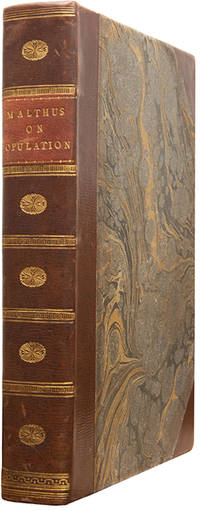
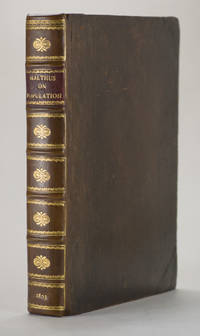
réf. 112135London T. Bensley for J. Johnson 1803. . Second edition substantially revised; 4to 27.5 x 22 cm; a few pencil annotations C4 cancelled and signed C3 title neatly tipped on to following leaf small chip lower edge b2 occasional spotting; modern half brown morocco gilt spine in 6 compartments contrasting red morocco lettering-piece very good; viii 4 610pp. The second edition substantially revised and in essence a 'new work'. The second edition substantially revised and in essence a 'new work' in which Malthus defends his views against a host of critics Preface. 'The central idea of the essay and the hub of Malthusian theory was a simple one. The population of a community Malthus suggested increases geometrically while food supplies increased only arithmetically. If the natural increase in population occurs the food supply becomes insufficient and the size of the population is checked by 'misery' that is the poorest sections of the community suffer disease and famine. The Essay was highly influential in the progress of thought in early nineteenth-century Europe' PMM. In this enlarged edition Malthus made clear what was only implicit in the first that prudential restraint should if humanly possible be 'moral restraint' that is delayed marriage accompanied by strictly moral pre-marital behaviour although he admitted that moral restraint would not be easy and that there would be occasional failures. Whereas in the first edition he had said that all the checks to population would involve either misery or vice in the second edition he attempted to lighten this 'melancholy hue' first edition p.iv and 'to soften some of the harshest conclusions of the first essay' second edition p.vii by arguing that moral restraint if supported by an education emphasising the immorality of bringing children into the world without the means of supporting them would tend to increase rather than diminish individual happiness. 'His work was an important influence on both Darwin and Wallace in their formulation of the concept of natural selection. It also had a profound influence on the decrease in size of families down to the present time' Garrison-Morton. Cf.PMM 251; Garrison-Morton 1693; Goldsmiths 18640; Kress B.4701. London, T. Bensley for J. Johnson, 1803. unknown
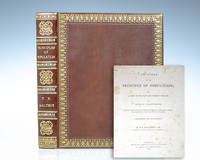
1803réf. 143843London: T. Bensley 1803. Rare second edition of this cornerstone text of modern economics. Quarto bound in full diced morocco raised bands gilt titles and tooling to the spine front and rear panels marbled endpapers. In very good condition. An exceptional presentation. “Malthus was one of the founders of modern economics. His Essay was originally the product of a discussion on the perfectibility of society with his father who urged him to publish. Thus the first edition published anonymously was essentially a fighting tract but later editions were considerably altered and grew bulkier as Malthus defended his views against a host of critics… The Essay was highly influential in the progress of thought in early 19th-century Europe and his influence on social policy was considerable… Both Darwin and Wallace clearly acknowledged Malthus as a source of the idea of ‘the struggle for existence” PMM 251. T. Bensley hardcover
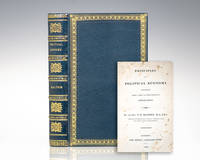
1820réf. 143844London: John Murray 1820. Rare first edition of Malthus' classic work. Octavo bound in full diced morocco raised bands gilt titles and tooling to the spine front and rear panels marbled endpapers. In near fine condition. An exceptional presentation. Thomas Malthus was an English economist known for his work in the fields of political economics and demography. His theory that prosperity and production lead not to utopia but to population growth and thereby back to social imbalance known as the "Malthusian trap" was expounded in his Essay on the Principle of Population 1789 one of his most notable and debated works. His Principles of Political Economy was written as a polemic against David Ricardo's On the Principles of Political Economy and Taxation and Say's Law arguing that demand did not grow simultaneously with supply but that they should be analyzed independent of each other expounding ideas which became influential on Keynsian economics. Both these works were divisive incurring backlash and support amongst notable economists. The bleak message of his Principle of Population rendered Malthus a notorious figure: Ebenezer Scrooge from A Christmas Carol for example justifies his refusal to give charity as a Malthusian attempt to control the population. John Murray hardcover
réf. AT 9788126915217USA Edition . New. Brand New! Fast Delivery This is an International Edition and ship within 24-48 hours. Deliver by FedEx and Dhl & Aramex UPS & USPS and we do accept APO and PO BOX Addresses. Order can be delivered worldwide within 6-10 days and we do have flat rate for up to 2LB. Extra shipping charges will be requested if the Book weight is more than 5 LB. This Item May be shipped from India United states & United Kingdom. Depending on your location and availability. unknown
réf. 104064London T. Bensley for J. Johnson 1806. . Third edition 2 vols 8vo xvi 501 63; vii 559 pp. contemporary tree calf gilt red morocco labels some pale foxing a very good set. The first two-volume edition. Contains important additions and corrections to the earlier editions including replies to his critics. 'The central idea of the essay -- and the hub of Malthusian theory -- was a simple one. The population of a community Malthus suggested increases geometrically while food supplies increased only arithmetically. If the natural increase in population occurs the food supply becomes insufficient and the size of the population is checked by 'misery' -- that is the poorest sections of the community suffer disease and famine. The Essay was highly influential in the progress of thought in early nineteenth-century Europe' PMM. 'His work was an important influence on both Darwin and Wallace in their formulation of the concept of natural selection. It also had a profound influence on the decrease in size of families down to the present time' Garrison-Morton. Garrison-Morton 1693; Goldsmiths' 19210; Kress B5067; Cf. PMM 251. London, T. Bensley for J. Johnson, 1806. unknown
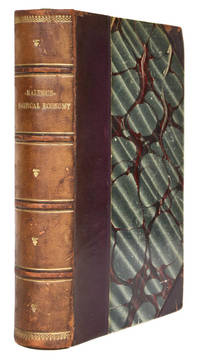
1820réf. 119668London: John Murray 1820. First edition of this classic work regarding nature of labor demand and profit. Octavo original boards retaining the original paper spine label. In very good condition. Ownership inscription from the African Society and stamp to the title page. Rare in the original boards. There can be no doubt that Malthus’ importance for economists today rests mainly on his Principles of Political Economy. It was because of this latter work that J. M. Keynes 1933 reinstated Malthus as a major figure in modern economic thought" New Palgrave. "In his 'Principles of Political Economy' Malthus was proposing investment in public work and private luxury as a means of increasing effective demand and hence as a palliative to economic distress. The nation he thought must balance the power to produce and the will to consume" DSB. "The Principles had only a limited impact at the time and was severely criticized by J. R. McCulloch and Ricardo; the latter prepared extensive critical notes. But more recently it has received greater recognition largely as a result of the comments by J. M. Keynes in the 1930s. Keynes argued that Malthus's theory of effective demand provided a scientific explanation of unemployment and that the hundred-year domination of Ricardo over Malthus had been a disaster for the progress of economics. Keynes believed that if economics had followed Malthus instead of being constrained by Ricardo in an artificial groove the world would be a much wiser and richer place" ODNB. John Murray hardcover
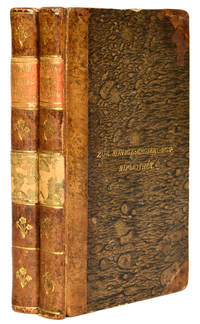
réf. 95379Altona I. F. Hammerich 1807. . First German edition 2 vols 8vo 20 x 12.5 cm. pp. xvi 368; pp. vii 358; very slight spotting to vol. 1. Contemporary half-brown leather binding; flat spine gilt bands separating compartments compartments 1 3 5 and 6 contain gilt floral decoration compartments 2 and 4 contain gilt lettering including translator's name and title gilt library stamp to both upper boards library stamps to verso of both upper boards and title pages pencil markings to verso of upper boards and endpapers; rubbed water or possibly glue marks to verso of upper boards and endpapers. Rare first German edition and first translation into a foreign language of this important work by the father of Malthusianism. Malthus' original work written in English was first published anonymously in 1798. It discusses the problem of the gap between population growth which is potentially exponential and the growth of food supply which is not. The work arose from a discussion between Malthus and his father about the possibility of a better society and went on to have an enormous impact on social policy. Ultimately Malthus believed population growth would always outrun food supply and therefore the betterment of society was impossible without stern limits on reproduction. For this reason he is often associated with Darwin. His views became popular again in the XX century largely due to the work of John Maynard Keynes. 'The essay exercised a strong influence on European intellectual development at the beginning of the nineteenth century. the Socialists fought him unanimously. and the Conservatives were happy that somebody was fighting against the spread of revolutionary ideas from the continent.' Carter/Muir. Thomas Malthus 1766 - 1834 was born into a family of intellectuals and his father was a great friend of the philosopher David Hume. He took holy orders in 1797 but in 1805 decided to become a professor teaching history and the relatively new subject of political economy at the East India Company college in Haileybury. He was elected a member of the Royal Society in 1819 and in 1834 founded the Statistical Society of London. Altona, I. F. Hammerich, 1807. hardcover
réf. 95378London John Murray 1820. . First edition; 8vo; small ownership stamp to lower outside corner of title-page small early 20th century bookseller's label to lower outside corner of verso of upper free endpaper a little age-toning and small ink smudge to title nineteenth century half calf over marbled boards rubbed at extremities spine faded a very good copy; vi 601 pp. The book was conceived as a series of tracts rather than a comprehensive and systematic treatise though Malthus published it to establish his own position against that of Ricardo with whom he had been having an ongoing debate about the nature of labour demand and profit. 'In his 'Principles of Political Economy' Malthus was proposing investment in public work and private luxury as a means of increasing effective demand and hence as a palliative to economic distress. The nation he thought must balance the power to produce and the will to consume' DSB. 'The Principles had only a limited impact at the time and was severely criticized by J. R. McCulloch and Ricardo; the latter prepared extensive critical notes. More recently it has received greater recognition largely as a result of the comments by J. M. Keynes in the 1930s. Keynes argued that Malthus's theory of effective demand provided a scientific explanation of unemployment and that the hundred-year domination of Ricardo over Malthus had been a disaster for the progress of economics. Keynes believed that if economics had followed Malthus instead of being constrained by Ricardo in an artificial groove the world would be a much wiser and richer place.' ODNB. Goldsmiths' 22767; Kress C.577. London, John Murray, 1820. hardcover
1798réf. 116955London: J. Johnson 1798. First edition of this cornerstone text of modern economics. Octavo bound in three quarters calf. Laid in is a clipping from an original manuscript signed by Malthus and entirely in his hand which reads in part "If at one time such a given product would make an effectual demand for certain commodities the conditions of the supply of which are supposed to remain the same it would immediately cease to make such effectual." Signed by Malthus in the lower right corner "Malthus." The verso features two further partial lines of text relating to supply and demand. In near fine condition. First editions of Malthus' magnum opus are exceptionally scarce. “Malthus was one of the founders of modern economics. His Essay was originally the product of a discussion on the perfectibility of society with his father who urged him to publish. Thus the first edition published anonymously was essentially a fighting tract but later editions were considerably altered and grew bulkier as Malthus defended his views against a host of critics… The Essay was highly influential in the progress of thought in early 19th-century Europe and his influence on social policy was considerable… Both Darwin and Wallace clearly acknowledged Malthus as a source of the idea of ‘the struggle for existence” PMM 251. J. Johnson unknown
1821réf. 23029Boston: Wells and Lilly 1821. First American edition of this landmark work in political economy. Octavo bound in three quarters leather over marbled boards black leather morocco spine label. In near fine condition. In his Principle of Political Economy Malthus was proposing investment in public works and private luxury as a means of increasing effective demand and hence as a palliative to economic distress. The nation he thought must balance the power to produce and the will to consume" DSB. Wells and Lilly hardcover
1807réf. 314917London: Printed for J. Johnson in St. Paul's Church-Yard by T. Bensley 1807. Fourth edition. 2 vols. 8vo. Contemporary mottled calf marbled edges. Rebacked in gilt calf one hinge tender. Fourth edition. 2 vols. 8vo. Malthus is as controversial as he is influential. "The central idea of the essay . was a simple one. The population of a community . increases geometrically while food supplies increase only arithmetically. If the natural increase in population occurs the food supply becomes insufficient and the size of the population is hecked by 'misery'" PMM. PMM 251 first edition; Kress 5219 Printed for J. Johnson in St. Paul's Church-Yard, by T. Bensley unknown
1716réf. 3115621716. 4 pp. Small splits at old folds old reinforcement to center fold very good. 4 pp. The bill of one John Boundy as issued by Daniel Malthus 1651-1717 apothecary to Queen Anne and George I and great-grandfather of the economist Thomas Robert Malthus. Items charged include various juleps cordials and draughts linseed oil chamomile flowers marshmallow leaves purging potions King's drops quieting powders etc. Attested paid to estate of Mr. Malthus at end by Tho. Graham and docketed paid £58 July 10 1718. With 4 small circular stamps with the motto of the Earl of Fortescue "Forte Scutum Salus Ducum" "A Strong Shield is the Salvation of Leaders" unknown
1820réf. 66825London: John Murray 1820. If Only Malthus Instead of Ricardo Had Been the Parent Stem From Which Nineteenth-Century Economics Proceeded What a Much Wiser and Richer Place the World Would be Today" MALTHUS Thomas Robert. Principles of Political Economy. Considered with a View to Their Practical Application. London: John Murray 1820. First edition. Octavo. vi 12-601602. Original boards uncut. With original paper label on spine. Hinges expertly and almost invisibly repaired. Old bookplate from "The Library of Victoria" with no other library markings. A very clean copy internally fine. Very scarce in original boards. Housed in a custom quarter black morocco clamshell gilt-stamped. First edition of Malthus' principal contribution to economic theory. Schumpeter describes Malthus' work in relation to that of his predecessors Adam Smith and Ricardo as follows: "Ricardo's work.started with the Wealth of Nations and recoined the latter's theoretical contents by a method that centered in the concept of value. Exactly the same thing is evidently true of the work of Malthus.except for his theory of saving and investment which on the face of it seems to be Malthus's own all the elements that enter into the analytic apparatus of that work and even its terminological arrangements point to the First book of the Wealth of Nations. Only whereas Ricardo recoined the doctrine of Wealth by means of the labor-quantity theory of value Malthus recoined it by the means of the theory of value that A. Smith actually used namely the theory of supply and demand.whereas Ricardo's analytic apparatus is geared to the problem of distribution.Malthus. geared his apparatus to the analysis of the whole economic process.Therefore Malthus should.stand in the history of analysis not only as the author of a valid alternative to Ricardo's theory but as the sponsor or rather as one of the sponsors of the victorious one." "Although Malthus is best known for the views on population contained in his Essay on Population.there can be no doubt that his importance for economists today rests mainly on his Principles of Political Economy 1820. It was because of the latter work that J. M. Keynes reinstated Malthus as a major figure in modern economic thought". New Palgrave. Cress C577. HBS 66825. $6500. John Murray unknown
1803réf. 65276London: Printed for J. Johnson.by T. Bensley 1803. The Economics of Population MALTHUS Thomas Robert. An Essay on the Principle of Population; Or a view of its past and present effects on Human Happiness; With an Inquiry into our prospects respecting the future removal or mitigation of the evils which it occasions. A new edition very much enlarged. London: Printed for J. Johnson. by T. Bensley 1803. Second edition enlarged and revised. Quarto. viii 4 610 pp. Contemporary calf skillfully rebacked to style and with corners renewed. Spine decoratively tooled in gilt compartments with burgundy morocco gilt lettering label. Endpapers renewed. Occasional light foxing. Title-page with publisher's diagonal paper flaw crease. Overall very good. A completely revised and greatly expanded edition of the most influential work on population ever written. Malthus published the first edition of his Essay in 1798 and was apparently unprepared for the torrent of controversy that his ideas provoked. His response to the public outcry was to spend the next five years refining and expanding his theories for this second edition so much so that "in its present shape it may be considered a new work and I should probably have published it as such omitting the few parts of the former which I have retained but that I wished it to form a whole of itself and not to need a continual reference to the other." preface Malthus' basic argument--that population increases geometrically at a greater rate than does the means of subsistence which increases arithmetically--was one of the earliest modern economic and social theories and his contention that it would eventually become necessary for society to impose some form of restraint on over-population provided the premise for heated socio-economic debate for almost two centuries. Kress B4701. See Printing and the Mind of Man 251. HBS 65276. $6500. Printed for J. Johnson...by T. Bensley unknown
1806réf. 236862London: Printed for T. Johnson 1806. Third edition. xvi 505 1 blank 60 index pp.; vii 1 blank 559 1 pp. 2 vols. 8vo. Contemporary three-quarter calf; joints cracked two boards detached; rubbed and scuffed; scattered foxing throughout; withal a good serviceable copy. Third edition. xvi 505 1 blank 60 index pp.; vii 1 blank 559 1 pp. 2 vols. 8vo. GERITS: Third edition the first to be published in 2 volumes and the first published after the Great Quarto edition of 1803 of one of the most important and influential books in the history of economic thought. The third edition contained numerous revisions among which was a text entitled A Reply to the Chief Objections which have been urged against the Essay on the Principle of Population which was also published separately so that it might be bound with earlier ones. Kress B.5067; Goldsmiths 19210; Einaudi 3669; Carpenter Economic Bestsellers XXXII 3; PMM 251 for the first edition; Blaug Great Economists before Keynes p. 141ff Printed for T. Johnson unknown
1817réf. 22733London: John Murray 1817. First edition. 1 vols. 8vo. Rebound in later buckram. Title a little foxed contents generally clean. First edition. 1 vols. 8vo. Issued in conformity with but separately from the fifth edition - the penultimate edition before the sixth and final one in his lifetime. Kress B.6973; Goldsmith 21762 John Murray unknown
1815réf. 39958London: Printed for John Murray 1815. Third edition. 47 1 pp. 1 vols. 8vo. Disbound with paper strip on spine pale dampstain to upper margin throughout not affecting text. Third edition. 47 1 pp. 1 vols. 8vo. Kress B 6539; Goldsmith 21179 Printed for John Murray unknown
réf. PJH55320J. P. Aillaud Paris 1820. VG bright set in contemporary slightly worn and scuffed calf bindings with red and black title labels to each spine. 501 452pp. 1st French Edition published same year as the English Edition. Two Volumes. From the collection of Professor Malcolm Deas 1941-2023 an Emeritus Fellow of St Antony's College Oxford and University Lecturer in the Government and Politics of Latin America 1966-2008 J. P. Aillaud (Paris) 1820 unknown
réf. 94314Leipzig Duncker & Humblot 1896. 8° XXIV 129 S. OLwd. Stemp. a Vors. sonst tadell. 010 Leipzig, Duncker & Humblot, 1896 unknown
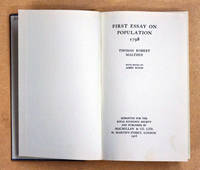
réf. 94317London Macmillan & Co 1926. 8° IX 396 S. XXVII Notes HLwd. Stemp. a Vors. sonst tadell. 010 London, Macmillan & Co, 1926 unknown
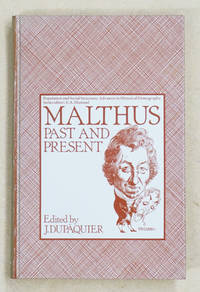
réf. 94302London Academic Press 1983. 8° XIX 416 S. OLwd. Stemp. a Vors. sonst tadell. 010 London, Academic Press, 1983 unknown
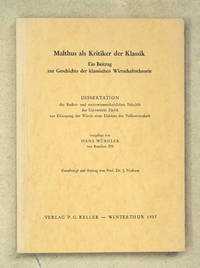
réf. 91296Winterthur Keller 1957. 8° XXIV 200 S. Brosch. Min. beschienen u. gebrauchsspurig Stempel a. Schmutztitel innen sonst tadellos. EA. Dissertation Universität Zèrich. 010 Winterthur, Keller, 1957 unknown
réf. 79636Urbana University of Illinois Press 1980. Gr.8° XXIX 686 XVIII S. Brosch. Einband gebrauchsspurig Kanten tlw. berieben Stempel a. Innendeckel innen sonst tadellos. 010 Urbana, University of Illinois Press, 1980 unknown
1996réf. JE-GYNI-TGYWRoutledge 1996. Hardcover. Very Good. Very faint small pink mark to long page edge. No other marks to book or cover. Clean bright pages tight binding pristine cover. Looks like new. An excellent copy of this rare volume. Items are dispatched the following or the same day. Please note our excellent customer feedback. Routledge hardcover