4.065 resultados
1922ref. 85914Boston: Houghton Mifflin 1922. First American Edition. First printing. Published the same year in London Constable. Octavo; red cloth hardcover; xix308pp. Spine darkened with mild soil to covers; endpapers toned from old jacket offsetting; text generally clean and unmarked; just a VG copy lacking the dustwrapper. A low-point which is saying something in the corpus of British antisemitic propaganda masquerading as a disinterested examination of the "Jewish Problem" by the noted Franco-English Catholic writer and historian. In the most reasonable-sounding way Belloc puts forward an argument for the segregation of British Jews on the grounds that "the Catholic Church is the conservator of an age-long European tradition and that tradition will never compromise with the fiction that a Jew can be other than a Jew." Even in the context of pre-Hitlerian "passive" antisemitism it was and remains a foul little book albeit one that needs reading. SINGERMAN Antisemitic Propaganda 0129. Houghton Mifflin unknown
1922ref. 85914Boston: Houghton Mifflin 1922. First American Edition. First printing. Published the same year in London Constable. Octavo; red cloth hardcover; xix308pp. Spine darkened with mild soil to covers; endpapers toned from old jacket offsetting; text generally clean and unmarked; just a VG copy lacking the dustwrapper. A low-point which is saying something in the corpus of British antisemitic propaganda masquerading as a disinterested examination of the "Jewish Problem" by the noted Franco-English Catholic writer and historian. In the most reasonable-sounding way Belloc puts forward an argument for the segregation of British Jews on the grounds that "the Catholic Church is the conservator of an age-long European tradition and that tradition will never compromise with the fiction that a Jew can be other than a Jew." Even in the context of pre-Hitlerian "passive" antisemitism it was and remains a foul little book albeit one that needs reading. SINGERMAN Antisemitic Propaganda 0129. Houghton Mifflin unknown books
1964ref. 054033Turkey: N. p. ca. 1964 or 1965 1964. 1st Edition . Soft cover. Fine. 8vo - over 7¾ - 9¾" tall. Original pictorial wrappers. Oblong large 8vo. 13 x 25 cm. In Turkish. 22 p. many b/w plates. Not recorded in any platform and library extremely rare propaganda pamphlet prepared for 60's Turkey by the UAR The United Arab Republic. On the frontispiece the leader of the UAR Egyptian President Gamal Abdel Nasser's iconic words with his portrait by Moheeb. The pamphlet includes the UAR's vision usually and its social and economic policies projects Suez Canal Al-Wady al-Gadid industry navigation mining oil and its industry agriculture and agricultural reforms livestock culture and education medicine water tourism etc. Extremely rare. N. p. [ca. 1964, or 1965] paperback
1935ref. 34063Berlin: May 18th 1935. 1935. Very good. - 88 words typed on sheet of cream paper 11-5/8 inches high by 8-1/4 inches wide with her name & address typed at the top. Signed "Dr. M. Unger" with 2 ink corrections. Attached is a typed single-spaced report on the 1934/35 Winterhilfswerk campaign filling a 2nd sheet of the same paper. The top corners of both sheets are creased with light creasing to their top & bottom edges. There is a paper-clip mark to the letter at bottom left. Folded twice for mailing. Very good. Marta Unger writes in English to a Mr. B. von Schenk in Hoboken New Jersey thanking him for his letter. "I was interested to read the article by Mrs. Ruth Frances Woodsmall about 'Women in the new Germany'. I met Mrs. Woodsmall last summer and showed her myself our German women work. But it is rather difficult to explain to people that what we want if the otherside stands on a quite different standpoint". She encloses a typed article in English about "our Winter Help Campaign 1934/35". Dr. Marta Unger was born in Japan in 1903 to an American mother. Her family settled in Heidelberg Germany in 1908. After working in the Foreign Ministry in Berlin from 1924-26 and obtaining a doctorate of law at the Johann-Wolfgang-Goethe University in Frankfurt she worked as a clerk in the Propaganda Ministry. In 1934 she was appointed head of the Foreign Affairs department of the Reichsfrauenfuhrung the post she held when she wrote this letter. In 1948 during the Wilhelmstrasse trial against German diplomats in Nuremberg Unger was part of the defense team of Ernst Woermann whom she later married. Woermann had been the ambassador to China. The Winterhilfswerk was a program to help clothe feed and keep warm the needy during the winter months. An important part of its funding came from collection drives to which all good German citizens were expected indeed were relentlessly pressured to contribute. Unger's report shows the amounts spent on clothes and fuel and on bread flour potatoes and other staples. She also writes about the "godmother" program by which childless people would give meals clothes shoes and Christmas gifts to a needy child. Berlin: May 18th, 1935. hardcover
1970In 8, cartella contenente 9 fascicoletti;-Manifestes de la generation grise et invisible-La merchandise ou la vie-Ligne noire-Petit livre peau-rougeCartella schiacciata, fascicoli in ottimo stato.Luogo di pubblicazione ParisEditore Le soleil noirAnno pubblicazione 1970Collana Les Cahiers noirs du soleil-3Materia/Argomento Costume, Curiosita, Pubblicita, propaganda, Politica, Fumetto
1964ref. 012670Comision de orientacion revolucionaria de la direccion nacional del PURCS 1964 En feuilles
1940In folio; (258) pp. Brossura editoriale. Esemplare in ottime condizioni di conservazione. Rarissima opera di propaganda politica e storica nazista stampato da questa celebre casa editrice tedesca di propaganda. L'opera, utilizzando documenti originali raccolti dai servizi segreti tedeschi, li utilizza per ricreare una versione alternativa della storia, dove il governo nazista cerca di far ricadere sulla Polonia le cause del secondo conflitto mondiale. All'interno sono presenti, in riproduzioni fotografiche, 16 documenti polacchi relativi alla genesi della guerra: facsimile di telegrammi, lettere, ordini e rapporti di Edward Raczynski (dal 1934 ambasciatore polacco a Londra), Jerzy Potocki (dal 1936 al 7 novembre 1939, ambasciatore di la Repubblica di Polonia a Parigi), Gustaw Potworowski (dal 15 maggio 1936 inviato straordinario e ministro plenipotenziario in Svezia), Jan Anyaki (diplomatico). Ogni documento è tradotto dal polacco all'inglese. I documenti sono stati selezionati in modo tale che il loro contenuto, seppur originale, corrispondesse alle tesi della propaganda nazista. Ad esempio la tesi secondo la quale la Germania fosse un paese minacciato da aggressioni esterne, tesi in parte riportata, ma come fatto ipotetico e privo di fondamento, in una copia di una lettera dell'addetto militare polacco a Lisbona, dal titolo “Valutazione della situazione internazionale secondo Chamberlaine, membro della missione militare britannica” nella quale si dice che “Siamo ben consapevoli del bluff della Germania e dell'Italia. Personalmente, sono dell'opinione … che dovremmo iniziare la guerra ora”, tesi riviste anche nelle lettere dell'Ambasciatore della Repubblica di Polonia a Washington datate 1936 prima e poi Parigi 1940, che contava notizie su un conflitto bellico tra l'URSS ed il Terzo Reich nelle quali, fra l'altro, i diplomatici, con notevole lungimiranza, concludevano come la forza potenziale dei sovietici era all'epoca sconosciuta e che molto probabilmente, un conflitto, fra i due paesi, sarebbe destinata a un guerra lunga ed estenuante. In una delle lettere, Bullitt, sosteneva che le democrazie occidentali avrebbero dovuto aspettare l'inizio di un conflitto russo-tedesco per attaccare il Terzo Reich e debellarne il pericolo. I documenti furono raccolti e pubblicati, anche con l'intento di incrinare i rapporti fra gli Alleati attraverso la divulgazione di documenti riservati. Non a caso, lo scritto attacca in particolare l'ambasciatore polacco a Washington accreditato anche a Cuba, Jerzy Józef Potocki (1889-1961) che venne molto danneggiato dalla pubblicazione delle sue lettere riservate da parte dei naziste per le frasi legate alla forte influenza degli ebrei sui media e la politica americana. Molto raro.
1955ref. 209986United States: Lloyd Friedgen and Rajkamal Kalamandir Studio. circa1955. Movie Front of House/Lobby card 28 x 35.7 cm inset sepia photographic still from the film surrounded by a red border with the movie title in yellow a white dragon curling above the title in very good condition. Striking Front of House/Lobby card for a 1955 film produced at the height of anti-Communism in the West. The byline for the film was lurid: "Swooping down from the North they ceated a brutal Reign of Terror" and as The Movie Database TMDB notes the film was "culled from footage of a Hindi film titled 'The Journey of Dr. Kotnis.' Producer Lloyd Friedgen added real and staged footage of wartime atrocities." It played to both American and Indian suspicions about the rise of China and appeared the year after Nehru's visit to Beijing. During the Communist Revolution in China a young Indian physician Dr Dwarkanath Kotnis Shantaram Rajaram Vankudre aids the resistance movement working against the development of germ warfare by Communist doctors and develops a serum then meets and courts a Chinese girl Ching Lan Jayashree. . Lloyd Friedgen and Rajkamal Kalamandir Studio. unknown
1974In 1973, the Weather Underground Organization established a printing operation called the Red Dragon Print Collective, a venture which Braley helped run. Operating out of a soundproof apartment, the print collective was a formative part of the Weather Underground Organization for its final three years. The Red Dragon Print Collective was responsible for producing the Weather Underground Organization's book Prairie Fire. All printing, binding, and collating of materials was done by the members themselves. As a precaution, work was done wearing gloves to ensure that no fingerprints would be left.
(ca. 31 x 23,5 cm). 1 Blatt. Großformatiges Blatt mit Deckeltitel und aus mehreren Schriftgrößen gesetztem Schriftbild. Blatt etwas gebräunt und gerändert, zweifache Faltlinien. Altersentsprechend und mit Blick auf den zeitgenössischen Einsatz gut erhalten. Original-Blatt (Kleinplakat) aus dem Frühjahr 1920. Das Blatt beschreibt aus Perspektive der Arbeiterschaft die Kämpfe in verschiedenen Städten Thüringens und im gesamten Land zwischen "Roten Kampftruppen" und Reichswehreinheiten. Infolge des Kapp-Putsches am 13. März 1920 kam es zu starken Abwehrreaktionen seitens der Arbeiter. Ein von der SPD forcierter Generalstreik (der größte überhaupt bis heute) legte das ganze Land lahm. In verschiedenen Teilen des Landes, auch in Thüringen, kam es zu Aufständen der organisierten Arbeiterschaft. Das vorliegende Blatt vom 19. März ruft zu weiterem Durchhalten auf und berichtet neueste Meldungen. Es heißt hier beispielsweise: "Jetzt heißt es Durchhalten bis zum Äußersten. Dann muß der volle Sieg auf der ganzen Linie unser sein!". Zu den Neuesten Meldungen zählt: "Gotha nach schwerem Kampf restlos in der Hand der Arbeiter!". Die sogenannte "Volkswehr" errang am 19. März 1920 tatsächlich den Sieg über die dortigen Reichswehreinheiten. Am 23. März dann mußten diese organisierten Arbeitereinheiten ihre Waffen ablegen und sich selbst auflösen. Das Original-Blatt (Kleinplakat) stammt aus der kurzen Periode mitten im Kampf der Arbeiter. Sehr seltenes Dokument aus der frühen Geschichte der Weimarer Republik!
1937ref. 15260Leipzig, Zeitgeschichte-Verlag Wilhelm Andermann, 1937. 1. Auflage mit 101 teils fot. Abb. wie Zeichn. und Faksimiles aif Kunstdruckpapier. OLn., 398 S., Kopfbraunschnitt, kl. 4° (=ca. 33 cm)
1915ref. 40499Berlin, Verlag für Sozialpolitik - Hermann Paetel Verlag, MCMXIII [1913] / 1915. 2 Bände Original-Leinwand mit Farbschnitt; 4°; [1] XI (I) 360 Seiten; [2] XV (I) 306 (6) Seiten; jeweils zahlreiche farbige Bildtafeln.
ref. 163318No publication details. No date. Large Chinese Cultural Revolution papercut on red paper with paper backing featuring Mao clapping and looking benevolently towards the huge crowds around him the sun with its bold rays extending behind him some people around Mao are in different minority costumes and others in their work outfit many of them are holding the red little book of Mao's quotations up high above their heads. Block of text lower margin in Chinese excellent condition papercuts sheet measures 53 x 73.9cm. Chinese text in lower margin reads "The East is Red. The Sun is Rising." the first line of a very popular Cultural Revolution song 东方红 The East is Red. Adapted from northern Shaanxi folk song the song was "re-composed" by 李有源 Li Youyuan and 公木 Gong Mu lyrics 李涣之Li Huanzhi Melody in 1940s. . No publication details. unknown
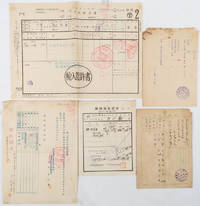
ref. 222006Manchukuo.: 外山卯三郎. Toyama Usaburō. Collection of nine items of ephemera relating to the making of Daichi no soshoku 大地の装飾 a Japanese film promoting Japanese policies in Manchuria. The collection includes four business cards 9 × 5.5 cm two telegrams 21.2 × 15 cm a customs duty receipt 20 × 15.3 cm an import declaration form 25.4 × 36 cm and an application for import duty exemption 27.2 × 19.6 cm. Some browning marking and signs of use but overall very good. A collection of business documents relating to the import and export of film stock etc for the making of the 1938 movie "Daichi no Sōshoku" 大地の装飾 Adorning the Earth conceived and directed by the film maker and art critic Toyama Usaburō 外山夘三郎 1903-1980. The film aimed to provide an evocative cinematic depiction of the scenic beauty and cultural traditions of Manchuria and provided implicit support for the creation and policies of the Japanese client state of Manchukuo. These documents give a glimpse of the practical tasks which went into the making of the film. Materials for film making had to be imported from Japan to Manchuria via Korea and the receipts and forms preseved in this collection were issued by the Manchukuo customs authorities in Antung now Dandong just across the Yalu River from Korea. This was a key gateway on the transport link from Japan to Manchukuo. Goods were commonly shipped from Japan to Pusan and then by rail up the Korean Peninsula to the Yalu River Bridge that crossed the border to Antung. Included in this collection are four name cards two of which are annotated from Japanese officials working in the Manchukuo administration: two in the Antung Customs Bureau and two in the information section of the central administration in the Manchukuo capital Shinkyō now Chanhchun. Their inclusion suggests that personal negotations as well as paperwork were needed to get the precious film stock through customs and into Manchukuo. . 外山卯三郎. [Toyama Usaburō]. unknown
195624 pages of detailed text. Contents: The Great Conspiracy; "Don't Tell the People"!!!; How They Do It in New York; The Pattern of Collusion; As in New York, So in Washington; They Stop at Nothing; Psychology Their Favorite Tool; How the "Reviews" Boomeranged; Is Our Press Controllled? - Foolish Question!!!; Now it is up to You!. Light wear. Clean and unmarked. A quality copy. Book
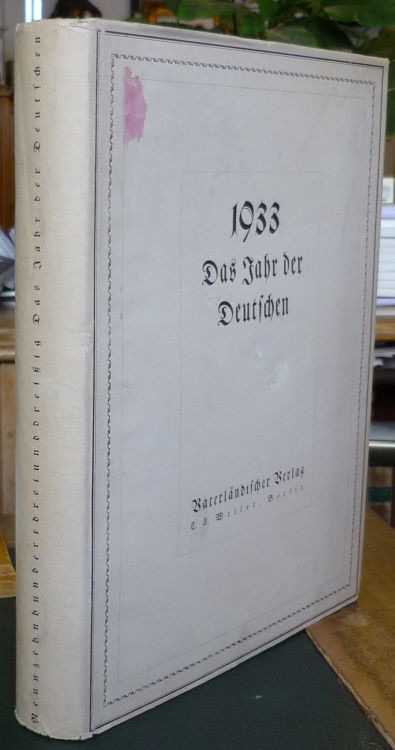
1934ref. 26853Berlin, Vaterländischer Verlag C. A. Weller, (1934). Folio (29 x 22 cm). Mit getöntem Frontispiz u. 2 Bl. Faksimile sowie zahlr. photograph. Abb. im Text. X, 509 S., 1 Bl. OLwd. m. goldgeprägt. Deckelvignette u. Rückentitel sowie Orig.-Schutzumschlag. Farbiger Kopfschnitt.
1919ref. MILI2427München, Bruckmann o.J. [1915 - 1919]. Quer-Gr.-4°. IV, 407; 407, VIII; VIII, 408 S. m. über 4000 s/w Abb., Karten u. Urkunden, OBrosch. in 3 OHLn.-Flügelmappen, einige Bl. der 30. Lieferung randrissig.
1975Testi: Castro Fidel. pagg. 196; BN; rileg. rigida in cofanetto. Editore: Editorial De Ciencias Sociales, La Habana, 1975.
ref. 105757Moscou 1958, Editions d'Etat de Construction d'Architecture et des Matériaux de Construction, Union des Architectes de l'U.R.S.S, Direction d'Architecture de la Planification de la ville de Moscou, 347x269mm, 205p, 11 planches ou cartes hors texte, plein similicuir vert de l’éditeur, plan de Moscou estampé à froid sur le plat, titre en argent et or au dos.
ref. 101498Affiche 600x420mm, imprimée à Paris portant la mention " Comité de solidarité avec la BPP - Simone de Beauvoir ".Probablement produite vers 1969-70 après la participation des Black Panthers au Festival culturel panafricain à Alger, avec de nombreux musiciens français et américains, de free-jazz en particulier. À l'époque, Seale était emprisonné à la suite des émeutes survenues lors de la convention nationale démocrate de 1968 à Chicago.(101498)
1930ref. 1046881930 Moscou, éditions d’état de la RSFSR, 1930, 416 x 300 mm, 32p, broché sous cou- verture illustrée. (104688)
ref. 200804649Munchen, Zentralverlag der NSDAP franz eher nachf., 1940 ; in-8, 304 pp., cartonnage de l'éditeur (ptes usures). Kameraden erzahlen von Dr. Ley aufgeschrieben von Walter Kiehl - 5 auflage - tampons.
ref. 222996[Paris], Relief-Marchandeau, s.d. (1867) in-folio (48 x 31 cm), en feuille.
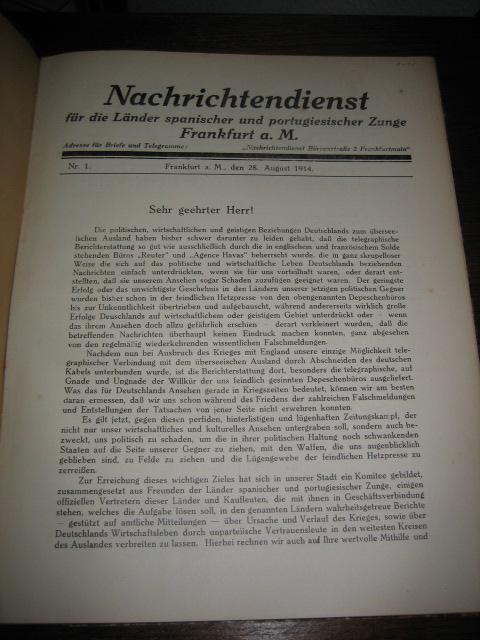
1916ref. 58124Frankfurt: Verlag Nachrichtendienst, 1914, 1915, 1916. nicht paginiert, einige s/w-Fotografien und Zeichnungen, einige Orig.-Dokumente in Kopie beigebunden, 4°, priv. Halbleinenband,
1974ref. 126404Leningrad, 1974. Affiche couleurs Leningrad, 1974. Affiche couleurs au format 56 * 42 cm et provenant de l'album "L'éducation" du groupe Fighting Pencil (Beovoy Karendash) de Leningrad. Très bon éat. C'est au cours de Décembre 1939 que des artistes de Leningrad décident de créer le groupe Fighting pencil et produisent des affiches de propagande ou des affiches de caricature. Ses membres fondateurs étaient les artistes graphiques Ivan Astapov, Orest Vireysky, Valentin Kirdov, Vladimir Galba, Nikolai Muratov et Boris Semionov. La première affiche collective a été publié sur le sujet de la Guerre d' Hiver contre la Finlande," arbre de Noël..." et entièrement peinte à la main. La première période de la "Bataille des Crayon" a pris fin avec la fin de la guerre avec la Finlande au printemps de 1940. En Octobre 1943, la première exposition du groupe Fighting Pencil s'ouvre à Moscou, à la Bibliothèque Lénine. Elle gagne l'attention du public, à la fois à Moscou et à Kouibychev ou l'exposition a été transporté. Après un arrêt de quelques années, le groupe reprend ses activités en 1956. Il produit à cette période, des affiches de satires sociales et politiques sur la vie interne en URSS et contre "l'impérialisme mondial", pour mener à bien la propagande politique visant à augmenter les taux de production et de la discipline du travail; à populariser le sport, l'hygiène et les règles de circulation; et la satire de la vie privée. L'association a continué à travailler jusqu'au début des années 1990, rejointe par des artistes tels que MS Belomlinsky, VA Galba, JV Efimovsky, VA Zavyalov, GV Kovenchuk, YP Lobachev et YV Trunev... D'autres affiches sont disponibles, envoi de photos sur demande.