[CHINESE PROPAGANDA PAPERCUT].Biblio.com
4072 resultados
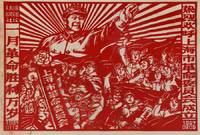
ref. 157440No publication details. No date. Large Chinese Cultural Revolution papercut on red paper with paper backing. This papercut features a crowd of people cheering together for the establishment of Shanghai Revolution Committee. Among them two female red guards are holding a banner showing the name of the committee people on left corners are playing musical instruments many are holding high of the little red book of Mao's quotations. There is a head and shoulders portrait of Mao Zedong's with the sun with its bold rays extending behind him. Excellent condition blocks of text in Chinese papercuts sheet measures 50.3 x 73.2cm. Text in right margin reads "Many Cheers on the Founding of the Revolution Committee of Shanghai City./February 5th 1967". The dates here shows the committee was established on February 5th 1967. Text in left margin reads "China Military China Daily Editorial./The victory of January Revolution last for ten thousand years./ January 12th 1967." The dates shows when the article was published in the newspaper. In January 1967 a political campaign led by 张春桥 Zhang Chunqiao and supported by Mao Zedong had undergone in Shanghai. Zhang and other leaders of this campaign took over the local Shanghai government and established a local revolution committee by rebellion factions. This event marks the beginning of the power seizure movement nationwide and it propels the Cultural Revolution into full swing. . No publication details. unknown
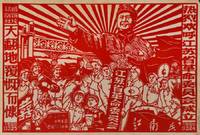
ref. 157438No publication details. No date. Large Chinese Cultural Revolution papercut on red paper with paper backing. Papercut features a crowd of people cheering together for the establishment of Jiangsu Revolution Committee. Among them two people are holding a banner showing the name of the committee some soldiers in uniform are playing musical instruments some are holding the little red book of Mao's quotations a worker on left corner is holding a flag showing 囍 Double Happiness and a peasant is lifting a banner showing The Highest Order from Central Communist Party of China which says "Never forget the class struggle". A head and shoulder's portrait of Mao Zedong the sun with its bold rays extending behind him and a road-rail bridge in the background completes the picture. Excellent condition blocks of text in Chinese papercuts sheet measures 49.9 x 73.4cm. Text in right margin reads "Many Cheers on the Founding of the Revolution Committee of Jiangsu Province./March 24th 1968". The dates here shows the committee was established on March 24th 1968. Text in left margin reads "China Military China Daily Editorial./Heaven-and-earth overturned bringing great changes. People are overjoyed./ March 25th 1968." This phrase is quoted from a poem by Mao Zedong. The dates shows when the article was published in the newspaper. . No publication details. unknown
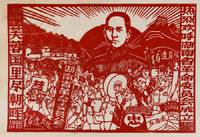
ref. 160161No publication details. No date. Large Chinese Cultural Revolution papercut of red paper loosely presented on paper backing. This papercuts features a crowd of people cheering together for the establishment of Hunan Revolution Committee. Among them two people are holding a banner showing the name of the committee some of them are playing musical instruments and the majority of them are holding their hands high with the little red book of Mao's quotations. Mao Zedong's head and shoulder portrait the sun with its bold rays extending behind him. Views of mountains and villiage are also at the background. Excellent condition blocks of text in Chinese papercuts sheet measures 51.7 x 71.7cm. Text in right margin reads "Many Cheers on the Founding of the Revolution Committee of Hunan Province./April 8th 1968". The dates here shows the committee was established on April 8th 1968. Text in left margin reads "China Military China Daily Editorial./Confederate roses are opening beautifully at my home town. The Sunshine at dawn is shining there/ April 10th 1968." This phrase is quoted from a poem by Mao Zedong. The dates shows when the article was published in the paper. The blocks of texts on the banners and flags are the names of the committee and rebel factions. . No publication details. unknown
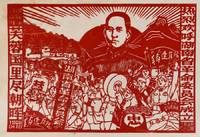
ref. 157441No publication details. No date. Large Chinese Cultural Revolution papercut of red paper loosely presented on paper backing. This papercuts features a crowd of people cheering together for the establishment of Hunan Revolution Committee. Among them two people are holding a banner showing the name of the committee some of them are playing musical instruments and the majority of them are holding their hands high with the little red book of Mao's quotations. Mao Zedong's head and shoulder portrait the sun with its bold rays extending behind him. Views of mountains and villiage are also at the background. Excellent condition blocks of text in Chinese papercuts sheet measures 49.4 x 71.9cm. Text in right margin reads "Many Cheers on the Founding of the Revolution Committee of Hunan Province./April 8th 1968". The dates here shows the committee was established on April 8th 1968. Text in left margin reads "China Military China Daily Editorial./Confederate roses are opening beautifully at my home town. The Sunshine at dawn is shining there/ April 10th 1968." This phrase is quoted from a poem by Mao Zedong. The dates shows when the article was published in the paper. The blocks of texts on the banners and flags are the names of the committee and rebel factions. . No publication details. unknown
ref. 18134Central Office of Information Grand in-folio à l'italienne Couverture rigide à anneaux Londres
ref. 104703(104703)
1930Very Good Turkish In modern photograph album including 40 photographs. In various sizes. Album size: (20x16 cm). Descriptive notes on backsides of photographs. 1934 Fevzi Çakmak and military stuff in Izmir.; [An inspection].; On a board (ship) (Small size).; Train riding practice in 1936, Tekirdag.; [In a train].; [Afyon] Kocatepe in [1]941 on railways (Small size).; Procession in Tekirdag - 1936 (Small size).; [On a board (ship)] (Small size).; Fevzi Çakmak and military stuff.; Mariners in 1935.; Fevzi Çakmak with a machine gun.; Fevzi Çakmak on ship's board with binoculars in 1935.; Artillery practice.; Inspection of aviators in Eskisehir by Fevzi Çakmak and other stuff in 1932 etc. The Thrace Maneuvers (Trakya Manevralari) were conducted by the Turkish Armed Forces in 1937 between 17 and 20 August under the command of the Chief of General Staff Marshal Fevzi Çakmak. Prior to the upcoming World War II, it was carried out both as a review of the level of preparation of the armed forces and as a show of strength for potential enemy threats. First of all, the fascist movement led by Benito Mussolini in Italy and then the Nazis, led by Adolf Hitler in Germany, after they took the power to aggressively take up arms and run again to share the land in the European continent, were regarded as a sign of an upcoming war. Therefore, Turkish state officials, especially Atatürk, decided to get military exercises to prepare the armed forces for a military confrontation and to intimidate potential threats.
ref. 95122aaf1933-1934, A4 7 Bl. + 15. Bl., nur einseitig beschriftet, Typoskripte mit hs. Korrekturen und Unterstreichungen im Text, am Rand durchgehend etwas fleckig und Ecken geknickt, Rostspuren von Büroklammer, ansonsten guter Zustand,
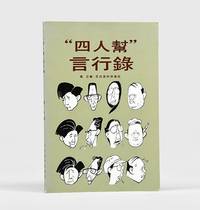
1977ref. 151285Hong Kong: Wenhua ziliao gongying she 1977. Chairman Mao's widow under attack First edition first printing of this collection of propaganda cartoons seldom seen in commerce and presenting here in exceptional condition. This visually striking work was issued by a Beijing-backed publisher in Hong Kong to bring to the colony the tumultuous politics of the post-Mao mainland in particular the denunciations of a fallen political faction led by Chairman Mao's widow. The roots of the present publication lie in the dramatic political changes that gripped the People's Republic of China in autumn 1976. After Mao's death in early September a new leadership grouping quickly coalesced around the up-and-coming politician Hua Guofeng and less than a month after Mao's passing Hua arranged the arrest and imprisonment of a rival wing of the communist party leadership led by Mao's widow Jiang Qing. Hua's faction argued that Jiang and her allies posed an existential threat to Mao's revolutionary legacy. Jiang along with Zhang Chunqiao Yao Wenyuan and Wang Hongwen were quickly christened the "Gang of Four" by state media and they became the go-to scapegoats for the chaos of the Cultural Revolution years 1966-1976. Ultimately their fate was decided in a sensational televised trial in 1981 at which they were sentenced to lengthy prison sentences. After the "Gang's" arrest to make the official narrative stick and to prepare the way for the trial state propaganda organs pumped out huge quantities of anti-"Gang" agitprop. This material was often visual with professional and amateur caricaturists and cartoonists drafted in to draw memorable condemnations of the "Gang's" political crimes. The present work anthologises some of the best of these drawings from the Chinese mainland for readers in Hong Kong. The publisher's Beijing links can be seen in the way the text accompanying the cartoons mirrors the party lines emanating from communist newspapers such as the People's Daily while the blurb on the rear wrapper talks of the Chinese people's "hatred" of the "Gang." The caricatures present all the standard political refrains of state media: the work begins with images of Jiang Qing showing her pseudo-imperial political aspirations while her allies toady at her feet; Zhang Chunqiao and Yao Wenyuan become grotesque pen-wielding ideologues; and Wang Hongwen is depicted primping and preening ready to take on the position of premier. The "Gang" are often depicted together as a choir singing counter-revolutionary anthems as a group indulging in an hedonistic decidedly un-socialist lifestyle and as a four-headed monster with tentacles extending across the political world. Quite apart from their entertainment value these materials were extremely successful. The anti-"Gang" narrative remains in vogue today and still exerts a strong influence on academic research into modern Chinese politics. Octavo. Cartoons and drawings throughout title page and copyright page printed in blue. Original green paper wrappers title and caricatures printed in red white and black. Spine lightly sunned with touch of wear to foot. A fine copy. unknown
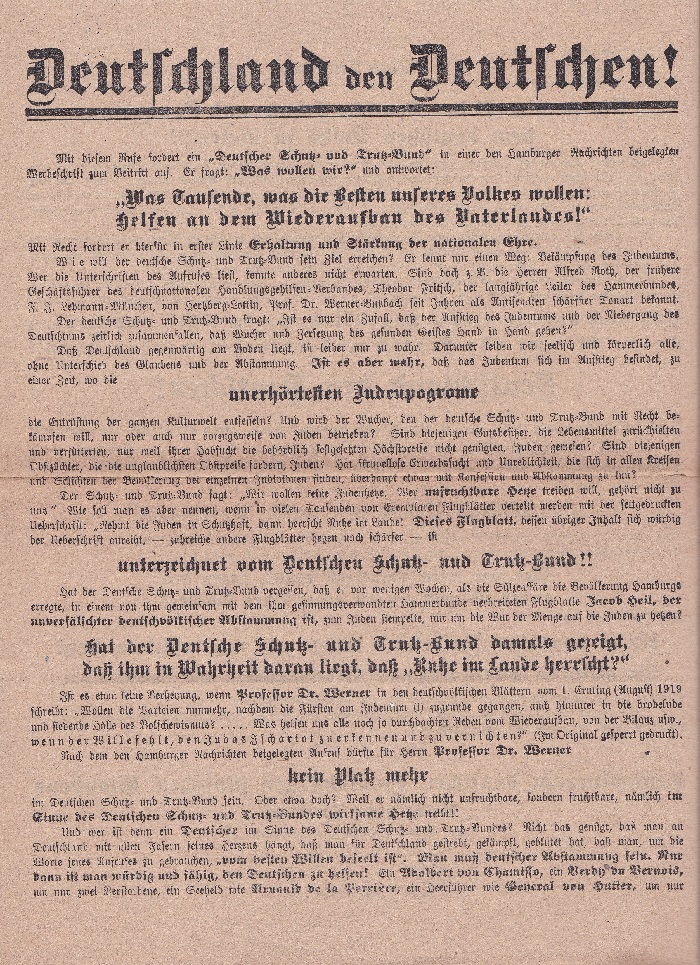
1919ref. 9148CHamburg:, Centralverein deutscher Staatsbürger jüdischen Glaubens., [1919]. (ca. 29,4 x 23 cm). 2 S. Original-Flugblatt. Papier wurde gefaltet, sonst wohlerhalten. Altersentsprechend sehr guter Zustand.
1931ref. 60636Diessen : Huber 1931. 192 S. : mehr. Taf. ; 8°, Schrift: Fraktur / Altdeutsche Schrift., Eigentümersignatur auf Vorsatzblatt (Ulrich Crämer deutscher Historiker und in der Zeit des Nationalsozialismus Professor an der Universität München.) Softcover/Paperback, Papier und Schnitt stärker bräunlich, sonst Ecken und Kanten gebrauchsspurig, sonst Exemplar in gutem Erhaltungszustand
1944ref. 49042Die Wehrmacht, Bln. 1944. Mit sehr zahlreichen s/w Abbildungen. Folio. OBrosch. Heft 9 mit durchgehendem Einriß (3 cm) am Rücken. Heft 16 mit Gekritzel auf der Rätselseite. Sonst nur kleinere Gebrauchspuren.
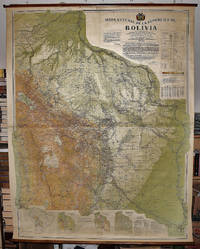
1936ref. 2309280012Sociedad de Ingenieros de Bolivia y Centro de Propaganda y Defensa Nacional La Paz 1936. Maps. Very Good. Large color map of pre-WWII Bolivia. 146 x 185 cm. Mounted on muslin wood rods top and bottom. Scale 1:1000000. Relief shown by gradient tints and spot heights. Includes text climate diagram and 4 inset maps. Inset maps of: Vias de comunicacion internacional Sud America -- Vialidad y comunicaciones en Bolivia -- Riquezas explotables en Bolivia -- Isogonas magneticas para los anos 1930 y 1940 -- Perfil del territorio. Note: This is a large heavy map. Additional postage will apply depending on delivery location Sociedad de Ingenieros de Bolivia y Centro de Propaganda y Defensa Nacional, La Paz, unknown
1919167 pages. Black and white plates, including tissue-protected frontispiece. Author was a Captain in America's Military Intelligence Division during WWI. A compilation of his fascinating and informative letters. Gift greetings atop front free endpaper otherwise contents clean and unmarked. Light age-toning to contents. Binding intact. Somewhat above-average external wear and soiling. A sound copy. Book
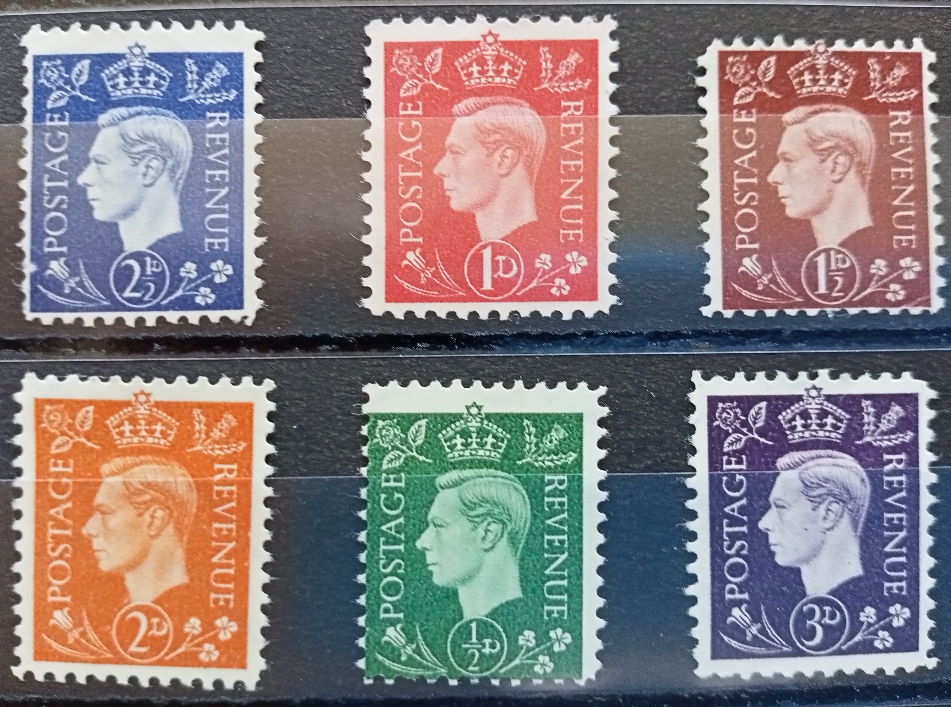
1944ref. 7518AKZ Sachsenhausen, 1944. 6 Briefmarken.
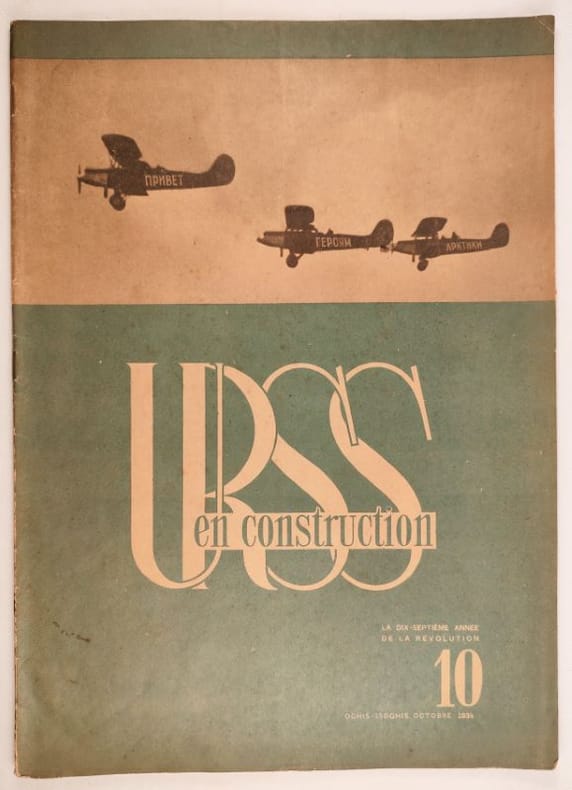
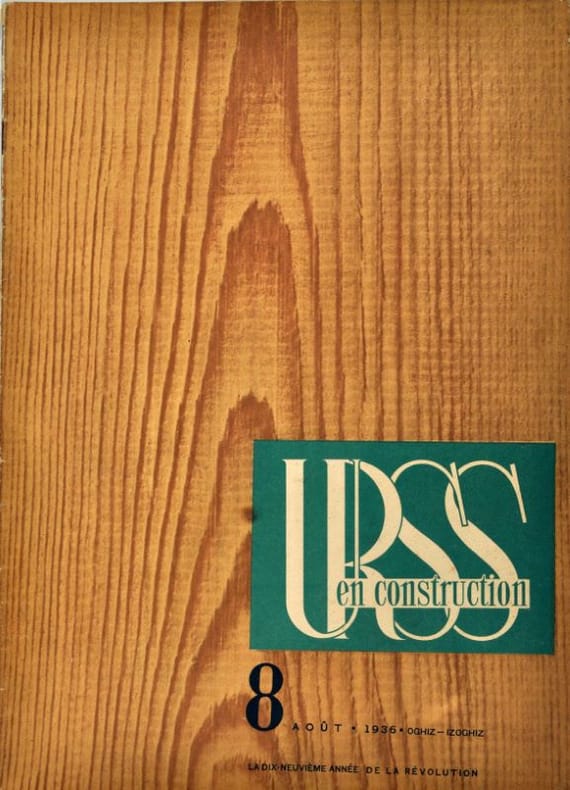
1936ref. 1047151936 Moscou, Isoghis, 1936, 416x300mm, 40p., un petit dépliant avec 12 photographies fixé à la page 8, une carte sur un rabat, broché sous couverture imitation bois. (104715)
ref. awd-1004Strasbourg, Baby Lone, 1986. Portfolio in-4 à l’italienne en toile bicolore, titre sur le 1er plat (6 pp. découpées en diagonale contenant les 2 textes et la justification). En regard : 4 sérigraphies en couleurs signées de Jean-Claude Forest, dans un compartiment. Conception : Daniel Sardet. Tirage à 126 ex.
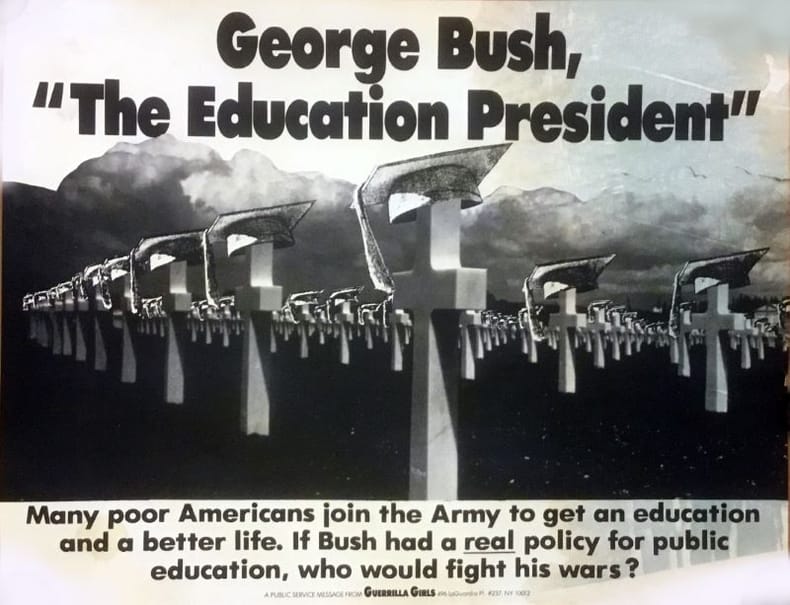
ref. 104193Affiche 432x552mm impression offset.Trous de punaises mouillure.
1930ref. 8-0-278o.O., Rudolf Renner M.d.L. / Peuvag (Druck), 1930. 8°, 16 Bll, Klammerheftung
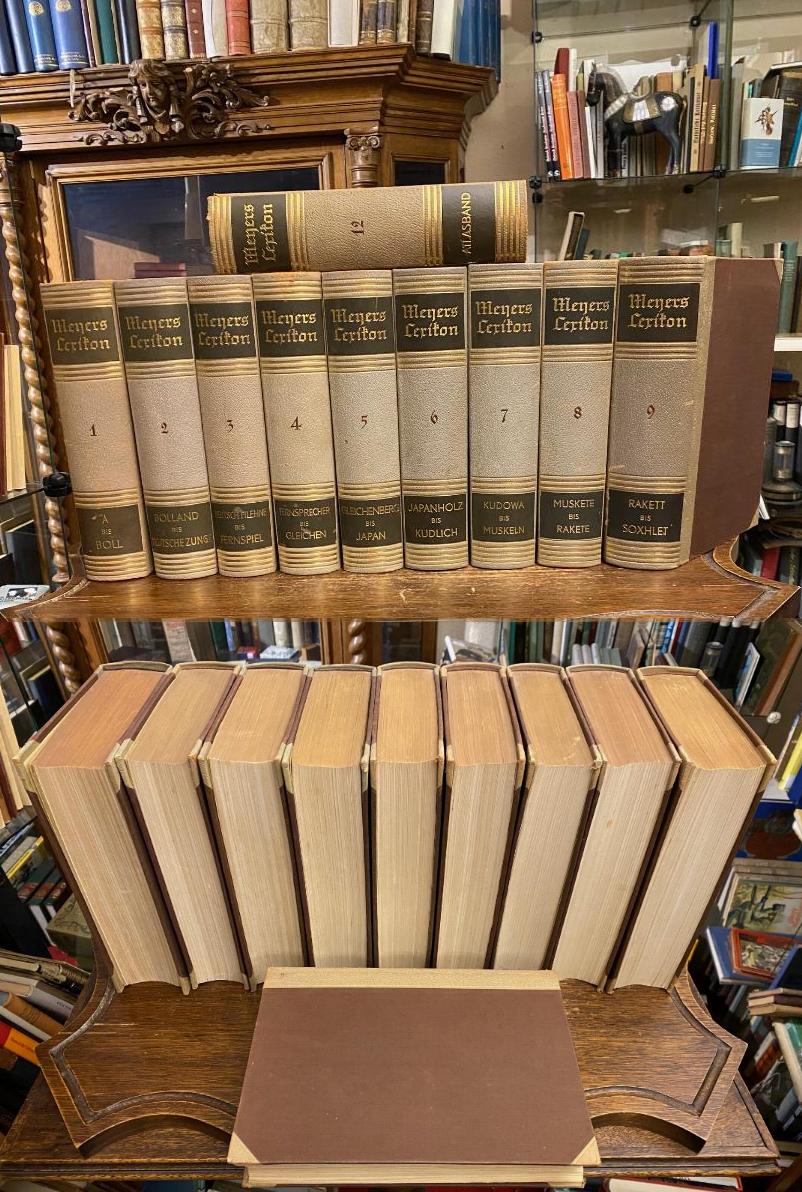
1936ref. 58956ABLeipzig, BI Bibliographisches Institut, 1936 - 1942. 4° (25x17) je Band etwa 800 S. (zweispaltig paginiert), mit zahlr. teils farb Abb. im Text und auf Tafeln, Band 7 mit anatomischem Modell in Kartentasche (so komplett), einheitl OHldrbde mit LdrEcken, hellgraues Leder, brauner LeinenBezug, goldRückenPrägung, 9+1 Bände : Band 1 - 9 + 12 (so komplett), 8. Aufl. Rücken minimalst berieben, schöne gepflegte Exemplare,
1936ref. 1047181936 Moscou, Izoghiz, 1936, 416x300mm, 32p., broché sous couverture imprimée. (104718)
1964ref. 012671Santiago Comision de orientacion revolucionaria de la direccion nacional del PURCS 1964 En feuilles
1934ref. 33758Editions du Carrefour, Paris 1934. 226 S., 1 Bl. 19 x 13 cm. Eigentümersignatur auf Vorsatzblatt Broschiert ++ ohne das illustrierte Deckblatt +++ sonst Exemplar in gutem Erhaltungszustand
1945Very Good Serbo-Croatian Original color lithographed print poster. Mounted on cardboard. Slight chip on the left corner, not loose. A good poster. 44x28 cm. In Serbo-Croatian. Artist signature: Kun, [Gleb?]. Red and black theme on the white surface. The peasant Serbian woman with her head and right hand raised to the sky is depicted. Antifastictika Fronta Zena [i.e. The Women's Antifascist Front] was a Yugoslav feminist and anti-fascist mass organization. The predecessor to several feminist front groups in the former Yugoslavia, and present-day organizations in the region, the "AFZ" was heavily involved in organizing and participating in the Partisans, the communist and multi-ethnic resistance to the Nazi occupation of Yugoslavia during World War II. It was formed by volunteers on 6 December 1942 in Bosanski Petrovac at the First National Conference of Women. In its early days, the organization was called the Antifascist Organization of Women (AOZ). In Croatia, the organization was named the Antifascist in front of women of Croatia. In Slovenia, there were a number of titles: Antifascist women association, Antifascist Front Women, Antifascist Front of Women. It was founded under the name of the Slovenian Antifascist Women Association. There was also a Slovenian Anti-Italian Women's Union. In Macedonia, it was called Antifascist front of women of Macedonia (Antifasisticki front na zenite na Makedonija). In Serbia, there was the Antifascist Front of Women of Serbia, including the Antifascist Front of Women of Vojvodina (based in Subotica). Before World War II, many women organizations advocated for peace, fighting against the different totalitarian forces that were growing across Europe. During the war, however, many women organized themselves within the antifascist movement and strengthened their position. This is confirmed by the first document of the Supreme Headquarters and the National Liberation Army volunteer Yugoslavia, which at that time was the supreme authority in the liberated territories. In various documents, it confirmed women's active and passive voting rights, which they already possessed prior to 1941, as outlined in the Constitution, but were not allowed to exercise. [.] Women began to massively involve the NOP as soldiers, medical staff, politicians, and MPs. Different female structures, which were established in 1941 under various names, have been associated in the wider areas, and as of 6 December 1942, held the first National Conference of Women. The conference was attended by 166 delegates from all over Yugoslavia, except for Macedonia, because they did not occur because of both distance and security concerns. Then the Conference founded the Antifascist Front of Women with the aim of mobilizing women for assisting new units, helping partisan government bodies, participation in armed and sabotage actions, and for the development of 'Brotherhood and Unity' among women. AFZ played an influential role in the Second World War, after the Invasion of Yugoslavia. The NLA attracted about two million women. In military units, there were 110 000 women. During the war, 2,000 women became officers. AFZ Committees were also responsible were collecting clothes for the NOV, caring about children, wounded soldiers, working as front-line nurses, and performing agricultural tasks. Of the 305,000 fallen soldiers between 1941-1945, 25000 were women, and of the 405,000 injured 40,000 were women. The issue of legal equality did not arise, because the women through their participation in the national liberation movement had arguably already achieved certain rights. All that after FOCA regulations on the principles of equality enshrined in the later constitutions "new" Yugoslavia, and various laws, the result of the struggle of women themselves in the feminist and anti-fascist women's organizations before the war, as well as their struggle during the war. [.].
1924Very Good Turkish, Ottoman (1500-1928) Contemporary green cloth bdg. Slight scratches on faded cloth, with slight foxing on pages. Overall a good copy. Cr. 8vo. (20 x 14 cm). In Ottoman script (Old Turkish with Arabic letters). 238, [2] p., 1 b/w portrait of Nezihe, ills. First and only edition of this exceedingly rare first book including a "May 1" poem, written by a Turkish female poet Yazar Nezihe. Nezihe was considered as one of the female poets in the Ottoman Period. She is known as a writer of the first Turkish poem for International Workers' Day on May 1. Yasar Nezihe differed from other female poets of the period in the sense of her life story and a contrary literary identity. Throughout her lifetime, she wrote poems about her penurious and challenging childhood as well as her love life and marriages. Being known as the first female poet whose works were published in Aydinlik Dergisi (i.e. Enlightenment Journal), Yasar Nezihe also became prominent for supporting labor unrests and her activist identity. She was recognized as a socialist poet who gave voice to poverty in her poems. She wrote the poem named "Gazete Sahiplerine" (i.e. To Newspaper Owners) addressing the executives with the intent of supporting laborers who were on strike because of the disagreement between newspaper owners and Mürettipler Cemiyeti (i.e. Typesetters Society). (Source: Wikipedia). This is her second poetry book. Being the first female poet wrote in Aydinlik Dergisi, Yasar Nezihe Bükülmez was accused of being a communist because of her writings, her membership of Osmanli Amele Cemiyeti [The Ottoman Workers' Society], and support for labor unrests and was arrested. Book has a biographical introductory text by Rifat Necdet Evrimer, (1898-1971) who was a Turkish/Ottoman poet, educator, and biographer in which is important being the earliest male gaze in its period. Özege 5645.; TBTK 6996.; Five copies in OCLC: 25346925 (Four copies) and 1030875484 (One copy).