4,236 results
1873Very Good Turkish, Ottoman (1500-1928) Original very decorative 1/4 leather bdg. Raised bands, ornaments gilded on four compartments of five. Foolscap 8vo. (17 x 12 cm). In Ottoman script. 173 p. Framed text in a style of early 19th century mostly seen in the transition period from manuscripts to the printing. Slightly faded on boards, stains on margins of two pages. Otherwise a very good copy. Harputî Ishak Efendi was a 19th-century statesman and Islamic scholar in the Ottoman Empire. After completing his first education in his hometown, he came to Istanbul and received a license from "Sahn-i Seman Madrasahs" in Fatih, Constantinople. While teaching in Istanbul madrasas, he taught "huzur dersleri" [i.e. the peace lessons] of Sultan Abdulaziz. He continued these lessons for many years as an educator. During the reign of Sultan Abdülhamit II, he was a commission member in the Ministry of Foundations (Waqfs), as a teacher of junior high, and as a qadi of Isparta and Medina. Harputi Ishak was an accomplished theological instructor and writer. In 1861, he published the Sems al-hakikat against Karl Pfander's ideas. During the 1860s he was a teacher at the prestigious Darü'l-Maarif secondary school. Harputî Ishak then rose within the religious scholarly ranks while an instructor at the Fatih Medrese, and he gained the attention of Sultan Abdülaziz. In the 1870s, he held the position of molla, as he was an instructor at the Darü'l-Maarif, and attained the rank of Istanbul payesi (rank of the qadi of Istanbul). His literary ventures had the official sanction and reflected so-called traditionalist views of Sultan Abdulaziz's administration in contrast to Euro-centric reformers such as Ali Pasha. In 1874, he wrote the Kashifu'l-esrâr ve dafiu'l-eshrar, against Bektashism. On the third page of the work, Ishak Efendi stated that he divided the book into three parts. The first part includes Fadlullah el-Hurufi (prophet, or, leader of Hurufism) and the basic principles of Bektashism, the second part, the criticism of Abdülmecid Firisteoglu's work named Isknâme [i.e. The book of light], and third part, the criticism of the views against religion in Câvidânnâme (The sacred book of Hurufis by their leader, Fazlullah). Ishaq says that all Hurufis and Bektashis are the enemies of Islamic religion in his book, which he describes as Hurufi and attacks in this direction. (Source: AN ANTI-ISLAMIC POLEMIC IN 1878 OTTOMAN ISTANBUL: S.W. KOELLE'S GIDAÜ'L-MÜLAHAZAT, by Scott Rank). It is not known how many copies of the book written by Ishaq were published in any source, but it is known that the readers and the public of the period were influenced by this Sunni-origin counter-discourse. Second Edition. Özege 10358.; OCLC 892728564.; Library of Congress. Karl Süssheim Collection, no. 785.
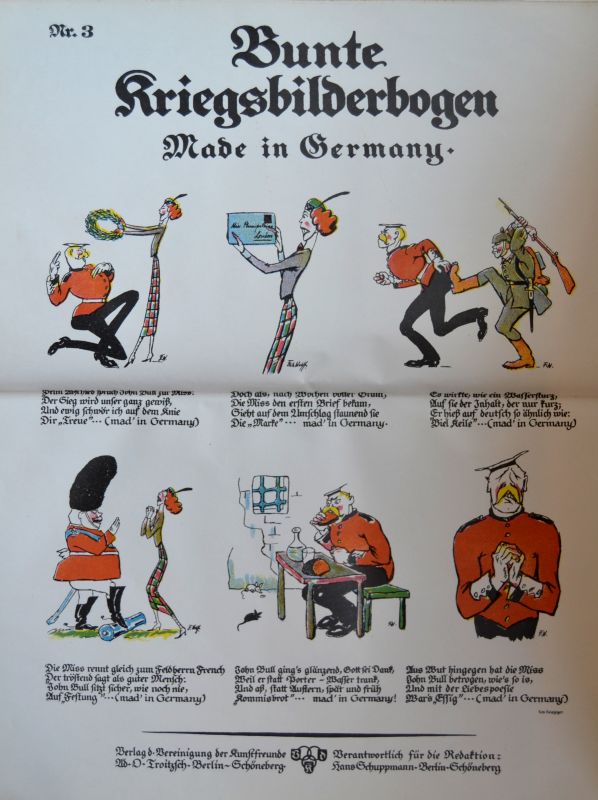
1914ref. 100783Berlin, Verlag d. Vereinigung der Kunstfreunde Ad. O. Troitzsch o.J. (1914). 40 doppelblattgr. farblithogr. Bögen. Ca. 44 x 34 cm (Bogen), 4°, dunkelrot. HLwd. mit marmor. Deckeln.
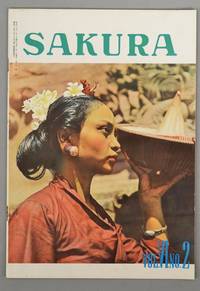
1944ref. 888911944. JAPANESE PROPAGANDA Asahi Shimbunsha. SAKURA. Volume 6 #2 #31 overall. Large wrappered staple bound illustrated photomagazine in the tradition of FRONT and HOMELIFE. This number published in February of 1944 celebrated the plans for a cross continental railway to cross Eurasia from Tokyo to Berlin complete with an undersea tunnel from Japan to the mainland. SAKURA magazine was written in English Chinese and French. The whole world seems to lay at the feet of the Axis in this rosy scenario as sketched throughout the magazine. East Asia under the guidance of Imperial Japan is on the march to build a new world. Yet by February of 1944 the Red Army was in Poland and the Ukraine Sevastopol was cut off times were bleak for the 1000 year Reich indeed. Closer to home the Allies had "turned the corner" in the Western Pacific had isolated the large Japanese force at Rabaul and were headed north towards the homeland. At some point during the war reality and appearance began a rapid divergence and as the end approached it became all pure delusion. All of which does not obviate what an amazing visual feast SAKURA is from the covers to the ads a consistent message of normalcy progress and steadfast purpose in a great task. unknown
1944ref. 888911944. JAPANESE PROPAGANDA Asahi Shimbunsha. SAKURA. Volume 6 #2 #31 overall. Large wrappered staple bound illustrated photomagazine in the tradition of FRONT and HOMELIFE. This number published in February of 1944 celebrated the plans for a cross continental railway to cross Eurasia from Tokyo to Berlin complete with an undersea tunnel from Japan to the mainland. SAKURA magazine was written in English Chinese and French. The whole world seems to lay at the feet of the Axis in this rosy scenario as sketched throughout the magazine. East Asia under the guidance of Imperial Japan is on the march to build a new world. Yet by February of 1944 the Red Army was in Poland and the Ukraine Sevastopol was cut off times were bleak for the 1000 year Reich indeed. Closer to home the Allies had "turned the corner" in the Western Pacific had isolated the large Japanese force at Rabaul and were headed north towards the homeland. At some point during the war reality and appearance began a rapid divergence and as the end approached it became all pure delusion. All of which does not obviate what an amazing visual feast SAKURA is from the covers to the ads a consistent message of normalcy progress and steadfast purpose in a great task. unknown books
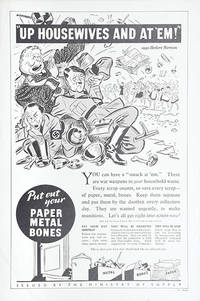
1940ref. 173612London: Issued by the Ministry of Supply 1940. A striking British wartime poster appealing for salvage showing Hitler Goebbels and Goering cowering under a barrage of newspapers pots and bones thrown by a mob of British housewives. The poster tells housewives that "you can have a 'smack at 'em'. There are war weapons in your household waste". It instructs them to separate out paper metal and bones from their house waste to be collected and used in munition manufacturing. The title is a quote from Herbert Morrison which was also used for a Pathé newsreel and a popular song. Offset lithograph 379 x 252 mm. Tiny chip at foot light crease at head. In very good condition. unknown
1791In-8°, 24pp, legatura in carta semplice In-8°, 24pp, paper binding
1791In-8°, 24pp, legatura in carta semplice, intonso In-8°, 24pp, paper binding, uncut
1947ref. 1033901947 New York, Henry Holt and Company,1947, 242x185mm, 244p., pleine toile orange de l’éditeur, jaquette illustrée.118 illustrations photographiques de la deuxième guerre mondiale en noir et blanc imprimées en héliogravure.Textes et images de Robert Capa.Défauts minimes à la jaquette. Auer 324.(103390)
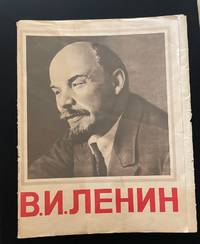
1969ref. 013792Moscow 1969. Soft cover. Very Good. Printed in the former USSR in 1969. Paper portfolio with cover photograph of Lenin measuring approx. 17.5 x 22" containing 31 pictures of various sizes on 18 sheets depicting all aspects of Lenin's life as student father one of the people and founder of the republic. Images presumably "suitable for framing" to be used in offices public buildings schools etc both as government issued "art" and history lessons. Some wear to paper portfolio along edges; sheets fine. unknown
1969ref. 013792Moscow 1969. Soft cover. Very Good. Printed in the former USSR in 1969. Paper portfolio with cover photograph of Lenin measuring approx. 17.5 x 22" containing 31 pictures of various sizes on 18 sheets depicting all aspects of Lenin's life as student father one of the people and founder of the republic. Images presumably "suitable for framing" to be used in offices public buildings schools etc both as government issued "art" and history lessons. Some wear to paper portfolio along edges; sheets fine. unknown books
191520 pages. Features: The Trade in the Tools of Death, by George Sylvester Viereck - an account of the tremendous development of the manufacture of munitions of war in the United States showing how this country, allegedly neutral, is helping to prolong the European conflict by furnishing firearms and explosive to the British Allies; Cartoon by A. Staehle shows the Prince of Peace coming out of Bethlehem, Palestine, and hell going out of Bethlehem, Pennsylvania in the form of munitions on railcars; White List - A list of some companies what have refused to manufacture arms and ammunition and ammunition-related manufacturing machinery; Money From Death - a partial list of American companies engaged in the manufacture of munitions of war; Victory - In Battle and in Balkan Diplomacy; The War of 1920 - 2nd Instalment; The Ocean Travelers' Suicide Club; Arm the German Ships in New York Harbor; The Cleveland Automatic Company and the New York Times - poison shrapnel being provided to the Allies; Mr. Pulitzer in Looking-Glass Land - he seems to exist in a land where everything is the reverse of the truth; The Verdict - Guilty! - England on the Witness Stand; Spring's Awakening in Berlin, by Louis Viereck; Ad for Kaffee Hag on back cover; and more. Unmarked. Average wear. Covers loose but present, otherwise a sound copy. Magazine
191520 pages. Features: The Next Step of President Wilson; Friends of Peace, Organize! Organize!; The Trust of the Red Death - Article III - Premonitions of the Future - George Sylvester Viereck discusses how capital is diverted from peaceful employment to the establishment of a trust that will ean the fomenting and making of wars for profit; News from Austria-Hungary, by Dr. Ervin Acel-Starhemberg; German Week at the San Francisco Exposition; Famous English Preacher Pleads for Arms Embargo - Rev. Dr. Aked and Prof. Rauschenbusch Protest Against National Dishonor; The War of 1920 (continued); Russia as a Publisher Duplicates her Failure in Military Affairs; The London Morning Post Fears the Fatherland; Mr. Ochs's (of the New York Times) Fate?; Chip in for the Dernburg Fund; Henry James has done something; Full-page fascimile of letter to George Sylvester Viereck from Mrs. Carl L. Schurz asking him to be Editor of the English edition of "Weltkrieg" called World-War; A hint for the "American Machinist" - a publication which promotes the sale of poison shrapnel; Poultney Bigelow Again - an amusing clown; If The Fatherland were published in Germany - an interesting quotation from the Cedar Rapids Republican; Prof. Burgess's Book "The War of 1914" Boycotted by some of the leading book stores in New York; Facsimile of Mr. Viereck's reply to Mrs. Schurz - in the affirmative; The German Aims of Peace; - and more. Unmarked. Average wear. Openings/creases to upper corner of back cover at backstrip. This issue noteworthy in that for the first time we find a full-page back cover ad for Budweiser -with a George Washington theme. Until this issue, most advertisers in this publication had been of the smaller, local (New York City) variety. Magazine
Very Good Persian Original wrappers. Folio. (33 x 25 cm) and some different sizes. In Persian with bilingual titles in English and Persian. A lot including 124 issues, published between July 30, 1991, to 1999. A lot including 124 issues of this rare Iranian satyric magazine "Gol Agha", which was the first such publication in post-revolutionary Iran, maintaining its dominance for more than two decades after its debut, adding monthly and annual editions as well as producing new generation of satirists and cartoonists. Kioumars Saberi Foumani, (1941-2004), also known by his pen name Gol-Agha, was an Iranian satirist, writer, and teacher. Saberi was born during the Second World War in Souma'eh Sara a city in Gilan Province. His father, originally from Rasht, worked for the Ministry of Economic Affairs and Finance. He was transferred to Souma'eh Sara in 1938 and then to Fuman in 1942 where he died a few months later. His mother, who was the daughter of a respected cleric and one of the few educated women in the city, taught the Quran after the death of her husband. His brother, who was 14 years older, had to leave school at the age of 15 to work to help with the family expenses. Education for Saberi was hard because of his family's poverty and he had to start working in a tailor shop after finishing his elementary education. He also worked in his brother's bicycle repair shop during elementary school and high school. He started high school education at his mother's insistence. At the age of 16, he gained entry to Sari's Agriculture teacher's college which only accepted one student from Fuman each year. He continued his college education and graduated in 1959. He worked as a teacher from 1959-1961. At the age of 20, he took his high school exams and received his high school diploma. He continued his education at the University of Tehran while working as a teacher. He achieved his bachelor of science degree in political science in 1965. He spent most of the 1970s reading and teaching and in 1978 he obtained his master's degree in comparative literature from the University of Tehran. Saberi got married in 1966 and he had a daughter and a son. His son died in a car accident in 1985 but this sad incident did not stop him from reaching his goal, which was to make people smile. Kioumars Saberi Foumani died on April 30, 2004. During his first year at university, Saberi was arrested for participating in student demonstrations and started to write political satire in Towfigh magazine. Towfigh magazine was Iran's most respected pro-democracy political satire magazine, with the highest circulation in Iranian history. Its editor-in-chief was Hossein Towfigh who, along with his brothers Hassan and Abbas, turned Towfigh magazine into the most influential journal in Iranian history. Saberi became one of the many staff writers of Towfigh magazine. After the Iranian Revolution, he became the cultural advisor for Mohammad Ali Rajai. One of his other political posts was as the counselor to the minister of Housing and Urban Development of Iran. Following the Revolution, Saberi worked in different political positions before deciding to leave politics. He was in charge of Roshde-Adabe-Farsi magazine and sometimes he wrote for the Ettelaat newspaper. He started a column called "Do-Kalame-Harfe-Hesab" in Ettelaat in 1984 which was a starting point for political satires after the revolution. He continued writing for this column for six years until he started his own magazine called Gol-Agha in 1990. His courageous and powerful writings were appreciated by many famous authors such as Mohammad Ali Jamalzadeh. Saberi received first prize in the press exhibitions of 1992 and 1994 and second prize in 1993. He stopped writing for Ettelaat in 1993. The main characters in his writings are Gol-Agha, Shagholam, Mamasadegh, Kamineh, The wife of Mamasadegh), Mash-Rajab, and Ghazanfar. In 2003 in his last editorial in Gol-Agha, Saberi announced that publishing Gol-Agha will be stop
1945ref. 88798New York: Army Information Branch/Army Service Forces 1945. Large broadsheet map format 35" x 47". Printed in color and black and white. Some light creasing and toning to folds otherwise very good 1st January 1945 having some soiling and wear to lower edge. Maps present include: Mnday 1st January 1945; Monday 15th January 1945; Monday 5th February 1945; Monday 30th Aril 1945; Monday 28th May 1945; Monday 2nd July 1945. "Newsmap" was a weekly educational and propaganda poster published by the US War Department during and immediately after World War II. It ran for basically four volumes from April 1942 up to March 1946 after which an additional eight issues were published. Newsmaps were not issued for general distribution rather they were distributed to military installations branch bases and government and civilian groups working on War Department projects in a military adjacent capacity. Ostensibly concerned with providing easily digestible progress data to service personnel including information on where fighting was happening the geography and type of territory and what the enemy was doing they also served as a morale boosting exercise promoting a sense of sweeping progress and imminent victory. The language is solid and implacable mostly ending on a positive note; "Eighth Army forces took several small places and American troops beat off fierce Nazi attacks" even at points in the war when general morale might have been at a lower ebb; colorful eye-catching and bluntly explanatory they provided a visible barometer for service personnel and civilians away from the theatre of war. Army Information Branch/Army Service Forces unknown
1945ref. 88798New York: Army Information Branch/Army Service Forces 1945. Large broadsheet map format 35" x 47". Printed in color and black and white. Some light creasing and toning to folds otherwise very good 1st January 1945 having some soiling and wear to lower edge. Maps present include: Mnday 1st January 1945; Monday 15th January 1945; Monday 5th February 1945; Monday 30th Aril 1945; Monday 28th May 1945; Monday 2nd July 1945. "Newsmap" was a weekly educational and propaganda poster published by the US War Department during and immediately after World War II. It ran for basically four volumes from April 1942 up to March 1946 after which an additional eight issues were published. Newsmaps were not issued for general distribution rather they were distributed to military installations branch bases and government and civilian groups working on War Department projects in a military adjacent capacity. Ostensibly concerned with providing easily digestible progress data to service personnel including information on where fighting was happening the geography and type of territory and what the enemy was doing they also served as a morale boosting exercise promoting a sense of sweeping progress and imminent victory. The language is solid and implacable mostly ending on a positive note; "Eighth Army forces took several small places and American troops beat off fierce Nazi attacks" even at points in the war when general morale might have been at a lower ebb; colorful eye-catching and bluntly explanatory they provided a visible barometer for service personnel and civilians away from the theatre of war. Army Information Branch/Army Service Forces unknown books
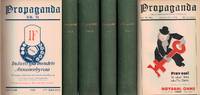
ref. 1087851928-32. Stor 8vo. Flere pagineringer. Rikt illustr. annonser bilag noen i farger. Bundet i fire samtidige fine helsjirtingb. med en del av de originale for- og bakomslagene medbundet særlig for 1928 de øvrige årgangene kun sporadisk. Fin rekke. Propaganda ble utgitt frem til 1960. . unknown
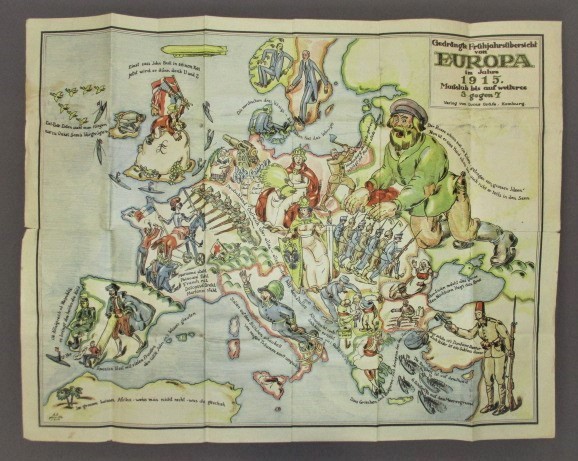
1915ref. 20076Hamburg, Gräfe, 1915. Mehrfach gefalt. farblithographierte Landkarte. Ca. 70 cm x 55 cm. Ohne Einband, verso der vorderer OU aufgeklebt).
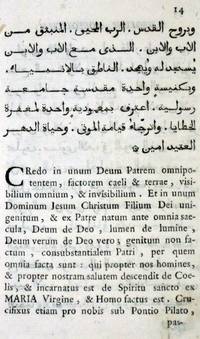
1797ref. 1004161797. Rome Propaganda Fide 1797. 15pp. Unbound. Woodcut vignette on titlepage and one vignette in the text. One of the rare publications of the Propagande Fide that was established in 1626 for propaganda among the Eastern peoples. Ferdinand II presented Illyrian types for a missal and the Mediciean and other Oriental types from the Stamperia Vaticana were added to its stock while Stefano Paolini engraved others. It continued its existence throughout the seventeenth and eighteenth centuries: Bodoni received his early training here. In 1789 most of the types were taken to Paris where in 1805 an edition of the Lord's Prayer in 150 languages was printed as a compliment at the time of Napoleon's coronation. Much of the type still remains at the Imprimerie Nationale. Not in Birrell & Garnett Smitskamp PO 216; Brunet I 197.
1942xiv, 384 pages. "The first authoritative book about the wartime use of radio in the United States. What fundamental policies should govern creative Radio in wartime? How effective are such broadcasts? What skills and techniques are most useful in the writing, producing and directing of American Radio in wartime? This book will open your eyes - and ears. It will tell you, the radio listener, how to detect propaganda - and how to create and put effective propaganda on the air! Author was Director of Radio Productions for the University of Chicago and of the world-famous University of Chicago Round Table, to which tens of millions listened each week." - dust jacket. Prior owner's name stamped inside each board, otherwise unmarked with moderate wear to red cloth-covered boards. Binding tight. Above-average wear to dramatically-illustrated, price-clipped and mylar protected dust jacket, the back panel of which promotes the purchase of U.S. War Bonds and Stamps, featuring a message from and photo of business analyst Merryle Stanley Rukeyser. COLE p.258, LARSON 42. Book
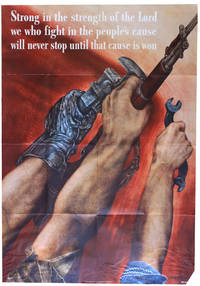
1942ref. 173221942. Stone Martin David. Strong In The Strength of the Lord We Who Fight In The People's Cause Will Never Stop Until That Cause Is Won 1942 a U.S. government wartime poster that articulates the ideological pro-America push on the American home front during World War II. Produced in the first full year of U.S. involvement following Pearl Harbor the poster advances a unified vision of civilian and military participation by aligning industrial labor military service and women's wartime work within a single visual and rhetorical program. The quotation from Vice President Henry Wallace a central political figure in wartime liberal internationalism and later the Progressive Party presidential candidate in 1948 situates the poster within federal efforts to frame the war as both a democratic and moral struggle requiring total societal commitment. Strong In The Strength of the Lord We Who Fight In The People's Cause Will Never Stop Until That Cause Is Won. Washington D.C.: U.S. Government Printing Office 1942. Poster measuring approximately 40 x 28 inches. Designed by David Stone Martin the composition presents three raised arms one female and two male each holding tools or instruments that signify industrial production and military participation. The visual program emphasizes coordinated effort across gender and occupational roles reinforcing federal messaging that positioned women as essential industrial laborers while sustaining the symbolic presence of the soldier and the worker. Issued as part of a broader federal propaganda campaign the poster would have circulated in workplaces public buildings and transportation hubs to reinforce wartime discipline production quotas and civic obligation. The poster belongs to a larger body of U.S. Office of War Information and Government Printing Office materials that sought to define the "home front" as a site of organized labor patriotic duty and ideological unity. During 1942 federal agencies intensified messaging that encouraged participation through war bond purchases factory labor and adherence to rationing and production directives. Wallace's language invoking moral purpose and collective struggle reflects the administration's effort to frame the war in universalist and populist terms linking domestic labor to global democratic outcomes. Minor bumping along the edges of the matting otherwise very good condition. unknown
1942ref. 173221942. Stone Martin David. Strong In The Strength of the Lord We Who Fight In The People's Cause Will Never Stop Until That Cause Is Won 1942 a U.S. government wartime poster that articulates the ideological pro-America push on the American home front during World War II. Produced in the first full year of U.S. involvement following Pearl Harbor the poster advances a unified vision of civilian and military participation by aligning industrial labor military service and women's wartime work within a single visual and rhetorical program. The quotation from Vice President Henry Wallace a central political figure in wartime liberal internationalism and later the Progressive Party presidential candidate in 1948 situates the poster within federal efforts to frame the war as both a democratic and moral struggle requiring total societal commitment. Strong In The Strength of the Lord We Who Fight In The People's Cause Will Never Stop Until That Cause Is Won. Washington D.C.: U.S. Government Printing Office 1942. Poster measuring approximately 40 x 28 inches. Designed by David Stone Martin the composition presents three raised arms one female and two male each holding tools or instruments that signify industrial production and military participation. The visual program emphasizes coordinated effort across gender and occupational roles reinforcing federal messaging that positioned women as essential industrial laborers while sustaining the symbolic presence of the soldier and the worker. Issued as part of a broader federal propaganda campaign the poster would have circulated in workplaces public buildings and transportation hubs to reinforce wartime discipline production quotas and civic obligation. The poster belongs to a larger body of U.S. Office of War Information and Government Printing Office materials that sought to define the "home front" as a site of organized labor patriotic duty and ideological unity. During 1942 federal agencies intensified messaging that encouraged participation through war bond purchases factory labor and adherence to rationing and production directives. Wallace's language invoking moral purpose and collective struggle reflects the administration's effort to frame the war in universalist and populist terms linking domestic labor to global democratic outcomes. Minor bumping along the edges of the matting otherwise very good condition. unknown books
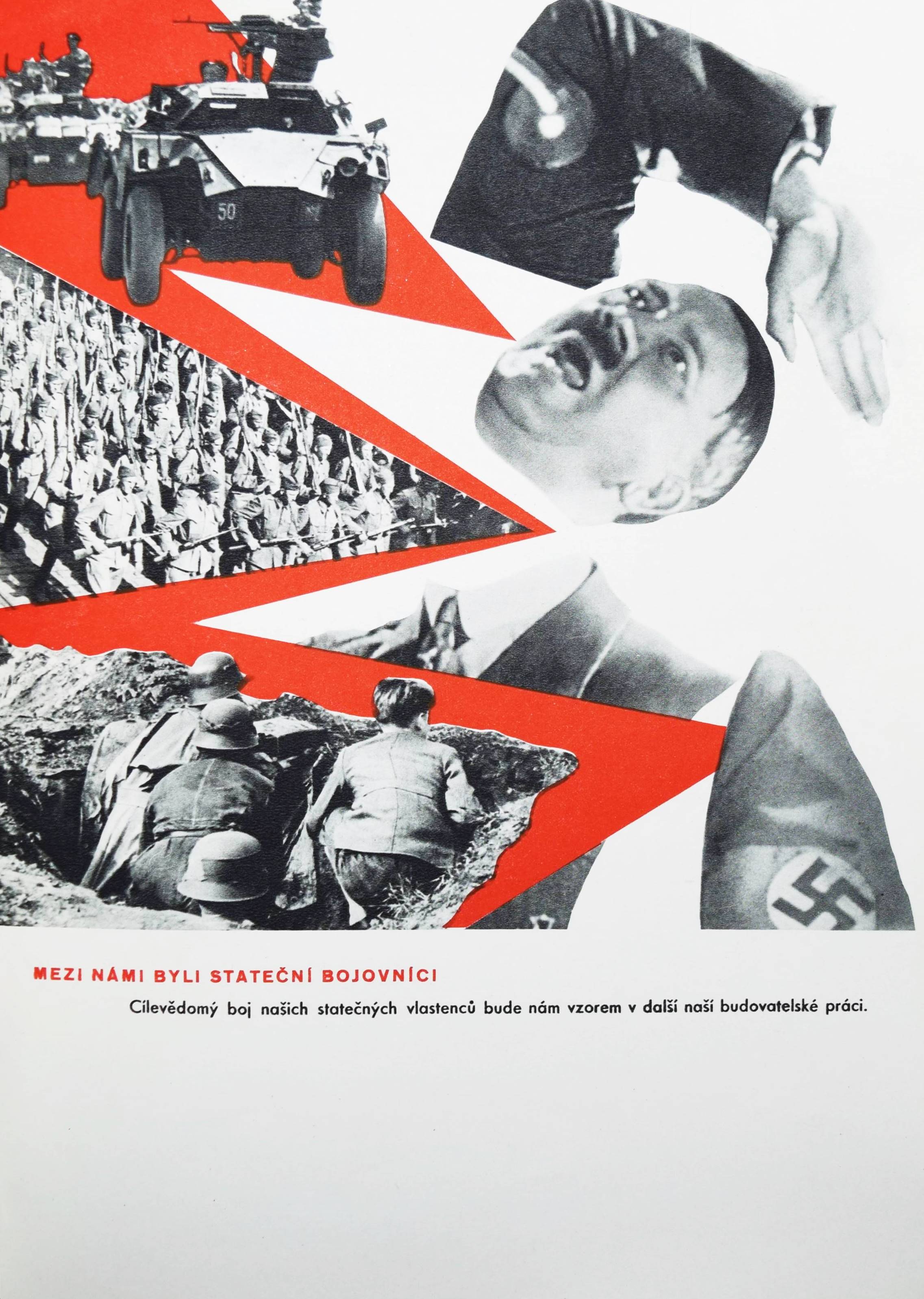
1945ref. 103007BBPraha (Prag), Svet v Obrazech, (1945). 4°. [44] Bl. mit 18 (17 ganzs.) Foto-Montagen, meist in Rot und Schwarz. Farbig illustr. OKart.
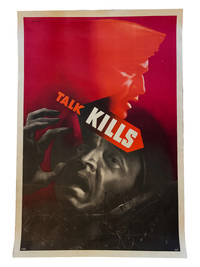
1943ref. 004937London 1943. Printed poster approximately 530mm x 775mm in size. Once folded now backed with linen one or two tiny amounts of colour loss to surface otherwise quite bright and clean. Designed by Abram Games 1914-1996 and printed by Henry Hildesley Limited. Games designed many British wartime propaganda and information posters over the course of his military service with the Royal Engineers. In 1942 he was appointed Official War Poster Artist. He produced two versions of this poster showing the possible consequences of disclosing sensitive information about the war - one coloured green that suggested a death at sea and another coloured red which suggested a death on land From the National Army Museum website. First Edition. Unbound. Good. Illus. by Games A.bram. Double Elephant. Poster. Paperback
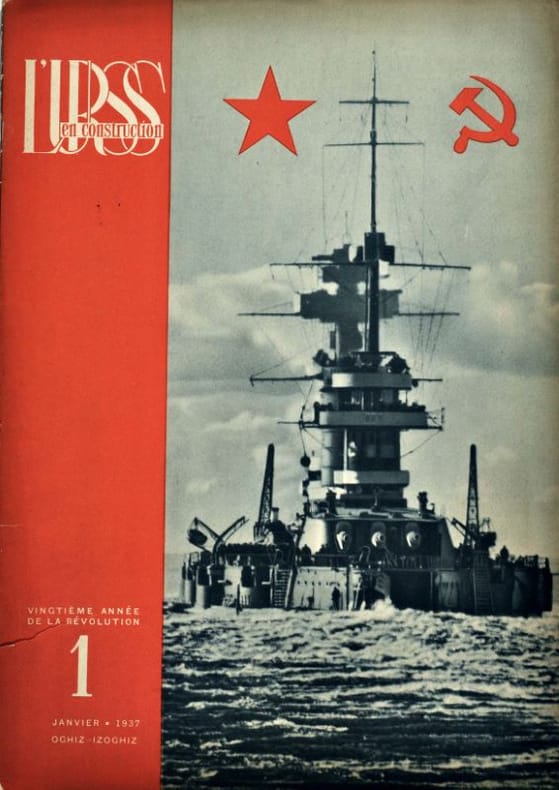
1937ref. 1047201937 Moscou, Isoghis , 1937, 416x300mm, 48p., un hors-texte, broché sous couverture photographique.
191516 pages. Features: The War of 1920, being the fictional diary of Gustav Bauerfeldt, War Correspondent of the Berliner Rundschau - Part 1; What we Demand of President Wilson In the Spirit of 'Seventy-Six'; Behind the Scenes in Warring Germany with Edward Lyell Fox; The Eliots and the Parkhursts, a poem by Stephen Oland; "To See Ourselves as Others See Us", by Dr. Edmund von Mach; Mr. Bryan and the German-Americans; The Worm Turns - at last American manufacturers are making an energetic protest to President Wilson against England's strangulation of American commerce; Why Franklin Knight Lane, Secretary of the Interior, and William Bauchop Wilson, head of the Department of Labor, Should Resign; Why They Are Against Peace - one of the most virulent pro-Ally newspapers in New England is owned by interests manufacturing war supplies for the Allies; Swiss View on our "Neutrality"; News from Germany; and more. Unmarked. Average wear. Three-inch opening to bottom of coverfold otherwise a sound copy. Magazine