Trochine, Alpert, G. Zelmanovitch et BaranovLivre Rare Book

1932réf. 1046921932 Moscou, Izoghiz, 1932, 416x300mm, 40p., broché sous couverture illustrée. (104692)
1933réf. 1046951933 Moscou, Izoghiz, 1933, 416x300mm, 32p., broché sous couverture illustrée. (104695)
1933réf. 1046971933 Moscou, Izoghiz, 1933, 416x300mm, 32p., grand dépliant central, broché sous couverture illustrée. (104697)
1936réf. 1047111936 Moscou, Izoghiz, 1936, 416x300mm, 44p., broché sous couverture imprimée. (104711)
1974réf. 126403Leningrad, 1974. Affiche couleurs Leningrad, 1974. Affiche couleurs au format 42 * 56 cm et provenant de l'album "L'éducation" du groupe Fighting Pencil (Beovoy Karendash) de Leningrad. Petites déchirures sans manque en bord. C'est au cours de Décembre 1939 ques des artistes de leningrad décident de créer le groupe Fighting pencil et produisent des affiches de propagande ou des affiches de caricature. Ses membres fondateurs étaient les artistes graphiques Ivan Astapov, Orest Vireysky, Valentin Kirdov, Vladimir Galba, Nikolai Muratov et Boris Semionov. La première affiche collective a été publié sur le sujet de la Guerre d' Hiver contre la Finlande," arbre de Noël..." et entièrement peinte à la main. La première période de la "Bataille des Crayon" a pris fin avec la fin de la guerre avec la Finlande au printemps de 1940. En Octobre 1943, la première exposition du groupe Fighting Pencil s'ouvre à Moscou, à la Bibliothèque Lénine. Elle gagne l'attention du public, à la fois à Moscou et à Kouibychev ou l'exposition a été transporté. Après un arrêt de quelques années, le groupe reprend ses activités en 1956. Il produit à cette période, des affiches de satires sociales et politiques sur la vie interne en URSS et contre "l'impérialisme mondial", pour mener à bien la propagande politique visant à augmenter les taux de production et de la discipline du travail; à populariser le sport, l'hygiène et les règles de circulation; et la satire de la vie privée. L'association a continué à travailler jusqu'au début des années 1990, rejointe par des artistes tels que MS Belomlinsky, VA Galba, JV Efimovsky, VA Zavyalov, GV Kovenchuk, YP Lobachev et YV Trunev... D'autres affiches sont disponibles, envoi de photos sur demande.
1974Leningrad, 1974. Affiche couleurs au format 42 * 56 cm et provenant de l'album "L'éducation" du groupe Fighting Pencil (Beovoy Karendash) de Leningrad. Petites déchirures sans manque en bord. C'est au cours de Décembre 1939 ques des artistes de leningrad décident de créer le groupe Fighting pencil et produisent des affiches de propagande ou des affiches de caricature. Ses membres fondateurs étaient les artistes graphiques Ivan Astapov, Orest Vireysky, Valentin Kirdov, Vladimir Galba, Nikolai Muratov et Boris Semionov. La première affiche collective a été publié sur le sujet de la Guerre d' Hiver contre la Finlande," arbre de Noël..." et entièrement peinte à la main. La première période de la "Bataille des Crayon" a pris fin avec la fin de la guerre avec la Finlande au printemps de 1940. En Octobre 1943, la première exposition du groupe Fighting Pencil s'ouvre à Moscou, à la Bibliothèque Lénine. Elle gagne l'attention du public, à la fois à Moscou et à Kouibychev ou l'exposition a été transporté. Après un arrêt de quelques années, le groupe reprend ses activités en 1956. Il produit à cette période, des affiches de satires sociales et politiques sur la vie interne en URSS et contre "l'impérialisme mondial", pour mener à bien la propagande politique visant à augmenter les taux de production et de la discipline du travail; à populariser le sport, l'hygiène et les règles de circulation; et la satire de la vie privée. L'association a continué à travailler jusqu'au début des années 1990, rejointe par des artistes tels que MS Belomlinsky, VA Galba, JV Efimovsky, VA Zavyalov, GV Kovenchuk, YP Lobachev et YV Trunev... D'autres affiches sont disponibles, envoi de photos sur demande.
1974réf. 126398Leningrad, 1974. Affiche couleurs Leningrad, 1974. Affiche couleurs au format 42 * 56 cm et provenant de l'album "L'éducation" du groupe Fighting Pencil (Beovoy Karendash) de Leningrad. Petite déchirure sans manque, petit trou. C'est au cours de Décembre 1939 ques des artistes de leningrad décident de créer le groupe Fighting pencil et produisent des affiches de propagande ou des affiches de caricature. Ses membres fondateurs étaient les artistes graphiques Ivan Astapov, Orest Vireysky, Valentin Kirdov, Vladimir Galba, Nikolai Muratov et Boris Semionov. La première affiche collective a été publié sur le sujet de la Guerre d' Hiver contre la Finlande," arbre de Noël..." et entièrement peinte à la main. La première période de la "Bataille des Crayon" a pris fin avec la fin de la guerre avec la Finlande au printemps de 1940. En Octobre 1943, la première exposition du groupe Fighting Pencil s'ouvre à Moscou, à la Bibliothèque Lénine. Elle gagne l'attention du public, à la fois à Moscou et à Kouibychev ou l'exposition a été transporté. Après un arrêt de quelques années, le groupe reprend ses activités en 1956. Il produit à cette période, des affiches de satires sociales et politiques sur la vie interne en URSS et contre "l'impérialisme mondial", pour mener à bien la propagande politique visant à augmenter les taux de production et de la discipline du travail; à populariser le sport, l'hygiène et les règles de circulation; et la satire de la vie privée. L'association a continué à travailler jusqu'au début des années 1990, rejointe par des artistes tels que MS Belomlinsky, VA Galba, JV Efimovsky, VA Zavyalov, GV Kovenchuk, YP Lobachev et YV Trunev... D'autres affiches sont disponibles, envoi de photos sur demande.
1974réf. 126402Leningrad, 1974. Affiche couleurs Leningrad, 1974. Affiche couleurs au format 56 * 42 cm et provenant de l'album "L'éducation" du groupe Fighting Pencil (Beovoy Karendash) de Leningrad. Petite déchirure sans manque au bas. C'est au cours de Décembre 1939 ques des artistes de leningrad décident de créer le groupe Fighting pencil et produisent des affiches de propagande ou des affiches de caricature. Ses membres fondateurs étaient les artistes graphiques Ivan Astapov, Orest Vireysky, Valentin Kirdov, Vladimir Galba, Nikolai Muratov et Boris Semionov. La première affiche collective a été publié sur le sujet de la Guerre d' Hiver contre la Finlande," arbre de Noël..." et entièrement peinte à la main. La première période de la "Bataille des Crayon" a pris fin avec la fin de la guerre avec la Finlande au printemps de 1940. En Octobre 1943, la première exposition du groupe Fighting Pencil s'ouvre à Moscou, à la Bibliothèque Lénine. Elle gagne l'attention du public, à la fois à Moscou et à Kouibychev ou l'exposition a été transporté. Après un arrêt de quelques années, le groupe reprend ses activités en 1956. Il produit à cette période, des affiches de satires sociales et politiques sur la vie interne en URSS et contre "l'impérialisme mondial", pour mener à bien la propagande politique visant à augmenter les taux de production et de la discipline du travail; à populariser le sport, l'hygiène et les règles de circulation; et la satire de la vie privée. L'association a continué à travailler jusqu'au début des années 1990, rejointe par des artistes tels que MS Belomlinsky, VA Galba, JV Efimovsky, VA Zavyalov, GV Kovenchuk, YP Lobachev et YV Trunev... D'autres affiches sont disponibles, envoi de photos sur demande.
1974Leningrad, 1974. Affiche couleurs au format 42 * 56 cm et provenant de l'album "L'éducation" du groupe Fighting Pencil (Beovoy Karendash) de Leningrad. Petite déchirure sans manque, petit trou. C'est au cours de Décembre 1939 ques des artistes de leningrad décident de créer le groupe Fighting pencil et produisent des affiches de propagande ou des affiches de caricature. Ses membres fondateurs étaient les artistes graphiques Ivan Astapov, Orest Vireysky, Valentin Kirdov, Vladimir Galba, Nikolai Muratov et Boris Semionov. La première affiche collective a été publié sur le sujet de la Guerre d' Hiver contre la Finlande," arbre de Noël..." et entièrement peinte à la main. La première période de la "Bataille des Crayon" a pris fin avec la fin de la guerre avec la Finlande au printemps de 1940. En Octobre 1943, la première exposition du groupe Fighting Pencil s'ouvre à Moscou, à la Bibliothèque Lénine. Elle gagne l'attention du public, à la fois à Moscou et à Kouibychev ou l'exposition a été transporté. Après un arrêt de quelques années, le groupe reprend ses activités en 1956. Il produit à cette période, des affiches de satires sociales et politiques sur la vie interne en URSS et contre "l'impérialisme mondial", pour mener à bien la propagande politique visant à augmenter les taux de production et de la discipline du travail; à populariser le sport, l'hygiène et les règles de circulation; et la satire de la vie privée. L'association a continué à travailler jusqu'au début des années 1990, rejointe par des artistes tels que MS Belomlinsky, VA Galba, JV Efimovsky, VA Zavyalov, GV Kovenchuk, YP Lobachev et YV Trunev... D'autres affiches sont disponibles, envoi de photos sur demande.
1974Leningrad, 1974. Affiche couleurs au format 56 * 42 cm et provenant de l'album "L'éducation" du groupe Fighting Pencil (Beovoy Karendash) de Leningrad. Petite déchirure sans manque au bas. C'est au cours de Décembre 1939 ques des artistes de leningrad décident de créer le groupe Fighting pencil et produisent des affiches de propagande ou des affiches de caricature. Ses membres fondateurs étaient les artistes graphiques Ivan Astapov, Orest Vireysky, Valentin Kirdov, Vladimir Galba, Nikolai Muratov et Boris Semionov. La première affiche collective a été publié sur le sujet de la Guerre d' Hiver contre la Finlande," arbre de Noël..." et entièrement peinte à la main. La première période de la "Bataille des Crayon" a pris fin avec la fin de la guerre avec la Finlande au printemps de 1940. En Octobre 1943, la première exposition du groupe Fighting Pencil s'ouvre à Moscou, à la Bibliothèque Lénine. Elle gagne l'attention du public, à la fois à Moscou et à Kouibychev ou l'exposition a été transporté. Après un arrêt de quelques années, le groupe reprend ses activités en 1956. Il produit à cette période, des affiches de satires sociales et politiques sur la vie interne en URSS et contre "l'impérialisme mondial", pour mener à bien la propagande politique visant à augmenter les taux de production et de la discipline du travail; à populariser le sport, l'hygiène et les règles de circulation; et la satire de la vie privée. L'association a continué à travailler jusqu'au début des années 1990, rejointe par des artistes tels que MS Belomlinsky, VA Galba, JV Efimovsky, VA Zavyalov, GV Kovenchuk, YP Lobachev et YV Trunev... D'autres affiches sont disponibles, envoi de photos sur demande.
réf. 163318No publication details. No date. Large Chinese Cultural Revolution papercut on red paper with paper backing featuring Mao clapping and looking benevolently towards the huge crowds around him the sun with its bold rays extending behind him some people around Mao are in different minority costumes and others in their work outfit many of them are holding the red little book of Mao's quotations up high above their heads. Block of text lower margin in Chinese excellent condition papercuts sheet measures 53 x 73.9cm. Chinese text in lower margin reads "The East is Red. The Sun is Rising." the first line of a very popular Cultural Revolution song 东方红 The East is Red. Adapted from northern Shaanxi folk song the song was "re-composed" by 李有源 Li Youyuan and 公木 Gong Mu lyrics 李涣之Li Huanzhi Melody in 1940s. . No publication details. unknown
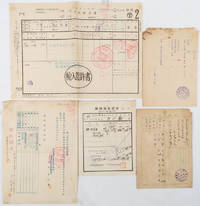
réf. 222006Manchukuo.: 外山卯三郎. Toyama Usaburō. Collection of nine items of ephemera relating to the making of Daichi no soshoku 大地の装飾 a Japanese film promoting Japanese policies in Manchuria. The collection includes four business cards 9 × 5.5 cm two telegrams 21.2 × 15 cm a customs duty receipt 20 × 15.3 cm an import declaration form 25.4 × 36 cm and an application for import duty exemption 27.2 × 19.6 cm. Some browning marking and signs of use but overall very good. A collection of business documents relating to the import and export of film stock etc for the making of the 1938 movie "Daichi no Sōshoku" 大地の装飾 Adorning the Earth conceived and directed by the film maker and art critic Toyama Usaburō 外山夘三郎 1903-1980. The film aimed to provide an evocative cinematic depiction of the scenic beauty and cultural traditions of Manchuria and provided implicit support for the creation and policies of the Japanese client state of Manchukuo. These documents give a glimpse of the practical tasks which went into the making of the film. Materials for film making had to be imported from Japan to Manchuria via Korea and the receipts and forms preseved in this collection were issued by the Manchukuo customs authorities in Antung now Dandong just across the Yalu River from Korea. This was a key gateway on the transport link from Japan to Manchukuo. Goods were commonly shipped from Japan to Pusan and then by rail up the Korean Peninsula to the Yalu River Bridge that crossed the border to Antung. Included in this collection are four name cards two of which are annotated from Japanese officials working in the Manchukuo administration: two in the Antung Customs Bureau and two in the information section of the central administration in the Manchukuo capital Shinkyō now Chanhchun. Their inclusion suggests that personal negotations as well as paperwork were needed to get the precious film stock through customs and into Manchukuo. . 外山卯三郎. [Toyama Usaburō]. unknown
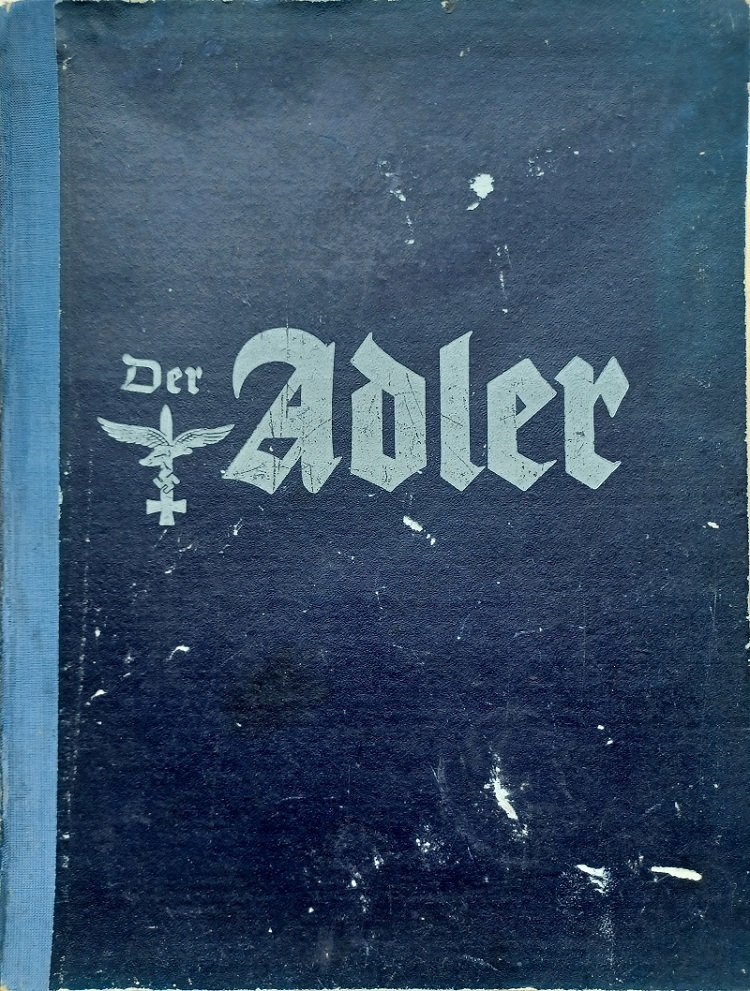
1944réf. 8581CBerlin:, August Scherl., 1944. (ca. 32,5 x 25,5 cm). je Heft ca. 20-24 S. Original-Halbleinen mit illustriertem Deckeltitel und NS-Hoheitszeichen. 17 Hefte jeweils mit den Original-Deckblättern. [5 Warenabbildungen] Einband an Ecken und Kanten etwas berieben, Leinenrücken mit Schadstellen, innen wohlerhalten. Altersentsprechend guter Zustand.
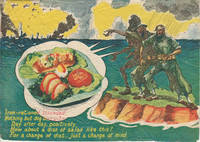
1942réf. 175578Circa1942. Small airborne propaganda leaflet printed on one side only featuring a colour illustration. Appears to have been dropped during the Malayan Campaign. 14.6 x 19.8 cm creased and marked on the reverse. Image still very clear and strong. Airborne colour propaganda leaflet urges the British troops to surrender to Japan. The rather oddly worded text reads: "Iron-rationed. Stranded. Nothing but dog biscuits. Day after day positively. How about a dish of salad like this For a change of diet. just a change of mind". The image shows three figures two of whom are identifiable as British soldiers in a desperate situation on a small piece of land possibly representing Singapore. In the distance their warships are burning. A plate of salad which dominates the image looks enticingly fresh and colourful albeit rather surprising that the Japanese military propaganda believed salad would motivate the soldiers to surrender! Similar messages published and dropped by the Allies were distributed to Japanese troops in Japanese towards the end of the Pacific War with the same aim in mind. Although we have not been able to identify the area depicted with absolute certainty we believe this leaflet was likely dropped during the Malayan Campaign rather than Guadalcanal as we have seen it attributed to. Our reasons for this include the leaflet showing British soldiers whereas American servicemen were primarily involved in Guadalcanal. The burning ships offshore seem to fit more with the sinking of the HMS Prince of Wales and HMS Repulse particularly as only two are depicted and they are being destroyed by what seem to be land-based bombers not other ships or carrier-based aircraft. Likewise at the late stage in the Pacific War that the Guadalcanal Campaign took place Japan was no longer in a position where they could cope with POWs nor were they likely to be in a position to print colour leaflets or distribute them. Commonly airborne leaflets were used over land battles rather than in naval battles. . unknown
1933réf. 1047001933 Moscou, Izoghiz, 1933, 416x300mm, 38p., et un petit fascicule central de 8p., broché sous couverture illustrée. (104700)
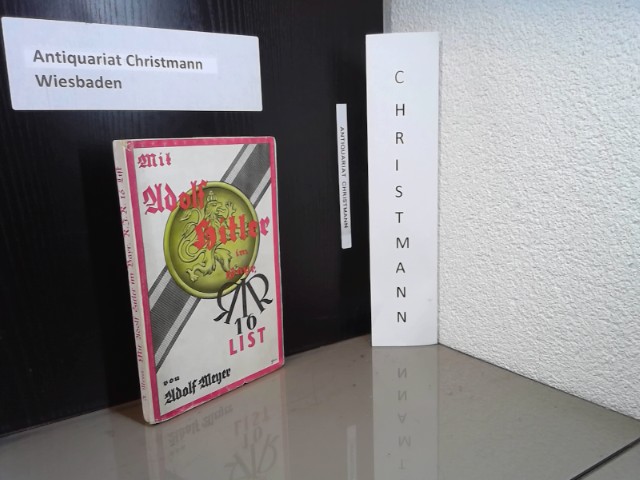
1934réf. 59335Neustadt [a. d.] Aisch, Mfr : G. Aupperle 1934. 109 S. : mit 50 Abb./ Fotos 2 Taf., 1 Panorama ; 8°, Schrift: Fraktur / Altdeutsche Schrift. Kart., Softcover/Paperback, leichte Gebrauchsspuren am Einband, sonst guter Zustand
1935réf. 1047071935 Moscou, Isoghis, 1935, 416x300mm, 36p., broché sous couverture imprimée. (104707)
1933réf. 52079Berlin : Schmidt & Co. G.m.b.H. 1933. 307 S. : Mit 50 Bildern auf Kunstdr. Taf. ; gr. 8°, Eigentümerstempel auf Vorsatzblatt Lw., gebundene Ausgabe, Leinen, sonst Exemplar in gutem Erhaltungszustand
1934réf. 15003Berlin, Vaterländischer Verlag A. Weller, 1934. (1.-15. Tsd.) Mit vielen ganzseitigen Abbildungen, sowie zahlreichen s/w fot. Abbildungen im Text und 1 Faksimile nebst einem Frontipiz in Gravüre. ill. OLwd., 509 S., Gr.4° (=35 x 20 cm) [2 Warenabbildungen]
1933réf. 1046981933 Moscou, Izoghiz, 1933, 416x300mm, 32p., grand dépliant central, broché sous couverture illustrée. (104698)
1935réf. 72304Braunschweig u.a: Westermann. 1935. Mit zahlr. farb. Abb. 90 S. Einband gebräunt, sonst gutes Exemplar [3 Warenabbildungen] Illustr. Halbleinen.
réf. 160149No publication details. No date. Late 20th Century. Large Chinese Propaganda papercut on red paper with paper backing featuring an image of Mao holding up high the "May 16th Circular" in his right hand the the earth spins behind him. The great ideological pioneers and philosophers Karl Marx Friedrich Engels Vladimir Lenin and Lu Xun are also shown upper section with a sailing boat between them. A group of armed soldiers march forward below them. Very good. Text in Chinese. Papercut measures 73.1 x 50.7cm. The May 16th Circular formally known as 中国共产党中央委员会通知 Circular of the Central Committee of the Communist Party of China was first circulated on May 16th 1966 and was regarded as the official document which triggered off the beginning of the Chinese Cultural Revolution. . No publication details. unknown
réf. 157469No place of publication.: No publication details. No date. Late 20th Century. Large Chinese propaganda papercuts onf red paper with paper backing depicting a large Mao's half-body portrait. Mao is wearing the 红卫兵袖章 Red Guard Armband and 红领巾 Red Scarf a neckerchief worn by Young Pioneers of several communist countries. Excited crowds are looking admiringly at Mao some of them hold the little red book of Mao's quotations some hold revolutionary banners posters and red flags. Nine balloons carry banners floating behind Mao two banners with texts. Excellent condition blocks of text in Chinese papercuts paper measures 51.5 x 73.6cm. Upper margin text 你们要关心国家大事,要把无产阶级文化大革命进行到底! You must pay attention to state affairs and carry the great proletarian cultural revolution through to the end! a propaganda slogan first announced by Mao Zedong on August 10 1966. Later that year Mao had received thousands of Red Guards and young Cultural Revolution supporters at Tiananmen Square. Text on the flying banners 毛主席万岁!Long Live Chairman Mao!; 中国共产党万岁!Chinese Communist Party lasts for ten thousand years! Text on the banner holding by the crowds 无产阶级文化大革命胜利万岁!The great victory of the great proletarian Cultural Revolution lasts for ten thousand years! . No publication details. unknown
réf. 160241No publication details. No date. Chinese Cultural Revolution papercut on red paper with paper backing featuring a full-body portrait of Mao Zedong looking benevolently a few branches of plum blossom behind him. A poem of Chairman Mao cut in the style of Chinese calligraphy is featured on the left section. Very good copy papercuts sheet measures 72.6 x 50cm. Included a handwritten poem by Mao Zedong titled 卜算子·咏梅 Ode to the Plum Blossom - to the Tune of Pu Suan Tzu created in December 1961. A re-creation based on 陆游 Lu You's a famous Southern Song Dynasty poet popular poem of the same title "Ode to the Plum Blossom - to the Tune of Pu Suan Tzu". . No publication details. unknown
réf. 160154No publication details. No date. Late 20th Century. Large Chinese Cultural Revolution papercut on red paper with paper backing. Head and shoulders portrait of Mao in the centre the sun with its bold rays extending behind him. A large crowd cheers in the background cheers many of the crowd hold their hands high in the air while waving their little red book of Mao's quotations. Two people on the right are holding a banner showing the character 囍 double happiness. The outer section is decorated with sunflowers. Excellent condition blocks of text in Chinese papercuts sheet measures 60 x 47.6cm. Text at upper margin reads "The Great Victory of the Great Proletarian Cultural Revolution Lasts for Ten Thousand Years!" On September 7th 1968 China Daily and People's Liberation Army Daily jointly released an article announcing that all regions except Taiwan established the local Revolution Committees. Lower margin text reads 'To Celebrate that the Whole Country is Red". . No publication details. unknown