Domin, Hilde (1909-2006)Antiquariat.de
3 516 résultats
1982réf. 15801Piper Verlag, München, 1982. 208 Seiten, OLeinen m. OU signiert, gewidmet. ("Für Hugo Schneider Hilde Domin 12.4.86"). Gutes Exemplar. 4.-5. Tausend. Selten. Rare. Good copy, signed by the author. Das Buch stammt aus der Bibliothek eines Autographensammlers.
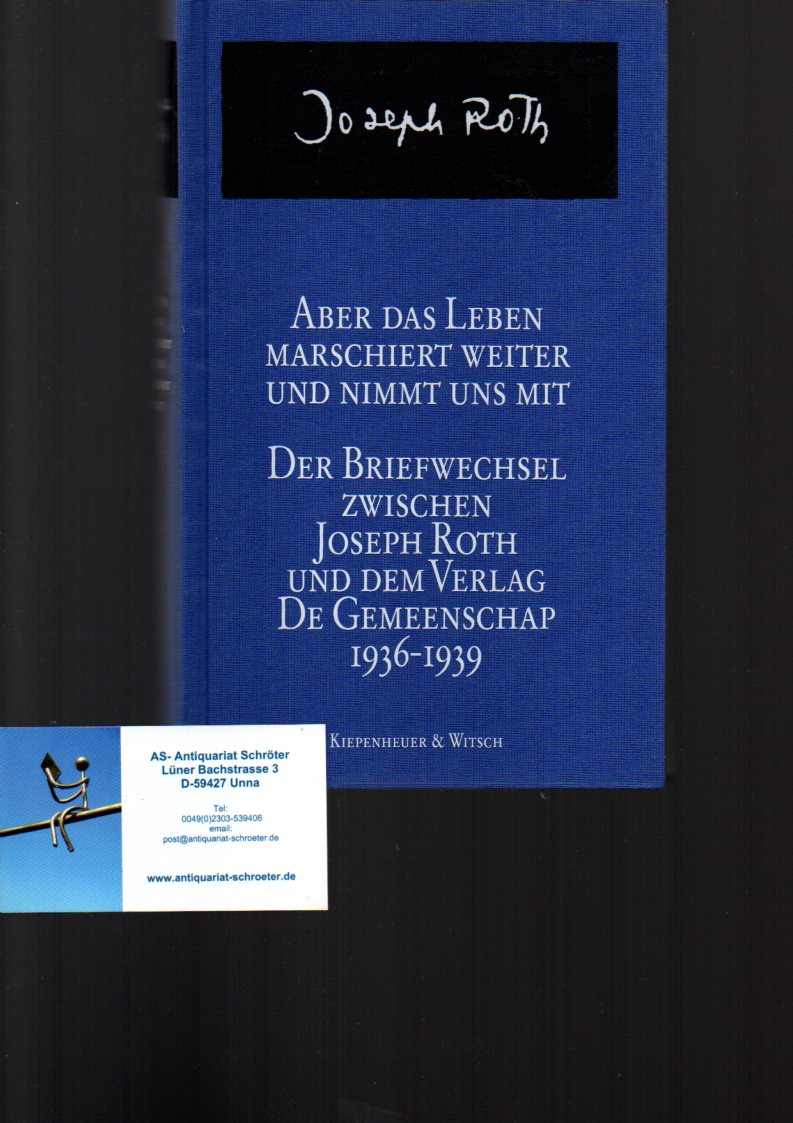
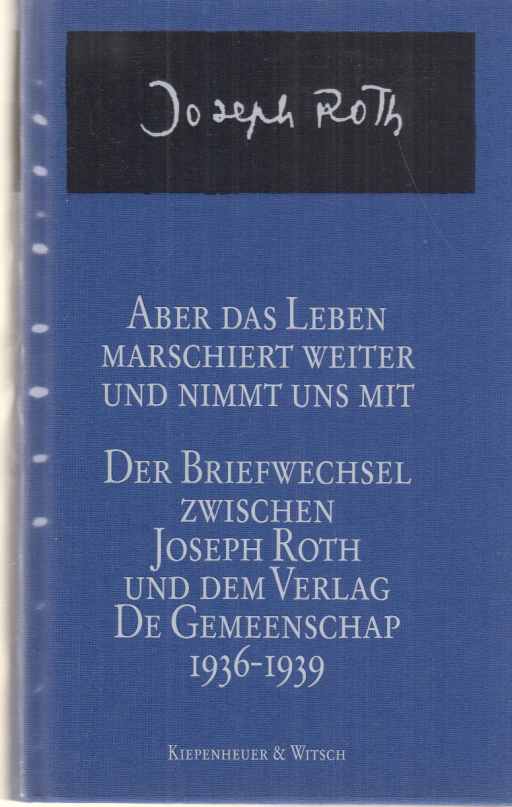
1991réf. 10376Kiepenheuer & Witsch, Köln, 1991. 329 Seiten, blaues OLeinen m. bedrucktem Klarumschlag und schwarzem Rückenschild, mit Abbildungen im Text. Schönes Exemplar. Good copy.
1991réf. 1125752Köln : Kiepenheuer und Witsch, 1991. 329 S. : Ill. ; 21 cm. Originalleinen mit Schutzumschlag.
1991réf. 42642Frankfurt am Main : Umschau-Verl., 1991. 260 S. Ill. Gr. 8°. Bibl.- Einbd.
1976réf. 31368Mnch, Ellermann, 1976. 279 S., OLwd. m. OU. (dieser am Rücken gering leicht gebräunt)
1950réf. 105353BBZürich, Europa Verlag, 1950. 8°. 243 S. mit 13 Abb. auf 8 Tafeln. Brauner Original-Leinenband mit goldgeprägtem Deckel- und Rückentitel.
1944réf. 17439ABStockholm, Bonniers, 1944. Gr.8°, 311 (+1)S., 1 Bl.(= Inh.), typogr. OBrosch., Bd. etw. berieben, unbeschnitten, ger. gebräunt; gutes Expl.
2009réf. 45066München: Coll. Heyne, 2009. 495 S. 8°. 1. Aufl. OPpbd. mit Lesebändchen u. SU.
1942réf. 43302London: Liberty Publications 1942. Original Illustrated black-and-white wrappers 8o 15 1 pages. Illustrated throughout with black-and-white photos. Holocaust-era anti-Nazi pamphlet aimed at British trade unionists and sympathizers on the brutal realities of life for Polish laborers under German occupation. Framed as the story of “Jan Kowalski” the Polish equivalent of “John Smith” it traces—hour by hour—a worker’s day under occupation drawn from firsthand reports documents and underground newspapers.The author’s describe the fear forced labor food shortages child abuse suppression of education and collapse of community life under Nazi rule while also noting the resilience of the Polish underground and moments of solidarity between Polish and Jewish workers. James Jeremiah Griffiths 1890–1975 was a Welsh Labour politician trade union leader and the first Secretary of State for Wales.“Liberty Publications established by the Polish Socialist Party PPS specialised in socio-political publications that were aimed at the British left. The board of directors included two British members Jimmy Middleton and Rennie Smith who were appointed ‘to avoid complications with the Home Office’.31 The firm was sponsored by the Polish Ministry of Information through the Polish Social Information Bureau Polska Informacja Spoleczna whose aim was ‘to inform the British people on all questions concerning life in Poland the Polish war effort etc.’” Rzepa “Publishing ‘paper bullets’: Politics propaganda and Polish English translation in wartime London”; https://repository.essex.ac.uk/23813/3/Rzepa%20-%20revised.pdf. OCLC: 3894561. The US Holocaust Museum keeps their copy in their Rare Book Collection. Covers lightly rubbed interior clean and bright. Very Good Condition. Holo2-163-15-LAGGMMMVXECC. London: Liberty Publications unknown
2018New English Paperback. Large 8vo. In English. 236 p., ills. A new homeland: The massacre of the Circassians, their exodus to the Ottoman Empire and their role in the making of modern Turkey.
1935réf. 5208ABNew York, Viking Press, 1935. 8°, VIII,301 S., illustr. roter OLwdbd.m. goldgeprägt. Titelschrift, Kopffarbschnitt, unbeschnitten, ger. gebräunt; schönes Expl.
1965Original boards. 8vo, 1300 pages. SUBJECTS: Very Good Condition. (Neusner-4-3)
2014réf. 1130250USC Libraries / Villa Aurora, 2014. 53 S.; Illustr. (vorw. Brief- und Handschriftenfaksimiles); 27 cm; kart.
2009réf. 15534Dog Ear Publishing Indianapolis, 2009. 216 S., Broschur, 8°. Zustand: sehr gut.
1944réf. 10929ABN.Y./London, Associated Music Publ./Schott & Co., (1944). 8°, VII,125 S.m. Noten, OKstLdr.m. gldgepr.TSchrift, Bd. ger. berieben, stellenw. Bleistiftmarg.; insges. schönes Expl.
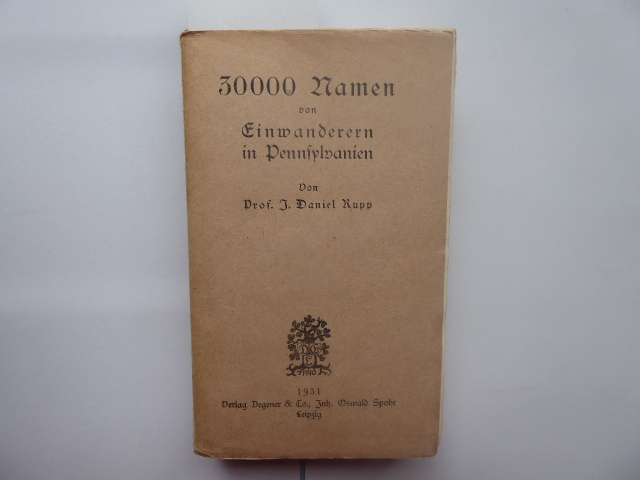
1931réf. 144446Verlag Degener & Co. Inh. Oswald Spohr. Leipzig 1931. IX, (1), 478 Seiten (pages) and 89 Seiten (pages) "Namensregister angefertigt nach der Ausgabe von 1880 von Ernst Wecken. Breitrandiges, unaufgeschnittenes Exemnplar. Originalbroschur in guter Erhaltung. (Erste Lage lose). 19x11,5 cm
1979réf. 1226Press & The Whittington Press London und Andoversford, Acorn, 1979. (88) nn S, illustrierter OPappband im farbigen Schuber (mit Schabspuren), Fadenheftung, Handsatz, durchgehend farbige Original-Linolschnitte von Weissenborn. "350 copies hand-set in Bell-type and printed from the original perspex blocks on Basingwerk Parchment at The Whittington Press and bound by Weatherbys. This is copy no: 241". Im Impressum von Weissenborn handschriftlich signiert. HW (1898 Leipzig - 1982 London), er war von 1918-1925 an der Akademie für Graphische Künste und Buchgewerbe Leipzig, von 1926-1938 lehrte er an der Leipziger Akademie, 1939 Emigration nach England. 1946 zusammen mit seiner Frau Lesley Macdonald Gründung der Acorn-Press. Gutes Exemplar. Good copy.
1977réf. 79082Olten, Freiburg i.Br.: Walter 1977.
1940réf. c1403160415xbvkParis, Felix Béroud Imprimeur; (1940). 29 (1) pages. - Couverture originale; 8vo.(ca. 21 x 14 cm).
1976réf. 77496Wiesbaden: Edition Klaus Blahak 1976. 211 Ss. 8°. Grüner Kst. mit goldgeprägt. Rücken- u. Deckeltitel u. Umschl.
1949Very Good Armenian Original half bound leather bdg. Large demy8vo. (22 x 15,5 cm). In Armenian. 675 p. Prior to Soviet rule, the Dashnaksutiun had governed the First Republic of Armenia. The Socialist Soviet Republic of Armenia was founded in 1920. Diaspora Armenians were divided about this: supporters of the nationalist Dashnaksutiun did not support the Soviet state, while supporters of the Armenian General Benevolent Union (AGBU) were more positive about the newly founded Soviet state. From 1828 with the Treaty of Turkmenchay to the October Revolution in 1917, Eastern Armenia had been part of the Russian Empire and partly confined to the borders of the Erivan Governorate. After the October Revolution, Bolshevik leader Vladimir Lenin's government announced that minorities in the empire could pursue a course of self-determination. Following the collapse of the empire, in May 1918 Armenia, and its neighbors Azerbaijan and Georgia, declared their independence from Russian rule and each established their respective republics. After the near-annihilation of the Armenians during the Armenian Genocide and the subsequent Turkish-Armenian War, the historic Armenian area in the Ottoman Empire was overrun with despair and devastation. A number of Armenians joined the advancing 11th Soviet Red Army. Afterward, Turkey and the newly proclaimed Soviet republics in the Caucasus negotiated the Treaty of Kars, in which Turkey resigned from its claims to Batumi to Georgia in exchange for the Kars territory, corresponding to the modern-day Turkish provinces of Kars, Igdir, and Ardahan. The medieval Armenian capital of Ani, as well as the cultural icon of the Armenian people Mount Ararat, were located in the ceded area. Additionally, Joseph Stalin, then acting Commissar for Nationalities, granted the areas of Nakhchivan and Nagorno-Karabakh (both of which were promised to Armenia by the Bolsheviks in 1920) to Azerbaijan. From 12 March 1922 to 5 December 1936, Armenia was a part of the Transcaucasian SFSR (TSFSR) together with the Georgian SSR and the Azerbaijan SSR. The policies of the first Soviet Armenian government, the Revolutionary Committee (Revkom), headed by young, inexperienced, and militant communists such as Sarkis Kasyan and Avis Nurijanyan, were implemented in a highhanded manner and did not take into consideration the poor conditions of the republic and the general weariness of the people after years of conflict and civil strife. Such was the degree and scale of the requisitioning and terror imposed by the local Cheka that in February 1921 the Armenians, led by former leaders of the republic, rose up in revolt and briefly unseated the communists in Yerevan. The Red Army, which was campaigning in Georgia at the time, returned to suppress the revolt and drove its leaders out of Armenia. Convinced that these heavy-handed tactics were the source of the alienation of the native population to Soviet rule, in 1921 Moscow appointed an experienced administrator, Alexander Miasnikian, to carry out a more moderate policy and one better attuned to Armenian sensibilities. With the introduction of the New Economic Policy (NEP), Armenians began to enjoy a period of relative stability. Life under the Soviet rule proved to be a soothing balm in contrast to the turbulent final years of the Ottoman Empire. The Armenians received medicine, food, as well as other provisions from the central government and extensive literacy reforms were carried [.] Only one copy is located in OCLC: 782028953 (National Library of Israel - Jewish National Library).
1922Very Good Armenian Original fine red cloth bdg. with decorative gilt on board. Spine is repaired masterfully. Large roy. 8vo. (25 x 18 cm). In Armenian. [24], 429 p., 1 folded Armenian map of Turkey (map size: 24x33 cm), 29 unnumbered full-page b/w plates (one is folded). Armenian Golgotha is a memoir written by Grigoris Balakian about his eyewitness account of the Armenian Events. The memoir was released in two volumes. Volume 1, about his life prior to and during the Armenian Deportation, was released in 1922. Volume 2, about his life as a fugitive after the Deportation, was released in 1959. Originally published in Armenian, the memoir was later published in various languages including an English translation by Peter Balakian, Balakian's great-nephew, with Aris Sevag. Grigoris Balakian [or, Palakean, Palakian, Balakean], was a bishop of the Armenian Apostolic Church, in addition to being a survivor and memoirist of the Armenian Events in the Ottoman Empire. Grigoris Balakian was born in Tokat in the Ottoman Empire and graduated from the Sanasarian College in Erzurum. He had been studying architecture in Germany for two years and got a degree in civil engineering. He became a celibate priest ordained under the monastic name Grigoris Balakian. On 24 April 1915, he was among the group of 250 leading Armenian figures of Constantinople who were arrested and deported. One group was deported to Ayas. Balakian was deported to Çankiri, north-east of Ankara with the rest of the 190 other deportees from the capital. Only 16 of them would survive. He marched with 48 deportees from Çankiri in the direction of Deir Al-Zor in the Syrian desert. On the way, Balakian won the confidence of captain of constabulary Shukri Bey and learned about the Ottoman government's plan to exterminate the whole Armenian population. Balakian was able to flee toward Islahie. He joined a group of workers on the Bagdad-railway where Turkish deserters did forced labor alongside Armenian refugees. While Armenian workers between Marash and Bartche were being slain, Balakian fled to another construction site on the Bagdad railway. He was helped by German engineers and finally succeeded - disguised as Herr Bernstein - in escaping from Constantinople to Paris. At the 1921 trial in Berlin against Soghomon Tehlirian, the murderer of Talât Pasha, Balakian appeared as a witness for the defendant together with Johannes Lepsius. Soghomon Tehlirian was ultimately acquitted. Balakian became prelate of Manchester, London, and finally bishop of Marseille. Two churches were built under his guidance in Marseille and Nice (St. Mary, 1928) as well as a number of chapels and schools. He died in Marseille. Balakian is the granduncle of Anna Balakian, an expert on symbolism and surrealism who chaired New York University's Department of Comparative Literature, and the great-granduncle of Peter Balakian, an Armenian-American writer and winner of the 2016 Pulitzer Prize for Poetry. Balakian's memoirs in Armenian Golgotha are an important eyewitness account of the Armenian Events. He describes his experiences during the deportation. Balakian was one of the few surviving leaders of the Armenian community who gave an account of the deportation. Komitas (Gomitas) Vartapet belonged to the same group of detainees as Balakian. His information about the traumatization of the famous composer and founder of modern Armenian classical music is of eminent importance. OCLC: 1137218025. First Armenian Edition. Rare.
1942réf. ZEIT1712London : Vydal tydenk "?echoslovák" 1942. 112 S., OKart., sehr gut erhalten. In tschech. Sprache
1963réf. 23322(Edition Michael Hasenclever, Köln - München) / Mourlot, Paris (Druck), (ca 1963). 1 Bll. 77 x 53,8 cm.
1949réf. 116346ABLondon, Artrium Press, [1949]. Kl.8° (17,3 x 12,5 cm). 32 dreigeteilte farbige Bilder auf festem Karton. Original-Pappband mit Spiralbindung, Vorder- und Rückdeckel von Walter Trier farbig illustriert. (=Fun in fairyland).